Top 5 Things You Can Buy With Crypto in 2026
— By Tony Rabbit in Tutorials
Top 5 things you can buy with crypto in 2026: gift cards, travel, real estate, digital assets, and food delivery, with step-by-step payment guides.
In 2026, you can buy a wide range of goods and services with crypto, from everyday items like coffee to luxury purchases such as real estate. The infrastructure for crypto payments has significantly advanced, enabling transactions with Bitcoin, Ethereum, USDT, and many other tokens through various merchants and payment platforms.
Cryptocurrency is no longer just an investment vehicle or speculative asset. In 2026, you can spend your BTC, ETH, USDT, and dozens of other tokens on everything from a morning coffee to a Miami penthouse. The infrastructure for crypto payments has matured dramatically, with thousands of merchants, payment processors, and crypto-native platforms making it easier than ever to use digital assets in your daily life.
This guide covers the five most practical categories of things you can buy with crypto right now, with step-by-step instructions, real platforms, accepted currencies, fees, and tips to make every transaction smooth. Whether you are sitting on Bitcoin gains or simply prefer the privacy and speed of crypto payments, this article will show you exactly how to spend it.
Crypto Payments in 2026 - By the Numbers
15,000+
Online merchants accepting crypto
$12B+
Annual crypto payment volume
100+
Countries with crypto-pay options
250+
Cryptos accepted by major processors
Table of Contents
1. Gift Cards and Shopping
Gift cards are the gateway to spending crypto almost anywhere. Even if a retailer does not directly accept Bitcoin, you can purchase a gift card with crypto and use it to shop. This is the single most versatile way to convert your digital assets into real-world purchases, and the ecosystem in 2026 is robust.
Key Platforms
Bitrefill
Bitrefill is the largest crypto gift card marketplace, offering cards for over 5,000 brands across 170+ countries. You can buy Amazon, Netflix, Steam, Uber, Uber Eats, Airbnb, Apple, Google Play, DoorDash, and hundreds more. They accept BTC, ETH, USDT, USDC, LTC, DOGE, and payments via the Lightning Network for near-instant transactions with minimal fees.
How to buy a gift card on Bitrefill:
- Go to bitrefill.com and create an account (or browse without one).
- Search for the brand you want (e.g., Amazon, Steam, Netflix).
- Select your country and the card denomination (e.g., $25, $50, $100).
- Click Add to Cart and proceed to checkout.
- Choose your payment method: Bitcoin, Lightning, Ethereum, USDT, or others.
- Send the crypto to the provided address or scan the QR code from your MetaMask wallet or Trust Wallet.
- Once the transaction confirms, your gift card code appears instantly on screen and in your email.
Pro tip: Bitrefill offers a rewards program where you earn sats (satoshis) back on purchases. Some cards occasionally offer 1-5% cashback in Bitcoin, making it cheaper than paying with fiat.
CoinGate
CoinGate is both a payment processor for merchants and a gift card shop. They support over 70 cryptocurrencies including BTC, ETH, USDT, USDC, XRP, ADA, SOL, and many more. Their gift card catalog includes major brands across electronics, gaming, food, entertainment, and travel. CoinGate also integrates with e-commerce platforms, so many Shopify and WooCommerce stores use CoinGate under the hood.
Shopify Stores with Crypto Payments
Thousands of Shopify merchants now accept crypto directly through integrations with BitPay, CoinGate, or Coinbase Commerce. When you see the crypto payment option at checkout, you can pay from any wallet. This covers independent brands, clothing stores, supplement shops, electronics retailers, and more. Check for the Bitcoin or crypto logo at checkout.
What You Can Buy
- Amazon: Gift cards from $1 to $500. Works for anything on Amazon.
- Netflix: Prepaid subscription cards. Avoid sharing your credit card entirely.
- Steam: Load your Steam wallet for games, DLC, and in-game items.
- Uber / Uber Eats: Rides and food delivery funded by crypto.
- Apple / Google Play: Apps, subscriptions, and digital content.
- Spotify / Hulu / Disney+: Entertainment subscriptions paid with BTC.
- Nike, Adidas, Best Buy: Physical goods through gift cards.
Fees and Discounts
Most gift card platforms charge 0-2% above face value. However, Bitcoin Lightning payments on Bitrefill are often at face value with no premium. Some cards are occasionally discounted 3-5%, which means you effectively get a discount for paying with crypto. CoinGate fees are typically around 1%. Compare this to credit card interchange fees of 2-3% that merchants pay - crypto can actually be cheaper for everyone involved.
Pros
- Works for virtually any major retailer through gift cards
- Lightning Network payments confirm in seconds
- Cashback rewards in Bitcoin on some platforms
- Privacy - no need to link bank accounts to retailers
Cons
- Small markup on some gift cards (1-2%)
- Gift cards are non-refundable once purchased
- Each purchase is a taxable event in most jurisdictions
- Denomination limits may require multiple cards for large purchases
2. Travel and Hotels
Travel is one of the most developed use cases for crypto spending. Multiple platforms have built their entire business model around crypto-funded travel, and the experience in 2026 is polished, competitive, and often cheaper than traditional booking sites.
Key Platforms
Travala
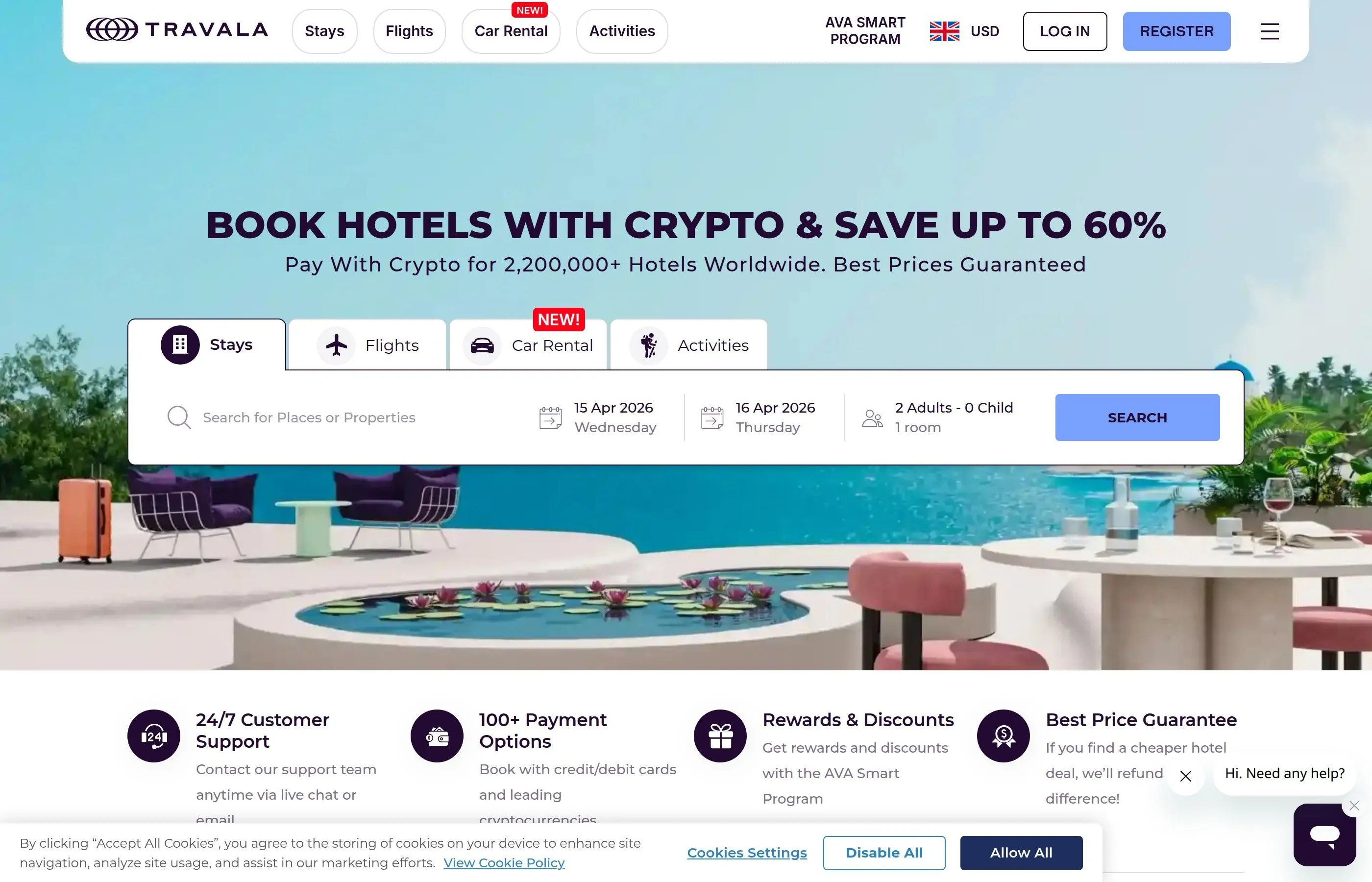
Travala is the leading crypto-native travel platform, offering over 2.2 million properties worldwide plus flights, activities, and car rentals. They accept BTC, ETH, USDT, USDC, AVA (their native token), BNB, SOL, DOGE, and 60+ other cryptocurrencies. Travala aggregates listings from Booking.com, Expedia, and other major OTAs, so you get the same inventory with the added option to pay in crypto.
How to book a hotel on Travala:
- Visit travala.com and create an account.
- Search for your destination, dates, and number of guests.
- Browse available hotels and compare prices.
- Select your room and click Book Now.
- At checkout, choose Crypto as your payment method.
- Select your cryptocurrency (BTC, ETH, USDT, etc.).
- Send the exact amount to the provided wallet address within the time window (usually 30 minutes).
- Once the payment is confirmed on-chain, you receive your booking confirmation via email.
Travala Smart Program: If you hold their AVA token, you unlock tiers with up to 5% cashback on bookings, free room upgrades, and loyalty rewards. Even without AVA, paying in crypto often gives you 2% back in AVA rewards.
CheapAir
CheapAir has been accepting Bitcoin since 2013, making them one of the earliest adopters in travel. They offer flights, hotels, and car rentals. CheapAir accepts BTC, ETH, LTC, DOGE, BCH, and USDC. Their flight inventory pulls from major airlines worldwide. The booking experience is nearly identical to any traditional flight search engine, with crypto simply appearing as a payment option at checkout.
How to book a flight on CheapAir:
- Go to cheapair.com and search for flights as you normally would.
- Select your preferred itinerary.
- Enter passenger details and continue to payment.
- Select Bitcoin or another supported crypto at the payment step.
- You will see the price in both USD and the chosen cryptocurrency.
- Complete the payment from your wallet (they use BitPay as their processor).
- Receive your e-ticket and confirmation via email.
Alternative Crypto Travel Options
- Expedia via gift cards: Buy Expedia or Hotels.com gift cards on Bitrefill and use them for any booking on those platforms.
- Airbnb alternatives: Purchase Airbnb gift cards with crypto, or use platforms like Travala that list vacation rentals alongside hotels.
- Crypto debit cards: Load your Coinbase Card, Binance Card, or Crypto.com card with crypto and book anywhere that accepts Visa or Mastercard.
- Private jet charters: Companies like BitLux accept Bitcoin for private aviation. Prices start around 0.5-2 BTC depending on the route.
Accepted Cryptos and Fees
Travala charges no additional fee for crypto payments. The price you see is the price you pay, and the crypto conversion rate is pulled from live markets at checkout. CheapAir uses BitPay, which charges about 1% on the conversion. For stablecoin payments like USDT and USDC, there is no exchange rate volatility, so the price is exactly what you see. If you are paying with BTC or ETH, keep in mind the price is locked for a limited window (typically 15-30 minutes) before the rate refreshes.
Using Layer 2 networks like Lightning Network for BTC or Polygon/Arbitrum for ETH-based tokens can dramatically reduce gas fees, sometimes to under $0.01 per transaction.
Pros
- Massive inventory - millions of properties and flights
- Cashback in crypto on Travala (up to 5%)
- No bank or credit card needed for international travel
- Stablecoin payments eliminate exchange rate risk
Cons
- Refund processes can be slower with crypto payments
- Exchange rate fluctuation during payment window (for volatile assets)
- Not all hotels on aggregators support direct crypto - some route through gift cards
- Customer support for crypto-specific issues can vary
3. Real Estate and Luxury Goods
The high-value purchase market has embraced crypto enthusiastically. From luxury condominiums in Miami and Dubai to Rolex watches and Lamborghini supercars, the world of high-end commerce now treats Bitcoin as a legitimate payment method. This is where crypto truly shines for holders with significant gains - large transfers are faster, cheaper, and more private than traditional wire transfers.
Real Estate
Crypto-Native Real Estate Platforms
Several real estate agencies and platforms now specialize in crypto transactions. In Miami, companies like Bitcoin Real Estate and Propy have facilitated hundreds of property sales paid entirely in BTC and ETH. Dubai has emerged as another hotspot, with major developers accepting crypto directly for off-plan and completed properties.
How a typical crypto real estate purchase works:
- Find a property through a crypto-friendly broker or platform like Propy.
- Negotiate the price. It is usually quoted in USD with real-time crypto conversion.
- Sign the purchase agreement, which includes a clause for cryptocurrency payment.
- Deposit escrow funds in crypto to a designated escrow wallet (often managed by a title company with crypto capabilities).
- Complete due diligence, inspections, and title searches as with any property purchase.
- At closing, transfer the remaining balance in crypto to the seller's wallet or through the escrow agent.
- The deed is recorded, and you receive ownership just like any other real estate transaction.
Tokenized real estate: Platforms like RealT and Lofty allow you to buy fractional ownership in properties using crypto. You can invest in rental properties for as little as $50 using DeFi protocols and stablecoins, receiving rental income proportional to your share, paid directly to your wallet.
Notable Markets
- Miami, FL: The crypto capital of the US. Luxury condos in Brickell, Miami Beach, and Wynwood regularly trade for BTC. Properties range from $500K studios to $50M+ penthouses.
- Dubai, UAE: Tax-free jurisdiction with massive crypto adoption. Developers like DAMAC and Emaar have accepted Bitcoin for property purchases.
- Portugal: Crypto-friendly tax environment attracting buyers from across Europe.
- El Salvador: Bitcoin is legal tender, so every property transaction can be conducted in BTC by law.
Luxury Watches
The luxury watch market has become one of the most active spaces for crypto spending. BitDials, an online luxury retailer, sells Rolex, Patek Philippe, Audemars Piguet, and other high-end watches exclusively for cryptocurrency. Prices range from a few thousand dollars for entry-level luxury pieces to hundreds of thousands for rare references.
Major authorized dealers and gray-market platforms like Chrono24 also support crypto through BitPay integration. You can buy a Rolex Submariner, a Patek Nautilus, or an AP Royal Oak with BTC, ETH, or USDT and have it shipped insured to your door.
Luxury Cars
Multiple car dealerships accept crypto, especially for high-end vehicles. BitCars specializes in selling supercars and luxury vehicles for crypto. Dealerships accepting BitPay can sell Lamborghinis, Ferraris, Porsches, Teslas, and more with BTC, ETH, USDT, and other major tokens.
How to buy a car with crypto via BitPay:
- Find a dealership that accepts BitPay (check BitPay's merchant directory).
- Negotiate your vehicle price as you would normally.
- At payment, the dealer generates a BitPay invoice for the agreed amount.
- Open the invoice link and select your crypto (BTC, ETH, USDT, USDC, etc.).
- Pay from your wallet - you can use Coinbase, Binance, or any self-custody wallet.
- BitPay converts and settles with the dealer. You receive your vehicle title and keys.
Fees for Luxury Purchases
For real estate, expect standard closing costs (2-5% of purchase price) plus any network transaction fees for the crypto transfer itself. A large BTC transfer might cost $2-20 in network fees regardless of amount, which is dramatically cheaper than the wire transfer fees, currency conversion costs, and intermediary bank charges associated with traditional international real estate transactions. BitPay charges merchants 1%, which is sometimes passed to the buyer and sometimes absorbed. For watches and cars, the crypto premium is typically 0-1% over the listed price.
Pros
- Large transfers are cheaper via crypto than wire transfers
- International purchases without currency conversion hassles
- Fractional real estate ownership accessible to smaller investors
- Faster settlement than traditional escrow processes
Cons
- Significant capital gains tax triggered on large crypto dispositions
- Limited legal protections compared to traditional banking for disputes
- Price volatility risk between agreement and closing
- Not all jurisdictions have clear legal frameworks for crypto real estate
4. Domain Names and Digital Assets
Digital assets are perhaps the most natural thing to buy with crypto. From blockchain-native domain names that serve as your Web3 identity to digital goods, software licenses, and virtual real estate, the digital economy runs on crypto rails. This is where the technology really comes into its own - buying digital things with digital money, no conversion needed.
ENS Domains (.eth Names)
Ethereum Name Service (ENS) domains are blockchain-native domain names that replace long wallet addresses with human-readable names like yourname.eth. Instead of sharing "0x7a3f...8b2c," you can tell people to send funds to "yourname.eth." ENS domains also work as decentralized website addresses through IPFS gateways.
How to register an ENS domain:
- Go to app.ens.domains in your browser.
- Connect your Ethereum wallet (MetaMask or Phantom with EVM support).
- Search for the name you want (e.g., "yourname.eth").
- If available, select your registration period (1 year minimum).
- Click Request to Register - this initiates a two-step process to prevent front-running.
- Wait 60 seconds, then click Register to complete.
- Confirm two transactions in your wallet: one to commit the name, one to finalize registration.
- Pay the registration fee in ETH (around $5/year for 5+ character names, more for shorter names).
- Set your name as your primary ENS name to use it as your wallet identity.
Cost breakdown: 5+ character names cost roughly $5/year in ETH. 4-character names cost about $160/year. 3-character names cost approximately $640/year. Plus gas fees for the Ethereum transactions, which vary based on network congestion but typically run $1-10 in 2026 thanks to network improvements.
Unstoppable Domains
Unstoppable Domains offers blockchain domain names across multiple extensions: .crypto, .wallet, .nft, .x, .dao, .blockchain, and more. Unlike ENS, Unstoppable Domains are a one-time purchase with no renewal fees, ever. They function similarly to ENS names for wallet addressing and decentralized websites.
How to buy an Unstoppable Domain:
- Visit unstoppabledomains.com.
- Search for your desired name across available extensions.
- Add to cart - prices start as low as $5 for longer names, up to thousands for premium short names.
- At checkout, select Pay with Crypto.
- Choose from BTC, ETH, USDT, USDC, MATIC, SOL, or other supported tokens.
- Complete the payment from your wallet.
- Mint your domain to Polygon (low gas) or Ethereum.
- Configure your domain to point to your wallet addresses across multiple chains.
Other Digital Assets You Can Buy
- VPN subscriptions: Mullvad, ProtonVPN, and NordVPN accept BTC and other cryptos for enhanced privacy.
- Cloud hosting: Providers like Hostinger, Njalla, and some VPS providers accept crypto for web hosting and servers.
- Software licenses: Microsoft, some game studios, and software marketplaces accept crypto through payment processors.
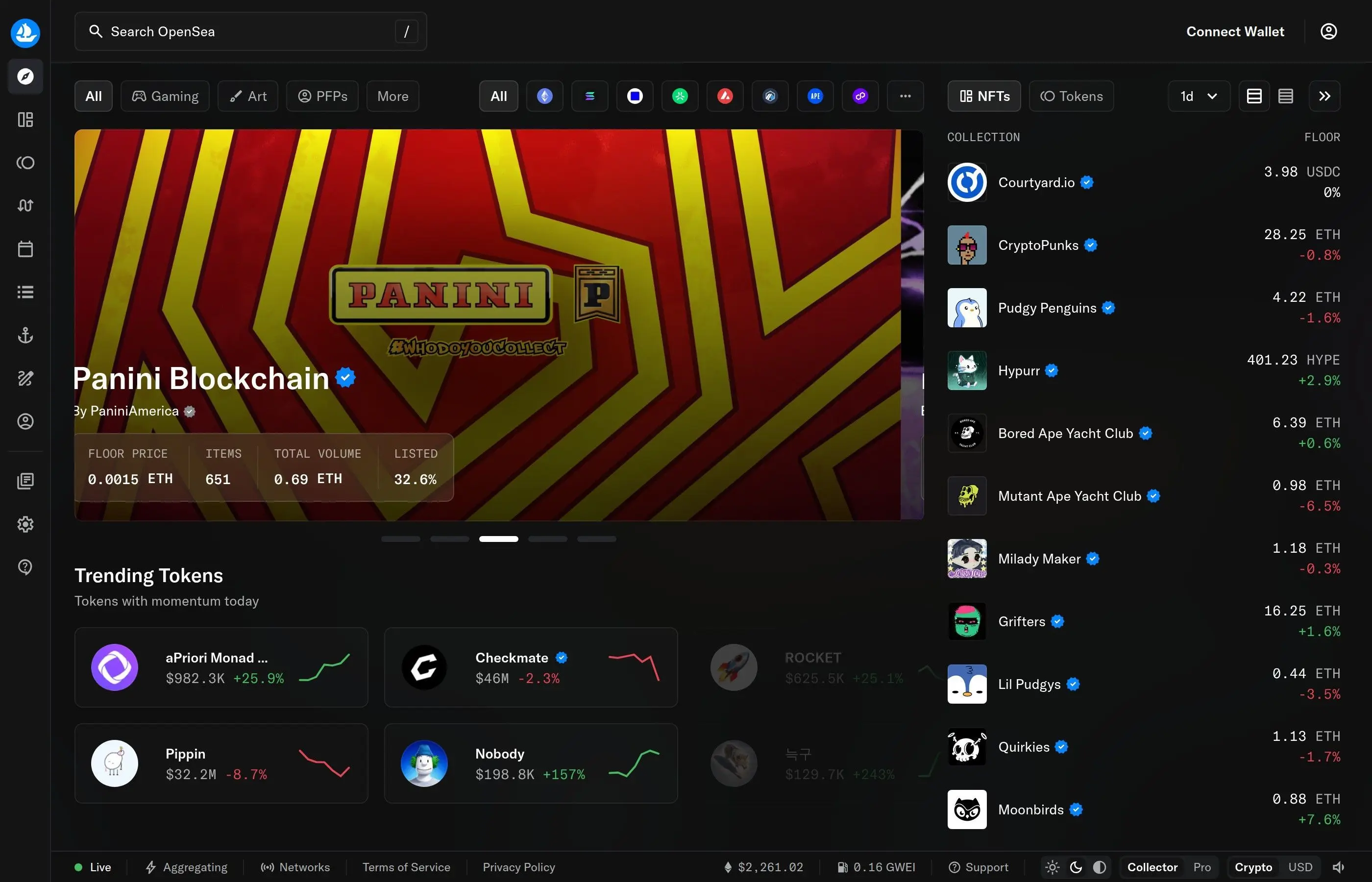
- Digital collectibles and NFTs: Entire marketplaces like OpenSea, Magic Eden, and Blur operate entirely in crypto. Buy digital art, gaming items, music, and more.
- In-game assets: Web3 games let you purchase characters, weapons, land, and other items directly with tokens.
Web3 Identity - Why It Matters
Your ENS or Unstoppable Domain becomes your unified Web3 identity. It displays as your name across DeFi apps, DAOs, NFT marketplaces, and social platforms like Farcaster. It replaces your hex address everywhere, making crypto transactions more human-friendly. Think of it as your username for the decentralized internet. If you are active in DeFi or Web3, having a recognizable domain name is essentially a must-have.
Pros
- Blockchain domains are censorship-resistant and self-custodied
- One-time purchase option with Unstoppable Domains (no renewals)
- Unified identity across Web3 applications
- Native crypto payment - no conversion needed
Cons
- ENS names require annual renewal and gas fees
- Blockchain domains are not recognized by traditional DNS (yet)
- Premium short names can be very expensive
- Risk of losing access if you lose your wallet keys
5. Food Delivery and Everyday Services
The true test of crypto as money is whether you can use it for everyday spending - ordering dinner, grabbing coffee, paying for a haircut. In 2026, the infrastructure for daily crypto spending has reached a tipping point. Between merchant adoption, payment apps, and crypto-loaded debit cards, you can genuinely live on crypto for your routine expenses.
Key Platforms and Services
Menufy
Menufy is an online ordering platform used by thousands of restaurants across the United States. They integrated Bitcoin payments early and continue to support crypto checkout. When you order from a Menufy-powered restaurant, you can pay with BTC at checkout. The experience is straightforward: browse the menu, add items to your cart, and select Bitcoin at payment.
Takeaway.com (Just Eat Takeaway)
In Europe, Takeaway.com (part of Just Eat Takeaway) has accepted Bitcoin in the Netherlands and select markets. They use BitPay for processing, and the checkout flow mirrors any standard food delivery order with crypto as a payment toggle.
BitPay Merchant Network
BitPay is the largest crypto payment processor, and their merchant network spans restaurants, retail stores, service providers, and online shops. You can use the BitPay app or wallet to pay at any BitPay merchant. The app also includes a Mastercard-branded debit card that lets you spend crypto anywhere Mastercard is accepted, including restaurants, grocery stores, gas stations, and more.
How to use the BitPay Card for everyday spending:
- Download the BitPay app and create an account.
- Load your wallet with BTC, ETH, USDT, USDC, or other supported cryptos.
- Order the BitPay Mastercard (available in the US).
- Once received, link it to your BitPay wallet.
- Use it at any merchant that accepts Mastercard - swipe, tap, or use online.
- BitPay converts your chosen crypto to USD at the moment of purchase.
- You can set which crypto to spend from and set spending limits.
Flexa / SPEDN
Flexa is a payment network that allows you to spend crypto at major retailers through their SPEDN app or through partner wallets like Gemini Pay. Flexa payments work by generating a barcode at checkout that the merchant scans. The merchant receives fiat while you pay in crypto - seamless for both sides. Supported merchants have included Nordstrom, Whole Foods, GameStop, Petco, Lowe's, and Baskin-Robbins, among others. Flexa accepts BTC, ETH, AMP, DOGE, SOL, and many more tokens.
How to pay with Flexa:
- Open a Flexa-compatible wallet (SPEDN app or Gemini).
- Load your wallet with supported cryptocurrency.
- At a participating merchant, open the app and select Pay.
- Choose which crypto you want to spend.
- A barcode appears on your screen.
- The cashier scans it like any mobile payment.
- Done - transaction confirmed instantly via the Flexa network.
Other Everyday Uses
- Coffee shops: Many independent cafes accept Bitcoin through Square or BitPay terminals. Starbucks gift cards are available on Bitrefill.
- Grocery stores: Whole Foods (via Flexa), plus grocery gift cards for Walmart, Target, Kroger, and others on Bitrefill.
- Ride-sharing: Uber and Lyft gift cards, or load a crypto debit card and pay directly.
- Gym memberships: Some gyms accept crypto directly; otherwise, prepaid Visa gift cards purchased with crypto work everywhere.
- Bill payments: Services like BitPay allow you to pay utility bills, phone bills, and other recurring expenses from your crypto wallet.
- Phone top-ups: Bitrefill offers mobile phone top-ups in 170+ countries, payable in crypto.
Crypto Debit Cards Compared
If you want maximum flexibility for everyday spending, a crypto debit card is your best tool. Here are the top options:
- Coinbase Card: Visa debit, up to 4% cashback in crypto, spend from any asset in your Coinbase portfolio.
- Crypto.com Card: Visa debit, tiered rewards based on CRO staking, Spotify/Netflix rebates at higher tiers.
- BitPay Card: Mastercard, no conversion fees for spending crypto, works anywhere Mastercard is accepted.
- Binance Card: Visa debit, up to 8% cashback, spend directly from your Binance account balance.
Pros
- Crypto debit cards work anywhere Visa/Mastercard is accepted
- Cashback rewards in crypto on everyday spending
- Flexa enables in-person crypto payments at major retailers
- Growing list of restaurants and services accepting crypto directly
Cons
- Each card swipe is a taxable crypto disposal event
- Debit card rewards tiers often require token staking
- Direct merchant acceptance is still limited in many regions
- Some cards have monthly fees or minimum balance requirements
Platform Comparison Table
Tax Implications of Spending Crypto
This is the part most people overlook, and it can be costly. In the United States and most other countries, spending cryptocurrency is a taxable event. Every time you buy a coffee, a gift card, a hotel room, or a Lamborghini with crypto, you are technically disposing of a capital asset. Here is what you need to know.
How Spending Crypto Is Taxed
When you spend crypto, the IRS (and most tax authorities globally) treats it as if you sold the crypto for fiat and then used the fiat to make the purchase. This means you realize a capital gain or loss equal to the difference between what you paid for the crypto (your cost basis) and its fair market value at the time you spent it.
Example: You bought 0.1 BTC for $3,000. When BTC is at $80,000, that 0.1 BTC is worth $8,000. You use it to book a $8,000 trip on Travala. You owe capital gains tax on the $5,000 gain ($8,000 - $3,000), not the full $8,000 purchase price.
Key Tax Considerations
- Short-term vs. long-term gains: If you held the crypto for less than one year, the gain is taxed as ordinary income (up to 37% in the US). If held over one year, it qualifies for long-term capital gains rates (0%, 15%, or 20% depending on income).
- Stablecoin spending: If you spend USDT or USDC, your gain is typically minimal or zero since stablecoins hold a $1 peg. This makes stablecoins the most tax-efficient crypto for everyday spending.
- Record keeping: You must track every transaction including the date, amount of crypto spent, fair market value at time of purchase, and your cost basis. Use crypto tax software like Koinly, CoinTracker, or TokenTax to automate this.
- De minimis exemption: As of 2026, there have been proposals for a de minimis exclusion for small crypto transactions (under $200 gain), but check current legislation in your jurisdiction. Some countries have already implemented such thresholds.
- International variations: Portugal, Singapore, UAE, and El Salvador have more favorable crypto tax treatment. Germany exempts crypto held over one year from capital gains. Always consult a tax professional for your specific situation.
Tax Warning
Every crypto purchase - no matter how small - is a taxable event in most jurisdictions. Failing to report these transactions can result in penalties and interest. Keep records of all crypto spending and consult a qualified tax professional. Consider using stablecoins for routine purchases to minimize capital gains implications.
Frequently Asked Questions
What is the easiest way to spend crypto for a beginner?
The easiest entry point is buying gift cards on Bitrefill. You send crypto from any wallet, and you receive a gift card code instantly. No KYC is needed for smaller purchases, and you can use the gift cards at any major retailer. Alternatively, get a crypto debit card from Coinbase or BitPay, which works like any regular debit card but is funded by your crypto balance.
Which cryptocurrency is best for making purchases?
For everyday purchases, stablecoins like USDT and USDC are the most practical because their value does not fluctuate and they trigger minimal capital gains. For speed and low fees, Bitcoin over the Lightning Network is excellent. For broad acceptance, BTC and ETH are supported by the most merchants. If tax efficiency is your priority, spending stablecoins is the clear winner.
Do I need to pay taxes when I buy something with crypto?
Yes, in the United States and most countries, spending crypto is a taxable event. You realize a capital gain or loss based on the difference between your cost basis and the fair market value at the time of the transaction. The exception is if you spend stablecoins that have not changed in value, resulting in zero or near-zero gain. Always track your transactions for tax reporting.
Can I get a refund if I pay with crypto?
Refund policies depend on the merchant and platform. Gift card purchases are generally non-refundable. For travel bookings on Travala or CheapAir, standard cancellation policies apply, and refunds are typically processed back to your crypto wallet or as account credit. For purchases through BitPay merchants, the refund goes through BitPay back to your wallet. Crypto transactions themselves are irreversible on the blockchain, so refunds must be initiated by the merchant as a new transaction.
How do crypto debit cards work?
Crypto debit cards like the Coinbase Card, BitPay Card, and Crypto.com Card connect to your crypto wallet or exchange account. When you swipe the card at any merchant, the payment processor instantly converts the crypto you choose into fiat currency and pays the merchant. The merchant never sees crypto - they receive regular dollars, euros, or their local currency. You can typically choose which crypto to spend from, and many cards offer cashback rewards in crypto.
Is it safe to spend crypto online?
Spending crypto online is generally safe when you use reputable platforms and follow good security practices. Always verify the payment address before sending. Use established platforms like Bitrefill, Travala, and BitPay merchants. Keep your wallet secured with strong passwords and, ideally, a hardware wallet for large holdings. Never send crypto to unknown addresses or click suspicious payment links. Unlike credit cards, crypto transactions are irreversible, so double-check everything before confirming.
What fees should I expect when paying with crypto?
Fees vary by payment method and network. On-chain Bitcoin transactions cost $1-10 depending on network congestion. Lightning Network payments cost fractions of a cent. Ethereum transactions vary with gas prices but are typically $0.50-5 in 2026. Layer 2 networks like Arbitrum and Polygon reduce ETH-based fees to under $0.10. Payment processors like BitPay charge merchants about 1%, which is sometimes passed to buyers. Gift card platforms add 0-2% markup. Stablecoin transfers on efficient networks are among the cheapest options overall.
Can I buy real estate entirely with Bitcoin?
Yes, several properties have been sold entirely in Bitcoin or Ethereum, particularly in Miami, Dubai, and El Salvador. The process involves a crypto-friendly broker, a purchase agreement with a crypto payment clause, and typically an escrow service that handles the digital asset transfer. You will still need standard due diligence, title insurance, and legal documentation. Some buyers convert a portion to fiat at closing for fees and taxes. For fractional ownership, platforms like RealT let you invest in rental properties with crypto starting from just $50.
What is the difference between ENS domains and Unstoppable Domains?
ENS (Ethereum Name Service) domains use the .eth extension, require annual renewal fees paid in ETH, and are deeply integrated into the Ethereum ecosystem. Unstoppable Domains offer extensions like .crypto, .wallet, .nft, and others, with a one-time purchase and no renewal fees. Both serve as wallet address replacements and Web3 identity tools. ENS has stronger integration with Ethereum-native apps, while Unstoppable Domains offers multi-chain support and the appeal of no recurring costs. Choose based on your primary blockchain ecosystem and preference for one-time vs. recurring payments.
How do I track all my crypto purchases for taxes?
Use dedicated crypto tax software like Koinly, CoinTracker, or TokenTax. These tools connect to your wallets and exchanges, automatically import transactions, calculate cost basis using FIFO/LIFO/HIFO methods, and generate tax reports compatible with IRS Form 8949 and international equivalents. You can also manually track in a spreadsheet with columns for date, crypto amount, cost basis, fair market value at sale, and calculated gain/loss. Export transaction histories from platforms like Bitrefill and Travala to feed into your tracking system. The key is consistency - start tracking before you start spending.
Related Tutorials
How to Use MetaMask Wallet
Complete guide to setting up and using MetaMask for crypto payments, DeFi, and Web3 interactions.
How to Use Coinbase
Beginner tutorial for buying, selling, and spending crypto through Coinbase and the Coinbase Card.
How to Use Trust Wallet
Set up Trust Wallet for multi-chain crypto management, payments, and DApp browsing.
What Are Gas Fees?
Understand transaction costs on Ethereum and other networks, and learn how to minimize them.
Best Cold Wallets 2026
Compare hardware wallets for securely storing your crypto before and after spending.
Best Stablecoins 2026
Compare USDT, USDC, DAI, and others for tax-efficient crypto spending and payments.
What Is DeFi?
Complete guide to decentralized finance, including how DeFi connects to real-world crypto spending.
What Are Layer 2s?
Learn how Layer 2 scaling solutions reduce fees and speed up your crypto payments.
Crypto spending infrastructure has never been more accessible. Whether you are buying a $10 gift card or a $10 million penthouse, the tools exist to pay with digital assets today. Start small with gift cards or a crypto debit card, track your transactions for tax purposes, and explore the growing universe of merchants who are ready to accept your BTC, ETH, and stablecoins.
Frequently Asked Questions
Q
A
What are some emerging asset classes I can buy with crypto in 2026?
Digital real estate in the metaverse and fractionalized ownership of high-value physical assets are expected to be more accessible through crypto. NFTs representing unique digital and physical items will also continue to grow.
Will I be able to buy everyday goods with crypto?
Yes, increased merchant adoption and stablecoin integration will likely make it easier to purchase groceries, electronics, and other consumer goods directly with crypto or crypto-linked cards.
What kind of luxury items might be more commonly purchased with crypto?
Luxury goods such as high-end vehicles, exclusive art pieces, and premium travel experiences are anticipated to see greater crypto acceptance, especially for high-net-worth individuals.
Can I invest in traditional markets using crypto?
Platforms are evolving to allow crypto to be used as collateral or direct payment for investments in stocks, bonds, and other traditional financial instruments, expanding investment opportunities.
Related Guides
- FDV vs Market Cap in Crypto: How to Read Unlock Risk Before You Buy (2026)
- Whale Buy or Exit Liquidity? How to Read Big Swaps Without Blindly Copying Whales
- How to Verify Token Safety Before Buying: A Pre-Buy Crypto Checklist
- Top 5 NFT Marketplaces in 2026: Where to Buy and Sell Digital Assets
- The No-Buy Checklist: 12 Times DEXTools Data Tells You to Walk Away