What Is Cosmos (ATOM): Complete IBC Ecosystem Guide (2026)
— By Tony Rabbit in Tutorials
What is Cosmos (ATOM)? Complete 2026 guide: Cosmos SDK + Tendermint + IBC stack, top app-chains (Osmosis, dYdX, Injective, Celestia, Sei), ATOM 2.0 retrospective.
Intent check: This page is the broader Cosmos ecosystem guide. If you want the thesis-first explainer on IBC and the Internet of Blockchains, read Cosmos (ATOM) Explained.
Cosmos is one of the most ambitious projects in crypto, built around a single idea that has become more relevant every year since its 2019 launch: instead of forcing every application to share one congested blockchain, why not let every application have its own purpose-built chain, all connected through a universal communication protocol? That vision, often called the "internet of blockchains," is now the dominant model for blockchain scaling in 2026, and Cosmos pioneered it.
The Cosmos ecosystem includes some of the biggest names in crypto today. dYdX, the largest decentralized perpetual exchange, abandoned Ethereum and built its V4 on the Cosmos stack. Celestia kicked off the modular blockchain revolution as a Cosmos chain. Osmosis became the on-chain trading hub for Cosmos. Injective is a high-performance L1 for finance applications. Sei delivers parallel execution with full EVM compatibility. All of these chains use the same toolkit: Tendermint consensus, the Cosmos SDK, and the IBC protocol.
At the center of the ecosystem sits the Cosmos Hub and its native token, ATOM. The relationship between ATOM and the broader Cosmos ecosystem is complicated, and we will not pull punches. ATOM has consistently underperformed despite the success of chains built using Cosmos technology, and the failed ATOM 2.0 proposal in 2022 still casts a long shadow. This guide covers the entire landscape: the technology stack, the most important app-chains, IBC interoperability, the honest story behind ATOM tokenomics, and where Cosmos is heading in 2026.
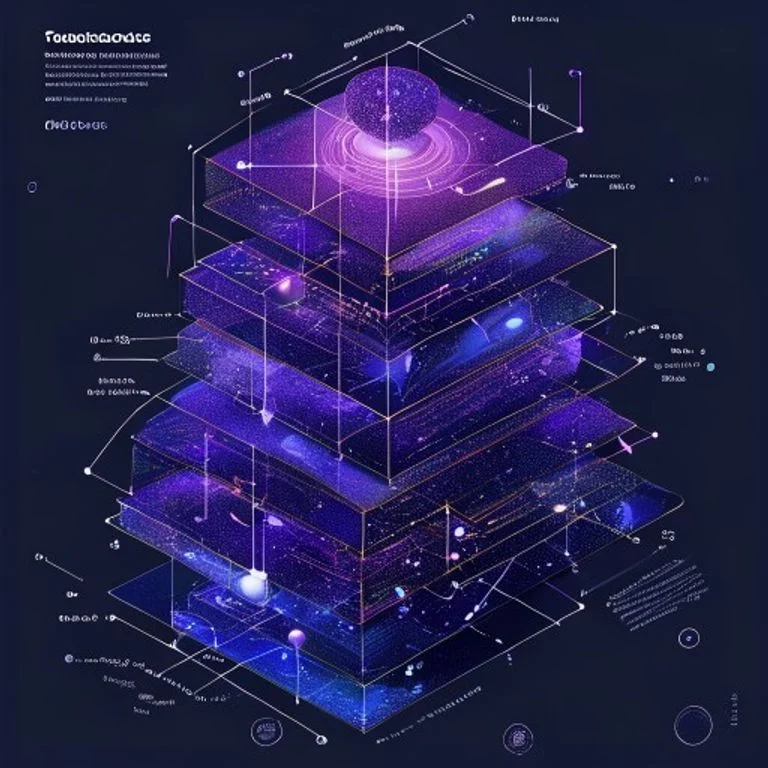
What Is Cosmos? An Ecosystem of Sovereign Chains
Cosmos is not a single blockchain. That distinction matters more than any other when trying to understand what Cosmos actually is. Ethereum is one blockchain. Solana is one blockchain. Bitcoin is one blockchain. Cosmos is a network of independent blockchains, each running its own validator set, each making its own governance decisions, each capable of upgrading without permission from anyone else. We call these chains "sovereign" because they answer to no parent chain.
The Cosmos vision started with a simple observation. Every blockchain ends up being a tradeoff. Bitcoin prioritizes security and decentralization over speed. Ethereum tries to balance all three. Solana sacrifices some decentralization for raw throughput. If every application has to live on one chain, every application is stuck with the same tradeoffs. A high-frequency trading platform needs sub-second finality but can tolerate fewer validators. A stablecoin needs maximum security and decentralization. A gaming app needs cheap transactions but does not care much about either. Cramming all of these onto one chain is inefficient.
The Cosmos answer is the app-chain model. Each application builds its own custom blockchain optimized for its specific needs, then connects to the rest of the ecosystem through the IBC protocol. The result is a network of specialized chains that can still move tokens, data, and even contract calls between each other. This is fundamentally different from Ethereum's "smart contracts on a shared chain" model and from rollup architectures where everything settles back to one base layer.
The benefits are significant. Application developers get full control over their execution environment, fee market, governance, and even consensus parameters. There are no gas wars with unrelated applications. There is no risk that another app's congestion will price your users out. Your chain can hard fork to fix a bug without coordinating with a global validator set. The cost, of course, is that you have to bootstrap your own security from scratch, which is what Interchain Security tried to solve and what we will discuss later.
The Cosmos Stack: Tendermint, SDK, and IBC
To build a Cosmos chain you assemble three components that together form what people call "the Cosmos stack." Each layer handles a different job, and each can be customized or replaced independently, which is why so many different chains can use the stack and still feel distinct.
At the bottom is Tendermint Core, now rebranded as CometBFT, which provides Byzantine Fault Tolerant consensus and a peer-to-peer networking layer. In the middle is the Cosmos SDK, a Go framework that handles transaction execution, accounts, staking, governance, token issuance, and more through a system of plug-in modules. At the top is the application logic, the unique parts of whatever chain you are building. Surrounding everything is IBC, which handles communication between different Cosmos chains and increasingly with non-Cosmos chains like Ethereum.
This separation is powerful because each piece is reusable. You can take Tendermint and pair it with a completely different application layer if you want. The Polygon zkEVM team famously used a fork of Tendermint as the consensus engine for their proof-of-stake bridge years ago. Conversely, you can take the Cosmos SDK and run it on a different consensus engine, which is essentially what Celestia does for the Sovereign rollup architecture. The stack is modular by design.
Tendermint: The BFT Consensus Engine
Tendermint, now officially named CometBFT, is the consensus engine that powers nearly every Cosmos chain. It is a deterministic, leader-based, Byzantine Fault Tolerant protocol that delivers instant finality. Instant finality is one of the most important features of Tendermint and one of its biggest differences from Ethereum or Bitcoin. When a block is produced on Tendermint, it is final immediately. There is no concept of probabilistic finality or chain reorganization. Once a block is committed, it is committed forever.
The way this works is straightforward. A small validator set (usually 100 to 175 active validators on any given chain) participates in a multi-round voting process. In each round, one validator is selected as the proposer, deterministically based on voting power. The proposer creates a block and broadcasts it. Validators then exchange two rounds of votes called "pre-vote" and "pre-commit." If more than two thirds of voting power pre-commits to the block, it is finalized and added to the chain. If consensus fails, the round resets with a new proposer. This BFT design tolerates up to one third of validators being malicious or offline.
The tradeoffs of Tendermint are well-understood. The good news is fast finality (typically 5 to 7 seconds per block), high throughput, and clean validator economics. The bad news is that the validator set must be relatively small to keep the voting rounds fast, which means less decentralization than Bitcoin or Ethereum at the consensus layer. Also, if more than one third of validators go offline simultaneously, the chain halts until enough validators come back. This has happened on multiple Cosmos chains, including the Cosmos Hub itself in early years. It is the cost of choosing finality over liveness.
Cosmos SDK: Building App-Chains
The Cosmos SDK is what most developers actually interact with when building a Cosmos chain. It is a Go framework that organizes blockchain functionality into modules, each of which handles a specific concern. Want staking? Use the staking module. Want governance? Use the gov module. Want IBC transfers? Plug in the IBC module. Want a custom AMM? Write your own module and add it to the application.
This modular design is why so many wildly different chains can use the same SDK and still look completely different at the application layer. Osmosis built custom modules for an AMM with concentrated liquidity. dYdX built modules for an order book exchange with off-chain matching. Celestia built modules for data availability sampling. They all share underlying infrastructure for accounts, transactions, validation, and consensus, but the business logic is completely customized.
Beyond the standard modules, developers can also use Cosmwasm, a smart contract runtime that brings Rust-based smart contracts to Cosmos chains. Cosmwasm is a popular alternative to writing custom Go modules, especially for application teams that want to iterate quickly without needing to upgrade the chain itself every time they want to change their app. Chains like Osmosis, Neutron, and Stargaze use Cosmwasm extensively. The result is a flexible spectrum where developers can choose between native modules (faster, lower-level) and Cosmwasm smart contracts (more flexible, easier to upgrade).
If you are familiar with smart contract development on Ethereum, the mental shift here is significant. On Ethereum, your application is a tenant on a shared chain. On Cosmos, your application IS the chain. This means you choose your validators, your gas economics, your governance, and even your consensus parameters. The cost is operational complexity. The benefit is total sovereignty.
IBC Protocol: How Cosmos Chains Talk
The Inter-Blockchain Communication protocol, or IBC, is the glue that ties the entire Cosmos ecosystem together. It is sometimes called "TCP/IP for blockchains" because it provides a standardized way for sovereign chains to send messages and tokens to each other without trusting a central intermediary. IBC is the most important and distinctive piece of Cosmos technology, and understanding it explains a lot about why people are bullish on the entire ecosystem.
IBC works through a system of light clients and packet relayers. Every chain that supports IBC runs a light client of every other chain it wants to communicate with. A light client is a small, efficient representation of another chain's state that can be used to verify proofs about that chain. When Chain A wants to send tokens to Chain B, Chain A creates a packet describing the transfer. Off-chain processes called "relayers" pick up these packets and submit them to Chain B along with cryptographic proofs that Chain A actually committed them. Chain B verifies the proofs using its light client of Chain A. If the proofs are valid, Chain B mints the equivalent representation of the tokens. If not, the packet is rejected.
The crucial insight is that this entire process is trustless. No central bridge holds funds. No multi-signature committee can be compromised. The two chains verify each other directly using cryptographic proofs. If you have ever worried about bridge hacks (and you should, given that bridges have been responsible for billions in losses), IBC is structurally different. The relayers are permissionless infrastructure that anyone can run. They cannot steal funds because they only deliver proofs; the actual verification happens on-chain.
IBC supports far more than just token transfers. The protocol can move arbitrary data between chains, which has been used for cross-chain governance, cross-chain queries (called Interchain Queries), and cross-chain account control (called Interchain Accounts or ICA). With ICA, a user on Chain A can control an account on Chain B without ever leaving Chain A. This is the foundation for chains like Quicksilver, which uses ICA to provide liquid staking across multiple Cosmos chains from a single hub.
ATOM: The Hub Token
ATOM is the native token of the Cosmos Hub, which is the original Cosmos chain that launched in March 2019. The Cosmos Hub was envisioned as the central router for the Interchain, the place where IBC traffic would converge and where shared services would live. ATOM is used to stake and secure the Cosmos Hub, to pay transaction fees on the Hub, and to vote on Hub governance proposals.
Token holders earn staking rewards by delegating ATOM to validators. As of 2026, the staking yield is roughly 10 to 15 percent annualized, depending on the total staked supply and the inflation rate. Inflation is dynamic and adjusts based on the staking ratio. If less than 67 percent of supply is staked, inflation increases to incentivize more staking. If more than 67 percent is staked, inflation decreases. This mechanism, called dynamic inflation, was groundbreaking in 2019 and has been copied by countless other chains since.
The honest problem with ATOM is that the Cosmos Hub does very little compared to the broader Cosmos ecosystem. dYdX uses Cosmos technology but does not pay anything to ATOM stakers. Osmosis uses Cosmos technology but does not pay anything to ATOM stakers. Celestia uses Cosmos technology but does not pay anything to ATOM stakers. ATOM captures essentially none of the value that the Cosmos ecosystem creates, because every chain in the ecosystem is sovereign and has its own token. The Cosmos Hub itself is just one chain among many, and not the most important one. This is the central critique of ATOM tokenomics, and it has driven persistent underperformance relative to other major Layer 1 tokens.
ATOM 2.0 and Why It Failed
In late 2022, the Cosmos Hub team published a sweeping proposal called "ATOM 2.0" or the "Cosmos Hub Whitepaper 2.0." The proposal tried to address the value-accrual problem head-on by transforming ATOM into a productive asset. The plan included a new monetary policy with three phases of dynamic inflation, a Treasury that would deploy ATOM to seed new applications, an "Allocator" mechanism that would manage protocol-owned liquidity, an Interchain Scheduler for cross-chain MEV capture, and the introduction of an Interchain Allocator for ecosystem-wide capital deployment.
The proposal was ambitious. Too ambitious, as it turned out. The ATOM 2.0 governance proposal failed in October 2022, with a slim majority of voters opting against the changes. The reasons for the rejection were varied. Some voters thought the new monetary policy was too aggressive and would dilute existing holders. Some objected to the centralization implied by the Treasury and Allocator mechanisms. Some thought the proposal was simply too complex and tried to do too many things at once. Some objected on philosophical grounds, arguing that ATOM should remain minimalist and that the Hub should not try to compete with the app-chains it serves.
The failure of ATOM 2.0 was a turning point. It demonstrated that the Cosmos Hub community could not agree on what ATOM should be or do. Subsequent attempts to revive parts of the proposal have passed in piecemeal fashion. Inflation has been adjusted downward. A small Treasury has been created. But the comprehensive vision of ATOM as a productive Interchain capital asset never materialized. The token has continued to drift, and many in the broader Cosmos community now treat the Cosmos Hub as a legacy chain rather than the central pillar it was originally meant to be.
Interchain Security (ICS): Renting ATOM Security
Interchain Security, often abbreviated as ICS, is one of the most important attempts to give ATOM real utility. The idea is elegant: instead of each new Cosmos chain having to bootstrap its own validator set from scratch, ICS lets a new chain "rent" the security of the Cosmos Hub. The Hub's validators run the consumer chain in parallel with the Hub itself, and the consumer chain pays the Hub in its native fees, which are then distributed to ATOM stakers as additional yield.
ICS launched in mid-2023, and the first major consumer chain was Neutron, a Cosmwasm-focused smart contract platform. Stride, the liquid staking chain, joined later. Several other chains have signed on since. In theory, this creates a virtuous cycle: more consumer chains means more fees to ATOM stakers, which makes ATOM more valuable, which makes the Hub's security more valuable, which attracts more consumer chains. In practice, the adoption has been disappointing.
The reasons are structural. ICS forces consumer chains to use the Hub's validator set, which means they inherit the Hub's congestion risk, governance dynamics, and operational dependencies. Many successful chains, particularly dYdX, explicitly chose NOT to use ICS because they wanted full sovereignty. Other chains found that the cost of paying ATOM stakers was higher than the cost of running their own validators. Most importantly, ICS does not solve the value-accrual problem unless the consumer chains generate substantial fees, which most of them do not.
There is an ICS v2 ("opt-in security") and ICS v3 ("partial security") in development, which try to address these issues by letting validators opt in to securing specific consumer chains rather than forcing all Hub validators to secure all consumer chains. These features are interesting and may revive ICS adoption, but as of 2026 the Cosmos Hub still captures relatively little value through this mechanism.
Top Cosmos App-Chains in 2026
The most interesting thing about Cosmos is not the Hub. It is the diversity of app-chains that have launched using Cosmos technology. Some of these chains are larger than the Hub itself by every meaningful metric. The list below is not exhaustive but represents the most important application chains as of 2026.
The dominant DEX in Cosmos. Concentrated liquidity, IBC-native swaps across 50+ chains. OSMO token.
Largest decentralized perp DEX. Off-chain order book, on-chain settlement. Migrated from Ethereum.
Plug-and-play modules for spot, derivatives, prediction markets. EVM and Cosmwasm support. INJ token.
First modular data availability layer. Used by dozens of L2 rollups. TIA token.
Twin-turbo consensus, parallelized execution, full EVM compatibility. Optimized for trading. SEI token.
Multi-chain liquid staking via ICA. stATOM, stTIA, stOSMO, etc. ICS consumer chain.
Marketplace for GPU and CPU compute. Used heavily for AI workloads. AKT token.
Circle-issued USDC native on Cosmos via CCTP. Distributes USDC across the Interchain through IBC.
Osmosis Deep Dive: The Largest Cosmos DEX
Osmosis is the trading hub of the Cosmos ecosystem and the second-largest chain by total value locked after Celestia. It launched in 2021 as a fork of Balancer's smart pools but quickly evolved into something much more sophisticated. Today Osmosis supports concentrated liquidity (similar to Uniswap V3), bonded liquidity with longer lock-ups earning higher rewards, and superfluid staking, which lets liquidity providers also stake their LP tokens to secure the Osmosis chain.
The killer feature of Osmosis is native IBC routing. When you swap on Osmosis, your trade can route through liquidity on dozens of different Cosmos chains automatically. You can sit on the Cosmos Hub and swap ATOM for stTIA in one transaction, with the trade actually routing through Osmosis pools, IBC transfers, and Stride's liquid staking module. From the user's perspective it is a single swap. From the protocol's perspective it is a multi-hop, multi-chain orchestration. This is impossible on Ethereum without using bridges, and even with bridges it would take five minutes and three approval transactions.
Osmosis also serves as the de facto on-ramp for new Cosmos chains. When a chain launches, it typically establishes Osmosis pools first to bootstrap liquidity for its token. The OSMO token captures protocol fees through "taker fees" introduced in 2023, which makes its tokenomics more aligned with usage than ATOM's. OSMO is also a productive staking asset within the Osmosis chain itself.
dYdX V4: The Largest App-Chain
If there is one event that proved the Cosmos thesis was right, it was dYdX V4 launching as a standalone Cosmos chain in late 2023. dYdX had been the largest decentralized perpetual exchange in crypto, running as an Ethereum-based StarkEx Layer 2. The team announced in 2022 that they would migrate to their own Cosmos chain because they wanted full control over their order book and fee economics, and because Ethereum L2s simply could not deliver the throughput their order book required.
dYdX V4 is technically remarkable. Unlike most DEXs which use automated market makers, dYdX runs a true order book. Validators on the dYdX chain maintain the order book in memory and run matching off-chain. Only settled trades are written to the blockchain. This architecture gives dYdX traditional-exchange-level performance (1000+ trades per second, sub-second matching) while still being decentralized and self-custodial. The DYDX token is used for staking and validator rewards, and trading fees are paid to stakers in USDC, giving DYDX clearer value capture than most other governance tokens.
The migration was massive. At launch, dYdX V4 quickly became the largest single Cosmos chain by trading volume, and by 2026 it consistently processes more daily volume than most Ethereum L2s. The success of dYdX validated the entire app-chain thesis. It demonstrated that an application can grow faster and capture more value by running its own chain than by being a tenant on a shared chain.
Injective, Celestia, and Sei: High-Profile Cosmos Chains
Beyond Osmosis and dYdX, three other Cosmos chains deserve special attention because of their post-launch impact on crypto. Injective, Celestia, and Sei have each carved out distinct niches and have all reached multi-billion-dollar valuations.
Injective focuses on finance applications. It ships with native modules for spot trading, derivatives, prediction markets, and oracle integration, which means developers can launch sophisticated financial applications without writing them from scratch. Injective also supports both Cosmwasm and a full EVM environment, making it one of the most flexible chains for finance developers. INJ has a unique tokenomics design that burns a portion of all protocol fees, creating a deflationary pressure on the token supply.
Celestia kicked off the modular blockchain revolution. Celestia is built using the Cosmos SDK and Tendermint, but instead of being a general-purpose smart contract platform, it specializes in data availability. Rollups can post their transaction data to Celestia and use it as their Celestia-secured data layer, which is far cheaper than posting data to Ethereum. By 2026, Celestia has become the data availability layer of choice for many emerging rollup chains.
Sei made waves by combining Cosmos infrastructure with parallel execution and EVM compatibility. Sei V2, which launched in 2024, is fully EVM-compatible, meaning Ethereum developers can deploy their existing smart contracts on Sei with no changes. The twist is that Sei executes non-conflicting transactions in parallel rather than sequentially, which gives it much higher throughput than vanilla EVM chains. Sei has positioned itself as the trading-optimized EVM chain and has attracted significant developer interest.
IBC v2 and Polymer: Extending IBC to Ethereum
For most of IBC's existence, the protocol was limited to Tendermint-based chains. This was a significant constraint, because it meant Cosmos chains could only talk natively to other Cosmos chains. To move tokens between Cosmos and Ethereum, you had to use traditional centralized or trust-minimized bridges, which reintroduced exactly the security model IBC was trying to avoid.
IBC v2, sometimes called "IBC Eureka," was a major upgrade that simplified the protocol and made it more portable. Together with light client implementations for non-Tendermint chains (including EVM chains), IBC v2 makes it practical to extend IBC to Ethereum. The Polymer Labs team has been building infrastructure to bring IBC to the Ethereum ecosystem, with Polymer functioning as an interoperability hub that translates between IBC and Ethereum's messaging protocols.
By 2026, IBC connections to major non-Cosmos chains are increasingly common. Ethereum, Solana, and Bitcoin all have early IBC bridges in production or near production. The vision is that IBC becomes a universal interoperability standard, not just a Cosmos standard. If that happens, it changes the nature of cross-chain bridges fundamentally, replacing trusted committees with cryptographic verification.
Cosmos vs Polkadot vs Avalanche Subnets
Cosmos is one of three major projects that pursued multi-chain architectures, and it is worth comparing them directly. Each represents a different philosophy of how to scale blockchain technology, and the differences matter for developers and users alike.
Cosmos takes the most decentralized approach. Every chain is fully sovereign with its own validator set. Connection between chains happens through IBC, which is a peer-to-peer messaging protocol rather than a central hub. There is no shared security by default (although ICS exists as an option). The benefit is total flexibility. The cost is that each chain must bootstrap its own security from zero.
Polkadot takes a "shared security" approach. Parachains do not have their own validators. Instead, they all share the Polkadot relay chain's validator set, which secures everything. The benefit is that new chains inherit Polkadot's security immediately. The cost is that parachains have less sovereignty (they cannot freely upgrade their consensus) and parachain slots are scarce and expensive to obtain.
Avalanche Subnets are somewhere in between. Each subnet has its own validator set, but validators must also be Primary Network validators (staking AVAX). This creates a partial shared-economic-security model. Subnets have more flexibility than Polkadot parachains but less than Cosmos chains. The cost model also requires validators to spend significant AVAX to participate.
In practice, Cosmos has won the most adoption among serious applications. dYdX, Celestia, Injective, Osmosis, Sei, and dozens more chose Cosmos technology. Polkadot has a smaller but devoted ecosystem. Avalanche Subnets have been more focused on enterprise and gaming use cases. The choice often comes down to philosophy: do you want maximum sovereignty (Cosmos), maximum shared security (Polkadot), or something in between (Avalanche)?
ATOM Honest Critique: Tokenomics and Governance
Let us be direct about the problems with ATOM, because most articles on Cosmos gloss over this. ATOM has consistently underperformed other major Layer 1 tokens since 2021. The reasons are structural and worth understanding, especially if you are considering ATOM as an investment.
The fundamental issue is that ATOM has weak value accrual. The Cosmos Hub itself does not host major applications. Its main job is providing baseline infrastructure for the ecosystem, but the ecosystem is sovereign and does not pay rent. dYdX generates hundreds of millions in trading fees, but none of those fees go to ATOM stakers. Osmosis generates substantial fees, but none go to ATOM stakers. Celestia is a multi-billion-dollar chain, but it pays nothing to ATOM stakers. The Hub gets fee revenue only from its own activity, which is modest.
The second issue is inflation. ATOM has dynamic inflation that has historically run between 7 and 20 percent annually. Stakers earn this inflation as yield, but non-stakers are diluted. Worse, the issuance is not offset by meaningful fee burns or protocol revenue. This is structurally different from Ethereum's post-merge model where issuance is largely offset by fee burns, or from chains like Solana where significant fee revenue is generated from on-chain activity.
The third issue is governance gridlock. ATOM 2.0 failed in 2022. Subsequent reform attempts have stalled. The Hub community is divided between "minimalist" voters who want ATOM to remain a simple staking token and "ambitious" voters who want it to capture more value. Neither side has the votes to win decisively, so reforms tend to be small and incremental rather than transformative. This is a known weakness of token-based governance and Cosmos is not alone in suffering from it, but it has prevented ATOM from evolving in the way other major tokens have.
None of this means Cosmos as a technology is failing. The opposite is true. Cosmos technology has won massively. But owning ATOM and owning "exposure to Cosmos" are different things. If you want exposure to the success of dYdX, you need DYDX. If you want exposure to Celestia, you need TIA. ATOM is a bet on the Cosmos Hub specifically, and the Hub has not been the value-capture mechanism the original whitepaper imagined.
How to Stake ATOM: Keplr/Leap Wallet Walkthrough
If you decide ATOM staking is right for you, the process is straightforward. The Cosmos ecosystem has its own wallet stack, separate from the MetaMask world. The two dominant wallets are Keplr and Leap, both browser extensions with mobile apps available. Both work across dozens of Cosmos chains, not just the Hub.
To stake ATOM, first install Keplr or Leap, create a new wallet (or import an existing seed), and fund the wallet with ATOM. You can buy ATOM on any major exchange and withdraw it directly to your Keplr address. Make sure you select the Cosmos Hub network when withdrawing, not Ethereum or any other chain. After the ATOM arrives, open the staking interface in your wallet (or visit a portal like the official Cosmos Hub web app).
Choose a validator from the list. Validators are ranked by voting power, commission rate, and uptime. A good rule is to avoid the top five validators (to support decentralization) and to avoid validators with 100 percent commission (they take all your rewards). Look for established validators with commission around 5 percent, good uptime track records, and active community participation. Delegate your ATOM by signing the transaction. From that moment, you start earning rewards.
Be aware that ATOM has an unbonding period of 21 days. If you want to unstake, you cannot access your tokens for three weeks after starting the unbonding process. This is true of most Cosmos chains and is a security feature, not a bug. It prevents validators from instantly cashing out after malicious behavior. If you want flexibility, consider liquid staking through Stride, which gives you stATOM tokens that you can use in DeFi while still earning staking yield. Read more about staking pools to understand the tradeoffs.
Frequently Asked Questions
What is Cosmos used for?
Cosmos is used as the underlying technology for hundreds of blockchains that need their own custom execution environment. The most common use cases are decentralized exchanges (Osmosis, dYdX), specialized finance L1s (Injective), data availability layers (Celestia), liquid staking (Stride), decentralized compute (Akash), and stablecoin distribution (Noble). The Cosmos Hub itself is used primarily for ATOM staking and as an early IBC routing hub.
Is Cosmos a Layer 1?
The Cosmos Hub is a Layer 1 blockchain. But "Cosmos" as commonly used refers to a constellation of Layer 1 chains that share technology and connect through IBC. There is no single "Cosmos blockchain" the way there is a single Ethereum blockchain. Each chain in the Cosmos ecosystem is a sovereign Layer 1 in its own right. This is often confusing for newcomers but is the central feature of the design.
What is IBC in Cosmos?
IBC stands for Inter-Blockchain Communication. It is a protocol that lets independent blockchains send messages and tokens to each other in a trustless, decentralized way using light clients and cryptographic proofs. IBC is the connective tissue of the Cosmos ecosystem and is increasingly being extended to non-Cosmos chains like Ethereum through projects like Polymer. IBC has moved billions of dollars in cross-chain volume without ever having a bridge-style hack, which is a remarkable security track record.
Is ATOM a good investment?
This is not investment advice, but here is the honest assessment. ATOM has weak value accrual relative to other major Layer 1 tokens because the Cosmos Hub does not capture fees from the broader Cosmos ecosystem. ATOM has historically underperformed during crypto bull markets despite the Cosmos technology stack being widely successful. If you want exposure to "Cosmos technology winning," you may be better off owning tokens of successful Cosmos chains like OSMO, DYDX, TIA, or INJ. ATOM is a more direct bet on the Cosmos Hub specifically, which has its own set of challenges. Always do your own research and consider tokenomics carefully before investing.
What is the difference between Cosmos and Polkadot?
Both projects pursue multi-chain visions, but the philosophies differ. Cosmos chains are fully sovereign, each with their own validator set, and they connect through IBC. Polkadot parachains share security with the Polkadot relay chain, meaning they do not need their own validators but they have less sovereignty and parachain slots are scarce. Cosmos has won more adoption among serious application teams (dYdX, Celestia, Injective, etc.). Polkadot has a smaller but devoted ecosystem with strong technical foundations.
Can you bridge Cosmos to Ethereum?
Yes, but the experience is evolving. For years, Cosmos-Ethereum bridges relied on traditional cross-chain bridge architectures (Axelar, Gravity Bridge, Wormhole). These work but reintroduce the security risks of bridges. In 2026, IBC v2 and Polymer are bringing native IBC connections to Ethereum, which means Cosmos-Ethereum interoperability becomes more secure over time. Native USDC on Cosmos (via Noble using Circle's CCTP) is also a popular way to move dollars between Cosmos and Ethereum without trust assumptions.
Conclusion: Cosmos Won the Technology, Lost the Token
Cosmos in 2026 is a paradox. The technology has won decisively. The app-chain thesis that the Cosmos team pioneered in 2014 is now the dominant model for blockchain scaling, with dYdX, Celestia, Injective, Sei, and dozens of other major chains all built on the Cosmos stack. IBC has moved tens of billions in cross-chain volume without a single bridge hack, demonstrating that secure interoperability is possible. The Cosmos SDK is the most-used blockchain framework in the world by number of chains. Tendermint consensus is the basis for countless other projects.
And yet ATOM, the token most directly associated with Cosmos, has been a disappointing investment for most of its history. The Cosmos Hub did not become the central router for the Interchain. Value accrual is weak. Governance has gridlocked. The ambitious ATOM 2.0 plan failed. Interchain Security adoption has been limited. These are real and unsolved problems, and they are why we encourage you to think carefully about the difference between "Cosmos technology" and "ATOM the token."
For developers, the Cosmos stack is one of the most powerful options available for building serious blockchain applications. If you need an order book DEX, a high-throughput trading chain, a data availability layer, or any other specialized blockchain, the Cosmos SDK plus Tendermint plus IBC remains the best toolkit. The success of dYdX V4 alone validates this. For users, the Cosmos ecosystem offers an incredible variety of apps, the best cross-chain UX in crypto thanks to IBC, and a vibrant developer culture.
For investors, the picture is more nuanced. ATOM remains a foundational asset of the Cosmos ecosystem and the most liquid Cosmos token. It pays staking yield, secures the Hub, and may yet revive if upcoming reforms succeed. But owning ATOM is not the same as owning the Cosmos ecosystem, and the past five years have shown that the strongest gains have come from holding the tokens of successful Cosmos app-chains rather than from holding ATOM itself. Plan accordingly, do your own research, and consider how Cosmos exposure fits into your broader thinking about the altseason and the next phase of crypto.
The internet of blockchains is no longer a vision. It is the architecture of crypto in 2026. Cosmos got there first, built the standards, and proved the model works. Whether ATOM eventually captures the value its technology has created is a separate, open question. Either way, understanding Cosmos is now essential for anyone serious about understanding where blockchain technology is heading next.
Frequently Asked Questions
What is Cosmos (ATOM)?
Cosmos (ATOM) is a decentralized network of independent parallel blockchains, each powered by BFT consensus algorithms like Tendermint. It aims to create an 'Internet of Blockchains' by enabling interoperability between different chains.
What is the Inter-Blockchain Communication (IBC) protocol?
IBC is the standard protocol for interoperability within the Cosmos ecosystem, allowing blockchains to securely exchange data and tokens. It enables seamless communication and asset transfers between IBC-enabled chains.
What is the ATOM token used for?
The ATOM token is the native cryptocurrency of the Cosmos Hub, the central blockchain of the Cosmos network. It is used for network security through staking, governance, and transaction fees.
What is the Cosmos ecosystem expected to look like in 2026?
By 2026, the Cosmos ecosystem is anticipated to feature a significantly expanded number of interconnected blockchains utilizing IBC, with enhanced scalability and a broader range of decentralized applications. Further advancements in shared security and interchain security models are also expected.
How does Cosmos address blockchain scalability?
Cosmos addresses scalability through its modular architecture, allowing for the creation of application-specific blockchains (zones) that can process transactions in parallel. The Tendermint BFT consensus engine also provides high transaction throughput for individual chains.
Related Guides
- What Is Cosmos (ATOM)? IBC Explained (2026)
- dYdX V4 Explained: Appchain Architecture, Validators and Market Structure (2026)
- Polkadot vs Cosmos: Interoperability Networks Compared (2026)
- The Open League (TOL): TON Ecosystem Program Guide
- What Is MyShell (SHELL)? The Decentralized AI Agent Ecosystem Explained in 2026