What Is Cosmos (ATOM)? IBC Explained (2026)
— By AliceOnChain in Tutorials
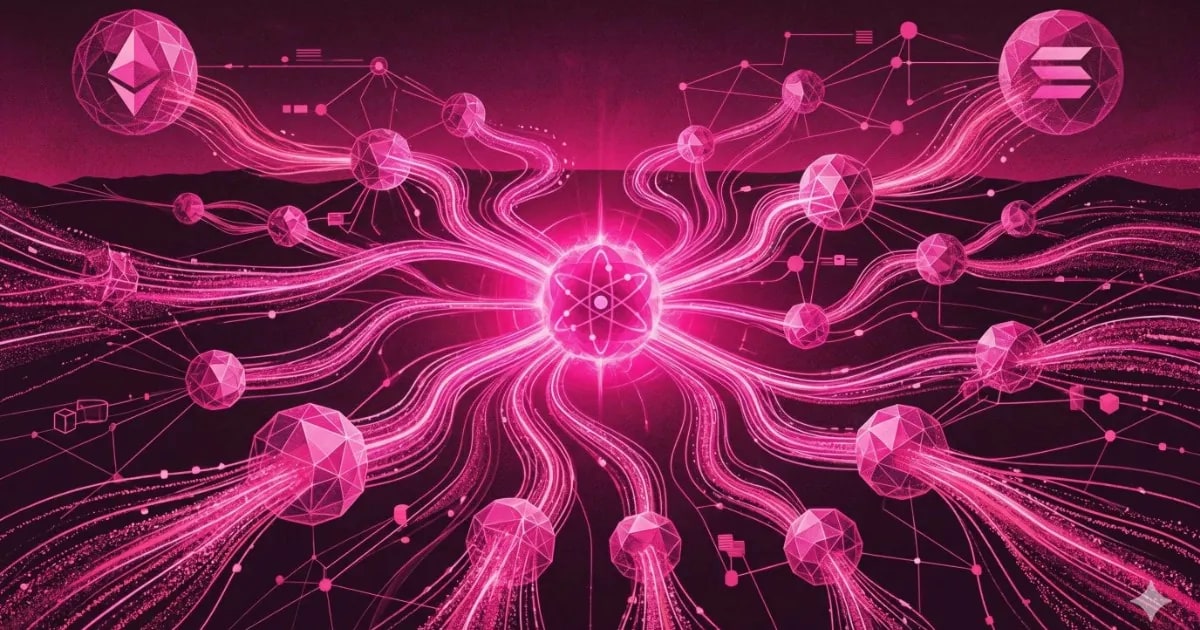
Cosmos (ATOM) explained: learn how IBC and interchain design work, why app-chains exist, and how Cosmos approaches modular interoperability in 2026.
Intent check: This page explains the Cosmos thesis, IBC, and interchain design. If you want the broader ecosystem guide covering the main app-chains and ATOM in 2026, read Complete Cosmos IBC Ecosystem Guide.
What is Cosmos (ATOM)? IBC and the Internet of Blockchains
In the early days of crypto, blockchains were isolated silos. Bitcoin couldn't talk to Ethereum, and liquidity was fragmented across dozens of disconnected networks. Many newcomers often ask what is Cosmos (ATOM) and how it plans to solve this "tribalism" by creating a decentralized web of independent, parallel blockchains. In 2026, the vision of the Internet of Blockchains is more alive than ever, with over 115 chains connected via a single, universal language.
For anyone using DEXTools to navigate cross-chain DeFi, understanding the mechanics behind the network is the key to mastering the interchain future.
The Vision: A Network of AppChains
At its core, this infrastructure acts as a "Layer 0" protocol. Instead of being a single blockchain where everyone competes for block space, it is a network of AppChains-sovereign blockchains tailored for specific use cases.
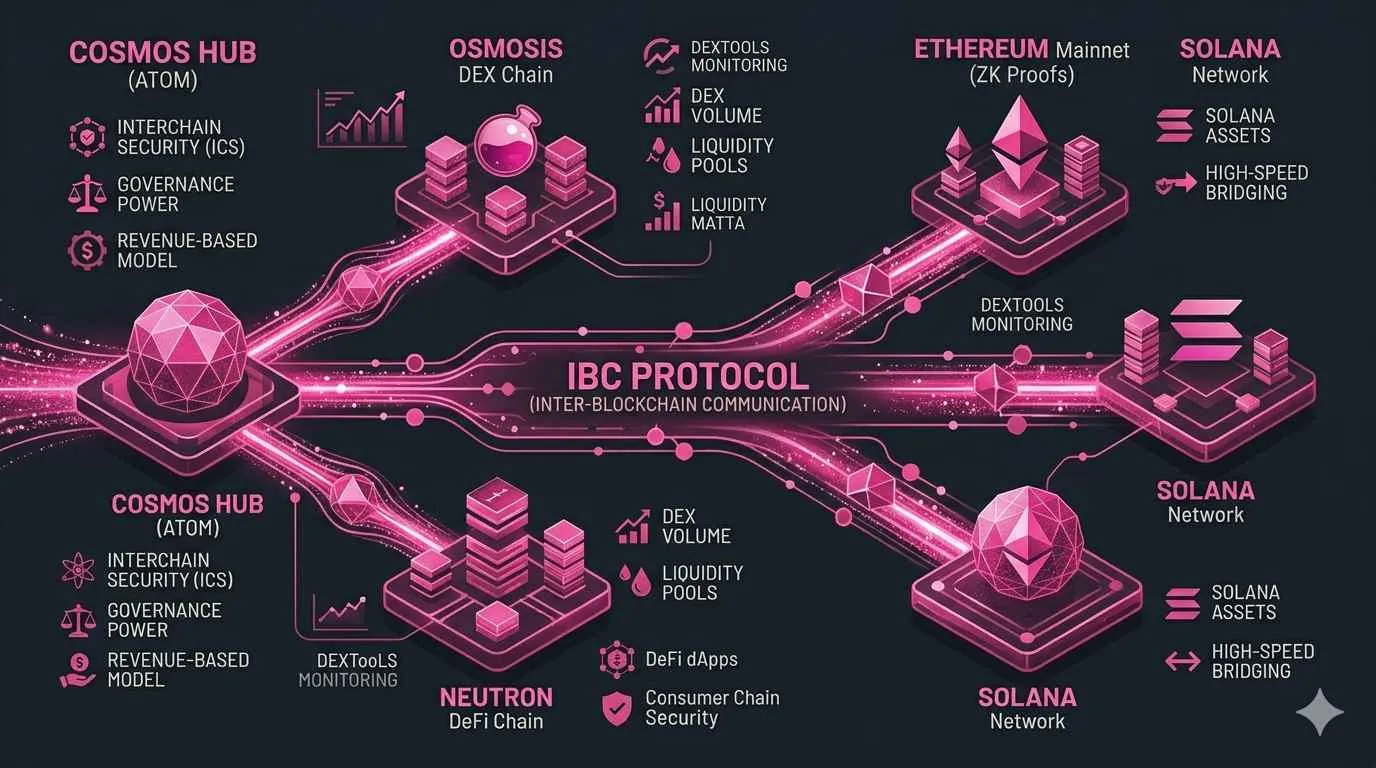
When you dive into what is Cosmos (ATOM), you are looking at an environment where a decentralized exchange, a gaming platform, and a stablecoin issuer can each have their own blockchain while remaining fully interconnected. The Cosmos Hub sits at the center of this web, acting as the primary router and security provider for the entire decentralized landscape.
The Three Pillars of the Interchain Stack
To understand the power of the ecosystem, we must look at the three technologies that make it possible:
CometBFT (formerly Tendermint): This is the high-performance consensus engine. It allows developers to skip the hard work of building a chain from scratch, providing instant finality.
Cosmos SDK: Think of this as the "WordPress for Blockchains." It’s a modular framework that lets developers launch a custom chain in weeks, not years, using the project's pre-built modules.
IBC (Inter-Blockchain Communication): This is the crown jewel. IBC is the TCP/IP of the blockchain world-a protocol that allows independent chains to transfer tokens and data trustlessly.
IBC in 2026: Beyond the Native Ecosystem
The most significant development in 2026 is the expansion of IBC. No longer restricted to its original environment, this technology has moved into the "Hyper-Interoperability" phase:
Ethereum Integration: Thanks to Zero-Knowledge (ZK) proofs, Ethereum mainnet is now natively connected to the Hub. Users can move assets between both worlds for minimal fees.
The Solana Bridge: The recent integration of Solana into the IBC network has unlocked massive liquidity, allowing high-speed assets to flow into the specialized zones tracked on DEXTools.
Institutional Adoption: Through "Project Pax," major financial institutions are now using this communication standard for regulated asset transfers, proving the protocol is ready for enterprise-grade finance.
The ATOM Token: Security and Governance
The native currency remains the lifeblood of the Hub. Its utility has evolved significantly in 2026 following a major tokenomics overhaul:
Interchain Security (ICS): This is a primary value driver. Holders can stake their tokens to secure not just one chain, but also "Consumer Chains" (new projects that rent security). In return, stakers earn rewards in multiple native tokens from across the ecosystem.
Governance Power: Stakers decide the future of the network, including treasury allocations and protocol upgrades.
Economic Alignment: In early 2026, the community focused on a revenue-based model, utilizing token burning and fee-sharing to provide long-term value to the token's holders.
On DEXTools, you can use our advanced analytics to monitor the price action of these native assets and the performance of consumer chains that rely on this economic security.
Cosmos and DEXTools: A Multichain Command Center
Trading in this environment is a different experience. Because each app has its own chain, liquidity is spread across specialized DEXs like Osmosis or Neutron.
By using the DEXTools Pair Explorer, you can track these interchain movements in real-time. Whether you are looking for the next big AppChain launch or monitoring the flow of bridged BTC, our analytical tools are essential for navigating the Internet of Blockchains with precision.
Understanding what is Cosmos (ATOM) means seeing the blockchain world as a collaborative network rather than a winner-takes-all competition. Through its modular stack and the universal IBC protocol, this project has built the foundation for a truly decentralized global economy. As we move through 2026, this infrastructure is no longer just a theory-it is the backbone powering the next wave of financial innovation.
Chain Abstraction: The End of Bridging in CryptoHow to Use Polkadot Parachains
What is Polkadot (DOT)? Parachains explained for Beginners
What is BNB Chain? Smart Chain vs opBNB vs Greenfield
L1 and L2 Ecosystems 2026: Solana, BNB, Ethereum, and Base
Disclaimer: This article is for informational purposes only and does not constitute investment advice, financial advice, trading advice, or any other kind of advice. DEXTools does not recommend buying, selling, or holding any cryptocurrency or token. Users should conduct their own research and consult with a qualified financial advisor before making any investment decisions. Cryptocurrency investments are volatile and high-risk. DEXTools is not responsible for any losses incurred.
Related Guides
- What Is Cosmos (ATOM): Complete IBC Ecosystem Guide (2026)
- dYdX V4 Explained: Appchain Architecture, Validators and Market Structure (2026)
- Polkadot vs Cosmos: Interoperability Networks Compared (2026)
- What Is Web3: The Complete Guide to the Decentralized Internet (2026)
- What Is Mog Coin (MOG)? The Internet Culture Memecoin Explained in 2026
Frequently Asked Questions
What is Cosmos (ATOM)?
Cosmos is a network of independent, interoperable blockchains, and ATOM is the native token associated with its core hub. It is often described as an internet of blockchains because it focuses on connecting many chains rather than running everything on one.
What is IBC in Cosmos?
IBC, or Inter-Blockchain Communication, is a protocol that lets separate Cosmos chains securely send tokens and data to each other. It is the backbone that makes the interconnected design of the Cosmos ecosystem possible.
What is an app-chain in Cosmos?
An app-chain is a blockchain built for a specific application rather than hosting many unrelated apps on shared infrastructure. This approach gives projects more control over performance, governance, and customization of their own chain.
How does Cosmos approach interoperability?
Cosmos uses a modular design where independent chains connect through shared standards like IBC instead of forcing everything onto a single network. This lets each chain specialize while still communicating with the broader ecosystem.