What Is Altseason? Altcoin Cycle Guide 2026
— By Tony Rabbit in Tutorials

What is altseason? Learn what counts as a real altcoin season, how the altseason index and ETH/BTC confirm it, and the 4 phases of capital rotation.
Every crypto cycle eventually arrives at the same question: is altseason starting? The answer is rarely as clean as the meme suggests. Altseason is real, but it is a regime, not a switch. It happens when capital rotates out of Bitcoin and into the rest of the market in a sustained, measurable way. Reading the conditions for it correctly is more useful than guessing the date it will arrive.
Quick answer: Altseason is a phase of the crypto cycle in which altcoins (everything except Bitcoin) outperform Bitcoin on a sustained basis. It is identified by falling Bitcoin dominance, expanding ETH/BTC, broad participation across sectors, and accelerating volume on altcoin pairs. It is not defined by a price level on Bitcoin or by any single news catalyst.
- Altseason is a rotation, not a price target. It is about where capital flows, not about a magic BTC level.
- Falling BTC dominance is the headline signal. A persistent down-trend in BTC.D usually accompanies altcoin outperformance.
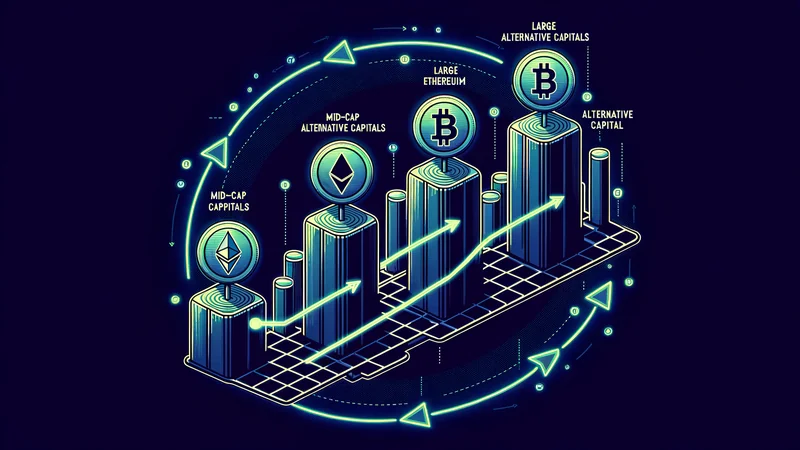
- ETH leads first, then large caps, then mid and small caps. The rotation tends to step down the market-cap ladder.
- Volume confirms the regime. Real altseasons show expanding altcoin trading volume, not just rising prices.
- Risk explodes at the end. Late-stage altseasons are euphoric, narrow, and often followed by sharp reversals.
Intent split
- This page is the broader altcoin-cycle guide: how rotation spreads across the market and how altseason begins, accelerates, and ends.
- For the single ratio traders watch every day, read Bitcoin Dominance (BTC.D) Explained.
- For the base asset-category definition, read What Is an Altcoin?.
What altseason actually means
Altseason is a market regime, not a date. It exists when altcoins as a group outperform Bitcoin over a sustained window. There is no official organization that declares it, no single threshold to cross. Different traders use different working definitions, and that is fine, as long as the definition is honest.
The most common operational definition uses the altseason index: when 75 percent or more of the top 50 altcoins outperform Bitcoin over a 90-day window, that period is widely labeled an altseason. When fewer than 25 percent outperform, the regime is "Bitcoin season." Anything in between is a transition.
Altseason vs altcoin pump
A two-day pump on a single coin is not altseason. A narrative-driven sector run that fades inside a week is not altseason. Altseason is broader: many sectors participate, the rotation lasts weeks to months, and BTC.D shows a clear, sustained breakdown rather than a single red candle.
Misreading a short-term altcoin pump as altseason is one of the costliest beginner mistakes. The pattern is recognizable: a few high-beta coins go vertical for a week, retail piles in, BTC.D barely moves, and the move dies as quickly as it started.
Why altseason exists at all
The mechanics are simple. Bitcoin attracts the first wave of capital because it is the most liquid, the most institutionally accepted, and the easiest to onboard. Once Bitcoin has run, traders look for higher-beta exposure. They rotate into ETH, then into majors, then progressively further out the risk curve. Altseason is the visible result of that rotation.

The altseason index, in plain English
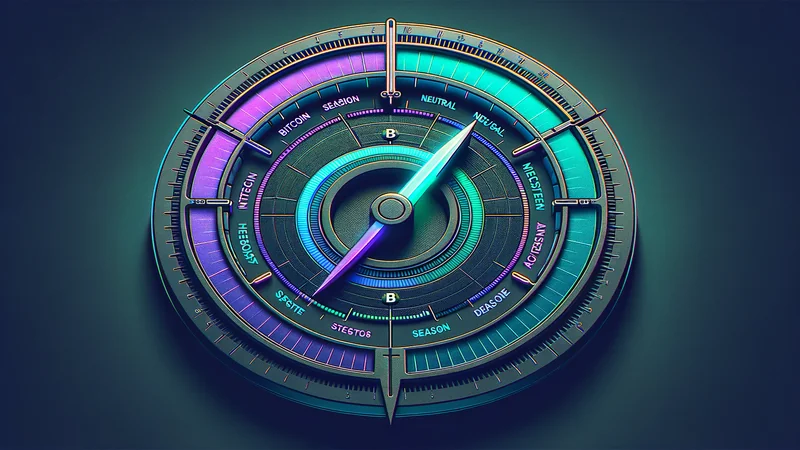
The altseason index is a 0-to-100 score that measures how broadly altcoins are beating Bitcoin over the last 90 days. The higher the score, the more aggressive the rotation. Most public versions use the same logic: count how many of the top 50 altcoins (excluding stablecoins and wrapped tokens) outperformed BTC in the window, and convert that count into a percentage.
How to read the gauge
Different platforms use slightly different bands, but the consensus reads like this:
- 0 to 25: Bitcoin season. BTC dominates, altcoins underperform on a relative basis.
- 25 to 75: Transition zone. No clear leadership, often choppy.
- 75 and above: Altseason. Most large altcoins are beating BTC.
The number is descriptive, not predictive. A reading of 80 today says altseason already happened during the last 90 days. It does not say tomorrow will continue. Treat the index as a thermometer, not a forecast.
Why one number is never enough
The altseason index is one input. By itself, it can flash false signals. A handful of large altcoins running hard while small caps stay dead can push the index up without any real broadening of participation. The cleanest reads combine the index with BTC dominance, ETH/BTC, and sector breadth.
The four signals that confirm altseason
A real altseason rarely shows up as a single chart printing one perfect candle. It is built from a stack of signals that line up at the same time. Four of them carry most of the weight.
Signal 1: BTC dominance breaks down
Watch Bitcoin dominance on the daily and weekly charts. A clean break of a long-term support level, accompanied by lower highs and lower lows, is the cleanest macro signal that the market is rotating away from BTC.
Signal 2: ETH/BTC turns up
The ETH/BTC pair is the most-watched leading indicator for altcoin rotation. Ethereum is large enough to absorb the first wave of capital leaving Bitcoin. A sustained ETH/BTC up-trend often precedes the broader altcoin run by weeks.
Signal 3: Volume on altcoin pairs expands
Price moves without volume are suspicious. Real altseasons show expanding 24-hour and 7-day volume on altcoin pairs, both on CEX order books and on DEX trading volume. A narrow rally with declining volume is usually a trap.
Signal 4: Breadth, not narrowness
The cleanest sign is broad participation. When DeFi, layer-1 alts, layer-2s, AI tokens, infrastructure plays, and even older coins start moving in the same window, the rotation is real. When only one sector is running, it is a sector trade, not altseason.
The four phases of an altseason
Most observed altseasons follow a similar internal sequence. Understanding the order helps traders avoid being late to one phase while still chasing the previous one.
| Phase | Leadership | BTC dominance | Risk profile |
|---|---|---|---|
| 1 - Setup | Bitcoin still leading, ETH/BTC bottoming | Topping | Moderate, early positioning window |
| 2 - Large-cap rotation | ETH and top 10 altcoins outperform BTC | Falling slowly | Moderate, narratives still rational |
| 3 - Mid-cap broadening | Sector themes lead (DeFi, L2s, AI, RWA) | Falling fast | High, volatility expanding |
| 4 - Small-cap mania | Meme coins, micro caps, narrative chasing | At cycle lows or basing | Extreme, drawdown risk maximum |
The most rewarding moments are usually in phase 2 and early phase 3, before the small-cap phase pulls in inexperienced capital. The most dangerous moments are at the end of phase 4, when participation is broadest, narratives are loudest, and any catalyst can trigger a sharp reversal.
The risks no one mentions during altseason
Altseason headlines focus on outsized gains. The risks are quieter and just as real.
- Drawdowns are violent. A 70 to 90 percent drawdown on alts after a parabolic run is not unusual.
- Liquidity dries up first. Mid and small caps get thin before they get cheap, so exits are worse than entries.
- Fee leakage compounds. Active rotation means more trades, more fees, more slippage. The math erodes returns.
- Survivorship bias dominates social media. Wins are amplified, losses go silent. Real distributions are far less optimistic.
- Tax bills can outlive gains. A profitable altseason followed by an ignored bear can leave traders with tax liabilities they cannot pay.
The strongest behavior during altseason is the boring one: pre-defined allocation, periodic rebalancing into stables or BTC, and a written exit plan that does not depend on social media to validate it.
Practical playbook for an altseason
The cleanest playbook is built around process, not prediction. Six steps cover most of what disciplined traders actually do.
- Define what altseason means for you. Use one or two objective indicators, not vibes from social media.
- Pre-build a watchlist. Liquid majors, sector leaders, and a handful of speculative names with clear theses.
- Decide allocation in advance. Maximum percentage to altcoins, maximum percentage to small caps, maximum per-position size.
- Use BTC.D and ETH/BTC as a regime filter. Don't fight the dominance trend.
- Rebalance on rules, not feelings. Trim into strength, rotate to higher liquidity as cycle matures.
- Have an exit plan. Write it before the high. Editing it during euphoria almost always erases gains.
Pair the playbook with broader context: on-chain data for capital flows, portfolio construction for sizing, and rug-pull checks for the long tail of small caps that explode in late-stage altseasons.
Common altseason mistakes
- Calling altseason on every alt-led week. Most "altseason starts now" calls are wrong by months.
- Forgetting BTC entirely. The same Bitcoin that "underperforms" still anchors the cycle. BTC weakness drags everything else down faster.
- Buying narratives at the top. By the time a sector is on every podcast, the rotation usually moved on.
- Holding through the entire round-trip. Refusing to sell strength in altseason is the single biggest reason gains evaporate.
- Over-leveraging. Altcoin volatility plus leverage equals liquidation cascades, even on the right thesis.
Frequently asked questions
How do I know altseason is starting?
No single chart confirms it. The cleanest stack is: BTC dominance breaking a major support, ETH/BTC turning up on the weekly, altseason index above 75 with broad sector participation, and expanding altcoin volume. One of those signals alone is rarely enough.
How long does altseason usually last?
Historical altseasons have ranged from a few weeks to several months. The "average" altseason is a misleading concept because every cycle has different macro conditions, leverage profiles, and stablecoin supply backdrops. Plan for the regime, not for a fixed duration.
Should I sell Bitcoin to buy altcoins during altseason?
That is a portfolio decision, not a generic answer. Many traders rotate a portion (not all) of BTC into majors during early altseason and gradually rotate back into BTC and stablecoins as the cycle matures. Selling all BTC at the start of an altseason and re-buying near the highs is a classic round-trip that destroys returns.
Is altseason a good time to start trading crypto?
It looks tempting, but it is one of the worst entry points for first-time traders. Late-cycle altseasons are dominated by survivorship bias, leverage, and narrative chasing. Beginners often arrive at peak euphoria and exit at peak fear. Learning the playbook before altseason is far safer.
Where can I track an altseason index?
Multiple data providers publish an altseason index in real time. Their methodologies differ slightly, so it is normal to see different readings on the same day. Pick one source as the primary reference and use the others to cross-check rather than mixing them.
Final takeaway: Altseason is a regime defined by sustained altcoin outperformance, broad participation, falling BTC dominance, and rising volume. It is not a date, not a price, and not a tweet. The traders who profit from it the most are the ones who built rules before it started, not the ones who tried to time the headline.
Disclaimer: This guide is for educational purposes only and does not constitute investment, financial, legal, or trading advice. Altcoin trading carries significantly higher risk than Bitcoin, including the risk of total loss.
Related Guides
- What Is the Crypto Market Cycle? Phases Guide (2026)
- Is XRP a Stablecoin or an Altcoin? Full 2026 Guide
- What Is an Altcoin: Complete Guide to Alternative Cryptocurrencies (2026)
- The Life Cycle of a Memecoin: Launch to Survival or Fade
- Anatomy of a Crypto Pump: Understanding the 5 Key Phases
Frequently Asked Questions
What is altseason in crypto?
Altseason refers to a period when altcoins broadly outperform Bitcoin, with capital rotating from Bitcoin into other tokens. It is usually identified when a large share of major altcoins gain more than Bitcoin over a set window.
How do you know when altseason is starting?
Common signals include Bitcoin dominance falling, the ETH/BTC ratio rising, and altseason indexes showing widespread altcoin outperformance. These are indicators of capital rotation rather than guarantees of a sustained move.
What is the ETH/BTC ratio and why does it matter for altseason?
The ETH/BTC ratio measures Ethereum's price relative to Bitcoin and is often watched as a proxy for risk appetite in altcoins. A rising ratio is frequently read as early confirmation that capital is rotating out of Bitcoin.
Does altseason happen every cycle?
Altcoin rotations have appeared in past market cycles, but timing, strength, and duration vary and are never assured. Treating altseason as a recurring pattern rather than a fixed event helps set realistic expectations.