What Is an Altcoin: Complete Guide to Alternative Cryptocurrencies (2026)
— By Tony Rabbit in Tutorials

What is an altcoin? Complete guide to alternative cryptocurrencies: Layer 1s, DeFi tokens, memecoins, AI tokens, RWA, how to evaluate, altcoin seasons, and top 20 by market cap.
An altcoin is any cryptocurrency that is not Bitcoin. The term combines "alternative" and "coin," and it covers thousands of digital assets ranging from major platforms like Ethereum to niche tokens built for specific purposes. Whether you are brand new to crypto or looking to diversify beyond Bitcoin, understanding altcoins is essential to navigating the broader digital asset market in 2026.
Bitcoin launched in 2009 as the first cryptocurrency, and for a while it was the only game in town. But developers quickly realized that blockchain technology could do far more than peer-to-peer payments. That realization gave birth to the altcoin market, which now includes over 15,000 active projects spanning dozens of categories. This guide breaks down everything you need to know about altcoins: what they are, how they work, which categories matter, how to evaluate them, and how to add them to your portfolio safely.
What Exactly Is an Altcoin?
The simplest definition: an altcoin is any cryptocurrency that is not Bitcoin (BTC). Ethereum is an altcoin. Solana is an altcoin. Dogecoin is an altcoin. The term was coined in the early days of crypto when new projects positioned themselves as "alternatives" to Bitcoin, each trying to improve on Bitcoin's limitations or serve an entirely different purpose.
Some altcoins fork directly from Bitcoin's code and tweak certain parameters (like Litecoin increasing transaction speed). Others are built from scratch on entirely new blockchains with different consensus mechanisms, smart contract capabilities, or specialized features. The common thread is simple: if it is not BTC, it is an altcoin.
Altcoin Categories
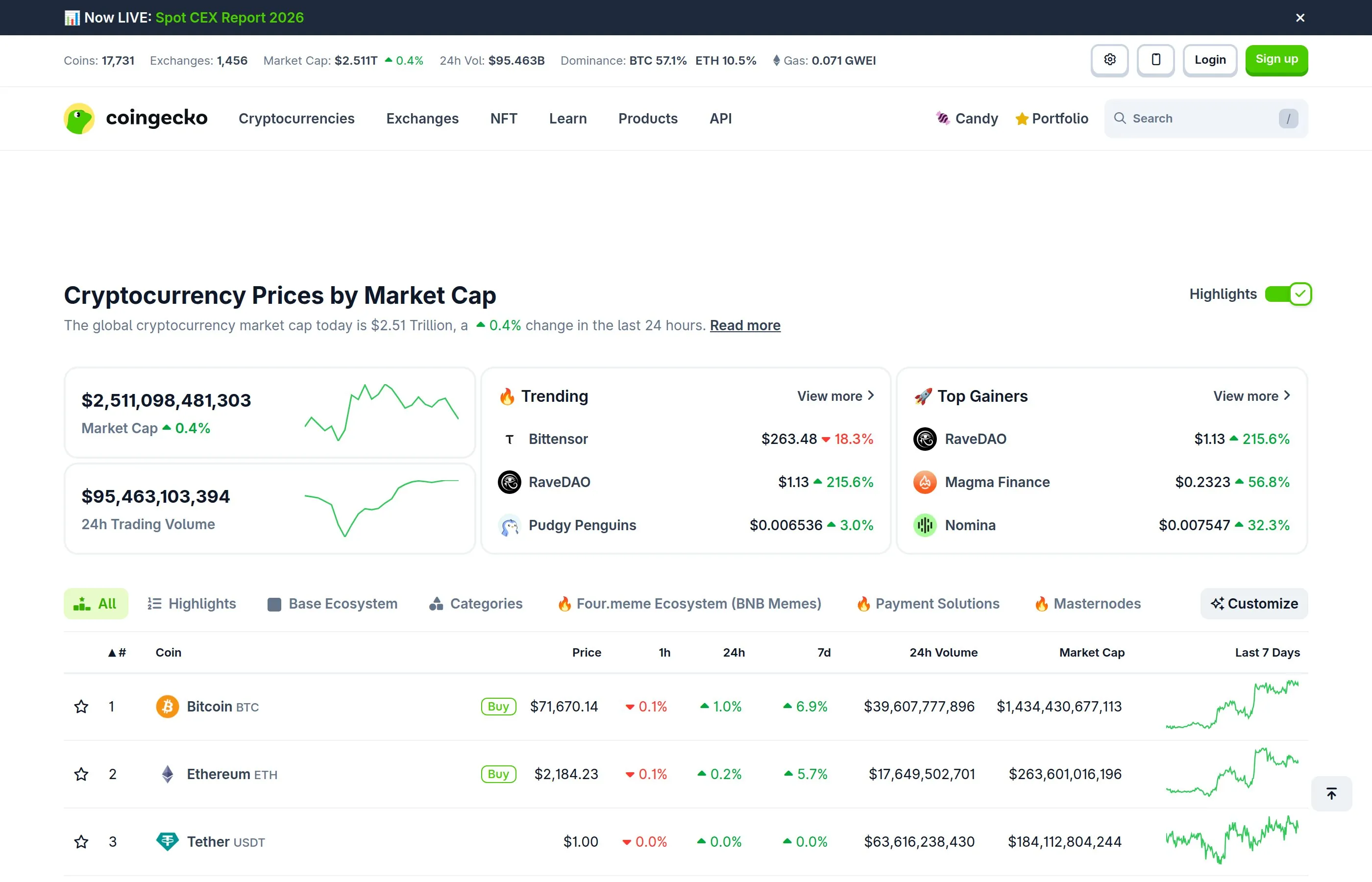
As of April 2026, altcoins collectively represent roughly 35-40% of the total cryptocurrency market capitalization. That share fluctuates significantly depending on market conditions, a concept known as Bitcoin dominance (more on that below).
A Brief History of Altcoins
The altcoin story begins in 2011 with Namecoin, the first cryptocurrency launched after Bitcoin. Namecoin aimed to create a decentralized domain name system (DNS) that would be resistant to censorship. It forked from Bitcoin's code and proved that the blockchain concept could be adapted for purposes beyond simple value transfer.
Litecoin followed shortly after in October 2011, created by Charlie Lee as a "lighter" version of Bitcoin. It used a different hashing algorithm (Scrypt instead of SHA-256), offered faster block times (2.5 minutes vs. 10 minutes), and had a larger maximum supply of 84 million coins. Litecoin earned the nickname "digital silver" to Bitcoin's "digital gold."
🔑 Key Point
Understanding this concept is fundamental to navigating the crypto ecosystem. Take your time with each section before moving on.
🔑 Key Point
Understanding this concept is fundamental to navigating the crypto ecosystem. Take your time with each section before moving on.
The true altcoin revolution came in 2015 with the launch of Ethereum. Vitalik Buterin's creation introduced smart contracts, programmable code that runs on the blockchain and executes automatically when conditions are met. Ethereum did not just create another payment coin. It created an entirely new platform where developers could build decentralized applications (dApps), tokens, and entire financial systems. This single innovation spawned the DeFi movement, the NFT boom, and thousands of new altcoins built as ERC-20 tokens on Ethereum's network.
From 2017 onward, the altcoin market exploded. The ICO boom of 2017-2018, the DeFi summer of 2020, the NFT craze of 2021, and the AI token wave of 2024-2025 each brought new categories of altcoins into the spotlight. Today, the altcoin landscape is more diverse and sophisticated than ever.
Major Altcoin Categories
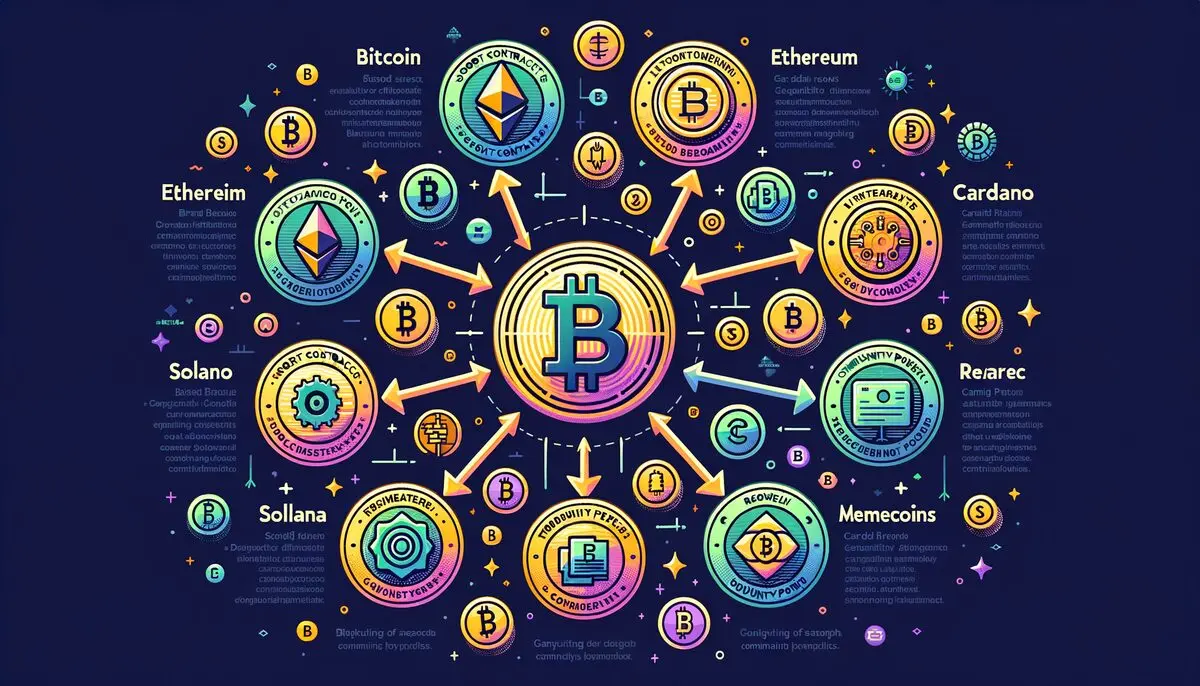
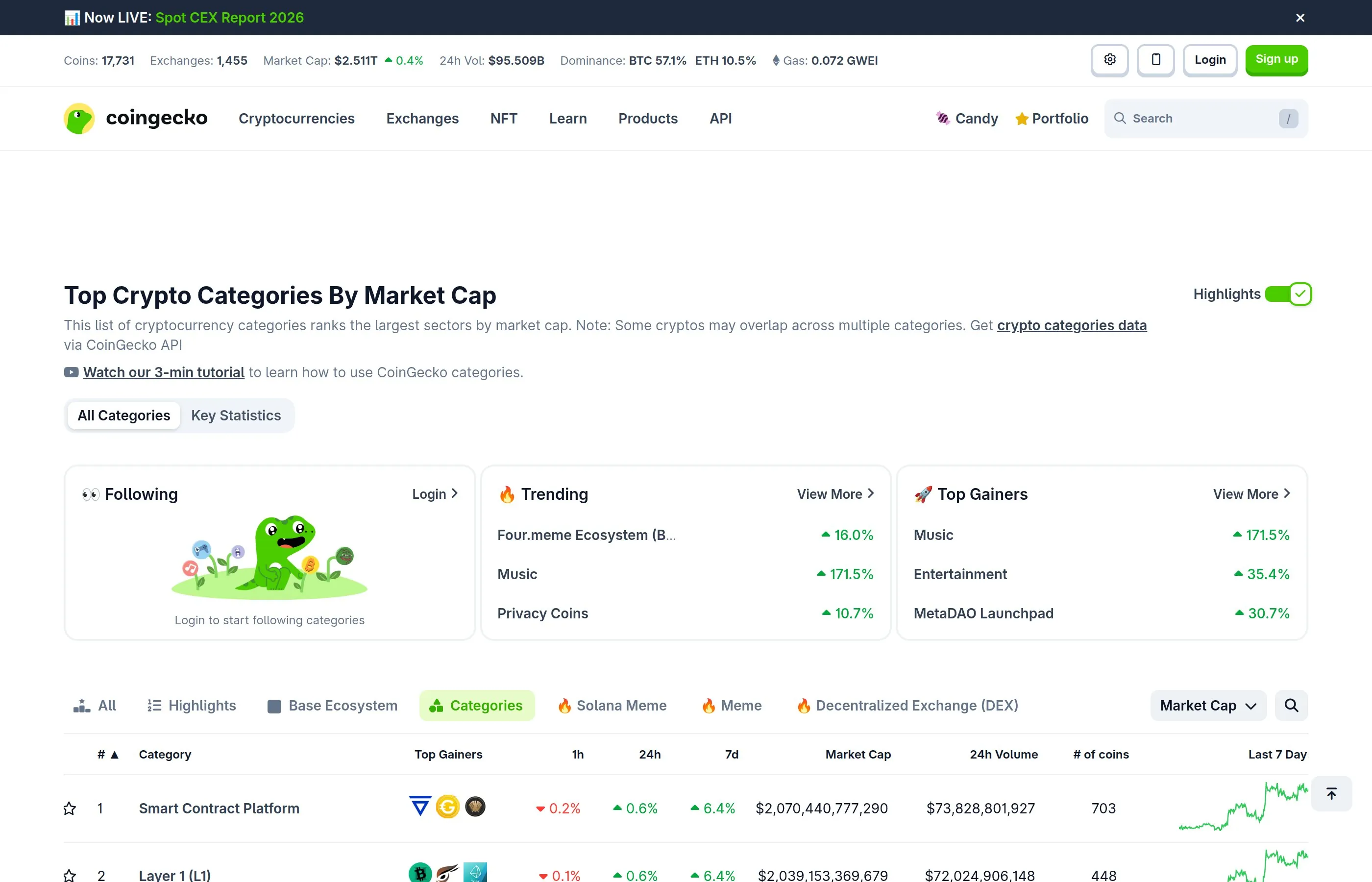
Not all altcoins are created equal. They span a wide range of categories, each serving different functions within the crypto ecosystem. Here is a visual breakdown of the major categories and their most prominent tokens:
| Layer 1s | DeFi Tokens | Memecoins | AI Tokens | RWA Tokens |
|---|---|---|---|---|
| ETH (Ethereum) | UNI (Uniswap) | DOGE (Dogecoin) | FET (Fetch.ai) | ONDO (Ondo Finance) |
| SOL (Solana) | AAVE (Aave) | SHIB (Shiba Inu) | RNDR (Render) | MKR (Maker) |
| ADA (Cardano) | CRV (Curve) | PEPE | TAO (Bittensor) | |
| AVAX (Avalanche) | BONK |
Let's explore each category in detail.
Layer 1 Blockchains
Layer 1 (L1) altcoins are the foundational blockchains that operate independently with their own consensus mechanisms, validator networks, and native tokens. They compete with each other to attract developers, users, and capital. Think of them as the operating systems of the crypto world.
🔑 Key Point
The crypto ecosystem moves fast. What matters is understanding the fundamentals - those do not change regardless of market conditions.
Ethereum (ETH) remains the largest altcoin by market cap and the dominant smart contract platform. Its transition to Proof of Stake (the Merge in 2022) reduced energy consumption by over 99%, and ongoing upgrades continue improving scalability and reducing gas fees.
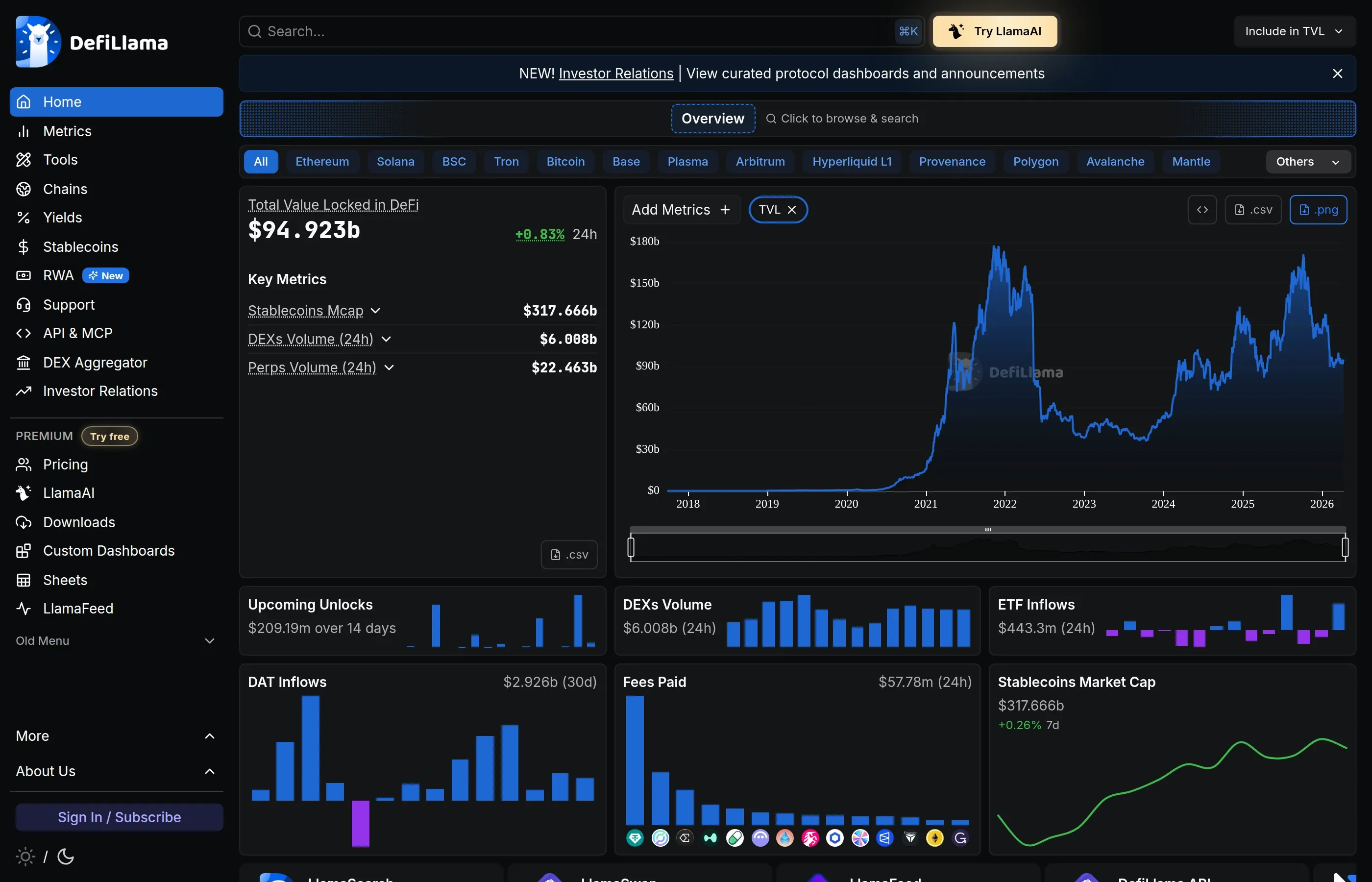
Solana (SOL) focuses on raw speed and low costs. It processes thousands of transactions per second at fractions of a cent, making it the go-to chain for memecoins, DeFi trading, and consumer-facing applications.
🔑 Key Point
The crypto ecosystem moves fast. What matters is understanding the fundamentals - those do not change regardless of market conditions.
Cardano (ADA) takes an academic, research-driven approach to blockchain development. It uses a peer-reviewed development process and the Ouroboros Proof of Stake consensus mechanism.
Avalanche (AVAX) introduced the subnet architecture, allowing anyone to launch customized blockchains that still benefit from Avalanche's consensus and security. It has found particular traction in institutional and enterprise use cases.
Layer 2 Scaling Solutions
Layer 2 (L2) protocols build on top of existing Layer 1 blockchains (primarily Ethereum) to increase transaction throughput and reduce costs. Major L2 tokens include ARB (Arbitrum), OP (Optimism), MATIC/POL (Polygon), and BASE's ecosystem. These solutions bundle transactions together and submit them to the main chain, inheriting its security while dramatically improving performance.
🔑 Key Point
This is where most people stop reading. If you made it this far, you understand more than 90% of crypto users. The next step is to actually try it with a small amount.
DeFi Tokens
Decentralized finance (DeFi) tokens power protocols that recreate traditional financial services without intermediaries. Uniswap (UNI) governs the largest decentralized exchange. Aave (AAVE) enables decentralized lending and borrowing. Curve (CRV) specializes in efficient stablecoin swaps. These tokens typically grant governance rights, allowing holders to vote on protocol upgrades and parameter changes.
Memecoins
Memecoins are tokens that originate from internet culture, jokes, or viral trends rather than specific technological innovation. Dogecoin (DOGE) started as a joke in 2013 but became a multi-billion dollar asset. Shiba Inu (SHIB) followed a similar path. PEPE and BONK represent the newer generation of memecoins that often launch on Solana. If you want to learn the mechanics, check out our guide on how to buy memecoins on Solana. Memecoins are extremely volatile and most go to zero, but the category consistently attracts attention and trading volume.
AI Tokens
The intersection of artificial intelligence and blockchain has produced a fast-growing category of altcoins. Fetch.ai (FET) builds autonomous AI agents for decentralized services. Render (RNDR) provides a decentralized GPU rendering network. Bittensor (TAO) creates a decentralized machine learning network. These tokens gained significant momentum in 2024-2025 as AI hype spilled into crypto markets.
Real-World Asset (RWA) Tokens
RWA tokens represent the tokenization of real-world assets like treasury bonds, real estate, commodities, and private credit on the blockchain. Ondo Finance (ONDO) focuses on tokenized US treasuries and other yield-bearing assets. Maker (MKR) governs the protocol behind DAI, a decentralized stablecoin backed by crypto collateral and increasingly by real-world assets. This category has seen massive institutional interest, with major firms like BlackRock entering the space.
🔑 Key Point
This is where most people stop reading. If you made it this far, you understand more than 90% of crypto users. The next step is to actually try it with a small amount.
Stablecoins
Stablecoins are altcoins pegged to a stable asset, usually the US dollar. USDT (Tether), USDC (Circle), and DAI are the most prominent. They serve as the backbone of crypto trading and DeFi, providing a way to hold value without the volatility of other tokens. While they are technically altcoins, most people treat them as a separate asset class because they are not designed to appreciate in value.
Privacy Coins
Privacy-focused altcoins like Monero (XMR) and Zcash (ZEC) use advanced cryptography to obscure transaction details. While Bitcoin transactions are pseudonymous (visible on the blockchain but not directly linked to real identities), privacy coins aim to make transactions truly untraceable. This category faces increasing regulatory scrutiny, and several exchanges have delisted privacy coins in certain jurisdictions.
Gaming and Metaverse Tokens
Gaming altcoins power play-to-earn and blockchain gaming ecosystems. Tokens like IMX (Immutable X), GALA, and RON (Ronin) facilitate in-game economies, NFT-based items, and decentralized gaming infrastructure. The category is closely tied to the broader adoption of blockchain technology in entertainment.
Top 20 Altcoins by Market Cap (2026)
Market capitalization (price multiplied by circulating supply) is the most common way to rank altcoins. Here are the top 20 altcoins as of early 2026, excluding stablecoins:
- Ethereum (ETH) - Smart contract platform, largest DeFi ecosystem
- XRP (XRP) - Cross-border payments and institutional settlements
- BNB (BNB) - Binance exchange ecosystem and BNB Chain
- Solana (SOL) - High-speed Layer 1 for DeFi and consumer apps
- Cardano (ADA) - Research-driven smart contract platform
- Dogecoin (DOGE) - Original memecoin, payments utility
- TRON (TRX) - Content sharing and stablecoin transfers
- Avalanche (AVAX) - Subnet-based scalable blockchain
- Chainlink (LINK) - Decentralized oracle network
- Polkadot (DOT) - Cross-chain interoperability protocol
- Shiba Inu (SHIB) - Memecoin with expanding DeFi ecosystem
- Polygon (POL) - Ethereum scaling and aggregation layer
- Litecoin (LTC) - Fast Bitcoin alternative, digital silver
- Uniswap (UNI) - Leading decentralized exchange governance
- Render (RNDR) - Decentralized GPU rendering network
- Fetch.ai (FET) - AI agents and autonomous services
- Arbitrum (ARB) - Ethereum Layer 2 rollup
- Cosmos (ATOM) - Inter-blockchain communication protocol
- Bittensor (TAO) - Decentralized machine learning
- Ondo Finance (ONDO) - Tokenized real-world assets
Rankings shift frequently. Always check current data before making investment decisions. Tools like DEXTools can help you monitor real-time altcoin prices and trading activity.
How to Evaluate Altcoins: The DYOR Checklist
With thousands of altcoins competing for your attention, knowing how to do your own research (DYOR) is the single most important skill you can develop. Here is a structured checklist for evaluating any altcoin:
1. Understand the Problem It Solves
Every legitimate altcoin should solve a real problem or serve a clear purpose. Ask yourself: what does this project do that cannot be done without a blockchain? If the answer is nothing, that is a red flag. Read the whitepaper, check the project documentation, and understand the value proposition before anything else.
2. Analyze the Team
Who built this project? Are the founders public and verifiable? Do they have relevant experience in blockchain, finance, or the industry the project targets? Anonymous teams are not automatically bad (Bitcoin's creator is anonymous), but they do increase risk. Look for team profiles on LinkedIn, previous projects, and conference appearances.
3. Study the Tokenomics
Tokenomics refers to the economic design of a token: total supply, circulating supply, emission schedule, distribution, and utility. Key questions to answer include: What is the maximum supply? How are tokens distributed between the team, investors, and community? Is there a vesting schedule for insider tokens? Are tokens inflationary or deflationary? Bad tokenomics can doom even a technically excellent project.
4. Evaluate the Technology
Is the code open source? Has it been audited by reputable security firms? Is there active development on GitHub? Check the project's repositories for commit frequency, the number of contributors, and whether the codebase is growing or stagnant. A project with no code updates for months is a warning sign.
5. Assess Community and Adoption
Strong altcoins have engaged, organic communities. Look at Discord and Telegram activity (watch for bot activity), Twitter/X engagement, and on-chain metrics like active addresses and transaction volume. Be wary of projects that rely heavily on paid marketing and influencer promotions without corresponding organic growth.
6. Check Liquidity and Exchange Listings
Where is the token traded? Is there sufficient liquidity to buy and sell without massive slippage? Tokens listed only on obscure decentralized exchanges with thin liquidity carry much higher risk. Major exchange listings (Coinbase, Binance, Kraken) provide a baseline level of vetting, though listing is not an endorsement.
7. Review the Roadmap and Partnerships
Does the project have a clear roadmap with achievable milestones? Have they delivered on past promises? Partnerships should be verifiable. Many projects exaggerate partnerships or announce "collaborations" that amount to nothing. Check whether the partner has also acknowledged the relationship publicly.
8. Understand the Competitive Landscape
How does this altcoin compare to others solving the same problem? If there are 50 projects doing the same thing, what gives this one an edge? First-mover advantage, superior technology, stronger network effects, and better tokenomics are all factors that can differentiate a project from its competitors.
What Is Altcoin Season?
Altcoin season (or "alt season") is a period when altcoins collectively outperform Bitcoin in terms of price gains. During these phases, capital rotates from Bitcoin into altcoins, and many smaller tokens can post explosive returns of 5x, 10x, or even 100x in short time frames.
Altcoin seasons typically follow a pattern. Bitcoin leads the market with a strong rally. As Bitcoin's momentum slows and its price consolidates, traders take profits from Bitcoin and rotate into altcoins seeking higher returns. Large-cap altcoins like ETH and SOL tend to move first, followed by mid-caps, and finally small-caps and memecoins. The cycle reverses when risk appetite drops and capital flows back into Bitcoin or stablecoins.
The Altcoin Season Index, tracked by Blockchain Center, measures whether the market is in Bitcoin season or altcoin season by comparing the 90-day performance of the top 50 altcoins against Bitcoin. When 75% or more of the top 50 altcoins outperform Bitcoin over 90 days, the market is in altcoin season.
It is important to understand that altcoin seasons are temporary. They create enormous opportunities but also enormous risk. Many traders who buy altcoins at the peak of an alt season give back all their gains (and more) when the cycle reverses. Having a plan for building your crypto portfolio with clear entry and exit strategies is essential.
Bitcoin Dominance Explained
Bitcoin dominance is a metric that measures Bitcoin's market capitalization as a percentage of the total cryptocurrency market cap. When Bitcoin dominance rises, it means Bitcoin is gaining market share relative to altcoins. When it falls, altcoins are gaining ground.
Historically, Bitcoin dominance has ranged from around 35% (during peak alt seasons in 2018 and 2021) to over 70% (during bear markets and Bitcoin-led rallies). In 2026, Bitcoin dominance has fluctuated between 55-65%, reflecting a maturing market where altcoins hold significant but not dominant value.
Tracking Bitcoin dominance helps you time altcoin entries and exits. Falling BTC dominance often signals a good time to increase altcoin exposure, while rising dominance suggests rotating back toward Bitcoin or stablecoins. However, this is a probabilistic tool, not a crystal ball. Combine it with other indicators for better results.
Risks of Investing in Altcoins
Altcoins offer significant upside potential, but they come with risks that every investor must understand before putting money in.
Higher Volatility
Altcoins are more volatile than Bitcoin. While Bitcoin might drop 20-30% in a correction, altcoins routinely drop 50-80% or more. This volatility works both ways: altcoins can produce massive gains, but they can also destroy capital quickly. Smaller market caps mean less liquidity, which amplifies price swings in both directions.
Rug Pulls and Scams
A rug pull occurs when a project's developers drain liquidity or abandon the project after raising funds. This remains one of the biggest risks in the altcoin space, particularly with new tokens on decentralized exchanges. Warning signs include anonymous teams, locked but short-duration liquidity, concentrated token holdings, and unrealistic promised returns. Always verify smart contracts and liquidity locks before investing in smaller tokens.
Regulatory Risk
Many altcoins operate in regulatory gray areas. The SEC has classified certain tokens as securities, leading to delistings and legal action against projects. Regulatory developments can dramatically impact altcoin prices overnight. Privacy coins face particular scrutiny, and exchange tokens may be affected by exchange-specific regulatory actions.
Technology and Smart Contract Risk
Bugs in smart contract code can lead to catastrophic losses. DeFi protocols have lost billions of dollars to exploits and hacks over the years. Even audited code can contain vulnerabilities. When you invest in an altcoin, you are implicitly trusting the quality and security of its underlying technology.
Liquidity Risk
Many smaller altcoins have thin liquidity, meaning you can buy in easily but struggle to sell at a reasonable price when you want to exit. This is especially true during market downturns when everyone tries to sell simultaneously. Always check trading volume and liquidity depth before investing significant amounts.
Project Failure
The vast majority of altcoins fail. Studies estimate that over 90% of crypto projects from previous cycles have either gone to zero or lost more than 95% of their peak value. Even well-funded projects with talented teams can fail due to poor product-market fit, competition, or changing market conditions.
Where to Buy Altcoins
You have several options for buying altcoins, each with its own advantages and trade-offs.
Centralized Exchanges (CEXs)
Platforms like Coinbase, Binance, Kraken, and OKX offer the easiest on-ramp for buying altcoins. They accept bank transfers, credit cards, and other fiat payment methods. CEXs provide a familiar interface, customer support, and generally good liquidity. The downsides: you do not control your private keys (the exchange holds your tokens), exchanges can be hacked, and they may freeze your account due to regulatory requirements.
Decentralized Exchanges (DEXs)
DEXs like Uniswap (Ethereum), Raydium and Jupiter (Solana), and PancakeSwap (BNB Chain) allow you to swap tokens directly from your wallet without an intermediary. You maintain full custody of your assets. DEXs offer access to a much wider range of tokens, including new launches that have not yet been listed on CEXs. The trade-offs: higher technical complexity, potential for smart contract risk, and sometimes higher slippage on illiquid pairs. Use DEXTools to analyze DEX trading pairs before you swap.
Secure Storage
After purchasing altcoins, secure storage is critical. For significant holdings, transfer your tokens to a hardware wallet. Our guide on the best cold wallets covers the top options for keeping your altcoins safe offline. Never leave large amounts on exchanges for extended periods.
Altcoin Portfolio Allocation Strategies
How much of your crypto portfolio should be in altcoins? There is no universal answer, but here are three common frameworks based on risk tolerance:
Conservative (Lower Risk)
70-80% Bitcoin, 10-20% large-cap altcoins (ETH, SOL, BNB), 0-10% mid-cap altcoins. This approach prioritizes stability and exposure to the most established assets. Suitable for long-term holders who want crypto exposure with minimal altcoin risk.
Balanced (Moderate Risk)
40-50% Bitcoin, 25-30% large-cap altcoins, 15-20% mid-cap altcoins, 5-10% small-cap/high-conviction plays. This is the most popular approach among experienced investors. It provides meaningful altcoin upside while maintaining a strong Bitcoin core.
Aggressive (Higher Risk)
20-30% Bitcoin, 30-40% large-cap altcoins, 20-30% mid-cap altcoins, 10-20% small-cap altcoins and memecoins. This allocation maximizes potential returns during altcoin seasons but suffers the most during downturns. Only suitable for traders who actively manage positions and have strong risk management.
Regardless of your strategy, maintain a portion of your portfolio in stablecoins. Dry powder (available capital in stablecoins) allows you to capitalize on market dips rather than being forced to sell other positions to buy opportunities.
Pros and Cons of Altcoins
Advantages:
- Higher potential returns compared to Bitcoin during bull markets and alt seasons
- Access to innovative technology and use cases beyond simple value transfer
- Diversification across different sectors (DeFi, AI, gaming, RWA)
- Early investment opportunities in emerging projects and narratives
- Ability to earn yield through staking, lending, and liquidity provision
- Governance participation in decentralized protocols
- Lower entry prices make them psychologically accessible to new investors
Disadvantages:
- Significantly higher volatility and drawdown risk than Bitcoin
- Over 90% of altcoins from previous cycles have failed or lost most of their value
- Rug pulls, scams, and exploits are far more common in the altcoin space
- Regulatory uncertainty can cause sudden, severe price drops
- Many altcoins have poor liquidity, making it hard to exit large positions
- Information asymmetry favors insiders and venture capital investors
- Requires significantly more research and active management than holding Bitcoin
- Altcoins tend to underperform Bitcoin during bear markets and risk-off periods
Altcoins vs. Bitcoin: Key Differences
Understanding how altcoins differ from Bitcoin helps frame your investment approach. Bitcoin is a monetary network focused on being a store of value and medium of exchange. It prioritizes security, decentralization, and predictability above all else. Its monetary policy (21 million fixed supply, halving every four years) is set in stone.
Altcoins prioritize different things. Ethereum prioritizes programmability. Solana prioritizes speed. Monero prioritizes privacy. This means altcoins can offer features Bitcoin cannot, but they also introduce trade-offs that Bitcoin avoids. Most altcoins have more centralized governance, more complex attack surfaces, and less battle-tested security.
The practical implication: Bitcoin is often viewed as the safest long-term bet in crypto, while altcoins are where you go for higher-risk, higher-reward exposure. Many successful crypto investors treat Bitcoin as their core holding and use altcoins as satellite positions for growth potential.
How Altcoin Tokens Are Created
Altcoin tokens come into existence in several ways. Some launch their own independent blockchains with their own consensus mechanisms (like Solana or Cardano). Others are created as tokens on existing platforms using token standards like ERC-20 (Ethereum), SPL (Solana), or BEP-20 (BNB Chain). The latter approach is far more common because it allows developers to launch a token without building blockchain infrastructure from scratch.
This distinction matters. A token on Ethereum depends on Ethereum's network for its security and transaction processing. If Ethereum has network issues, all ERC-20 tokens are affected. Independent blockchains have their own infrastructure, which means they are responsible for their own security but also free to customize their design entirely.
The Future of Altcoins in 2026 and Beyond
Several trends are shaping the altcoin landscape heading into mid-2026:
Institutional Adoption of RWA Tokens: The tokenization of real-world assets is moving from concept to reality. Major financial institutions are tokenizing treasury bonds, real estate, and private credit on public blockchains. This trend could bring trillions of dollars in assets on-chain over the coming years.
AI and Blockchain Convergence: AI tokens continue to grow as decentralized computing, AI agents, and on-chain inference become more practical. The intersection of these two technologies remains one of the most actively funded areas in crypto.
Layer 2 Maturation: Ethereum's Layer 2 ecosystem is maturing, with lower fees and better user experiences making Ethereum-based altcoins more accessible to mainstream users.
Regulatory Clarity: Increasing regulatory frameworks around the world are providing clearer rules for altcoin projects, which benefits legitimate projects even as it pushes out bad actors.
Cross-Chain Interoperability: The walls between different blockchains continue to come down, allowing altcoins to interact across multiple ecosystems through bridges and interoperability protocols.
Video Explainer
Watch this video for a visual walkthrough of the concepts covered above.
Frequently Asked Questions
What is an altcoin in simple terms?
An altcoin is any cryptocurrency that is not Bitcoin. The name comes from "alternative coin." Everything from Ethereum to Dogecoin to the newest DeFi token counts as an altcoin. There are over 15,000 altcoins in existence as of 2026.
Is Ethereum an altcoin?
Yes. Despite being the second-largest cryptocurrency by market cap, Ethereum is technically an altcoin because it is not Bitcoin. In practice, many people put ETH in a category of its own due to its size and importance, but by strict definition, it is an altcoin.
Are altcoins a good investment?
Some altcoins have produced extraordinary returns, but the majority lose value over time. Altcoin investing requires thorough research, risk management, and acceptance that most projects fail. Never invest more than you can afford to lose, especially in smaller-cap altcoins.
What is the best altcoin to buy right now?
There is no single "best" altcoin because it depends on your risk tolerance, investment timeline, and thesis. Large-cap altcoins like ETH and SOL are generally considered safer bets within the altcoin space. Always do your own research before buying any cryptocurrency.
What is altcoin season?
Altcoin season is a market phase where altcoins collectively outperform Bitcoin. It typically occurs after Bitcoin has made a significant move upward and then consolidates. During alt season, capital flows from Bitcoin into altcoins, often producing rapid and substantial gains across the altcoin market.
How many altcoins exist?
There are over 15,000 altcoins listed on tracking sites like CoinGecko and CoinMarketCap. However, many of these are inactive, illiquid, or effectively dead. Only a few hundred altcoins have meaningful trading volume and active development.
Can altcoins overtake Bitcoin?
The scenario where the total altcoin market cap surpasses Bitcoin's is called "the flippening." While this has not happened yet, Ethereum came close in 2017 and 2021. Most analysts believe Bitcoin will maintain its lead due to its first-mover advantage, brand recognition, and store-of-value narrative, but the gap could narrow as the altcoin ecosystem matures.
What is the difference between a coin and a token?
A coin operates on its own blockchain (like BTC on Bitcoin, ETH on Ethereum, SOL on Solana). A token is built on top of another blockchain (like UNI on Ethereum, BONK on Solana). In casual conversation, "coin" and "token" are often used interchangeably, but the technical distinction matters for understanding how an asset works.
Are memecoins considered altcoins?
Yes. Memecoins like DOGE, SHIB, PEPE, and BONK are all altcoins. They fall under the broader altcoin umbrella but represent a specific subcategory defined by their community-driven, meme-inspired origins rather than technical innovation.
How do I store altcoins safely?
The safest method is a hardware (cold) wallet like Ledger or Trezor, which keeps your private keys offline. For smaller amounts or active trading, software wallets like MetaMask (Ethereum), Phantom (Solana), or Trust Wallet (multi-chain) work well. Never leave large holdings on exchanges.
What is Bitcoin dominance and why does it matter for altcoins?
Bitcoin dominance is the percentage of the total crypto market cap that belongs to Bitcoin. When Bitcoin dominance rises, altcoins generally underperform. When it falls, altcoins tend to outperform. Tracking this metric helps investors time their altcoin entries and manage portfolio allocation between Bitcoin and altcoins.
Should I buy altcoins before or after buying Bitcoin?
Most experienced investors recommend establishing a Bitcoin position first, then diversifying into altcoins. Bitcoin serves as the foundation of a crypto portfolio due to its lower relative risk and stronger long-term track record. Altcoins are best used as satellite positions to add growth potential once you have a solid base.
What happens to altcoins during a bear market?
Altcoins typically suffer much larger losses than Bitcoin during bear markets. While Bitcoin might decline 60-70% from its peak, many altcoins drop 80-95% or more. Some never recover. This is why risk management, position sizing, and taking profits during bull markets are critical for altcoin investors.
How do I spot altcoin scams?
Common red flags include anonymous teams with no verifiable history, guaranteed return promises, unrealistic APY yields, concentrated token ownership, no code audits, plagiarized whitepapers, fake partnership announcements, and aggressive paid marketing without substance. Use blockchain explorers to verify token distribution and always do thorough research before investing.
What are the tax implications of trading altcoins?
In most jurisdictions, trading altcoins is a taxable event. Swapping one altcoin for another, selling altcoins for fiat, and even using altcoins to make purchases can trigger capital gains taxes. Keep detailed records of all your transactions and consult a tax professional familiar with cryptocurrency regulations in your jurisdiction.
Final Thought: Altcoins represent one of the most dynamic and opportunity-rich areas of the cryptocurrency market. They also carry substantially higher risk than Bitcoin. The investors who succeed in the altcoin space are those who do the research, manage their risk, and resist the urge to chase hype. Start with the fundamentals covered in this guide, build your knowledge systematically, and never invest more than you can afford to lose. If you are new to crypto entirely, start with our guide on how to buy cryptocurrency to get your first position set up safely.
Frequently Asked Questions
What is an altcoin?
An altcoin is any cryptocurrency other than Bitcoin. The term is a portmanteau of "alternative coin."
How do altcoins differ from Bitcoin?
Altcoins often introduce new features, consensus mechanisms, or use cases not present in Bitcoin. They aim to improve upon or offer alternatives to Bitcoin's original design.
What are some common categories of altcoins?
Common categories include stablecoins, utility tokens, security tokens, and meme coins. Each category serves distinct purposes within the crypto ecosystem.
Will altcoins still be relevant in 2026?
Altcoins are expected to remain a significant part of the cryptocurrency market in 2026. Their continued development and innovation drive new applications and expand the digital asset landscape.
What should one consider before engaging with altcoins?
Before engaging with altcoins, it is important to research their underlying technology, use case, and market capitalization. Understanding their specific purpose and community support is key.