How to Buy Cryptocurrency: Beginner Guide (2026)
— By Tony Rabbit in Tutorials
Learn how to buy cryptocurrency safely in 2026: where to buy, how to pay, how to pick a wallet and how beginners can avoid the most common mistakes.
To buy cryptocurrency, choose a platform, payment method, and destination for your coins. Beginners often start with mainstream exchanges for simplicity. Before confirming, double-check transaction details to avoid common mistakes that can increase costs or risks. Cryptocurrency is digital money on a decentralized blockchain, with Bitcoin being the first created in 2009.
How to buy cryptocurrency starts with three practical choices: where you will buy it, how you will pay for it, and where the coins will go after the purchase. Most beginners are not blocked by the buy button itself. They are blocked by platform choice, wallet confusion, fees, and safety.
This guide is built for that first real purchase. It explains the main buying methods, how beginners usually get started, what to double-check before confirming, and how to avoid the mistakes that make a simple buy more expensive or more risky than it needs to be.
What Is Cryptocurrency and Why Buy It?
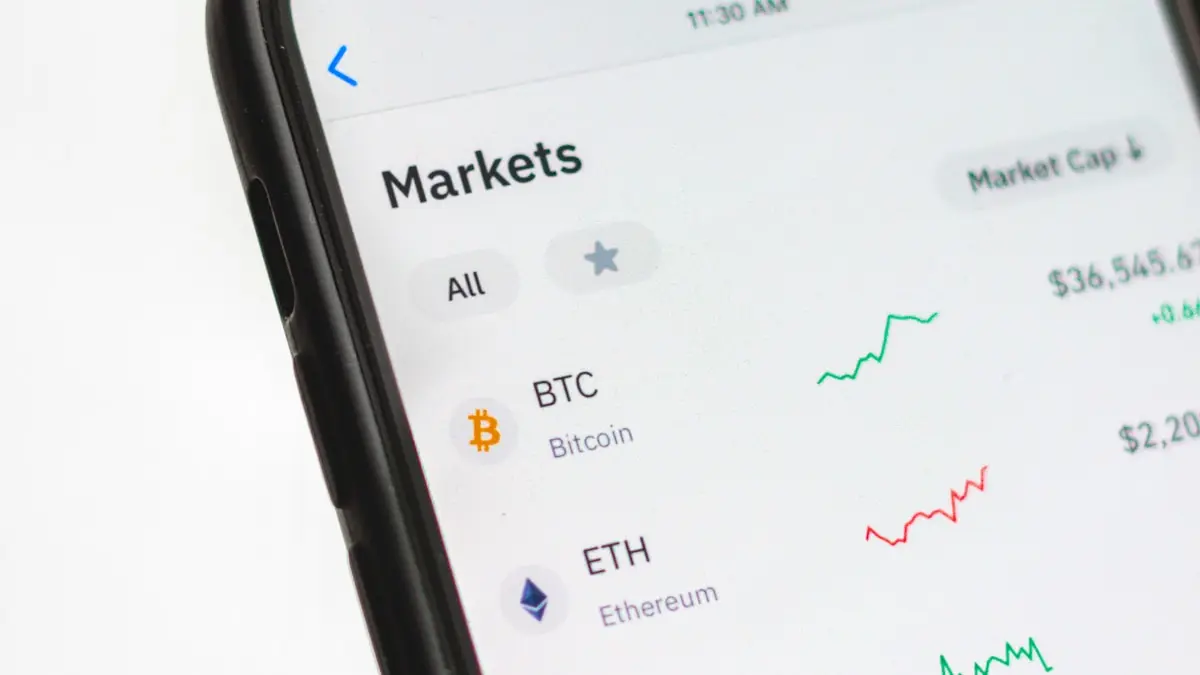
Cryptocurrency is digital money that runs on blockchain technology, a decentralized ledger that records every transaction without needing a bank or government intermediary. Bitcoin, created in 2009, was the first cryptocurrency. Today there are over 20,000 different cryptocurrencies, though only a few dozen have significant market capitalization and real-world utility.
People buy cryptocurrency for several reasons:
Your First Crypto Purchase: 5 Steps
- Investment and wealth growth - Bitcoin has outperformed every traditional asset class over the past decade, with early adopters seeing life-changing returns
- Inflation hedge - With a fixed supply of 21 million coins, Bitcoin is often compared to digital gold
- Decentralized finance (DeFi) - Earn yield, borrow, and lend without banks using protocols built on Ethereum and Solana
- Payments and remittances - Send money anywhere in the world in minutes with minimal fees
- Technology exposure - Owning crypto gives you a stake in Web3, smart contracts, and the future of the internet
Understanding the "why" helps you make smarter decisions about "how." If you are investing long-term, your strategy will differ from someone who wants to use crypto for daily payments.
6 Methods to Buy Cryptocurrency in 2026
There is no single "best" way to buy crypto. Each method has trade-offs in convenience, fees, privacy, and security. Here is a breakdown of every option available to you right now.

Method 1: Centralized Exchanges (CEX) - Recommended for Beginners
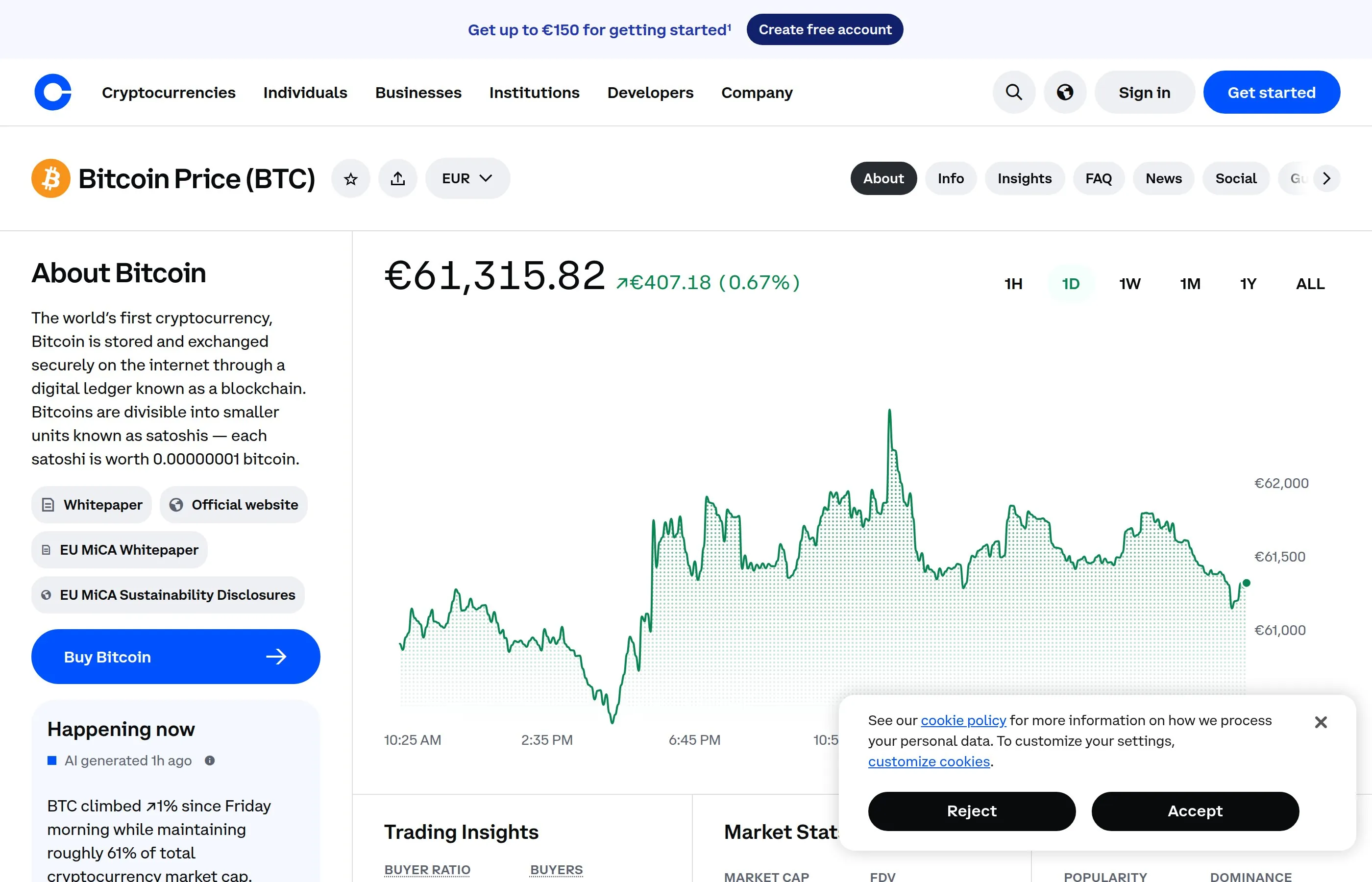
Centralized exchanges like Coinbase and Binance are the most popular way to buy cryptocurrency. They work similarly to stock brokerages: you create an account, deposit money, and buy crypto through a simple interface. These platforms handle everything behind the scenes, including custody of your assets.
Pros of centralized exchanges:
- Beginner-friendly interfaces with mobile apps
- Support for bank transfers, credit cards, and other fiat payment methods
- High liquidity means better prices on large orders
- Customer support available if something goes wrong
- Regulated in most major jurisdictions
- Insurance on custodied assets (varies by platform)
Cons of centralized exchanges:
- Requires identity verification (KYC), which takes time
- You do not control your private keys ("not your keys, not your coins")
- Exchanges can freeze accounts or restrict withdrawals
- Trading fees range from 0.1% to 1.5% depending on the platform
- Centralized platforms are targets for hackers
Top Centralized Exchanges for Beginners in 2026
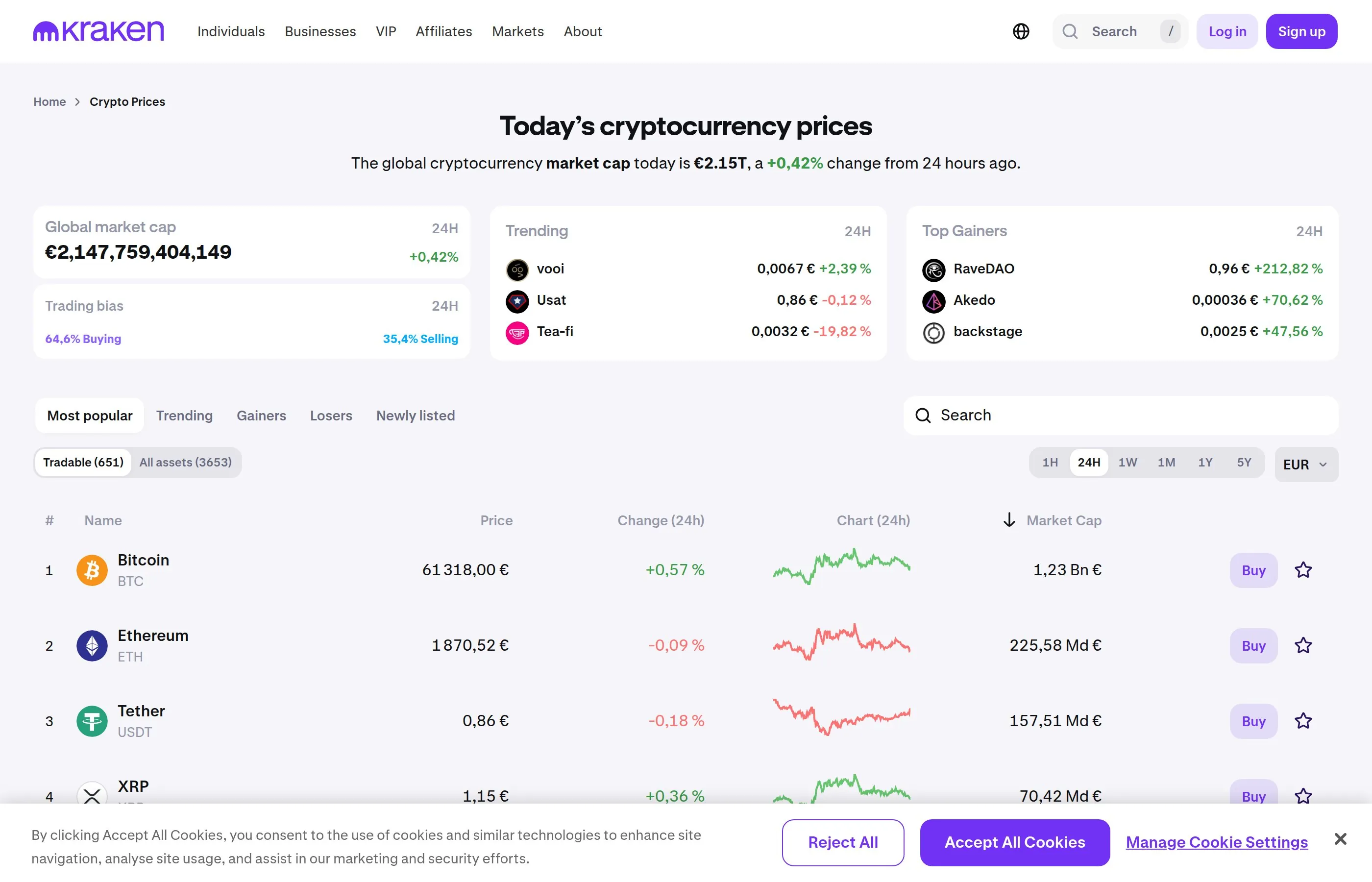
Coinbase - Best for US users, simplest interface, FDIC-insured USD balances. Binance - Largest exchange globally, lowest fees (0.1%), widest coin selection. Kraken - Strong security track record, good for intermediate users. Crypto.com - Best crypto debit card program, competitive staking rewards. Gemini - Regulated in New York, SOC 2 certified, insurance on hot wallet assets.
Method 2: Decentralized Exchanges (DEX)
Decentralized exchanges like Uniswap, Jupiter, and Raydium let you swap crypto directly from your wallet without creating an account or verifying your identity. They use smart contracts to facilitate trades, meaning no company holds your funds at any point.
To use a DEX, you first need a self-custody wallet like MetaMask (for Ethereum and EVM chains) or Phantom (for Solana). You connect your wallet to the DEX, select the tokens you want to swap, approve the transaction, and confirm it. The entire process happens on-chain.

Pros: Full control of your funds, no KYC, access to thousands of tokens not listed on centralized exchanges, transparent pricing.
Cons: Steeper learning curve, risk of interacting with malicious smart contracts, higher fees on Ethereum (gas fees), potential for slippage on large orders, no customer support.
DEXs are better suited for users who already own some crypto and want to trade into smaller altcoins or participate in DeFi. If you are a complete beginner, start with a centralized exchange and explore DEXs after you understand how crypto wallets work.
Method 3: Peer-to-Peer (P2P) Platforms
P2P platforms connect buyers and sellers directly. Binance P2P, Paxful, and Bisq are popular options. The buyer and seller agree on a price and payment method (bank transfer, PayPal, cash, gift cards), and the platform holds the crypto in escrow until the seller confirms payment.
Pros: Flexible payment methods, often no trading fees (sellers pay), available in countries where exchanges are restricted, can sometimes get better prices than market rate.
Cons: Slower than instant exchange purchases, risk of dealing with dishonest counterparties, requires more caution and due diligence, limited to major cryptocurrencies.
Method 4: Crypto ATMs
Bitcoin ATMs (also called BTMs) are physical machines that let you buy crypto with cash or debit cards. There are over 38,000 crypto ATMs worldwide in 2026, with the majority in the United States. Companies like Bitcoin Depot, CoinFlip, and Athena operate large networks.
Pros: Buy crypto with cash, no bank account needed, fast and straightforward, available 24/7.
Cons: High fees (typically 6% to 12%), limited cryptocurrency selection (usually just Bitcoin and sometimes Ethereum), lower transaction limits, requires a crypto wallet to receive funds.
Crypto ATMs are best for people who want to buy small amounts of Bitcoin with cash and do not want to use an online exchange. The fees are significantly higher than other methods, so this should not be your primary buying method if you plan to invest regularly.
Method 5: Credit or Debit Card Purchases
Most major exchanges allow you to buy crypto instantly with a credit or debit card. Services like MoonPay, Transak, and Simplex also let you buy crypto directly to your wallet without creating an exchange account.
Pros: Instant purchases, convenient for small amounts, widely available.
Cons: Higher fees (typically 2.5% to 4.5%), your bank may charge additional cash advance fees for credit card purchases, lower purchase limits compared to bank transfers.
Warning: Credit Card Cash Advance Fees
Many banks classify crypto purchases as cash advances, not regular purchases. This means you may be charged an additional 3% to 5% cash advance fee on top of the exchange fee, plus interest starts accruing immediately with no grace period. Always check with your card issuer before buying crypto with a credit card.
Method 6: PayPal, Venmo, and Cash App
PayPal, Venmo, and Cash App all support cryptocurrency purchases directly within their apps. Cash App is particularly popular for buying Bitcoin. PayPal expanded its crypto offerings in recent years and now supports Bitcoin, Ethereum, Litecoin, and Bitcoin Cash, with the ability to transfer crypto to external wallets.
Pros: Use an app you already have, simple interface, FDIC-insured USD balances (PayPal/Venmo), instant purchases.
Cons: Limited cryptocurrency selection, higher spreads than dedicated exchanges, some platforms still restrict external transfers, cannot interact with DeFi protocols.
Fees Comparison Table: How Much Does It Cost to Buy Crypto?
Fees are one of the biggest factors to consider when choosing how to buy cryptocurrency. Here is a comparison of typical fees across different methods in 2026:
| Method | Trading Fee | Deposit Fee | Withdrawal Fee | Total Cost (per $1,000) |
|---|---|---|---|---|
| Coinbase (Advanced) | 0.4% - 0.6% | Free (ACH) | Network fee | $4 - $6 |
| Binance | 0.1% | Free (bank transfer) | Network fee | $1 - $2 |
| Kraken | 0.16% - 0.26% | Free (ACH/wire) | Network fee | $1.60 - $2.60 |
| Credit/Debit Card | 2.5% - 4.5% | Included | Network fee | $25 - $45 |
| PayPal/Venmo | 1.5% - 2.3% | Free | Network fee | $15 - $23 |
| Cash App (Bitcoin) | 1.5% - 2.2% | Free | Free (Bitcoin) | $15 - $22 |
| Crypto ATM | 6% - 12% | Cash (included) | Network fee | $60 - $120 |
| DEX (Solana) | 0.25% - 1% | N/A | <$0.01 | $2.50 - $10 |
| DEX (Ethereum) | 0.3% - 1% | N/A | $1 - $15 gas | $4 - $25 |
As you can see, the difference between methods is enormous. Buying $1,000 of Bitcoin through Binance costs roughly $1 to $2 in fees, while the same purchase at a crypto ATM could cost you $60 to $120. Over time, especially if you are dollar-cost averaging with regular purchases, these fees add up significantly.
How to Buy Cryptocurrency: Step-by-Step Guide
This walkthrough uses a centralized exchange (the recommended method for beginners). The process is nearly identical whether you use Coinbase, Binance, Kraken, or any other major platform.
Step 1: Choose Your Exchange
Pick an exchange based on your location, preferred payment method, and the cryptocurrencies you want to buy. If you are in the United States, Coinbase and Kraken are the most beginner-friendly regulated options. For global users, Binance offers the lowest fees and widest selection. Read our detailed Coinbase tutorial or Binance tutorial for platform-specific instructions.
Step 2: Create Your Account
Visit the exchange's official website or download their mobile app from the Apple App Store or Google Play Store. Never use links from emails, social media ads, or search engine ads, as these may lead to phishing sites.
You will need to provide:
- A valid email address
- A strong, unique password (use a password manager)
- Your phone number for SMS verification
After creating your account, immediately enable two-factor authentication (2FA) using an authenticator app like Google Authenticator or Authy. Do not rely on SMS-based 2FA alone, as it is vulnerable to SIM-swap attacks.
Step 3: Verify Your Identity (KYC)
Regulated exchanges require Know Your Customer (KYC) verification. You will typically need to submit:
- A government-issued photo ID (passport, driver's license, or national ID card)
- A selfie or live photo for facial verification
- Proof of address (utility bill or bank statement, usually within the last 3 months)
Verification typically takes 5 to 30 minutes with automated systems in 2026, though some cases may require manual review (up to 48 hours). Higher verification tiers unlock larger deposit and withdrawal limits.
Step 4: Deposit Funds
Once verified, deposit fiat currency (USD, EUR, GBP, etc.) into your exchange account. The most cost-effective methods are:
- ACH bank transfer (US) - Free on most exchanges, takes 1-3 business days to clear, but many platforms give you instant buying power
- SEPA transfer (Europe) - Free or low-cost, usually arrives within 1 business day
- Wire transfer - Available globally, fast (same day), but may incur bank fees of $15-$30
- Debit card - Instant but higher fees (1.5%-3.5%)
For your first purchase, a bank transfer is the best option to minimize fees. Start with an amount you are comfortable with and can afford to lose entirely.
Step 5: Place Your First Buy Order
Navigate to the trading section of your exchange. For beginners, use the "Simple Buy" or "Instant Buy" feature rather than the advanced trading interface. Here is how:
- Select the cryptocurrency you want to buy (e.g., Bitcoin)
- Enter the amount in your local currency (e.g., $100 USD)
- Review the price, fees, and total cost
- Confirm the purchase
If you want lower fees, use the exchange's advanced or pro trading interface and place a "limit order" at your desired price rather than a "market order" that executes instantly at the current price. Limit orders typically have lower fees and give you more control over the price you pay.
Step 6: Secure Your Crypto
After buying, decide where to store your cryptocurrency. You have two options:
- Leave it on the exchange (custodial) - Convenient for active trading, but you trust the exchange to keep your funds safe
- Transfer to a personal wallet (self-custody) - You control the private keys, which means complete ownership and responsibility
For amounts over $500, we strongly recommend transferring to a self-custody wallet. Learn how in our crypto wallet setup guide.
Which Cryptocurrency Should You Buy First?
With thousands of cryptocurrencies available, choosing what to buy can feel overwhelming. Here are the top picks for beginners, based on market capitalization, track record, utility, and accessibility.
Bitcoin (BTC) - The Foundation
Bitcoin is the original cryptocurrency and remains the largest by market capitalization. It is the most widely accepted, most liquid, and most battle-tested cryptocurrency. Every beginner should consider Bitcoin as their first purchase. Its fixed supply of 21 million coins, combined with growing institutional adoption (spot Bitcoin ETFs now hold over $100 billion in assets), makes it the closest thing to a "blue chip" in crypto. Read our full guide to buying Bitcoin for detailed instructions.
Ethereum (ETH) - The Smart Contract Platform
Ethereum is the second-largest cryptocurrency and the backbone of decentralized finance, NFTs, and most Web3 applications. If Bitcoin is digital gold, Ethereum is the programmable computer of crypto. Owning ETH gives you access to the entire Ethereum ecosystem, including thousands of DeFi protocols. Our Ethereum buying guide covers everything you need to know.
Solana (SOL) - The High-Performance Chain
Solana has established itself as the leading high-performance blockchain, processing thousands of transactions per second with fees under a penny. Its ecosystem has grown rapidly, particularly in DeFi, gaming, and consumer applications. SOL is available on every major exchange and is a solid pick for beginners who want exposure beyond Bitcoin and Ethereum. Check out our Solana buying guide for step-by-step instructions.
Suggested Beginner Portfolio Allocation
Conservative: 70% Bitcoin, 20% Ethereum, 10% Solana. Balanced: 50% Bitcoin, 30% Ethereum, 20% Solana/other large caps. Growth-oriented: 40% Bitcoin, 30% Ethereum, 30% altcoins (SOL, LINK, AVAX, etc.). Always do your own research before buying any cryptocurrency.
How Much Money Should You Invest in Crypto?
The number one rule of cryptocurrency investing: never invest more than you can afford to lose entirely. Crypto is a volatile asset class. Prices can drop 30% to 50% in a matter of weeks, and some altcoins can lose 90% or more of their value.
Here are practical guidelines for deciding how much to invest:
- Pay off high-interest debt first. Credit card interest rates (20%+) will almost certainly outpace crypto returns
- Build an emergency fund. Have 3 to 6 months of living expenses in a savings account before investing in any volatile asset
- Start small. You can buy as little as $10 worth of Bitcoin. There is no minimum investment required on most platforms
- Use the 5% rule. Many financial advisors suggest allocating no more than 5% to 10% of your total investment portfolio to cryptocurrency
- Dollar-cost average. Instead of investing a lump sum, spread your purchases over time (weekly or monthly) to reduce the impact of volatility
A common beginner approach is to set up a recurring purchase of $25 to $100 per week in Bitcoin and Ethereum. This dollar-cost averaging (DCA) strategy removes the stress of trying to time the market and has historically produced strong results over multi-year periods.
Crypto Wallets: Custodial vs. Self-Custody
Understanding wallets is essential to understanding how to buy cryptocurrency safely. A crypto wallet does not actually "store" your coins. Instead, it stores the private keys that give you access to your cryptocurrency on the blockchain.
Custodial Wallets (Exchange Wallets)
When you buy crypto on Coinbase or Binance and leave it there, you are using a custodial wallet. The exchange holds your private keys on your behalf, similar to how a bank holds your money.
Advantages: Easy to use, no risk of losing your private keys, integrated with trading features, customer support available, often insured against hacks (partially).
Disadvantages: You do not truly own your crypto ("not your keys, not your coins"), exchange can freeze your account, you are dependent on the exchange's security, counterparty risk if the exchange becomes insolvent.
Non-Custodial (Self-Custody) Wallets
Self-custody wallets give you full control over your private keys. There are two types:
Hot wallets (software wallets) are free apps installed on your phone or browser. Popular options include MetaMask (Ethereum/EVM), Phantom (Solana), and Trust Wallet (multi-chain). They are convenient for daily use and interacting with DeFi applications but are connected to the internet, making them more vulnerable to malware.
Cold wallets (hardware wallets) are physical devices that store your private keys offline. Ledger and Trezor are the leading brands. Hardware wallets are the gold standard for security and are strongly recommended for anyone holding more than $1,000 in crypto. Read our hardware wallet comparison guide to find the right device for your needs.
Wallet Strategy for Beginners
Under $500: Exchange wallet is fine. Focus on learning. $500 to $5,000: Use a hot wallet (MetaMask, Phantom, or Trust Wallet) and learn self-custody. Over $5,000: Get a hardware wallet (Ledger or Trezor) for your main holdings. Keep a small amount in a hot wallet for active use.
Security Essentials: Protecting Your Cryptocurrency
Security is not optional in crypto. Unlike traditional finance, most crypto transactions are irreversible. If someone steals your crypto or you send it to the wrong address, it is gone forever. Here are the non-negotiable security practices every crypto holder must follow.
Account Security
- Use a unique, strong password for every exchange account (minimum 16 characters with mixed case, numbers, and symbols)
- Enable 2FA with an authenticator app (Google Authenticator, Authy). Never use SMS-only 2FA
- Use a password manager (Bitwarden, 1Password) to generate and store passwords securely
- Set up a withdrawal whitelist on your exchange so funds can only be sent to pre-approved addresses
- Enable email notifications for all login attempts and withdrawals
Wallet Security
- Write down your seed phrase on paper and store it in a secure physical location (fireproof safe, safety deposit box). Never store it digitally (no screenshots, no cloud storage, no notes apps)
- Never share your seed phrase with anyone. No legitimate service, support team, or person will ever ask for it
- Use a metal seed phrase backup for additional protection against fire and water damage
- Verify wallet addresses character by character before sending transactions. Clipboard-hijacking malware can replace addresses
- Start with a small test transaction before sending large amounts to a new address
Common Scams to Avoid
- Phishing websites that look identical to real exchanges. Always type the URL directly or use bookmarks
- Fake customer support on social media. No exchange will DM you first or ask for your password/seed phrase
- "Guaranteed returns" schemes. If someone promises fixed daily returns or "risk-free" profits, it is a scam
- Rug pulls on new tokens. Research projects thoroughly using our DYOR research guide
- Impersonation scams where someone pretends to be Elon Musk, CZ, or another crypto figure asking you to send crypto
- Fake airdrops that ask you to connect your wallet to malicious smart contracts
Dollar-Cost Averaging: The Smartest Strategy for Beginners
Dollar-cost averaging (DCA) is an investment strategy where you buy a fixed dollar amount of cryptocurrency at regular intervals, regardless of the price. Instead of trying to buy at the perfect moment (which even professionals cannot do consistently), you spread your purchases over time.
How DCA works in practice:
- Decide on a fixed amount (e.g., $50 per week)
- Choose your cryptocurrency (e.g., Bitcoin)
- Set up an automatic recurring purchase on your exchange
- Let it run regardless of whether prices are up or down
When prices are high, your $50 buys less crypto. When prices are low, your $50 buys more. Over time, this averages out your cost basis and removes the emotional stress of trying to time the market.
Historical data shows that DCA into Bitcoin over any 4-year period has been profitable 100% of the time. While past performance does not guarantee future results, DCA remains the most recommended strategy for beginners who want steady, low-stress exposure to crypto. Read our complete DCA crypto guide for detailed setup instructions on every major exchange.
Tax Basics: What You Need to Know
Cryptocurrency is a taxable asset in most countries. Understanding the basic tax rules prevents costly surprises and potential legal issues down the road.
Taxable Events in Crypto
- Selling crypto for fiat (e.g., selling Bitcoin for USD) - triggers capital gains tax
- Trading one crypto for another (e.g., swapping ETH for SOL) - triggers capital gains tax
- Using crypto to buy goods or services - triggers capital gains tax
- Receiving crypto as income (mining, staking rewards, airdrops, salary) - triggers income tax
Non-Taxable Events
- Buying crypto with fiat and holding it
- Transferring crypto between your own wallets
- Gifting crypto (up to annual gift tax exclusion limits)
Keep detailed records of every transaction, including the date, amount, price at the time of transaction, and any fees paid. Most exchanges provide transaction history exports, and crypto tax software like Koinly, CoinTracker, and TaxBit can automate the calculation process. Read our comprehensive crypto tax guide for 2026 for country-specific rules and reporting requirements.
Important Tax Reminder
Tax obligations apply even if you do not cash out to fiat. Swapping Bitcoin for Ethereum, for example, is a taxable event in the United States, United Kingdom, Australia, Canada, and most other jurisdictions. Failure to report crypto taxes can result in penalties, interest, and in severe cases, criminal prosecution. When in doubt, consult a tax professional familiar with cryptocurrency.
Pros and Cons of Buying Cryptocurrency
Pros
- High growth potential. Crypto has been the best-performing asset class over the past decade
- 24/7 market access. Unlike stocks, crypto markets never close
- Low barrier to entry. Buy as little as $1 worth on most platforms
- Decentralization. No single entity controls Bitcoin or Ethereum
- Global accessibility. Anyone with internet access can participate
- Portfolio diversification. Crypto has low correlation with traditional assets
- Programmable money. DeFi enables lending, borrowing, and yield generation without banks
- Inflation resistance. Bitcoin's fixed supply makes it a potential hedge against currency devaluation
- Institutional validation. Major corporations, banks, and governments are now involved in crypto
Cons
- Extreme volatility. Prices can swing 10% to 20% in a single day
- Regulatory uncertainty. Laws vary by country and are still evolving
- Security risks. Hacks, scams, and user errors can result in permanent loss of funds
- Complexity. Self-custody, DeFi, and blockchain technology have a steep learning curve
- Irreversible transactions. Sending crypto to the wrong address means it is gone forever
- Tax complexity. Tracking and reporting crypto taxes can be burdensome
- Environmental concerns. Bitcoin mining consumes significant energy (though this is improving)
- Market manipulation. Smaller altcoins are susceptible to pump-and-dump schemes
10 Common Mistakes Beginners Make (and How to Avoid Them)
Learning how to buy cryptocurrency is just the first step. Avoiding these common mistakes will save you money and frustration.
Mistake 1: Investing More Than You Can Afford to Lose
Crypto is exciting, and it is easy to get caught up in the hype. But investing your rent money, emergency fund, or money you need in the next 1 to 2 years is a recipe for disaster. Only invest discretionary income that you would be okay losing entirely.
Mistake 2: Trying to Time the Market
Even the most experienced traders cannot consistently predict short-term price movements. Instead of waiting for the "perfect" entry point (which you will never feel confident about), use dollar-cost averaging and invest consistently over time.
Mistake 3: Buying Based on Hype or Social Media
If you are buying a coin because an influencer on Twitter or TikTok said it will "100x," you are already too late. Always do your own research. Understand what the project does, who the team is, and what the tokenomics look like before investing.
Mistake 4: Ignoring Security
Using a weak password, skipping 2FA, or storing your seed phrase in a notes app are mistakes that can cost you everything. Take security seriously from day one, even if you are only buying a small amount.
Mistake 5: Panic Selling During Dips
Crypto markets go through cycles. A 30% drop is not unusual and has happened dozens of times in Bitcoin's history. If you believe in your investment thesis and you are investing for the long term, short-term dips are buying opportunities, not reasons to sell at a loss.
Mistake 6: Not Understanding Fees
Using Coinbase Simple Buy instead of Coinbase Advanced Trade can cost you 10 times more in fees. Using a credit card instead of a bank transfer can add 3% to 5% to every purchase. Learn how fees work on your chosen platform and always use the most cost-effective method.
Mistake 7: Holding Everything on One Exchange
Exchange hacks and insolvencies have happened repeatedly throughout crypto history. Diversify where you hold your crypto: keep trading amounts on the exchange, move long-term holdings to a hardware wallet, and never keep all your eggs in one basket.
Mistake 8: Chasing Memecoins Without Research
Memecoins can produce spectacular short-term gains, but the vast majority lose 99%+ of their value. If you want to speculate on memecoins, use only money you are genuinely prepared to lose entirely, and never allocate more than 5% of your crypto portfolio to high-risk speculative plays.
Mistake 9: Forgetting About Taxes
Every trade, swap, and sale is potentially taxable. Ignoring this does not make the obligation go away. Use crypto tax software from the start and keep records of every transaction. It is much easier to track as you go than to reconstruct a year's worth of trades at tax time.
Mistake 10: Sending Crypto to the Wrong Network
Sending Ethereum to a Bitcoin address, or sending tokens on the wrong network (e.g., ERC-20 vs. BEP-20), can result in permanent loss. Always double-check the network and address before confirming any withdrawal. Use the test transaction method: send a small amount first, confirm it arrives, then send the rest.
Video Explainer
Watch this video for a visual walkthrough of the concepts covered above.

Frequently Asked Questions (FAQ)
How much money do I need to start buying cryptocurrency?
You can start with as little as $1 on most exchanges. Coinbase, Binance, and Kraken all allow very small purchases. There is no minimum investment required to buy Bitcoin or Ethereum. You do not need to buy a whole coin; you can buy fractions. For example, $50 buys you a fraction of a Bitcoin (called satoshis).
Is buying cryptocurrency safe?
Buying crypto on regulated exchanges like Coinbase, Kraken, and Binance is generally safe. These platforms use bank-grade security, cold storage for the majority of assets, and carry insurance policies. However, the crypto you buy can still lose value, and you are responsible for securing your own accounts with strong passwords and 2FA. Self-custody introduces additional responsibility for protecting your private keys.
What is the best cryptocurrency to buy for beginners?
Bitcoin (BTC) is the safest starting point for beginners. It has the longest track record, highest liquidity, strongest network effects, and clearest regulatory status. Ethereum (ETH) and Solana (SOL) are also solid choices for beginners who want broader exposure to the crypto ecosystem. Avoid jumping into small-cap altcoins or memecoins until you have experience and understand the risks.
Can I buy cryptocurrency without ID verification?
Decentralized exchanges (DEXs) like Uniswap and Jupiter do not require ID verification. However, you need to already own some cryptocurrency to use a DEX. Crypto ATMs sometimes allow small purchases (under $250 to $500) without full KYC, depending on local regulations. For most beginners, completing KYC on a regulated exchange is the easiest and safest path.
What is the difference between a coin and a token?
A "coin" (like Bitcoin or Ethereum) operates on its own blockchain. A "token" (like USDC or LINK) is built on top of an existing blockchain. For example, USDC is a token on the Ethereum blockchain. In everyday conversation, people often use "coin" and "token" interchangeably, but the technical distinction matters when you are transferring crypto between wallets (you need to use the correct network).
Should I buy crypto with a credit card?
Generally, no. Credit card purchases incur higher fees (2.5% to 4.5%) from the exchange, and many banks charge an additional cash advance fee (3% to 5%) plus immediate interest. If you have the option, use a bank transfer (ACH, SEPA, or wire) for significantly lower fees. Debit cards are a middle ground if you need instant purchases.
What happens if an exchange gets hacked?
Major exchanges carry insurance policies and maintain the majority of customer funds in cold storage (offline wallets). If an exchange is hacked, they typically cover losses from their insurance fund. However, this is not guaranteed, and smaller exchanges may not have adequate reserves. This is why self-custody (moving crypto to your own wallet) is recommended for significant holdings.
How do I sell cryptocurrency once I have bought it?
Selling is the reverse of buying. On a centralized exchange, navigate to the sell section, select the cryptocurrency, enter the amount, and choose to sell for fiat currency (USD, EUR, etc.). The proceeds are deposited to your exchange balance, which you can then withdraw to your bank account. Withdrawals to bank accounts typically take 1 to 5 business days.
What is a stablecoin and should I buy one?
Stablecoins are cryptocurrencies designed to maintain a 1:1 value with a fiat currency, usually the US dollar. Popular stablecoins include USDT (Tether), USDC (Circle), and DAI (MakerDAO). You do not buy stablecoins as an investment (they do not appreciate in value). Instead, they are used as a safe haven during volatile markets, for transferring value between exchanges, and for earning yield in DeFi protocols.
Is it too late to buy Bitcoin in 2026?
This question has been asked every year since Bitcoin was $100. While past performance does not guarantee future results, Bitcoin's fundamental properties (fixed supply, growing adoption, institutional demand, spot ETF inflows) suggest it still has significant room for growth. The key is to have a long-term perspective (3+ years), use dollar-cost averaging, and not invest more than you can afford to lose.
Do I need to report crypto on my taxes?
Yes, in virtually every developed country. In the United States, the IRS requires you to report all cryptocurrency transactions, including sales, trades, and income from mining or staking. Many exchanges now issue 1099 forms and share transaction data with tax authorities. Use crypto tax software to automate tracking and reporting. See our crypto tax guide for country-specific details.
What is the safest way to store cryptocurrency?
A hardware wallet (cold wallet) like Ledger or Trezor is the safest option for long-term storage. These devices keep your private keys offline, making them immune to online hacking attempts. For smaller amounts or active trading, a reputable exchange or software wallet with strong security practices (2FA, withdrawal whitelists) is sufficient. See our cold wallet comparison guide for detailed reviews.
Can I lose more money than I invest in crypto?
If you are simply buying and holding cryptocurrency (spot trading), the maximum you can lose is your initial investment. A coin's price can drop to zero, but you cannot owe money beyond what you invested. However, if you use leverage or margin trading (borrowing money to trade), you can lose more than your initial investment. Beginners should avoid leverage trading entirely.
How long does it take to buy cryptocurrency?
If you use a credit card or debit card, you can buy crypto within minutes of creating and verifying your account. Bank transfers take 1 to 3 business days to settle, though many exchanges offer instant buying power while the transfer processes. Account verification (KYC) can take anywhere from 5 minutes to 48 hours, depending on the platform and verification tier.
Related Tutorials
Continue your crypto education with these in-depth guides:
- How to Buy Bitcoin: Step-by-Step Guide (2026)
- How to Buy Ethereum (ETH): Complete Guide (2026)
- How to Buy Solana: Best Ways to Buy SOL in 2026
- How to Use Coinbase: Complete Beginner Tutorial (2026)
- How to Use Binance Exchange: Complete Trading Tutorial (2026)
- How to Create a Crypto Wallet: Step-by-Step Guide (2026)
- Best Cold Wallets 2026: Hardware Wallet Comparison Guide
- How to Use MetaMask Wallet: Complete Tutorial (2026)
- How to DYOR: Crypto Token Research Tutorial Guide
- What Is a Blockchain? Complete Beginner Guide (2026)
- How to Dollar-Cost Average (DCA) Crypto Guide (2026)
- Crypto Tax Guide: Every Country (2026)
Related Guides
- How to Buy Toncoin (TON) in 2026: Exchanges, Wallet Setup and First Purchase Guide
- Top AI x Crypto Tokens by Use Case: A Buyer's Map
- Liquidity Incentive Traps: When Rewards Attract Farmers, Not Real Buyers
- What Is MegaETH? Real-Time Ethereum L2 Guide 2026
- What is ETH ATH? Ethereum’s All-Time High Explained