Tourist vs Native Capital: Spotting Crypto Growth
— By Whatsertrade in Tutorials
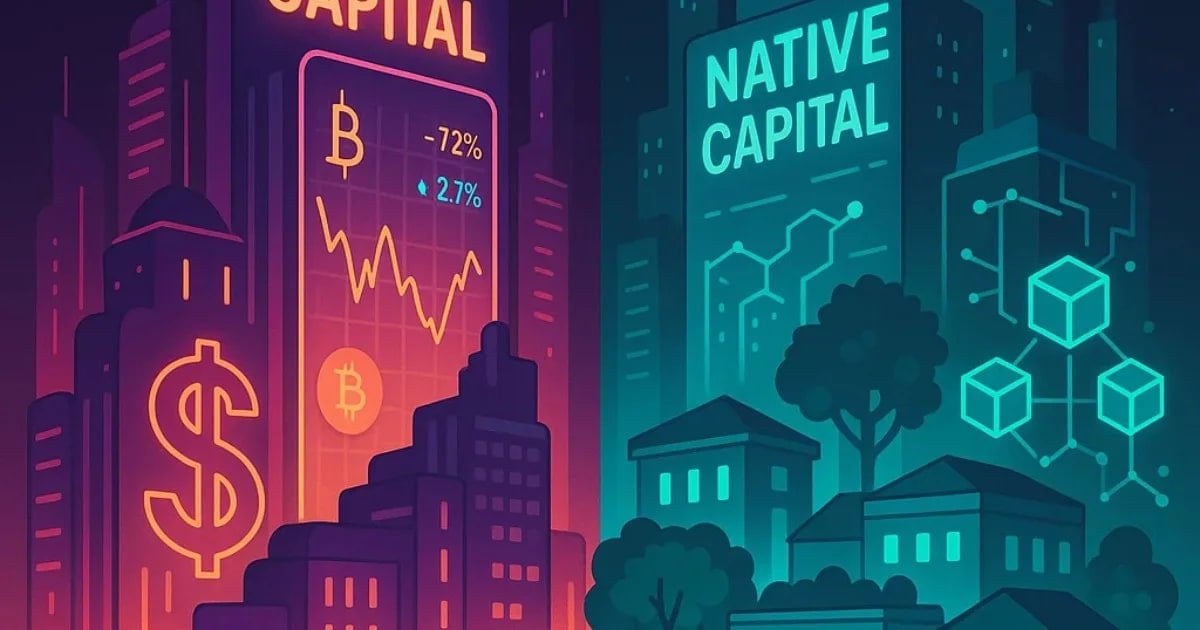
Tourist vs native capital explained: learn to tell temporary crypto hype from real community support by reading participant behavior and market activity.
Not all buyers are equal in the realm of crypto community growth. Some traders enter a token market for quick gains and vanish when momentum declines. Others remain, participate consistently, provide liquidity, engage actively with the community, and offer ongoing market support.
The first group represents tourist capital. The second is native capital.
Key Takeaways
- Defining Tourist Capital
- Defining Native Capital
- The Importance of Recognizing the Difference
- Identifying Tourist Capital Traits
- Recognizing Native Capital Patterns
- Volume Isn't the Full Story
Grasping this distinction helps traders not to confuse short-term hype with genuine community expansion.
Defining Tourist Capital
Characteristics of Tourist Capital
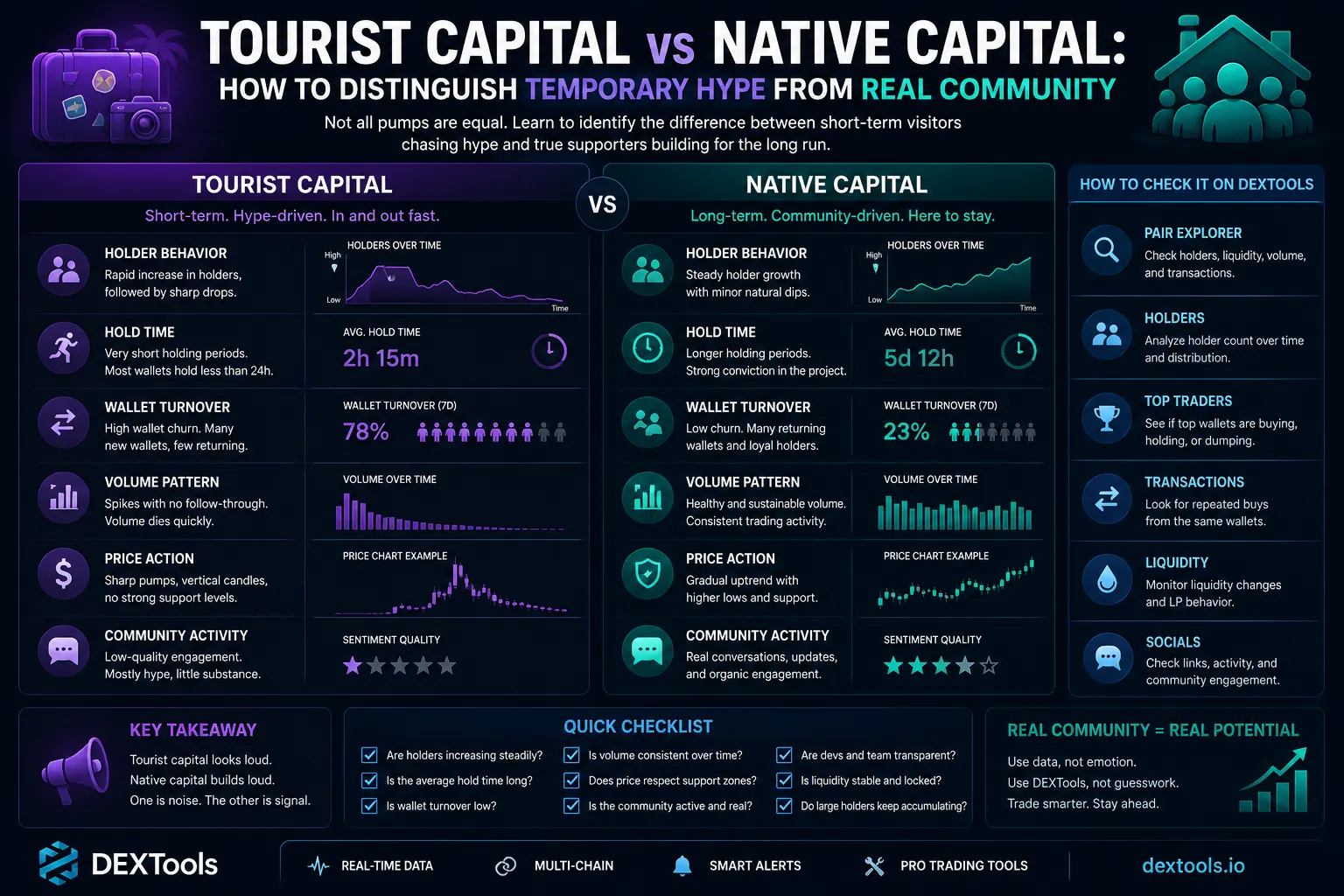
Tourist capital flows into a token because it's trending, viral, or temporarily alluring. These traders often lack long-term commitments to the project. They're after quick profits and fast exits.
This kind of capital can fuel dramatic price surges, pushing a chart upward in minutes and making a token seem unstoppable, but it can just as quickly evaporate.
A token overwhelmed by tourist capital frequently shows abrupt volume spikes, sharp price candles, and quick holder growth, often with little follow-through.
Defining Native Capital
Attributes of Native Capital
Native capital derives from participants with a deeper connection to the project or community. They might be early backers, ecosystem users, long-term holders, builders, liquidity providers, or repeat purchasers.
Such capital often stabilizes market behavior. While it doesn't remove volatility, it supports recovery after downturns. A token buoyed by native capital typically shows consistent buying, stronger holder retention, and more reliable liquidity.
The Importance of Recognizing the Difference
Impact on Market Perception
A chart dominated by tourist capital might appear robust but could have a fragile support base. Once interest shifts, the token can rapidly lose steam.
Resilience of Native Capital
A chart supported by native capital might grow more slowly but usually has better resilience. Pullbacks might be met with buying, liquidity might stay intact, and holders might continue engaging after initial hype wanes.
Traders should discern whether a move is a rental by transient attention or underpinned by committed participants.
Identifying Tourist Capital Traits
Key Indicators
Tourist capital reveals itself in brief spikes of activity. Warning signs include:
- Sudden volume followed by no lasting engagement
- Large price movements with immediate sell-offs
- Many small new holders showing minimal repeat buying
- Social media buzz overshadowing actual liquidity
- Sharp movements during trendy times, followed by silence
- Early investors cashing out while latecomers buy in
These signals don't inherently mean a token is poor. They urge caution about assuming such moves have a lasting foundation.
Recognizing Native Capital Patterns
Positive Signs
Native capital causes different patterns. Promising indicators include:
- Consistent buying post-pullbacks
- Holder retention amid volatility
- Stable or improving liquidity
- A more balanced holder distribution over time
- Community engagement persisting beyond initial price boosts
- Larger wallets holding rather than selling immediately
Identifying native capital in real-time is challenging but important. More of these signs, appearing together, reinforce the case for real, enduring support.
Volume Isn't the Full Story
Beyond Mere Volume
Traders often use volume as a demand shortcut. This is hazardous. High volume may denote genuine interest, but could equally signify rotation, speculation, or exit liquidity.
The crucial question is what follows the volume: does price sustain higher levels, do holders persist, does liquidity hold, and do buyers revisit after downturns?
If not, the volume might have been mere fleeting attention rather than genuine conviction.
Analyzing Holder Retention
Retention Insight
Holder growth is valuable, but retention is crucial. A token amassing thousands of holders during hype but losing them soon after might lack authentic community strength.
Look for holders persevering through regular volatility. Check if new buyers emerge only during uptrends or also during pullbacks. A healthy community supports weakness, not just strength.
Tourist capital offers opportunities but also risks. It moves swiftly, reacts emotionally, and departs as attention wavers. Native capital, harder to nurture, provides stronger long-term support.
Traders don't need to evade all tourist capital. Fast money creates strong moves. The key is recognizing if a token's driven only by transient hype or if it rests on a deeper support base.
A chart can pump due to visits; a robust market forms when participants decide to stay.
How to Bridge Crypto Between Chains: Complete Cross-Chain Tutorial 2026 How to Use 1inch: Complete DEX Aggregator Swap Tutorial (2026) How to Use OKX Web3 Wallet: Multi-Chain DeFi Hub Guide (2026)Related Guides
- Spotting Artificial Crypto Holder Growth
- Native Staking vs Liquid Staking vs Restaking: Decision Tree
- Blast chain: Native Yield L2 Explained
- Bitcoin ETFs vs Native DeFi in 2026: Custody, Yield and Control
- Detect Wash Trading on DEXTools Easily
Frequently Asked Questions
What is the difference between tourist and native capital in crypto?
Tourist capital is money that chases short-term hype and leaves quickly once the excitement fades, while native capital comes from participants who stay engaged with a project over time. The distinction helps you tell temporary momentum apart from durable community support.
How can I tell if crypto growth is real or just hype?
Look at participant behavior over time rather than a single price spike, such as whether holders keep using the project, provide liquidity, or return after pullbacks. Growth driven only by quick speculative inflows tends to reverse as fast as it appeared.
Why does tourist capital leave a project so quickly?
Tourist capital is usually motivated by short-term gains rather than belief in the project, so it rotates out as soon as a faster opportunity appears or sentiment cools. This can make prices look strong briefly and then collapse when the inflows stop.
Why does native capital matter for long-term crypto projects?
Native capital reflects participants who are committed to a project, which tends to produce steadier liquidity and more resilient activity through market cycles. Projects supported mainly by committed users are generally less fragile than those reliant on passing hype.