Blast Chain Explained: Native Yield L2 Guide 2026
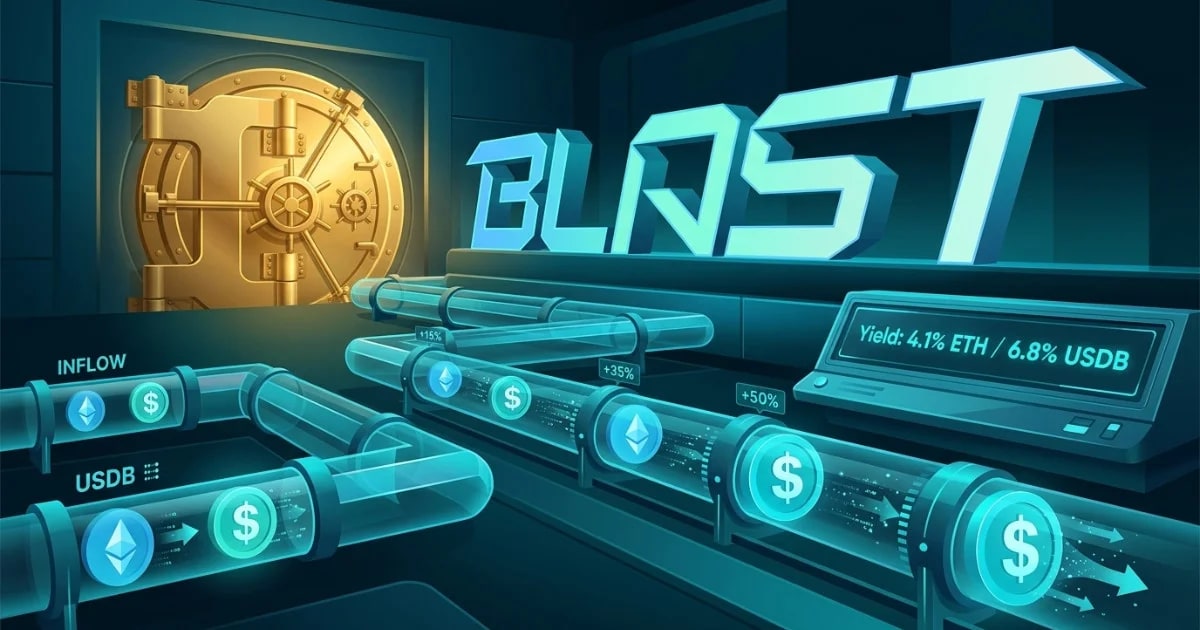
Blast chain explained: learn how this native yield L2 works in 2026, its yield on ETH and USDB, gas-revenue sharing, and upcoming token unlocks.
Analyzing the Native Yield L2 and its 2026 Ecosystem
- As of May 14, 2026, Blast chain has matured from a controversial "points-farming" experiment into a stable fixture of the Ethereum Layer 2 (L2) landscape. While it initially gained notoriety for its aggressive marketing and invite-only bridge, Blast in 2026 is recognized for its unique Auto-Rebasing model, which natively integrates yield into the wallet experience.
- While the "yield-first" narrative remains its primary draw, the network has had to navigate the complexities of a large token supply and the transition from temporary "Points" and "Gold" incentives to a fully functional BLAST token economy.
1. The Native Yield Mechanism: ETH and USDB
Blast is the first L2 to offer native yield directly at the protocol level. Unlike other networks where assets sit idle, assets on Blast automatically grow through two primary channels:
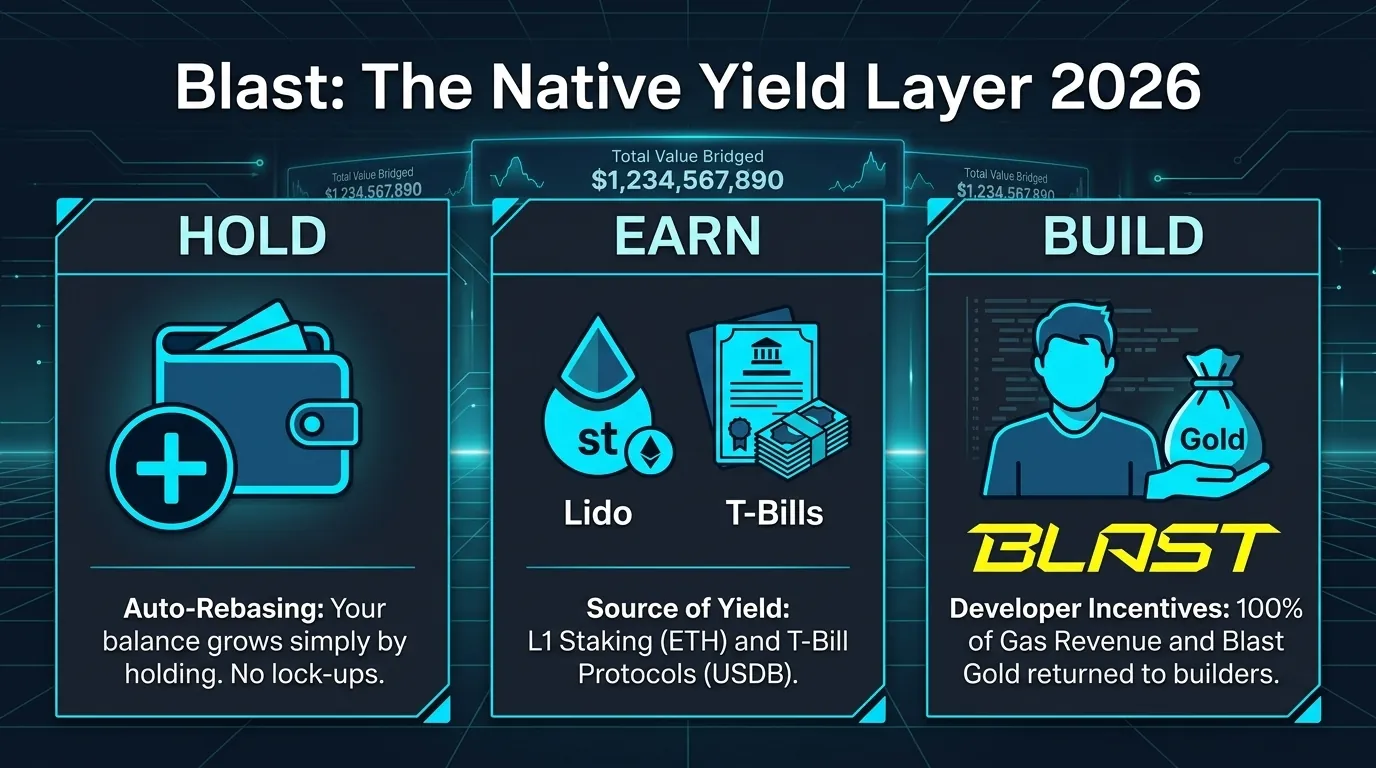
ETH Auto-Rebasing: When users bridge ETH to Blast, the protocol stakes that ETH in L1 liquid staking protocols (primarily Lido). The staking rewards are then passed back to users by automatically increasing their ETH balance on the L2. In May 2026, the native ETH yield fluctuates between 3.2% and 4.1% APY.
USDB (Blast USD): When stablecoins (USDC, USDT, DAI) are bridged, they are converted to USDB. This native stablecoin generates yield from Real-World Asset (RWA) protocols, specifically MakerDAO’s on-chain T-Bill protocols. In 2026, USDB yields range between 5% and 7% APY, making it a competitive "parking spot" for capital during market consolidation.
2. Beyond Points: The BLAST Token and Gold
The legendary "Blast Points" and "Blast Gold" programs of 2024 have largely transitioned into the BLAST chain token ecosystem.
The BLAST Token: Following the successful community airdrop, the BLAST token is now the primary governance and utility asset. As of mid-May 2026, the token is undergoing a significant vesting phase, with the next major unlock for the Blast Foundation scheduled for May 26, 2026.
Blast Gold: This mechanism remains as a developer-focused incentive. The network programmatically distributes "Gold" to dApps based on their activity and TVL. Developers then redistribute this Gold to users, creating a continuous "loyalty" loop that persists even in the mature 2026 market.
Gas Revenue Sharing: A technical standout of Blast is its gas sharing model. Unlike other L2s that keep sequencer profit, Blast returns a portion of the net gas revenue to the dApp developers, allowing them to subsidize user transactions or build "gas-free" experiences.
3. The 2026 Blast chain Ecosystem: Top dApps and Categories
The Blast chain ecosystem has specialized in high-frequency DeFi and SocialFi applications that benefit from native yield:
Aerodrome & Thruster: These remain the primary liquidity hubs, utilizing native yield to provide deeper liquidity for high-volume trading pairs.
Blast Mobile: An intuitive interface launched in late 2025 that abstracts away the technical complexities of L2s, allowing mainstream users to earn "rebasing" yield with a traditional fintech feel.
Social Gaming: Blast has become a hub for games where in-game economies are backed by USDB, ensuring that the "treasury" of the game grows even when users aren't playing.
Technical Trade-offs and Market Realities
Strengths and Opportunities
Inherent Capital Efficiency: The "Auto-Rebasing" model is arguably the most efficient way for retail users to hold ETH and stablecoins without manual staking.
Developer Alignment: The gas-sharing and Gold programs ensure that developers are economically incentivized to keep users engaged.
Yield-Bearing Liquidity: DeFi on Blast is naturally more "sticky" because the underlying liquidity providers (LPs) are earning protocol-level yield on top of trading fees.
Limitations and Challenges
Security Model: Blast is an Optimistic Rollup and still utilizes a multi-signature (multi-sig) security mechanism for its core contracts. While it hasn't faced a major breach by May 2026, the "trust" required in the five-signer setup remains a critique from decentralization purists.
Token Dilution: The BLAST token has a massive total supply (100 billion), and the ongoing vesting cliffs (including the upcoming May 26 unlock) create persistent selling pressure that has kept the token's market cap relatively modest compared to its TVL.
Yield Sensitivity: The network's attractiveness is tied to L1 staking rates and T-Bill yields. If global interest rates or L1 staking rewards drop significantly, Blast's primary value proposition weakens.
Verification and Security via DEXTools
In the 2026 Blast chain ecosystem, where "Gold" distributions often drive sudden surges in new token launches, verifying contract integrity is paramount. DEXTools is the essential standard for real-time verification and market forensics.
To monitor the DeFi market in an agile and secure way in real-time with the help of the best crypto tools, you can access DEXTools here.Disclaimer: This article is for informational purposes only and does not constitute investment advice, financial advice, trading advice, or any other kind of advice. DEXTools does not recommend buying, selling, or holding any cryptocurrency or token. Users should conduct their own research and consult with a qualified financial advisor before making any investment decisions. Cryptocurrency investments are volatile and high-risk. DEXTools is not responsible for any losses incurred.
Related Guides
- Bitcoin ETFs vs Native DeFi in 2026: Custody, Yield and Control
- Tourist vs Native Capital: Spotting Crypto Growth
- Native Staking vs Liquid Staking vs Restaking: Decision Tree
- Yield Aggregators Explained: Yearn, Beefy and Sommelier
- How to Evaluate Yield Farms in Crypto: APY Quality, Risks and Red Flags (2026)
Frequently Asked Questions
What is Blast chain: Native Yield L2 Explained?
Analyzing the Native Yield L2 and its 2026 EcosystemAs of May 14, 2026, Blast has matured from a controversial "points-farming" experiment into a stable fixture of the Ethereum Layer 2 (L2) landscape.
What should readers know about Analyzing the Native Yield L2 and its 2026 Ecosystem?
As of May 14, 2026, Blast has matured from a controversial "points-farming" experiment into a stable fixture of the Ethereum Layer 2 (L2) landscape.
What is The Native Yield Mechanism: ETH and USDB?
Blast is the first L2 to offer native yield directly at the protocol level.
What should readers know about Beyond Points: The BLAST Token and Gold?
The legendary "Blast Points" and "Blast Gold" programs of 2024 have largely transitioned into the BLAST chain token ecosystem. The BLAST Token: Following the successful community airdrop, the BLAST token is now the primary governance and utility asset.
What is The 2026 Blast chain Ecosystem: Top dApps and Categories?
The Blast chain ecosystem has specialized in high-frequency DeFi and SocialFi applications that benefit from native yield:Aerodrome & Thruster: These remain the primary liquidity hubs, utilizing native yield to provide deeper liquidity for high-volume trading.