How to Bridge Crypto Between Chains: Complete Cross-Chain Tutorial 2026
— By Tony Rabbit in Tutorials

How to bridge crypto between chains safely in 2026, when to use official bridges, when aggregators help, and how to avoid costly route mistakes.
How to bridge crypto between chains safely in 2026 sounds simple until you actually do it with real money. One bad route, one wrong network, or one lazy bridge choice can turn a five-minute transfer into an expensive mess. That is why this topic keeps ranking: people do not just want a definition. They want to know which route is safest, when to use an aggregator, when to use an official bridge, and how to avoid the mistakes that usually cost beginners time and funds.
New chain alert: how to bridge ETH to Robinhood Chain, and who can actually use it.
Intent check: This page is the general cross-chain workflow. If you want protocol-specific routing and interface details, read How to Use Wormhole Bridge or How to Use Across Bridge
This updated guide is built for that real-world use case. Instead of treating all bridges as interchangeable, it shows you how to think about route selection in 2026, what tools are actually useful, and how to move funds between chains without guessing.
Quick answer
- The safest way to bridge crypto between chains is to start with the route type, not the logo. If an official bridge exists for your exact move and you are comfortable with its delay model, that is usually the cleanest route.
- If you want speed and route discovery, use a reputable bridge or aggregator and still verify the chain, token, recipient address, and final output token before you click confirm.
- For most users in 2026, the real skill is not "finding a bridge." It is choosing the right bridge for the exact transfer.
What bridging really is
At a practical level, bridging means moving value from one chain environment to another. Sometimes that is a direct bridge. Sometimes it is a route that combines a bridge plus a swap. Sometimes it is really a message-and-settlement process hidden behind a simple front end. The point is that you are not just "sending tokens." You are choosing an infrastructure path.
That is why beginners get tripped up. They think the only question is: "Which bridge should I use?" The better question is: what exact move am I trying to make?
- Ethereum mainnet to Arbitrum
- Base to Optimism
- Arbitrum to Solana
- USDC to USDC on another chain
- ETH to a different token on another chain
Those are not the same transfer, and they should not be treated like the same risk profile.
Some routes are simple same-asset transfers between EVM chains. Some are cross-ecosystem moves where the wrapping or final asset format matters a lot more. Some are fastest through a bridge aggregator, while others are safer or cleaner through an official chain path. If you understand that distinction, you are already ahead of most users who lose time and money here.
Which route to use for which move
A strong bridge article should not just list protocols. It should tell you which tool class fits which job.
This is also why generic "best bridge" rankings often age badly. The right tool depends on whether you are optimizing for safety, route simplicity, speed, supported chains, or the exact asset pair.
How to choose a bridge safely
If you only remember one section from this guide, make it this one. A good bridge choice is mostly a filtering process.
In practice, safety is often less about finding the "perfect" bridge and more about avoiding unforced errors. Wrong destination chain, wrong token format, wrong recipient address, and fake URLs are still the biggest killers.
Real tools that are useful in 2026
The fastest way to waste time is to pretend every route needs the same front end. Here is the cleaner mental model.
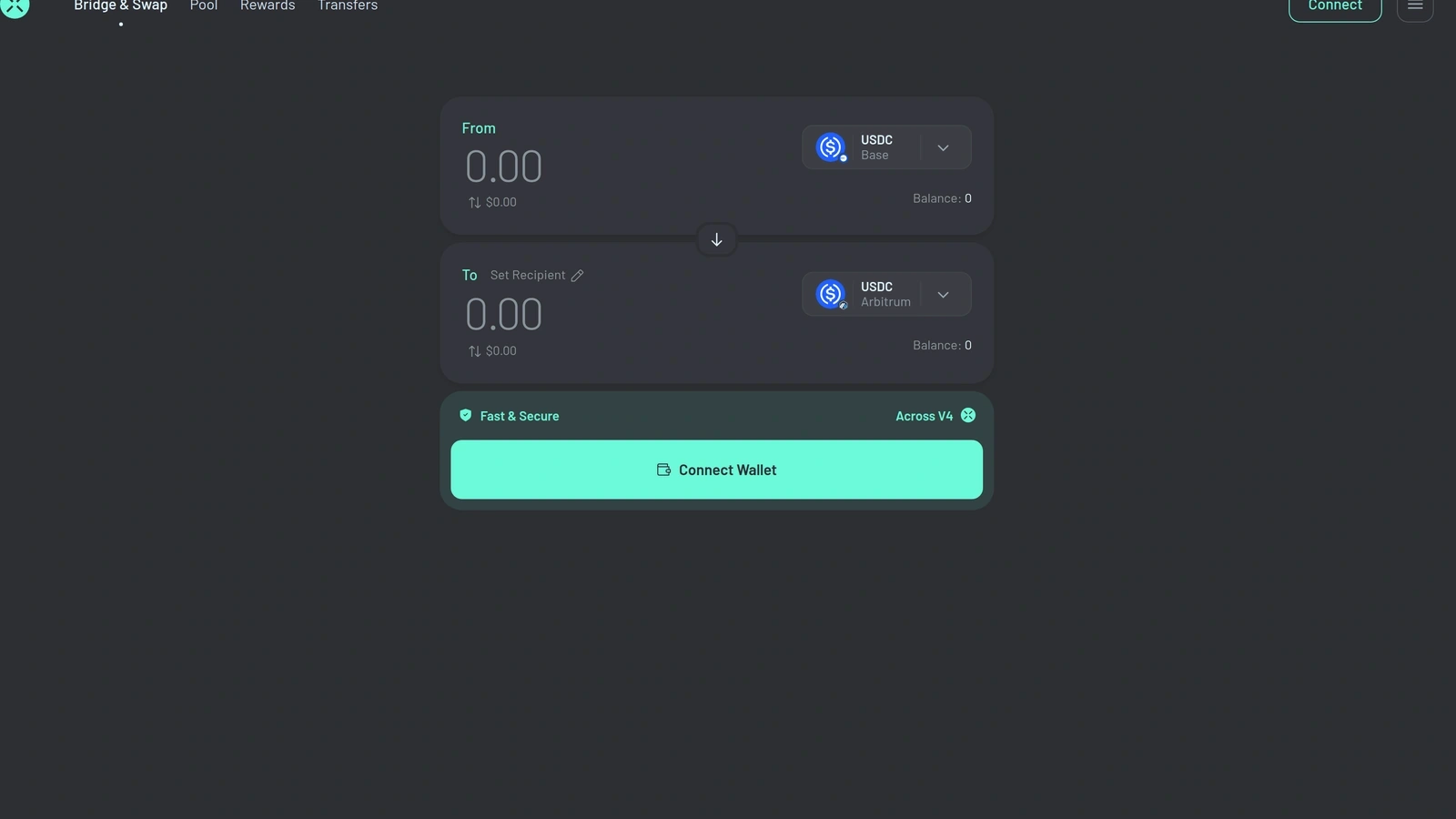
Across is especially useful when you want a straightforward move between major EVM environments and you care about simplicity and speed. If your transfer is something like stablecoins from Base to Arbitrum, this is the kind of route class many users should check first.
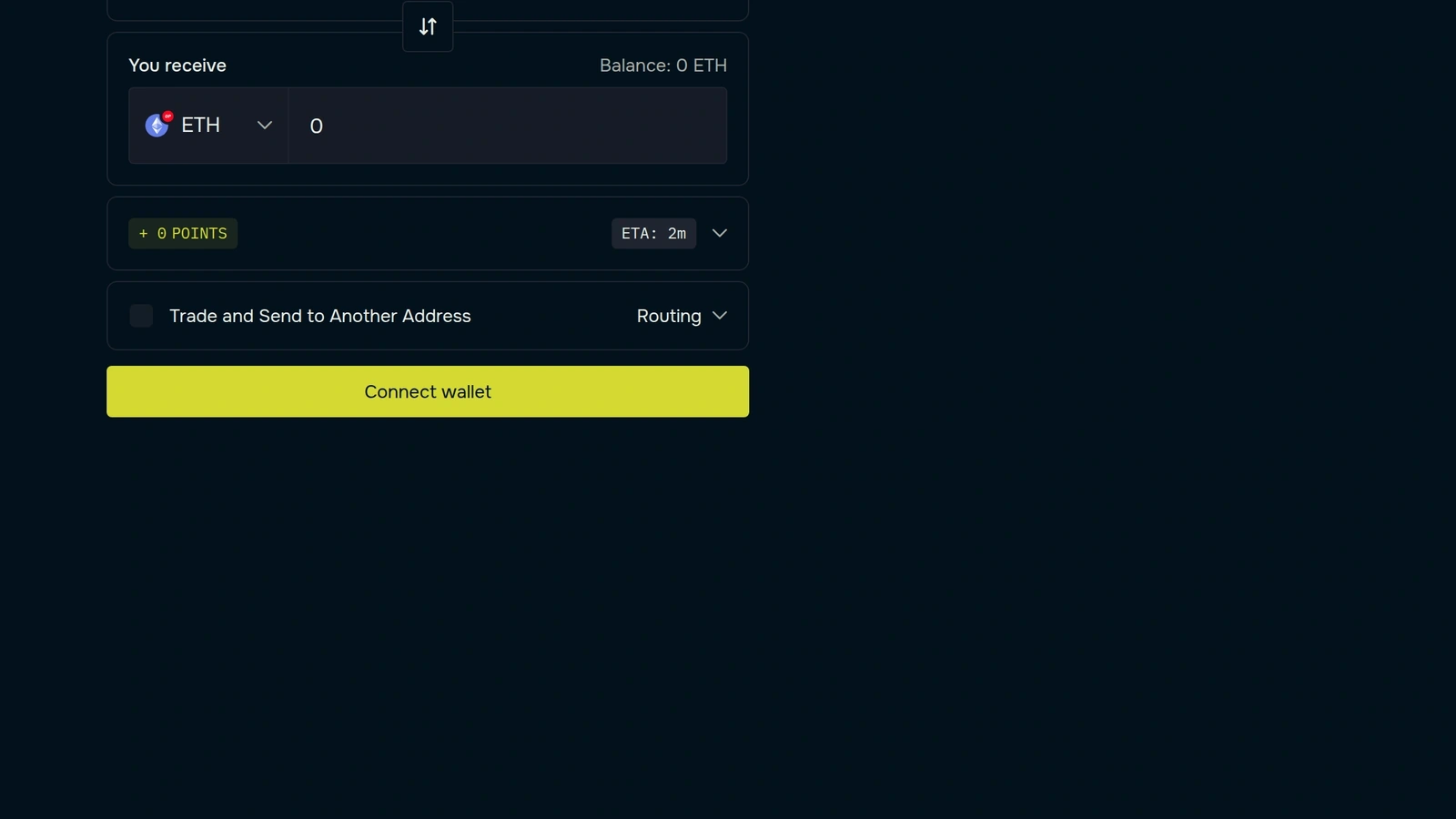
deBridge is useful when your mental model is closer to "I want to move value and possibly swap in the same flow." That matters because cross-chain movement is often not just about sending the same asset to the same asset. Sometimes the output token matters as much as the path.
Orbiter still matters because some users want chain-specific bridge flows rather than a broad all-in-one dashboard. It is also a good reminder that specialized tools can still be the right answer if the route is familiar and supported.
And then there are aggregators such as Jumper. Even if you do not use an aggregator for every transfer, they are incredibly useful when you are unsure which route is best. In that situation, the aggregator is not just the execution layer. It is part of the research process.
If you want deeper protocol-specific walkthroughs after this article, the best next reads on DEXTools are:
- How to Use Jumper Exchange
- How to Use deBridge
- How to Use Wormhole Bridge
- How to Use Orbiter Finance
- How to Bridge Base to Ethereum Safely
Step-by-step bridging workflow
Here is the workflow I would actually recommend to someone moving funds between chains in 2026.
- Define the exact transfer. Write it down if needed: source chain, source token, destination chain, destination token, destination wallet.
- Check whether an official route exists. If it does and the move is sensitive or large, start there.
- If not, compare reputable bridge options. Use a trusted bridge or aggregator to see which route is available.
- Read the output carefully. Do not just click because the logo looks familiar. Check route, ETA, fee estimate, and final token.
- Test with a small amount first. This is still one of the highest-ROI habits in crypto.
- Only then send size. If the test lands correctly, repeat with the real amount.
That may sound conservative, but it is far cheaper than troubleshooting a cross-chain mistake after the fact.
For users bridging into a different wallet environment, such as EVM to Solana, the small test matters even more. The cross-chain part is not the only risk. The destination wallet format and asset wrapper can be the real problem.
Mistakes that cost people money
The fastest way to lose trust in a bridge is usually your own mistake, not necessarily the protocol itself.
This is also where route discipline beats speed. The people who rarely have bridge problems are not usually the fastest clickers. They are the ones who verify everything before signing.
A clean best-practice workflow
If you want the shortest version of this whole article, use this:
- Use official bridges when trust minimization matters most.
- Use fast reputable bridges for common EVM routes when speed and simplicity matter.
- Use aggregators when you are unsure which route is best.
- Use specialized bridges for special destinations such as Solana or ecosystem-specific moves.
- Always test first.
That is the workflow that scales from small retail transfers to larger portfolio operations. It is not fancy, but it is how you avoid turning a basic bridge move into a recovery problem.
And if your goal is simply to move from one environment to another with minimal stress, the answer is not to memorize every bridge on the market. The answer is to build a repeatable route-selection habit.
Frequently asked questions
What is the safest crypto bridge in 2026?
There is no single safest bridge for every route. The safest starting point is usually the official route for the exact chain pair when one exists. For faster or broader routes, use reputable, widely used bridges and verify the output carefully.
Should I use an aggregator or a direct bridge?
Use an aggregator when you want route discovery and comparison. Use a direct bridge when you already know the exact path you want and trust that route for the move you are making.
Is bridging the same as swapping?
No. Some routes include a swap as part of the overall transfer, but bridging and swapping are not automatically the same action. That is why you need to read the final output token carefully.
Can I bridge any token between any chains?
No. Support depends on the bridge, the chain pair, the token, and sometimes the wallet environment. Always verify the exact route instead of assuming support exists.
What is the biggest beginner mistake when bridging?
The biggest beginner mistakes are using the wrong site, not checking the destination token, and sending a full-size transfer without testing the route first.
Related Guides
- What Is Crypto Bridge Slippage? Why Cross-Chain Transfers Drift (2026)
- Top 5 Crypto Bridge Tools in 2026: Best Cross-Chain Options Compared
- Jumper Exchange Tutorial 2026: Cross-Chain Bridge Master
- deBridge Tutorial 2026: DLN Cross-Chain Bridge Guide
- How to Use Across Bridge: Complete Cross-Chain Tutorial (2026)
- Stargate vs. Synapse vs. Hop
- How to Bridge to Anubis Chain
Frequently Asked Questions
What is the safest way to bridge crypto between chains in 2026?
Usually the safest starting point is the official route for your exact chain pair when one exists. For faster or broader routes, use reputable, widely used bridges and verify the output token, destination chain, and final recipient before confirming.
Should I use an aggregator or a direct bridge?
Use an aggregator when you want route discovery and comparison. Use a direct bridge when you already know the exact path you want and trust that route for the move you are making.
Is bridging the same as swapping?
No. Some cross-chain routes include a swap as part of the overall transfer, but bridging and swapping are not automatically the same action. Always check the final output token.
Can I bridge any token between any chains?
No. Support depends on the bridge, the chain pair, the token, and the wallet environment. Always verify the exact route instead of assuming support exists.
What is the biggest beginner mistake when bridging?
The biggest beginner mistakes are using the wrong site, not checking the destination token, and sending a full-size transfer without testing the route first.