What Are Bitcoin Ordinals: Complete NFT Inscription Guide (2026)
— By Tony Rabbit in Tutorials
What are Bitcoin Ordinals? Complete 2026 guide: ordinal theory, inscription transactions, top collections (NodeMonkes, Bitcoin Puppets), wallets and marketplaces.
In January 2023, a software engineer named Casey Rodarmor quietly released a protocol that would split the Bitcoin community in half and ignite what many call the Cambrian explosion of activity on the world's oldest blockchain. That protocol is called Ordinals, and it allows anyone to inscribe arbitrary data, including images, text, audio, video, and even fully playable video games, directly onto individual satoshis. In doing so, Ordinals brought non-fungible tokens to Bitcoin in a way nobody thought possible, and the implications are still being felt across the entire crypto ecosystem in 2026.
Before Ordinals, Bitcoin was widely considered a "digital gold" network. It stored value, settled transactions, and resisted change. Ethereum and other smart contract platforms owned the NFT and DeFi narratives. Ordinals changed that overnight. Within months of launch, hundreds of thousands of inscriptions were created. Within a year, Bitcoin saw fee revenue spikes not seen since the 2017 bull run. By 2026, Ordinals collections command millions of dollars in trading volume per week, and Bitcoin itself has been forced to confront questions about identity, scaling, and what the network is actually for.
This guide will explain exactly what Bitcoin Ordinals are, how the inscription process works at the technical level, why Taproot was the unlock that made it all possible, the top collections active in 2026, the marketplaces and wallets you need to participate, and the philosophical debate that continues to divide Bitcoin developers, miners, and users. Whether you want to buy your first Ordinal, inscribe your own, or just understand why your Bitcoin transactions sometimes cost more than they used to, this is the complete reference.
What Are Bitcoin Ordinals?
A Bitcoin Ordinal is a satoshi, the smallest unit of Bitcoin (one hundred millionth of a BTC), that has been individually numbered and assigned arbitrary data through a process called inscription. The numbering system is called ordinal theory, and the data attached is called the inscription. Together, the numbered sat plus the inscribed content equals what most people simply call an Ordinal, a Bitcoin NFT, or a digital artifact.
The key insight is that Ordinals do not exist as a separate token standard on top of Bitcoin. There is no smart contract, no ERC-721 equivalent, and no separate ledger. The inscription is part of a normal Bitcoin transaction, stored in the witness data of a Taproot transaction. The sat itself, which is part of the regular Bitcoin supply, becomes the carrier. This is a fundamental philosophical and technical departure from how NFTs work on Ethereum and Solana, where the token is a database entry inside a smart contract.
Every Ordinal has three core properties that you should understand from the start. First, it is tied to a specific satoshi identified by its ordinal number, which is determined by the sat's mining order. Second, it carries content with a defined content type, such as image/png, text/html, or audio/mpeg. Third, it is fully on-chain, meaning the content lives forever in Bitcoin block data and does not depend on IPFS or any external server to remain accessible.
Ordinal Theory Explained
Ordinal theory is the numbering scheme that makes Ordinals possible. The premise is elegant in its simplicity: every satoshi ever mined receives a unique serial number, starting from 0 and counting upward in the order each sat is mined. The first sat ever created carries ordinal number 0. The 100 millionth sat carries ordinal number 99,999,999. As of 2026, the highest numbered sats are pushing past 1.97 quadrillion.
This numbering does not exist at the Bitcoin protocol level. Bitcoin nodes do not track sat numbers natively. Instead, ordinal theory is a convention that anyone can implement by following the rules of the Bitcoin blockchain. When a block is mined, the new sats receive sequential numbers based on the block's reward order. When those sats are spent, the ordinal-theory rule says that they flow into the first outputs of the transaction in a first-in, first-out manner. This deterministic flow lets you trace any specific sat from its mining block to wherever it lives today.
Because every sat is unique under ordinal theory, some sats are inherently more interesting than others. Rodarmor proposed a rarity classification based on Bitcoin's block schedule, which creates natural milestones when difficulty adjustments and halvings occur. Collectors hunt for these rare sats much like coin collectors hunt for rare mint years.
Beyond the official rarity tiers, the community has invented its own categories. Pizza sats refer to satoshis from the famous 2010 transaction where Laszlo Hanyecz bought two pizzas for 10,000 BTC. Block 9 sats originate from the very early days of Bitcoin mining and are believed to be associated with Satoshi Nakamoto. Palindrome sats have ordinal numbers that read the same forwards and backwards. These cultural categories add layers of meaning that go far beyond the protocol-level rarity definitions.
How Inscription Actually Works Technically
This is where Ordinals get genuinely interesting from an engineering perspective. The inscription process exploits a specific feature of Bitcoin's Taproot upgrade to embed arbitrary data inside what looks like a regular transaction. To understand it, you need to know about witness data, which is a separate section of every Taproot transaction that does not count toward Bitcoin's normal 1 MB block size limit and instead falls under the 4 MB block weight limit at a 1:4 discount.
An inscription is created using a two-step process: a commit transaction followed by a reveal transaction. In the commit transaction, you create a special Taproot output that commits to a script containing your inscription data. This script is never actually executed on-chain at this stage. It just exists as a commitment. The output looks like a perfectly normal Taproot UTXO to anyone who is not specifically looking for inscriptions.
In the reveal transaction, you spend that Taproot output, and in doing so, you must reveal the script that you previously committed to. This is when the inscription data becomes publicly visible on the blockchain. The script uses a clever trick called an "envelope," which wraps the inscription content in a sequence of OP_FALSE OP_IF opcodes followed by the content. Because OP_FALSE OP_IF is unreachable in normal script execution, Bitcoin nodes simply ignore the data inside it, but the data is still permanently recorded in the witness data of the transaction.
Once the reveal transaction confirms, the inscription is permanently attached to the first satoshi of the first output of that transaction. Because of ordinal theory's first-in, first-out rule, this sat can now be tracked across all future transactions. You can send it like any other Bitcoin, but any wallet that understands Ordinals will recognize that this particular sat carries an inscription. If you accidentally send it to someone who does not support Ordinals, the inscription technically still exists on-chain, but the recipient may unknowingly spend it as regular Bitcoin fees, which the community calls "burning" an inscription.
The technical elegance of this design is what makes Ordinals controversial. Bitcoin developers did not specifically design Bitcoin to support NFTs. Rodarmor simply found a way to use existing features in a creative manner. To Ordinals proponents, this is a beautiful example of Bitcoin's flexibility. To Bitcoin purists, it is an exploitation of a loophole that bloats the blockchain with non-monetary data.
Why Taproot Was the Unlock
None of this would have been possible without the Taproot soft fork that activated on Bitcoin in November 2021. Taproot was originally designed to improve Bitcoin's privacy and efficiency for complex transactions, but it had a side effect that almost nobody anticipated. By introducing the ability to spend Taproot outputs using script-path spends with arbitrary witness data, and by removing the previous 10,000-byte limit on push data in script, Taproot effectively created the infrastructure for storing large data blobs cheaply on Bitcoin.
Before Taproot, you could technically inscribe data on Bitcoin using older mechanisms like multisig outputs or OP_RETURN, but these were severely size-limited and economically inefficient. OP_RETURN, the standard way to attach small messages to Bitcoin transactions, is limited to 80 bytes. Multisig hacks could store more data but were prohibitively expensive because they used base transaction weight, not witness weight. Taproot's witness discount, which gives witness data a 4x cheaper effective weight than base data, suddenly made storing kilobytes of inscription data economically viable.
The other crucial Taproot feature is script-path spends, which let you reveal arbitrary scripts when spending an output. This is what makes the commit-reveal pattern possible. Without script-path spends, there would be no way to embed an inscription envelope into a transaction that nodes treat as valid. Rodarmor essentially combined three Taproot features (witness discount, script-path spends, and the removal of push-data limits) and used them in a way no soft fork proponent had publicly discussed.
Casey Rodarmor and the Original Vision
Casey Rodarmor is a former Bitcoin Core developer with a background in mathematics and software engineering. He worked at Bitcoin Magazine, contributed to various Bitcoin projects, and was respected in the developer community long before Ordinals. He had been thinking about sat-level tracking for years before releasing the Ordinals protocol in January 2023, originally calling the project "Ordinal Theory" rather than "NFTs on Bitcoin" because he wanted to emphasize the mathematical elegance of the numbering system rather than draw comparisons to Ethereum.
Rodarmor's stated philosophy was that Ordinals should be "digital artifacts" rather than "NFTs." He distinguished the two as follows: NFTs on Ethereum often store metadata off-chain, can be modified by their issuer, depend on smart contracts that may have bugs or admin keys, and reference assets that can disappear if IPFS pins fail. Digital artifacts on Bitcoin, by contrast, are immutable, fully on-chain, and have no admin keys or trusted parties. They are simply data permanently recorded in the most secure blockchain in the world.
This philosophical positioning resonated with a certain segment of the Bitcoin community, particularly those who were tired of the perceived flakiness of NFTs on other chains. It also enraged a different segment, who saw Ordinals as polluting Bitcoin with frivolous data. The debate has only intensified as inscription volume has grown.
Top Bitcoin Ordinals Collections in 2026
The Ordinals ecosystem has matured into a recognizable hierarchy of blue-chip collections, mid-tier projects, and speculative new mints. The blue chips have established themselves through community strength, artistic merit, historical significance, or some combination of all three. Floor prices for top collections regularly exceed 0.5 BTC per inscription, with rare pieces selling for tens or even hundreds of BTC.
10,000 pixel-art primates. The first PFP collection inscribed entirely within the first 20,000 inscriptions. Considered the OG Ordinals blue chip and the cultural anchor of the ecosystem.
10,000 puppet-style characters with a chaotic, meme-driven community. Floor regularly trades above 0.3 BTC. Strong cult following that emerged organically without VC backing.
3,333 dynamic Ordinals from Taproot Wizards team. Used recursive inscriptions, a 2024 technical breakthrough where inscriptions reference other inscriptions to generate complex visuals on-chain.
112,383 free-mint Ordinals airdropped to Ordinals holders in late 2023. Marked the bridge between Ordinals and the Runes fungible token standard. Massive community distribution.
Hand-drawn wizard collection led by Udi Wertheimer. Among the earliest serious Ordinals projects. The 2.1k wizard at inscription 652 is considered foundational Bitcoin art history.
5,000 stylized PFPs with strong branding around Bitcoin maximalism culture. One of the more financially successful mid-tier collections with steady liquidity throughout the 2024-2026 cycles.
Beyond the PFP scene, there are other notable categories. The first 1,000 inscriptions ever made, often called "sub-1ks," carry historical significance regardless of artistic content. The first 10,000 inscriptions ("sub-10ks") are also treated as historically valuable. Then there are themed collections like Bitcoin Frogs, Pizza Ninjas, and Bitcoin Wizards that have built their own followings. Generative art collections from established crypto artists, single-edition pieces from traditional fine artists who have started inscribing on Bitcoin, and even on-chain video games complete the diverse ecosystem.
Where to Trade Ordinals: Top Marketplaces
The Ordinals marketplace ecosystem has consolidated significantly since the early days when off-chain Discord deals were the norm. Today, several mature platforms handle the bulk of secondary trading. Each has its own fee structure, supported wallet integrations, and unique features.
Magic Eden Bitcoin is the largest Ordinals marketplace by volume in 2026. It expanded from being a Solana NFT marketplace into Bitcoin Ordinals in 2023 and has remained the dominant venue ever since. It charges a 2% taker fee, supports all major Ordinals wallets, and provides extensive collection analytics, rarity rankings, and floor price tracking. Magic Eden also pioneered "bidding pools" for Ordinals, which improved liquidity for collections that were historically illiquid.
OKX Marketplace is the second-largest venue and benefits from the OKX exchange's deep integration with its own Ordinals-compatible wallet. OKX charges no maker fees and a flat 1% taker fee, making it cheaper than Magic Eden for many trades. The marketplace is particularly strong for users in Asia and for trading BRC-20 fungible tokens alongside Ordinals.
UniSat Marketplace was one of the first Ordinals-native marketplaces and remains popular among power users. UniSat focuses heavily on BRC-20 trading and Runes alongside traditional inscriptions. The platform has the most granular sat-rarity filters, making it the go-to venue for rare sat hunters.
Gamma.io takes a different approach, focusing on curated drops and inscription services rather than pure secondary trading. Gamma is where many new collections launch and where many users perform their first inscription. The platform handles all the technical complexity of inscription on behalf of users.
Wallets That Support Bitcoin Ordinals
You cannot use a standard Bitcoin wallet for Ordinals because most Bitcoin wallets do not understand sat-level accounting and might accidentally spend your inscriptions as transaction fees. You need a wallet that specifically supports Ordinals through what is called "sat control," meaning the wallet can distinguish between regular sats and inscribed sats when constructing transactions.
Xverse is the most popular consumer Ordinals wallet in 2026. Available as a browser extension and mobile app, Xverse supports Ordinals, BRC-20, Runes, and standard Bitcoin in a single interface. It integrates with major marketplaces, supports hardware wallets for cold storage, and has a clean UI suited to beginners.
Leather Wallet (formerly Hiro Wallet) is the developer-favorite Ordinals wallet. It has tight integration with Stacks, the Bitcoin Layer 2 used by many Ordinals developers, and offers fine-grained control over UTXO selection. Power users who want to manage rare sats often prefer Leather for its transparency about what each UTXO contains.
UniSat Wallet is another popular choice, especially for active traders. It has the most comprehensive support for BRC-20 tokens and Runes alongside Ordinals. The wallet's inscription service lets you create inscriptions directly from the wallet UI without needing third-party services.
OKX Wallet offers a strong integrated experience for users of the OKX exchange. The wallet supports Ordinals, BRC-20, Runes, and multiple other chains beyond Bitcoin, making it a good multi-chain option.
Sparrow Wallet with the ord wallet command-line companion is the choice for advanced users who want maximum sovereignty. Sparrow handles UTXO management transparently, and ord provides the cryptographic tooling to verify, create, and transfer inscriptions. This combination is recommended for storing valuable Ordinals long-term.
How to Buy Your First Bitcoin Ordinal Step-by-Step
Buying your first Ordinal is straightforward once you have the right tools set up. Here is the complete process from zero to first inscription in your wallet.
First, install an Ordinals-compatible wallet. Xverse is the easiest choice for beginners. Download it from the official Xverse site, create a new wallet, and carefully back up your 12-word seed phrase to a physical medium. Do not store this digitally. Bitcoin theft from compromised seed phrases is the leading cause of lost funds in 2026.
Second, fund your wallet with Bitcoin. You need enough BTC to cover the Ordinal price plus marketplace fees and Bitcoin network fees. Transfer BTC from an exchange like Coinbase, Kraken, or Binance to the Bitcoin receive address shown in your Xverse wallet. Note that you specifically need the "Bitcoin" address, not the "Ordinals" or "Stacks" addresses, which are derived from the same seed but serve different purposes.
Third, connect your wallet to a marketplace. Go to Magic Eden Bitcoin or your marketplace of choice, click "Connect Wallet," and select Xverse. Approve the connection request in your wallet. You should now see your Bitcoin balance reflected in the marketplace interface.
Fourth, browse collections and identify what you want to buy. Floor sweepers can simply buy the cheapest available inscription in a collection. Collectors looking for specific traits should use the marketplace's rarity filters. Always verify the collection name and check that you are on the official collection page, since copycat collections are common.
Fifth, place your bid or accept the listing. For instant purchases, click "Buy Now" on a listed item. For more strategic purchases, place a bid below floor price and wait. Confirm the transaction in your wallet. After Bitcoin confirms the transaction, which typically takes 10 to 30 minutes depending on network congestion, your new Ordinal will appear in your wallet.
Sixth, verify ownership on a block explorer. Tools like ordinals.com, mempool.space, or hiro.so let you look up your inscription by ID, view the content, and confirm you are the current owner. This step is essential because it is the only way to truly verify ownership independent of any marketplace's database.
How to Inscribe Your Own Bitcoin Ordinal
Creating your own Ordinal is called inscribing. You can inscribe any data up to roughly 400 KB (the practical limit imposed by Bitcoin's standardness rules). This means you can inscribe images, short videos, audio clips, text, HTML, JavaScript, or even small applications. Once inscribed, the content becomes a permanent part of Bitcoin's blockchain.
The easiest way to inscribe is through a service like Gamma.io or OrdinalsBot. You upload your file, pay a fee, and the service handles the technical work of creating the commit and reveal transactions on your behalf. The fee covers Bitcoin network costs plus a service margin. As of 2026, inscribing a 50 KB image typically costs between $5 and $30, depending on Bitcoin network congestion and the service you use.
The advantage of these services is convenience. The disadvantage is that you must trust the service not to lose your inscription before sending it to your wallet. Reputable services have strong track records, but the inscription technically exists in their custody briefly before being transferred to you. For valuable inscriptions, this trust window matters.
The technically correct approach is to inscribe yourself using the ord wallet CLI, the official reference implementation from Rodarmor. This requires running a full Bitcoin node, syncing the chain (about 800 GB in 2026), and learning command-line tools. The benefit is total sovereignty: you never trust a third party with your funds or your inscription. Many serious Ordinals collectors run their own node setup for this reason.
A middle ground is using a wallet that has built-in inscription support, such as UniSat. You upload your file directly in the UniSat browser extension, the wallet constructs the commit and reveal transactions, you sign them, and your inscription is on-chain within an hour. This gives you most of the trust-minimization of the CLI approach without the operational complexity.
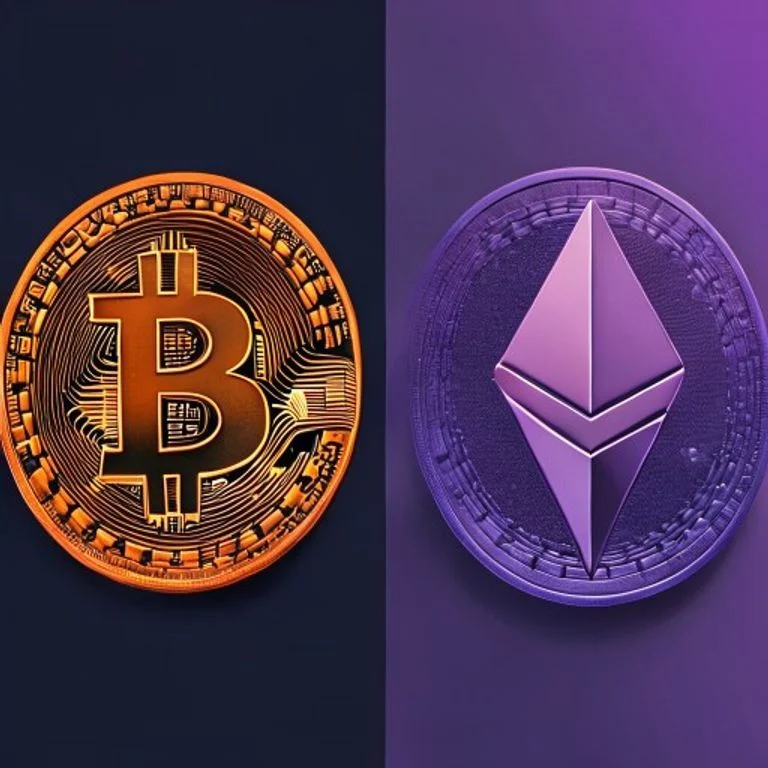
Bitcoin Ordinals vs Ethereum NFTs
One of the most common questions newcomers ask is how Bitcoin Ordinals differ from Ethereum NFTs. The differences are deeper than they appear at first glance and have significant implications for how you should think about ownership, permanence, and authenticity.
- Storage: Token ID stored in smart contract
- Metadata: Usually off-chain via IPFS or HTTP URL
- Contract: Deployed by issuer, may have admin keys
- Mutability: Can be modified via contract upgrade
- Royalties: Enforced (or not) at marketplace level
- Cost: $5-50 to mint in gas
- Risk: Asset may disappear if IPFS unpinned
- Storage: Inscribed directly on a single satoshi
- Metadata: Fully on-chain in witness data
- Contract: None. Pure Bitcoin transactions only
- Mutability: Immutable. Cannot be changed ever
- Royalties: Not enforced at protocol level
- Cost: $5-30 depending on size and fees
- Risk: Lives as long as Bitcoin blockchain exists
The most consequential difference is on-chain storage. An Ethereum NFT typically stores only a pointer (a token ID) in the smart contract, and the actual image lives on IPFS or an HTTP server. If those external systems fail, the NFT becomes a token pointing to nothing. Bitcoin Ordinals, by contrast, store the entire content within Bitcoin block data. As long as Bitcoin exists, your Ordinal exists exactly as it was inscribed, with no possibility of degradation or loss of associated content.
The lack of smart contracts is the other key difference. Ethereum NFTs can implement complex behavior like dynamic metadata, on-chain royalties, evolving traits, and even gameplay logic. Bitcoin Ordinals cannot, because Bitcoin does not support those primitives. This is both a limitation and a feature, depending on your perspective. Ordinals proponents argue that the simplicity is what makes them durable. Ethereum NFT proponents argue that the lack of programmability makes Ordinals less interesting as a long-term primitive. To learn more about traditional NFTs, see our guide to what an NFT is.
Ordinals vs Runes vs BRC-20: Clear Distinctions
The Bitcoin token landscape now includes three related but distinct standards that often confuse newcomers. Understanding what each one does is essential for navigating the ecosystem.
Ordinals (inscriptions) are the foundational layer. Each Ordinal is a unique inscription on a single satoshi, similar in spirit to an ERC-721 NFT. Ordinals can contain any type of content and are inherently non-fungible. Each one is its own thing.
BRC-20 was the first attempt to build fungible tokens on top of Ordinals. Created by an anonymous developer called domo in March 2023, BRC-20 uses JSON-formatted inscriptions to represent token operations like deploy, mint, and transfer. The token state lives in indexer databases off-chain, while the inscriptions themselves provide the canonical record. BRC-20 was experimental and inefficient, generating massive blockchain bloat by requiring multiple inscriptions per token action.
Runes, also created by Casey Rodarmor and activated at the April 2024 halving, is the proper fungible token protocol for Bitcoin. Runes uses OP_RETURN outputs to encode token operations, which is far more efficient than the inscription-based approach of BRC-20. Runes was designed specifically to provide BRC-20 functionality without the same blockchain bloat. To learn more, see our dedicated guide on Bitcoin Runes.
In summary: Ordinals are NFTs. BRC-20 was a clumsy attempt at fungible tokens that mostly got replaced. Runes is the modern fungible token standard. All three coexist in 2026, but most new fungible projects use Runes, while Ordinals remains the primary standard for NFT-style digital artifacts.
Fee Market Impact: How Ordinals Affected Bitcoin Fees
One cannot discuss Ordinals honestly without acknowledging their dramatic impact on Bitcoin's fee market. Before Ordinals, Bitcoin transaction fees were relatively predictable and modest, typically a few sats per byte during normal demand and only spiking during major bull markets. Ordinals changed this profile permanently.
When inscription volume surges, blocks fill with inscription data, and ordinary Bitcoin users find themselves competing with inscribers for block space. This has led to periods where simple Bitcoin transactions cost $20 or more in fees. For long-time Bitcoin users who remembered the days of pennies in fees, this was jarring. For miners, it was a windfall. In some months during 2024 and 2025, fees made up over 60% of total miner revenue, an unprecedented ratio in Bitcoin's history.
The fee market impact has practical and ideological consequences. Practically, casual Bitcoin payments became less viable on the main chain, accelerating adoption of Lightning Network and other Layer 2 solutions. Ideologically, the debate over whether Bitcoin should serve as a "monetary network" or a "general-purpose data layer" intensified. You can monitor real-time inscription impact on fee dynamics by watching the mempool on tools like mempool.space.
Some long-tail effects have been beneficial. Higher fees have validated Bitcoin's long-term security model, which relies on transaction fees eventually replacing block subsidies as block rewards halve every four years. Without sustained fee demand, Bitcoin's security budget would shrink as halvings progress. Ordinals have provided a fee floor that arguably makes Bitcoin more sustainable in the long run. To understand why halvings matter for this, see our guide on Bitcoin halving.
The Philosophical Debate: NFTs on Bitcoin?
The Ordinals protocol has triggered one of the most contentious philosophical debates in Bitcoin's history. The disagreement runs along a deep fault line about what Bitcoin is and should be. There are valid arguments on both sides, and understanding them is part of becoming a sophisticated participant in the ecosystem.
The Ordinals proponents argue that Bitcoin's permissionless design means any valid use of the protocol is legitimate. If you can pay the fee and produce a valid transaction, you have the right to use Bitcoin however you wish. Ordinals do not violate any Bitcoin Core rules. They use existing features in creative ways. Furthermore, Ordinals have generated significant fee revenue, strengthened Bitcoin's security budget, and brought new users, developers, and capital into the Bitcoin ecosystem. Proponents see Ordinals as a feature of Bitcoin's flexibility, not a bug.
The Bitcoin purists, often associated with the Bitcoin maximalist or "Bitcoin only" community, argue that Bitcoin should be optimized for monetary use. Filling blocks with JPEG inscriptions makes the network less useful for its core purpose of being electronic cash and digital sovereignty. They argue that Ordinals are essentially spam, that the network would be better off if relays or miners filtered out inscriptions, and that the cultural attention on Ordinals distracts from Bitcoin's monetary mission. Some have proposed soft forks to explicitly disable inscription-style data embedding.
A middle-ground perspective acknowledges legitimate points on both sides. Ordinals are clearly here to stay regardless of philosophical objections, since blocking them would require a contentious soft fork that miners would resist due to fee revenue. The pragmatic question is how the community manages the coexistence of monetary and non-monetary use cases. Layer 2 solutions like Lightning Network help by moving small payments off-chain, leaving main chain block space available for both inscriptions and high-value monetary settlements.
Notable Bitcoin developers have taken public positions on both sides. Adam Back, CEO of Blockstream, has been critical of Ordinals as inefficient. Luke Dashjr has been one of the most vocal opponents, calling Ordinals an exploit. On the other side, Eric Wall, Udi Wertheimer, and Casey Rodarmor himself defend Ordinals as legitimate Bitcoin use. The debate remains unresolved and probably will not be resolved.
Risks of Buying and Holding Ordinals
Like all crypto assets, Ordinals come with significant risks that any participant should understand before committing capital. The risks are different from Ethereum NFT risks in important ways.
Liquidity risk is perhaps the most important practical risk. Even popular collections can have thin order books outside of NodeMonkes-tier blue chips. Selling a mid-tier inscription can take days or weeks at a fair price. Bid-ask spreads of 20-50% are common for less liquid collections. If you need to exit quickly, you may have to accept significant discounts to floor price.
Wallet and UTXO management risk is unique to Ordinals. Because inscriptions live on specific satoshis, accidentally spending them as transaction fees is a real concern. If you send an inscription to an address using a wallet that does not understand Ordinals, the wallet may "consolidate" the UTXO and burn your inscription. Always use Ordinals-aware wallets and never sweep inscription wallets with non-Ordinals tools.
Phishing and scam risk is endemic. Fake marketplace clones, malicious browser extensions, and social engineering attacks have stolen significant amounts from Ordinals holders. Common scams include fake collection mints, marketplace impersonation sites, and "free airdrop" sign messages that authorize transactions you did not intend. Always verify URLs, never sign blind messages, and consider using a hardware wallet for any inscription worth meaningful money.
Smart contract limitation risk is a fundamental limitation. Bitcoin does not support smart contracts, so Ordinals cannot have programmable behavior. This means no automatic royalties, no on-chain games with state, and no DeFi-style composability. If your investment thesis depends on these capabilities, Ordinals are not the right vehicle.
Regulatory risk is significant and evolving. Regulators in the US and EU have not specifically addressed Ordinals, but general NFT regulation may apply. The SEC could potentially classify certain Ordinals collections as securities under the Howey test, particularly those with strong promotional activity or roadmap promises. This regulatory ambiguity creates legal risk for issuers and traders alike.
Frequently Asked Questions
What is the difference between Ordinals and NFTs?
Ordinals are technically a type of NFT, but they differ from Ethereum-style NFTs in important ways. Ordinals are inscribed directly on individual satoshis using Bitcoin's witness data, with all content stored fully on-chain. Ethereum NFTs are entries in a smart contract that typically point to off-chain metadata. Ordinals are immutable and have no admin keys, while Ethereum NFTs can sometimes be modified via contract upgrades. Both are non-fungible digital collectibles, but the underlying architecture and trust assumptions are very different.
Are Bitcoin Ordinals dead?
No. While the speculative mania around Ordinals has cooled from its 2023-2024 peak, the protocol is alive and growing in 2026. Blue-chip collections like NodeMonkes and Bitcoin Puppets continue to trade actively. New collections launch regularly, and total inscriptions have surpassed 80 million as of mid-2026. The Ordinals ecosystem has matured from a speculative frenzy into a more stable digital artifacts market with genuine collector demand.
Can I create my own Ordinal?
Yes. Anyone can inscribe content on Bitcoin. The easiest method is using a service like Gamma.io or OrdinalsBot, where you upload your file, pay the fee, and receive the inscription in your wallet. More technical users can use wallets like UniSat that have built-in inscription functionality. Advanced users can run the official ord CLI for maximum sovereignty. Inscribing a 50 KB image typically costs $5 to $30 in 2026 depending on Bitcoin network fees.
What is the most expensive Bitcoin Ordinal ever sold?
Several individual Ordinals have sold for over $1 million. NodeMonkes #6529, which was acquired by NFT collector punk6529, reportedly traded for over 200 BTC in a private deal. Taproot Wizards' "Wizard 1" sold for several hundred thousand dollars at peak. Rare sats with specific historical significance, like sats from Block 9 attributed to Satoshi Nakamoto, have traded for premiums exceeding 1000x their face value. The market for high-end Ordinals operates similarly to fine art markets, with private deals often exceeding public sale records.
Do Ordinals slow down Bitcoin transactions?
Ordinals do not slow Bitcoin's block production, which remains roughly 10 minutes per block regardless of transaction type. However, Ordinals do consume block space that monetary transactions would otherwise use, which can increase fee competition during high inscription activity. During major inscription waves, simple Bitcoin payments may need to pay higher fees to confirm in a reasonable time. For latency-sensitive payments, Lightning Network is the standard solution.
Which wallet should I use for Ordinals?
For most users in 2026, Xverse is the best balance of features and ease of use. It supports Ordinals, BRC-20, Runes, and standard Bitcoin in one interface, and integrates with major marketplaces. For power users and high-value storage, Sparrow Wallet combined with the ord CLI offers maximum sovereignty. For active BRC-20 and Runes traders, UniSat is the most feature-rich option. Always pair a software wallet with a hardware wallet like Ledger or Trezor for any valuable inscriptions.
Conclusion
Bitcoin Ordinals represent the most significant cultural and technical shift in Bitcoin since the SegWit and Taproot upgrades. What started as Casey Rodarmor's mathematical curiosity in January 2023 has evolved into a multi-billion-dollar ecosystem of collectors, creators, marketplaces, and infrastructure providers. Whether you view them as Bitcoin finally achieving its potential as a general-purpose value layer or as an unwanted intrusion into a monetary network, Ordinals are now an inseparable part of what Bitcoin is.
The technical elegance of inscriptions, leveraging Taproot's witness data and commit-reveal scripting to embed arbitrary content directly on individual satoshis, is genuinely beautiful engineering. The on-chain permanence and lack of trusted parties give Ordinals a durability that Ethereum NFTs cannot match. The integration with ordinal theory's rarity schema adds a layer of mathematical poetry that resonates with Bitcoin's broader cultural emphasis on hard, verifiable scarcity.
For practical participation, the path is clearer than ever in 2026. Install Xverse or UniSat, fund with Bitcoin, connect to Magic Eden Bitcoin or OKX, and you can buy your first Ordinal within minutes. For creators, services like Gamma make inscription accessible to anyone with a Bitcoin balance. For long-term holders, treat your inscriptions like rare physical art: use cold storage, verify ownership through block explorers, and avoid wallets that do not understand sat-level accounting.
The philosophical debate about whether Ordinals belong on Bitcoin will continue, and that debate is healthy. It forces the community to confront fundamental questions about purpose, sovereignty, and the limits of permissionless innovation. Whatever your view, understanding Ordinals is now part of understanding Bitcoin itself, and the protocol has proven robust enough to host whatever uses humans dream up. That is, in the end, the deepest argument for Bitcoin's enduring relevance: a network that lets anyone, including Casey Rodarmor with his quirky satoshi numbering scheme, change everything just by following the existing rules.
Related Guides
- Bitcoin Ordinals and BRC-20 Inscriptions: Complete Guide 2026
- What are Ordinals? Bitcoin NFTs Explained
- Bitcoin Runes vs BRC-20 vs Ordinals: Complete Comparison 2026
- What Are Bitcoin Stamps (SRC-20)? The Permanent NFT Protocol on Bitcoin Explained in 2026
- What Is UPEG? Unipeg Token Explained, From Ethereum Liquidity to the NFT Angle