What Is the Lightning Network? How Bitcoin Layer 2 Works
— By Tony Rabbit in Tutorials

Learn what the Lightning Network is, how Bitcoin payment channels work, and why this Layer 2 aims to make BTC transactions faster and cheaper.
Top results for what is the Lightning Network focus on Bitcoin scalability, payment channels, fast low-cost transactions, and Layer 2 trade-offs. This guide is tuned to that core beginner intent.
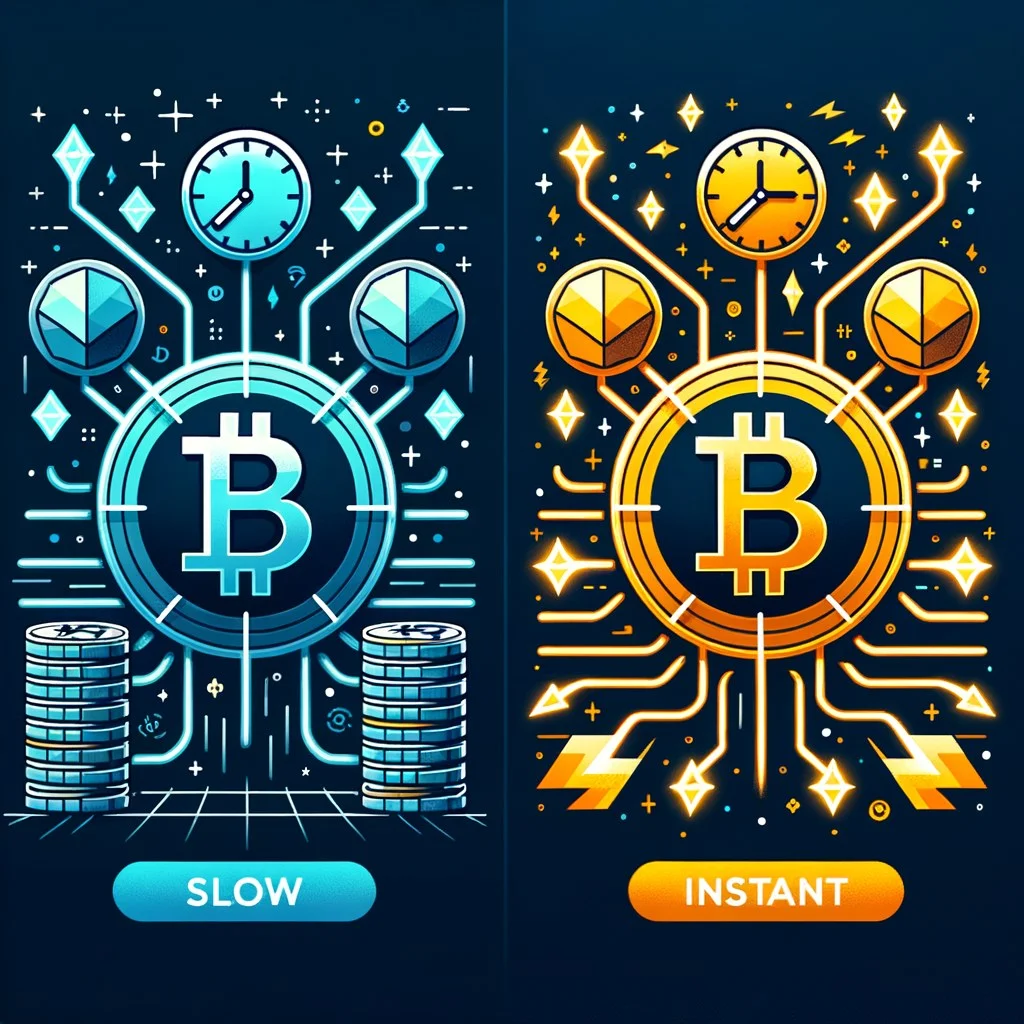
Bitcoin is the most secure and decentralized monetary network ever built, but it has one well-known weakness: speed and cost at scale. The base chain confirms a block roughly every ten minutes and processes about seven transactions per second across the entire planet. That is fine for settling large value, but it is a terrible experience for buying a coffee, tipping a creator, or paying a streaming bill by the second. The Lightning Network is the second-layer protocol that fixes exactly this problem, and in 2026 it has matured into a global payment rail that moves billions of satoshis every day.
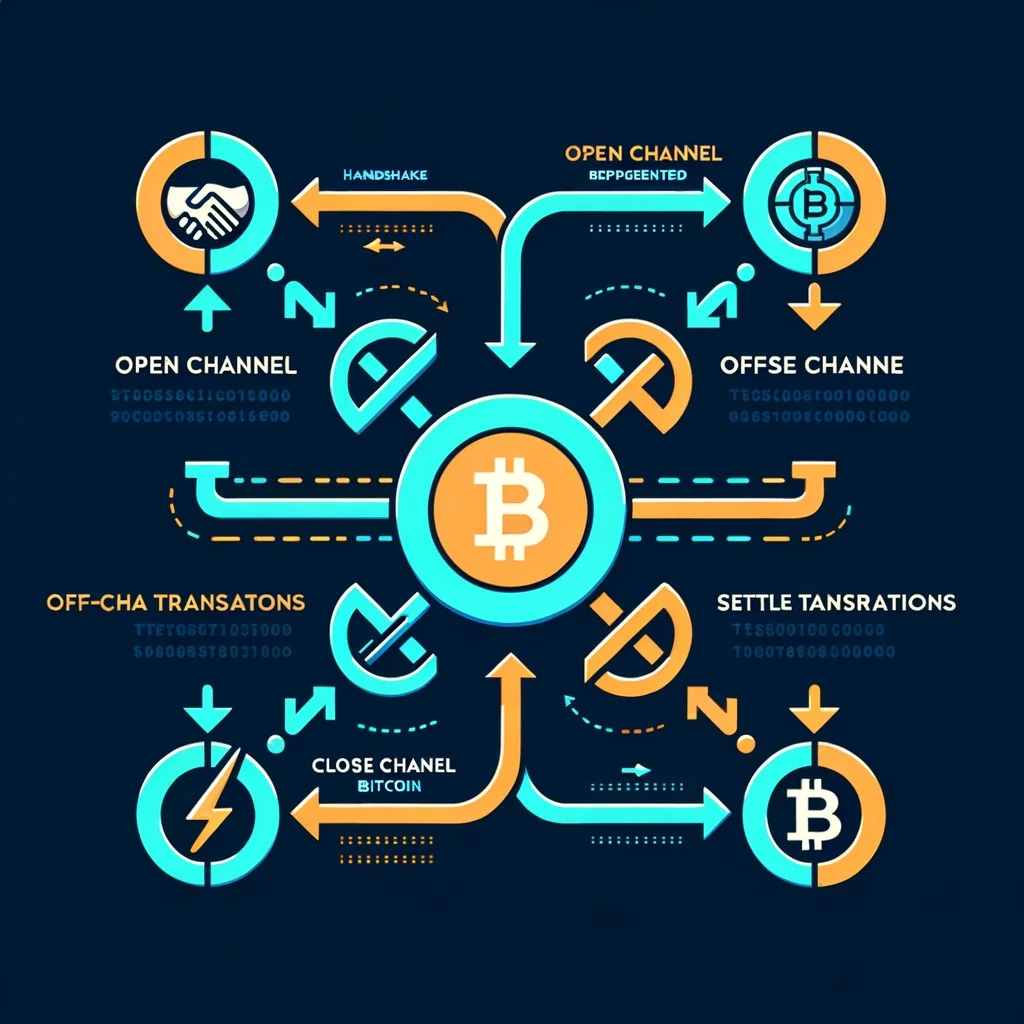
In simple terms, the Lightning Network is a network of payment channels built on top of Bitcoin. Two parties open a shared on-chain channel funded with bitcoin, then exchange unlimited off-chain transactions instantly and almost for free. When they are done, they close the channel and the final balance settles on the Bitcoin blockchain. Multiply this across thousands of interconnected nodes and you get a global mesh where anyone can pay anyone else in milliseconds, with fees often measured in fractions of a cent.
This guide is for anyone who has heard about Lightning but has never fully understood how it works under the hood, which wallets to use, where it shines, and where it still struggles. Whether you are a beginner who wants to send your first lightning payment, a merchant evaluating point-of-sale options, or a developer curious about HTLC mechanics, you will walk away with a clear mental model and a practical plan. We will also place Lightning in context against other Bitcoin Layer 2s and explain its real limitations, because no honest tutorial pretends a technology is magic.
How the Lightning Network Works
To understand Lightning you first have to accept a simple insight: not every Bitcoin transaction needs to live forever on the blockchain. If Alice and Bob are going to exchange hundreds of small payments back and forth, recording each one on chain is wasteful. It would clog the network, force everyone else to validate trivial activity, and cost a fortune in fees. Lightning sidesteps this by letting Alice and Bob keep a running tally between themselves, secured by Bitcoin scripts, and only touch the chain when they open or close their relationship.
The protocol does this through what is called a payment channel. A payment channel is a 2-of-2 multisig address on the Bitcoin blockchain that both participants control jointly. Each time they want to update their balance, they sign a new commitment transaction off-chain that reflects the latest state. The Bitcoin scripts attached to these transactions guarantee that if anyone tries to cheat by broadcasting an old state, the counterparty can punish them and take all the funds in the channel. This punishment mechanism is what makes Lightning trust-minimized, since you do not need to trust your channel partner, only the Bitcoin protocol itself.
Lightning is not a separate blockchain. It does not have its own token, its own consensus mechanism, or its own validators. It is a peer-to-peer protocol layered directly on Bitcoin, inheriting Bitcoin's security model. Every lightning payment is, at the end of the day, a conditional Bitcoin transaction that could be enforced on chain if needed. This is fundamentally different from sidechains like Liquid or smart contract chains like proof of work alternatives, because Lightning does not introduce a new trust assumption beyond Bitcoin itself.
To make the system truly useful you also need routing. A direct channel between every pair of users would be impossible. Instead, Lightning lets payments hop through multiple intermediate nodes, each of which forwards the payment to the next, using a cryptographic primitive called a hash time-locked contract. We will cover routing and HTLCs in depth a few sections below.
Payment Channels Explained
A payment channel is the atomic unit of Lightning. Everything else, from routing to invoices to splicing, is built on top of this single primitive. Understanding how a channel is opened, used, and closed is the most important conceptual step you can take.
Opening a channel is an on-chain Bitcoin transaction. Suppose Alice wants to open a channel with Bob and fund it with 500,000 satoshis (0.005 BTC). She broadcasts a funding transaction that sends those 500,000 sats to a 2-of-2 multisig output controlled by both Alice's and Bob's keys. Once the transaction confirms on the Bitcoin blockchain, the channel is live. This is the only moment, along with closing, where Lightning touches the base layer.
Transacting through the channel happens entirely off-chain. Each payment updates a commitment transaction that, if broadcast, would distribute the channel's funds according to the latest balance. If Alice sends 10,000 sats to Bob, they both sign a new commitment showing Alice with 490,000 sats and Bob with 10,000 sats, and they invalidate the previous state by exchanging a revocation key. This back-and-forth can happen thousands of times per second without ever touching the blockchain, with no fees beyond the tiny routing fees if more than one hop is involved.
Closing a channel writes the final balance to the Bitcoin blockchain. There are two ways to close: cooperatively, where both parties agree on the final state and broadcast a clean transaction, or unilaterally (sometimes called a "force close") when one party goes offline or refuses to cooperate. Force closes still work and protect your funds, but they typically use higher fees and trigger time locks that delay access to your bitcoin for a number of blocks.
Channel capacity is also a crucial concept. The total amount of bitcoin locked in a channel is its capacity, but each party only controls a portion of that. If Alice funded the channel with 500,000 sats, she has 500,000 sats of outbound liquidity and Bob has zero. After Alice sends Bob 100,000 sats, Alice has 400,000 outbound and Bob has 100,000 outbound. The capacity has not changed, only the distribution. This becomes important when you start routing payments through other people's channels.
HTLCs and Routing: How Multi-Hop Payments Work
The real magic of Lightning is that you do not need a direct channel with every person you want to pay. If Alice has a channel with Bob, and Bob has a channel with Carol, Alice can pay Carol by routing through Bob, even though Alice and Carol have never opened a channel with each other. This is what turns a collection of bilateral channels into a true network.
The mechanism that makes this possible is the hash time-locked contract, or HTLC. An HTLC is a special Bitcoin script that says: "I will pay you X satoshis if you can reveal a secret that hashes to a specific value, before block height Y. Otherwise I get my money back." It combines a cryptographic preimage commitment with a time lock, hence the name.
Here is how a multi-hop payment works. Carol generates a random secret called the preimage. She hashes it and sends the hash to Alice as part of a Lightning invoice. Alice constructs a payment route: she locks funds in an HTLC with Bob, who locks funds in an HTLC with Carol, all keyed to the same hash. When Carol reveals her preimage to claim Bob's HTLC, Bob can use the same preimage to claim Alice's HTLC. The payment cascades back through the route atomically. Either every hop completes successfully or nothing changes, much like the atomic guarantee of flash loans on Ethereum, but with a different cryptographic foundation.
From the user's perspective, none of this complexity is visible. You scan a QR code, confirm the amount, and the payment lands in under a second. But under the hood, your node is calculating routes, negotiating with multiple peers, and constructing onion-encrypted packets so that intermediate nodes cannot tell who is paying whom. Routing in Lightning uses an onion routing scheme inspired by Tor, where each hop only knows the previous and next hop, not the full path. This provides reasonable, though not perfect, privacy.
Routing fees are usually tiny. A typical hop charges a base fee of one satoshi plus a few parts per million of the amount routed. A payment of 100,000 sats (worth perhaps fifty dollars at 2026 prices) might cost ten sats total in routing fees across three hops, less than a tenth of a cent. Compare that to base layer fees that can spike above five dollars during congestion, or to credit card fees of two to three percent, and you start to see why Lightning is irresistible for small payments.
How to Use the Lightning Network
The good news is that you do not need to understand HTLCs or routing to use Lightning. Modern wallets abstract everything away into a simple "send" and "receive" experience that feels indistinguishable from any other payment app. The choice you make is which wallet, and that choice affects custody, privacy, channel management, and your safety if you lose your phone.
Most Lightning wallets fall into two categories: non-custodial, where you hold your own keys and manage your own channels, and custodial, where a service holds the keys on your behalf and you simply have a balance, like a fintech app. Non-custodial wallets give you the full sovereignty promise of Bitcoin but require more responsibility, particularly around backups and on-chain fees. Custodial wallets are simpler but reintroduce a trusted third party, which goes against the original ethos of Bitcoin. Tony's guide on private keys is essential reading if you are still deciding which model fits your needs.
To get started with a typical non-custodial wallet like Phoenix, you download the app, write down your 12-word seed phrase, and receive your first payment. The wallet automatically opens a channel on your behalf the first time you receive funds, using on-chain fees that come out of the incoming payment. After that, every send and receive is instant. To pay someone, you scan their Lightning invoice or paste a Lightning address (which looks like an email: yourname@walletprovider.com). To receive, you generate an invoice for a specific amount, or share a static Lightning address that works for any amount.
The biggest mental shift for newcomers is the concept of inbound and outbound liquidity. To send a payment you need outbound capacity, which is your share of the funds in your channels. To receive a payment you need inbound capacity, which is your channel partners' share. A brand new wallet has zero inbound capacity, so you cannot receive payments until you have either spent some of your outbound (which converts capacity in the other direction) or paid for an inbound liquidity service. Wallets like Phoenix handle this automatically by opening new channels on demand and charging a small service fee out of the incoming payment.
Top Lightning Wallets in 2026
The Lightning wallet landscape has consolidated around a handful of reliable options. Here are the most important ones in 2026 and where each one fits.
Non-custodial, mobile-first wallet by ACINQ. Automatic channel management, splicing support, and excellent UX. The go-to choice for self-sovereign Lightning users.
Non-custodial hybrid wallet that holds both on-chain and Lightning balances seamlessly. Uses submarine swaps under the hood, simple recovery via 2-of-2 backup.
Custodial, dead simple. No channels, no seed, just an app. Perfect for absolute beginners or low-balance daily spending. Trade-off: the operator holds your funds.
Non-custodial, open-source, with built-in podcast streaming sats and a marketplace. Now also offers an SDK that other apps embed to add Lightning support.
Phoenix is widely considered the best all-around non-custodial Lightning wallet. It is built by ACINQ, one of the original Lightning protocol developers, and it pioneered features like splicing (resizing channels without closing them) and trampoline routing (which solves the routing problem for mobile devices that cannot keep the full network graph in memory). Phoenix is mobile only and uses a simple 12-word seed for recovery.
Muun takes a different approach: instead of native Lightning channels, it holds your funds on chain and uses submarine swaps to convert between on-chain and Lightning at payment time. This means you have only one balance to think about and recovery is the standard Bitcoin seed phrase, but you pay slightly higher fees per Lightning payment. Muun is excellent for users coming from a regular Bitcoin wallet who want a smooth on-ramp to Lightning.
Wallet of Satoshi is the most popular Lightning wallet by user count, precisely because it is custodial and therefore frictionless. There are no channels to manage, no seed phrase to back up, no inbound liquidity to worry about. You sign up, you have a Lightning address, you send and receive instantly. The trade-off is real though: the company holds your keys, which means if they get hacked, regulated out of existence, or freeze your account, your sats are gone. For tiny daily balances this is a reasonable trade. For savings it is not.
Breez sits in the middle. It is non-custodial like Phoenix but more feature-rich, with built-in podcasting (you can stream sats per minute to creators while you listen), an LNURL implementation, and a developer SDK that lets other apps add Lightning payments without becoming Lightning experts themselves. If you care about supporting independent creators, Breez is a fantastic choice.
Beyond these four, advanced users often run their own node software like LND, Core Lightning, or Eclair on hardware they control, sometimes packaged in plug-and-play boxes like Umbrel, Start9, or Raspiblitz. Running your own node gives you maximum sovereignty, the ability to earn routing fees, and full participation in the network, but it also means you are responsible for uptime, backups, and channel management. For most users a mobile wallet is enough.
Real-World Use Cases
Lightning is not a hypothetical technology. It is processing real economic activity at meaningful scale in 2026, with the public network capacity holding above 5,000 BTC across more than 70,000 public channels, and an unknown but substantial amount of private capacity layered on top. Here are the categories where it has found the strongest fit.
Pay-per-article, tips, in-game items. Send 1 sat without fee absurdity.
Pay per second of podcast, video, or compute time. New business models.
Bars, cafes, retail. Sub-cent fees, instant settlement, no chargebacks.
Reward loops, in-game economies, esports tipping with real money.
Send value cross-border in seconds at near-zero cost. No banks needed.
El Salvador remains the highest-profile national experiment with Lightning. After making Bitcoin legal tender in 2021, the country built a national wallet called Chivo and integrated Lightning to handle daily commerce. Today, businesses across the country accept lightning payments routinely, and remittances from the United States flow into the country at a fraction of the cost of Western Union or MoneyGram. The lessons from El Salvador have informed similar projects in other parts of Latin America and Africa.
Nostr zaps have become one of the most surprising drivers of Lightning adoption since 2023. Nostr is a decentralized social protocol, and zaps are Lightning tips attached to posts. Liking a post on Nostr does not give the author a heart, it sends them sats. This tiny, instant value transfer has unlocked a new culture of micro-tipping that simply was not possible before Lightning made small payments economically viable.
Strike and Cash App have built consumer-facing Bitcoin services with Lightning as the rails. Cash App, owned by Block, supports Lightning send and receive natively for tens of millions of US users. Strike pioneered the idea of using Lightning to facilitate dollar-to-dollar payments under the hood, where each side never sees bitcoin but the value moves over the Lightning Network at lightning-fast speed. This is an underappreciated use case: Lightning as a settlement layer for fiat, where the bitcoin is essentially an invisible courier.
Other notable use cases include podcasting 2.0, where listeners stream sats per minute to podcasters via apps like Fountain and Breez; online services that charge per API call rather than per month; mining pool payouts, where pools like OCEAN and Braiins distribute rewards over Lightning to avoid on-chain fees; and charitable giving, where Lightning-native nonprofits collect contributions globally without payment processors.
Lightning vs Bitcoin Base Layer
It helps to put Lightning directly next to the base layer to see exactly what it changes and what it preserves.
- ~7 transactions per second globally
- 10 minute average block time
- Fees vary, often $1 to $20+
- Every TX recorded permanently
- Maximum decentralization
- Best for large, final settlement
- Millions of TPS theoretical capacity
- Sub-second confirmation
- Fees usually a fraction of a cent
- Off-chain TXs not publicly visible
- Inherits Bitcoin security
- Best for fast, small payments
The two layers complement each other rather than compete. The base layer is the immutable, censorship-resistant settlement foundation, and Lightning is the fast, cheap, programmable payment layer on top. You use the base layer when you want to store value, move large amounts with absolute finality, or interact with on-chain protocols. You use Lightning when you want to spend small amounts quickly without paying network fees that exceed the transaction value.
Lightning vs Other Bitcoin Layer 2s
Lightning is not the only Layer 2 trying to scale Bitcoin, although it is the most widely deployed by a wide margin. A quick survey of the other contenders helps you understand where Lightning fits in the broader Bitcoin scaling story.
Liquid Network is a federated sidechain operated by Blockstream and a federation of exchanges and businesses. It offers fast confirmations and confidential transactions where amounts are hidden. The trade-off is that you trust the federation not to collude against you, which is a different and weaker security model than Lightning's punishment-based design. Liquid shines for OTC desks and asset issuance, not retail payments.
Rootstock (RSK) brings Ethereum-style smart contracts to Bitcoin via a merge-mined sidechain pegged to BTC. It targets DeFi and complex applications rather than simple payments. If you want stablecoins, lending, or programmable money on Bitcoin, Rootstock is interesting. If you want to buy a coffee, Lightning is better.
Stacks is technically a separate Layer 1 anchored to Bitcoin via proof of transfer, with its own token (STX) and smart contracts. It enables Bitcoin-secured DeFi and ordinal-related applications. Like Rootstock, Stacks is not focused on payments. It is a different category of scaling: smart contract scaling rather than transaction scaling.
The newer wave of Bitcoin Layer 2s building around BitVM, optimistic rollups, and validity proofs may eventually offer additional scaling vectors with stronger trust assumptions than federated sidechains. For now, in 2026, Lightning is still the dominant payment Layer 2 by orders of magnitude, and the most aligned with Bitcoin's original design philosophy.
Limitations and Risks of the Lightning Network
An honest tutorial has to talk about what Lightning still does badly. The protocol is impressive but it is not magic, and certain limitations are worth understanding before you put serious money on it.
Liquidity management is the single biggest pain point for non-custodial users. To receive sats, you need inbound liquidity, which means someone else's outbound capacity pointed at you. New users frequently discover that they cannot receive their first payment without first paying for a channel or running through a service that auto-provisions liquidity. Tools like Phoenix, Breez, and lightning service providers (LSPs) have made this dramatically smoother in recent years, but it is still a concept that confuses newcomers.

Routing failures happen more often than people admit. A multi-hop payment can fail if any node along the route is offline, has insufficient liquidity in the right direction, or simply rejects the payment. The Lightning client will then try a different route, and another, and another. Most of the time this happens silently and the payment lands, but for large amounts (over a few million sats) routing can become unreliable. Multi-path payments, which split a single payment across several routes, have improved this significantly but not eliminated it.
Watchtowers are required to protect against the worst-case attack. If your channel partner broadcasts an old commitment to try to steal funds while you are offline, you need to be online (or have a watchtower monitoring on your behalf) within the time-lock window to broadcast the penalty transaction. In practice, mobile wallets handle this internally and the risk is low, but if you run your own node and let it stay offline for weeks, a malicious peer could potentially steal from you. Watchtower services from third parties are available and inexpensive.
Force-close costs can be painful when on-chain fees are high. Closing a channel non-cooperatively involves a transaction with multiple outputs and special locking scripts, which makes it more expensive than a normal transaction. During fee spikes, this can eat meaningfully into a small channel's balance. Anchor outputs, a feature widely deployed by 2025, mitigated this by letting you pay the closing fee separately, but the issue has not fully disappeared.
Privacy is good for the sender but not perfect for everyone. Onion routing hides the source and destination from intermediate hops, but the receiver knows who paid them (or at least sees the invoice they generated being paid). Sophisticated chain analysis can also link channel funding and closing transactions to broader on-chain activity. The introduction of BOLT 12 offers and blinded paths in recent years has improved privacy considerably, but Lightning is not a panacea for surveillance resistance. You should still use it with the same caution you would apply when learning about blockchain explorers and what they reveal.
Custodial risk is the elephant in the room. Many of the most popular Lightning wallets, including Wallet of Satoshi and Cash App, are custodial. They are easy and they work beautifully, but they reintroduce exactly the trust-in-third-parties problem that Bitcoin was created to solve. If you can use a non-custodial wallet, you should. If you cannot for now, only keep small balances in custodial services. For larger balances, consider combining a non-custodial Lightning wallet with a multisig wallet on the base layer.
Finally, protocol complexity remains a barrier for developers and a long-term maintenance challenge. Lightning is harder to implement correctly than Bitcoin itself, and there have been several non-trivial bugs in major node implementations over the years. The protocol continues to evolve with features like splicing, taproot channels, and dual funding, which is exciting but means the surface area for new bugs is constantly growing.
A Quick Note on Fees, Halving, and the Long View
Lightning's importance grows alongside Bitcoin's monetary economics. After each Bitcoin halving, miners earn less from block subsidies and become increasingly reliant on transaction fees to keep the network secure. This puts upward pressure on base-layer fees over the long run. Lightning is essential to this future: by absorbing small payments off chain, it both reduces fee pressure on individual users and helps the base layer evolve into a high-value settlement network. The two layers are co-dependent, and neither works as well alone as they do together. If you want to think about gas fees across different ecosystems, Lightning is the Bitcoin world's most elegant answer.
Step by Step: Sending Your First Lightning Payment
Here is a complete walkthrough so you have a concrete picture of what using Lightning actually feels like.
Step 1: Choose and install a wallet. For most first-time users, Phoenix on Android or iOS is a solid choice. Download from the official app store, open it, and follow the onboarding. You will be asked to write down a 12-word seed phrase. Do this on paper and store it somewhere safe. Anyone with this phrase can spend your sats.
Step 2: Fund your wallet. Tap "Receive" and copy your Lightning address or generate an invoice. Send some bitcoin from an exchange, a base-layer wallet, or another Lightning wallet. Phoenix will auto-open your first channel using a portion of the incoming amount to pay for the on-chain transaction. The first send may show a slightly larger fee for this reason; subsequent transactions cost almost nothing.
Step 3: Send a payment. Find a Lightning-enabled merchant, a tipping QR on a podcast, or a friend's Lightning address. Tap "Send", scan the QR, confirm the amount and the fee estimate, then approve. The payment should complete in under a second, with a confirmation animation on your phone. Verify with the recipient that they received the sats.
Step 4: Back up. Make sure your 12-word seed phrase is stored safely in a place where you can recover it years from now. Phoenix also encrypts a backup of your channel state to the cloud, which is essential because Lightning recovery from seed alone is not possible. If you lose access to both your phone and the encrypted backup, your channel funds can be lost. This is the single most important thing to get right.
Step 5: Receive a payment. Ask a friend to send you sats, or earn some by writing a Nostr post and getting zaps. Watch the balance update instantly. Congratulations, you are now a real participant in the Lightning Network.
Pros and Cons of the Lightning Network
- Instant settlement under one second
- Fees often less than a cent
- Inherits Bitcoin security
- Onion-routed for sender privacy
- Streaming sats unlock new business models
- No new token, native Bitcoin
- Liquidity management complexity
- Routing failures on large payments
- Requires online presence or watchtowers
- Force-close fees during congestion
- Most popular wallets are custodial
- Channel backup is critical and tricky
Frequently Asked Questions
What is the Lightning Network in simple terms?
The Lightning Network is a second layer built on top of Bitcoin that lets people send and receive bitcoin payments instantly with almost zero fees. It works by opening payment channels between users and letting them exchange unlimited off-chain transactions, with only the opening and closing recorded on the Bitcoin blockchain.
Is the Lightning Network safe?
Lightning inherits its base security from Bitcoin itself, and the protocol has been audited extensively since its 2018 launch. The main risks are protocol implementation bugs, custodial wallet hacks, and user errors with channel backups. For everyday spending amounts, Lightning is safe enough. For large balances, you should use non-custodial wallets and keep most of your bitcoin on the base layer.
Do I need to run a node to use Lightning?
No. Mobile wallets like Phoenix, Muun, Breez, and Wallet of Satoshi let anyone use Lightning without running a node. Running your own node gives you maximum sovereignty and the ability to earn routing fees, but it is not required for sending and receiving payments.
What is the difference between custodial and non-custodial Lightning wallets?
A custodial Lightning wallet holds your private keys on your behalf, like a fintech app. You trust the operator with your sats. A non-custodial wallet gives you full control of your keys and your channels, so you are responsible for backups but no one can freeze or steal your funds. Wallet of Satoshi is custodial; Phoenix, Muun, and Breez are non-custodial.
Why do I need inbound liquidity to receive Lightning payments?
Lightning payments move balance within existing channels. To receive sats, you need a channel where the other side has capacity pointed toward you. A brand new wallet has channels with zero remote capacity, so the first payment needs to either open a new channel or use a lightning service provider that allocates inbound liquidity. Modern wallets like Phoenix handle this automatically.
Can I lose money on the Lightning Network?
Yes, in a few specific scenarios. You can lose funds if you use a custodial wallet that gets hacked or goes bankrupt, if you lose your seed phrase and channel backup for a non-custodial wallet, or if a malicious channel partner cheats while you are offline and no watchtower is protecting you. In normal use with a reputable wallet and proper backups, the risk is very low.
How big is the Lightning Network in 2026?
The public Lightning Network in 2026 holds more than 5,000 BTC in capacity across over 70,000 public channels, with thousands of additional private channels that are not announced to the gossip network. Daily payment volume is estimated in the billions of satoshis, with major adoption from companies like Cash App, Strike, Coinbase, Kraken, and many others.
Is Lightning better than other crypto payment networks?
For Bitcoin specifically, Lightning is by far the most secure and decentralized scaling solution. Compared to other chains' payment networks, Lightning offers stronger trust assumptions because it uses Bitcoin itself as the settlement layer, but it lacks the smart-contract flexibility of payment networks on Ethereum L2s or Solana. The right answer depends on whether you value Bitcoin's monetary properties or the programmability of other ecosystems.
Conclusion
The Lightning Network turns Bitcoin from "digital gold" into something you can actually spend in everyday life without paying gold-bar fees on every transaction. By moving small payments off the base layer and into a mesh of payment channels secured by Bitcoin scripts, it scales the system to potentially millions of transactions per second while keeping the security guarantees that make Bitcoin worth using in the first place.
In 2026, Lightning is no longer experimental. It is processing real economic activity at meaningful scale, from El Salvador's national wallet to Nostr zaps to Cash App's mainstream user base. The tooling has matured to the point where any beginner can install Phoenix or Wallet of Satoshi and send their first payment in under five minutes. The remaining challenges around liquidity, routing reliability, and channel backup are real but solvable, and they are being actively worked on by some of the best minds in the Bitcoin ecosystem.
If you have read this far, you now understand more about Lightning than most people in crypto. The next step is simple: pick a wallet, fund it with a small amount you can afford to experiment with, and send your first payment. Once you feel the difference between waiting ten minutes for a base-layer confirmation and seeing a payment settle in under a second, you will understand why so many Bitcoiners consider Lightning the most important Bitcoin innovation since the original protocol itself.
Related Guides
- What is the Lightning Network? Bitcoin L2 Scalability Guide
- What Is a Layer 2? Rollups and Validiums (2026)
- Lightning Network Setup: How to Open Your First Channel
- Is XRP Centralized or Decentralized? How the XRP Ledger Works
- What Is Plasma (XPL)? Bitcoin-Anchored Stablecoin Layer 1 Guide 2026
- What Is Hemi Network? The Bitcoin and Ethereum Supernetwork