What Is an NFT? Complete Beginner's Guide (2026)
— By Tony Rabbit in Tutorials
What is an NFT and how do they work? A complete beginner's guide for 2026: how NFTs are made, used and traded, plus the risks before you buy.
Non-fungible tokens have transformed how we think about digital ownership, creating entirely new markets for art, gaming items, music, and even real-world assets. Whether you are a complete beginner or someone looking to deepen your understanding, this guide covers everything you need to know about NFTs in 2026, from the underlying technology to practical steps for buying, creating, and evaluating them.
What Is an NFT in Simple Terms
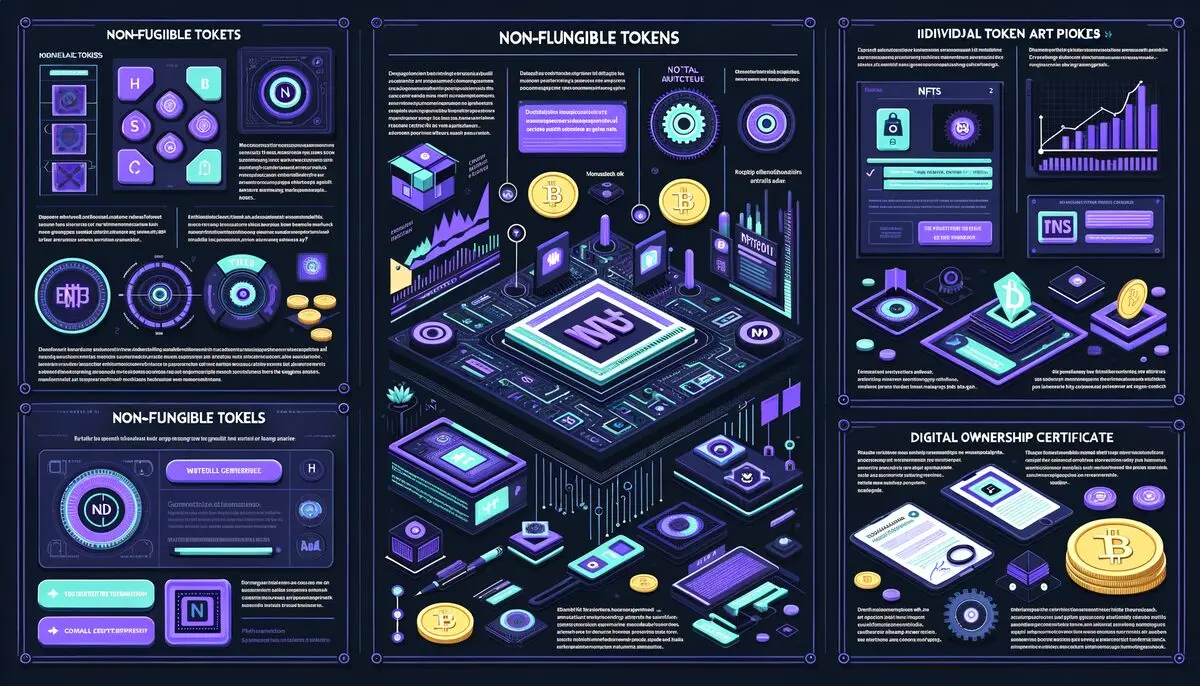
An NFT, or non-fungible token, is a unique digital certificate stored on a blockchain that proves you own a specific digital or physical item. Unlike cryptocurrencies such as Bitcoin or Ethereum, where each coin is identical and interchangeable (fungible), every NFT is one of a kind. Think of it like a signed painting versus a dollar bill. Every dollar bill works the same way, but a signed painting is unique and cannot be swapped equally for another.
The word "non-fungible" simply means "not replaceable by something identical." When you own an NFT, you hold a verifiable, tamper-proof record on the blockchain that says, "This specific digital item belongs to this wallet address." That record cannot be duplicated, forged, or erased without consensus from the network.
NFTs can represent virtually anything: digital artwork, music tracks, video clips, virtual real estate, in-game weapons, event tickets, legal contracts, and much more. The token itself is not the image or the song. Rather, it is the proof of ownership and authenticity that points to where that file is stored.
One important distinction: owning an NFT does not automatically grant you the copyright or intellectual property rights to the underlying work, unless the creator explicitly transfers those rights. You own the token, which proves possession, but the creator often retains the ability to reproduce the original work.
How NFTs Work: ERC-721, ERC-1155, Metadata, and IPFS
To understand NFTs at a technical level, you need to know four core concepts: token standards, smart contracts, metadata, and decentralized storage. Together, these components form the infrastructure that makes NFTs possible.
Token Standards: ERC-721 and ERC-1155
Most NFTs live on the Ethereum blockchain and follow one of two token standards. ERC-721 was the original NFT standard, introduced in 2018. Each ERC-721 token has a unique token ID, meaning every single NFT minted under this standard is completely distinct. This is the standard used by most profile picture (PFP) collections like CryptoPunks and Bored Ape Yacht Club.
ERC-1155, developed by Enjin, is a more flexible standard that supports both fungible and non-fungible tokens within the same smart contract. This is particularly useful for gaming, where a developer might need 10,000 identical gold coins (fungible) alongside one legendary sword (non-fungible). ERC-1155 also allows batch transfers, reducing gas costs significantly when moving multiple tokens at once.
| Feature | ERC-721 | ERC-1155 |
|---|---|---|
| Token Uniqueness | Every token is unique | Supports unique and identical tokens |
| Batch Transfers | Not supported natively | Supported, reduces gas fees |
| Gas Efficiency | Higher cost per transfer | Lower cost with batch operations |
| Best Use Case | Unique art, PFP collections | Gaming items, mixed collections |
| Contract Complexity | Simpler, single-token focus | More complex, multi-token support |
Beyond Ethereum, other blockchains have their own NFT standards. Solana uses the Metaplex standard, Bitcoin has Ordinals (which inscribe data directly onto satoshis), and Polygon, Avalanche, and BNB Chain each have their own implementations. However, ERC-721 and ERC-1155 remain the most widely adopted standards in the ecosystem.
Smart Contracts
Every NFT collection is governed by a smart contract, which is a self-executing program deployed on the blockchain. The smart contract defines the rules for minting, transferring, and sometimes burning (destroying) NFTs. It also stores the mapping between token IDs and owner wallet addresses. When you buy an NFT on a marketplace, you are interacting with the collection's smart contract to update the ownership record.
Metadata and IPFS
The actual content associated with an NFT, such as the image, animation, or audio file, is typically too large to store directly on the blockchain. Instead, the NFT's smart contract stores a pointer (a URI) to a metadata file, usually in JSON format. This metadata file contains the item's name, description, attributes (traits), and a link to the media file.
Storing these files on centralized servers creates a single point of failure. If the server goes down, the NFT's image disappears. This is why most reputable projects use IPFS (InterPlanetary File System), a decentralized peer-to-peer storage network. Files stored on IPFS are addressed by their content hash, meaning as long as at least one node on the network pins that file, it remains accessible. Some projects go a step further and use Arweave, which offers permanent storage through a one-time payment model.
History of NFTs
The history of NFTs stretches back further than most people realize. Understanding this timeline helps explain how the technology evolved from a niche experiment into a global phenomenon.
2012-2014: Colored Coins and Early Experiments. The concept of representing unique assets on a blockchain began with Colored Coins on Bitcoin. These were small denominations of Bitcoin marked ("colored") to represent real-world assets. While limited by Bitcoin's scripting language, they planted the seed for tokenized ownership.
2017: CryptoPunks and CryptoKitties. Larva Labs launched CryptoPunks in June 2017 as 10,000 algorithmically generated pixel art characters on Ethereum, given away for free to anyone with an Ethereum wallet. Later that year, CryptoKitties became the first mainstream NFT application, allowing users to breed and trade digital cats. The game became so popular it congested the entire Ethereum network.
2018-2019: Infrastructure Building. OpenSea launched as the first major NFT marketplace. The ERC-721 standard was formalized, providing a common framework for NFT development. SuperRare, KnownOrigin, and other art-focused platforms emerged.
2020: DeFi Summer Meets NFTs. The explosion of decentralized finance (DeFi) brought renewed attention to Ethereum-based tokens, including NFTs. Projects like Rarible introduced governance tokens for NFT marketplace participation, and NBA Top Shot launched on Flow blockchain, bringing NFTs to sports fans.
2021: The Mainstream Explosion. Beeple's "Everydays: The First 5000 Days" sold at Christie's for $69.3 million, catapulting NFTs into mainstream consciousness. Bored Ape Yacht Club launched and quickly became a cultural phenomenon. The total NFT market volume exceeded $25 billion for the year.
2022-2023: Market Correction and Evolution. NFT trading volumes declined sharply from their 2021 peaks. Many speculative projects lost most of their value. However, the technology continued to evolve, with Blur disrupting the marketplace landscape through zero-fee trading and airdrop incentives. Bitcoin Ordinals launched, bringing NFTs to the Bitcoin blockchain for the first time.
2024-2026: Maturation and Real-World Utility. The NFT market shifted from speculation toward genuine utility. Real-world asset (RWA) tokenization gained significant traction, with major institutions exploring NFTs for real estate deeds, luxury goods authentication, and supply chain tracking. Gaming NFTs matured with AAA-quality titles integrating blockchain ownership. Cross-chain interoperability improved, making it easier to move NFTs between different blockchains.
Types of NFTs
NFTs have expanded far beyond simple digital images. Today, non-fungible tokens span a wide range of categories, each with unique characteristics and value propositions.
Digital Art
Art NFTs remain the most recognized category. Artists can sell their work directly to collectors without galleries or intermediaries, and smart contracts can include royalty mechanisms that pay the original creator a percentage of every secondary sale. Platforms like SuperRare, Foundation, and Art Blocks have created thriving ecosystems for both individual pieces and generative art collections. Generative art, where algorithms create unique visual outputs from coded parameters, has become one of the most valued categories, with projects like Fidenza and Ringers achieving blue-chip status.
Gaming NFTs
Blockchain gaming uses NFTs to represent in-game assets like weapons, armor, skins, characters, and land. Unlike traditional gaming items locked within a single game, NFT-based assets can theoretically be traded on open marketplaces or used across compatible platforms. Games like Axie Infinity, Illuvium, and Star Atlas have built entire economies around NFT ownership. The key innovation is true ownership: players can sell their items for real value rather than losing everything when they stop playing.
Music NFTs
Musicians are using NFTs to sell albums, individual tracks, stems, and exclusive experiences directly to fans. Platforms like Sound.xyz and Audius enable artists to retain a larger share of revenue compared to traditional streaming services. Some music NFTs include special perks like backstage passes, voting rights on setlists, or revenue-sharing arrangements. This model is particularly attractive for independent artists who struggle with the economics of traditional streaming platforms.
Domain Name NFTs
Blockchain-based domain names, such as those from Ethereum Name Service (ENS) and Unstoppable Domains, function as NFTs. An ENS name like "yourname.eth" serves as a human-readable address for your Ethereum wallet, replacing long hexadecimal addresses. These domains can also point to decentralized websites hosted on IPFS. Premium short names and dictionary words have traded for significant sums on secondary markets.
Real-World Asset (RWA) NFTs
One of the fastest-growing NFT categories involves tokenizing real-world assets. This includes fractional ownership of real estate, luxury watches, fine wine, rare cars, and other physical items. Companies like RealT and Propy have tokenized property deeds, allowing investors to buy fractional shares of rental properties and receive proportional income. Authentication NFTs for luxury goods help combat counterfeiting by providing a verifiable digital certificate of authenticity tied to a physical item.
Collectibles and PFP Projects
Profile picture (PFP) collections like CryptoPunks, Bored Ape Yacht Club, Azuki, and Pudgy Penguins have become digital identity symbols within crypto culture. Owners use these images as their social media avatars to signal community membership. Beyond aesthetics, many PFP projects offer utility through exclusive communities, token airdrops, merchandise, and event access. The social and cultural value of these collections often exceeds their artistic complexity.
Top NFT Marketplaces in 2026: OpenSea vs Blur vs Magic Eden
Choosing the right marketplace is crucial for both buyers and sellers. The three dominant platforms in 2026 each serve different audiences and offer distinct advantages. For detailed walkthroughs of each platform, see our dedicated tutorials: How to Use OpenSea, How to Use Blur, and How to Use Magic Eden.
| Feature | OpenSea | Blur | Magic Eden |
|---|---|---|---|
| Primary Chains | Ethereum, Polygon, Solana, Base, Arbitrum | Ethereum, Blast | Solana, Ethereum, Bitcoin, Polygon, Base |
| Trading Fees | 2.5% marketplace fee | 0% marketplace fee | 2% marketplace fee |
| Creator Royalties | Optional, minimum 0.5% | Optional, incentivized through points | Optional on most chains |
| Target Audience | Beginners, casual collectors | Pro traders, high-volume flippers | Cross-chain users, Solana collectors |
| Advanced Trading Tools | Basic analytics | Real-time floor charts, portfolio tracking, bid pools | Rarity tools, collection analytics |
| Token Incentives | None currently | BLUR token airdrops for active traders | ME token rewards |
| User Interface | Clean, intuitive, beginner-friendly | Data-dense, trader-focused dashboard | Modern, well-organized, multi-chain |
| Best For | Browsing, discovering, first-time buyers | Speed, volume trading, earning token rewards | Multi-chain portfolios, Solana NFTs, Bitcoin Ordinals |
OpenSea remains the most recognizable name in the NFT space and offers the most beginner-friendly experience. Its interface is clean and intuitive, making it ideal for people making their first NFT purchase. However, its 2.5% fee structure puts it at a disadvantage for high-volume traders.
Blur disrupted the marketplace landscape by offering zero trading fees and rewarding active traders with BLUR token airdrops. Its interface is designed for professional traders, with real-time floor price charts, portfolio analytics, and advanced bidding tools. Blur dominates Ethereum NFT trading volume in 2026.
Magic Eden started as the leading Solana marketplace and has expanded to support Ethereum, Bitcoin Ordinals, Polygon, and Base. Its cross-chain approach makes it the go-to platform for collectors who hold NFTs across multiple blockchains. Magic Eden also pioneered Bitcoin Ordinals trading, positioning itself at the forefront of Bitcoin-native NFTs.
How to Buy an NFT Step by Step
Buying your first NFT can feel overwhelming, but the process is straightforward once you understand each step. Here is a complete walkthrough for beginners.
Step 1: Set Up a Crypto Wallet
You need a crypto wallet to interact with NFT marketplaces. For Ethereum-based NFTs, MetaMask is the most popular choice. For Solana NFTs, Phantom is the standard. For a comprehensive overview of wallet options, check out our guide on what is a crypto wallet and how to choose one. Download the wallet as a browser extension or mobile app, create a new wallet, and securely store your seed phrase (recovery words). Never share your seed phrase with anyone, and consider writing it down on paper rather than storing it digitally.
Step 2: Fund Your Wallet
Purchase the cryptocurrency needed for the blockchain where you want to buy NFTs. For Ethereum NFTs, you need ETH. For Solana NFTs, you need SOL. You can buy crypto on centralized exchanges like Coinbase, Kraken, or Binance, then transfer it to your wallet. Some wallets also support direct purchases with credit or debit cards through on-ramp partners. Remember to account for gas fees (transaction costs) when deciding how much to transfer.
Step 3: Connect to a Marketplace
Visit your chosen marketplace (OpenSea, Blur, or Magic Eden) and click "Connect Wallet." Your wallet extension will prompt you to approve the connection. This does not give the marketplace access to your funds. It simply allows the site to see your wallet address and present buying options. Always verify you are on the legitimate website URL before connecting.
Step 4: Browse and Choose an NFT
Explore collections, trending items, or search for specific projects. Review the NFT's details including its traits, rarity ranking, ownership history, and floor price (the lowest price available in the collection). Compare prices across multiple marketplaces, as the same NFT can be listed at different prices on different platforms.
Step 5: Make the Purchase
You have two main options: "Buy Now" at the listed price, or "Make Offer" to bid a lower amount. For Buy Now, click the button, review the total cost (price plus gas fees) in your wallet, and confirm the transaction. For offers, set your bid amount and expiration time. If the seller accepts, the transaction executes automatically. After the transaction confirms on the blockchain, the NFT appears in your wallet.
How to Create and Mint an NFT
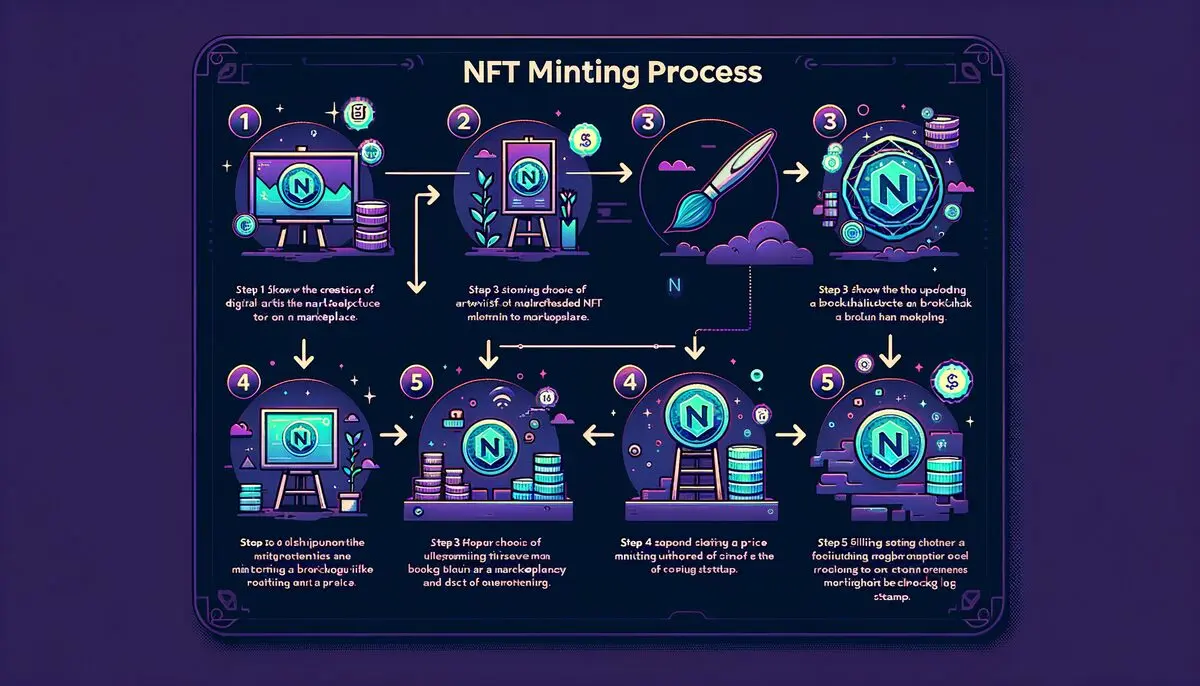
Creating your own NFT has become remarkably accessible. You do not need to be a programmer. Most platforms offer no-code minting tools that guide you through the process.
Preparing Your Content
Start with the digital file you want to tokenize. This could be an image (PNG, JPG, SVG, GIF), video (MP4, WEBM), audio (MP3, WAV), or 3D model (GLB, GLTF). Most platforms accept files up to 100 MB, though smaller files are recommended for faster loading. Ensure your content is original or that you have the rights to tokenize it. Minting someone else's work as an NFT is both unethical and potentially illegal.
Choosing a Platform and Blockchain
Select where you want to mint. OpenSea offers the simplest minting experience with support for multiple chains. Manifold is popular among artists who want more control over their smart contract. Zora provides a creator-friendly platform with built-in social features. Consider the blockchain carefully: Ethereum offers the largest collector base but higher gas fees, while Polygon and Base offer very low fees at the cost of a smaller market. Solana offers a middle ground with moderate fees and a strong collector community.
Minting Process
Upload your file, add a name, description, and properties (traits). Set your royalty percentage for secondary sales (typically 2.5% to 10%). Choose whether to mint as a single edition (1/1) or a collection with multiple editions. Some platforms offer "lazy minting," where the NFT is not actually written to the blockchain until someone buys it, saving you upfront gas costs. Once you confirm, sign the transaction with your wallet. Your NFT is now live and can be listed for sale immediately.
How to Evaluate an NFT Before Buying
The NFT market contains both genuine projects and outright scams. Learning to evaluate NFTs before purchasing is essential for protecting your investment and finding valuable opportunities.
Assess the Team and Community
Research the creators behind the project. Are they known artists or developers with a track record? Are their identities public (doxxed), or are they anonymous? Check their social media presence and history. Join the project's Discord server to gauge community engagement and sentiment. Active, enthusiastic communities are a positive sign, while dead or toxic servers are red flags.
Analyze On-Chain Data
Use blockchain analytics tools to study the collection's trading history. Key metrics to examine include: total volume traded, number of unique holders, listing-to-sales ratio, and whale concentration. If a small number of wallets hold a large percentage of the collection, the floor price can be easily manipulated. Tools like NFTGo, Dune Analytics, and Flips Finance provide these insights.
Evaluate the Art and Utility
Consider both the aesthetic quality and any utility promised by the project. Utility can include token airdrops, access to exclusive events or content, staking rewards, governance rights, or integration with games or metaverse platforms. Be skeptical of projects that promise unrealistic returns or vague future utility without a clear roadmap.
Check the Smart Contract
For more technical buyers, reviewing the smart contract on Etherscan or the relevant block explorer adds another layer of due diligence. Look for whether the contract has been verified, if it includes any unusual functions (like the ability for the owner to freeze transfers), and whether the metadata is stored on IPFS or a centralized server. Verified contracts from established standards like ERC-721A (an optimized version of ERC-721 that reduces gas costs for batch minting) are generally safer.
NFT Risks and Scams
The NFT space, like broader crypto, has its share of risks and bad actors. Understanding common threats helps you protect yourself and your assets.
Common Scam Types
Phishing attacks are the most prevalent threat. Scammers create fake websites that look identical to legitimate marketplaces, send deceptive Discord DMs or emails, or deploy malicious smart contracts designed to drain your wallet when you approve a transaction. Always double-check URLs, never click links in DMs from unknown accounts, and use a separate "burner" wallet for interacting with unfamiliar contracts.
Rug pulls occur when project creators collect mint revenue and then abandon the project, deleting their social media accounts and leaving buyers with worthless tokens. Warning signs include anonymous teams with no track record, unrealistic promises, pressure to buy quickly, and artificially inflated hype through paid influencers.
Wash trading involves traders buying and selling to themselves to create the illusion of high demand and inflate prices artificially. Before buying into a collection with impressive volume numbers, check whether a small number of wallets are responsible for most of the trading activity.
Security Best Practices
Use a hardware wallet (Ledger or Trezor) for storing valuable NFTs. Enable all available security features on your wallet and marketplace accounts. Never share your seed phrase, private key, or sign transactions you do not fully understand. Revoke token approvals regularly using tools like Revoke.cash. Consider using a separate wallet for minting new, unverified projects. Keep your wallet software and browser extensions updated to patch security vulnerabilities.
Market Risks
Beyond scams, NFTs carry inherent market risks. Liquidity can disappear quickly, meaning you may struggle to find a buyer when you want to sell. NFT prices are strongly correlated with the broader crypto market, so bear markets can devastate NFT valuations. Regulatory uncertainty also poses risks, as governments worldwide are still developing frameworks for how NFTs should be classified and taxed. Royalty enforcement remains inconsistent, which can affect the long-term economics for creators and the perception of value for collectors.
NFTs Beyond Art: Gaming, Real Estate, and Identity
While art and collectibles dominated early NFT adoption, some of the most transformative applications of non-fungible tokens extend into other industries entirely.
Gaming and Virtual Worlds
Blockchain gaming represents one of the largest growth areas for NFTs. In traditional gaming, players spend billions on in-game items they never truly own. Game publishers can modify, remove, or restrict access to these items at any time. NFT-based gaming flips this model by giving players verifiable ownership of their digital assets, with the ability to sell or trade them freely on open markets.
Virtual world platforms like Decentraland, The Sandbox, and Otherside use NFTs to represent parcels of virtual land. Owners can build experiences, host events, display art, or lease their land to others. While the metaverse concept has faced skepticism, the underlying technology for digital property rights continues to mature. Some gaming studios are building interoperable asset systems where items earned in one game can be used or displayed in another.
Real Estate and Property
Tokenizing real estate through NFTs can streamline property transactions, reduce paperwork, enable fractional ownership, and create more liquid markets for traditionally illiquid assets. A property deed represented as an NFT on a blockchain provides a transparent, tamper-proof record of ownership and transfer history. Some jurisdictions have begun recognizing blockchain-based property records, and pilot programs for NFT-based property sales have been conducted in locations ranging from the United States to countries in the Middle East and Europe.
Digital Identity and Credentials
NFTs can serve as verifiable digital credentials, from university diplomas and professional certifications to government-issued identity documents. Soulbound tokens (SBTs), a concept proposed by Ethereum co-founder Vitalik Buterin, are non-transferable NFTs designed specifically for identity and reputation. These tokens can represent achievements, qualifications, and affiliations without being tradable, making them suitable for building decentralized identity systems. Companies and institutions are experimenting with SBTs for employee badges, membership cards, and proof of attendance.
Supply Chain and Authentication
Luxury brands and manufacturers are using NFTs as digital certificates of authenticity. When you buy a designer handbag or a premium watch, an accompanying NFT can serve as a tamper-proof record of its origin, manufacturing details, and ownership chain. This combats counterfeiting and provides buyers with confidence in their purchase. Companies like LVMH, Prada, and Breitling have launched NFT-based authentication programs. The technology is also being applied to food supply chains, pharmaceutical tracking, and materials sourcing verification.
The Future of NFTs
The NFT landscape continues to evolve rapidly. Several key trends are shaping where the technology is headed in 2026 and beyond.
Account Abstraction and Improved UX
One of the biggest barriers to NFT adoption has been the complexity of managing crypto wallets, seed phrases, and gas fees. Account abstraction (ERC-4337) and smart wallet technology are making this simpler by enabling social login, gas sponsorship (where the project pays gas fees on behalf of users), and session keys that eliminate the need to approve every single transaction. These improvements are making NFTs accessible to mainstream users who have no interest in learning the technical details of blockchain.
Cross-Chain Interoperability
As NFTs proliferate across multiple blockchains, the ability to move assets seamlessly between chains becomes increasingly important. Cross-chain bridges and protocols like LayerZero and Wormhole are enabling NFTs to be transferred or represented on multiple chains simultaneously. In the future, a collector might buy an NFT on Ethereum, display it in a Solana-based virtual gallery, and use it as an avatar in a game on a different chain entirely, all without manual bridging.
AI and Dynamic NFTs
The intersection of artificial intelligence and NFTs is creating new possibilities. Dynamic NFTs can change their appearance, properties, or behavior based on external data feeds, user interactions, or AI-generated content. Imagine an NFT artwork that evolves based on weather data, sports scores, or the owner's activity. AI-generated art collections are also growing, raising interesting questions about authorship, creativity, and value in the digital age.
Regulatory Clarity
Governments around the world are developing clearer regulatory frameworks for NFTs. While the lack of regulation in the early days allowed rapid innovation, it also enabled fraud and market manipulation. Balanced regulation that protects consumers without stifling innovation will be crucial for long-term institutional adoption. Key areas of focus include securities classification (whether certain NFTs qualify as investment contracts), tax treatment of NFT transactions, anti-money laundering compliance for marketplaces, and intellectual property protections for creators.
Mainstream Brand Integration
Major brands including Nike, Adidas, Starbucks, Gucci, and many others have already launched NFT programs. This trend is accelerating as companies recognize the value of blockchain-based loyalty programs, limited edition digital collectibles, and tokenized customer experiences. The next wave will likely involve more subtle integrations where consumers interact with NFTs without even realizing it, through loyalty points, digital receipts, and membership programs powered by blockchain technology behind the scenes.
Frequently Asked Questions About NFTs
What does NFT stand for?
NFT stands for Non-Fungible Token. "Non-fungible" means the item is unique and cannot be replaced by something identical. A fungible item, like a dollar bill, can be swapped for any other dollar bill. A non-fungible item, like a painting, is one of a kind. The "token" part refers to the digital certificate stored on a blockchain that proves ownership.
Are NFTs a good investment?
NFTs are highly speculative and carry significant risk. While some early buyers of projects like CryptoPunks and Bored Apes saw enormous returns, the vast majority of NFTs lose value over time. Only invest what you can afford to lose entirely, do thorough research before buying, and focus on projects with genuine utility or cultural significance rather than short-term hype. Diversification across asset classes remains important.
Can I screenshot an NFT instead of buying it?
You can save the image, but you do not own the NFT. Screenshotting an NFT is like photographing a painting in a museum. You have a copy of the image, but you do not possess the original work, cannot sell the authentic item, and do not have the blockchain-verified proof of ownership that the NFT represents. The value of an NFT lies in its verifiable authenticity and provenance, not just the visual content.
What blockchain is best for NFTs?
Ethereum remains the dominant blockchain for high-value NFTs due to its large collector base, established marketplaces, and strong security. Solana is excellent for lower-cost NFTs and fast transactions. Polygon and Base offer nearly free minting and trading, making them ideal for beginners or experimental projects. Bitcoin Ordinals have carved out a niche for collectors who value Bitcoin's security and cultural significance. The best chain depends on your priorities: security, cost, speed, or collector audience.
How much does it cost to create an NFT?
Costs vary dramatically by blockchain and method. On Ethereum mainnet, minting can cost anywhere from $5 to $100+ depending on network congestion. Lazy minting on OpenSea is free until someone buys the NFT. On Polygon and Base, gas fees are fractions of a cent. On Solana, minting typically costs around $0.01 to $0.05. Beyond gas, some platforms charge listing fees or take a percentage of sales. You should also budget for promotion if you want your NFT to gain visibility.
Do I need cryptocurrency to buy NFTs?
Traditionally, yes. Most NFT purchases require the native cryptocurrency of the blockchain the NFT lives on (ETH for Ethereum, SOL for Solana, etc.). However, an increasing number of platforms now support credit card payments through on-ramp partners. Magic Eden offers credit card checkout for many collections, and some brands sell NFTs directly through their websites using traditional payment methods. Even with fiat payment options, you still need a crypto wallet to hold the NFT after purchase.
What happens to my NFT if the marketplace shuts down?
Your NFT exists on the blockchain independently of any marketplace. If OpenSea or Blur were to shut down tomorrow, your NFT would still be in your wallet, and you could view it, transfer it, or list it on any other compatible marketplace. The marketplace is just an interface for discovery and trading. However, if the NFT's metadata or media files are stored on a centralized server rather than IPFS or Arweave, the associated image or content could become inaccessible if that server goes offline.
Are NFTs bad for the environment?
This concern was valid before Ethereum's transition to Proof of Stake (the Merge) in September 2022. Under the old Proof of Work system, Ethereum consumed as much energy as some small countries. After the Merge, Ethereum's energy consumption dropped by approximately 99.95%. Solana, Polygon, and most other NFT-supporting chains also use energy-efficient consensus mechanisms. While blockchain technology is not zero-impact, the environmental argument against NFTs is largely outdated as of 2026.
Can NFTs be stolen?
Yes, NFTs can be stolen through phishing attacks, malicious smart contract approvals, or seed phrase theft. If someone gains access to your wallet's private key or tricks you into signing a malicious transaction, they can transfer your NFTs to their own wallet. Once an NFT is transferred on the blockchain, the transaction is irreversible. This is why security practices like using hardware wallets, never sharing seed phrases, and carefully reviewing every transaction before signing are critically important.
How do I sell an NFT I already own?
Connect your wallet containing the NFT to a marketplace like OpenSea, Blur, or Magic Eden. Navigate to the NFT in your profile or collection, click "List for Sale" or "Sell," set your price (fixed price or auction format), and confirm the listing transaction. Some platforms require a one-time approval transaction the first time you list from a specific collection. When a buyer purchases your NFT, the sale proceeds (minus any marketplace and creator royalty fees) are sent directly to your wallet.
What are soulbound tokens (SBTs)?
Soulbound tokens are a type of non-transferable NFT proposed by Vitalik Buterin in 2022. Unlike regular NFTs that can be freely traded, SBTs are permanently bound to a specific wallet address. They are designed to represent credentials, achievements, and affiliations that should not be bought or sold, such as university degrees, professional certifications, proof of attendance at events, or reputation scores. SBTs could form the foundation of decentralized identity systems where your on-chain history builds a verifiable digital reputation.
Related Guides
- What Are Bitcoin Runes: Complete Fungible Token Standard Guide (2026)
- Best XRP Wallets in 2026: Custodial vs Non-Custodial Options
- What Is a Non-Custodial Wallet: Complete Self-Custody Guide (2026)
- What Is UPEG? Unipeg Token Explained, From Ethereum Liquidity to the NFT Angle
- What Are Pudgy Penguins (PENGU)? NFT Collection + Token Guide 2026