TRC20 vs ERC20 USDT: Differences & Which to Use (2026)
— By Tony Rabbit in Tutorials
TRC20 vs ERC20 USDT compared: fees, speed, networks and safety. Learn the difference and which USDT standard to use so you never lose funds.
TRC-20 and ERC-20 are the two USDT networks most retail crypto users will ever touch. They both refer to "USDT," but the underlying transport is completely different. Picking the wrong one on a withdrawal can cost a few cents or a few hundred dollars depending on direction, and in the worst case the funds end up at an unrecoverable address. This guide explains the practical differences and how to decide which to use for any given transfer.
Quick answer: TRC-20 is the USDT version on TRON. ERC-20 is the USDT version on Ethereum. TRC-20 is much cheaper and faster for everyday transfers. ERC-20 has deeper DeFi integration, more institutional support, and is required for many Ethereum-based protocols. Always confirm both wallets and the exchange use the same network. Sending TRC-20 to a 0x-address or ERC-20 to a T-address can cause funds to be lost.
- TRC-20 lives on TRON. Addresses start with the letter T and fees are paid through TRX energy and bandwidth.
- ERC-20 lives on Ethereum. Addresses start with 0x and fees are paid in ETH gas.
- The token symbol is the same. Both are called USDT and target a 1 USD peg, but the rails are completely separate.
- Cost gap is large. TRC-20 transfers usually cost cents. ERC-20 transfers can cost several dollars or more.
- For most retail transfers, TRC-20 wins. For DeFi on Ethereum, ERC-20 is required.
What TRC-20 and ERC-20 actually are
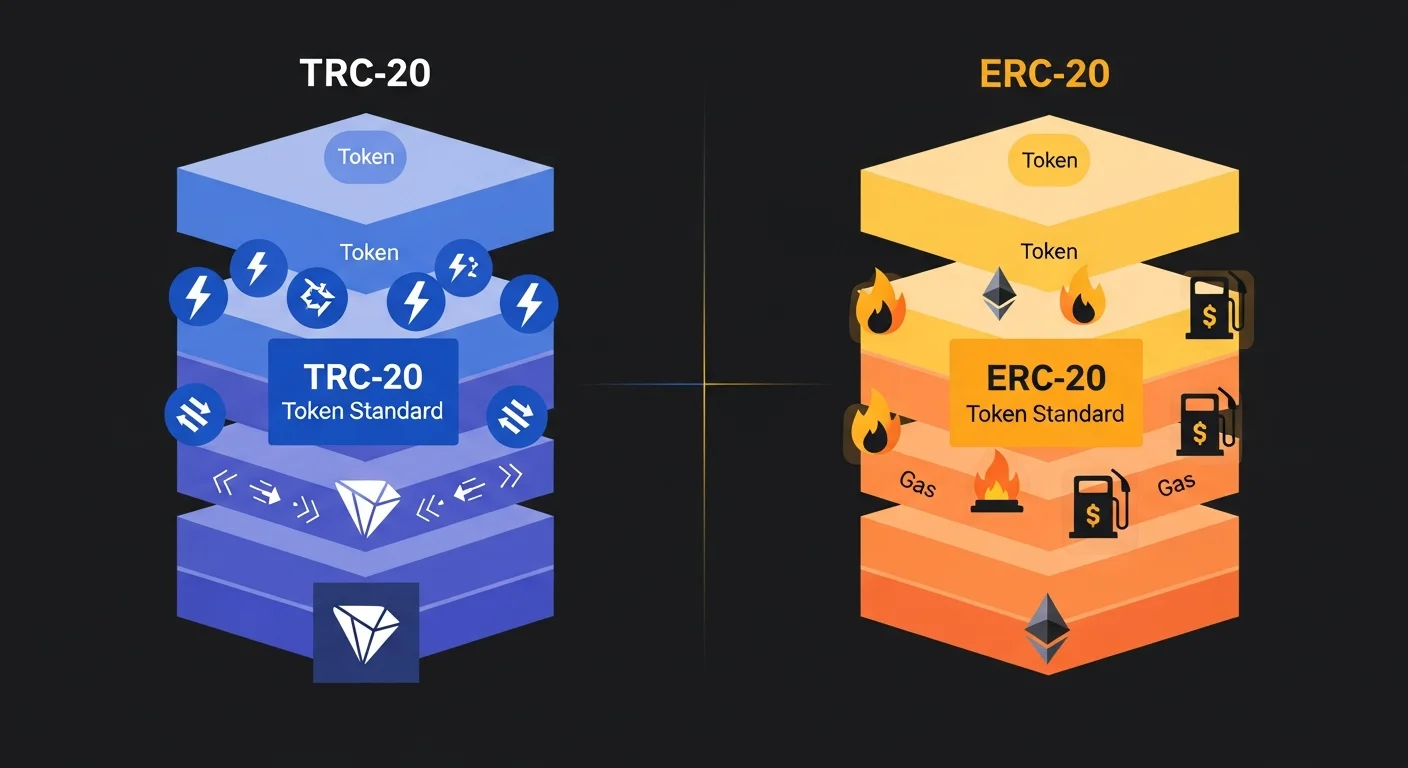
Both TRC-20 and ERC-20 are token standards. A standard defines the functions a smart contract must implement so wallets, exchanges, and dApps can interact with the token consistently. ERC-20 came first, and TRC-20 was designed to be largely compatible with it, which is why moving USDT between the two networks feels familiar.
ERC-20: Ethereum's standard
ERC-20 is the dominant standard on Ethereum. It defines how an Ethereum-based token can be transferred, approved, and queried. USDT-ERC20 is the most-used stablecoin in DeFi protocols on Ethereum. Sending it requires gas paid in ETH and goes through Ethereum's mempool with confirmation times around 12 to 30 seconds depending on network conditions.
TRC-20: TRON's standard
TRC-20 is the TRON equivalent. The functions are similar, but it runs on the TRON Virtual Machine, which has different fee mechanics. Instead of charging gas in TRON's native asset, the network charges energy and bandwidth, both ultimately denominated in TRX. Confirmations land in roughly 3 seconds.
Fees and confirmation speed
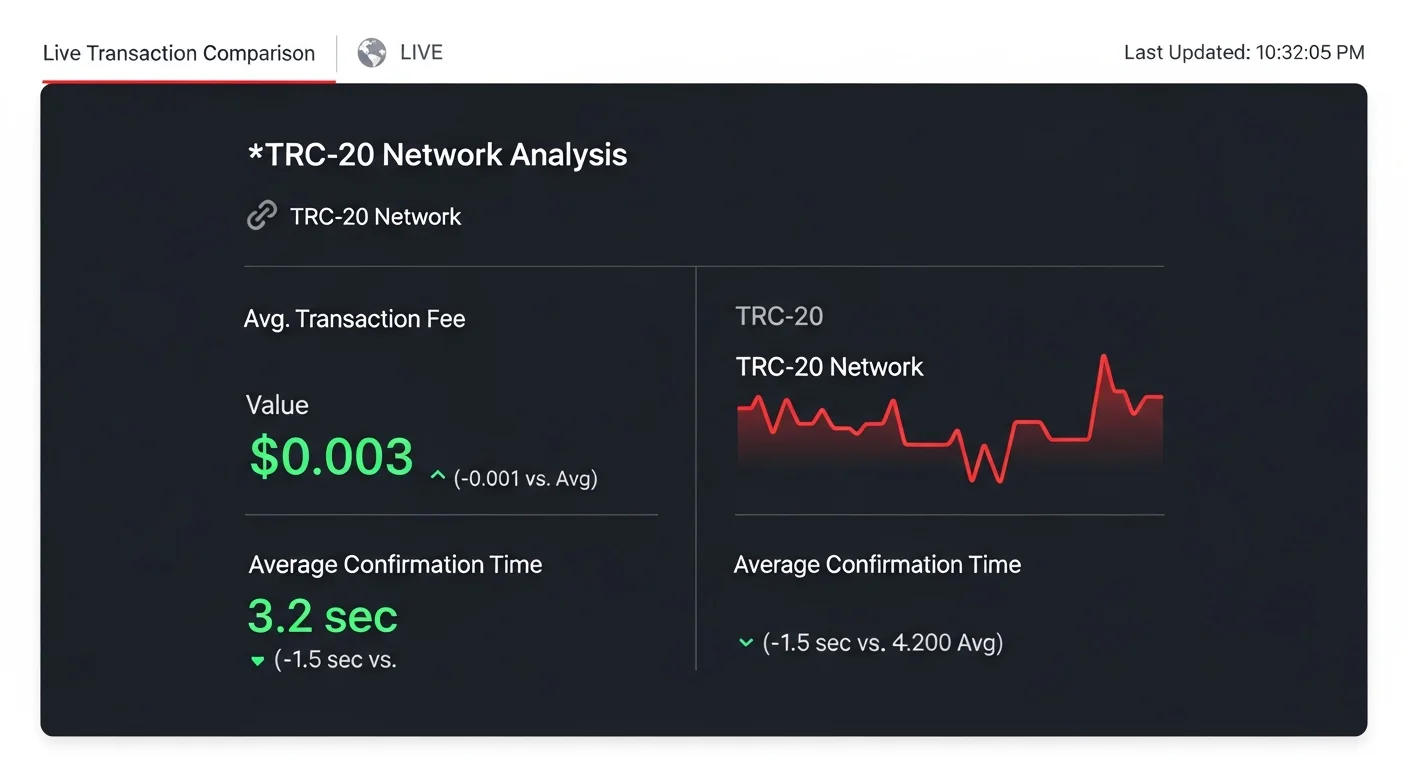
The single biggest practical difference is cost. The same USDT transfer can cost cents on TRON and several dollars on Ethereum. The reason is structural, not temporary.
ERC-20 fee dynamics
ERC-20 USDT transfers consume around 65,000 gas. The total dollar fee depends on the gas price, which floats with demand. In quiet periods this can be a couple of dollars. In busy periods, transfer fees climb sharply. Layer 2 networks reduce that fee dramatically, but they require both wallets and exchanges to support the specific L2.
TRC-20 fee dynamics
TRC-20 USDT transfers consume around 30,000 to 65,000 energy plus a small bandwidth charge. The wallet either burns a few TRX automatically or draws from staked resources. The total dollar cost is typically cents. We have a deeper fee explainer in what are TRX energy and bandwidth.
Security, decentralization and ecosystem
Cost is not the only factor. The two networks differ in decentralization, validator design, and the breadth of the ecosystem on top.
Ethereum's security and ecosystem
Ethereum has the largest validator set, the most economic security in the space, and the deepest DeFi ecosystem. Most institutional flows, large lending markets, and major DeFi protocols default to ERC-20 USDT. If your transfer needs to land inside an Ethereum-based protocol, ERC-20 is the only choice that works without bridging.
TRON's design tradeoffs
TRON uses a Delegated Proof of Stake model with a smaller, faster validator set. This produces low latency and low fees, but the consensus is more centralized than Ethereum's by design. For pure dollar transfers, this tradeoff usually does not matter. For very large transfers or for protocols requiring strong economic security, the Ethereum side has historically been favored.
When to use TRC-20 and when to use ERC-20
The right answer depends on what the transfer is for and where the destination lives.
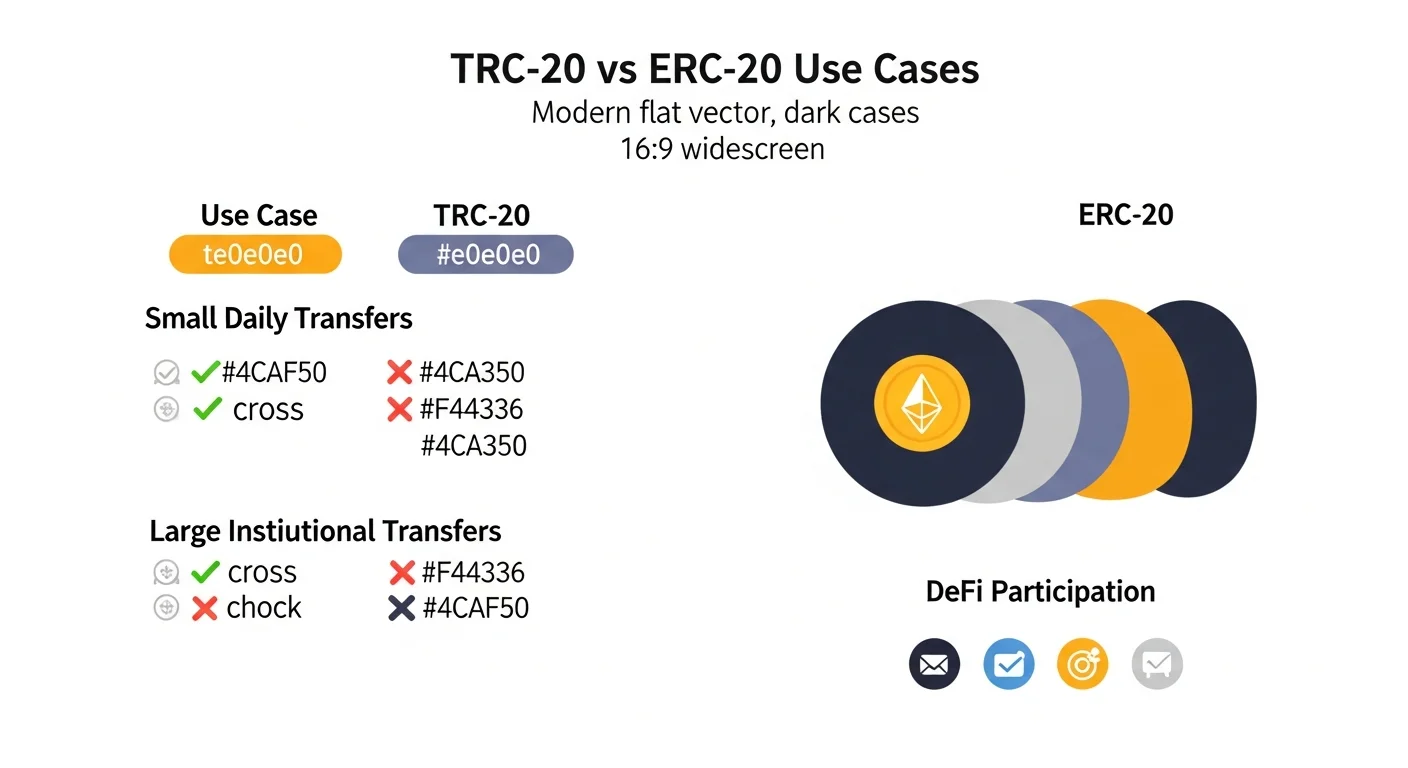
Use TRC-20 when
Use TRC-20 for everyday transfers between exchanges, between friends, or between centralized platforms that support TRON. The low fee and fast confirmation make it the right choice for moving smaller amounts of USDT. Most major exchanges support TRC-20 deposits and withdrawals.
Use ERC-20 when
Use ERC-20 when sending USDT to an Ethereum DeFi protocol, an Ethereum smart contract, or a counterparty that only operates on Ethereum mainnet. Institutional desks and some custodians also default to ERC-20 because of the underlying audit and tooling stack.
Addresses, exchange support and the network selector
The single biggest source of lost USDT is the network selector on a centralized exchange. The same exchange can offer USDT deposits and withdrawals in TRC-20, ERC-20, BEP-20, Polygon, Arbitrum, and other networks.
Confirm both ends
Before withdrawing, confirm three things: the address starts with the right prefix (T for TRON, 0x for Ethereum), the network selected on the exchange matches that prefix, and the receiving wallet or exchange expects USDT on that exact network. A 0x-address with TRC-20 selected is one of the easiest ways to lose funds.
Cross-network is impossible without a bridge
You cannot directly send TRC-20 to an Ethereum address by clicking the right button. Moving USDT between networks requires either a centralized exchange that supports both (deposit on one network, withdraw on the other) or a cross-chain bridge designed for stablecoins.
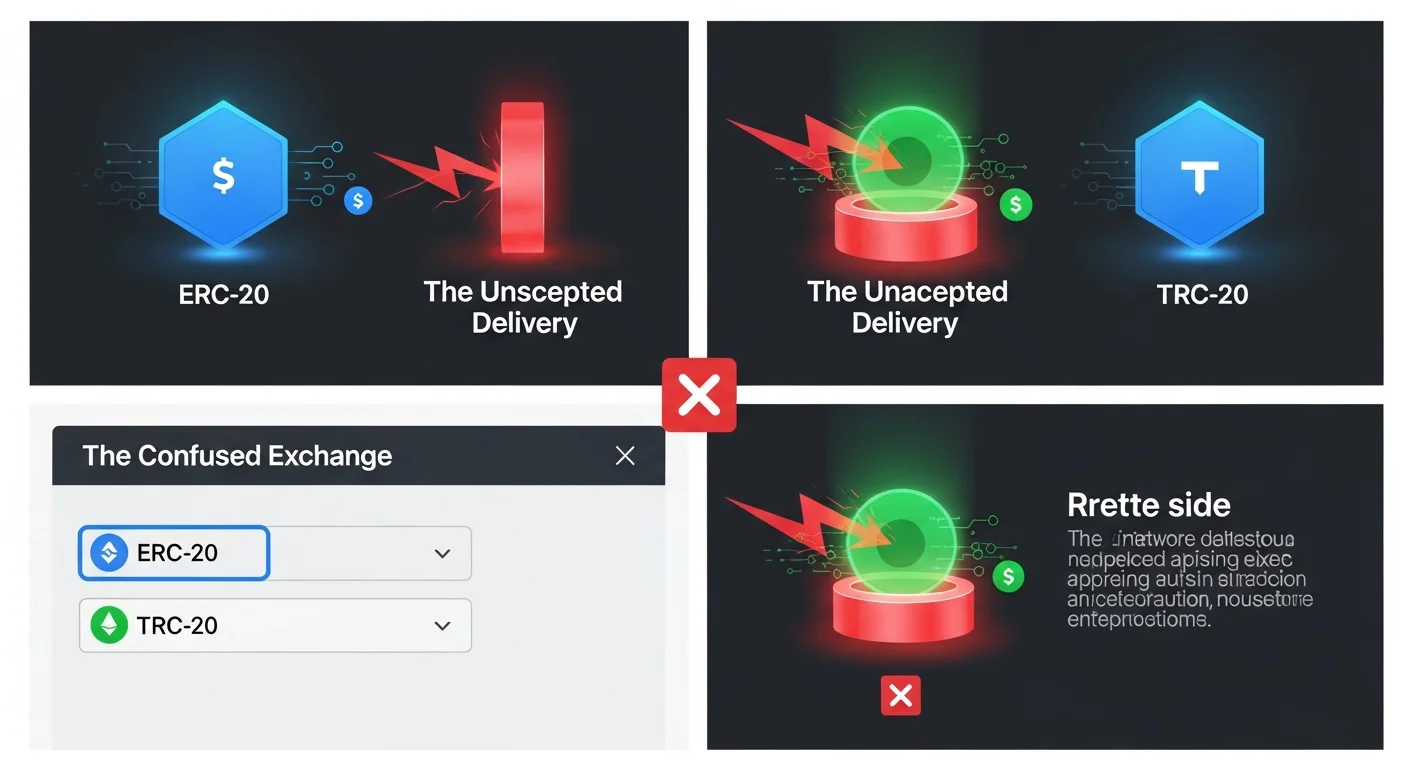
Common cross-network mistakes
- TRC-20 sent to a 0x-address: the funds end up at an unreachable TRON address derived from the same hex.
- ERC-20 sent to a T-address: the receiving exchange or wallet may reject or, in some cases, accept and credit but only after a manual review.
- Selecting BEP-20 by mistake: sends through Binance Smart Chain instead of TRON or Ethereum.
- Pasting an old address: some wallets generate new addresses; always copy fresh from the exchange.
- Skipping the small test transfer: a 1 USDT test costs cents and confirms the path before larger transfers.
Quick comparison: TRC-20 vs ERC-20
| Feature | TRC-20 | ERC-20 |
|---|---|---|
| Underlying chain | TRON | Ethereum |
| Address prefix | Starts with T | Starts with 0x |
| Typical fee | Cents | A few dollars or more |
| Confirmation time | ~3 seconds | ~12 to 30 seconds |
| Best for | Daily transfers, exchange routing | Ethereum DeFi, institutional flows |
| Native fee asset | TRX (energy and bandwidth) | ETH (gas) |
Practical workflow before any USDT withdrawal
- Decide where the USDT needs to land. The destination determines the network.
- Confirm both ends speak the same network. Address prefix plus exchange selector.
- Send a small test first. 1 USDT confirms the path before the real transfer.
- Keep the relevant fee asset funded. Some TRX for TRC-20, some ETH for ERC-20.
- Verify on the block explorer. TRONSCAN for TRC-20, Etherscan for ERC-20.
Frequently asked questions
Are TRC-20 USDT and ERC-20 USDT the same coin?
They both target a 1 USD peg and are issued by Tether, but they live on different blockchains. The supply is tracked separately and they cannot be transferred between networks without a bridge or an exchange.
Which is cheaper, TRC-20 or ERC-20?
TRC-20 is dramatically cheaper. Typical transfers cost cents on TRON and a few dollars on Ethereum mainnet. Layer 2 networks narrow the gap.
Is TRC-20 less secure than ERC-20?
It is more centralized in consensus design but has been reliable for stablecoin transfers. For pure transfers, the practical difference rarely matters. For very large amounts, many users still prefer Ethereum's economic security.
Can I convert TRC-20 USDT to ERC-20 USDT?
Yes, either through a centralized exchange that supports both networks or through a stablecoin bridge that can move USDT across chains.
What happens if I send USDT on the wrong network?
It depends. Some exchanges can recover with manual support and a fee. Many cases are unrecoverable. Always send a small test transfer first.
Final takeaway: TRC-20 wins on fee and speed for everyday transfers. ERC-20 wins on DeFi integration and economic security. The right network is whichever both ends actually support, and the cheapest way to make sure is a 1 USDT test before the real move.
Disclaimer: This guide is for educational purposes only and does not constitute investment, financial, legal, or trading advice. Cross-network mistakes are usually unrecoverable.
Related Guides
- How to Send USDT on TRON (TRC-20): Complete Step-by-Step Guide (2026)
- ERC-721 vs ERC-1155 Comparison for Traders
- USDT vs USDC vs DAI: Differences and Risks
- What Is an ERC-20 Token: Complete Guide to Ethereum's Token Standard (2026)
- What Is Account Abstraction: ERC-4337 Explained Simply (2026)
Frequently Asked Questions
What is the difference between TRC-20 and ERC-20 USDT?
TRC-20 USDT runs on the TRON network while ERC-20 USDT runs on Ethereum, so they use different addresses and fee systems. The stablecoin itself is the same Tether, just issued on different blockchains.
Which is cheaper, TRC-20 or ERC-20 USDT?
TRON transfers are generally lower cost than Ethereum mainnet transfers, though Ethereum fees vary with network demand. The cheaper option in practice depends on current conditions and your wallet's resources.
Can I send TRC-20 USDT to an ERC-20 address?
No, the two run on different networks, and sending to a mismatched network can cause permanent loss of funds. You must use the same network on both ends or a bridge to move between them.
How do I choose between TRC-20 and ERC-20 for a transfer?
Confirm which networks the sender and receiver both support, then weigh fees and speed for that transfer. The right choice is usually the network both parties accept at the lowest cost.