What Are TRX Energy and Bandwidth? Complete TRON Gas Guide (2026)
— By Tony Rabbit in Tutorials
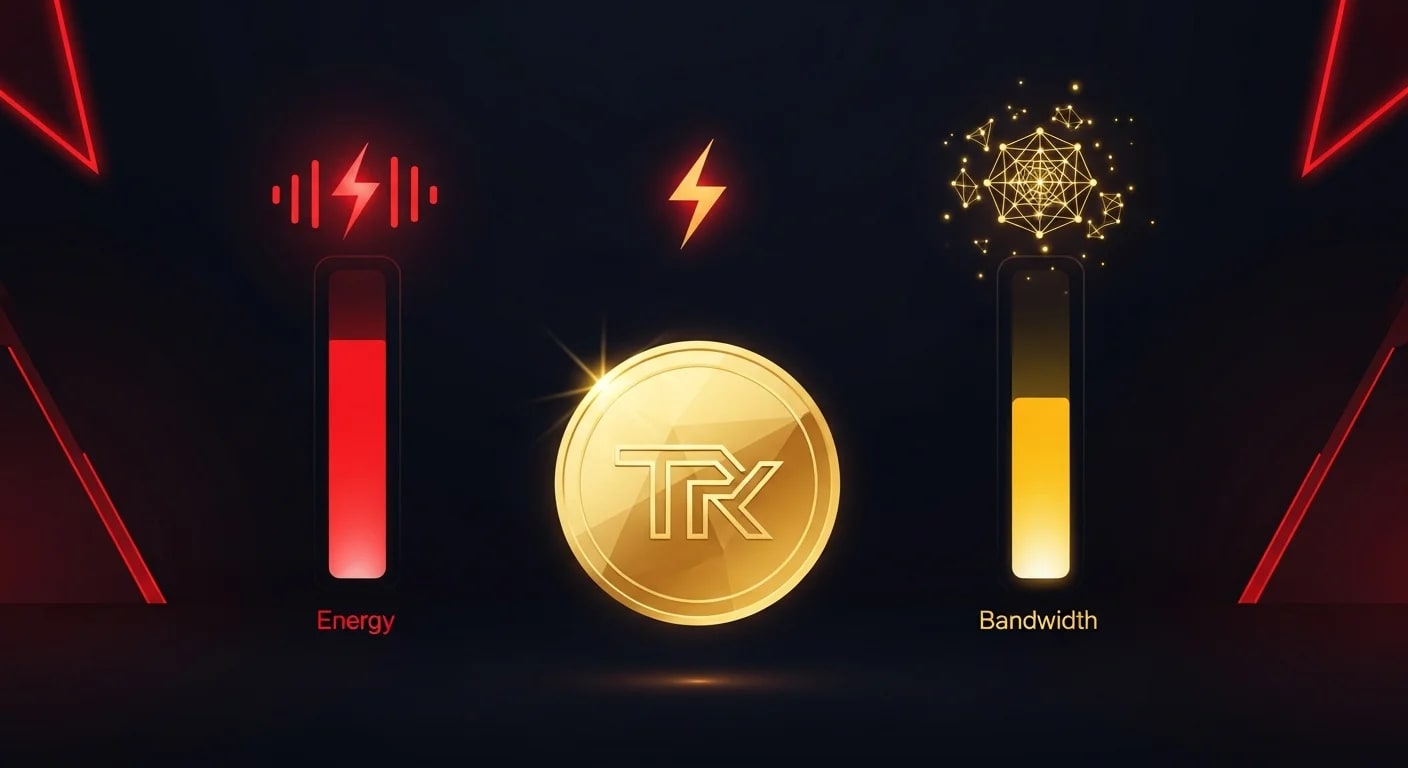
Energy and bandwidth are TRON's version of gas, and they confuse new users. This guide explains the two resources, when they apply, when to stake versus burn TRX, and how to keep transaction costs as low as possible.
TRON does not charge fees in TRX directly. It charges them in two resources called bandwidth and energy, both of which are paid for in TRX one way or another. The model is genuinely different from Ethereum's gas, and for new users it is the most confusing part of the network. Once you understand it, the network becomes nearly free for everyday transfers, which is the entire reason TRON dominates retail USDT activity.
Quick answer: Bandwidth pays for the size of a TRON transaction in bytes. Energy pays for the computational work of running a smart contract. Both are spent automatically by your wallet. If your account does not have enough of either, the wallet falls back to burning a small amount of TRX. Power users stake TRX to receive recurring energy and bandwidth, which makes most transfers effectively free.
- Bandwidth covers transaction bytes. Every account gets about 600 free bandwidth per day.
- Energy covers smart contracts. USDT, JustLend, and SunSwap all consume energy on every interaction.
- If both run out, TRX is burned. The fallback is automatic and small, but it adds up over many transfers.
- Staking TRX returns recurring resources. Stake to receive energy or bandwidth without burning anything.
- You can buy energy. Energy markets exist, where users rent out their staked resources for short periods.
The TRON resource model in plain English
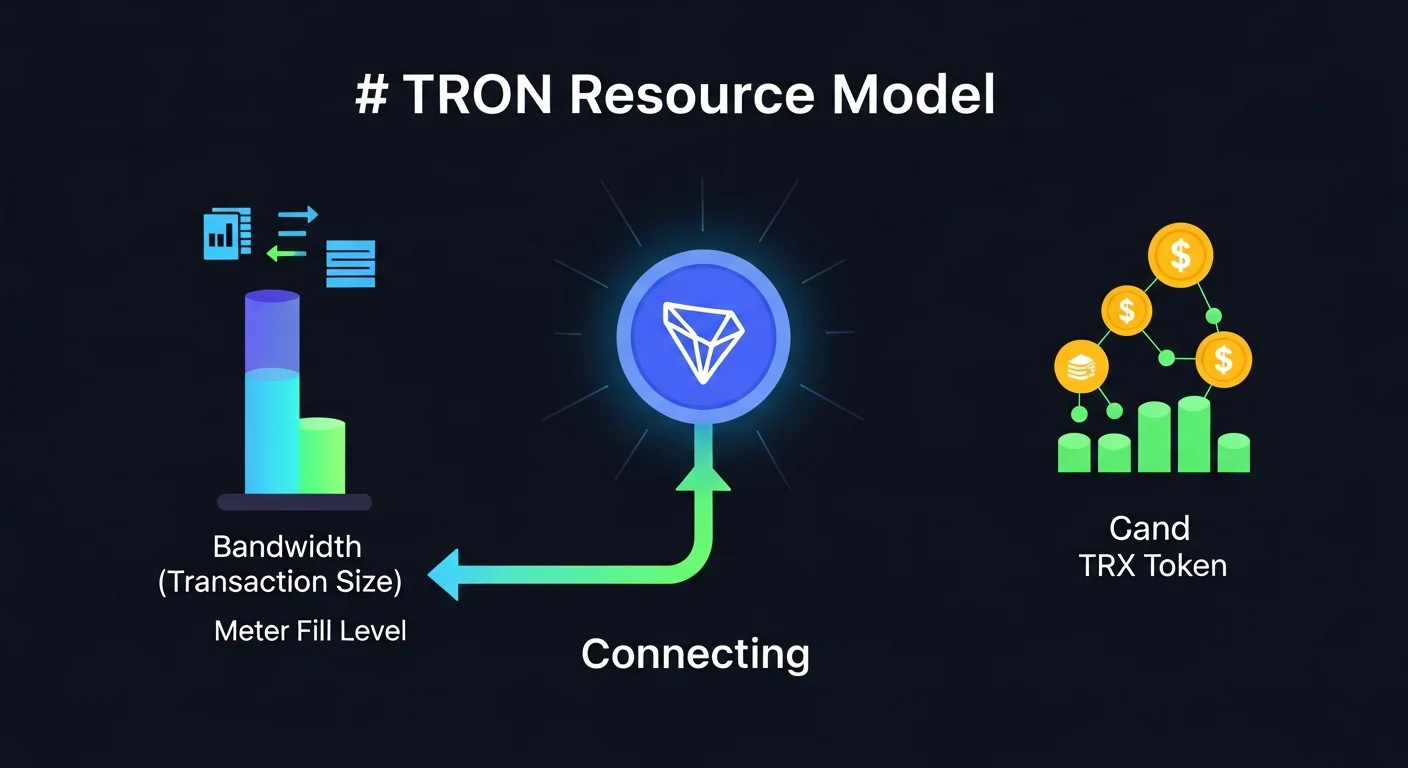
Most blockchains use a single resource called gas. The user pays for everything from a simple transfer to a complex contract call out of one bucket. TRON splits that bucket into two, on the theory that simple transfers and computation-heavy contracts are different in kind, not just in scale.
Bandwidth
Bandwidth is the simpler of the two. Every TRON transaction has a size in bytes. Sending TRX, voting, freezing, and unfreezing all consume some bandwidth. Each TRON account gets a free daily allowance of around 600 bandwidth, which is usually enough for a couple of basic transfers.
Energy
Energy covers smart contract execution. When the network has to actually run code, it charges energy. Sending TRX from one wallet to another does not consume energy. Sending USDT-TRC20, however, does, because USDT is a contract token. The same goes for any DeFi interaction on JustLend, SunSwap, or SunPump.
How resources are paid for
There are three ways a TRON transaction is paid for, and most users will encounter all of them at some point.
Daily free bandwidth
Every active account gets a small amount of free bandwidth each day. For a single TRX transfer or a vote, this is usually enough. The free quota refreshes every 24 hours, so a wallet that mostly sits idle rarely runs out.
Burning TRX as a fallback
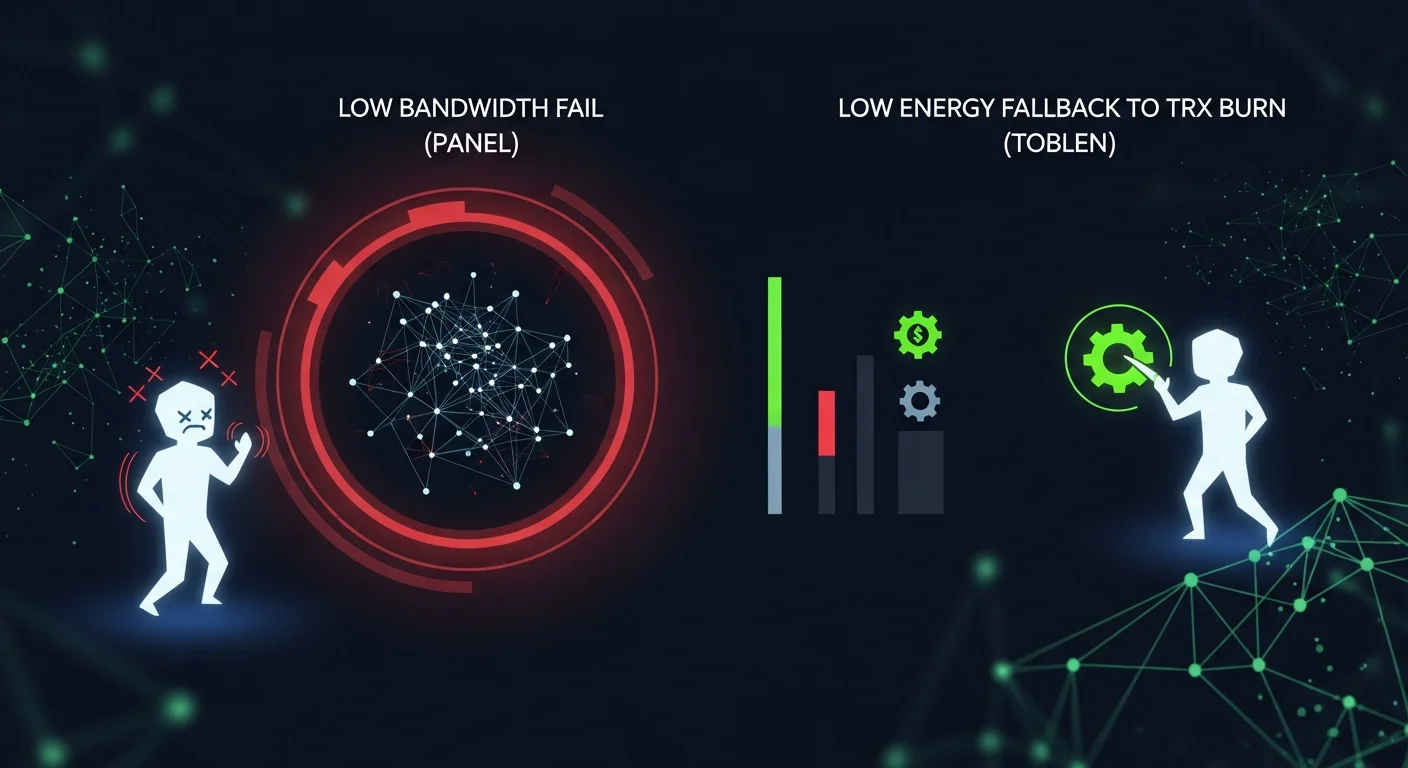
When the wallet does not have enough bandwidth or energy, the network burns a small amount of TRX from your balance to cover the cost. For a USDT-TRC20 transfer, the burn is typically a few TRX. The transaction goes through silently and the deduction shows up as a small TRX outflow on the explorer.
Staking TRX for resources
The most efficient option for active users is staking. You lock TRX into the network and receive a steady supply of either energy or bandwidth, depending on how you allocate the stake. The TRX is not consumed; it just becomes temporarily illiquid. When you unstake, the TRX returns after a short waiting period.
Staking TRX for energy and bandwidth
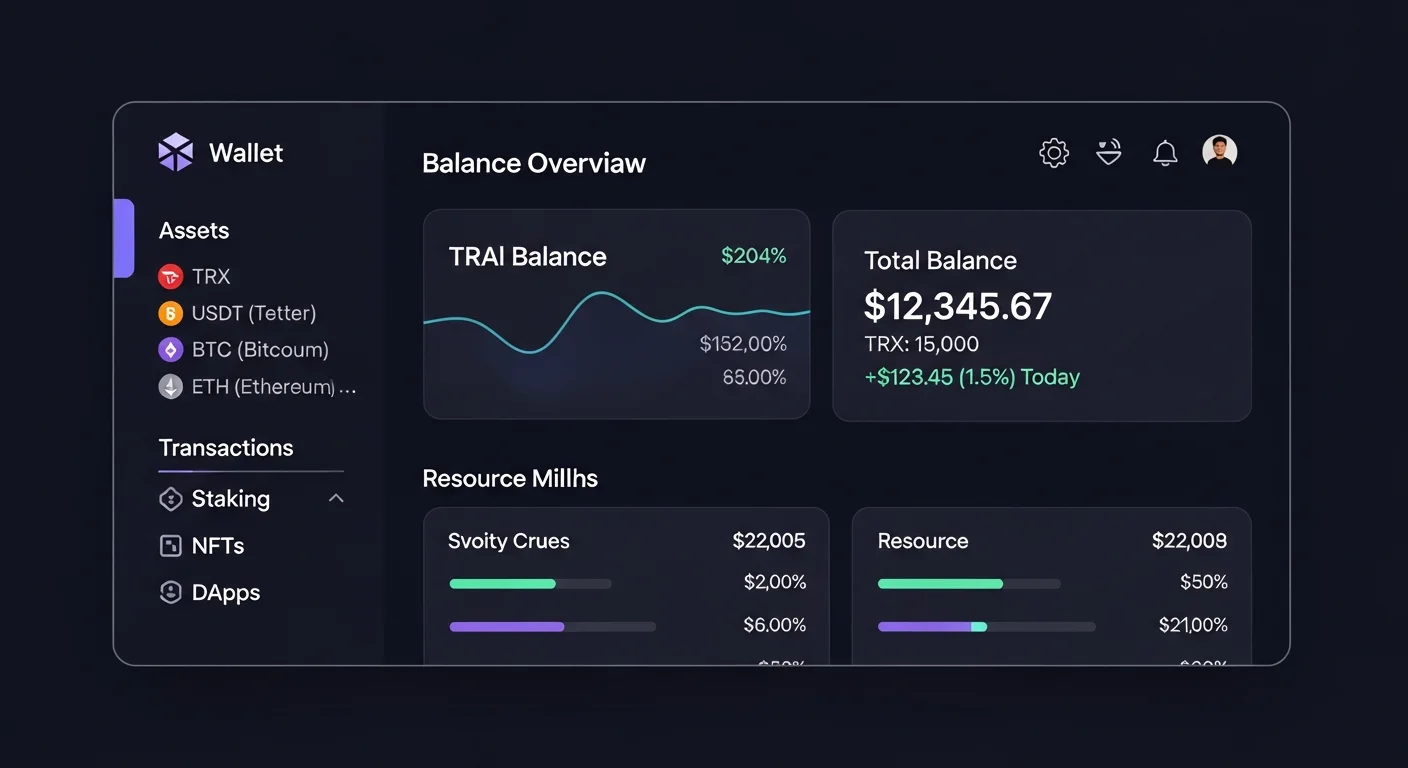
The staking flow inside TronLink and other TRON wallets is simple, but the choice of resource type matters more than most beginners realize.
Energy vs bandwidth allocation
When you stake, you decide whether to receive energy or bandwidth. Energy is what most active users need, because almost every USDT transfer and DeFi interaction consumes energy. Bandwidth is plenty for users who only ever do basic TRX transfers and votes.
How much TRX is enough
The exact yield in resources changes with network usage, because the resource pool is shared. As a rough sense check, staking a few hundred TRX is often enough to cover a moderate user's daily USDT transfers. Heavy DeFi users may need to stake several thousand TRX to avoid burns during peak hours.
Unstaking and the cooldown
Unstaking returns your TRX after a waiting period (usually 14 days under the current network rules, subject to governance changes). During the cooldown the TRX is not earning resources, but it is also not yet liquid. Plan stake amounts in line with your real usage so you do not get surprised by the lockup.
Energy rental and the third-party market
For users who do not want to stake their own TRX, third-party energy markets exist. These services let users pay a small fee in TRX to "rent" energy from someone else's stake for a short window.
How energy rental works
The renter pays a small one-time fee. The provider's stake is delegated to the renter's address for a fixed time, often a few minutes to a few days. During that window, the renter has free energy for transactions. After the window expires, the energy goes back to the provider.
When rental makes sense
Rental works well for one-off heavy transactions, like a single large USDT transfer or a DeFi interaction. For ongoing use, your own stake is usually more efficient because you keep the resources permanently while staked.
Real costs of common TRON actions
| Action | Bandwidth | Energy | Typical TRX burn fallback |
|---|---|---|---|
| Send TRX | ~268 bandwidth | None | Free if daily allowance available |
| Send USDT TRC-20 | ~345 bandwidth | ~30,000 to 65,000 energy | Around 13 to 30 TRX |
| Swap on a DEX | Higher bandwidth | Tens of thousands of energy | Several TRX or more |
| Stake TRX | Small bandwidth | None | Free if allowance available |
| Vote for SR | Small bandwidth | None | Free |
Three usage profiles and what to do
The right resource strategy depends on how heavily you use the network.
Occasional user
If you only send the odd USDT transfer, do not bother staking. Keep around 50 to 100 TRX in the wallet and let the burn fallback cover energy as needed. Your bandwidth needs are usually covered by the free daily allowance.
Frequent USDT sender
If you move USDT on TRON several times a week, stake a few hundred TRX for energy. Most transfers will then be effectively free. This is the sweet spot for retail users routing payments through the TRON network.
Power dApp user
If you actively use JustLend, SunSwap, or other contract-heavy dApps, stake several thousand TRX for energy and keep an extra TRX buffer in the wallet. The network usage of contract-heavy interactions is meaningfully higher than simple transfers.
Common resource mistakes
- Staking for bandwidth when you mostly send USDT. Bandwidth covers bytes, not contract execution.
- Letting TRX run too low. Even with stake, if the wallet has zero TRX, certain interactions can fail.
- Unstaking on a cooldown when you need resources tomorrow. The lockup means a 14-day window without resources.
- Renting energy at high markup. Some providers overcharge during peak hours; compare quotes.
- Ignoring resource bars before a big interaction. A simple check avoids a failed contract call.
Practical workflow for TRX resource management
- Estimate your real monthly USDT activity. Stake to cover that with a buffer.
- Allocate the stake to energy. Most active retail use is contract-bound.
- Keep a small TRX cash buffer. Even with stake, occasional burns may apply.
- Review your resource bars weekly. Adjust stake if usage changed.
- Use rental for spikes. One-off heavy transactions are cheaper to rent than to overshoot stake.
Frequently asked questions
What is the difference between energy and bandwidth on TRON?
Bandwidth pays for transaction size in bytes. Energy pays for smart contract execution. Both are denominated in TRX through staking or burns.
Why does USDT need energy on TRON?
USDT-TRC20 is a smart contract token. Every transfer triggers contract code, which consumes energy.
How do I get free TRON energy?
Stake TRX and allocate the resource to energy. The stake is not consumed and you can unstake later, subject to a cooldown.
How long does TRON unstaking take?
Currently about 14 days under default network rules, subject to governance changes.
Can I run out of bandwidth and energy at the same time?
Yes. If both are exhausted, the wallet falls back to burning a small amount of TRX to cover the missing resources.
Final takeaway: TRON's two-resource model is unusual but rewarding once you set it up. Stake for energy if you transfer USDT regularly, keep a small TRX buffer for safety, and your day-to-day cost on TRON drops to near zero.
Disclaimer: This guide is for educational purposes only and does not constitute investment, financial, legal, or trading advice. Network parameters can change through governance.
Related Guides
- What is TRON (TRX)? Complete 2026 Guide
- How to Buy TRX (TRON) in 2026: Beginner Step-by-Step
- What Is Grass Crypto? The DePIN Network Turning Unused Bandwidth Into AI Training Data Explained in 2026
- How to Stake TRX: Step by Step Staking Guide
- What Is Out of Gas in Crypto? Causes and Fixes (2026)
Frequently Asked Questions
What are Energy and Bandwidth on TRON?
Energy and Bandwidth are the two resources TRON uses to pay for on-chain activity, serving as TRON's version of gas. Bandwidth covers basic transaction data, while Energy covers smart contract execution.
When do you need Energy versus Bandwidth on TRON?
Bandwidth is consumed by ordinary transactions like simple transfers, while Energy is consumed when interacting with smart contracts such as token transfers. Many token operations require both resources.
How do you get Energy and Bandwidth on TRON?
You can obtain these resources by staking (freezing) TRX, which grants a daily allotment, or by burning TRX directly to pay for a transaction. Staking is generally more cost-effective for frequent users.
Why did my TRON transaction burn TRX?
If you do not have enough free Energy or Bandwidth from staking, the network automatically burns TRX to cover the resource cost. Staking enough TRX in advance can reduce or eliminate these burn costs.