TON Validators and Nominator Pools: Complete Architecture Guide (2026)
— By Tony Rabbit in Tutorials
TON validators secure the network and earn block rewards. This guide explains validator selection, nominator pools, slashing, reward distribution, and how to delegate TON the right way.
TON validators are the nodes that produce blocks, secure the network, and distribute rewards. Unlike Ethereum, where any holder with 32 ETH can run a validator, TON's model uses a smaller active set with a higher minimum stake. Most TON holders never run a validator directly. They delegate through nominator pools or liquid staking protocols, and the network design routes rewards back to the underlying delegators while keeping block production efficient.
Quick answer: A TON validator is a node that runs the TON consensus client and stakes a large amount of TON to produce blocks. Validators are selected each round based on stake. Most users do not run their own validator. They delegate TON through a nominator pool (a smart contract that pools delegators' TON to fund a single validator) or a liquid staking protocol (which mints an LST in exchange for the deposit). Rewards flow back to delegators in proportion to their share, minus the validator's commission.
- Validators stake large amounts of TON. The minimum stake is high enough that solo validation is rare for retail.
- Nominator pools aggregate delegations. A pool contract holds delegators' TON and funds a validator's bond.
- Rewards depend on validator uptime and luck. Missed blocks reduce the pool's payout.
- Slashing exists but is rare. Misbehavior or downtime can reduce a validator's stake.
- Liquid staking abstracts pools further. LST tokens like tsTON, stTON, and hTON deposit into pools on the user's behalf.
What a TON validator actually does
The validator's job is to participate in consensus, produce blocks on assigned shardchains, and verify the work of other validators. This is the same general role validators play on any modern PoS chain, but TON's sharded architecture adds a specific twist.
Trade TON with Not.Trade, the fastest terminal on TON
Not.Trade is purpose built for TON traders: real-time on-chain charts for every jetton, insider safety scoring (Top 10 wallets, snipers, dev movement, bundlers, LP lock), MCAP-trigger limit orders, multi-wallet sniping, MEV protection and one-click swaps routed across STON.fi and DeDust. It runs natively inside Telegram and as a fast web terminal, with TON Connect non-custodial wallet support.
Read the full Not.Trade guide →Block production on shardchains
The masterchain assigns validator groups to active shardchains every round. Each validator participates in producing blocks on its assigned shard. As the network's load shifts and shardchains split or merge, validator groups are reshuffled. This rotation prevents any single validator group from being permanently responsible for the same shard.
Consensus
TON uses a Byzantine-fault-tolerant consensus where validators vote on blocks. A super-majority is required to finalize. The combined effect of fast voting and rotating groups is sub-second user-facing finality.
Hardware and bandwidth
Validators need substantial hardware: fast SSDs, high RAM, and reliable bandwidth. Running a TON validator at home is theoretically possible but in practice most validators run in data centers. This is why the active validator set is smaller than Ethereum's, but each validator is highly capable.
Nominator pools in plain English
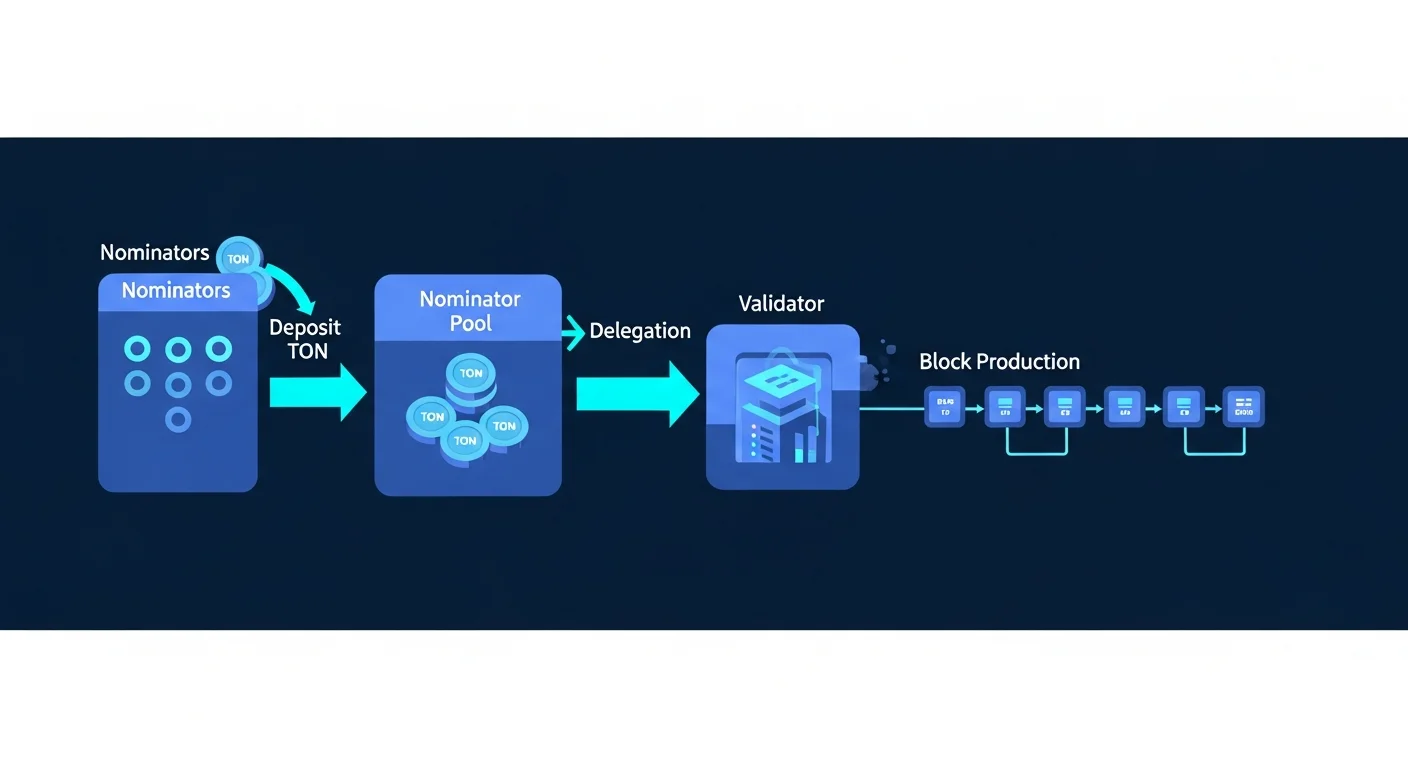
Solo validation requires a large stake. The minimum is far above what most retail holders carry. Nominator pools solve this by aggregating many small delegations into a single validator bond.
How a pool contract works
A nominator pool is a smart contract that accepts deposits from multiple users, stakes the combined amount as a validator's bond, and tracks each depositor's share. When the validator earns rewards, the contract distributes them pro rata, minus the validator's commission. When the validator's stake is reduced (slashing or unbonding), the contract handles the accounting.
Joining a pool
Users deposit TON into the pool contract directly through their wallet. The pool may have a minimum deposit, a maximum cap, and a lock-up period during which the deposit cannot be withdrawn. After the lock-up, withdrawals enter a queue tied to the validator's unbonding cycle.
Risk per pool
Each pool has its own risk surface: the validator's reliability, the contract's correctness, the size of the depositor base, and the commission policy. A pool funding an unreliable validator pays less than a pool funding a steady one, even if both look identical from the outside.
Rewards and slashing
Validators earn through block rewards. Pools and delegators receive a portion of those rewards based on the contract's commission rules.
Reward calculation
Rewards depend on the validator's stake share, uptime, and luck (some validators are assigned more block production opportunities than others in any given round). The pool aggregates these rewards over a period and distributes them.
Commission
The validator typically charges a commission, often a small percentage of the rewards, to cover hardware and operational costs. Lower commission means more reward to delegators, but very low commission can also signal an unsustainable operator.
Slashing risk
Slashing on TON is rare but possible. Severe misbehavior (double-signing, sustained downtime) can reduce the validator's stake. Pool delegators share that loss proportionally. Picking a validator with a clean track record is the main mitigation.
Solo validator vs nominator pool vs liquid staking
The three options trade different things.
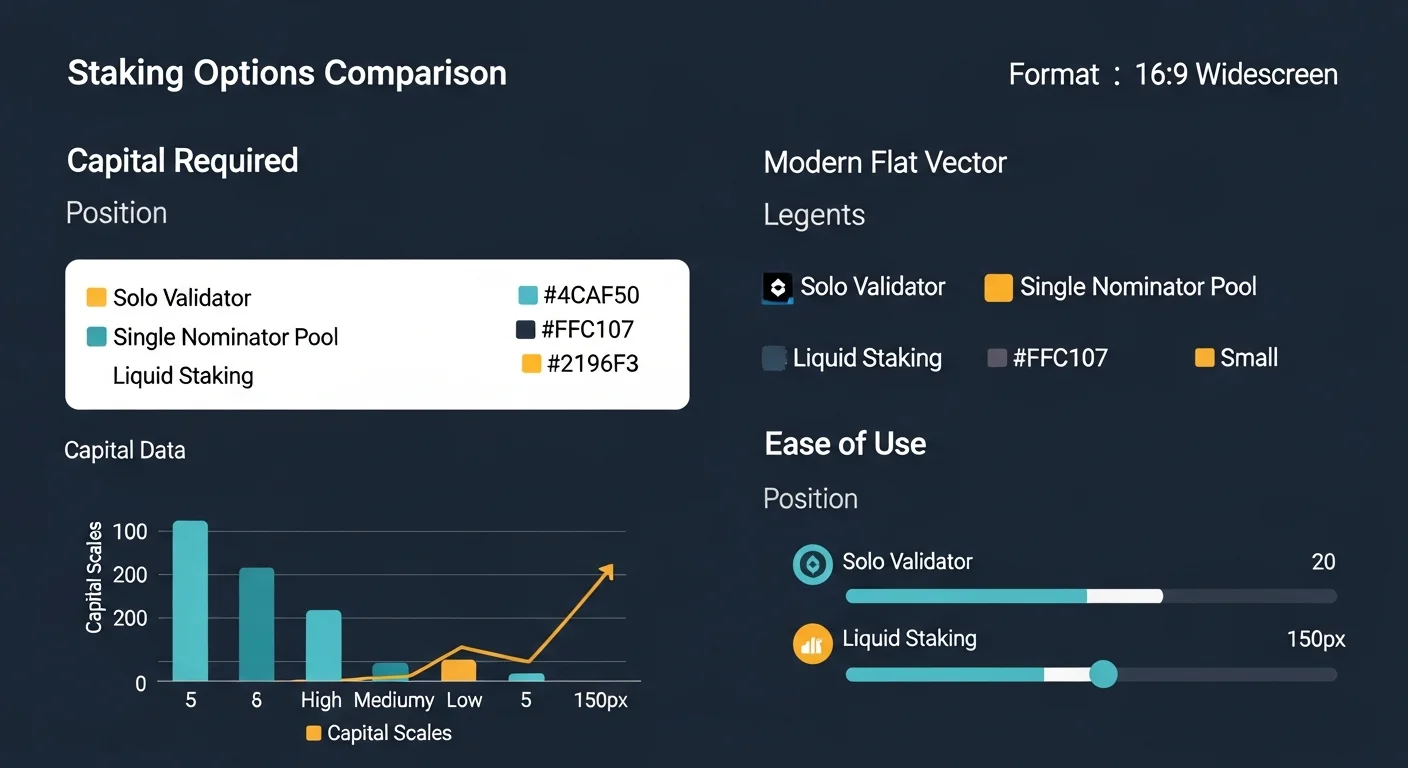
| Option | Capital required | Effort | Liquidity |
|---|---|---|---|
| Solo validator | Very high | Hardware + ops | Locked while validating |
| Nominator pool | Low | Pick a pool, deposit | Locked until withdrawal cycle |
| Liquid staking | Very low | Pick an LST, deposit | LST is tradable |
For deeper LST coverage, see TON liquid staking.
Risks specific to delegating
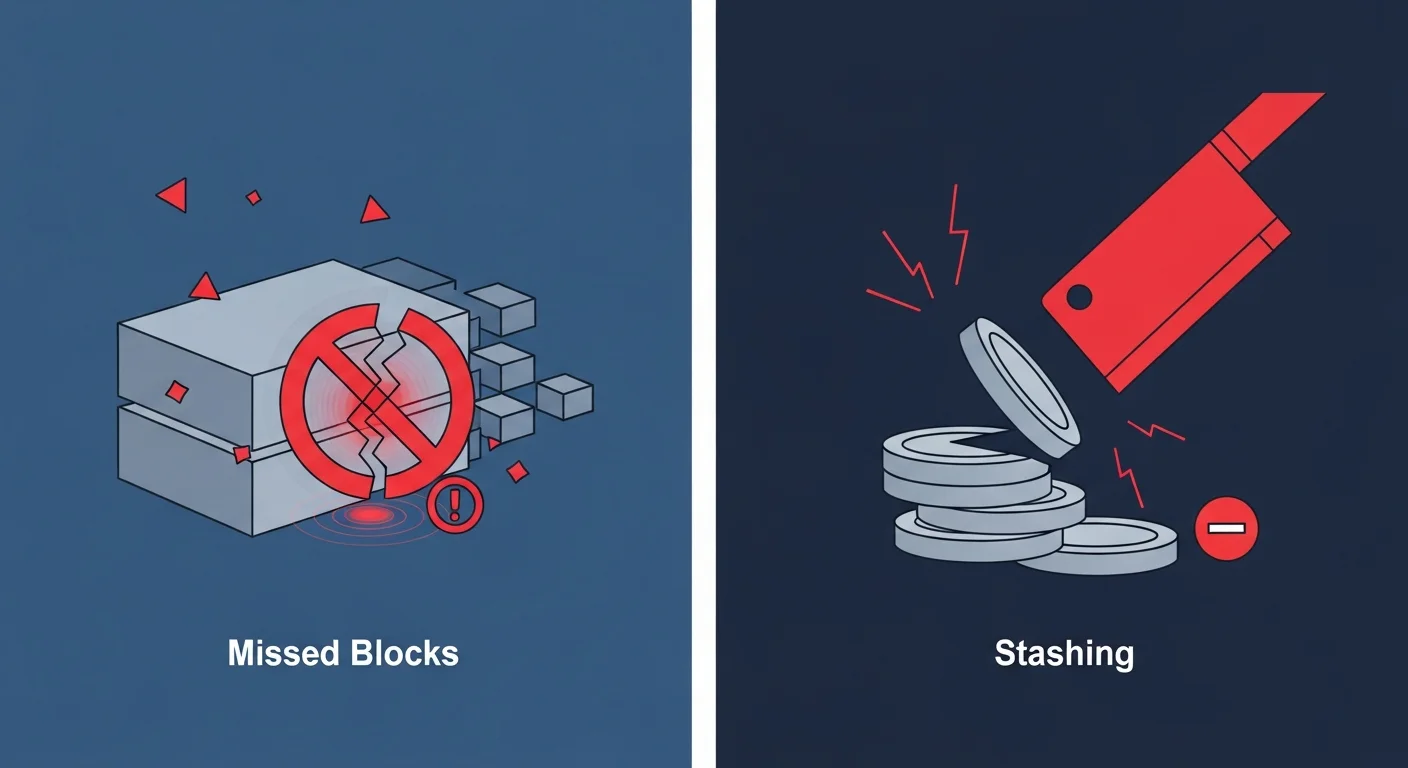
- Validator downtime: missed blocks reduce rewards.
- Slashing: rare, but a single bad event can reduce delegators' principal.
- Pool contract risk: bugs in the pool's smart contract can affect delegators.
- Lock-up surprises: withdrawal cycles can be longer than expected during peak demand.
- Pool concentration: a single oversized pool funding many validators can centralize the network.
How to pick a nominator pool or LST
- Check validator uptime. Consistently high uptime is the strongest predictor of stable rewards.
- Compare commission policies. Reasonable, transparent commission beats both extremes.
- Review pool TVL and depositor count. Bigger usually means better-tested, with diminishing returns past a point.
- Read the contract audit if available. Pools with public audits add a layer of comfort.
- Diversify if size matters. Splitting between two pools or two LSTs limits single-source risk.
Frequently asked questions
Can I run my own TON validator?
Yes, but the minimum stake and hardware requirements are significant. Most retail holders delegate instead.
What is the difference between a nominator pool and liquid staking?
A nominator pool is a contract that holds your deposit and funds a validator. Liquid staking adds a tradable LST on top, so you keep liquidity while delegating.
Are TON validator rewards guaranteed?
No. Rewards depend on validator uptime, the network's emission schedule, and rare slashing events. They tend to be stable but are not contractually fixed.
Can I lose my TON in a nominator pool?
Yes, in extreme cases. Slashing or contract bugs can reduce delegators' principal. Picking reputable pools and diversifying mitigates this.
How long is the unbonding period?
It depends on the pool and the validator's cycle. Days to weeks is typical. Always read the specific pool's terms before depositing.
Final takeaway: TON's validator architecture is high-throughput by design, with nominator pools and LSTs giving regular holders a path into staking economics. Pick reliable pools, watch the validator's uptime, and consider LSTs for the liquidity advantage if you may need to exit on short notice.
Disclaimer: This guide is for educational purposes only and does not constitute investment, financial, legal, or trading advice. Staking parameters can change through governance.
Related Guides
- How to Stake TON Safely: Nominator Pools, Liquid Staking, and Risk Guide (2026)
- dYdX V4 Explained: Appchain Architecture, Validators and Market Structure (2026)
- TON Architecture Explained: Masterchain, Workchains and Sharding (2026)
- How to Use DeDust on TON Safely: Swaps, Pools, and Routing Guide (2026)
- Sui Network Architecture: Object-Centric Design, Parallel Execution and DeFi Apps (2026)
Frequently Asked Questions
What do TON validators do?
TON validators run nodes that produce and confirm blocks, securing the network in exchange for rewards. They are required to stake a significant amount of TON to participate.
What is a nominator pool on TON?
A nominator pool lets multiple holders combine their TON to support a validator without running one themselves. Participants share in the rewards proportionally to their contribution.
How do I delegate TON to a validator?
You delegate by staking your TON into a nominator pool or a staking service that supports a validator. You should research the pool's reputation and terms before committing your funds.
What is slashing and how does it affect stakers?
Slashing is a penalty in which a validator can lose part of its stake for misbehavior or poor performance. Because nominators back validators with their funds, choosing a reliable validator helps protect your stake.