TON Liquid Staking: tsTON, stTON, hTON Compared 2026
— By Tony Rabbit in Tutorials

TON liquid staking explained: compare tsTON, stTON, and hTON, the leading TON LSTs, learn how rewards work, and the risks every staker should weigh.
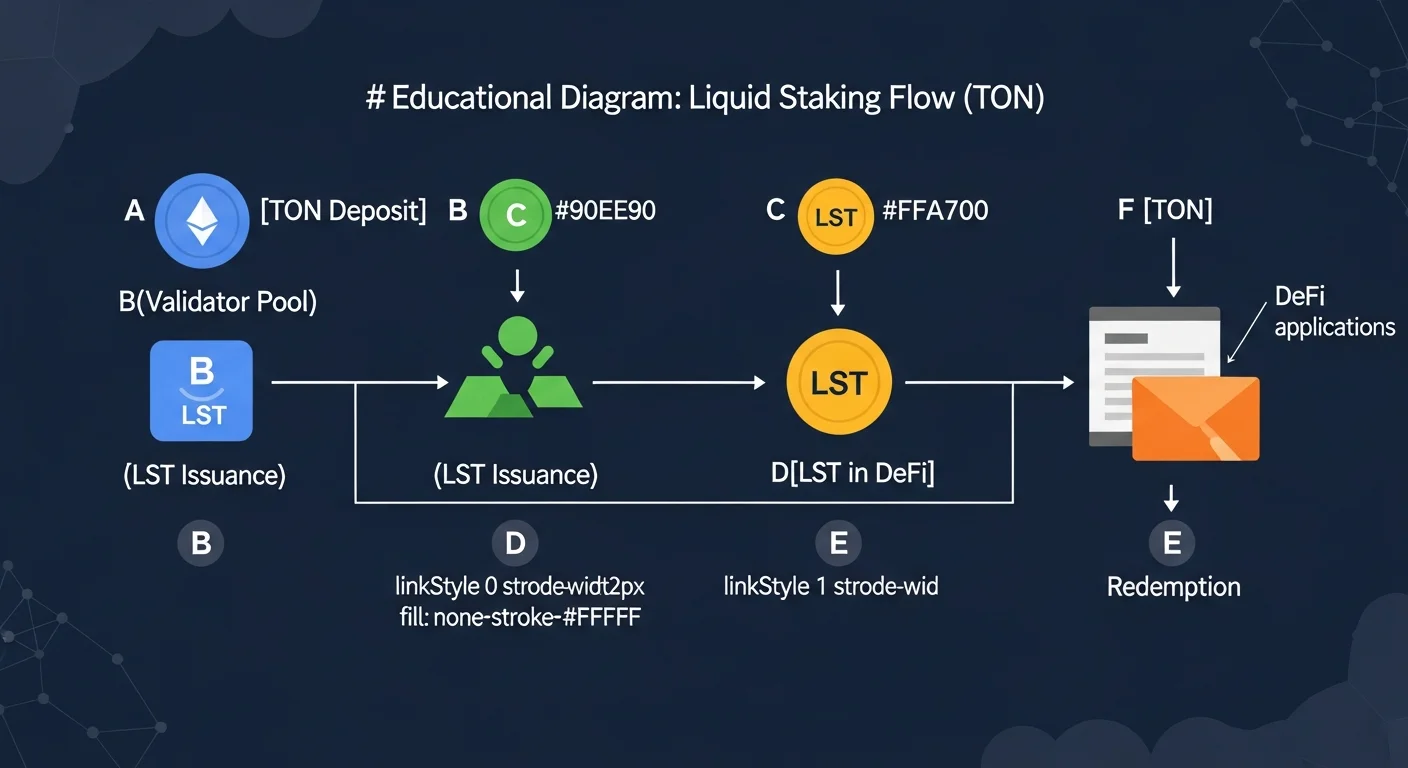
TON staking pays validators to secure the network and shares the resulting rewards with delegators. The downside of normal staking is the lockup: TON sitting in a nominator pool is illiquid until it is unbonded. Liquid staking solves this by issuing a tradable token (the LST) that represents the staked position. Holders keep validator yield while remaining free to use the LST in DeFi.
Quick answer: The three leading TON liquid staking tokens are tsTON (Tonstakers), stTON (bemo finance), and hTON (Hipo). All of them accept TON deposits, route them to validator pools, and issue an LST that grows in value as rewards accrue. Each token has slightly different fees, redemption mechanics, and DeFi integrations. Diversification across two LSTs is a reasonable hedge against single-protocol risk.
- LSTs unlock liquidity. You earn validator rewards while keeping a tradable token.
- Each LST has its own protocol. tsTON, stTON, and hTON share the concept but differ in implementation.
- Yields are similar. The big differences are fees, redemption time, and DeFi composability.
- Smart contract risk applies. Each LST adds a contract layer on top of base TON staking.
- Depeg risk is real. Market price of an LST can briefly diverge from its fair redemption value.
What TON liquid staking is
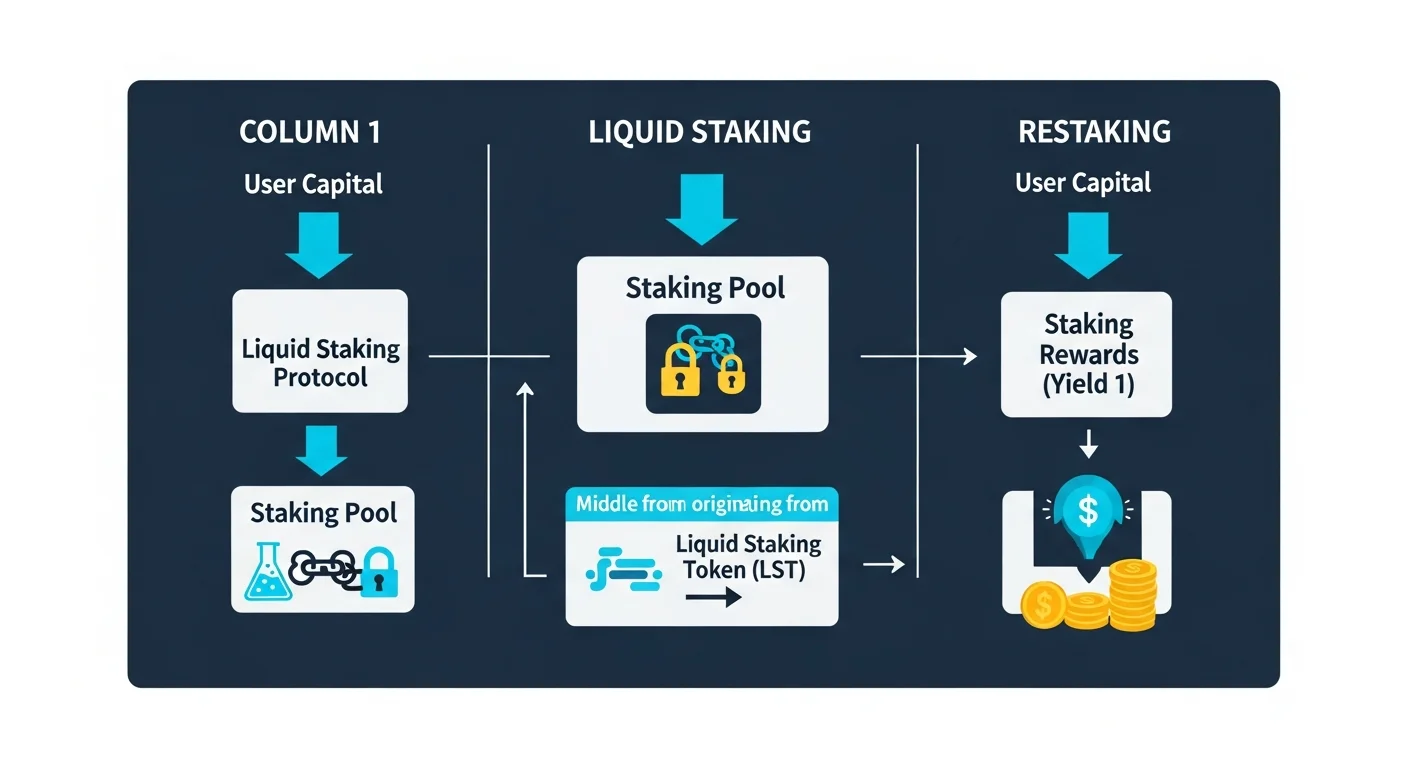
Liquid staking is a small layer on top of regular TON staking. Instead of locking your TON into a validator pool directly, you deposit it into a liquid staking protocol. The protocol routes the TON to validators, mints an LST in your wallet, and lets that LST trade and earn yield while the underlying TON is staked.
Trade TON with Not.Trade, the fastest terminal on TON
Not.Trade is purpose built for TON traders: real-time on-chain charts for every jetton, insider safety scoring (Top 10 wallets, snipers, dev movement, bundlers, LP lock), MCAP-trigger limit orders, multi-wallet sniping, MEV protection and one-click swaps routed across STON.fi and DeDust. It runs natively inside Telegram and as a fast web terminal, with TON Connect non-custodial wallet support.
Read the full Not.Trade guide →Rebasing vs reward-bearing
Some LSTs grow your balance over time (rebasing). Others keep your token balance constant and let the redemption rate climb (reward-bearing). The end-state is similar; the difference matters for accounting, DeFi integrations, and tax reporting.
Why DeFi loves LSTs
An LST that holds value and grows with validator rewards becomes a productive piece of collateral. Lending markets accept LSTs as collateral. DEXs run LST/TON pools. Yield aggregators stack LST exposure with extra incentives. The LST is the connector between base-layer security and DeFi yield.
tsTON (Tonstakers)
tsTON is one of the largest TON liquid staking tokens by TVL. It is issued by Tonstakers, a non-custodial protocol that routes deposits across a curated set of validators.
How tsTON works
You deposit TON into the Tonstakers contract. The protocol delegates that TON to selected validators. tsTON is minted to your wallet at the current exchange rate. As rewards accrue, the redemption rate of tsTON climbs versus TON. To exit, you redeem tsTON for TON either through the protocol's queue or by selling it on a DEX.
Strengths and tradeoffs
Tonstakers has been live for a long stretch and has integrations across major TON DeFi protocols, which makes tsTON one of the easier LSTs to use as collateral. The tradeoff is the same one every LST shares: an extra contract layer between you and the underlying validator stake.
stTON (bemo finance)
stTON is the LST issued by bemo finance, another major player in TON liquid staking.
How stTON works
The mechanics are similar: deposit TON, receive stTON, watch the redemption rate climb as validators earn. bemo focuses on a clean UX and transparent validator selection, with redemption typically routed through the protocol's contracts.
Strengths and tradeoffs
stTON has a strong DeFi integration footprint, including STON.fi pools and lending markets. The fee structure and redemption queue should be checked before depositing, because parameters can change with governance.
hTON (Hipo)
hTON is the LST issued by Hipo. It positions itself as a non-custodial, audit-focused liquid staking protocol on TON.
How hTON works
Same general flow as the other LSTs: deposit TON, mint hTON at the current exchange rate, redeem later through the protocol or sell on a DEX. Hipo emphasizes a careful validator selection process and smaller delegation set per pool to limit single-validator risk.
Strengths and tradeoffs
For users prioritizing protocol-level conservatism, Hipo's narrower validator set can be a feature. The tradeoff is that smaller TVL means thinner secondary liquidity for hTON on DEXs.
How to liquid stake on TON
The flow is similar across all three LSTs.
Connect a TON wallet
Open the LST protocol's site and connect your TON wallet through TON Connect. Tonkeeper, Telegram's @wallet, and Ledger via TON wallets are all supported by the major LSTs.
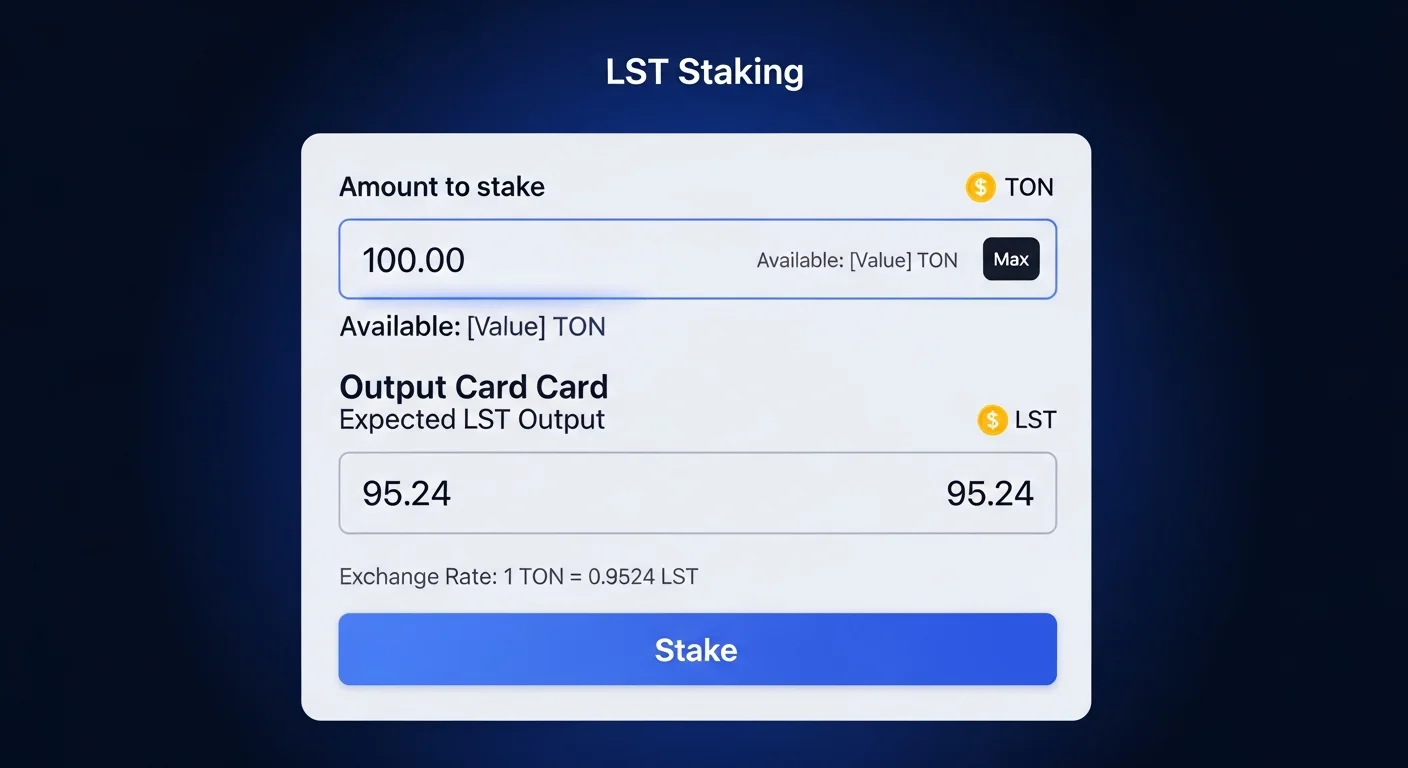
Deposit TON
Choose the amount of TON to stake. Confirm the transaction. The LST mints to your wallet at the current exchange rate. Some protocols show a small fee disclosure.
Use or hold the LST
You can leave the LST in your wallet to accrue value, lend it on a TON lending market, deposit it into a DEX pool against TON, or use it as collateral in a yield-bearing strategy.
Risks specific to TON LSTs
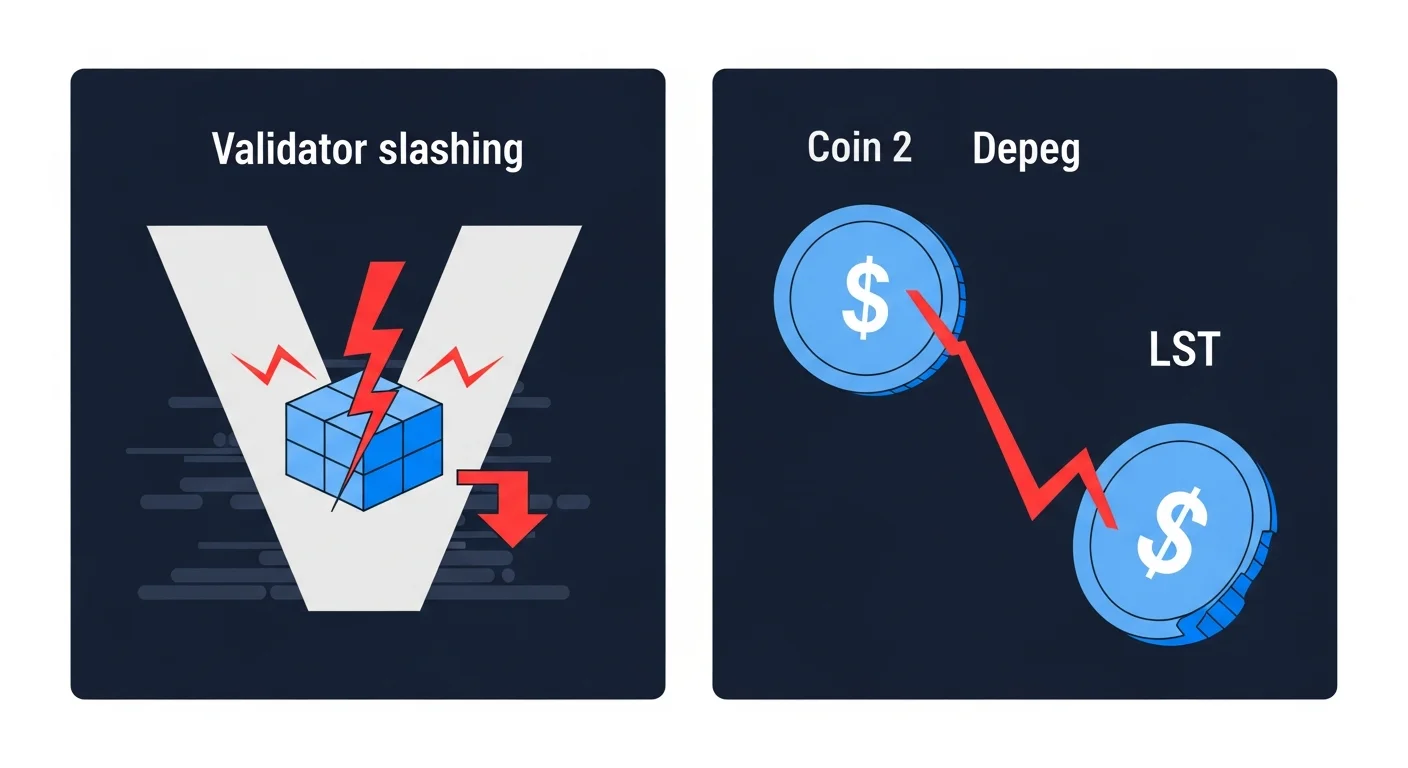
- Validator slashing: if a validator misbehaves, the LST's underlying value can drop.
- Smart contract risk: each LST adds a contract layer that can be exploited even if base staking is fine.
- Depeg risk: the LST's market price can briefly diverge from fair redemption value during stress.
- Redemption queues: withdrawing through the protocol's queue may take longer than expected at peak demand.
- Liquidity risk: selling a less-liquid LST on a DEX can cost more than the redemption queue would.
tsTON vs stTON vs hTON
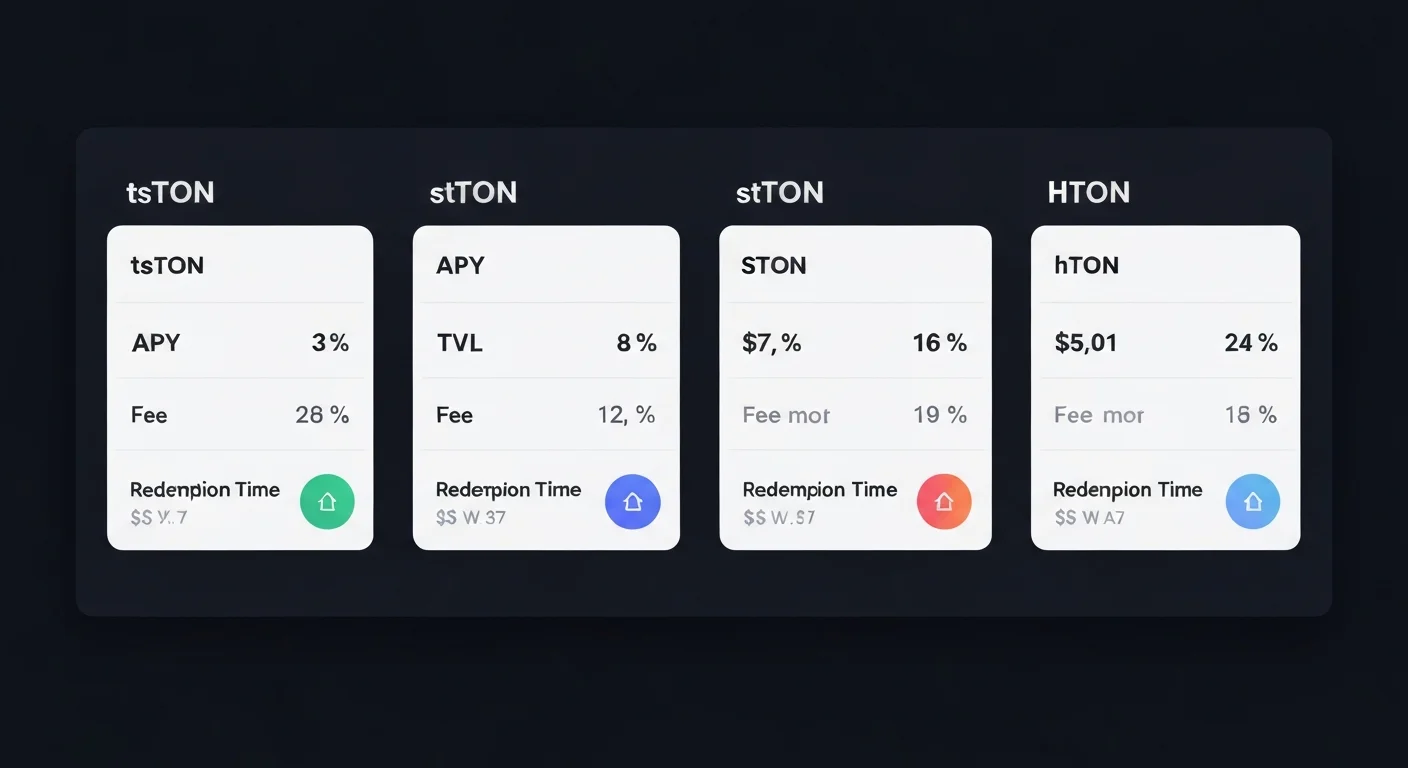
| LST | Strengths | Main caution |
|---|---|---|
| tsTON | Largest TVL, deepest DeFi integration | Largest single-protocol exposure |
| stTON | Clean UX, broad DEX support | Fee parameters and redemption queue worth checking |
| hTON | Conservative validator selection | Smaller secondary liquidity |
Practical workflow for TON liquid staking
- Start with the largest LST for the deepest DeFi integrations and clearest exit paths.
- Diversify across two LSTs for sizeable positions to limit single-protocol risk.
- Watch redemption queues if you may need to exit on short notice.
- Compare DEX pool depth if you plan to sell rather than redeem.
- Track LST/TON price as a signal of market stress.
Frequently asked questions
What is the difference between staking and liquid staking on TON?
Direct staking locks your TON in a nominator pool until you unbond. Liquid staking issues a tradable LST representing your stake, so you keep validator yield while remaining liquid.
Are tsTON, stTON, and hTON interchangeable?
They share the concept but are different protocols with different smart contracts, redemption models, and DeFi integrations.
Can I lose money with TON liquid staking?
Yes. Smart contract risk, validator slashing, depeg events, and queue delays can all cause losses or temporary value gaps.
Which TON LST is the safest?
"Safest" depends on what you fear most. Larger TVL usually means deeper liquidity but more concentrated single-protocol risk. Diversification across two LSTs is a common compromise.
How are LST yields calculated?
Yields come from validator rewards minus protocol fees. They appear as a rising redemption rate or a growing balance, depending on whether the LST is reward-bearing or rebasing.
Final takeaway: TON liquid staking turns idle TON into a productive, composable asset. Pick an LST that matches your priorities (deep DeFi integration, conservative validator policy, redemption flexibility), watch the protocol's risk surface, and consider splitting larger positions across two LSTs.
Disclaimer: This guide is for educational purposes only and does not constitute investment, financial, legal, or trading advice. DeFi yields can vary and protocols can fail.
Related Guides
- Lido vs Rocket Pool: Ethereum Liquid Staking Compared (2026)
- How to Stake TON Safely: Nominator Pools, Liquid Staking, and Risk Guide (2026)
- What Is Rocket Pool (rETH): Complete Liquid Staking Guide (2026)
- What Is Lombard Finance? LBTC Bitcoin Liquid Staking Guide 2026
- What Is Liquid Staking in Crypto? Complete Beginner's Guide (2026)
Frequently Asked Questions
What is liquid staking on TON?
Liquid staking lets you stake TON to help secure the network while receiving a liquid staking token that represents your staked position. This token can be used elsewhere in the ecosystem while your underlying TON keeps earning rewards.
What are tsTON, stTON, and hTON?
They are liquid staking tokens issued by different TON staking protocols, each representing staked TON plus accrued rewards. They differ in their issuing protocol, mechanics, and how rewards are reflected in the token's value or balance.
How do liquid staking rewards work?
Staking rewards from the network accrue to your position, and depending on the token, this can show up as a rising exchange rate against TON or as an increasing balance. You can typically redeem the liquid staking token back for TON over time.
What are the risks of TON liquid staking?
Risks include smart contract vulnerabilities, the liquid staking token trading below its underlying value, and reliance on the protocol's validators. Spreading exposure and understanding each protocol's design helps you weigh these risks before staking.