What is Ronin Network? Axie L1 and Beyond
— By AliceOnChain in Tutorials
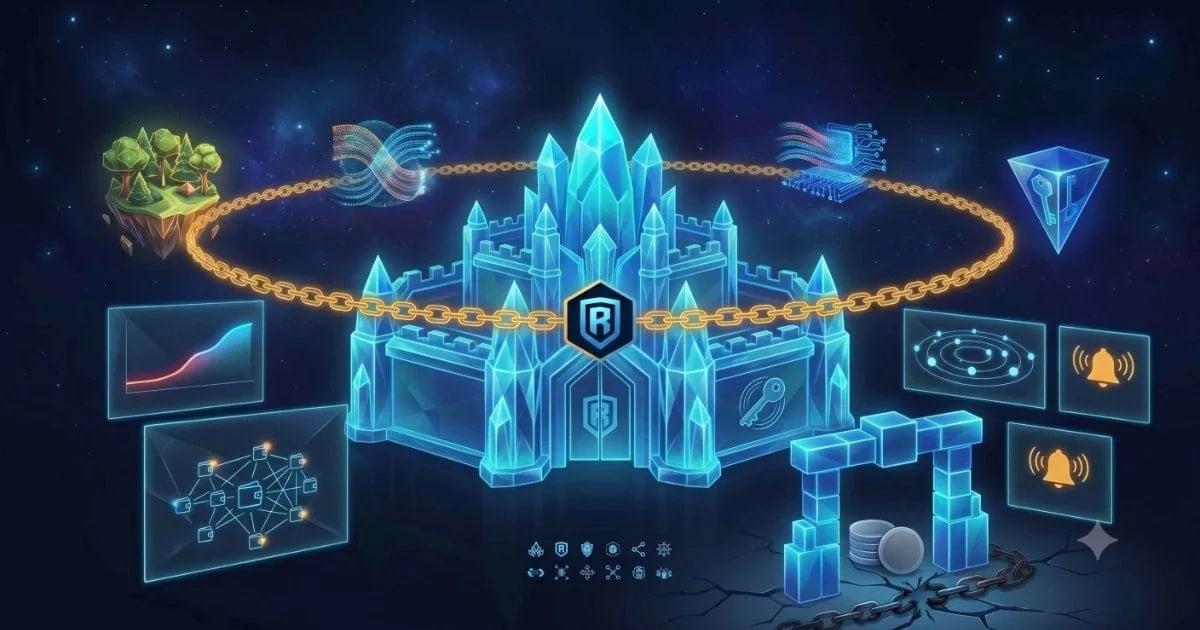
An analytical deep dive into Ronin Network’s technical infrastructure, tracing its evolution from a dedicated Axie Infinity sidechain to a major Layer 1 gaming ecosystem. Learn how to track its unique tokenomics, on-chain liquidity, and contract safety patterns using advanced tools.
What is Ronin Network? Axie L1 and Beyond
The quest for scalability within Web3 gaming has fundamentally transformed decentralized infrastructure. During the initial GameFi expansion, legacy networks struggled with high transaction costs and structural congestion, rendering frequent in-game microtransactions completely unfeasible. To solve this bottleneck, Sky Mavis engineered a dedicated, EVM-compatible infrastructure. But to truly understand the current market landscape, one must ask: What is Ronin Network today, and how has it grown beyond its origins?
Initially built to serve exclusively as the infrastructure layer for Axie Infinity, the ecosystem has undergone a massive architecture overhaul. It has transitioned into a robust, generalized Layer 1 network specialized entirely in high-performance Web3 gaming ecosystems. For on-chain analysts, developers, and active DeFi traders, evaluating this network requires looking deep into its consensus shifts, security upgrades, cross-chain liquidity tracking, and the underlying value capture of its native utility asset, RONIN.
The Architectural Genesis: From Sidechain to Independent L1
To accurately answer What is Ronin Network, we must first dissect its technical progression. Launched initially as an Ethereum sidechain, its primary objective was to abstract away gas fees and latency for millions of daily active users trading in-game digital property. The early design utilized a Proof of Authority (PoA) consensus mechanism, which optimized transaction throughput and cost efficiency but relied on a highly centralized set of validator nodes.
Following significant historical infrastructure challenges, the network underwent a structural migration toward a Delegated Proof of Stake (DPoS) consensus framework. This structural shift decentralized the block production process by allowing any native asset holder to delegate their stake to trusted validators.
Today, the network combines this consensus layer with optimized Ethereum Virtual Machine (EVM) compatibility. This allows developers to deploy complex smart contracts, decentralized applications (dApps), and immersive gaming environments using familiar Solidity frameworks, while capitalizing on sub-second block finality and negligible transaction costs.
Tracking Ecosystem Liquidity Architecture
For on-chain traders analyzing assets within this ecosystem, assessing how capital moves across the native infrastructure is critical. Fully understanding the scope of What is Ronin Network requires evaluating Katana, the network's native Decentralized Exchange (DEX), which acts as the core liquidity engine for all ecosystem tokens.
When navigating these pairs using the DEXTools Pair Explorer, tracking the overall depth of the liquidity pools is essential. Because gaming economies depend on smooth conversions between volatile in-game reward tokens and stable collateral assets, monitoring the Automated Market Maker (AMM) pools on Katana provides direct insight into market health.
A sudden increase in daily trading volume relative to Total Value Locked (TVL) often indicates short-term speculative positioning around a game launch or a major protocol update. Conversely, deep, stable pools with balanced liquidity distributions suggest a mature ecosystem capable of absorbing retail distribution without experiencing massive price slippage.
Tokenomics and Value Capture of the RONIN Asset
A central component of analyzing What is Ronin Network is evaluating the structural utility and economic design of the RONIN token. Unlike early GameFi dual-token models that suffered from structural inflation, the native asset functions as a true gas and security token for an entire sovereign network.
Gas Fees and Network Consumption
Every execution, smart contract deployment, and asset transfer across the network requires the consumption of the native utility asset. This creates a direct correlation between organic network usage-such as players upgrading items or claiming rewards-and token velocity.
Staking and Network Security
Under the current DPoS consensus mechanism, validators must lock up a significant amount of the native asset to participate in block validation. Individual holders can delegate their tokens to these validators, earning a portion of the network rewards. This mechanism permanently locks substantial circulating supply out of open market liquidity pools, altering the supply-demand dynamics.
Governance and Ecosystem Alignment
As the network expands into a multi-game ecosystem, the native asset increasingly functions as a generalized governance layer. Decisions regarding ecosystem fund allocations, validator parameter updates, and strategic cross-chain bridging upgrades are influenced by on-chain voting power, driving long-term alignment among developers, players, and nodes.
On-Chain Risk Management: Verifying Ecosystem Safety
Analyzing projects within this specialized ecosystem demands strict validation of on-chain metrics to distinguish sustainable implementations from speculative anomalies. When exploring tokens launched on this Layer 1, utilizing advanced analytic frameworks helps clarify What is Ronin Network in terms of actual security and decentralized validation.
Holder Distribution and Concentration Analysis
Because many Web3 gaming titles feature early token allocations for studios, institutional backers, or community incentives, verifying wallet concentration is a vital step in risk management. By leveraging the advanced holder analysis and integrated Bubblemaps tools on DEXTools, analysts can visually isolate interconnected wallet networks.
If a small cluster of hidden wallets controls a dominant percentage of the circulating supply, the probability of synchronized distribution increases. A highly fragmented, organic distribution pattern among retail participants historically points to a more stable structure.
Smart Contract Verification
Technical security remains a critical focal point when exploring the L1 gaming ecosystem and its hosted dApps. Before interacting with new gaming protocols or deploying capital into automated pools, traders must inspect contract verification states directly on the DEXTools pair dashboard. Ensuring that the code is fully verified, checking for unrenounced administrative permissions, and identifying potential hidden mint functions are non-negotiable steps to protect capital against technical smart contract exploits.
Technical Execution and Price Action Context
While structural tokenomics and protocol health provide long-term validation, tracking live technical indicators offers the necessary context for executing entries or managing volatility.
Volume and Momentum Indicators
Ecosystem tokens frequently display high-beta volatility during major platform events. Monitoring momentum oscillators like the Relative Strength Index (RSI) on live charts can reveal hidden structural changes. For instance, a bearish divergence-where the asset price prints a higher high but the RSI establishes a lower peak-can signal that buying exhaustion is setting in, suggesting a potential near-term consolidation phase.
Key Support and Breakout Levels
Identifying historical accumulation zones on the charts helps traders determine where institutional or algorithmic buying interest might re-emerge. Utilizing features such as automated DEXTools Price Alerts allows market participants to track critical support or resistance levels passively. This prevents emotional overtrading during high-volatility events, ensuring disciplined market participation.
Beyond Axie: The Multi-Game Expansion
To comprehensively answer What is Ronin Network, one must observe its transformation from a single-title chain into a diversified entertainment hub. The network has successfully integrated top-tier Web3 gaming studios, indie developers, and prominent community-led applications.
By scaling its infrastructure to accommodate third-party intellectual properties, the Layer 1 has successfully diversified its on-chain transaction footprint. This reduces its structural dependence on any single gaming economy, distributing risk across a wider variety of digital ecosystems and creating a more resilient macroeconomic foundation for the entire network.
For active Web3 participants, this multi-game expansion highlights the critical importance of continuous on-chain tracking. Monitoring which new games are attracting unique active wallets, observing liquidity shifts across Katana DEX pools, and evaluating developer wallet behaviors provide the raw data required to navigate this rapidly maturing sector.
Disclaimer: This article is for informational purposes only and does not constitute investment advice, financial advice, trading advice, or any other kind of advice. DEXTools does not recommend buying, selling, or holding any cryptocurrency or token. Users should conduct their own research and consult with a qualified financial advisor before making any investment decisions. Cryptocurrency investments are volatile and high-risk. DEXTools is not responsible for any losses incurred.
Ronin's Economic Engine: Understanding Delegated Proof of Stake and Its Implications
Beyond its technical architecture, Ronin's economic security and operational efficiency are intrinsically linked to its Delegated Proof of Stake (DPoS) consensus mechanism. This design choice is not merely about transaction speed; it's a strategic decision that shapes the network's decentralization, validator incentives, and ultimately, its resilience as a Layer 1 gaming hub. Unlike pure Proof of Stake, DPoS introduces a layer of elected validators, creating a more streamlined yet still robust security model.
The DPoS system on Ronin empowers token holders to delegate their RON tokens to validators, who then process transactions and secure the network. This delegation process is crucial for network health, as it distributes voting power and incentivizes active participation from the community. Understanding how this delegation works is key to grasping Ronin's long-term economic stability and its potential for sustained growth beyond its initial gaming applications.
Practical Implications for Token Holders and Developers
- Validator Selection: Token holders should research and choose validators based on their uptime, commission rates, and community reputation, not just their APY.
- Staking Rewards: Staking RON tokens through delegation earns rewards, aligning token holder interests with network security and performance.
- Governance Participation: While not direct voting, delegating to a validator often implies support for their stance on network upgrades and proposals.
- Network Security: A diverse set of active, well-distributed validators strengthens the network's resistance to attacks and censorship.
- Transaction Finality: DPoS contributes to Ronin's fast transaction finality, a critical feature for real-time gaming experiences.
Related Guides
- What Is Pixels (PIXEL)? The Web3 Farming Game on Ronin Explained in 2026
- Tap-to-Earn Games on TON: Notcoin, Hamster Kombat and Beyond (2026)
- Ethereum Roadmap: Beyond 10k TPS and Invisible Infra
- How XRP Ledger Powers Global Finance in 2026
- Best DeFi Yield Strategies for 2026 (Beyond Stablecoins)
Frequently Asked Questions
What is Ronin Network?
Ronin is a blockchain originally built to support a blockchain game and later expanded into a broader gaming-focused ecosystem. It is designed to handle the high volume of transactions common in games.
Why was Ronin Network created?
Ronin was created to provide fast and low-cost transactions tailored to gaming use cases that can generate heavy on-chain activity. A dedicated chain helps avoid congestion and high fees that could disrupt game economies.
What is Ronin used for today?
Beyond its original game, Ronin has grown to support additional games and applications within its ecosystem. It positions itself as infrastructure for blockchain gaming and related on-chain activity.
Is Ronin a layer 1 blockchain?
Ronin has evolved toward operating as its own layer 1 gaming-focused network rather than only a sidechain. Its focus remains on supporting gaming applications at scale.