Paper Trading Crypto: Best Demo Accounts Guide (2026)
— By Tony Rabbit in Tutorials
Paper trading crypto explained: compare top demo accounts like TradingView, Binance, Bybit, and Hyperliquid testnet, plus a 30-day practice plan.
If you have ever wanted to learn how to trade Bitcoin, Ethereum, perpetual futures, or DeFi positions without putting a single dollar at risk, paper trading crypto is how serious traders practice before going live. It is the simulated trading environment where you place orders, manage stops, journal results, and stress-test your strategy with virtual money on real market data. In 2026, paper trading is not just a TradingView demo button anymore. It now spans centralized exchange mock futures, Layer 2 testnets, mainnet forks via anvil, and AI agent sandboxes that run autonomous strategies on simulated balances.
Paper trading is simulated trading with virtual money to practice strategies without financial risk. That is the featured-snippet answer, and it is also the right starting frame. But the depth behind that sentence is what separates a beginner who survives their first month of live trading from one who blows up their account in a weekend. A proper paper-trading workflow teaches process, exposes weak setups, builds platform fluency, and gives you a paper trail of decisions you can review honestly.
This guide covers everything: what paper trading actually is, how the major demo accounts work (TradingView, Binance Futures Mock, Bybit Demo, Phemex Paper, BitMEX Testnet, Hyperliquid Testnet, dYdX Testnet), how to paper trade DeFi using Foundry anvil --fork-url and Sepolia, the AI agent frameworks that auto-execute paper strategies, a 30-day roadmap, a transition framework to real capital, and a comparison table you can bookmark. By the end you will know exactly which crypto demo account fits your style, and how to use it without lying to yourself.
What Is Paper Trading in Crypto?
Paper trading is simulated trading with virtual money to practice strategies without financial risk. The name comes from the pre-electronic era when traders would write hypothetical buy and sell orders on paper, then track how those imaginary positions would have performed if executed live. In modern crypto markets, paper trading happens inside a demo account, a testnet wallet, or a forked node, and the orders are placed through the same interface a live trader would use.
The defining property is that no real capital changes hands. You see the same charts, the same order book, the same funding rates on perpetuals, but your balance is a starting allocation of virtual dollars or test tokens. When you click buy, the platform credits a position to your demo account. When you close, your PnL updates a virtual balance. The market data is real (or as close to real as the platform can stream), but the money is not.
Paper trading crypto is the practice of placing simulated buy and sell orders on live or near-live market data using a demo account or test environment. You use virtual money to rehearse entries, exits, position sizing, and risk management, then review the outcomes as if they were real trades, without any financial exposure.
Three things are worth pinning down up front. First, paper trading is not backtesting. Backtesting runs a strategy across historical data. Paper trading runs it forward, in real time, on live conditions. Second, paper trading is not transaction simulation, which previews a single on-chain transaction's outcome before signing. Third, paper trading is not demo investing. It is a serious training tool, and it works only when treated like one.
A Short History of Paper Trading and Its Crypto Evolution
Paper trading predates crypto by more than a century. Floor traders in Chicago and New York would track hypothetical positions in notebooks during slow sessions, swapping notes about what they would have done at the open. The practice formalized in the 1980s when retail brokers began offering paper money accounts for stocks and options. Thinkorswim, Interactive Brokers, and TD Ameritrade all eventually shipped some form of simulator.
Crypto inherited the concept but pushed it into new shapes. The first crypto paper trading tool most retail users encountered was TradingView's Paper Trading feature, launched as a built-in simulator on its charting platform. Traders could click a symbol, attach a demo broker, and place market or limit orders that updated a virtual balance using live price data. BitMEX followed with its testnet, a fully functional clone of its mainnet exchange that used test BTC. Bybit, Phemex, and Binance later launched their own mock environments aimed at futures and perpetuals.
The DeFi side took longer. Early Ethereum testnets like Ropsten, Rinkeby, Kovan, and Goerli let developers practice contract interactions, but they were not designed for trading simulation. The breakthrough came with Hardhat and Foundry's mainnet forking, which let anyone spin up a local node that mirrors Ethereum mainnet at a specific block. That made it possible to paper trade real DeFi pools, real liquidity, real Uniswap and Aave state, against an unlimited virtual balance, with zero gas cost. By 2026, fork-based paper trading is standard for serious DeFi traders.
The newest wave is AI agent paper trading. Frameworks like ElizaOS, Virtuals, and custom LangChain pipelines now ship with paper-trading harnesses where an autonomous agent can place simulated orders across CEXs and DEXs while researchers tune prompts, risk parameters, and reward functions. The agent loops in a sandbox until its strategy is stable enough to graduate to a live wallet with very small size.
How Paper Trading Actually Works Under the Hood
Different platforms implement paper trading in very different ways, and the differences matter. Knowing how each one simulates fills, slippage, and funding will save you from drawing the wrong conclusions about your strategy.
Tier 1: Broker-side demo accounts. TradingView Paper Trading, Binance Futures Mock, Bybit Demo, Phemex Paper. The platform runs a parallel orderbook simulator, often using the live mid price as the reference, and fills your simulated orders against that price with optional simulated slippage. Real liquidity is not consumed, so your hypothetical fills are always available even in size.
Tier 2: Testnet exchanges. BitMEX Testnet, Hyperliquid Testnet, dYdX v4 Testnet. These are fully operational versions of the exchange running on a separate chain or environment. Liquidity is provided by other testers, market makers seeding test funds, and bots. Fills behave more realistically because there is a real (though thin) orderbook. The downside: liquidity can be lower than mainnet, and prices can drift from real markets.
Tier 3: Mainnet forks. Foundry's anvil --fork-url or Hardhat's forking mode. You spin up a local node that copies Ethereum mainnet state at a chosen block. The fork has all the real liquidity of Uniswap, Aave, Curve, and every other protocol, frozen at that block. You can impersonate any address with anvil_impersonateAccount, mint yourself unlimited test ETH, and execute massive trades against the real pools without touching mainnet.
Tier 4: L2 testnets for DeFi. Arbitrum Sepolia, Base Sepolia, Optimism Sepolia, Polygon Amoy. These are real chains running with test tokens. Some DeFi protocols deploy testnet versions on these chains, so you can practice DEX swaps, lending, and yield farming with no real capital and minimal gas (paid in faucet-issued test ETH).
Simulated fills against live mid price. Unlimited liquidity, optional simulated slippage. Best for spot and futures practice.
Real orderbook with test funds. More realistic fills, thinner liquidity. Best for perpetuals strategy testing.
Local copy of mainnet state with full real liquidity. Best for DeFi paper trading and complex multi-protocol strategies.
Real chains with test tokens. Good for wallet workflow practice and DEX UX rehearsal without real value at risk.
TradingView Paper Trading: The Default Starting Point
TradingView Paper Trading is the most accessible crypto demo account in existence. It is free, it works on every plan including the free tier, and it covers nearly every crypto pair you can think of through its exchange integrations. To enable it, open any chart, click the Trading Panel at the bottom of the screen, select Paper Trading from the broker dropdown, and confirm. You are immediately credited with $100,000 of virtual money.
The interface is identical to live trading. You place market, limit, stop, and bracket orders directly from the chart with right-click or via the order ticket. Positions show up in the panel with live unrealized PnL. You can attach stops and targets, modify them, partial-close, and reverse. The only difference is the absence of real money. Fills happen instantly against the current best bid or ask, with no simulated slippage by default.
That last point is the key weakness. TradingView fills assume infinite liquidity at the displayed price, which is fine for small spot orders but unrealistic for size, illiquid altcoins, or any order that would move the market live. Treat TradingView Paper Trading as a chart-reading and execution-workflow rehearsal, not as a high-fidelity strategy validation tool. For workflow practice, journaling, and learning how to draw setups with indicators like VWAP, it is unbeatable.
Binance Futures Mock Trading
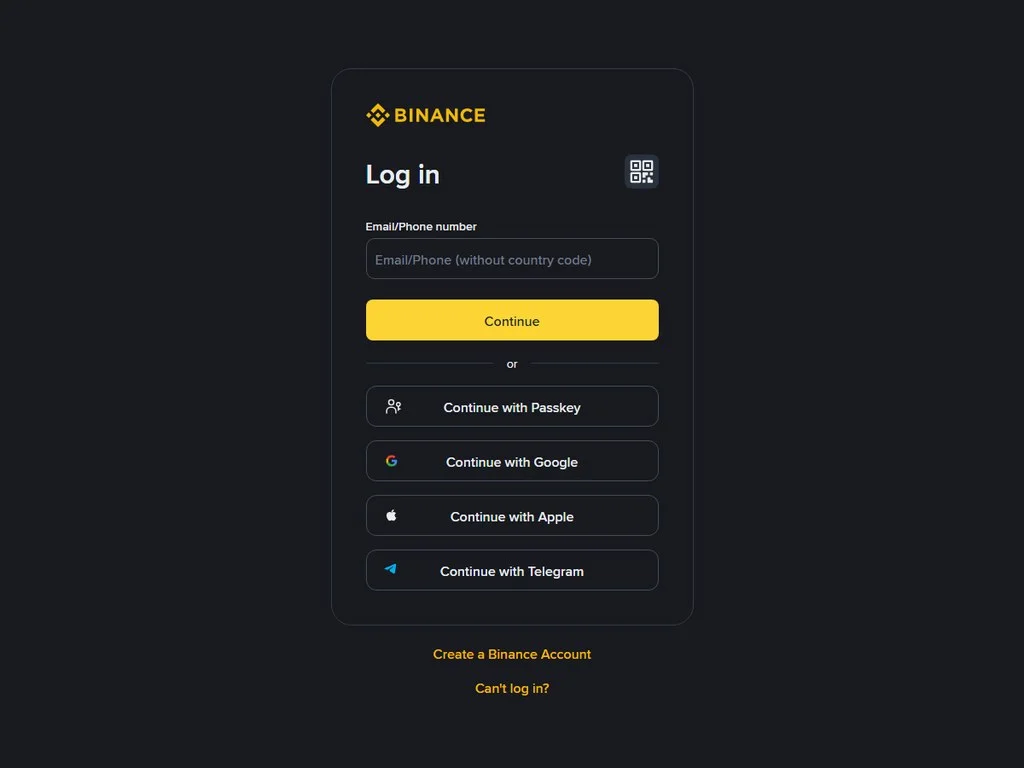
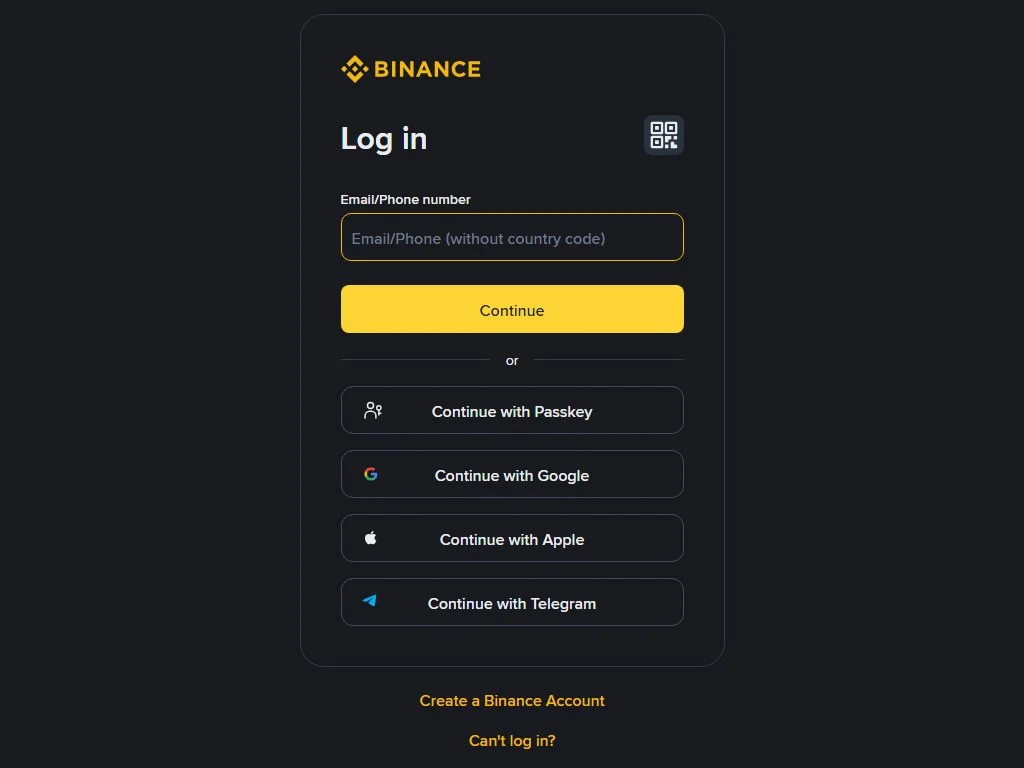
Binance offers a USDT-M Futures Mock Trading environment that ships with 100,000 test USDT and a full clone of the live futures interface. Access it from the Futures menu by selecting Mock Trading or by switching the futures account toggle. The mock environment supports the same instruments as live USDT-M perps: BTCUSDT, ETHUSDT, SOLUSDT, and hundreds of altcoin perps with up to 125x leverage available.
The simulated orderbook on Binance's mock environment is more realistic than TradingView's because it uses a snapshot of live depth and applies simulated fills against it. You will see partial fills on large orders, simulated funding payments every 8 hours, and realistic liquidation triggers if your position goes underwater. This makes it one of the better venues for practicing leveraged futures strategies before risking real capital. If you are still learning how leverage and liquidation interact, read our leverage trading guide and our piece on liquidation zones before opening your first paper perp.
One nuance: Binance periodically resets the mock account balance, so any meaningful paper-trading P&L tracking needs to be journaled externally. Use a Google Sheet, a Notion database, or a dedicated trade-journal app to log every paper trade with screenshot, entry, exit, size, and post-trade notes. Without that, the mock account becomes a video game.
Bybit Demo Trading and Phemex Paper
Bybit's Demo Trading is a separate environment accessible from the user menu in the top-right of the app. Switching to demo gives you a parallel account with virtual USDT for spot and perpetuals, with the same UI and order types as live. Bybit is popular for paper trading because the demo environment is unusually clean and persistent, balances are not wiped frequently, and the platform offers reset on request if you want to start over.
Phemex Paper Trading works similarly, with a dedicated demo wallet that supports both spot and contract trading. Phemex's interface emphasizes contract trading and is favored by users who want to rehearse high-leverage perpetual strategies. The demo balance is generous and the platform offers educational walkthroughs that overlay the real trading UI.
BitMEX Testnet: The Old Guard
BitMEX Testnet was the original crypto paper-trading exchange and remains a useful environment for traders who want a real orderbook experience without using real funds. It is fully separate from mainnet, runs at testnet.bitmex.com, and uses test BTC that you can request from the testnet faucet. The orderbook is real, populated by other testers, and behaves like a thin version of the mainnet exchange.
The advantage of BitMEX Testnet over a broker-side demo is realism. You actually consume liquidity. Your orders sit in the book. Your fills depend on counterparties. The disadvantage is the same: liquidity is much thinner than mainnet, so price discovery is unreliable, and you cannot test strategies that depend on real-market conditions like ETF flows or macro events.
Hyperliquid and dYdX Testnets for DeFi Perpetuals
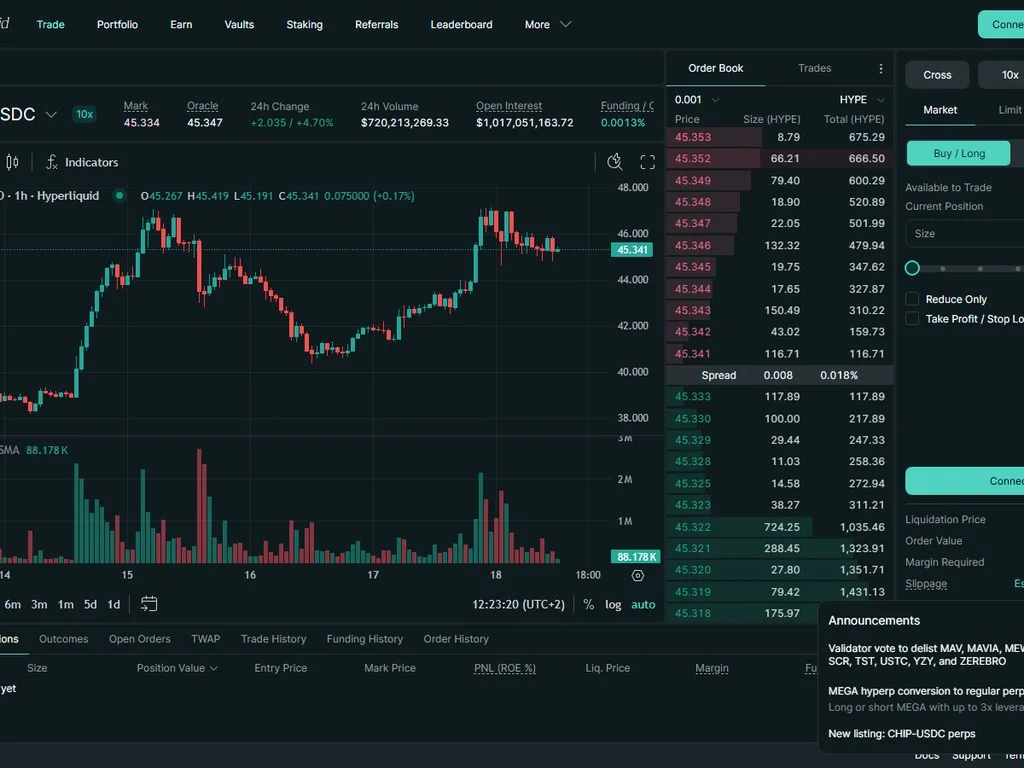
The on-chain perpetuals space has matured fast, and both Hyperliquid and dYdX v4 offer fully functional testnets that mirror their mainnet products. Hyperliquid Testnet runs on a separate chain with test USDC. You connect a wallet, request testnet USDC from the faucet, and trade perpetuals on the same UI as live with full order types, sub-accounts, vault functionality, and the HyperBFT consensus running on test hardware.
dYdX v4 Testnet is similar but built on the dYdX Chain (a Cosmos appchain). You bridge or claim test tokens, then trade perpetuals with the same orderbook engine and matching as mainnet. Both testnets are excellent for rehearsing perpetuals strategies that require on-chain order management, since the gas behavior, latency, and matching dynamics are closer to live than any CEX demo can offer.
If you are new to perpetuals, pair testnet practice with our breakdown of long vs short positions and how market makers shape liquidity. Understanding who is on the other side of your testnet fills tells you why the live orderbook will behave differently.
DeFi Paper Trading with Anvil and Mainnet Forking
This is where paper trading gets genuinely powerful for DeFi, and where most generic paper-trading guides stop. Foundry's anvil tool lets you spin up a local Ethereum node that copies mainnet state at a chosen block. The fork includes every contract, every pool, every position, every balance, exactly as it exists on mainnet at that block. You can interact with Uniswap V3, Aave, Curve, Pendle, EigenLayer, anything, against real liquidity, without spending real money.
The basic command is straightforward. Install Foundry, then run anvil --fork-url https://eth-mainnet.g.alchemy.com/v2/YOUR_KEY. This boots a local RPC at http://127.0.0.1:8545 that mirrors mainnet. Point your wallet (MetaMask custom RPC) or your bot at that endpoint, fund any address you control with anvil_setBalance, and you are paper trading DeFi on real mainnet state.
This unlocks scenarios that no CEX demo can simulate. You can stress-test a large Uniswap swap and measure the actual price impact against real liquidity. You can borrow on Aave, supply collateral, and simulate liquidations. You can practice complex multi-step strategies like collateral swaps via flash loans (see our flash loan deep dive for the mechanics). You can test 1inch and DEX aggregator routing on real pool depth.
1. Install Foundry: curl -L https://foundry.paradigm.xyz | bash then foundryup.
2. Get an RPC URL from Alchemy or Infura.
3. Run anvil --fork-url $RPC_URL --fork-block-number 22000000.
4. Point MetaMask at http://127.0.0.1:8545 as a custom RPC with chain ID 1. Done.
For trading-only DeFi practice without writing code, MetaMask Sepolia testnet plus testnet versions of Uniswap and Aave will get you 80% of the way there. Add the Sepolia network to MetaMask, request test ETH from the Sepolia faucet, and use the testnet deployments to practice swaps, lending, and yield management. You will learn the wallet flow, the signature prompts, the slippage settings, and the gas behavior. Just remember that liquidity on Sepolia DeFi is essentially fake, so PnL means nothing. The point is the workflow, not the result.
AI Agent Paper Trading Frameworks in 2026
The fastest-growing category in paper trading is AI agent sandboxes. Frameworks like ElizaOS, Virtuals Protocol, LangChain trading templates, and custom autoGPT-style pipelines all ship with paper-trading harnesses. The agent has a virtual balance, a set of tools (read price, read orderbook, place order, close position), and a goal (maximize Sharpe, minimize drawdown, follow a specific strategy). It runs in a loop, makes decisions, executes simulated orders, observes results, and (if configured) updates its prompt or parameters based on outcomes.
The paper-trading layer is what makes AI agent development survivable. Without it, every prompt experiment, every tool change, every reward function tweak would cost real money. With it, you can iterate hundreds of times in a day at zero cost. Most teams run their agent in paper mode for weeks before graduating it to a live wallet with a tiny allocation, and most teams also keep the paper harness running in parallel even after live deployment as a control benchmark.
Common AI paper-trading stacks combine an OpenAI or Anthropic model for decision-making, a CCXT or hyperliquid-python client for exchange execution (pointed at a demo or testnet endpoint), and a database for trade logging. Some teams add a Pyth Network oracle feed for high-frequency price data, or a custom indicator service that mirrors what the agent would see on a live trader's chart.
Crypto Demo Account Comparison Table
The right paper-trading venue depends on what you want to practice. Spot traders should start with TradingView. Perpetuals traders should use Binance Mock or Bybit Demo. On-chain perp traders should test on Hyperliquid or dYdX testnet. DeFi traders should master Anvil. Here is a side-by-side reference.
A 30-Day Paper Trading Roadmap
Random paper trading is just noise. A structured 30-day roadmap turns the time into actual skill acquisition. The plan below assumes you can dedicate 60 to 90 minutes a day. Adjust the calendar to your real life, but keep the sequence.
Open TradingView Paper. Pick three pairs. Watch them at the same times daily. Journal three setups per day that you would have taken. No execution yet.
Begin paper executions on the same setups. Predefine entry, stop, target, size before every trade. Screenshot every entry and exit. Review nightly.
Open Binance Futures Mock or Bybit Demo. Practice the same setups with realistic slippage and funding. Compare results to TradingView paper.
Full edit of the journal. Compute win rate, average R, max drawdown, rule-violation count. Only then transition to live with smaller-than-paper size.
The non-negotiable element is the journal. If you skip the nightly review, the roadmap collapses into entertainment. The journal is what converts paper time into pattern recognition, and pattern recognition is the entire point.
Best Practices: How to Paper Trade Without Lying to Yourself
Most paper trading fails not because the tool is bad but because the trader cheats. The cheating is usually subtle: pretending you would have held through a wick that actually would have stopped you out, taking trades you would never have spotted live, ignoring fees, or sizing positions you cannot psychologically handle with real money. The discipline below removes the cheats.
Treat it like real money. Every paper trade should have a written plan: setup name, entry, stop, target, size, invalidation. If a real-money version of this trade would scare you, the paper version should also scare you. Stop scrolling Twitter mid-trade. Stop closing the app when the position goes red. Behave the way you want to behave live.
Use proper position sizing. A common cheat is to size paper trades much bigger than you ever could live, because the dollar PnL looks more impressive. This destroys the simulation. Pick a realistic starting balance (often the same as your planned live size) and risk a fixed percentage per trade, usually 0.5% to 1% for beginners. Use the same risk-reward framework you will use live.
Journal everything. Every paper trade gets a screenshot at entry and at exit, a one-line description of the setup, the planned vs actual stop and target, and a post-trade note about execution quality and emotion. Weekly review of the journal is where the learning actually happens.
Account for fees and slippage. If a platform does not apply realistic costs, subtract them yourself. Spot trading on a major CEX is typically 0.1% per side. Perpetuals are typically 0.05% per side plus funding. Slippage on liquid pairs is usually 0.01% to 0.05% for small size, much more for size or thin pairs. Always assume the worst plausible cost.
Mirror your real life. If you can only watch markets for 90 minutes a day live, do not paper-trade an all-day scalping strategy. The paper edge must be available to the live version of you, not a fantasy version with unlimited screen time.
Drawbacks of Paper Trading You Need to Respect
Paper trading is a useful tool, but it is not a complete one. The honest answer to "how well does paper performance predict live performance" is: not very well, unless you respect the gaps. Five gaps matter most.
Emotional pressure is missing. Paper losses do not feel like real losses. You will hold stops more easily, scale into losers without panic, and exit winners patiently when paper trading. Live trading will surface fear and greed that paper cannot reproduce. The first weeks of live trading will reveal which of your paper edge was process and which was the absence of pressure.
Slippage and liquidity friction are underestimated. Most demo accounts fill at the mid price or against the live best bid/ask without consuming depth. Real fills, especially on illiquid pairs or during volatile moves, are dramatically worse. Always assume your live execution will be 10% to 30% worse than your paper execution on cost-adjusted terms.
Latency is simulated away. Real exchange execution has latency: HTTP round-trip, matching engine queue, fill confirmation. Demo accounts skip most of this. For high-frequency or scalping strategies, this is fatal. You will appear to capture moves on paper that real latency would prevent.
Funding, fees, and edge cases are often missing. Some demo accounts skip funding payments on perpetuals or simplify them. Some skip maker rebates. Some skip the impact of taker fees on profitability. The cleaner the paper account looks, the larger the surprise live.
Confidence becomes fake. A long paper win streak feels like skill, but it is often just the absence of friction. New traders graduating with inflated paper confidence often size up aggressively, then blow up within weeks. The transition framework below exists to prevent that.
Transitioning from Paper to Real Money
The move from paper to live is the highest-leverage decision a new trader makes. Done well, it preserves the patterns paper built. Done badly, it destroys them. The framework below has worked for thousands of traders, and it is built around a simple principle: live size starts much smaller than paper confidence wants.
Step 1: Define graduation criteria. Before opening real money, decide what proves you are ready. A common bar: 30+ paper trades, win rate above 45%, average winner equal to or larger than average loser, zero rule violations in the last two weeks, complete journal entries on every trade. If you cannot hit these on paper, you will not hit them live.
Step 2: Start at one-tenth of paper size. Whatever position size you used on paper, divide by ten for your first month of live trading. The point is not to make money. The point is to test whether the process survives real emotion. Anything you make at this size is bonus.
Step 3: Run paper and live in parallel. Continue paper-trading the same setups while you go live. The paper account is your control benchmark. If paper PnL is positive and live PnL is negative on the same setups, the gap is execution and emotion, and you need to slow down further.
Step 4: Grade execution, not PnL. For the first month live, ignore your dollar PnL. Grade yourself on plan adherence: did you take only A-grade setups, did you respect your stops, did you complete the journal? Skill compounds when execution improves, not when you guess on size.
Step 5: Scale based on consistency, not on confidence. Once you have 30 live trades with clean execution at small size, double your size. After another 30 with clean execution, double again. Confidence-based scaling is how traders blow up. Process-based scaling is how they survive.
If your eventual plan involves leverage, the transition matters even more. Re-read our leverage trading guide before sizing up. Leverage amplifies execution mistakes, and paper trading dramatically understates execution friction on leveraged positions.
Paper Trading vs Backtesting vs Live Trading
Paper trading sits between backtesting and live trading on the realism spectrum, and each has a different job. Backtesting runs a strategy on historical data and tells you whether the rules would have been profitable in the past. It is fast, cheap, and brutally exposed to overfitting. Paper trading runs forward in real time on live data, so it cannot be overfit, but it can be cheated. Live trading runs forward on real data with real money, so it cannot be cheated, but it costs real money to learn from.
The typical professional pipeline is: backtest the idea, paper trade the surviving rules forward for one to three months, then graduate the best paper rules to live at small size. Each stage filters out a different kind of false positive. Skipping any stage usually means losing the lesson it would have taught you, with real money.
Common Mistakes That Make Paper Trading Useless
Avoid these failure modes, which destroy paper trading's value faster than anything else.
- Oversizing for entertainment. Using a $1M paper account when you will trade $1K live. The patterns do not transfer.
- Ignoring fees and slippage. Pretending fills are clean. Live results will not be.
- Changing rules after a loss. Editing the plan retroactively to claim a winner. This poisons the dataset.
- Taking setups you would not take live. Random clicks just to feel active. This trains the wrong patterns.
- No journal. Paper trading without journaling is screen time, not skill building.
- Trading too many pairs. Spreading attention thin so no pattern actually sinks in.
- Confusing paper PnL with skill. A long paper streak proves nothing about live execution.
- Skipping the transition framework. Going straight from $100k paper to full live size. Almost always blows up.
Security Notes for Testnet and Fork Paper Trading
One frequently ignored angle: paper trading on testnets and forks still touches your wallet, and your wallet still touches mainnet. Two safety rules apply. First, never use your mainnet wallet directly on a fork or testnet, since some bugs in fork tooling have leaked transactions to mainnet. Use a dedicated burner wallet for all paper trading. Our guide on the burner wallet workflow covers the setup, and our broader wallet security tips cover the operational basics.
Second, be careful with token approvals during paper trading. Some testnet DEXs will ask for token approvals that, if your wallet is misconfigured, can persist if you later use the same wallet on mainnet. Use Permit2-aware tooling where possible, and revoke approvals periodically. Also be aware of address poisoning patterns that can affect any wallet, including burner wallets used for paper practice.
Frequently Asked Questions
Q Q Q What is paper trading in crypto?
Paper trading in crypto is simulated trading with virtual money on live or near-live market data. You place real-looking buy and sell orders inside a demo account or test environment, but no actual capital changes hands. It is used to practice strategies, learn platform mechanics, and rehearse risk management without financial exposure.
Q Q Q Can you actually paper trade crypto for free?
Yes. TradingView Paper Trading, Binance Futures Mock, Bybit Demo, Phemex Paper, BitMEX Testnet, Hyperliquid Testnet, and dYdX v4 Testnet are all free. Even mainnet fork paper trading using Foundry's anvil is free aside from the cost of an RPC endpoint, and free RPC tiers from Alchemy or Infura are usually sufficient for personal use.
Q Q Q What is the best crypto demo account for beginners?
TradingView Paper Trading is the easiest entry point. It is free, requires no account verification, runs on every chart, and uses the same interface as live trading. For beginners specifically interested in perpetuals or leverage, Binance Futures Mock and Bybit Demo are the next two stops. Avoid mainnet-fork DeFi paper trading until you are comfortable with wallets and basic on-chain operations.
Q Q Q How long should I paper trade before going live?
Long enough to prove your process. A common bar is at least 30 paper trades over four to eight weeks, with documented win rate, average R, max drawdown, and zero rule violations in the final two weeks. Time matters less than honest review. If you cannot execute a plan consistently on paper, you will not execute it consistently live.
Q Q Q Does paper trading work for futures and perpetuals?
Yes. Binance Futures Mock, Bybit Demo, Phemex Paper, BitMEX Testnet, Hyperliquid Testnet, and dYdX v4 Testnet all support paper trading on perpetuals or futures contracts. Binance Mock and the on-chain testnets are the most realistic for funding, liquidations, and leverage behavior. Practice with leverage on paper before ever using leverage live.
Q Q Q Can I paper trade DeFi without writing code?
Yes, with limits. Use MetaMask plus the Sepolia testnet to practice DeFi workflows on testnet deployments of Uniswap, Aave, and other protocols. You will get realistic wallet UX, signature prompts, and gas behavior with faucet-issued test ETH. For realistic liquidity and mainnet pool behavior, you do need to use Foundry's anvil mainnet fork, which requires some technical setup but no Solidity coding.
Q Q Q What does paper trading fail to teach?
Paper trading does not fully reproduce emotional pressure, real slippage and liquidity friction, exchange latency, the psychological weight of real losses, the temptation to deviate from the plan under FOMO, or the impact of fees on net edge. Treat paper success as evidence of process, not as proof of edge. Live trading at small size is the only environment that tests the missing pieces.
Q Q Q What is the difference between paper trading and backtesting?
Backtesting runs a strategy on historical data and computes hypothetical past performance. It is fast and cheap but vulnerable to overfitting. Paper trading runs the strategy forward in real time on live data, so it cannot be overfit, but the trader can still cheat by misjournaling or oversizing. Most professional traders backtest first, paper trade the survivors, then graduate to live at small size.
Q Q Q Should I use the same setups in paper and live trading?
Absolutely. Paper trading is only useful when it mirrors the live process you intend to run. Same markets, same timeframes, same setups, same sizing logic, same journal format. Practicing setups you will never trade live, or sizing positions you will never run live, trains the wrong patterns and produces data you cannot trust.
Q Q Q What is an anvil mainnet fork in DeFi paper trading?
Anvil is a local Ethereum node included in the Foundry developer toolkit. Running anvil --fork-url creates a local copy of Ethereum mainnet state at a chosen block, complete with all real contracts, pools, and balances. You can interact with Uniswap, Aave, Curve, and other live DeFi protocols using virtual ETH, at zero gas cost, against real mainnet liquidity. It is the highest-fidelity DeFi paper-trading environment available.
Final Take: Paper Trading Works If You Treat It Like Work
Paper trading is one of the most under-used and most misused tools in crypto. Beginners often skip it because they want real PnL immediately, and intermediate traders often abuse it as a comfort blanket that never connects to live behavior. The right way to use it is in between: a structured rehearsal environment where you build process, prove rules, and graduate to live with small size and the same journal you used on paper.
If you take only one thing from this guide, take this: paper trading does not prove edge. It proves discipline. Edge comes from live execution under pressure, sized to survive bad runs. Discipline comes from the boring nightly journal, the strict plan template, and the refusal to take setups you would not take with real money on the line. Build the discipline on paper, then earn the edge live, one small trade at a time. Continue your learning with our how cryptocurrencies work primer if you want a deeper foundation before risking real capital.
Related Guides
- DEXTools Trading Simulator Tutorial 2026: Free Paper Trading
- What Is Safe: Multisig Wallets, Smart Accounts and Treasury Control (2026)
- What Is Wash Trading in Crypto? Complete Beginner Guide (2026)
- Wash Trading Red Flags on Exchanges and DEXs (2026)
- What Is Trading Volume in Crypto? How to Read It (2026)