Crypto Address Poisoning Scams: Complete Avoidance Guide (2026)
— By Whatsertrade in Tutorials
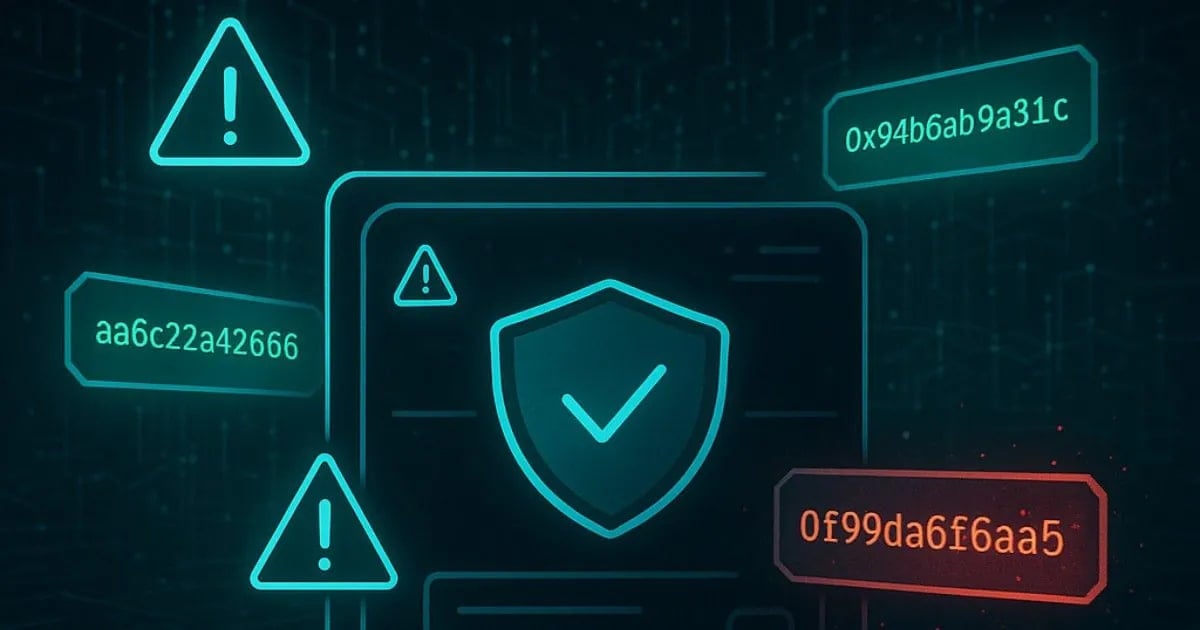
Address poisoning stole $68M in WBTC in 2024. Learn how the scam works, defense walkthrough, ENS as protection, and what to do if poisoned.
Address poisoning is one of the cheapest, simplest, and most effective scams in crypto today. It does not break your wallet. It does not steal your seed phrase. It does not need you to sign a malicious transaction. All it needs is for you to copy the wrong address from your transaction history one single time, and your funds are gone forever. In May 2024, a single victim lost $68 million in Wrapped Bitcoin (WBTC) to an address poisoning scam, becoming the largest documented case ever recorded. That loss happened in seconds, and the funds were laundered through more than 400 wallets within hours.
If you have ever copied a wallet address from your recent activity, scanned only the first and last few characters before sending, or assumed an address that "looks right" actually was right, you are exactly the target this attack was designed for. Address poisoning weaponizes habit, fatigue, and the way modern wallets display addresses. It works against retail users sending $50, and it works against institutional desks moving nine-figure sums. The mechanics are identical in both cases.
This guide walks through how address poisoning actually works on chain, the documented 2024 incidents (including the record $68M WBTC theft and the smaller flow of victims that lose six figures every week), the specific defensive habits that neutralize the attack, the wallet UX improvements that already exist to protect you, and exactly what to do if you find a poisoned address sitting in your blockchain explorer history right now. By the end, you will know how to send crypto without ever falling for this scam, and how to spot a poisoning attempt the moment it appears in your wallet.
What Is Address Poisoning in Crypto?
Address poisoning is a scam where an attacker generates a wallet address that visually matches the first and last characters of an address you regularly use, then sends a worthless transaction from that lookalike address to your wallet. The goal is not to steal anything in that initial transaction. The goal is to plant the fake address in your transaction history so that the next time you copy a recent destination address out of habit, you copy the attacker's address instead of the real one. When you paste it and confirm the send, your funds go straight to the scammer.
The technical term in some research papers is "transfer-from-zero" poisoning or "vanity address phishing." On chain, the attacker uses a vanity address generator (a brute-force GPU tool that produces Ethereum addresses with chosen prefix and suffix characters) to create a wallet that mirrors yours or your counterparty's address. Ethereum addresses are 42 characters long including the 0x prefix, and most wallet interfaces only show the first 6 and last 4 characters when rendering them. Attackers exploit exactly this truncation pattern.
What makes address poisoning different from a dust attack in the traditional sense is the intent. A classic dust attack tries to de-anonymize a wallet by tracing the dust through subsequent transactions. Address poisoning has zero interest in your privacy. It only wants you to misread a string of hex characters and pay the attacker by mistake. The attack does not require any approval, signature, or interaction beyond the victim sending a transaction to the wrong address.
The $68 Million WBTC Case and Other 2024 Incidents
On May 3, 2024, a victim in Hong Kong attempted to transfer 1,155 Wrapped Bitcoin (WBTC), worth approximately $68 million at the time, between two of their own wallets. The destination they intended to use ended in characters that the scammer had perfectly cloned. The victim copied the recent recipient from their wallet history, pasted it into the transfer form, scanned the first and last characters, and confirmed. The transaction routed 1,155 WBTC directly into the attacker's address. Within ten minutes, the funds were swapped into ETH on a series of decentralized exchanges. Within twenty-four hours, the ETH was distributed across more than 400 wallets to obscure the trail.
What happened next was unusual. The attacker, almost certainly aware that the on-chain trail would eventually be reconstructed, began sending small return transactions to the victim. Over the following days, the scammer returned a partial amount and engaged in negotiation via on-chain message memos. By late May, the majority of the funds had been returned, though several million dollars remain unaccounted for and the case is still cited as the largest single address poisoning incident on record.
The May 2024 WBTC case was not an isolated event. According to on-chain security firms tracking the attack pattern through 2024 and 2025, address poisoning scams have stolen tens of millions of dollars across thousands of incidents on Ethereum, BNB Chain, Polygon, Base, and Arbitrum. The largest losses cluster around the $68M case, but the median victim loses between $1,500 and $25,000. The attack is being industrialized: automated bots scan high-value wallets, generate lookalike addresses on demand, and send poisoning transactions within minutes of detecting a profitable target.
How Address Poisoning Works Step by Step
Understanding the exact mechanics of the attack is the single biggest defense, because once you have seen the attack play out in full you stop trusting your transaction history as a source of truth. Here is the full lifecycle on chain.
Step 1: Target Identification
The attacker (almost always an automated bot) scans the mempool and recent block history looking for wallets that meet specific criteria: high token balances, frequent transfers between a small set of addresses, and patterns suggesting an OTC desk, exchange hot wallet, or whale managing personal cold storage. Bots use indexers like Etherscan, Dune, and direct RPC queries to filter for these profiles. A wallet that moved $5M last week between two known counterparties is a prime target.
Step 2: Vanity Address Generation
The attacker takes the target's regular counterparty address, for example 0x1f9090aaE28b8a3dCeaDf281B0F12828e676c326, and uses a GPU-based brute-force tool to generate a new wallet whose address begins with 0x1f9090 and ends with c326. Matching the first 4 bytes and last 2 bytes takes a modern GPU between a few seconds and a few hours. There is no cryptographic vulnerability being exploited. The attacker is just generating millions of random keypairs until one happens to produce an address with the desired prefix and suffix. This is brute force, not hacking.
Step 3: The Poisoning Transaction
From the freshly generated lookalike address, the attacker sends a transaction to the victim. There are three common variants. First, a tiny amount of the actual token the victim transfers (for example $0.01 of USDT), which makes the lookalike appear in the victim's USDT transfer history. Second, a zero-value transferFrom() call from the victim's own address to the lookalike, which exploits the way ERC-20 events are emitted to spoof an outgoing transaction from the victim to the lookalike. Third, a fake "memecoin" or NFT airdrop from the lookalike, which appears in the victim's NFT or token history.
Step 4: History Pollution
The victim's wallet interface now renders a list of recent transactions. The lookalike address sits among legitimate counterparty addresses. When the victim's wallet truncates the address to 0x1f9090...c326, it looks identical to the real counterparty. Some wallets sort by date, putting the poisoned entry at the top. Others group by token, putting the lookalike alongside legitimate transfers of the same asset.
Step 5: The Victim Copies the Wrong Address
This is the entire payoff. The victim wants to send funds to their regular counterparty. They open their wallet, navigate to the send screen, and either (a) tap the recipient field and select a "recent address" suggestion that pulls from transaction history, or (b) open their transaction history in a separate tab, copy the recent recipient, and paste it into the send form. Either way, they end up with the lookalike address instead of the real one. They glance at the first 6 and last 4 characters, see the expected pattern, click confirm, and the funds leave their wallet forever.
Why the Attack Is So Effective
Address poisoning works because it exploits four specific human and interface behaviors that almost every crypto user shares.
Truncated address display. Every major wallet, from MetaMask and OKX Web3 Wallet to Phantom and Trust Wallet, displays addresses in truncated form by default. Showing all 42 characters is visually overwhelming, so wallets show "first 6 and last 4" or some similar pattern. This is exactly the pattern the attacker has cloned. Users have been trained to verify addresses by checking truncated views, which gives the lookalike a perfect hiding spot.
Recency bias in UX. Wallet send screens often suggest "recent recipients" pulled directly from transaction history. The intent is convenience: most users send to the same addresses repeatedly. But this convenience converts the attacker's poisoning transaction into a legitimate-looking suggestion the moment it lands in your history.
Habit-based confirmation. Experienced users develop a mental shortcut: glance at the first few and last few characters, see what they expect to see, click confirm. This habit is faster but verifiable in only one direction. If the address matches your expectation, you confirm. The attacker has engineered the lookalike to match exactly the parts of the address you check.
Irreversibility. Once the transaction confirms, the funds are gone. There is no chargeback, no fraud department, no reversal. The blockchain treats your mistake as a perfectly valid transaction because that is exactly what it is on the protocol level.
The Complete Defense Walkthrough
Address poisoning has a permanent fix at the user level: never trust transaction history as a source of destination addresses. Build a workflow where the address comes from a verified, isolated source every single time. Here is the exact step-by-step defense process for any meaningful transfer.
Step 1: Source the Address From an Authoritative Location
Before you send, decide where the destination address is coming from. The acceptable sources are: a wallet you own and have just unlocked yourself, an exchange deposit page you have just refreshed and logged into via known-good credentials, an address book entry you saved yourself at a verified moment in the past, or a counterparty who shared the address with you via a channel you can authenticate (a verified Telegram contact, a signed message, a video call). Transaction history is not on this list. Wallet "recent recipients" suggestions are not on this list. Recently received transfers are not on this list.
Step 2: Verify the Full Address Character by Character
Once you have the address from the authoritative source, do not glance. Verify. Ethereum addresses are 42 characters. Solana addresses are around 32-44 base58 characters. Bitcoin addresses range 26-62 characters. Compare at minimum the first 8, the middle 8, and the last 8. Better, verify every character. Best, scan a QR code instead of typing or pasting at all. QR codes encode the full address with no truncation, and if the scan succeeds, the data is exact.
Step 3: Use an Address Book With Labels
Every major wallet supports an address book or contacts feature. Use it. Save your regular destinations once, after verifying them carefully, with clear labels like "Coinbase Deposit ETH" or "Ledger Cold Storage Main" or "Tony Personal Vault." When you go to send, select the contact from your address book instead of pasting an address. This eliminates the entire attack surface because you are no longer copying from history. The address book entry is verified once and used forever.
Step 4: Send a Test Transaction for Large Transfers
For any transfer above a threshold you set personally (a common threshold is $1,000 to $5,000), send a small test amount first. Wait for confirmation. Verify on a blockchain explorer that the funds arrived at the intended address. Only then send the full amount. The 5-10 minutes of waiting and the few dollars of gas fees are trivial compared to losing the full balance to a lookalike address.
Step 5: Use Transaction Simulation Before Confirming
Modern wallets and security extensions like Blockaid, Wallet Guard, and Pocket Universe show a transaction simulation before you sign. The simulation shows the expected outcome: what tokens leave your wallet, where they go, and what comes back. If the destination address in the simulation does not match the destination you expected, abort. Simulations do not always catch address poisoning specifically (the transaction is technically valid), but they do show you the final destination unambiguously, which gives you one more chance to spot a discrepancy.
Step 6: Confirm on the Hardware Wallet Screen
If you use a hardware wallet like Ledger or Trezor, the device shows the destination address on its own screen. This is the most important verification step. The hardware wallet screen cannot be poisoned by malware on your computer. Scroll through the full address on the hardware device, compare it character by character to the address you intended to send to, and only press confirm if it matches exactly. This is the gold standard for high-value transfers.
12 Defensive Rules in One Grid
Transaction history is the attack surface. Source addresses from address book, QR, or fresh exchange page.
Check minimum 8 chars from start, middle, end. Better: every character. Best: QR scan.
Save verified destinations once, with labels. Select from book, never paste.
Above $1K-$5K, always test with a small amount first. Confirm arrival on explorer.
Send to vitalik.eth or alice.sol instead of hex. Names cannot be lookalike-spoofed.
When possible, scan the recipient's QR code from their device directly.
Ledger/Trezor screens are isolated from malware. Always verify there before signing.
Tiny unexpected transfers are usually poisoning bait. Do not interact, do not reply.
Use Blockaid, Wallet Guard, or native MetaMask simulation to preview the destination.
Address poisoning targets rushed behavior. Pause 30 seconds before every confirm.
Paste the destination into Etherscan first. Check it has prior activity if it should.
If an address looks "almost right," it is the trap. Real addresses always match exactly.
ENS, SNS, and Human-Readable Names as Defense
The most powerful structural defense against address poisoning is to stop sending to hex addresses entirely. Ethereum Name Service (ENS) lets you register a human-readable name like tonyvault.eth that resolves to your underlying Ethereum address. Solana Name Service (SNS) does the same with .sol names. Most modern wallets support ENS and SNS natively. When you type "tonyvault.eth" into the send field, the wallet resolves it to the underlying address before signing.
This kills address poisoning at the root because names are not characters in a hex string that can be brute-force matched. The attacker cannot generate tonyvault.eth through brute force. Names are uniquely owned by whoever registered them, and the resolution from name to address is enforced by the ENS smart contract. As long as you trust the name you are sending to, the destination address is guaranteed to be correct.
There are caveats. First, ENS names themselves can be impersonated. Attackers can register vitalick.eth to phish payments meant for vitalik.eth. Always verify the exact spelling. Second, an ENS name resolves to an address controlled by whoever owns the name. If the legitimate owner transfers or loses the name, the resolution changes. Use ENS names for your own wallets where you control the resolution, and verify counterparty ENS names through a secondary channel before relying on them. Third, not every chain has its own name service. ENS works on Ethereum and major L2s. SNS works on Solana. Bitcoin Name Service (BNS) and various L1-specific systems exist but adoption varies.
The practical recommendation: register an ENS name for your main wallet, share that name (not the hex address) with counterparties, and configure your wallets to display ENS names instead of hex wherever possible. This single change reduces your exposure to address poisoning by an order of magnitude.
How Wallet UX Has Improved (and What Still Needs Work)
Following the 2024 incident wave, wallet developers have implemented several countermeasures. Here is what the leading wallets currently do and where the gaps remain.
The remaining UX gap is universal: every major wallet still treats transaction history as a legitimate source of "recent recipients" in the send flow. Until that pattern is removed (or until address books are made the default rather than an opt-in), the attack will keep working. The most aggressive change you can make as a user is to disable or ignore recent-recipient suggestions and exclusively use ENS names or saved address book entries.
Address Poisoning vs Other Crypto Scams
Address poisoning is one of several attack vectors that target crypto users. Understanding how it differs from related scams helps you build a layered defense.
Plants lookalike address in your history. You send funds to the wrong address yourself. No approval or signature manipulation.
Tricks you into signing a malicious transaction or token approval that lets the attacker pull funds from your wallet.
Lures you to a fake site that asks for your seed phrase, private key, or a malicious signature. Targets credentials, not addresses.
Malware on your device replaces a copied address with the attacker's address when you paste. Requires local infection.
Tiny transfers used to track wallet activity across addresses. About privacy de-anonymization, not direct theft.
Direct credential compromise, usually via social engineering or malware. Grants full wallet access.
The key distinction: address poisoning is the only attack in this list where you, the victim, voluntarily and consciously execute the transaction that drains your own wallet. You authorize it. You sign it. The attacker only had to make you believe you were sending to the right address. That is what makes it so effective and so demoralizing for victims. They were not hacked. They were tricked into hacking themselves.

What to Do Right Now: Audit Your Wallet
If you are reading this and you have a wallet that has been active for more than a few months, there is a good chance you already have at least one poisoning attempt sitting in your transaction history. Here is the audit process.
1. Open Your Wallet's Transaction History
Open your main wallet (MetaMask, Phantom, etc.) and navigate to the transaction history view. If you have multiple chains active, check each one. Address poisoning happens on Ethereum, BNB Chain, Polygon, Arbitrum, Optimism, Base, Tron, Solana, and most other smart-contract chains. Each chain has its own history.
2. Look for Lookalike Incoming Transactions
Look specifically for incoming transfers of zero value, very small amounts (like $0.01 or 0.000001 of a token), or unfamiliar tokens. For each suspicious entry, click through to see the sender address. Compare the sender address character by character to the addresses you actually transact with. If the first and last few characters match a legitimate counterparty but the middle differs, that is almost certainly a poisoning attempt.
3. Check on a Blockchain Explorer
Open Etherscan (or the equivalent for your chain) and paste your wallet address. Look at the "ERC-20 Token Transfers" tab specifically. Poisoning attacks frequently use ERC-20 events to spoof transactions. Etherscan now flags many of these with a "Suspected spam token" or "Address poisoning" warning, but not all are caught.
4. Add Verified Counterparties to Address Book
For every legitimate destination you send to regularly, save it to your wallet's address book with a clear label. Verify the address by checking it against the source one final time before saving. Once saved, never copy from history again. Always select from the address book.
5. Set Up an ENS Name for Your Own Wallets
If you have not already, register an ENS name on Ethereum or an SNS name on Solana for your main wallet. Use the name when sharing your address with anyone going forward. Migrate your saved address book entries to use ENS/SNS names where the recipient has them registered.
6. Enable Transaction Simulation
Install a security extension (Blockaid, Wallet Guard, or Pocket Universe) if your wallet does not have native simulation. Make sure simulation is enabled by default. Every send transaction should show a preview of where the funds are going before you confirm.
What to Do If You Already Sent Funds to a Poisoned Address
The hard truth: in the overwhelming majority of cases, the funds are gone. Blockchain transactions are irreversible by design. But there is a sequence of actions worth taking immediately because in rare cases something can be recovered, and at minimum you can prevent the same mistake from happening twice.
Step 1: Document everything immediately. Screenshot your wallet, screenshot the transaction on Etherscan, save the transaction hash, save the destination address, and save the original intended address. You will need all of this if you report to authorities or investigators.
Step 2: Report to the platform you were using. If you were sending to an exchange and the destination was a lookalike of a real exchange deposit address, contact the exchange's security team. There have been cases where exchanges have frozen incoming funds when an attacker routes them through the platform. The chances are low but non-zero.
Step 3: Report to law enforcement and a blockchain forensics firm. File a report with your local cybercrime unit, the FBI's IC3 (if you are in the US), or the equivalent in your jurisdiction. For large losses, blockchain forensics firms like Chainalysis, TRM Labs, and Elliptic sometimes investigate cases pro bono if the amount is significant and the case is high-profile. The $68M WBTC case partial recovery happened in part because of public pressure and on-chain tracing by these firms.
Step 4: Monitor the attacker's address. Most poisoning attackers route stolen funds through mixers, bridges, and centralized exchanges to launder them. If the attacker tries to off-ramp through a regulated exchange, there is a chance of seizure. Tools like Arkham Intelligence and Etherscan let you watch the address and alert you when funds move.
Step 5: Lock down your wallet and review processes. Even though the wallet itself was not compromised in a poisoning attack, audit your wallet for any other lurking issues: outstanding token approvals (revoke unnecessary ones via revoke.cash), suspicious connected dApps, and other poisoning entries in your history that you may have missed. Then rebuild your sending workflow around address books and ENS names so the same attack cannot succeed twice.
Step 6: Be wary of recovery scams. After a public loss, victims are often contacted by "recovery services" promising to retrieve the funds for an upfront fee. Almost all of these are secondary scams targeting people in the worst possible emotional state. Legitimate forensics firms do not cold-contact victims. Do not pay anyone who promises recovery.
The 2026 Outlook: What Comes Next
Address poisoning is not going away. The attack is too cheap, too easy to automate, and too effective against rushed users. What is changing is the defensive ecosystem around it.
Wallet UX is improving. The dominant wallets are pushing harder on ENS and SNS resolution, transaction simulation, and history-pollution detection. MetaMask, Rabby, and Phantom have all rolled out features in 2025 specifically targeting poisoning. Coinbase Wallet now maintains an internal threat database that flags addresses associated with prior poisoning incidents.
Blockchain explorers have added detection. Etherscan, BscScan, Tronscan, and Solscan now tag many poisoning attempts in their UI with explicit warnings. This makes the attack harder to land because users who do bother to verify on an explorer see the warning. The catch is that bot operators iterate fast, and detection lags by days or weeks.
Regulatory attention is increasing. The May 2024 WBTC case received significant media coverage and pushed several regulators to publish consumer warnings. The FBI issued a public service announcement on address poisoning in late 2024. The European Banking Authority included address poisoning in its 2025 crypto risk guidance to member states.
The user-level reality has not changed. The single most important defense remains: never trust transaction history as a source of destination addresses. Build a workflow around verified address books, ENS/SNS names, hardware wallet confirmation, and test transactions for large transfers. If you do those four things consistently, address poisoning cannot harm you, regardless of how many lookalike addresses end up in your history.
Conclusion: Treat Every Send as High Stakes
Address poisoning is the rare crypto attack where the protocol, the wallet, and the network all do exactly what they are supposed to do. The blockchain processes the transaction correctly. The wallet signs it as you instructed. The funds move to the address you specified. The entire failure point is in the human-readable display layer, where a 42-character hex string is reduced to a truncated preview that the attacker has cloned.
The fix is procedural, not technical. Every send is a high-stakes operation. Treat it like one. Pull the address from a verified source. Confirm the full string. Use names instead of hex when possible. Test before sending large amounts. Confirm on hardware. Slow down. The few extra seconds those habits cost will eventually save you from a single mistake that could not be undone. The $68M WBTC victim got lucky because the attacker chose to return most of the funds. Almost no one else does.
Bookmark this guide, set up your address book today, and share it with anyone in crypto who still copies addresses from their wallet history. The next high-value transaction you make should be the last one where address poisoning is even theoretically possible. Combine these defenses with strong wallet security practices, smart use of transaction simulation tools, and disciplined blockchain explorer verification, and the attack vector is closed.
Frequently Asked Questions
What is address poisoning in crypto?
Address poisoning is a scam where an attacker generates a wallet address that visually matches the first and last characters of an address you regularly use, then sends a worthless transaction from that lookalike address to your wallet. The goal is to plant the fake address in your transaction history so you accidentally copy it the next time you send funds. When you confirm, the funds go to the attacker instead of the intended recipient.
How much money has been lost to address poisoning?
The largest single documented case occurred in May 2024 when a victim in Hong Kong lost $68 million in Wrapped Bitcoin (WBTC) before most of the funds were eventually returned by the attacker. Cumulative documented losses in 2024 alone exceeded $129 million across thousands of incidents on Ethereum, BNB Chain, Polygon, Base, Arbitrum, and Tron. The median individual loss sits between $1,500 and $25,000 per victim.
How do scammers create lookalike addresses?
Attackers use GPU-based vanity address generators to brute-force keypairs until they produce a wallet whose address matches the first and last several characters of the target's regular counterparty. Generating an address that matches the first 4 bytes and last 2 bytes of a specific target takes between a few seconds and a few hours on consumer GPU hardware. No cryptographic vulnerability is exploited. It is pure brute force against the random distribution of address generation.
Can I recover funds sent to a poisoned address?
In most cases, no. Blockchain transactions are irreversible by design. Recovery is only possible in rare circumstances, such as when the attacker chooses to return funds (as in the May 2024 WBTC case), when stolen funds are routed through a regulated centralized exchange that can freeze the deposit, or when law enforcement and blockchain forensics firms successfully trace and seize the funds. Document everything immediately and report to your local cybercrime unit and the exchange involved if applicable.
Does using ENS or SNS prevent address poisoning?
Yes, almost completely. ENS names like vitalik.eth and SNS names like alice.sol cannot be brute-force-matched the way hex addresses can. The attacker would need to register an impersonation name (like vitalick.eth) and trick you into using it, which is a different and more visible attack. Sending to verified ENS/SNS names from your address book is the single most powerful structural defense against address poisoning at the user level.
Should I delete the poisoned address from my transaction history?
You cannot delete it. Transaction history is read from the blockchain itself, which is immutable. The poisoned entry will remain in your history forever. Some wallets let you hide or filter dust deposits, which can reduce visual clutter, but the only real protection is to stop using transaction history as a source of destination addresses entirely. Use your address book or ENS names instead.
Is address poisoning the same as a dust attack?
No. A traditional dust attack uses tiny transfers to track wallet activity and de-anonymize users across linked addresses. Address poisoning uses similar-looking tiny transfers but with a completely different goal: planting a lookalike address in your history so you copy it by mistake later. Both involve dust, but address poisoning is a theft scam while traditional dust attacks are a privacy compromise technique.
Which chains are affected by address poisoning?
Every chain with public addresses and transferable tokens is vulnerable, but the highest activity is on Ethereum, BNB Chain, Polygon, Arbitrum, Optimism, Base, Tron (especially for USDT), and Solana. Bitcoin is comparatively less affected because Bitcoin addresses are typically used once via UTXO model rather than reused, which reduces the value of poisoning attacks. EVM chains with stable account-based addresses and frequent reuse are the prime targets.
Related Guides
- Address Poisoning Explained: How Attackers Trick You
- TON Wallet Drainer Scams: Complete Avoidance Guide (2026)
- What Is a Pump and Dump Scheme in Crypto: How to Spot and Avoid Scams (2026)
- 7 Best Telegram Trading Bots 2026: Safe Picks, Scams to Avoid
- Rug Pull Checklist: 10 Pair Explorer Checks to Avoid Scams