What Is Leverage Trading in Crypto: Complete Guide for Beginners (2026)
— By Tony Rabbit in Tutorials

Leverage trading crypto explained: margin, liquidation, long vs short, 2x-125x, step-by-step examples, risk management, and where to trade. Complete 2026 beginner guide.
Leverage trading in crypto lets you control a position worth far more than the capital you actually put up. With as little as $100, you can open a $10,000 trade. Sounds incredible, right? It is, until the market moves against you and your entire account gets liquidated in seconds.
This guide breaks down exactly how leverage trading works in crypto, from the basic mechanics to advanced risk management strategies. Whether you are exploring how to day trade crypto or just trying to understand what all those "100x" buttons on exchanges actually do, you will find everything you need here.

What Is Leverage Trading in Crypto?
Leverage trading (also called margin trading) is a method where you borrow funds from an exchange to open a larger trading position than your account balance would normally allow. The exchange lends you the extra capital, and your own funds serve as collateral, known as "margin."
Think of it like a down payment on a house. You put up $50,000, and the bank lends you $450,000 to buy a $500,000 property. In crypto leverage trading, the concept is identical, but the ratios can be far more extreme, and the timeline is compressed to minutes or hours instead of years.
Leverage Multiplier: $1,000 at Different Levels
If you use 10x leverage, every 1% move in the asset translates to a 10% move on your capital. A 5% price increase means a 50% profit. But a 5% price decrease means a 50% loss. And if the price drops 10%, your entire position is gone. That is the double-edged sword of leverage.
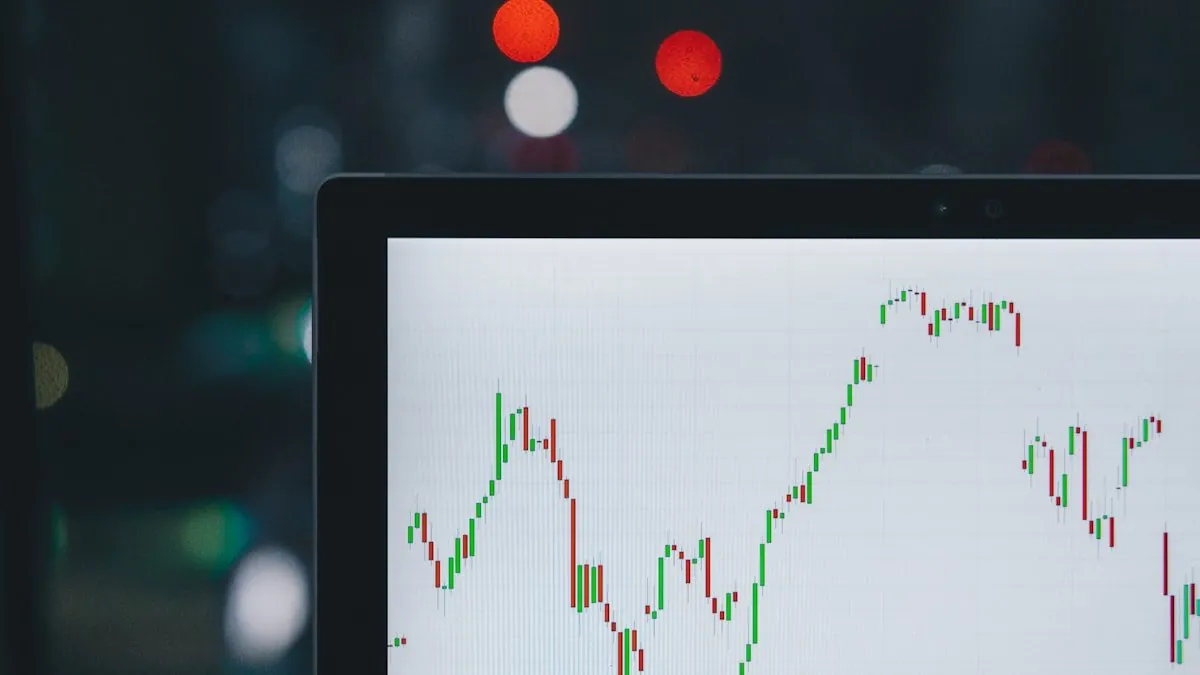
Before you start trading with leverage, make sure you have a solid understanding of how to use TradingView for chart analysis. Going into leveraged trades without proper technical analysis is one of the fastest ways to blow an account.

How Leverage Multiplies Gains AND Losses
The diagram below illustrates exactly how leverage amplifies both your profits and your losses using a simple 10x leverage example.
Key Terms You Must Know Before Trading With Leverage
Before placing your first leveraged trade, you need to understand the following terms. Skipping this section is how beginners lose money within hours of opening their first position.
Initial Margin
Initial margin is the amount of your own capital required to open a leveraged position. If you want to open a $10,000 position with 10x leverage, your initial margin is $1,000. This is the collateral you put up. The exchange covers the remaining $9,000.
Maintenance Margin
Maintenance margin is the minimum amount of equity you must maintain in your account to keep the position open. If your losses reduce your equity below this threshold, the exchange will begin the liquidation process. Most exchanges set maintenance margin between 0.5% and 2% of the position size depending on the leverage used.
Liquidation Price
The liquidation price is the exact price level at which the exchange automatically closes your position because your losses have consumed your margin. At this point, you lose your entire initial margin. Understanding where your liquidation price sits is arguably the most important thing in leverage trading.
Margin Call
A margin call is a warning from the exchange that your position is approaching liquidation. Some exchanges give you the option to add more margin to avoid liquidation. Others liquidate automatically with no warning. Always know which type of system your exchange uses.
Funding Rate
Funding rates are periodic payments exchanged between long and short traders on perpetual futures contracts. If the funding rate is positive, longs pay shorts. If negative, shorts pay longs. Funding rates typically settle every 8 hours and can significantly eat into your profits if you hold positions for extended periods.
Unrealized PnL
Unrealized PnL (Profit and Loss) is the current profit or loss on your open position. It becomes "realized" only when you close the trade. Your unrealized PnL directly impacts your available margin and how close you are to liquidation.
How Leverage Trading Actually Works: Step-by-Step
Let us walk through a complete leveraged trade from start to finish with real numbers so you can see exactly what happens at each stage.
Step 1: Deposit Collateral
You deposit $500 USDT into your futures trading account on an exchange like Bybit. This $500 is your total available margin.
Step 2: Choose Your Leverage
You select 20x leverage. This means your $500 can control a position worth up to $10,000.
Step 3: Open a Position
Bitcoin is trading at $65,000. You open a long position (betting the price will go up) worth $10,000. This means you are effectively buying 0.1538 BTC ($10,000 / $65,000).
Step 4: Monitor the Trade
Your liquidation price is approximately $62,750. That is only about 3.46% below your entry price. With 20x leverage, even small moves matter enormously.
Step 5: Price Moves in Your Favor
Bitcoin rises to $66,300, a 2% increase. Your position is now worth $10,200. Your unrealized profit is $200, which represents a 40% return on your $500 margin. Without leverage, the same $500 invested directly in Bitcoin would have earned you just $10 (2% of $500).
Step 6: Close the Position
You close the trade and collect your $200 profit (minus trading fees and any funding rate payments). Your account now holds $700 USDT.
Now imagine the opposite scenario. If Bitcoin dropped 2% to $63,700, you would have lost $200, leaving you with just $300 in your account. A 5% drop would have wiped $500 from your position, fully liquidating you.
Types of Leverage: Isolated vs. Cross Margin
Every major exchange offers two margin modes. Understanding the difference between them is critical because choosing the wrong one can mean the difference between losing one trade and losing your entire account.
Isolated Margin
With isolated margin, you assign a specific amount of margin to each individual trade. If that trade gets liquidated, you only lose the margin allocated to that position. The rest of your account balance remains untouched.
Example: You have $5,000 in your account and allocate $500 to a 10x leveraged long on ETH. If ETH drops enough to liquidate the position, you lose exactly $500. Your remaining $4,500 is safe.
When to use isolated margin: Almost always for beginners. It limits your downside to exactly what you are willing to risk on each trade.
Cross Margin
With cross margin, your entire account balance serves as collateral for all open positions. This gives you a wider liquidation price (harder to get liquidated) but puts your entire balance at risk.
Example: You have $5,000 in your account and open a 10x leveraged long on ETH. With cross margin, the exchange can draw from all $5,000 to keep the position alive. You will be harder to liquidate, but if it does happen, you could lose everything.
When to use cross margin: Only for experienced traders running multiple hedged positions who understand portfolio-level risk management.
If you are just getting started, always use isolated margin. No exceptions.
Long vs. Short Positions Explained
Leverage trading in crypto allows you to profit from both rising and falling markets. This is one of the key advantages over simply buying and holding (spot trading).
Going Long
When you "go long," you are betting that the price of the asset will increase. You profit when the price goes up and lose when the price goes down. This is the most intuitive type of trade because it mirrors buying an asset in the spot market.
Going Short
When you "go short," you are betting that the price will decrease. You profit when the price drops and lose when the price rises. Shorting is unique to derivatives and leverage trading. It is impossible to short on the spot market (without borrowing mechanisms).
Short selling is particularly powerful during bear markets and corrections. While spot holders watch their portfolios bleed, short sellers can generate significant profits. However, shorting carries theoretically unlimited risk because prices can rise indefinitely, while they can only fall to zero.
Understanding Leverage Levels: 2x to 125x
Exchanges offer a range of leverage options, typically from 2x all the way up to 100x or even 125x. Here is what different leverage levels actually mean in practice.
Low Leverage (2x to 5x)
At 2x leverage, a 50% price drop liquidates you. At 5x, it takes a 20% adverse move. Low leverage gives you significant breathing room and is appropriate for swing trades held over days or weeks. Many professional traders rarely exceed 3x to 5x leverage.
Medium Leverage (10x to 20x)
At 10x, a 10% move against you means liquidation. At 20x, just a 5% drop wipes you out. This range is popular among day traders who have tight stop losses and clear technical setups. If you want to explore day trading with leverage, read our guide on how to day trade crypto for strategies that actually work.
High Leverage (50x to 125x)
At 50x, a 2% adverse move liquidates your position. At 100x, just a 1% move wipes you out. At 125x, a 0.8% move ends the trade. This is pure gambling territory for the vast majority of traders. The only scenario where extremely high leverage makes mathematical sense is scalping with very tight stops on highly liquid pairs, and even then, the risk-to-reward often does not justify it.
Here is a quick reference table showing the liquidation threshold for different leverage levels:
Liquidation Explained: How Traders Lose Everything
Liquidation is the forced closure of your position by the exchange when your losses reach a threshold where you can no longer maintain the required margin. It is the single most important concept to understand in leverage trading because it represents the worst-case scenario for every trade.
How Liquidation Works
When you open a leveraged position, the exchange continuously monitors your margin ratio. If the market moves against you and your unrealized losses bring your margin below the maintenance margin requirement, the exchange's liquidation engine automatically closes your position at the current market price.
The liquidation price depends on several factors: your entry price, leverage level, margin mode (isolated or cross), and the exchange's maintenance margin requirement. Most exchanges display your estimated liquidation price when you open a position. Always check this number before confirming any trade.
Partial vs. Full Liquidation
Some exchanges perform partial liquidation first, reducing your position size to bring the margin ratio back above the requirement. If the price continues moving against you, more of the position gets liquidated until eventually the entire thing is closed. Other exchanges liquidate the full position immediately.
The Insurance Fund and Socialized Losses
When a position is liquidated, there is sometimes a gap between the liquidation price and the actual execution price, especially during volatile market conditions. Exchanges maintain insurance funds to cover these gaps. If the insurance fund is insufficient, some exchanges use a system called "auto-deleveraging" (ADL), which forces profitable traders to give up some of their gains to cover the shortfall. This is another risk unique to leverage trading.
Understanding slippage is essential here because during high volatility, your actual liquidation price can be worse than the estimated one. This phenomenon, called slippage during liquidation, means you could lose even more than your initial margin in rare cases on certain platforms.
Funding Rates: The Hidden Cost of Leverage Trading
If you are trading perpetual futures contracts (which is what most crypto leverage trading involves), you need to understand funding rates. Ignoring them is one of the most common mistakes that slowly drains accounts.
What Are Funding Rates?
Perpetual futures have no expiration date, unlike traditional futures contracts. To keep the perpetual contract price aligned with the spot price, exchanges use a funding rate mechanism. Every 8 hours (on most exchanges), one side of the market pays the other.
How Funding Rates Affect Your Trades
When the funding rate is positive (which happens when longs outnumber shorts and the futures price is above the spot price), long positions pay short positions. When the funding rate is negative, shorts pay longs.
Funding rates typically range from 0.01% to 0.1% per 8-hour period. This might seem tiny, but at 0.05% per 8 hours, that is 0.15% per day. On a 20x leveraged position, that translates to 3% of your margin per day. Hold that position for a week, and you have paid 21% of your margin just in funding fees, even if the price has not moved at all.
Always check the current funding rate before opening a position, and factor it into your trading plan if you intend to hold for more than a few hours.
Risk Management: How to Not Blow Your Account
Risk management is not optional in leverage trading. It is the entire game. The traders who survive long-term are not the ones with the best entries. They are the ones with the best risk management systems.
The 2% Rule
Never risk more than 2% of your total trading account on a single trade. This is the golden rule of position sizing, and it applies even more strictly in leverage trading.
Example: You have a $5,000 account. The maximum you should risk on any single trade is $100 (2% of $5,000). If you are using 10x leverage with a stop loss 2% below your entry, your position size should be $5,000 (because a 2% move on a $5,000 position equals a $100 loss).
Many beginners make the mistake of risking 10%, 20%, or even 50% of their account on a single leveraged trade. This is how accounts go to zero. Even with a 60% win rate, a few consecutive losses at high risk will destroy your capital.
Always Use Stop Losses
A stop loss is an order that automatically closes your position at a predetermined price to limit your losses. In leverage trading, stop losses are not optional. They are mandatory survival tools.
Set your stop loss before you enter the trade, not after. Decide how much you are willing to lose, set the stop loss at that level, and do not move it further away once the trade is active. Moving stop losses to "give the trade more room" is how small losses become account-ending liquidations.
Position Sizing Formula
Use this formula to calculate the correct position size for every leveraged trade:
Avoid Trading With Maximum Leverage
Just because an exchange offers 100x or 125x leverage does not mean you should use it. Professional traders typically use 2x to 10x leverage. The leverage slider exists so exchanges can earn more fees from liquidations. It is not a feature designed for your benefit.
Do Not Hold Leveraged Positions Overnight (At First)
As a beginner, avoid holding leveraged positions through overnight sessions or weekends. Crypto markets are 24/7, but liquidity drops during off-peak hours, increasing the risk of sudden price spikes that can liquidate you while you sleep. If you want to build a longer-term portfolio, learn how to build a crypto portfolio using spot positions instead.
Keep a Trading Journal
Document every trade: entry price, exit price, leverage used, position size, reasoning, and result. After 50 to 100 trades, review the data. You will spot patterns in your behavior, like overtrading after losses or using too much leverage on altcoins. A journal turns random trading into a systematic process.
Where to Trade Crypto With Leverage
Not all exchanges are created equal when it comes to leverage trading. Here are the top platforms in 2026, split between centralized exchanges (CEX) and decentralized exchanges (DEX).
Centralized Exchanges (CEX)
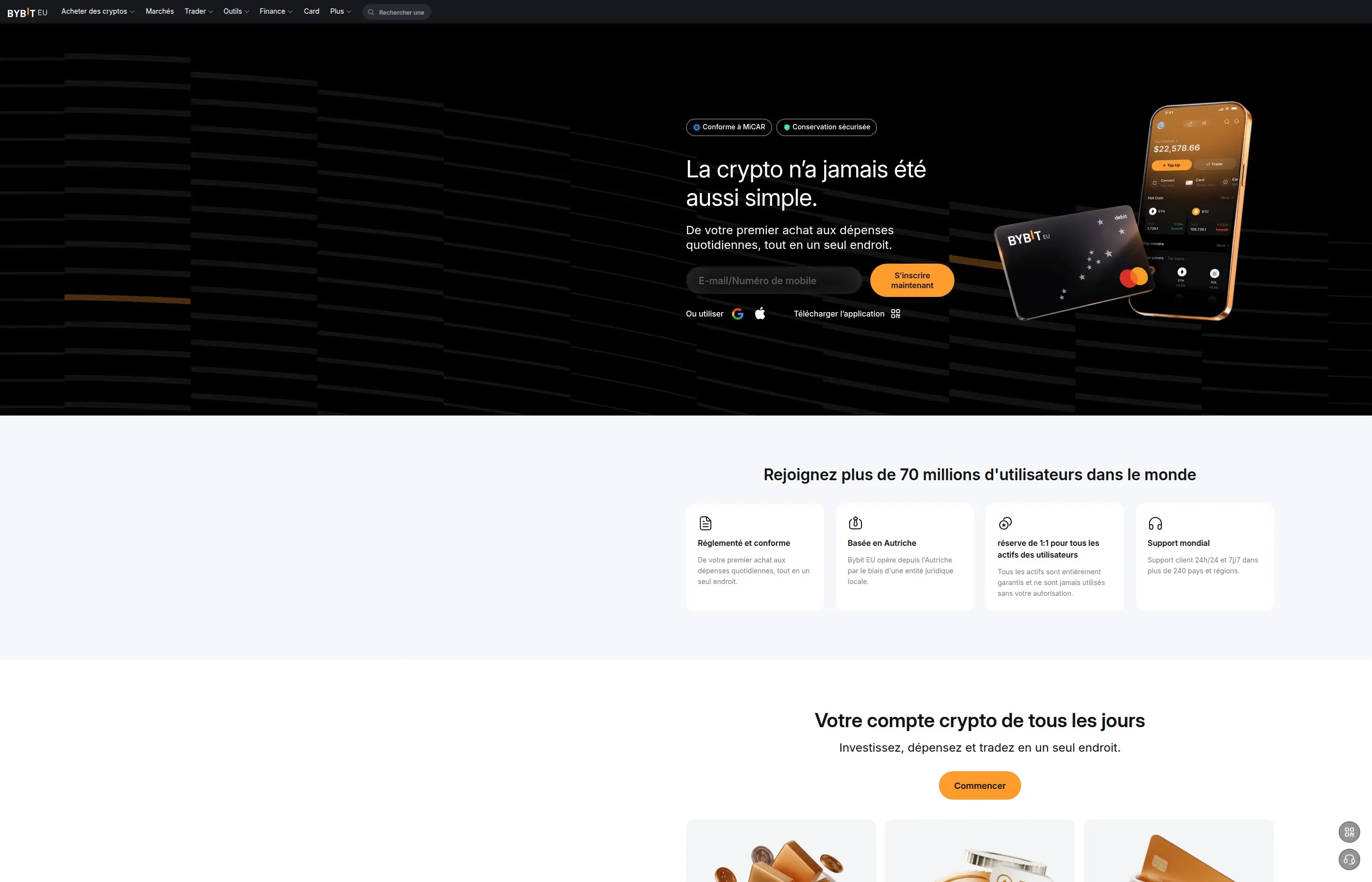
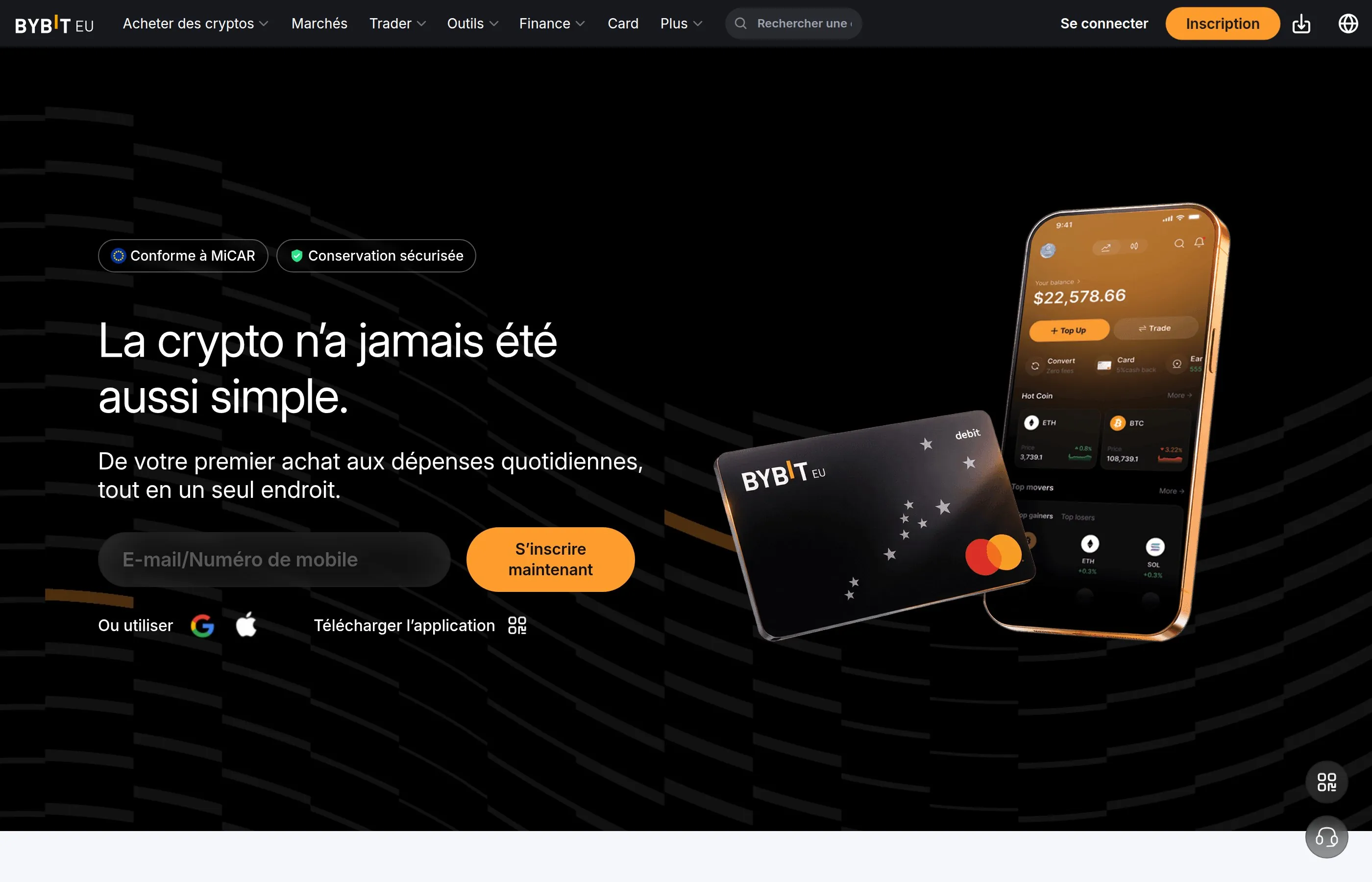
Bybit is one of the most popular platforms for crypto leverage trading in 2026. It offers up to 100x leverage on major pairs, a clean interface, and advanced order types. Bybit's liquidation engine is well-regarded, and the platform has deep liquidity on major pairs. Check out our full walkthrough on how to use Bybit exchange to get started.
Binance is the largest crypto exchange by volume and offers leverage trading up to 125x on select pairs. Binance Futures has the deepest liquidity in the market, which means tighter spreads and less slippage on entries and exits. Read our guide on how to use Binance exchange for a complete setup walkthrough.
Both platforms require KYC (Know Your Customer) verification and are regulated in various jurisdictions. They offer mobile apps, API trading, and a wide range of trading pairs.
Decentralized Exchanges (DEX)
Hyperliquid has emerged as the leading decentralized perpetual futures platform. It offers up to 50x leverage with an order book model that rivals centralized exchanges in speed and execution quality. No KYC required. Read our detailed guide on how to use Hyperliquid to learn how to trade there.
dYdX is another established decentralized platform for leverage trading, now running on its own Cosmos-based blockchain. It offers up to 20x leverage on dozens of markets with full decentralization.
For a comprehensive comparison of decentralized leverage platforms, check our top 5 perpetual DEXs guide.
CEX vs. DEX for Leverage Trading
Centralized exchanges offer higher leverage, more trading pairs, better liquidity, and lower latency. They are the better choice for active day traders and scalpers. The downsides are KYC requirements, counterparty risk (the exchange could get hacked or freeze your funds), and geographic restrictions.
Decentralized exchanges offer self-custody (your funds stay in your wallet until the moment of execution), no KYC, and censorship resistance. The trade-offs are lower liquidity on some pairs, higher gas fees (depending on the chain), and usually lower maximum leverage. DEXs are the better choice for privacy-focused traders and those in restricted jurisdictions.
Regardless of which platform you choose, make sure your funds are secured properly. Use hardware wallets for long-term storage and only keep trading capital on exchanges. Our guide on the best cold wallets covers the top options for securing your crypto.
Perpetual Contracts vs. Quarterly Futures
Most leverage trading in crypto happens through perpetual contracts (perps), but quarterly futures also exist. Understanding the difference helps you choose the right instrument.
Perpetual Contracts
Perpetual contracts have no expiration date. You can hold them indefinitely, as long as you maintain sufficient margin. The price is kept in line with the spot market through the funding rate mechanism. Perps are the most popular derivative in crypto by a massive margin.
Quarterly Futures
Quarterly futures expire on a specific date (usually the last Friday of March, June, September, or December). They do not have funding rates, which can be advantageous for longer-term directional bets. However, they tend to have lower liquidity than perpetuals and require rolling positions if you want to maintain exposure after expiration.
For beginners, perpetual contracts are the standard choice. They are simpler to understand, more liquid, and available on every major exchange.
Common Mistakes That Blow Accounts
After working with hundreds of traders, these are the recurring mistakes that consistently destroy accounts. Learn from others instead of paying for these lessons yourself.
Mistake 1: Using Maximum Leverage on Every Trade
The leverage slider is not a challenge. Beginners often crank it to 50x or 100x because the potential profits look enormous. What they do not see is that at 100x, a 1% move against you is a total liquidation. Crypto routinely moves 1% in seconds. Stick to 2x to 5x while learning.
Mistake 2: No Stop Loss
Trading without a stop loss on a leveraged position is financial self-destruction. "I will close it manually if it goes against me" does not work because emotions take over, you move the mental stop, and before you know it, the position is liquidated. Set a hard stop loss on every single trade.
Mistake 3: Revenge Trading After a Loss
You just got liquidated. You are angry. You immediately open another position with even more leverage to "make it back." This is revenge trading, and it is the fastest path to blowing your entire account. After a significant loss, step away from the screen for at least a few hours.
Mistake 4: Overtrading
More trades does not mean more profit. In leverage trading, every trade carries significant risk. Quality setups over quantity. If you are placing more than 3 to 5 leveraged trades per day as a beginner, you are overtrading.
Mistake 5: Ignoring Funding Rates
Holding a leveraged long position during a euphoric bull run might seem like free money, until you realize you have been paying 0.1% every 8 hours in funding. That adds up to 1.095% per day. On a 10x leveraged position, that is 10.95% of your margin per day. Over a week, you have paid nearly 77% of your margin in funding alone.
Mistake 6: Trading Illiquid Altcoins With Leverage
Low-cap altcoins have thin order books. When you open a large leveraged position on an illiquid pair, slippage on entry is bad, and slippage on exit (especially during liquidation) is worse. Stick to BTC, ETH, and top-20 tokens for leveraged trading.
Mistake 7: Not Understanding the Instrument
Many beginners jump straight into leverage trading without understanding basics like order types, chart patterns, support and resistance, or even how the exchange interface works. If you want to explore more advanced strategies, our guide on how to trade crypto options covers another powerful (and risky) derivative instrument.
When NOT to Use Leverage
Leverage is a tool, not a default setting. There are specific market conditions and personal situations where using leverage is a terrible idea.
During Major News Events
FOMC meetings, CPI data releases, regulatory announcements, and major protocol upgrades all cause extreme volatility. Prices can gap 5% to 10% in seconds. Even low leverage positions can get liquidated during these events. Either close your positions before major announcements or do not open new ones.
When You Are Emotional
If you just had a big win or a big loss, do not trade. Euphoria leads to overconfidence and excessive leverage. Anger leads to revenge trading. Both lead to blown accounts. Trade with a clear head or do not trade at all.
When You Cannot Monitor the Position
Leverage trading requires active management. If you are going to sleep, attending a meeting, or otherwise unable to watch your position, either close it or make absolutely sure your stop loss is set properly. "Set it and forget it" works for spot positions, not for leveraged ones.
When You Do Not Have an Edge
If you cannot articulate exactly why you are entering a trade, what your target is, and where your stop loss sits, you do not have an edge. You are gambling. Leverage amplifies everything, including the cost of random entries.
When You Are Using Money You Cannot Afford to Lose
This should go without saying, but never, under any circumstances, trade with money you need for rent, bills, food, or emergencies. Leverage trading is high risk. Only use truly disposable capital.
Pros and Cons of Leverage Trading in Crypto
Pros
Capital efficiency: You can take significant positions with a small amount of capital. A $1,000 account with 10x leverage has the buying power of $10,000.
Profit from falling markets: Short selling allows you to make money during bear markets and corrections, something spot trading cannot do.
Hedging: If you hold a large spot portfolio, you can open short leveraged positions to hedge against downside risk without selling your holdings.
Flexibility: Leverage trading offers a wide range of strategies: scalping, day trading, swing trading, hedging, and arbitrage. It is the most versatile tool in a trader's toolkit.
Higher returns: When used correctly with proper risk management, leverage can significantly amplify your returns on winning trades.
Cons
Amplified losses: The same mechanism that multiplies gains also multiplies losses. A 10% move against you at 10x leverage is a total wipeout.
Liquidation risk: Unlike spot trading where you can hold through downturns, leveraged positions can be forcibly closed, locking in permanent losses.
Funding costs: Perpetual futures charge funding rates that can significantly erode profits on longer-term positions.
Emotional pressure: The amplified gains and losses create intense emotional pressure that leads to poor decision-making. Leverage trading is psychologically brutal.
Complexity: Between margin calculations, liquidation prices, funding rates, and position sizing, leverage trading is far more complex than spot trading. The learning curve is steep and expensive.
Exchange risk: Your funds are on the exchange while trading. Exchange hacks, insolvency events, and withdrawal freezes can result in total loss of funds regardless of your trading performance.
Advanced Tips for Leverage Traders
Scale Into Positions
Instead of opening your full position at once, split it into 2 to 4 entries at different price levels. This technique, called scaling in or dollar-cost averaging into a position, gives you a better average entry price and reduces the impact of short-term volatility.
Use Take-Profit Orders
Set take-profit orders at predetermined levels to lock in gains. Do not rely on manual exits because greed will convince you to hold for "just a little more." Partial take-profits work well: close 50% at your first target, move your stop loss to break even, and let the rest ride.
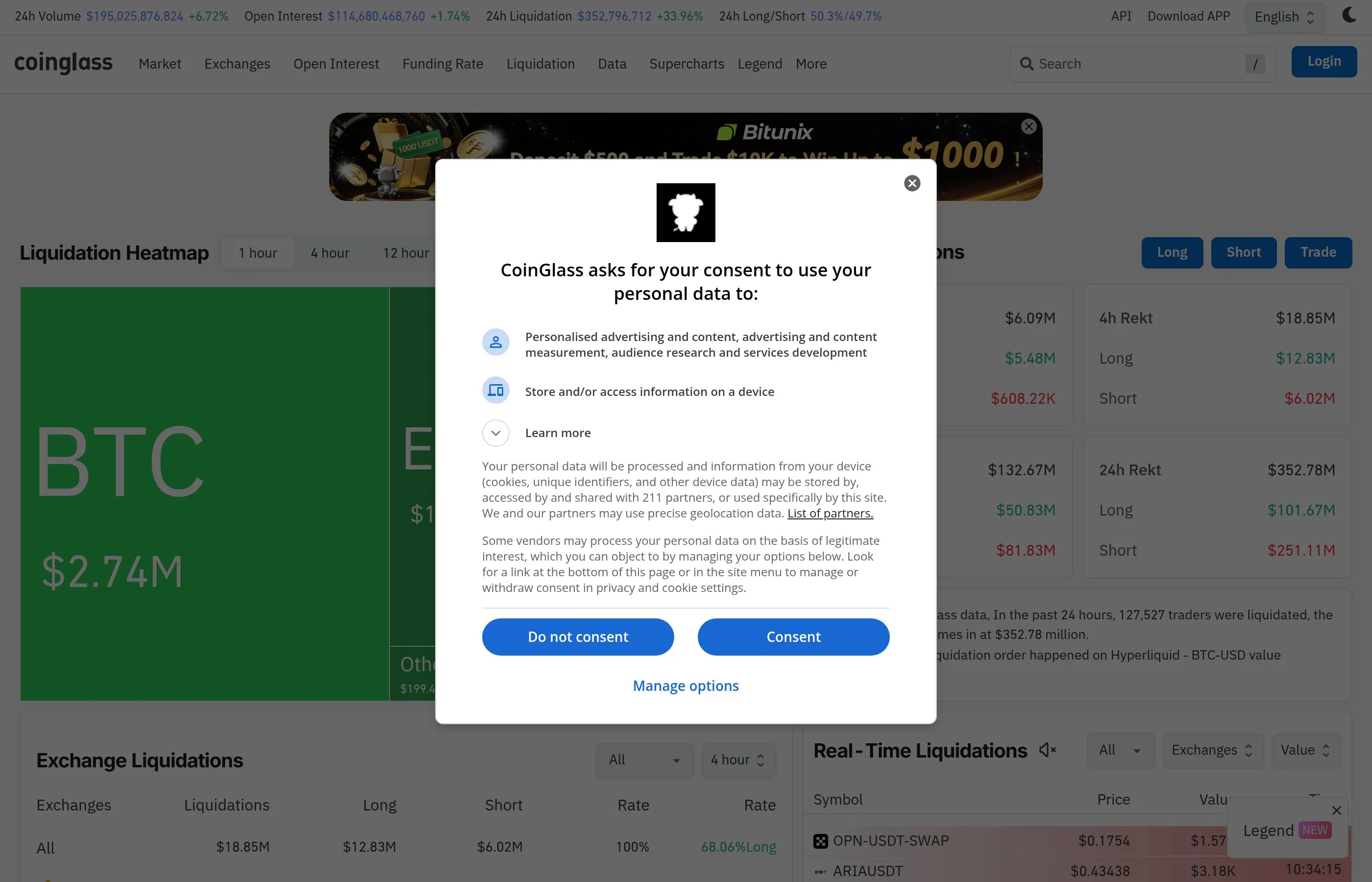
Monitor Open Interest and Liquidation Data
Open interest (the total number of outstanding derivative contracts) and liquidation data give you insight into market positioning. Large clusters of liquidation levels above or below the current price often act as magnets, as the market tends to move toward areas of high liquidation density.
Trade With the Trend
Leverage trading against the dominant trend is a recipe for losses. Use higher timeframe analysis to identify the trend direction, then take leveraged positions in that direction on pullbacks. Counter-trend trading with leverage should only be attempted by experienced traders.
Understand Correlation
If you have multiple leveraged positions open, make sure they are not all correlated. Having leveraged longs on BTC, ETH, SOL, and AVAX is not diversification. When crypto dumps, it all dumps together. You effectively have one massive leveraged long on "crypto" with 4x the risk you intended.
Video Explainer
Watch this video for a visual walkthrough of the concepts covered above.

Frequently Asked Questions
What is the minimum amount needed to start leverage trading crypto?
Most exchanges allow you to start leverage trading with as little as $10 to $50. However, starting with such a small amount limits your ability to manage risk properly. A more practical minimum is $200 to $500, which gives you enough capital to use proper position sizing with low leverage (2x to 5x).
Can you lose more than your deposit in leverage trading?
On most modern crypto exchanges, no. The liquidation mechanism closes your position before your losses exceed your margin. However, in extremely volatile conditions with rapid price gaps, there is a small possibility of a negative balance. Most major exchanges (Bybit, Binance) have negative balance protection policies that cover this scenario.
What is the best leverage level for beginners?
Start with 2x to 3x leverage. This gives you meaningful amplification while still allowing significant price movement before liquidation (33% to 50%). As you gain experience and prove consistent profitability, you can gradually increase to 5x or 10x. Never use more than 10x leverage until you have at least 6 months of profitable trading history.
Is leverage trading the same as margin trading?
They are closely related but technically different. Margin trading specifically refers to borrowing funds using your assets as collateral. Leverage trading is the broader concept of controlling a larger position than your capital allows. In crypto, the terms are used interchangeably because futures leverage trading operates on margin. The practical difference is minimal for most retail traders.
What is the difference between spot trading and leverage trading?
Spot trading involves buying and owning the actual asset. You pay the full price and receive the tokens in your wallet. Leverage trading involves trading contracts (derivatives) that track the price of the asset. You never own the underlying tokens. Spot trading has no liquidation risk. Leverage trading does.
How are profits taxed on leverage trading?
Tax treatment varies by jurisdiction, but in most countries, profits from leverage trading are taxed as capital gains or income. The key difference is that with leverage, you may realize much larger gains (and losses) relative to your capital. Keep detailed records of every trade, and consult a tax professional who understands cryptocurrency derivatives in your specific jurisdiction.
Can I use leverage on decentralized exchanges?
Yes. Platforms like Hyperliquid, dYdX, and GMX offer leverage trading without KYC through smart contracts. DEX leverage trading has grown significantly since 2024, with Hyperliquid in particular processing billions in daily volume. Read our Hyperliquid guide for a full DEX leverage trading walkthrough.
What happens to my position if the exchange goes down?
If a centralized exchange experiences downtime, you cannot manage your positions. If the price moves against you during the outage, you could be liquidated without the ability to add margin or close the position. This is a genuine risk with centralized exchanges and one of the strongest arguments for using decentralized alternatives or keeping positions small.
How do I calculate my liquidation price?
For a long position with isolated margin, the approximate formula is: Liquidation Price = Entry Price x (1 - 1/Leverage). For example, if you enter a BTC long at $65,000 with 10x leverage: $65,000 x (1 - 1/10) = $65,000 x 0.9 = $58,500. Your position would be liquidated around $58,500. The exact number varies by exchange due to maintenance margin requirements and fees.
Should I use leverage trading for long-term investing?
No. Leverage trading is designed for short-term speculation: scalping, day trading, and swing trading. For long-term investing, buy the actual asset on the spot market and store it securely. Funding costs, liquidation risk, and the psychological toll of watching leveraged positions fluctuate make it completely unsuitable for long-term holding.
What is auto-deleveraging and how does it affect me?
Auto-deleveraging (ADL) is a mechanism where exchanges forcibly reduce profitable positions to cover losses from liquidated traders when the insurance fund is insufficient. If you are a highly profitable trader at the time of a major liquidation event, part of your winning position might be automatically closed. ADL indicators on exchanges show your risk level. This is rare but important to understand.
Is leverage trading legal?
Legality depends on your jurisdiction. In the United States, crypto leverage trading is heavily regulated and not available on most platforms for retail traders. In Europe, leverage limits have been imposed on retail accounts. In Asia, availability varies by country. Always check your local regulations before trading. Using a VPN to access restricted platforms violates terms of service and can result in frozen funds.
How do I practice leverage trading without risking real money?
Most major exchanges offer testnet or paper trading modes where you can practice leverage trading with simulated funds. Bybit and Binance both have testnet environments. Use these to familiarize yourself with the interface, practice position sizing, and test strategies before committing real capital. Spend at least 2 to 4 weeks on paper trading before going live.
What are the best pairs for leverage trading?
BTC/USDT and ETH/USDT are the gold standards for leverage trading because they have the deepest liquidity, tightest spreads, and most predictable technical behavior. SOL/USDT is another strong option in 2026. Avoid trading obscure altcoin pairs with leverage because their thin order books and unpredictable price action dramatically increase your risk of slippage and sudden liquidation.
Final Thoughts
Leverage trading in crypto is one of the most powerful tools available to traders, but it demands respect. The same mechanism that can turn $1,000 into $10,000 can just as easily turn $10,000 into zero. The traders who succeed long-term are not the ones chasing 100x gains. They are the ones who manage risk religiously, use moderate leverage, and treat every trade as a calculated decision rather than a gamble.
Start with paper trading. Move to real money with low leverage (2x to 3x). Use isolated margin. Set stop losses on every trade. Never risk more than 2% of your account. Keep a journal. Study your results. Build your edge gradually.
If you follow these principles, leverage trading becomes a genuine wealth-building tool rather than a fast track to zero. And if you are still building your foundational knowledge, start with our guides on how to day trade crypto and how to use TradingView before putting any money into leveraged positions.