What Is Mog Coin (MOG)? The Internet Culture Memecoin Explained in 2026
— By Tony Rabbit in Tutorials
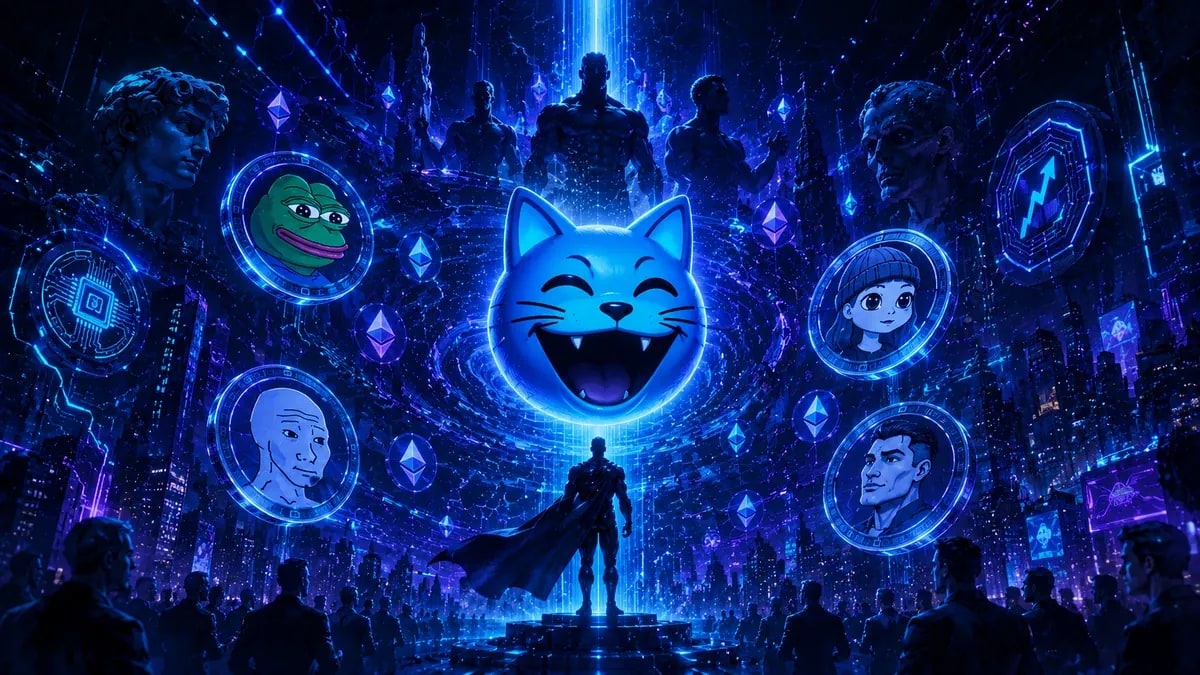
Mog Coin is the Ethereum ERC-20 memecoin that launched Summer 2023 via Uniswap V2 fair launch, branded as the internet's first culture coin around the laughing cat meme and the mogging philosophy of effortless cosmic domination. Learn the origin from 2021 fitness forums, the mog/acc PFP movement embraced by Elon Musk, fair launch tokenomics with a renounced contract, and how MOG compares to PEPE, WOJAK, and MILADY in this 2026 guide.
What Is Mog Coin (MOG)? The Internet Culture Memecoin Explained in 2026
Most memecoins die within weeks because they rely on a single joke or chart pattern that fades. Mog Coin is different. Born in Summer 2023 from a small group of friends who wanted to immortalize the cultural concept of mogging on Ethereum, MOG has built something rare: a genuine cultural movement that exists independently of its token. The coin describes itself as the internet's first culture coin, and that label is not marketing fluff. It is a statement about how value can emerge from shared identity, inside jokes, and the kind of online tribal energy that bonds anonymous accounts across imageboards, fitness forums, and crypto Twitter.
To understand why MOG matters, you have to understand the word that gives it its name. Mogging started as fitness forum slang derived from AMOG, an acronym meaning alpha male of group, which migrated from pickup artist communities in the late 2000s into bodybuilding boards by the early 2010s. By 2021, mogging had escaped its niche origins and become a general internet term for effortlessly dominating someone by simply existing in a more attractive, more confident, or more cosmically aligned state. Mog Coin took that philosophy, attached it to a laughing cat meme, and shipped it on Ethereum.
The result is a token that behaves more like a digital flag than a financial instrument. Holders display the laughing cat in their profile pictures, identify with the mog/acc accelerationist subculture that emerged in 2024, and treat their bag size as a measure of how early they recognized the cultural wave. There is no whitepaper, no roadmap, and no team holding back tokens. The contract is renounced, the supply is fixed, and the liquidity sits in a Uniswap V2 pair that was burned at launch. What you see is what you get, and what you get is pure culture monetized on a blockchain.
This guide walks through the entire MOG story in plain English: where the laughing cat came from, how the fair launch on Uniswap V2 worked mechanically, why Elon Musk and a handful of tech founders adopted the mog/acc PFP in 2024, how the tokenomics compare to other culture coins like PEPE, WOJAK, and MILADY, where to buy MOG safely on Coinbase, Binance, OKX, and Kraken, and the realistic risks of exposure to a token whose entire value proposition is sentiment. If you are new to the category, pair this with our memecoin trading fundamentals and complete Ethereum beginner guide before diving in.
Featured Snippet
Mog Coin (MOG) is an Ethereum-based ERC-20 memecoin launched in Summer 2023 via a Uniswap V2 liquidity pool fair launch, branded as the internet's first culture coin and centered on a laughing cat meme that represents the concept of mogging, internet slang for effortless cosmic domination. The token has no utility, no team allocation, a fixed supply, and a renounced contract. Its value is driven entirely by community sentiment, PFP adoption among tech influencers, and the mog/acc accelerationist subculture that emerged in 2024. MOG is listed on Coinbase, Binance, OKX, Kraken, Gate.io, and MEXC.

What Is Mog Coin in Plain English
Mog Coin lives on Ethereum and follows the ERC-20 standard, meaning it behaves like any other Ethereum token in wallet compatibility, transfer mechanics, and exchange listing requirements. If you have ever held USDC, LINK, UNI, or PEPE in a self-custody wallet, you already understand the technical container. Where MOG differs is in what that container represents. USDC represents a dollar, LINK represents access to an oracle network, and UNI represents governance rights. MOG represents nothing functional. It represents a vibe, a cultural in-group signal, and a shared belief that the laughing cat meme will continue to spread.
The official positioning is that MOG is the internet's first culture coin. Previous memecoins were either single-joke tokens like Dogecoin's Shiba Inu reference, character-based tokens like PEPE the frog or BRETT the cartoon, or art-collective tokens like MILADY tied to a specific NFT aesthetic. MOG, by contrast, is not attached to a character. It is attached to a behavior, a worldview, and a way of carrying yourself online. The laughing cat is just the visual shorthand. The actual product is the cultural identity of being someone who mogs.
This distinction changes how holders relate to the token. PEPE holders discuss frog memes and Matt Furie lore. MOG holders discuss who is mogging whom, post laughing cat reactions to perceived inferior takes, and signal alignment with the broader mog/acc worldview. The token becomes a participation badge in an ongoing conversation rather than a static collectible, and that participation loop gives MOG its resilience compared to memecoins that depend on a single viral moment.
The supply is fixed and very large by design, so each individual token costs a tiny fraction of a cent. Large supplies create the psychological experience of holding billions of tokens, fitting the playful, abundant energy of memecoin culture. If you understand how ERC-20 tokens work, you already understand the technical architecture of MOG.
The Laughing Cat Origin and Why It Stuck
The laughing cat associated with MOG is not an original creation. Like most successful memecoins, MOG borrowed an image already circulating in internet culture and gave it a new layer of meaning. The specific laughing cat appears in countless reaction image archives across imageboards, Twitter, Discord, and Reddit, where it has functioned for years as the canonical visual response to someone being mogged. When you mog someone, the appropriate response from observers is to post the laughing cat.
By choosing a reaction image rather than an original character, MOG anchored itself to vocabulary that already had cultural weight. People did not need to learn what the laughing cat meant; they already knew. The token gave that pre-existing artifact a financial dimension, creating authenticity that purpose-built mascot tokens often lack. PEPE benefited from a similar dynamic, and our PEPE coin guide traces how organic meme adoption translates into token momentum.
The laughing cat also works visually in ways that benefit spread. It is instantly recognizable, conveys emotion clearly at small PFP sizes, and pairs naturally with text overlays. A successful culture coin needs an image that compresses well, reads at a glance, and lends itself to remix. The laughing cat checks every box, which is why it spread so quickly across crypto Twitter.
The Mogging Cultural Phenomenon Explained
To value MOG as a culture coin, you have to understand mogging as a cultural concept independent of the token. The word traces back through several distinct phases of internet history, and each phase added a layer of meaning that the modern usage carries with it.
Phase 1
AMOG Origins (Late 2000s)
The acronym AMOG meant alpha male of group and circulated in pickup artist communities. To AMOG someone was to socially outrank them in a group setting, often nonverbally. The word was technical jargon for a specific social maneuver.
Phase 2
Fitness Forums (Early 2010s)
Bodybuilding and looksmaxxing forums shortened AMOG to mog and broadened it to mean any form of physical superiority. Mogging became a verb you could apply to height, jawlines, frames, or general aesthetic dominance.
Phase 3
Mainstream Internet (2021)
By 2021 mogging had escaped its niche origins and entered general internet vocabulary. It meant effortless dominance of any kind, not just physical. You could mog with intelligence, taste, timing, or sheer cosmic alignment with the moment.
The 2021 mainstreaming is the crucial development for understanding MOG. When mogging stopped being fitness jargon and became general vocabulary for effortless dominance, it became available as a cultural foundation for something larger. It became a way to describe Elon Musk buying Twitter, a reply absolutely demolishing the original tweet, any moment when one person made another look small without trying. That universality let MOG function as a culture coin rather than a niche subculture coin.
The philosophy embedded in mogging shapes how holders behave. Mogging is the opposite of grinding. Grinders try hard, post about morning routines, and treat success as accumulated effort. Moggers are presumed to win by virtue of being who they are, which culturally aligns mogging with natural talent and what the rationalist community calls slack. This anti-effort posture differentiates MOG from tokens whose communities orient around hustle culture.
MOG Timeline From Slang to Token to Movement
Mogging crosses from fitness forums and imageboards into general internet usage. The laughing cat emerges as the standard reaction image for moments of effortless dominance. The vocabulary that will later become a token finds its mainstream foothold.
Mog Coin launches as an ERC-20 token on Ethereum via a Uniswap V2 liquidity pool fair launch. A small group of friends deploys the contract, seeds the LP, burns the LP tokens, and renounces the contract. There is no presale, no team allocation, and no marketing budget. The launch is publicized through organic posting in crypto Twitter circles.
MOG gains traction as a culture coin distinct from the wider memecoin pump cycle. Holders begin treating the laughing cat as a profile picture identifier, building early in-group recognition across Ethereum-focused crypto Twitter accounts.
The mog/acc subculture emerges, combining the mogging worldview with accelerationist tech culture. Elon Musk and several prominent tech founders are spotted with mog or laughing cat themed profile pictures, signaling alignment with the meme. MOG receives major centralized exchange listings on platforms including Coinbase, Binance, OKX, Kraken, Gate.io, MEXC, and Bitget Web3.
MOG has matured into one of the longest-lived Ethereum culture coins, retaining a recognizable holder base and a steady presence on major exchanges. The token continues to trade on community sentiment with periodic surges driven by influencer adoption and broader meme cycle momentum.
Fair Launch on Uniswap V2 Explained Mechanically
The fair launch model used by Mog Coin is worth understanding because it shapes everything that came after. A fair launch in this context means the token was deployed and made available to the public simultaneously, with no presale, no whitelist, no team allocation, and no insider advantage beyond knowing the contract address slightly before it spread on social media. The deployer created the ERC-20 contract, minted the full fixed supply, paired a portion of those tokens with ether in a Uniswap V2 liquidity pool, burned the resulting LP tokens by sending them to a dead address, and then renounced the contract by transferring ownership to the zero address.
Each of those steps removes a category of risk that plagues other token launches. Burning the LP tokens means no one, including the original deployer, can withdraw the liquidity from the Uniswap pool. The ether and MOG sitting in that pool are locked there permanently and can only be drained through normal trading activity. This eliminates the most common rug pull vector, where a malicious deployer removes liquidity and leaves holders with worthless tokens. Renouncing the contract means no one can change the token parameters, mint new supply, blacklist holders, or modify tax mechanics. The token is frozen in its initial state forever.
For new buyers this combination produces a specific risk profile. The contract level risks are essentially eliminated, but all of the market level risks remain. You cannot lose your MOG because someone changed the contract, but you can absolutely lose your money because the price drops to near zero on weak sentiment. Understanding this distinction is critical, and our guide to spotting rug pulls walks through how to verify these specific properties on any token you consider buying, which is a skill that pays dividends across every memecoin you ever look at.
The Uniswap V2 choice was deliberate. Uniswap V2 pools use a simple constant product formula that produces predictable price impact and that every memecoin trader has internalized over years of experience. The pool is permissionless, the trading interface is familiar, and the burn process for LP tokens is standardized. By contrast, Uniswap V3 concentrated liquidity introduces complexity that fits poorly with the fair launch narrative because it allows the LP provider to set custom price ranges and potentially game the launch. The V2 choice signaled that the deployers wanted the simplest, most transparent, most rug-resistant possible launch structure. To go deeper on how Uniswap actually works under the hood, our Uniswap decentralized exchange guide covers the protocol mechanics in detail.

Mog/acc Accelerationism Movement Explained
The mog/acc movement that emerged in 2024 is one of the most distinctive cultural artifacts to come out of the Mog Coin ecosystem, and it explains why the token has held cultural relevance long after the initial launch buzz faded. The /acc suffix is borrowed from effective accelerationism, often shortened to e/acc, which is a tech philosophy that emerged in 2023 arguing for the maximum possible speed of technological progress, particularly in artificial intelligence and energy. The e/acc community treats technological acceleration as a moral imperative and views regulatory caution as a form of civilizational stagnation.
Mog/acc fuses this accelerationist worldview with the mogging philosophy of effortless cosmic dominance. The resulting blend says, roughly, that the future belongs to those who build, ship, and accelerate without apologizing for it, and that the appropriate posture for participants in that future is one of confident mogging rather than anxious hand-wringing. The laughing cat becomes the visual shorthand for that worldview, which is why you saw it spread through tech founder profile pictures, accelerationist Twitter accounts, and crypto-adjacent venture capital circles during 2024.
When Elon Musk and other high-profile tech figures adopted mog or laughing cat imagery in their profile pictures, it produced a cascading effect on the MOG price. Each adoption was interpreted by the market as a validation signal, suggesting that the cultural movement was crossing from niche internet vocabulary into the mainstream of tech identity. Whether or not those figures held the token was secondary. The cultural endorsement itself was the value driver, because MOG is a culture coin, and culture coins respond to cultural events the way utility tokens respond to product launches.
This dynamic is also why MOG holders pay close attention to the social graph of influential accelerationists. The token effectively trades on the question of how widely the mog/acc worldview will spread, and any sign that the worldview is gaining ground is bullish for sentiment. The reverse is also true. If the mog/acc identity ever loses fashion, MOG loses its primary narrative engine. This sentiment-driven mechanic is the central feature and the central risk of holding any culture coin, and it cannot be hedged through fundamental analysis the way utility tokens can.
MOG Tokenomics Breakdown
The tokenomics of MOG are deliberately minimal, which is itself a design choice. The token has a fixed maximum supply that was minted in full at launch, with no minting function remaining accessible after the contract was renounced. There is no inflation schedule, no token unlock cliff for insiders, no staking emissions, and no protocol-level mechanism that creates or destroys tokens beyond standard burn transactions initiated voluntarily by holders. The supply you see today is mathematically identical to the supply that existed on day one.
The fair launch distribution means there was no team allocation, no advisor allocation, no foundation treasury, and no investor allocation. Anyone who holds a meaningful percentage of MOG either bought it in the open market or accumulated it through the same Uniswap V2 pool that was available to every other participant from the first block of trading. There are large wallets in the holder distribution, but those wallets exist because someone bought aggressively, not because someone received an insider allocation. This makes the holder distribution comparatively clean for a token of this size, though concentrated holders still represent a sell pressure risk that traders should monitor.
There are no transaction taxes on MOG, which is another deliberate choice. Many memecoins implement buy and sell taxes that route a portion of every transaction to a marketing wallet, a development wallet, or an automatic liquidity provision mechanism. These taxes create ongoing income streams for the project but they also create friction for traders and constitute an attack surface if the tax destination wallet is compromised or rugged. MOG dispenses with the tax model entirely, which makes the token cheaper to trade and removes a category of insider risk.
The renounced contract means no one can add transaction taxes later, modify the supply, or pause transfers. From a security standpoint this is the strongest possible posture, but it also means there is no mechanism for the project to evolve technically. There will never be a MOG V2 with new features, never a governance proposal, never a treasury vote. The token is what it is, forever, which is exactly the point. Culture coins do not need product roadmaps because they are not products.
The Power of PFP Culture in Token Valuation
Profile picture culture is one of the most underappreciated drivers of value in the memecoin economy, and MOG is a textbook case study in how PFP adoption translates into price action. A PFP is more than a thumbnail. It is a public declaration of identity that appears next to every tweet, every reply, every quote post, and every interaction the user has on the platform. When a high-follower account changes their PFP to a laughing cat, they are broadcasting cultural alignment to their entire audience, many of whom will not yet know what the laughing cat means but will become curious enough to investigate.
This is distributed marketing that the project does not pay for. Each adopter becomes a billboard for the movement, and the more prestigious the adopter, the more curiosity their PFP generates. When prestige hits critical mass, the question shifts from why does this person have a laughing cat to why do I not. The PFP becomes a status object, and the token authenticates in-group membership. This is the same dynamic that drove NFT bull markets, applied to a fungible token.
MOG benefits from this more than most culture coins because the laughing cat requires no explanation. It reads at a glance, signals the right vibe immediately, and pairs with text replies intuitively. The PFP loop also creates a feedback mechanism: when MOG pumps, more accounts adopt the PFP; when more accounts adopt, MOG pumps again. This reflexive loop runs for weeks in bullish phases and reverses in bearish phases as accounts quietly retire the PFP. Understanding this feedback is essential to timing entries and exits.
Community-Driven Valuation Model
MOG has no cash flows, no revenue, no buybacks, and no discounted cash flow model. Every dollar of market cap is justified by community belief in the cultural durability of mogging. This is uncomfortable for traders trained on fundamentals, but it is the honest description of how the asset is valued, and pretending otherwise leads to worse decisions.
The closest analog is luxury goods or art markets, where price is determined by social consensus about what an object signals. A painting is worth what the collector class agrees, not because it performs a function. MOG works the same way, and that agreement can shift dramatically based on cultural events.
This implies specific portfolio construction. Culture coins should be sized to the position you can lose entirely, because the floor is zero in a way productive asset floors are not. Even a declining company has assets to sell; a culture coin that loses relevance has nothing. The upside, however, is unbounded, which is the asymmetric tradeoff that makes the category interesting to speculative capital.
Trading and Liquidity Across Exchanges
MOG is available on a broad set of trading venues, which is itself a marker of how the token has matured beyond its fair launch origins. On the decentralized exchange side, the original Uniswap V2 pool remains the primary on-chain liquidity source, with additional pools on Uniswap V3 and aggregator routing through DEX aggregators like 1inch and Matcha. On-chain trading remains the cheapest way to access MOG for users who already hold ether and are comfortable with self-custody, though gas costs on Ethereum mainnet make small trades disproportionately expensive.
On the centralized exchange side, MOG is listed on Coinbase, Binance, OKX, Kraken, Gate.io, MEXC, and Bitget Web3, among others. Each listing materially expands the addressable buyer base because it makes MOG accessible to users who only hold fiat and who would never bridge through self-custody to interact with a Uniswap pool. The Coinbase listing in particular was a significant cultural moment because Coinbase has stricter listing criteria than most exchanges and rarely lists pure memecoins without substantial cultural traction backing them.
When trading MOG on any venue, the standard precautions apply with extra weight. Always verify the contract address against an official source, ideally the project's site or a reputable price tracker like CoinMarketCap or CoinGecko, because impersonator tokens with similar names appear regularly. Use limit orders during volatile periods because market orders can fill at devastating prices when liquidity thins out. And never approve unlimited token spending allowances to unfamiliar contracts, because token approval scams are one of the most common ways memecoin holders lose funds even when the underlying token is legitimate. Our address poisoning scam guide covers the related vector where attackers impersonate familiar addresses in your transaction history.
For users who want to monitor MOG price action and liquidity in real time, dedicated analytics tools provide far richer data than exchange interfaces alone. Our DEXTools complete guide walks through how to track on-chain trading activity, watch for unusual wallet movements, and validate liquidity depth before entering a position, all of which are valuable habits for memecoin traders regardless of which specific token they are evaluating.

MOG vs PEPE vs WOJAK vs MILADY Culture Coins
MOG sits within a small category of Ethereum-based culture coins that share certain structural features but differ in cultural foundation. Comparing them clarifies what MOG is and is not. PEPE launched in April 2023 and represents the canonical example of a character-based memecoin, riding on years of Pepe the Frog cultural saturation that predated crypto entirely. PEPE achieved astronomical market capitalization quickly and demonstrated that pure memecoin energy could compete with utility tokens for trader attention.
WOJAK launched into the same memecoin season and represents the bald everyman character that has appeared in internet comics and reaction images for over a decade. Wojak coin tapped into the emotional vocabulary of internet culture, with the character variants like Doomer, Bloomer, and Zoomer each representing distinct emotional states that holders identify with. The token never achieved PEPE-scale dominance but built a dedicated holder base that valued the emotional honesty of the Wojak character.
MILADY emerged from an existing NFT collection and represents perhaps the most aesthetically opinionated culture coin in the category. The MILADY worldview is centered on a specific visual style, a specific online community, and a specific cultural taste profile that does not aim for mass adoption. MILADY holders treat the coin as an in-group artifact rather than a vehicle for mainstream growth, and the price reflects that narrower addressable audience.
MOG differs from all three because it is anchored to a behavior rather than a character. PEPE, WOJAK, and MILADY each have a primary visual subject that exists outside the token. MOG has the laughing cat, but the laughing cat is a reaction image rather than a protagonist. The token is about what you do when you mog someone, not about a specific character who mogs. This abstraction makes MOG more versatile as a cultural signal because it can attach to any context where mogging behavior is happening, whereas character coins are limited to contexts where the character makes sense. For a closer look at how other character-driven culture coins build their narratives, our Brett coin guide shows how the Boys cartoon character became a Base network memecoin phenomenon.
The Solana ecosystem has produced its own culture coin variants, including AI-narrative coins like Fartcoin that combine memetic energy with the artificial intelligence story arc. Our Fartcoin guide covers how the Solana culture coin scene developed in parallel with the Ethereum one, with different tokenomic norms and different community profiles. Understanding both ecosystems gives you a fuller picture of where MOG fits in the broader memecoin landscape.
Risks of Holding a Sentiment-Driven Culture Coin
The risks of holding MOG are fundamentally different from the risks of holding a utility token or a productive asset, and they deserve clear-eyed analysis rather than the dismissive framing that critics often use. The primary risk is narrative decay. MOG is worth what holders collectively believe it is worth, and that belief is sustained by an ongoing flow of cultural reinforcement. Profile pictures, references in popular tweets, mentions on podcasts, adoption by influential accounts, and broader meme cycle momentum all contribute to the reinforcement flow. If that flow weakens, the price weakens with it, and the weakening can compound rapidly because lower prices generate fewer cultural reinforcement events.
The second major risk is concentration. While MOG had a fair launch with no team allocation, individual whale wallets accumulated significant positions through open market buying, particularly during early low-liquidity periods. A single whale dumping a meaningful percentage of their bag can produce price moves that retail holders cannot absorb, and the on-chain transparency of Ethereum means everyone can watch the dumping happen in real time, which often triggers reflexive panic selling that compounds the original move.
The third risk is regulatory uncertainty. Memecoins occupy an awkward position in most regulatory frameworks because they are neither obviously securities nor obviously commodities. The position varies by jurisdiction and changes over time as regulators issue new guidance. Holders in some jurisdictions face tax complexity around culture coin holdings because the tokens are not always covered by clear precedent in tax codes. Specialized resources like Tokentax cover the tax treatment in depth for users who hold meaningful positions, and consulting a qualified tax professional is advisable for anyone whose holdings represent material capital.
The fourth risk is the broader memecoin sentiment cycle. MOG does not trade in isolation. When memecoins as a category are in favor, MOG benefits from rising tide effects regardless of the strength of its specific narrative. When memecoins as a category fall out of favor, MOG suffers from withdrawing tide effects regardless of how vibrant its specific community remains. This means even a culturally healthy MOG can underperform if the broader memecoin cycle has turned bearish, and the timing of category cycles is notoriously difficult to predict.
Pros and Cons of MOG Coin
Pros
- True fair launch with no team allocation, no presale, and no insider advantage
- Contract renounced, eliminating governance-level rug pull risk
- LP tokens burned at launch, locking liquidity permanently
- Listed on every major centralized exchange including Coinbase, Binance, OKX, and Kraken
- Genuine cultural movement with mog/acc subculture and tech founder PFP adoption
- Recognizable laughing cat image that reads instantly at any size
- Long-lived holder base that has weathered multiple market cycles since 2023
- No transaction taxes, no inflation, no surprise contract changes
Cons
- Zero utility beyond cultural identity, no cash flows or productive function
- Value depends entirely on sustained community sentiment and PFP adoption
- Whale concentration risk from large early accumulators
- Exposed to broader memecoin sentiment cycles that the project cannot influence
- Ethereum gas costs make small trades disproportionately expensive
- Regulatory and tax treatment varies significantly by jurisdiction
- No development roadmap means no future feature catalysts
- Highly volatile, with floor that is effectively zero in adverse scenarios
Best Practices for Culture Coin Investors
A handful of habits separate culture coin investors who survive cycles from those who learn expensive lessons. The first is position sizing. Culture coins should occupy a small percentage of your portfolio because the realistic downside is total loss. Two to five percent across a basket captures upside without devastating finances if the bets fail. Allocating fifty percent to a single culture coin is gambling, not investing.
The second is taking profits on the way up. Culture coins move in violent bursts followed by long consolidations, and bursts often reverse before holders realize. Setting partial profit targets at predetermined multiples removes emotion and ensures you capture upside. Holders who refuse to sell on the way up watch gains evaporate, then refuse to sell on the way down because they remember the higher price, and end up worse off than if they had never bought.
The third is watching cultural metrics rather than the chart alone. Price lags cultural shifts. By the time the chart breaks down, the cultural foundation has often weakened for weeks. Share of voice on crypto Twitter, PFP adoption among prestige accounts, and the pace of new laughing cat content all provide leading indicators no technical pattern can match.
The fourth is clean custody. Exchanges expose you to bankruptcy, hacks, and freezes. Self-custody exposes you to phishing, malware, and signing scams. Choosing deliberately reduces catastrophic loss from vectors you did not consider. Hardware wallets for long-term holdings, separate hot wallets for trading, and never reusing keys across functions all reduce attack surface meaningfully.
Frequently Asked Questions
What is Mog coin in one sentence?
Mog Coin is an Ethereum-based ERC-20 memecoin launched in Summer 2023 via a Uniswap V2 fair launch, branded as the internet's first culture coin around the laughing cat meme and the mogging philosophy of effortless cosmic domination.
Why is Mog called the internet's first culture coin?
Because it is anchored to a behavior and worldview rather than to a single character or single joke. The mogging concept already existed in internet culture before the token launched, and MOG attached financial weight to that pre-existing cultural identity rather than inventing a new mascot.
What does mogging mean?
Mogging means effortlessly dominating someone or something by virtue of who you are rather than what you do. The word originated as AMOG in pickup artist communities, migrated to fitness forums, and went mainstream around 2021 as general internet vocabulary for effortless superiority.
Who created Mog coin?
Mog Coin was launched in Summer 2023 by a small group of friends who deployed the contract, seeded the Uniswap V2 liquidity, burned the LP tokens, and renounced ownership. There is no central team holding equity or insider tokens. The project is community-driven by design.
How did Elon Musk influence Mog's price?
In 2024, Elon Musk and other prominent tech founders adopted mog or laughing cat themed profile pictures, signaling cultural alignment with the mog/acc accelerationist movement. The market treated these adoptions as validation signals, and MOG experienced sentiment-driven price rallies as the cultural movement gained mainstream tech visibility.
Is Mog a fair launch token?
Yes. MOG launched with no presale, no whitelist, no team allocation, and no insider advantage. The full supply was minted at launch, paired with ether in a Uniswap V2 pool, the LP tokens were burned, and the contract was renounced. Every holder bought through the open market.
What is mog/acc accelerationism?
Mog/acc fuses the mogging worldview of effortless dominance with effective accelerationism, the tech philosophy that argues for maximum speed of technological progress. The blend produces a confident, build-and-ship cultural posture that spread through tech founder and crypto-adjacent circles in 2024.
How is Mog different from PEPE?
PEPE is centered on a specific character, Pepe the Frog, with decades of cultural baggage attached. MOG is centered on a behavior, mogging, with a laughing cat as the reaction image. PEPE works as character iconography while MOG works as cultural shorthand for a worldview, which makes the two coins target different psychological niches.
Where can I buy Mog coin?
MOG is listed on major centralized exchanges including Coinbase, Binance, OKX, Kraken, Gate.io, MEXC, and Bitget Web3. It is also available on decentralized exchanges including Uniswap V2 and Uniswap V3 pools on Ethereum mainnet, accessible through any standard self-custody wallet.
What is the total supply of MOG?
MOG has a fixed maximum supply minted in full at launch, with no minting function remaining active after contract renunciation. The supply is intentionally large so individual tokens cost a tiny fraction of a cent, fitting the abundant memecoin aesthetic and lowering perceived entry barriers for new buyers.
What are the main risks of holding MOG?
The primary risks are narrative decay if the mogging worldview loses cultural relevance, whale concentration from large early accumulators, exposure to broader memecoin sentiment cycles, regulatory and tax uncertainty, and the absence of any utility or cash flow to provide a valuation floor in adverse scenarios.
Is Mog a good long-term investment?
MOG is a speculative cultural asset whose value depends on sustained community sentiment, not a productive asset with cash flows. It can deliver outsized returns if the mogging worldview keeps spreading and can lose most of its value if cultural relevance fades. Treat it as a sized speculative position rather than a long-term hold, and never allocate capital you cannot afford to lose entirely.
Final Thoughts on the Mog Phenomenon
Mog Coin is one of the cleanest case studies for understanding how value flows through purely cultural assets in crypto. It launched without insider advantage, lives without a roadmap, and trades on the strength of an idea rather than a product. The mogging worldview predates the token by years and will outlive any market cycle, but whether MOG continues to capture that worldview as its on-chain expression depends on community decisions no contract can mandate. The laughing cat will stay laughing whether or not the token survives, and that decoupling is the central uncertainty for any holder thinking past the next quarter.
For investors who accept the risks, MOG offers a rare combination of clean tokenomics, broad exchange access, durable cultural foundation, and credible long-term holder community. None of those features guarantee returns, but each removes a category of risk less mature culture coins still carry. If you participate, size appropriately, take profits when the market gives you the chance, watch cultural metrics alongside price, and treat the laughing cat as the speculative artifact it is rather than a productive asset.
The broader takeaway is that culture coins represent a genuinely new asset class with rules traditional finance has not mapped. The closest analogs are luxury goods, art markets, and collectible communities, all of which produce real value despite the absence of cash flows. MOG demonstrates the model works on a blockchain when the launch is clean, the cultural foundation is real, and the community has room to build identity around the asset. Whether the template generalizes to future culture coins or remains specific to MOG is one of the most interesting open questions in crypto.
Related Guides
- What Is SPX6900 (SPX)? Multichain Culture Memecoin Explained in 2026
- What Is Internet Computer (ICP)? Reverse Gas Explained
- Why AI Agents Will Make Stablecoins the Default Payment Layer of the Internet
- What Is Turbo Coin (TURBO)? AI Memecoin Created with ChatGPT in 2026
- What Is TRUMP Coin: Official Trump Memecoin Guide (2026)