What Are Real World Assets (RWA) in Crypto? Asset Types, Yield and Risks (2026)
— By Whatsertrade in Tutorials

Learn what real world assets are in crypto, which asset categories show up onchain, where yield comes from, and the main liquidity, legal, and issuer risks.
Intent check: This page owns the RWA category overview: asset types, yield sources, and risk framing. If you want the underlying process for how tokenization turns an offchain asset into an onchain claim, read What Is Tokenization?.
Real World Assets (RWAs) are one of the fastest-growing sectors in crypto, bringing trillions of dollars worth of traditional financial instruments onto the blockchain. From tokenized U.S. Treasury bills yielding 5-12% to fractional real estate and commodified gold, RWAs are bridging the gap between decentralized finance (DeFi) and the traditional financial world. In 2026, the on-chain RWA market has surpassed $15 billion in total value locked, and institutions like BlackRock and Franklin Templeton are actively participating. This complete guide covers everything you need to know about RWAs: what they are, how tokenization works, the top protocols, how to invest, the risks involved, and where this sector is headed.
Table of Contents
- What Are Real World Assets (RWAs) in Crypto?
- RWA Market Size in 2026
- Types of Real World Assets
- How Tokenization Works Technically
- Top RWA Protocols in 2026
- How to Invest in RWAs Step by Step
- RWA Yields: What to Expect
- RWA vs Traditional DeFi Yields Comparison
- Institutional Adoption: BlackRock, Franklin Templeton, and More
- Risks of Investing in RWAs
- Pros and Cons of RWAs
- Future Outlook for Real World Assets
- Frequently Asked Questions
- Related Tutorials
1. What Are Real World Assets (RWAs) in Crypto?
Real World Assets, commonly abbreviated as RWAs, refer to tangible or traditional financial assets that have been tokenized and brought onto a blockchain. In simpler terms, RWAs are digital representations of physical or off-chain assets - think government bonds, real estate properties, commodities like gold, private credit agreements, and even equities - that exist as tokens on networks like Ethereum.
The concept is straightforward: take an asset that already has value in the real world, create a digital token that represents ownership or a claim on that asset, and then allow that token to be traded, lent, or used as collateral within DeFi protocols. This process is governed by smart contracts that enforce the rules of ownership, transfer, and redemption on-chain.
Why does this matter? Traditional financial markets hold over $600 trillion in assets globally. DeFi, even at its peak, has only managed to capture a fraction of that value. RWAs serve as the connective tissue that can funnel traditional capital into blockchain-based systems, while simultaneously giving crypto-native users access to stable, yield-bearing instruments that are not purely dependent on crypto market speculation.
Before RWAs gained traction, most DeFi yields came from token emissions, lending/borrowing loops, or liquidity provision - all of which were cyclical and often unsustainable. RWAs introduced a paradigm shift by offering yields derived from real economic activity: interest on government bonds, rental income from properties, and interest payments on corporate loans.
Key Insight
RWAs are not a new token or coin to buy. They are a category of crypto assets that represent ownership of real-world value. The token itself is the wrapper; the underlying asset (a Treasury bill, a property deed, a gold bar) is what gives it value.
2. RWA Market Size in 2026
The on-chain RWA market has experienced explosive growth. As of early 2026, the total value of tokenized real-world assets on public blockchains has surpassed $15 billion, up from roughly $5 billion at the start of 2024. This figure includes tokenized treasuries, private credit, real estate, and commodities tracked across major chains.
Here is a breakdown of the market by category:
Tokenized treasuries are the dominant category, driven largely by institutional demand for on-chain access to U.S. government debt. The entry of players like BlackRock with their BUIDL fund and Franklin Templeton's on-chain money market fund brought massive credibility and capital to this segment. Private credit follows closely, with protocols like Maple Finance and Centrifuge facilitating billions in corporate and emerging-market loans.
It is worth noting that stablecoins are technically a form of RWA as well, since they are backed by real-world reserves (mostly treasuries and cash equivalents). If you include stablecoins, the total RWA footprint in crypto exceeds $150 billion. However, most industry analyses track stablecoins separately due to their distinct use case as a medium of exchange.
3. Types of Real World Assets
RWAs span a wide range of asset classes. Below is a detailed look at each major category, including the key protocols operating in each space.
3.1 Tokenized Treasury Bills and Bonds
Tokenized treasuries represent shares in funds that hold U.S. Treasury securities - bills, notes, and bonds issued by the U.S. government. These are considered among the safest assets in traditional finance, and bringing them on-chain gives DeFi users access to risk-free (or near risk-free) yields without leaving the blockchain ecosystem.
Ondo Finance is the market leader in this category with its OUSG (Ondo U.S. Government Bond) token and the newer USDY (U.S. Dollar Yield) token. OUSG provides direct exposure to short-term U.S. Treasuries and can be used as collateral within DeFi. Yields on OUSG have consistently tracked the federal funds rate, offering holders roughly 5-5.5% APY in 2026.
MakerDAO (now rebranded as Sky Protocol) was one of the earliest DeFi protocols to integrate RWAs into its balance sheet. MakerDAO allocated over $2 billion of its reserves into U.S. Treasuries and corporate bonds, generating substantial revenue for the protocol and backing its DAI stablecoin with real-world yield-bearing assets. This move fundamentally changed how DeFi protocols think about reserve management and tokenomics.
3.2 Tokenized Real Estate
Real estate tokenization allows investors to own fractional shares of properties - residential, commercial, or industrial - through blockchain tokens. Instead of needing hundreds of thousands of dollars to buy a property, you can invest as little as $50 in a tokenized property and receive proportional rental income.
RealT is a pioneer in this space, offering tokenized shares of rental properties primarily in the U.S. Each property is wrapped in a legal entity (typically an LLC), and tokens represent ownership shares in that LLC. Token holders receive weekly rent payments directly to their wallets. Properties listed on RealT typically yield between 8-12% annually from rental income alone.
Tangible takes a different approach, focusing on tokenized real estate through its TNFT (Tangible NFT) platform. Tangible also created USDR, a real estate-backed stablecoin, although it has faced challenges maintaining its peg. The protocol allows users to purchase fractional ownership of properties across multiple countries and receive rental yields on-chain.
3.3 Tokenized Commodities
Commodity tokens represent ownership of physical commodities stored in vaults or warehouses. Gold is by far the most popular tokenized commodity, though silver and other precious metals are also available.
Paxos Gold (PAXG) is the leading tokenized gold product. Each PAXG token represents one fine troy ounce of gold held in London Good Delivery vaults. PAXG is fully regulated, audited, and redeemable for physical gold. It trades on most major exchanges and can be used within DeFi for lending, borrowing, and collateral on platforms like Aave.
Tether Gold (XAUT) is another prominent gold token backed by physical gold stored in Switzerland. Both PAXG and XAUT have market capitalizations exceeding $500 million each, reflecting strong demand for on-chain gold exposure.
3.4 Private Credit
Private credit RWAs involve on-chain lending to real-world businesses. Rather than lending to crypto traders on margin, these protocols facilitate loans to companies, fintech lenders, and emerging market businesses, with loan agreements enforced through smart contracts and legal frameworks.
Maple Finance operates as an institutional capital marketplace where lenders can deploy capital into pools managed by professional credit delegates. Borrowers include crypto-native firms, fintech companies, and traditional businesses seeking capital. Pool yields range from 8-15% depending on the risk profile, and Maple has facilitated over $2 billion in cumulative loans.
Centrifuge focuses on bringing structured credit products on-chain. It allows asset originators (companies with receivables, invoices, or other credit instruments) to tokenize these assets and use them as collateral to borrow from DeFi liquidity pools. Centrifuge was one of the first protocols to integrate with MakerDAO for RWA collateral.
Goldfinch targets emerging market lending, providing crypto capital to fintech lenders in Africa, Southeast Asia, and Latin America. These loans fund real economic activity in underbanked regions and offer yields between 10-20%, though they carry higher risk due to the emerging market exposure.
3.5 Tokenized Equities
Equity tokenization represents shares of publicly traded or private companies as blockchain tokens. This is the most nascent and most heavily regulated RWA category. Some platforms offer synthetic exposure to equities through derivative structures, while others are working toward fully compliant tokenized stock offerings.
Companies like Securitize (which partnered with BlackRock for the BUIDL fund) and Backed Finance are at the forefront of this category. Tokenized equities face the most regulatory hurdles since securities laws are strict and vary by jurisdiction, but they represent an enormous potential market if regulatory clarity improves.
4. How Tokenization Works Technically
Understanding how RWA tokenization works under the hood is crucial for evaluating the legitimacy and risks of any RWA protocol. The process involves several layers of technology and legal infrastructure working together.
Step 1: Asset Selection and Legal Structuring
The process begins with identifying the real-world asset to be tokenized. This could be a portfolio of Treasury bills, a rental property, or a pool of private loans. A legal entity (typically a Special Purpose Vehicle, or SPV) is created to hold the asset. This SPV is the bridge between the off-chain legal world and the on-chain token world. The SPV owns the asset, and tokens represent shares or claims on the SPV.
Step 2: Smart Contract Deployment
A smart contract is deployed on a blockchain (usually Ethereum or a Layer 2) that defines the token's properties: total supply, transfer restrictions, yield distribution logic, and redemption mechanisms. Many RWA tokens use the ERC-20 standard with additional compliance features like whitelisting (only KYC-verified addresses can hold or transfer the token).
Step 3: Oracle Integration
Since the underlying asset exists off-chain, oracles are needed to feed real-world data to the smart contract. This includes the current value of the underlying asset (for NAV calculations), interest rate data, and attestations that the asset is properly custodied. Chainlink, API3, and custom oracle solutions are commonly used. The accuracy and reliability of these oracles is a critical trust assumption in RWA protocols.
Step 4: KYC/AML Compliance
Unlike purely on-chain DeFi tokens, most RWA tokens require Know Your Customer (KYC) and Anti-Money Laundering (AML) verification. Users must verify their identity before they can mint, purchase, or receive RWA tokens. This is enforced at the smart contract level through address whitelisting. Providers like Chainalysis, Elliptic, and on-chain identity solutions handle the compliance layer.
Step 5: Minting and Distribution
Once the legal structure is in place, the smart contract is deployed, oracles are connected, and KYC processes are established, tokens are minted. Users can typically purchase tokens by depositing stablecoins (like USDC) into the protocol. The stablecoins are used to acquire the underlying assets through the SPV, and tokens are issued to the user's wallet in return.
Step 6: Yield Distribution and Redemption
Yields generated by the underlying assets (interest from bonds, rent from properties, interest from loans) are distributed to token holders. Some protocols use rebasing mechanisms (the token balance increases automatically), while others use reward-bearing tokens (the token price appreciates). Redemption allows users to burn their tokens and receive back their principal plus accrued yield in stablecoins.
Important Technical Note
The biggest technical risk in RWA tokenization is the oracle and custody layer. If the entity managing the SPV mismanages the underlying assets, or if the oracle feeds incorrect data, the on-chain token may not accurately reflect the value or status of the off-chain asset. This is fundamentally different from purely on-chain DeFi, where everything is transparent and verifiable on the blockchain.
5. Top RWA Protocols in 2026
The RWA ecosystem has matured significantly, with several protocols establishing themselves as market leaders. Here is a detailed look at the top RWA platforms.
Ondo Finance
Ondo Finance has become the go-to protocol for tokenized U.S. government securities. Their flagship products include OUSG (Ondo Short-Term U.S. Government Bond Fund) and USDY (U.S. Dollar Yield token). OUSG provides direct exposure to short-duration treasuries and is designed for institutional and accredited investors. USDY is more accessible and can be used permissionlessly within DeFi after the initial KYC process. Ondo has partnerships with major custodians like BlackRock and Clear Street, and the ONDO governance token has become one of the top-performing RWA tokens by market cap.
MakerDAO / Sky Protocol
MakerDAO pioneered the integration of RWAs into DeFi by allocating a significant portion of its balance sheet to off-chain assets. Through partnerships with entities like Monetalis, BlockTower, and Centrifuge, Maker deployed billions into U.S. Treasuries and corporate bonds. The revenue generated from these RWA positions has become the primary income source for the protocol, far exceeding revenue from crypto collateral vaults. The Enhanced DAI Savings Rate (EDSR), which offered rates above 5%, was directly funded by RWA yields.
Centrifuge
Centrifuge provides the infrastructure for bringing structured credit on-chain. Its Tinlake platform (now integrated into the main Centrifuge app) allows asset originators to create pools of tokenized receivables, invoices, and other credit instruments. Centrifuge uses a tranche system (senior and junior tranches) to segment risk, allowing conservative investors to take the senior tranche with lower yields but higher protection, while risk-tolerant investors can take the junior tranche for higher returns.
Maple Finance
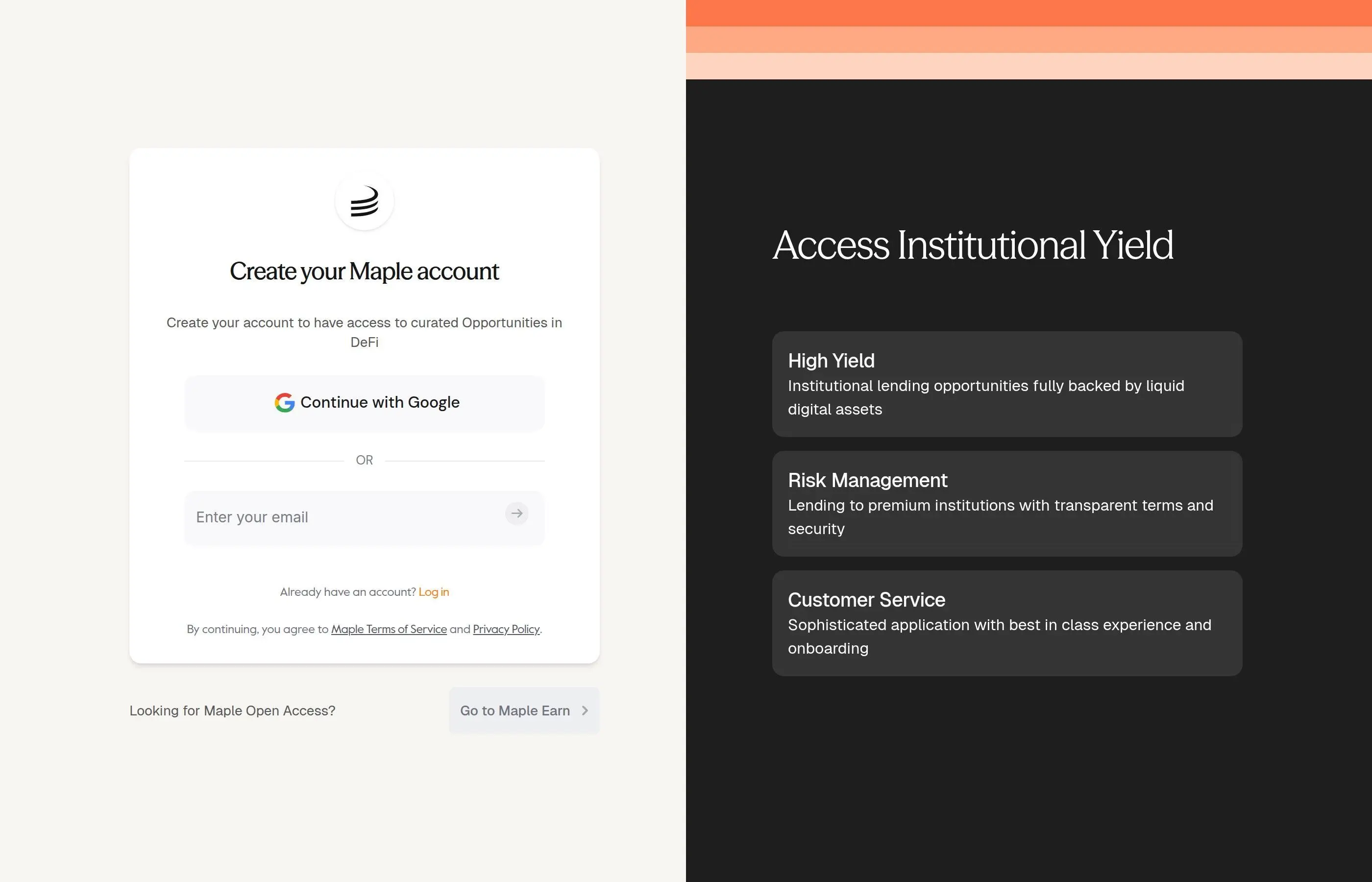
Maple Finance operates as an institutional lending marketplace. After facing challenges during the 2022 credit crisis (when several borrowers defaulted), Maple restructured its operations with stronger underwriting, mandatory over-collateralization for certain pool types, and more transparent risk disclosure. By 2026, Maple has rebuilt trust and expanded into new verticals including treasury management and cash management pools for DAOs and institutions.
RealT
RealT has tokenized hundreds of rental properties, primarily in Detroit and other U.S. cities. Their model is straightforward: each property is held in an LLC, tokens represent membership interests in the LLC, and rent is distributed weekly in USDC to token holders. Minimum investment is typically around $50 per token. RealT properties are available on the Gnosis Chain (formerly xDai) for lower gas fees, and the tokens can be used as collateral on RealT's own lending platform, RMM (RealT Money Market).
6. How to Invest in RWAs Step by Step
Getting started with RWA investments requires a few more steps than typical DeFi interactions due to compliance requirements. Here is a comprehensive step-by-step guide.
Step 1: Set Up Your Wallet
You will need a compatible crypto wallet. MetaMask is the most widely supported wallet for RWA protocols. Install MetaMask, secure your seed phrase, and ensure you have your wallet connected to the correct network (Ethereum mainnet for most RWA protocols, though some also support Polygon, Arbitrum, or Gnosis Chain).
Step 2: Acquire Stablecoins
Most RWA protocols accept stablecoins as the deposit currency, typically USDC or USDT. Purchase stablecoins on a centralized exchange and transfer them to your MetaMask wallet. Make sure to keep some ETH in your wallet for gas fees.
Step 3: Complete KYC Verification
Navigate to the RWA protocol of your choice (for example, Ondo Finance for tokenized treasuries or RealT for real estate). Create an account and complete the KYC verification process. This typically requires a government-issued ID, proof of address, and in some cases an accredited investor verification. KYC verification usually takes 1-3 business days.
Step 4: Whitelist Your Wallet Address
After KYC approval, you will need to register your wallet address with the protocol. This adds your address to the smart contract's whitelist, allowing you to receive and hold the RWA tokens. Some protocols allow multiple wallet addresses per account.
Step 5: Deposit and Mint Tokens
Connect your whitelisted wallet to the protocol's app, select the amount of stablecoins you want to invest, and confirm the transaction. The protocol will accept your stablecoins and mint the corresponding RWA tokens to your wallet. Minimum investments vary: Ondo's USDY starts at $500, while RealT properties can be purchased for as little as $50.
Step 6: Receive Yields
Once you hold RWA tokens, yields accumulate automatically. Depending on the protocol, yields may be distributed as periodic stablecoin payments (like RealT's weekly rent) or reflected in the token's increasing price (like Ondo's OUSG). You can track your positions through the protocol's dashboard or portfolio trackers.
Step 7: Use RWA Tokens in DeFi (Optional)
Many RWA tokens can be used as collateral in DeFi protocols. For example, you can supply OUSG to lending platforms like Aave or use RealT tokens as collateral on RealT's RMM. This allows you to earn the RWA yield while simultaneously borrowing against your position for additional passive income strategies.
Step 8: Redeem When Ready
When you want to exit your position, use the protocol's redemption feature to burn your RWA tokens and receive stablecoins in return. Redemption times vary: tokenized treasuries on Ondo typically process within 1-3 business days, while real estate tokens on RealT can be sold on the secondary market for near-instant liquidity.
7. RWA Yields: What to Expect
One of the primary attractions of RWAs is their ability to offer sustainable, real-world yields on-chain. Unlike DeFi yields that are often funded by token emissions (which are inherently inflationary), RWA yields come from genuine economic activity: interest on government bonds, rent from tenants, and interest on loans to businesses.
Here is a breakdown of typical yield ranges across different RWA categories in 2026:
The key takeaway is that RWA yields correlate directly with traditional financial market rates. When the Federal Reserve raises interest rates, tokenized treasury yields increase proportionally. This makes RWAs a unique asset class in crypto because they are directly influenced by macroeconomic conditions rather than solely by crypto market sentiment.
It is also important to understand that some RWA protocols offer boosted yields through token incentives on top of the base RWA yield. For example, a protocol might offer 5% from the underlying treasuries plus an additional 2-3% in their native governance token. While these boosted yields are attractive, the sustainability of the incentive portion depends on the protocol's tokenomics and emission schedule.
8. RWA vs Traditional DeFi Yields Comparison
To put RWA yields into context, let us compare them with traditional DeFi yields from lending, liquidity provision, and staking.
The fundamental trade-off is clear: RWA yields are more stable and sustainable, while traditional DeFi yields can be higher during bull markets but are far more volatile and often unsustainable. A well-balanced crypto portfolio in 2026 likely includes both RWA positions for stable, real-world-backed returns and traditional DeFi positions for higher-risk, higher-reward opportunities.
9. Institutional Adoption: BlackRock, Franklin Templeton, and More
The institutional adoption of RWAs has been one of the most significant developments in the crypto industry. Major financial institutions are no longer just talking about blockchain - they are actively deploying capital on-chain.
BlackRock BUIDL Fund
BlackRock, the world's largest asset manager with over $10 trillion in AUM, launched its BUIDL (BlackRock USD Institutional Digital Liquidity) fund on Ethereum in early 2024. BUIDL is a tokenized money market fund that invests in U.S. Treasury bills and repurchase agreements. The fund is managed by BlackRock and tokenized through a partnership with Securitize. By 2026, BUIDL has attracted over $1 billion in deposits and has become the benchmark for institutional-grade tokenized treasury products. The fund targets accredited investors with a minimum investment of $100,000.
BlackRock CEO Larry Fink has repeatedly stated that tokenization of financial assets represents the next generation of markets. The launch of BUIDL was a watershed moment that legitimized the entire RWA sector and encouraged other traditional finance players to explore tokenization.
Franklin Templeton
Franklin Templeton was actually one of the first major asset managers to tokenize a fund, launching the Franklin OnChain U.S. Government Money Fund (FOBXX) on the Stellar blockchain in 2021 and later expanding to Polygon. FOBXX uses blockchain technology for transaction processing and share ownership recording. By 2026, the fund has expanded to multiple chains and manages hundreds of millions in on-chain assets.
Other Institutional Players
Beyond BlackRock and Franklin Templeton, numerous other institutions have entered the RWA space. JPMorgan has its Onyx Digital Assets platform for tokenized collateral. HSBC has launched a tokenized gold product. Citigroup has published extensive research on tokenization, projecting the market could reach $5 trillion by 2030. Goldman Sachs has its Digital Asset Platform (GS DAP) for issuing and managing tokenized assets. Even central banks are exploring tokenization through their CBDC initiatives and Project Guardian (led by the Monetary Authority of Singapore).
This institutional wave has fundamentally changed the perception of RWAs. What started as a niche experiment by DeFi-native protocols has become a strategic priority for the world's largest financial institutions. This adoption brings capital, credibility, and regulatory clarity to the sector.
10. Risks of Investing in RWAs
While RWAs offer attractive yields and diversification benefits, they come with a unique set of risks that investors must understand. These risks differ significantly from the risks associated with traditional DeFi or pure crypto investments.
Regulatory Risk
RWAs sit at the intersection of traditional finance and crypto, making them subject to securities laws, banking regulations, and evolving crypto-specific regulations in multiple jurisdictions. A token representing a share of a treasury fund may be classified as a security, requiring registration, compliance, and potentially limiting who can purchase it. Regulatory changes could restrict access to certain RWA products, impose new compliance requirements, or even force protocols to shut down in specific jurisdictions. The regulatory landscape for tokenized securities remains fragmented globally, creating uncertainty.
Oracle Risk
Since RWA tokens represent off-chain assets, the on-chain system depends on oracles to relay accurate information about the underlying assets. If an oracle is compromised, provides stale data, or simply malfunctions, it could lead to incorrect valuations, improper liquidations, or other issues. The oracle layer is a critical trust assumption that does not exist in fully on-chain DeFi protocols. While Chainlink and other oracle networks have proven reliable, the risk is non-zero and particularly acute for less liquid or harder-to-price assets.
Counterparty Risk
In traditional DeFi, the smart contract is the counterparty - there is no entity that can decide to run off with your funds (assuming the contract is secure and non-upgradeable). RWAs introduce counterparty risk through the off-chain entities involved: the custodian holding the assets, the SPV managing the legal structure, the fund manager making investment decisions, and the servicer handling distributions. If any of these entities acts negligently or fraudulently, token holders could suffer losses. The collapse of several centralized crypto entities in 2022 demonstrated that counterparty risk is very real.
Liquidity Risk
Many RWA tokens have limited secondary market liquidity. While you can always redeem through the protocol, redemption processes can take days or even weeks, especially for less liquid underlying assets like real estate or private credit. During periods of market stress, redemption queues could build up, and you may not be able to exit your position quickly. Some RWA tokens trade on decentralized exchanges, but with thin order books, large orders could face significant slippage.
Smart Contract Risk
Like all DeFi protocols, RWA platforms rely on smart contracts that could contain bugs or vulnerabilities. However, many RWA protocols use relatively simple smart contract architectures (basic ERC-20 tokens with whitelisting) compared to complex DeFi protocols, which somewhat reduces this risk. Most reputable RWA protocols have undergone multiple audits by top security firms.
Default Risk (Private Credit)
For private credit RWAs specifically, the borrowers may default on their loans. Several DeFi credit protocols experienced significant defaults during the 2022 bear market. While underwriting practices have improved since then, the risk of borrower default remains inherent to any lending activity, whether on-chain or off-chain. Higher yields in private credit correspond directly to higher default risk.
Depeg and NAV Deviation Risk
RWA tokens are designed to track the net asset value (NAV) of their underlying assets, but market conditions can cause the token price to deviate from NAV. This is similar to how a closed-end fund in traditional finance can trade at a premium or discount to its NAV. During periods of high demand for redemptions or market panic, RWA tokens could trade below their NAV on secondary markets.
11. Pros and Cons of RWAs
Pros
- Sustainable, real-world yields not dependent on crypto market cycles
- Portfolio diversification with uncorrelated returns
- Access to previously inaccessible assets (fractional real estate, institutional bonds)
- 24/7 global accessibility through blockchain infrastructure
- Composability with DeFi (use as collateral, borrow against RWA positions)
- Transparent on-chain tracking of ownership and yield distributions
- Lower minimum investments compared to traditional equivalents
- Instant settlement and reduced intermediary costs
- Institutional backing bringing credibility and capital
- Stable yields during bear markets when DeFi yields compress
Cons
- KYC requirements reduce accessibility and privacy
- Counterparty risk from off-chain entities and custodians
- Oracle dependency for accurate off-chain data feeds
- Regulatory uncertainty across jurisdictions
- Limited secondary market liquidity for many tokens
- Redemption delays (days to weeks for some assets)
- Geographic restrictions (many products U.S.-only or exclude U.S.)
- Less transparent than fully on-chain DeFi (off-chain components)
- Default risk on private credit products
- Yields are lower than peak DeFi returns during bull markets
12. Future Outlook for Real World Assets
The trajectory for RWAs is overwhelmingly positive, driven by institutional demand, improving infrastructure, and evolving regulatory frameworks. Here are the key trends shaping the future of the RWA sector.
Regulatory Clarity Will Accelerate Growth
As governments worldwide develop clearer frameworks for tokenized securities, the barriers to entry for both issuers and investors will decrease. The EU's MiCA regulation, the SEC's evolving stance on digital securities, and Singapore's progressive regulatory sandbox have all created more defined pathways for compliant RWA issuance. This clarity will unlock a flood of new tokenized assets and attract more institutional capital.
Cross-Chain RWA Infrastructure
Currently, most RWAs are concentrated on Ethereum, but the future is multi-chain. Protocols are already deploying on Polygon, Arbitrum, Avalanche, Solana, and even newer chains like Base. Cross-chain bridges and interoperability protocols will enable RWA tokens to move seamlessly between chains, increasing liquidity and composability.
RWA-Native DeFi Primitives
We are already seeing the emergence of DeFi protocols designed specifically for RWAs. These include RWA-optimized lending markets, RWA index products, RWA-backed stablecoins, and structured products that combine multiple RWA types into a single token. As the ecosystem matures, expect more sophisticated financial products built on top of the tokenized asset layer.
Tokenization of Everything
The scope of tokenized assets will expand dramatically. Today it is treasuries, real estate, and gold. Tomorrow it could be carbon credits, intellectual property, insurance policies, private equity stakes, art, collectibles, infrastructure projects, and even cash flows from subscription businesses. The underlying technology and legal frameworks being built today will serve as the foundation for tokenizing virtually any asset class.
Market Size Projections
Industry estimates for the tokenized asset market vary widely, but the consensus is bullish. Boston Consulting Group projects the market could reach $16 trillion by 2030. Citigroup estimates $4-5 trillion. Even the most conservative estimates project hundreds of billions in tokenized assets within the next few years. Regardless of the exact figure, the direction is clear: RWAs will become a fundamental part of both the crypto ecosystem and the broader financial system.
13. Frequently Asked Questions
What exactly is a Real World Asset (RWA) in crypto?
An RWA is a digital token on a blockchain that represents ownership of or a claim on a real-world asset such as government bonds, real estate, commodities, or private loans. The token is backed by the actual off-chain asset through legal structures and custodial arrangements.
Are RWAs safe to invest in?
RWAs carry a different risk profile than traditional crypto or DeFi investments. While the underlying assets (like U.S. Treasuries) may be low risk, the tokenization layer introduces counterparty risk, oracle risk, and regulatory risk. It is essential to evaluate each protocol's legal structure, custodian, audits, and track record before investing.
Do I need to complete KYC to buy RWA tokens?
Most RWA protocols require KYC verification because the tokens represent regulated financial instruments. However, some protocols offer permissionless access through intermediary tokens or by operating in jurisdictions with lighter regulations. MakerDAO's DAI stablecoin, which is partly backed by RWAs, can be acquired without KYC.
What yields can I expect from tokenized treasuries?
Tokenized treasury yields closely track the prevailing interest rates set by the Federal Reserve. In 2026, short-term tokenized treasury products like Ondo's OUSG and USDY offer approximately 4.5-5.5% APY. These yields fluctuate as monetary policy changes.
What is the minimum investment for RWAs?
Minimums vary widely by protocol. RealT allows investments starting at around $50 per property token. Ondo's USDY has a $500 minimum. BlackRock's BUIDL fund requires a $100,000 minimum. Private credit pools on Maple or Centrifuge may require $10,000 or more.
Can I use RWA tokens as collateral in DeFi?
Yes, many RWA tokens are integrated into DeFi lending platforms. Ondo's OUSG can be used as collateral on select platforms, RealT tokens can be used on the RealT Money Market (RMM), and MakerDAO accepts various RWA tokens for DAI minting. This composability with DeFi is one of the key advantages of tokenized assets.
How is the ONDO token different from OUSG or USDY?
ONDO is the governance token for the Ondo Finance protocol - it gives holders voting rights on protocol decisions but does not directly represent treasury assets. OUSG and USDY are the actual RWA tokens backed by U.S. Treasuries. Buying ONDO is a bet on the protocol's success, while buying OUSG/USDY is an investment in the underlying treasury assets.
Are RWAs better than stablecoins for storing value?
RWAs and stablecoins serve different purposes. Stablecoins are designed for payments, trading, and as a unit of account - they do not typically generate yield (unless deposited in lending protocols). Yield-bearing RWA tokens like USDY or sDAI generate returns from the underlying assets. If you want stable value with yield, RWA tokens are generally superior to holding idle stablecoins.
What happens to RWA yields if the Fed cuts interest rates?
If the Federal Reserve cuts interest rates, tokenized treasury yields will decrease proportionally, since these yields are derived directly from government bond rates. In a low-rate environment, investors may shift toward higher-yielding RWA categories like private credit or real estate, which offer yields less directly tied to the federal funds rate.
Can I redeem RWA tokens for the physical underlying asset?
It depends on the protocol. Paxos Gold (PAXG) allows holders to redeem tokens for physical gold bars (minimum 1 bar, ~$600,000+). For tokenized treasuries like OUSG, you redeem for stablecoins rather than physical bonds. RealT tokens cannot be redeemed for a physical property but can be sold on the secondary market. Each protocol has its own redemption mechanism detailed in its documentation.
What wallet do I need for RWA tokens?
MetaMask is the most commonly supported wallet across RWA protocols. Some protocols also support WalletConnect-compatible wallets like Rainbow, Rabby, or hardware wallets like Ledger. Always check the specific protocol's documentation for supported wallets before investing.
Are there tax implications for RWA investments?
Yes, RWA yields are generally treated as taxable income in most jurisdictions, similar to interest income from a bank account or bond investment. Capital gains from selling RWA tokens at a profit may also be taxable. Tax treatment varies by jurisdiction, and the classification of tokenized assets is still evolving. Consult a tax professional familiar with both crypto and securities taxation for personalized guidance.
How do RWAs compare to staking ETH for yield?
Staking Ethereum currently offers around 3-4% APY in ETH, meaning you are exposed to ETH's price volatility. Tokenized treasuries offer 4.5-5.5% in USD terms with minimal price volatility. The key difference is currency exposure: ETH staking yield is denominated in ETH (volatile), while RWA yields are denominated in USD (stable). For risk-averse investors or those seeking stable income, RWAs are generally more suitable.
14. Related Tutorials
Frequently Asked Questions
What are Real World Assets (RWA) in crypto?
Real World Assets (RWA) in crypto are tangible and intangible assets from the traditional financial world tokenized and brought onto a blockchain.
What types of assets can be tokenized as RWAs?
A wide range of assets can be tokenized as RWAs, including real estate, commodities, art, intellectual property, and even government bonds.
What is the benefit of tokenizing RWAs?
Tokenizing RWAs can increase liquidity, enable fractional ownership, reduce transaction costs, and provide greater transparency through blockchain technology.
How do RWAs generate yield in crypto?
RWAs can generate yield in crypto through various mechanisms, such as interest payments from underlying debt, rental income from real estate, or staking rewards for certain protocols.
What are the risks associated with RWAs in crypto?
Risks include smart contract vulnerabilities, regulatory uncertainty, oracle dependence for price feeds, and the potential for illiquidity in certain tokenized assets.
Related Guides
- Top 5 Real World Asset (RWA) Tokens in 2026: Tokenized Finance Goes Mainstream
- What Is Tokenization? How Real World Assets Become Onchain Claims (2026)
- RWA Tokenization: A Beginner's Guide to Real-World Assets
- What is Centrifuge (CFG)? Real-World Assets on Chain
- Tokenized Treasuries: Complete 2026 Guide to Onchain US T-Bills
- What Is Real Yield in DeFi? Sustainable vs Emissions
- RWA vs. AI Tokens
- RWA Risks Explained