What Is a Smart Contract? Complete Beginner Guide (2026)
— By Tony Rabbit in Tutorials
Learn what smart contracts are, how they work on Ethereum and Solana, real-world use cases in DeFi, NFTs and DAOs, and how to read them on block explorers.
If you have spent any time exploring cryptocurrency or blockchain technology, you have probably encountered the term "smart contract." But what is a smart contract, exactly? And why do so many people in the crypto space consider them one of the most important innovations since the internet itself?
In this complete beginner guide, we will break down everything you need to know about smart contracts - from the basic definition to how they work under the hood, their history, real-world use cases, and how you can read them yourself on block explorers. Whether you are a curious newcomer or a DeFi enthusiast looking to deepen your understanding, this guide has you covered.
What Is a Smart Contract? A Simple Definition
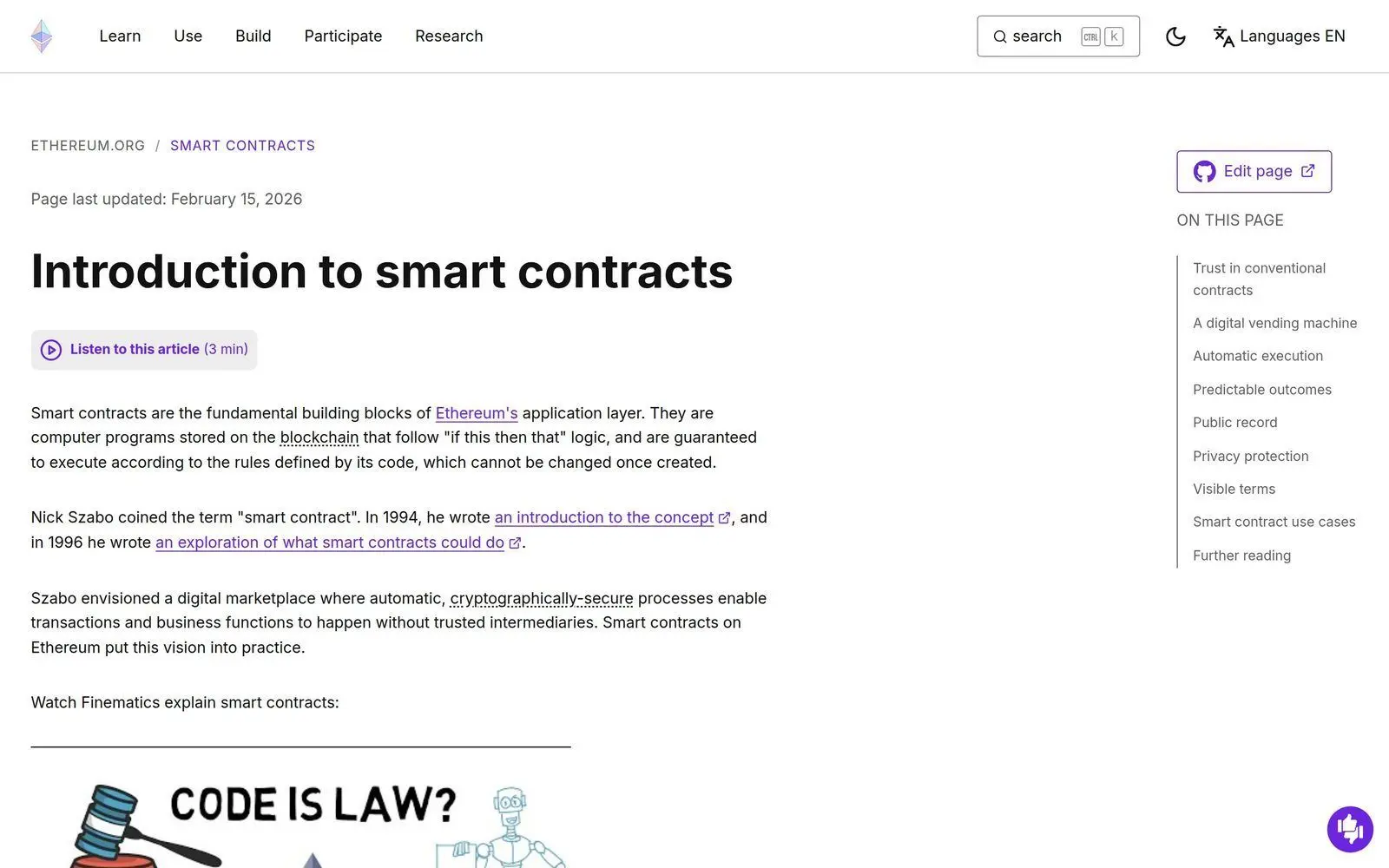
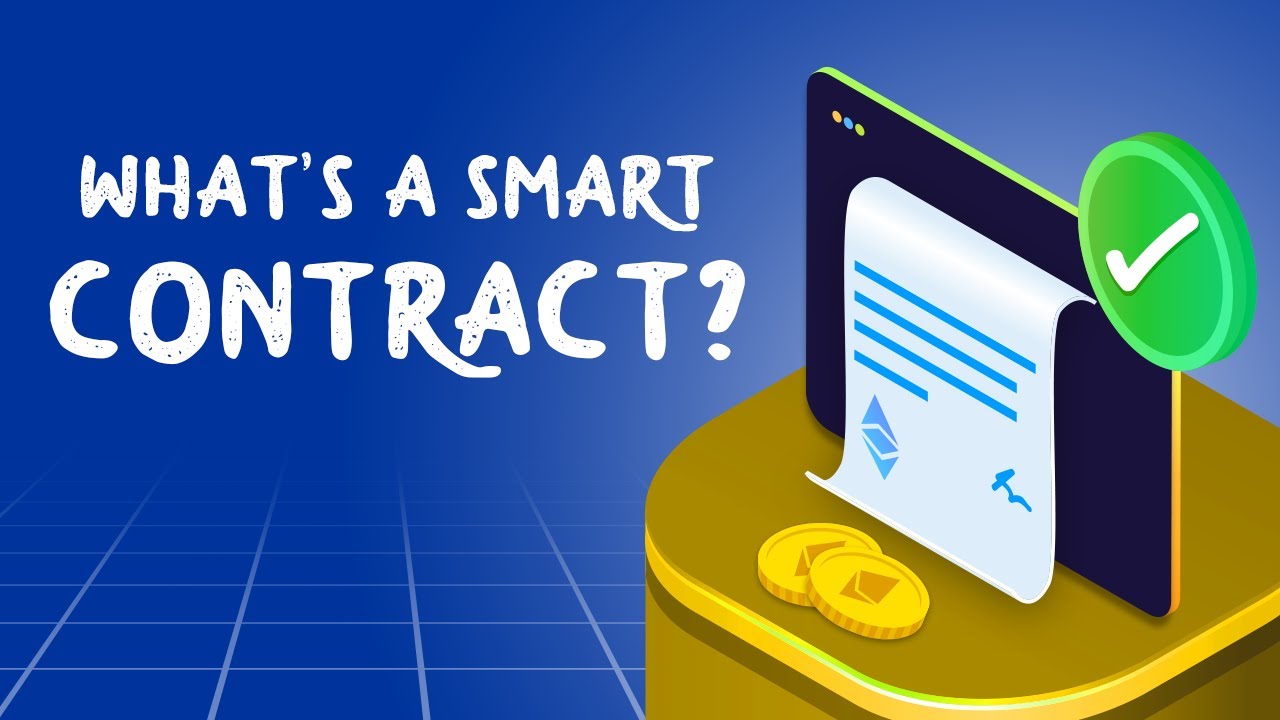
A smart contract is a self-executing program stored on a blockchain that automatically performs actions when specific, predetermined conditions are met. Think of it like a digital vending machine: you insert a coin (input), select your item (condition), and the machine delivers your snack (output) - all without needing a cashier, manager, or middleman.
In more technical terms, a smart contract is a piece of code deployed to a blockchain network. Once deployed, it lives at a specific address on the chain and can hold funds, interact with other contracts, and execute logic based on the rules written into its code. The key properties that make smart contracts powerful include:
- Self-executing: They run automatically when triggered, with no human intervention required
- Immutable: Once deployed, the code typically cannot be changed (though upgradeable patterns exist)
- Transparent: Anyone can inspect the code and verify what it does
- Trustless: Parties do not need to trust each other - they only need to trust the code
- Deterministic: Given the same inputs, they always produce the same outputs
This combination of properties is what makes smart contracts revolutionary. They remove the need for intermediaries in transactions and agreements, reducing costs, increasing speed, and eliminating single points of failure.
How Smart Contracts Work: A Step-by-Step Breakdown
Understanding how smart contracts work does not require a computer science degree. Here is a simplified step-by-step walkthrough of the entire lifecycle:
Step 1: Writing the Contract
A developer writes the smart contract code using a programming language designed for the target blockchain. On Ethereum, this is typically Solidity or Vyper. The code defines the rules, conditions, and actions the contract will execute. For example, a simple escrow contract might include rules like: "Release payment to the seller when the buyer confirms delivery."
Step 2: Compiling the Code
The human-readable source code is compiled into bytecode - a low-level format that the blockchain's virtual machine can understand and execute. On Ethereum, this virtual machine is called the EVM (Ethereum Virtual Machine). The compiler also generates an ABI (Application Binary Interface), which acts as a translator between the contract and external applications.
Step 3: Deploying to the Blockchain
The compiled bytecode is sent to the blockchain in a special deployment transaction. The deployer pays a gas fee (transaction cost) to have the contract stored permanently on the network. Once confirmed by validators, the contract receives its own unique address - similar to a bank account number - where it lives forever on the blockchain.
Step 4: Interacting with the Contract
Users and other contracts can now interact with the deployed smart contract by sending transactions to its address. Each interaction calls a specific function defined in the code. For instance, in a token swap contract, a user might call the swap() function, sending Token A and receiving Token B at the current exchange rate.
Step 5: Execution and State Changes
When a transaction reaches the contract, every validator node on the network executes the code independently. If all conditions are met, the contract performs its programmed actions - transferring tokens, updating balances, recording data, or triggering other contracts. These changes are recorded permanently on the blockchain.
Step 6: Verification and Finality
The transaction results are included in a new block, validated by the network's consensus mechanism, and added to the chain. At this point, the execution is final and irreversible. Anyone can verify the outcome by checking the blockchain.
Video: Smart Contracts Explained Simply
The History of Smart Contracts: From Nick Szabo to Ethereum
The concept of smart contracts is older than most people realize. The idea was not born with Bitcoin or Ethereum - it traces back to the mid-1990s.
1994: Nick Szabo Coins the Term
Computer scientist and legal scholar Nick Szabo first proposed the idea of smart contracts in 1994. He described them as "a set of promises, specified in digital form, including protocols within which the parties perform on these promises." Szabo drew the vending machine analogy that remains popular today - a simple machine that enforces a transaction protocol without human intervention.
Szabo recognized that digital protocols could embed contractual clauses into hardware and software, making breaches of contract expensive or even impossible for the breaker. However, the technology of the 1990s was not ready to implement his vision at scale.
2009: Bitcoin Introduces Basic Scripting
When Bitcoin launched in 2009, it included a basic scripting language that enabled simple conditional transactions - like multi-signature wallets that require multiple parties to approve a transaction. While not "smart contracts" in the modern sense, Bitcoin's scripting system proved that programmable money was possible.
2015: Ethereum Changes Everything
Vitalik Buterin, a programmer and Bitcoin Magazine co-founder, published the Ethereum whitepaper in 2013 and launched the network in July 2015. Ethereum was designed from the ground up as a "world computer" - a blockchain platform specifically built for smart contracts.
Unlike Bitcoin's limited scripting, Ethereum introduced a Turing-complete programming environment, meaning developers could write virtually any logic they could imagine. This was the breakthrough that unlocked the flood of decentralized applications (dApps) we see today - from DeFi protocols managing billions of dollars to NFT marketplaces and decentralized autonomous organizations.
2020-Present: The Multi-Chain Era
As Ethereum grew, so did demand for faster and cheaper alternatives. Networks like Solana, Avalanche, Polygon, Arbitrum, and Base emerged with their own smart contract capabilities. Today, smart contracts run on dozens of blockchains, each with different trade-offs between speed, cost, security, and decentralization.
Ethereum vs. Solana Smart Contracts: A Comparison
Ethereum and Solana are two of the most popular platforms for smart contract development, but they take fundamentally different approaches. Here is how they compare:
Programming Language
Ethereum primarily uses Solidity, a language created specifically for smart contract development. It also supports Vyper, a Python-like alternative. Solidity has the largest developer community and the most extensive tooling, libraries, and educational resources.
Solana uses Rust and C/C++ for its on-chain programs (Solana's term for smart contracts). Rust is a general-purpose systems language known for memory safety and performance. While Rust has a steeper learning curve, it gives developers low-level control and high performance. Solana also offers the Anchor framework, which simplifies Rust-based development significantly.
Execution Model
Ethereum runs contracts on the Ethereum Virtual Machine (EVM), processing transactions sequentially. This means one transaction must finish before the next begins, which limits throughput but simplifies reasoning about state.
Solana uses the Sealevel runtime, which can process multiple non-conflicting transactions in parallel. This parallel execution model is a key reason Solana achieves much higher throughput - thousands of transactions per second compared to Ethereum's base layer of roughly 15-30 TPS.
Cost and Speed
Ethereum mainnet transactions can cost anywhere from a few dollars to hundreds during congestion, with block times of about 12 seconds. Layer 2 solutions like Arbitrum and Base reduce costs to pennies and finality to seconds.
Solana offers sub-second finality and transaction fees typically under $0.01. This makes it ideal for high-frequency applications like trading, gaming, and micropayments.
Ecosystem and Adoption
Ethereum has the largest DeFi ecosystem by total value locked (TVL), the most mature tooling, and the strongest network effects. Most major DeFi protocols launched on Ethereum first.
Solana has a rapidly growing ecosystem, particularly strong in consumer applications, NFTs, and high-frequency trading. Its speed and low costs attract projects that need fast, cheap transactions.
Both platforms have their strengths, and many serious developers build on both. Tools like DEXTools support tokens and pairs across Ethereum, Solana, and dozens of other chains, making it easy to track activity regardless of which blockchain a contract is deployed on.
Real-World Use Cases for Smart Contracts
Smart contracts are not just theoretical - they power a massive and growing ecosystem of real applications. Here are the most impactful use cases in 2026:
DeFi: Lending, Borrowing, and Decentralized Exchanges
Decentralized Finance (DeFi) is the largest use case for smart contracts by far. Protocols like Aave and Compound use smart contracts to create lending markets where users can deposit crypto to earn interest or borrow against their holdings - all without banks or credit checks. The contracts automatically manage collateral ratios, interest rates, and liquidations.
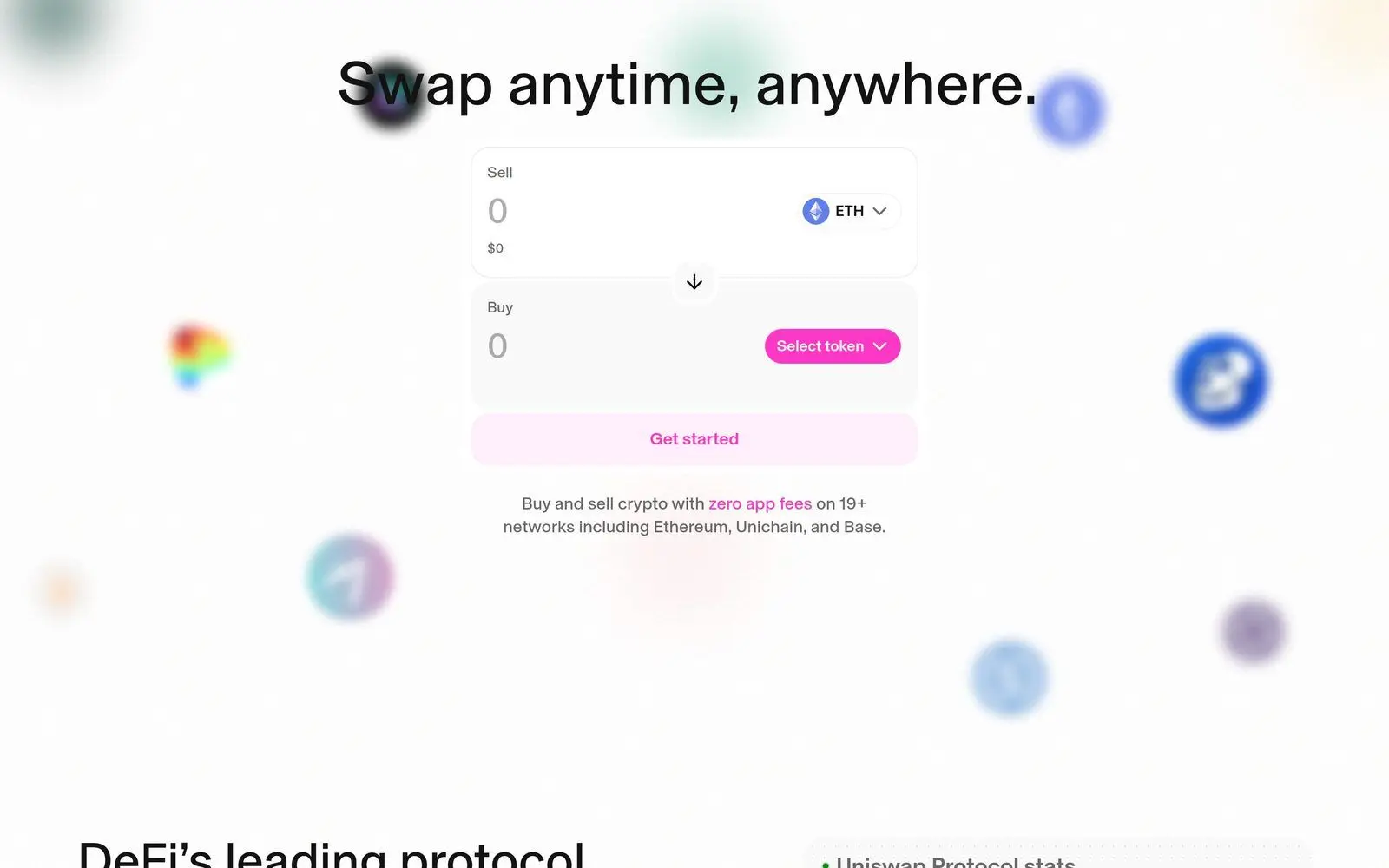
Decentralized exchanges (DEXs) like Uniswap, Raydium, and Jupiter use smart contracts to enable token trading directly from user wallets. Automated Market Maker (AMM) contracts hold pools of tokens and use mathematical formulas to determine prices. When you check a token pair on DEXTools, you are looking at data flowing from these smart contracts in real time.
NFTs and Digital Ownership
Non-fungible tokens (NFTs) are smart contracts that represent unique digital assets - art, music, virtual land, game items, or even real-world property deeds. Standards like ERC-721 and ERC-1155 on Ethereum define how NFTs are created, transferred, and managed. Smart contracts can also enforce royalties, automatically sending a percentage of each resale back to the original creator.
DAOs: Decentralized Governance
Decentralized Autonomous Organizations (DAOs) use smart contracts to coordinate decision-making among thousands of members without a central authority. Token holders vote on proposals, and the smart contract automatically executes the winning outcome - whether that is allocating funds, changing protocol parameters, or hiring contributors.
Insurance
Parametric insurance contracts pay out automatically based on verifiable data rather than claims adjusters. For example, a crop insurance smart contract might use weather data from an oracle to automatically compensate farmers when rainfall drops below a certain threshold - no paperwork, no claims process, no delays.
Supply Chain Management
Companies use smart contracts to track goods from manufacturer to consumer. Each handoff in the supply chain triggers a contract update, creating an immutable record of provenance. This is particularly valuable in industries like pharmaceuticals, luxury goods, and food safety where authenticity and traceability matter.
Gaming and Virtual Worlds
Blockchain games use smart contracts to give players true ownership of in-game assets. Items, characters, and currencies exist as tokens on the blockchain, meaning players can trade, sell, or transfer them freely outside the game. This model has grown significantly, with play-to-earn and GameFi ecosystems attracting millions of users.
How to Read a Smart Contract on Block Explorers
One of the most empowering skills in crypto is learning to read smart contracts yourself. You do not need to be a programmer - even basic familiarity helps you verify what a contract does before you interact with it. Here is how to get started:
Using Etherscan (Ethereum)
- Find the contract address: Every token and protocol has a contract address. You can find it on DEXTools by clicking on a token pair and checking the contract details, or by searching on Etherscan directly.
- Navigate to the Contract tab: On Etherscan, go to the contract's address page and click the "Contract" tab. If the contract is verified, you will see the full source code.
- Check verification status: A green checkmark means the source code has been verified - it matches the deployed bytecode. Unverified contracts are a red flag, as you cannot confirm what the code does.
- Read the code: Look for key functions like
transfer(),approve(),mint(), andburn(). Check if there are owner-only functions that could be used to pause trading, change taxes, or drain liquidity. - Use the Read/Write tabs: Etherscan's "Read Contract" tab lets you query contract data (like total supply or owner address) without paying gas. The "Write Contract" tab lets you interact with functions directly.
Using Solscan (Solana)
For Solana-based contracts, Solscan and Solana Explorer provide similar functionality. You can view program accounts, transaction history, and - if the program is verified - the source code. Solana programs work differently from Ethereum contracts, but the principle is the same: verify before you interact.
What to Look For
When reviewing a smart contract, pay attention to these critical elements:
- Owner privileges: Can the owner mint unlimited tokens, pause transfers, or change fees?
- Renounced ownership: Has the deployer given up admin control? This is generally positive for trust.
- Hidden functions: Watch for functions with misleading names or obfuscated logic.
- Liquidity lock: Is the trading pair's liquidity locked in a timelock contract?
- Tax/fee mechanisms: Does the contract take a percentage on buys or sells? Are they reasonable?
DEXTools provides automated security audits and token scores that flag many of these issues automatically, making it easier for beginners to assess risk without reading raw code. The platform's pair explorer shows real-time data pulled directly from on-chain smart contracts.
Smart Contract Risks and the Importance of Audits
Smart contracts are powerful, but they are not without risks. Understanding these risks is essential for anyone participating in DeFi or interacting with on-chain protocols.
Common Risks
- Code bugs: Smart contracts are written by humans, and humans make mistakes. A single bug can lead to catastrophic losses. The 2016 DAO hack exploited a reentrancy vulnerability and drained 3.6 million ETH - leading to the controversial Ethereum/Ethereum Classic hard fork.
- Rug pulls: Malicious developers deploy contracts with hidden backdoors - functions that allow them to drain all funds or disable selling. This is particularly common with new, unaudited tokens.
- Oracle manipulation: Smart contracts that rely on external data feeds (oracles) can be exploited if an attacker manipulates the price data. Flash loan attacks often exploit this vector.
- Upgrade risks: Upgradeable contracts can be a double-edged sword. While they allow bugs to be fixed, they also mean the admin can change the contract's behavior at any time.
- Economic exploits: Even bug-free contracts can be exploited through unexpected interactions with other contracts or creative use of flash loans and MEV (Maximal Extractable Value).
The Role of Smart Contract Audits
A smart contract audit is a professional review of the code by security experts. Reputable audit firms like Certik, Trail of Bits, OpenZeppelin, and Halborn examine the code for vulnerabilities, logic errors, and potential attack vectors. Key aspects of an audit include:
- Static analysis: Automated tools scan the code for known vulnerability patterns
- Manual review: Expert auditors read through the code line by line
- Economic modeling: Reviewers consider how the contract might be exploited through economic incentives
- Testing: Auditors write and run tests to verify the contract behaves as expected in edge cases
However, an audit is not a guarantee of safety. Audits catch many issues, but they are a snapshot in time - they cannot account for every possible future interaction or market condition. Always consider audits as one factor among many when evaluating a protocol's security.
Protecting Yourself
As a user, here are practical steps to minimize your smart contract risk:
- Use tools like DEXTools to check token security scores before investing
- Verify that contracts are audited and check the audit reports
- Start with small amounts when interacting with new protocols
- Revoke unnecessary token approvals regularly using tools like Revoke.cash
- Stick to well-established protocols with proven track records
- Never rush into transactions based on hype or FOMO
How Smart Contracts Are Changing Finance in 2026
The year 2026 marks a significant maturation point for smart contract technology. Several trends are reshaping the landscape:
Institutional Adoption
Major financial institutions are no longer just experimenting - they are actively deploying smart contracts for real operations. Tokenized treasuries, on-chain settlement systems, and programmable compliance are becoming mainstream. BlackRock's BUIDL fund and Franklin Templeton's on-chain money market fund are just the beginning of a massive wave of institutional capital flowing through smart contracts.
Real-World Asset (RWA) Tokenization
Smart contracts are bridging the gap between traditional finance and DeFi through the tokenization of real-world assets. Government bonds, real estate, commodities, and private credit are being represented as on-chain tokens governed by smart contracts. This unlocks 24/7 trading, fractional ownership, and instant settlement for assets that traditionally took days to transfer.
Layer 2 Scaling and Account Abstraction
Layer 2 networks like Arbitrum, Optimism, Base, and zkSync have made smart contract interactions dramatically cheaper and faster. Combined with account abstraction (ERC-4337), which allows smart contract wallets with features like social recovery, gasless transactions, and session keys, the user experience is approaching the simplicity of traditional apps.
Cross-Chain Interoperability
Smart contracts on different blockchains are becoming increasingly interconnected through bridges, messaging protocols, and chain abstraction layers. Protocols like LayerZero, Wormhole, and Chainlink CCIP enable contracts on Ethereum to communicate with contracts on Solana, Base, or any other supported chain - creating a unified ecosystem from what was previously a fragmented landscape.
AI and Smart Contracts
Artificial intelligence is beginning to interact with smart contracts in meaningful ways. AI agents can now execute on-chain transactions, manage portfolios, and even participate in governance. The convergence of AI and smart contracts is opening up entirely new categories of autonomous applications.
For traders and investors, understanding what is a smart contract is no longer optional - it is a fundamental skill for navigating modern finance. Whether you are swapping tokens on a DEX, providing liquidity, or evaluating a new protocol, smart contracts are at the center of everything.
Video: What Is a Smart Contract?
Frequently Asked Questions
What is a smart contract in simple terms?
A smart contract is a self-executing program stored on a blockchain that automatically carries out actions when predetermined conditions are met - like a digital vending machine that runs without any middleman. You set the rules in code, deploy it to the blockchain, and it runs exactly as programmed without needing anyone to oversee it.
Are smart contracts legally binding?
Smart contracts are not inherently legally binding in most jurisdictions. However, they can be designed to complement traditional legal agreements, and some jurisdictions like Arizona and Tennessee have passed laws recognizing their legal validity. The legal landscape is evolving, and more countries are developing frameworks for recognizing code-based agreements.
Can smart contracts be changed after deployment?
Standard smart contracts are immutable once deployed to the blockchain. However, developers can use upgradeable proxy patterns that allow the underlying logic to be updated while keeping the same contract address. This is common in major DeFi protocols that need the ability to fix bugs or add features, though it does introduce trust assumptions around who controls the upgrade process.
What programming languages are used for smart contracts?
Ethereum smart contracts are primarily written in Solidity or Vyper. Solana uses Rust and C/C++. Other chains use languages like Move (Aptos/Sui), Cairo (Starknet), and Michelson (Tezos). Solidity remains the most widely used language due to Ethereum's dominance and the many EVM-compatible chains that also support it, including Arbitrum, Base, and BNB Chain.
How much does it cost to deploy a smart contract?
Deployment costs vary by blockchain. On Ethereum mainnet, deploying a simple contract can cost $50-500+ depending on gas prices. On Solana, deployment costs are typically under $5. Layer 2 networks like Arbitrum and Base offer even cheaper deployment, often under $1. Testnets allow free deployment for development and testing before going live on mainnet.
Helpful next reads on DEXTools
Start Exploring Smart Contracts with DEXTools
Now that you understand what is a smart contract and how they power the decentralized ecosystem, the best way to deepen your knowledge is through hands-on exploration. DEXTools gives you the tools to do exactly that.
With DEXTools, you can explore real-time data from smart contracts across Ethereum, Solana, BNB Chain, Base, Arbitrum, and 80+ other networks. Check token security scores, view pair analytics pulled directly from on-chain AMM contracts, track wallet activity, and make more informed trading decisions - all in one platform.
Whether you are researching a new token, monitoring liquidity pools, or verifying a contract's safety before investing, DEXTools transforms raw blockchain data into actionable insights.
Ready to put your smart contract knowledge to work? Head over to DEXTools.io and start exploring the on-chain world like a pro.
Related Guides
- What Is Tenderly: Smart Contract Simulation, Debugging and Web3 Monitoring (2026)
- What Is Tenderly: Smart Contract Monitoring, Simulation and Debugging (2026)
- What Is OpenZeppelin: Smart Contract Libraries, Security and Access Control (2026)
- What Is Foundry: Smart Contract Testing, Fuzzing and Solidity Tooling (2026)
- What Is Argent Wallet? Smart Contract Wallet with Social Recovery (2026 Guide)
- What Is a Reentrancy Attack? Smart Contract Risk (2026)
- What is a Smart Contract? Beginner Guide & Examples