What Is Tokenization? How Real World Assets Become Onchain Claims (2026)
— By Tony Rabbit in Tutorials
Learn what tokenization means in crypto, how offchain assets become onchain claims, and why legal structure, custody, and redemption design matter.
Intent check: This page owns the tokenization process itself: turning an offchain asset into an onchain claim with custody, legal, and redemption structure. If you want the broader RWA category overview, use cases, and risks, read What Are Real World Assets (RWA) in Crypto?.
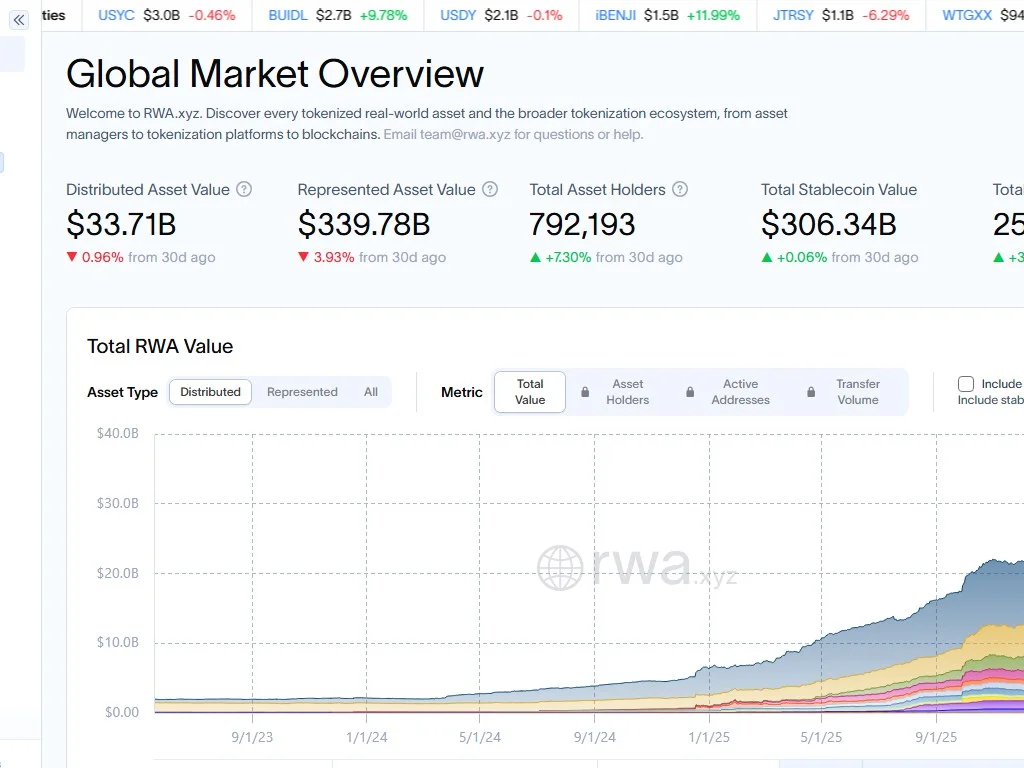
If you have ever wondered how a US Treasury bill, a Manhattan apartment, or a bar of gold could trade onchain like an ERC-20 token, you are asking about tokenization. By May 2026, more than $25 billion in real world assets sit on public blockchains, the fastest growing category in all of crypto and the bridge institutional finance has been waiting for. Tokenization is the process of converting ownership of a physical or off-chain financial asset into a digital token that lives on a blockchain, with that token serving as a legally enforceable claim on the underlying asset.
This is not theoretical. BlackRock, Franklin Templeton, KKR, Apollo, JPMorgan, and Goldman Sachs all run live tokenization products today. Retail platforms let you buy fractional shares of US homes for $50, hold tokenized Tesla stock from anywhere in the world, or earn 4.8% on tokenized Treasury bills inside DeFi as collateral. The same composability that made stablecoins eat global remittances is now hitting bonds, real estate, private credit, equities, and commodities at once.
In this guide we map the entire 2026 RWA landscape, category by category. You will learn how tokenization actually works under the hood, which issuers dominate each vertical, the regulatory paths used to bring assets onchain legally (Reg D, Reg S, MiCA), how to actually buy RWA tokens step by step, and why the merger of DeFi with traditional assets is the most important narrative of this cycle.
What Is Tokenization?
Tokenization is the process of representing the ownership rights of an asset as a digital token on a blockchain. The asset can be anything with verifiable economic value: a government bond, a fraction of a building, a barrel of oil, a corporate loan, a share of Apple, a painting, even carbon credits or invoices. Once tokenized, that asset becomes programmable. It can move 24/7, settle in seconds, split into tiny fractions, be used as collateral in DeFi, and be held in any self-custody wallet on Ethereum, Solana, Polygon, Avalanche, or Base.
The token itself is not magic. What gives it value is the legal wrapper. Behind every legitimate tokenized asset sits a special purpose vehicle (SPV), a trust, or a regulated issuer that holds the underlying asset and is contractually obligated to redeem the token for the asset (or its cash equivalent) on demand. Without that legal scaffolding, the token is just a database entry. With it, the token becomes a transferable claim enforceable in court, with the speed and composability of crypto.
The simplest analogy is a coat check ticket. The ticket is not the coat, but it represents the right to receive the coat. Tokenization gives you a coat check ticket that can be split into a thousand pieces, sent to anyone in the world in 12 seconds, and used as collateral while the coat sits in storage. That programmability is what changes everything.
How Tokenization Works Step by Step
Every tokenization workflow follows the same five-stage pipeline, regardless of whether the underlying asset is a T-bill, an apartment, or a barrel of oil.
In stage one, an issuer sources the underlying asset. BlackRock buys actual US Treasury bills. RealT purchases a Detroit duplex. PAX Trust buys physical gold and stores it in Brink's vaults in London. The underlying is real, audited, and held in regulated custody.
Stage two creates the legal wrapper. The issuer forms an SPV in a friendly jurisdiction (Delaware, Cayman, British Virgin Islands, Luxembourg) and contributes the asset. The SPV issues a security or fund interest. Holders of tokens are holders of those interests under the SPV's governing documents.
Stage three deploys the smart contract. Most RWAs use either standard ERC-20 with a transfer restriction layer, or ERC-3643 (the dedicated permissioned token standard for security tokens). The contract is the canonical record of who owns how much. Stage four is KYC and distribution: investors prove their identity, often their accredited investor status, get added to an allowlist, and receive tokens against fiat or stablecoin payment. Stage five is the magic stage: once distributed, those tokens trade peer to peer on DEXs, plug into Aave or Morpho as collateral, settle in 12 seconds, and clear continuously rather than T+2.
The 2026 RWA Market Map: Six Categories, $25 Billion
By May 2026, total value locked in tokenized real world assets exceeds $25 billion on public chains, not counting tokenized stablecoins themselves (which arguably are the largest RWA category at $230B+). The market splits cleanly into six categories. Each has different mechanics, different leading issuers, and different regulatory paths.
Onchain US T-bills and money market funds. The flagship RWA category.
Onchain corporate loans, SME finance, trade finance, receivables.
Fractional homes, commercial property, rental yield, REITs onchain.
24/7 onchain equities. AAPL, TSLA, NVDA, SPY tradable as tokens.
Tokenized gold, silver, oil, agricultural products, carbon credits.
Fractional Picassos, wine, watches, royalty streams, music rights.
Tokenized Treasuries dominate the chart at roughly 47% of total RWA TVL. This makes sense: T-bills are the most liquid, most boring, most regulated asset class on earth, and they happen to yield 4-5% in dollars right now. Wrapping them onchain solves an enormous pain point for DeFi protocols holding stablecoin treasuries that otherwise earn nothing.
Private credit is the dark horse at $8.4B and growing fast. It feeds DeFi protocols like Maple, Centrifuge, and Goldfinch with yield-bearing loans to fintechs, emerging market businesses, and trade finance operations. Real estate and tokenized stocks are smaller in TVL but explosive in user count, especially in emerging markets where access to US equities or rental property was historically blocked by geography or capital controls.
Tokenized Treasuries: BUIDL, OUSG, USDM and the Money Market Onchain
The story of tokenized treasuries is the story of how Wall Street finally took crypto seriously. BlackRock launched the BlackRock USD Institutional Digital Liquidity Fund (ticker BUIDL) in March 2024 on Ethereum. It crossed $1B in TVL within four months and is the single largest tokenized fund on any public blockchain in 2026, sitting at roughly $2.9B. Each BUIDL token represents one dollar, backed entirely by cash, US Treasury bills, and overnight repo agreements. Holders receive daily yield distributions through native rebasing.
BUIDL is not for retail. It uses Reg D 506(c) under US securities law, restricting it to qualified institutional buyers with a $5 million minimum. The investor experience runs through Securitize, BlackRock's tokenization partner, which handles KYC, allowlisting, and the transfer agent role. Tokens can only move between allowlisted addresses, enforced at the smart contract level. Despite the restriction, BUIDL has become an enormous primitive: Ondo Finance built USDY and OUSG with significant BUIDL backing, MakerDAO holds BUIDL in its RWA collateral basket, and dozens of protocols accept it for institutional treasury management.
Ondo Finance OUSG is the second giant of the category. OUSG (Ondo Short-Term US Government Bond Fund) wraps shares of the BlackRock iShares Short Treasury Bond ETF (SHV) plus BUIDL itself, distributing roughly 4.8% APY in 2026. Ondo uses Reg D for the US market with a $100,000 minimum for accredited investors. Its sister token USDY (Ondo US Dollar Yield) uses Reg S for non-US persons, opening the product to retail outside the United States. USDY has spread to Solana, Sui, Aptos, Mantle, Cosmos, and a dozen other chains, becoming the most chain-distributed Treasury token in existence. Learn more in our deep dive on Ondo Finance.
Mountain Protocol USDM took the most aggressive retail-friendly path. USDM is a rebasing yield-bearing dollar issued by a Bermuda-regulated entity. It distributes Treasury yield to all holders via daily rebases (like stETH does for ETH), requires no minimum, and is openly available across Ethereum, Arbitrum, Optimism, Polygon, and Base. Total supply hit $580M in early 2026.
Hashnote USYC is the institutional darling for DeFi protocols specifically. USYC tokenizes the Hashnote International Short Duration Yield Fund and is the primary backing for Circle's USDC reserve management innovations in 2026. Securitized RWA brings Franklin Templeton BENJI, the FOBXX fund, available on Stellar, Polygon, Solana, Arbitrum, Avalanche, and Base with a $20 minimum, making it the most accessible institutional tokenized money market fund.
Private Credit Onchain: Maple, Centrifuge, Goldfinch
Private credit is the second pillar of RWA at $8.4B and the most "DeFi native" of the categories. Unlike tokenized Treasuries which mirror existing TradFi instruments, onchain private credit creates new origination channels that often did not exist offline. The yields are higher (8-15%), the risk is higher, and the protocols look more like crypto-native lending markets than digital banks.
Maple Finance is the largest private credit protocol onchain with roughly $3.2B in active loans in 2026. Maple started as undercollateralized institutional lending: market makers and prop firms posted credentials, signed legal agreements, and borrowed USDC from pools managed by "pool delegates" who underwrote the risk. After the Maple/Orthogonal incident in 2022, the protocol pivoted to fully secured cash management products (Maple Direct), syrupUSDC, and a dedicated Treasury bills product. Today, Maple operates both secured T-bill backed products yielding 4-5% and higher-yield direct lending pools at 9-12%.
Centrifuge is the OG of RWA, live since 2018. Centrifuge connects real-world asset originators (invoice factoring shops, trade finance lenders, real estate bridge lenders) with DeFi liquidity. Originators tokenize their loan portfolios as NFTs, deposit them into Tinlake or Centrifuge pools, and DeFi investors fund the senior or junior tranches in exchange for yield. Centrifuge famously brought BlockTower's structured credit fund onchain and has been the primary RWA pipeline for MakerDAO's RWA collateral allocations. Total active originations on Centrifuge surpassed $1.1B in 2026.
Goldfinch pioneered emerging-market private credit. The protocol funds fintechs in Mexico, Kenya, Nigeria, the Philippines, and Indonesia, channeling DeFi capital to local borrowers who would otherwise pay much higher rates to local banks. Goldfinch uses a unique "trust through consensus" underwriting model where backers stake on borrowers and senior pool capital follows. Goldfinch yields have historically run 8-13%.
| Category | Leading Issuer | Product | TVL / Yield |
|---|---|---|---|
| Treasuries | BlackRock | BUIDL | $2.9B / 4.5% |
| Treasuries | Ondo Finance | OUSG, USDY | $1.4B / 4.8% |
| Treasuries | Franklin Templeton | BENJI (FOBXX) | $0.7B / 4.4% |
| Treasuries | Mountain Protocol | USDM | $0.58B / 4.6% |
| Private Credit | Maple Finance | syrupUSDC, Maple Direct | $3.2B / 9-12% |
| Private Credit | Centrifuge | Tinlake pools | $1.1B / 8-11% |
| Private Credit | Goldfinch | Senior pool | $0.4B / 8-13% |
| Real Estate | RealT | Fractional rentals | $190M / 6-10% |
| Real Estate | Lofty AI | Algorand homes | $80M / 5-9% |
| Stocks | Backed Finance | bIB01, bTSLA, bCOIN | $420M / equity |
| Stocks | Dinari | dShares | $140M / equity |
| Gold | Paxos | PAXG | $680M / spot |
| Gold | Tether | XAUT | $610M / spot |
Real Estate Onchain: RealT, Lofty, Propy
If tokenized Treasuries are the home run institutional asset class, real estate is the most emotionally resonant story for retail. The pitch is simple: you can own a piece of a US single-family rental for $50, receive rent paid in USDC every week, and sell your stake on a secondary market without dealing with realtors or a 6% commission.
RealT is the largest player. Founded in 2018 in Detroit, RealT has tokenized over 400 properties across Michigan, Ohio, Pennsylvania, and Florida. Each property sits inside a Delaware LLC. The LLC issues membership interests as ERC-20 tokens on Gnosis Chain (chosen for cheap gas). Token holders receive weekly USDC rent distributions, vote on property management decisions, and can sell their tokens on Levinswap or peer to peer. Yields after expenses typically run 6-10% per year. RealT requires KYC and uses Reg D 506(c) for US investors plus Reg S for international.
Lofty AI took a different path, building entirely on Algorand for sub-cent transaction fees. Lofty's properties are also LLC-wrapped single-family rentals, but distributions are daily rather than weekly, and the platform's secondary marketplace is fully internalized. Lofty hit $80M in tokenized property value in 2026 and now operates in over 20 US states.
Propy tackles the bigger prize: actual title transfer on the blockchain. Propy works with US county recording offices in Arizona, Florida, and other states to settle home purchases as NFTs, with the title officially recorded onchain via integration with the county's records system. This is much closer to "real tokenization of real estate" than fractional rentals: it puts the actual deed on the blockchain. Propy completed the first fully onchain US home sale in 2017 and now processes hundreds of transactions per month.
Other notable real estate plays in 2026 include Tangible (UK rental property), Roofstock onChain (full-home NFTs), and HomeBase (Texas fractional rentals on Base). Commercial real estate tokenization is also accelerating with platforms like InvestaX in Singapore and RedSwan CRE in the US bringing institutional-grade buildings to qualified investors.
Tokenized Stocks: Backed.fi, Dinari, Robinhood EU
Tokenized equities had a false start in 2021 when Binance, FTX, and Mirror Protocol all offered synthetic stock tokens that ultimately got shut down by regulators or collapsed with their issuers. The 2024-2026 generation is different: real shares, real custody, real legal claim, and real regulatory blessing from at least one jurisdiction.
Backed Finance is the leader of this generation. Based in Switzerland and regulated by FINMA, Backed buys actual shares of US and European stocks and ETFs and tokenizes them under Liechtenstein's token law. Their lineup includes bIB01 (1-3 year Treasuries), bIBTA (long-duration Treasuries), bCSPX (S&P 500), bCOIN (Coinbase stock), bTSLA, bNVDA, bMSTR, and dozens more. Tokens trade on Curve, Uniswap, and Balancer pools across Ethereum, Base, Arbitrum, and Gnosis. Distribution is restricted to non-US persons under Reg S equivalents in each jurisdiction.
Dinari serves a different market: it offers dShares directly to US accredited investors and via partners in select international markets. Dinari operates as a registered broker-dealer in the US and offers tokenized versions of about 70 stocks and ETFs, with real-time minting and redemption against the underlying shares held at a regulated custodian. Yields on dividend stocks are paid through automatic token rebasing.
Robinhood EU launched tokenized US stocks for European retail in mid-2025 via Robinhood Crypto's Arbitrum-based settlement layer. This was the first major US fintech to put real US equities onchain for foreign retail at scale. The tokens are non-transferable outside Robinhood today, but the company has signaled plans to open them to broader DeFi composability over the cycle.
Tokenized stocks crossed $1.9B in aggregate TVL in 2026 and are growing roughly 12% per month. The killer app is 24/7 trading: while the NYSE closes at 4pm Friday and reopens 9:30am Monday, tokenized AAPL keeps trading on Uniswap through the weekend, with prices that often move ahead of Monday's opening bell when major news breaks.
Tokenized Commodities: PAXG, XAUT, and Beyond
Gold is the original "real world asset" and the easiest to tokenize: a bar is fungible, vault custody is mature, audit standards (LBMA Good Delivery) are well-defined. Two products dominate.
Paxos PAXG is the largest tokenized gold at roughly $680M. Each PAXG token represents one fine troy ounce of LBMA Good Delivery gold held in Brink's vaults in London. PAXG is fully redeemable: holders of 430 tokens or more can take physical delivery, while smaller holders can redeem for cash at the spot price minus fees. PAXG is regulated by the New York Department of Financial Services (NYDFS) as a stablecoin-style trust company product.
Tether Gold XAUT sits at $610M and works similarly. One XAUT equals one troy ounce, with the gold stored in a Swiss vault. XAUT is issued under the Tether umbrella and has identical redemption mechanics. The two products are essentially substitutes; PAXG has slightly more DEX liquidity and DeFi integration, XAUT has slightly more exchange listings.
Beyond gold, commodities tokenization is expanding into silver (SilverToken, Kinesis KAG), oil (Petrodollar projects on Solana), agricultural products (cocoa, coffee, soy via Agrotoken in Latin America), and carbon credits (Toucan, KlimaDAO). The commodity vertical totals about $1.4B and is the slowest-growing of the six because the existing futures markets are already extraordinarily liquid and cheap, leaving less room for the speed and composability arbitrage that drives Treasuries and credit.
The Regulatory Landscape: Reg D, Reg S, MiCA
Every legitimate RWA token gets sold under a specific regulatory path. There are three dominant frameworks in 2026, and understanding them is essential before you put money into any product.
Sale to US accredited investors only. KYC plus income/assets verification required. No public solicitation limits.
Sale outside the United States only. No US persons. Often used with offshore SPVs. Looser retail access globally.
EU's harmonized crypto framework. ART/EMT for stablecoins, CASP licenses for issuers. Passportable across all 27 member states.
Reg D 506(c) is the workhorse for institutional US RWA. It lets issuers raise unlimited capital, publicly solicit (including online), but sell only to verified accredited investors (income above $200K, net worth above $1M excluding primary residence, or institutional status). The token contract enforces this by maintaining an allowlist of KYC'd addresses. BUIDL, OUSG, and most US real estate platforms use this path.
Reg S takes the opposite approach. It exempts offerings from US securities registration as long as no US persons participate and no US-directed selling efforts happen. Most "internationally available" RWA tokens use Reg S or equivalent local exemptions in Switzerland, Liechtenstein, Bermuda, or Cayman. The result: a US person legally cannot buy USDY, USDM, or Backed bTSLA, but a European, Asian, or Latin American retail investor can buy them with self-custody KYC in minutes.
MiCA (Markets in Crypto-Assets Regulation) is the EU's comprehensive crypto framework, fully in force since December 2024. MiCA distinguishes asset-referenced tokens (ART), e-money tokens (EMT, for fiat-backed stablecoins), and other crypto-assets. Issuers need authorization from a national competent authority, capital reserves, white papers, and disclosures. The big win: a single authorization passports across all 27 EU member states. Most large RWA issuers now have or are pursuing MiCA-compliant European entities.
Beyond these three, important jurisdictions include Singapore (MAS Payment Services Act, security token offerings under SFA), Hong Kong (SFC's revised regime), the UAE (VARA framework in Dubai, ADGM in Abu Dhabi), and Switzerland (FINMA token classification). The trend is clear: every major financial center now has a real path for compliant tokenization, eliminating the regulatory excuse that blocked institutional adoption for years.
How to Buy RWA Tokens in 2026
The exact buying process depends on whether you are accessing an institutional product or a retail-friendly one, and whether you are US or non-US. Here is the standard flow that covers about 80% of RWA tokens you might want to hold today.
Step 1: Pick the product and verify legal eligibility. If you are a US person, your easy options are PAXG, XAUT (no KYC needed for spot buying on exchanges), accredited-only OUSG or BUIDL via Securitize, RealT for real estate, Dinari for stocks, and Maple via accredited onboarding. If you are non-US, you have a much wider selection: USDY, USDM, Backed.fi, Mountain Protocol, Ondo USDY, Lofty, and pretty much every Reg S product on the market.
Step 2: Complete KYC on the issuer's platform. Visit the official site (always verify the URL through the issuer's documentation or a reputable aggregator like RWA.xyz). Submit ID, proof of address, and for accredited products, accreditation evidence (W-2, brokerage statement, CPA letter). Approval typically takes a few hours to a few days.
Step 3: Set up a self-custody wallet and get whitelisted. Most RWA issuers will only mint to allowlisted addresses. Submit your wallet address through the issuer's portal. Stablecoins are the standard funding currency: hold USDC, USDT, or PYUSD on the chain where you want to receive the RWA token.
Step 4: Mint or buy on secondary market. Primary mint: send stablecoins to the issuer's contract, receive RWA tokens. Secondary: swap stablecoins for RWA tokens on a Curve, Uniswap, or Balancer pool. Primary minting is usually capped to whitelisted addresses; secondary trading is usually open to anyone for tokens that allow it.
Step 5: Hold, redeem, or deploy into DeFi. Holders earn yield (for Treasuries and credit) or capital appreciation (for stocks, real estate, gold). You can redeem for stablecoins at any time, subject to the issuer's redemption window. Or you can put your RWA token to work as collateral in DeFi, which we cover next.
RWA + DeFi Composability: The Killer Feature
Here is where tokenization stops being a TradFi wrapper and starts being something genuinely new. Once an asset is onchain, it can plug into every DeFi protocol simultaneously. This was impossible with the asset offline.
The MakerDAO RWA collateral basket is the canonical example. MakerDAO holds billions in onchain Treasuries to back DAI/USDS, generating yield that flows to DSR depositors. Aave V3 lists multiple RWA tokens as collateral. Morpho Blue pools custom RWA markets with specific risk parameters. Pendle's principal/yield splitting on RWA tokens has become one of the most active DeFi categories of 2026, with billions in TVL across OUSG, USDY, and sDAI markets.
Stablecoins themselves are quietly transitioning to RWA-backed. Sky/MakerDAO's USDS already routes a significant portion of reserves into onchain Treasuries. Ethena's USDtb is fully backed by BUIDL. Circle and Tether both maintain large positions in tokenized money market funds. The line between "stablecoin" and "tokenized money market fund" is now mostly marketing.
Risks of Tokenized RWAs
RWAs introduce risks that pure crypto-native assets do not have. Understanding them is non-negotiable.
Issuer and custody risk. If the issuer's SPV becomes insolvent, mismanages the underlying assets, or its custody bank fails, the token claim might be impaired even if the smart contract is bulletproof. This is fundamentally different from holding ETH or BTC. You are trusting a regulated entity, an auditor, and a custodian chain.
Liquidity risk. Most RWA tokens have far less secondary liquidity than the underlying asset. Selling $5M of BUIDL on a DEX in one shot will move the price meaningfully. Redeeming through the issuer might take 1-3 business days. T-bills are infinitely liquid; tokenized T-bills are constrained by the issuer's redemption window and DEX depth.
Regulatory risk. The regulatory regime can change. A jurisdictional shift that revokes Reg S exemptions or tightens MiCA could force a product offline. US accredited rules could redefine accreditation. Each is unlikely but possible.
Smart contract risk. Code can have bugs. Permissioned token contracts add complexity (transfer hooks, allowlist checks) that broaden the attack surface. Even institutional issuers can suffer exploits.
Oracle and depeg risk. Treasury yield tokens like USDM rebase based on the issuer's reported NAV. If that NAV is wrong or stale, holders get the wrong amount. Secondary market prices can briefly depeg from NAV during stress (this happened to several products in early 2024 around the regional bank wobble).
Tax complexity. Tokenized stocks, real estate, and bonds typically generate tax reportable income, gains, and losses in your home jurisdiction. The tokens do not magically eliminate the tax accounting. Many users have been caught off-guard by 1099 reporting, K-1s, or foreign withholding on yield distributions.
Pros and Cons of RWA Tokenization
- 24/7 trading, instant settlement, global access
- Fractional ownership: $50 buys a slice of any asset
- DeFi composability as collateral or yield source
- Real yield (4-12%) versus 0% from idle stablecoins
- Onchain transparency on supply, holders, flows
- Lower minimums than TradFi private markets
- Counterparty risk on issuer and custodian
- KYC required for most products, including accredited checks
- Many products are geo-blocked for US persons
- Secondary market liquidity thinner than expected
- Tax reporting complexity not eliminated by tokenization
- Regulatory regime still evolving rapidly
The TVL Ranking and What It Tells Us
Sorting the leading RWA protocols by TVL paints a clear picture of where capital sits in 2026. BlackRock BUIDL ($2.9B), Ondo Finance OUSG+USDY combined ($1.4B), Maple Finance ($3.2B), Centrifuge ($1.1B), Franklin BENJI ($0.7B), Mountain USDM ($0.58B), and the gold twins PAXG ($0.68B) and XAUT ($0.61B) account for most of the $25B+ category. The concentration in regulated US-and-EU issuers running boring, low-risk assets like Treasuries is the entire story of why RWA finally took off: institutional comfort, audited assets, real yield, and the speed of crypto.
The fastest-growing slices are tokenized stocks (12% monthly growth), private credit on Maple (8% monthly), and tokenized Treasuries on Solana and Base specifically (15% monthly on those chains). The slowest are commodities (3% monthly) and the long-tail art and collectibles category (flat).
Frequently Asked Questions
Q What is tokenization in simple terms?
Q What does RWA stand for in crypto?
Q How big is the RWA market in 2026?
Q Is BlackRock BUIDL available to retail investors?
Q Can I buy tokenized stocks like Tesla onchain?
Q How do tokenized real estate platforms like RealT work?
Q What is the difference between Reg D and Reg S?
Q Can I use tokenized Treasuries as collateral in DeFi?
Q What are the main risks of holding RWA tokens?
Q Is tokenized gold the same as physical gold?
Q Do RWA tokens pay yield automatically?
Q What is the future of asset tokenization?
Conclusion: Tokenization Is the Bridge That Finally Works
For ten years, crypto promised to merge with traditional finance. Stablecoins were the first piece of evidence that the promise could be kept: dollars onchain genuinely changed remittances, exchanges, and DeFi. Tokenized RWAs are the second wave, and they are bigger. Twenty-five billion dollars in onchain Treasuries, credit, real estate, stocks, and commodities is not a crypto-only narrative anymore. BlackRock, Franklin Templeton, KKR, Apollo, JPMorgan, and Goldman Sachs are not investing in this category because they want to speculate; they are doing it because the rails are now faster, cheaper, and more programmable than what they built over the past 50 years.
For users, the practical takeaway is this: tokenization gives you access to assets that were previously locked behind geography, capital minimums, or trading hours. A retail investor in Buenos Aires can hold tokenized Tesla shares 24/7 with a self-custody wallet. A DAO treasurer in Singapore can park idle stablecoins in BUIDL or OUSG and earn 4-5% with daily liquidity. A renter in Detroit can become a fractional landlord with $50 on RealT. None of this was possible five years ago.
The risks are real: issuer counterparty exposure, regulatory shifts, thin secondary liquidity, and tax complexity all matter. But for any portfolio that already holds stablecoins as a base layer, adding an RWA allocation is one of the highest-conviction trades available in crypto today. Start with a small allocation in a fully audited product (USDY for non-US, BENJI for global retail, OUSG for accredited US), get comfortable with the KYC and redemption mechanics, and scale from there. The tokenization story is just getting started, and being a hands-on user in 2026 is the cheapest way to understand where it is going next.
Related Guides
- RWA Tokenization: A Beginner's Guide to Real-World Assets
- Tokenized Treasuries: Complete 2026 Guide to Onchain US T-Bills
- What Are Real World Assets (RWA) in Crypto? Asset Types, Yield and Risks (2026)
- What is Centrifuge (CFG)? Real-World Assets on Chain
- Top 5 Real World Asset (RWA) Tokens in 2026: Tokenized Finance Goes Mainstream
- The Attention Volume Gap
- RWA vs. AI Tokens