RWA Tokenization: A Beginner’s Guide to Real-World Assets
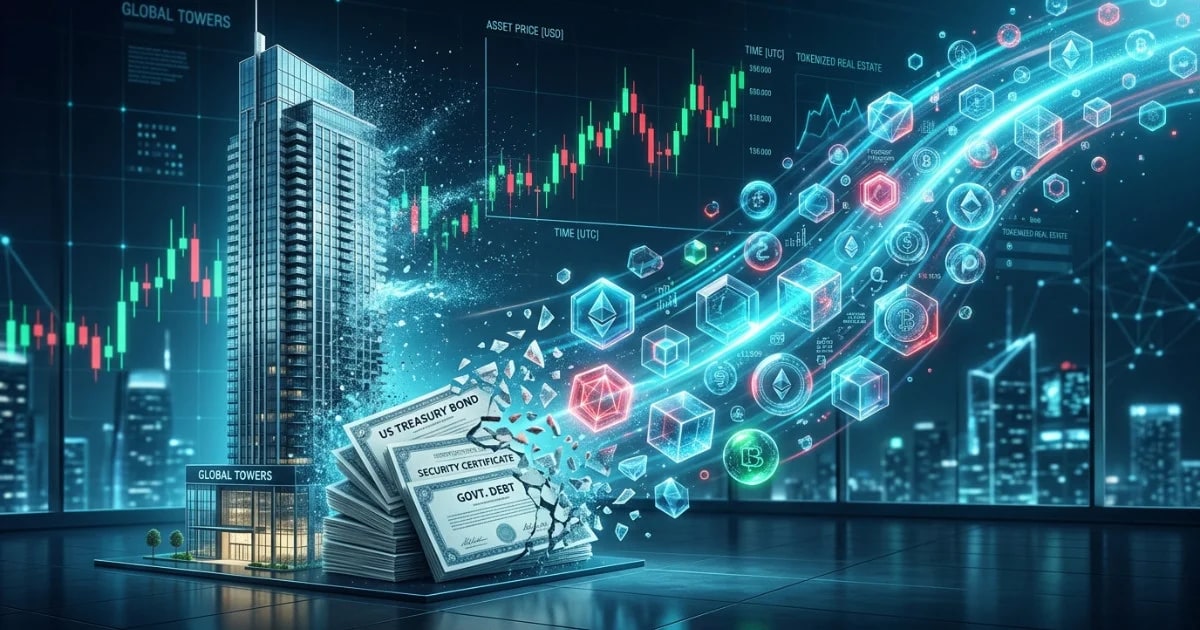
Traditional financial markets are bound by manual settlement delays and restricted access. We break down how RWA tokenization brings multi-trillion dollar assets onto crypto rails.
The Financial Pipeline: Bridging Brick-and-Mortar to Blockchain Rails
- Real-World Asset (RWA) Tokenization represents a fundamental structural overhaul of this aging record-keeping infrastructure. By converting ownership rights of physical and institutional financial assets (ranging from sovereign bonds and corporate debt to real estate and equities) into programmable digital tokens on a public blockchain, tokenization merges the stability of traditional finance (TradFi) with the high velocity of decentralized networks. The total on-chain value of tokenized RWAs has surpassed $30 billion, highlighting a massive institutional shift toward usable, tokenized market primitives.
- The plumbing of traditional global capital markets is old, expensive, and slow. For decades, settling a standard security transaction took days, high-tier investment opportunities were locked behind steep net-worth requirements, and trading windows were strictly confined to local banking hours. These administrative silos trap hundreds of billions of dollars in "dead liquidity," creating high transactional fees and friction for global businesses and individual allocators.
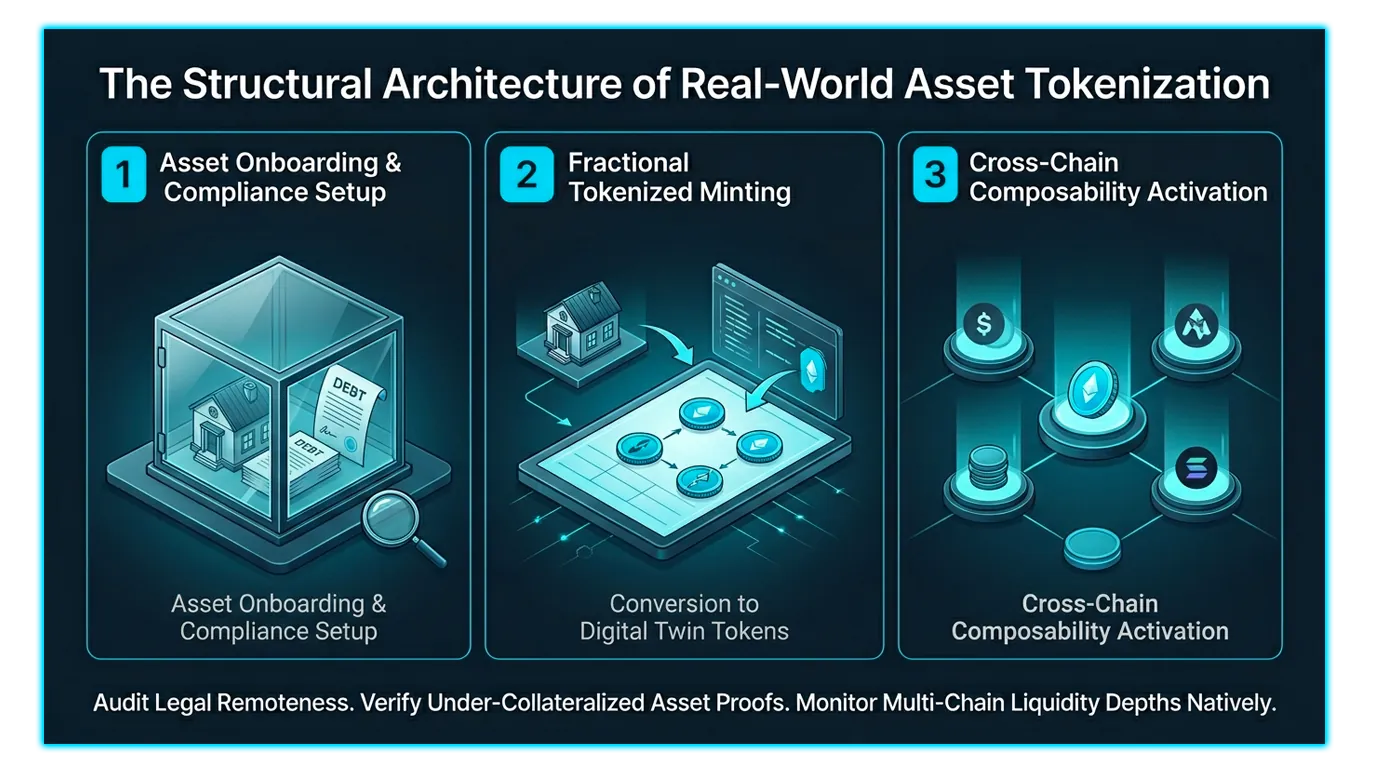
1. The Dominant Sectors of the On-Chain RWA Market
The expansion of the real-world asset landscape is driven by four primary asset classes, each serving a distinct structural role within the decentralized economy.
Tokenized U.S. Treasuries & Yield-Bearing Funds
Sovereign government debt has emerged as the largest core sector within the RWA framework, commanding over $11 billion to $12.98 billion in total distributed on-chain value. Driven by institutional product lines like BlackRock’s BUIDL fund and Ondo Finance, tokenized short-duration U.S. Treasury bills provide crypto-native companies, protocols, and decentralized autonomous organizations (DAOs) a secure way to capture a stable risk-free rate (~3-5% yield) directly on-chain without converting digital assets back into traditional fiat currencies.
Private Credit & Corporate Debt
Tokenized private credit converts traditional business loans, small-to-medium enterprise (SME) receivables, and asset-backed securities into on-chain digital tokens. Led by institutional platforms like Centrifuge, this track offers high yields (typically ranging between 8% and 15%). These elevated returns compensate investors for absorbing credit default risks and navigating illiquidity lock-up periods, giving companies alternative paths to source global capital without relying on traditional banks.
Fractional Real Estate & Alternatives
Real estate has historically been one of the most illiquid and exclusionary asset classes in global finance. Through tokenization, high-value commercial properties, residential complexes, and luxury real estate portfolios are split into thousands of fractional digital tokens. Individual retail investors can purchase micro-shares of a property for nominal amounts, capturing an automated, proportional slice of ongoing rental yields and long-term property appreciation via smart contracts.
Tokenized Equities & Public Stocks
The tokenization of public equities and exchange-traded funds (ETFs) has scaled aggressively, crossing the $1 billion milestone. Platforms like xStocks and Ondo Global Markets permit users to trade digital representations of mainstream companies (such as NVIDIA, Apple, or Tesla) 24/7. This allows international investors to easily rebalance portfolios and rotate capital between highly volatile cryptocurrencies and blue-chip corporate equities within a single, unified execution framework.
2. The Core Benefits of RWA Tokenization
Bringing traditional assets onto public cryptographic rails introduces powerful structural efficiencies for RWA Tokenization:
Fractionalization and Global Democratization: Splitting high-barrier real estate, private equity, or gold pools into micro-units lowers minimum entry limits, expanding wealth-building opportunities to a borderless audience.
Instant, 24/7 Programmatic Settlement: Eliminating banks, clearing houses, and manual brokers allows smart contracts to handle peer-to-peer asset execution instantly, collapsing multi-day settlement delays into seconds.
DeFi Composability and Capital Efficiency: Once an asset lives as a compliant on-chain token, it can serve as productive collateral across decentralized applications (dApps), allowing users to borrow stablecoins or leverage margin lines against real-world holdings.
3. Structural Risks and Vulnerabilities
Despite its immense scaling runway, the beginner investor must navigate serious systemic risks:
Regulatory and Legal Fluidity: Securities regulators worldwide (including the U.S. SEC) strictly enforce existing federal securities frameworks on tokenized assets. Changes in licensing, compliance parameters, or cross-border restrictions can freeze token liquidity pools.
Counterparty and Custodial Failure: A digital token is only as secure as the legal vehicle backing it. If the underlying bank, property manager, or Special Purpose Vehicle (SPV) fails or files for bankruptcy, token holders face severe legal delays or capital losses.
Thin Secondary-Market Liquidity: Unlike traditional stock markets with deep order-book depth, the secondary trading volume for many tokenized stocks and private credit instruments remains narrow, occasionally causing wide bid-ask price spreads.
RWA Architecture Performance Matrix
| Asset Class | Core Yield | Primary Benefit | Main Risk Vector |
| Treasuries | ~3-5% Flat | Stable base yield | Custodial delay |
| Private Credit | 8-15% High | Outsized returns | Default risk |
| Equities | Variable | 24/7 Stock access | Regulatory shift |
| Real Estate | ~4-10% Rent | Micro-ownership | Narrow liquidity |
Sourcing Tokenized Market Data via DEXTools Telemetry
- Reviewing the on-chain data footprints, treasury-backed liquidities, and capital flows of emerging asset platforms requires clean diagnostic visibility. Sourcing data through advanced decentralized charting architectures like DEXTools gives market participants an essential universal platform to monitor live token behaviors, evaluate pool depths, and inspect contract parameters across all public execution networks.
- By leveraging core features like the Pair Explorer, Live New Pairs dashboard, and the integrated Trade Story or Top Traders diagnostic tools, technical traders can seamlessly audit localized volume trends, track large whale wallet capital reallocations via the Big Swap Explorer, and check automated contract safety scores before initiating any on-chain interactions, ensuring your hardened hardware setup interacts safely with verified market venues.
Disclaimer: This article is for informational purposes only and does not constitute investment advice, financial advice, trading advice, or any other kind of advice. DEXTools does not recommend buying, selling, or holding any cryptocurrency or token. Users should conduct their own research and consult with a qualified financial advisor before making any investment decisions. Cryptocurrency investments are volatile and high-risk. DEXTools is not responsible for any losses incurred.
Beyond the Basics: Unlocking Liquidity and Programmability
While the initial appeal of RWA tokenization often centers on fractional ownership and broader access, its true disruptive potential lies in the enhanced liquidity and programmability it brings to traditionally illiquid assets. Imagine a world where a commercial real estate property can be instantly collateralized for a DeFi loan, or where royalty streams from intellectual property are automatically distributed to thousands of token holders based on predefined smart contract rules.
This goes far beyond simply representing an asset on a blockchain. It transforms the asset itself, embedding it with new functionalities and opening it up to a global, always-on marketplace. The traditional friction points of legal transfers, escrow services, and manual reconciliation are either minimized or eliminated entirely, leading to unprecedented efficiencies and cost savings.
The Programmable Asset Advantage
- Automated dividend distribution for equity tokens, removing manual payout processes.
- Instantaneous transfer and settlement of ownership, bypassing traditional multi-day cycles.
- Fractional collateralization of high-value assets within decentralized lending protocols.
- Creation of dynamic financial products, such as yield-bearing tokens tied to real-world revenue.
- Enhanced transparency of asset ownership and transaction history on an immutable ledger.
- Global accessibility for investors, overcoming geographical and jurisdictional barriers.
Related Guides
- What Is Tokenization? How Real World Assets Become Onchain Claims (2026)
- What Are Real World Assets (RWA) in Crypto? Asset Types, Yield and Risks (2026)
- What is Centrifuge (CFG)? Real-World Assets on Chain
- Tokenized Treasuries: Complete 2026 Guide to Onchain US T-Bills
- Top 5 Real World Asset (RWA) Tokens in 2026: Tokenized Finance Goes Mainstream
Frequently Asked Questions
What are Real-World Assets (RWAs)?
Real-World Assets are tangible or intangible assets that exist outside the blockchain, such as real estate, commodities, art, or intellectual property. They represent economic value in the traditional financial system.
How does RWA tokenization work?
RWA tokenization involves creating a digital representation, or token, of a real-world asset on a blockchain. This process typically includes legal structuring, asset verification, and then minting a token that is backed by the underlying asset.
What are the benefits of tokenizing RWAs?
Tokenizing RWAs can enhance liquidity by fractionalizing ownership and enabling 24/7 trading. It also improves transparency, reduces settlement times, and can broaden investor access to previously illiquid or exclusive asset classes.
What kinds of RWAs are being tokenized today?
A wide range of RWAs are being tokenized, including government bonds, private credit, real estate, and even luxury goods. The market is continuously expanding as more traditional assets find their way onto blockchain rails.