How to Short Crypto: 5 Methods for Beginners (2026)
— By Tony Rabbit in Tutorials
How to short crypto in 2026: 5 beginner methods (margin, perp futures, options, inverse tokens), the best venues, short-squeeze risks, and safe position sizing.
Most retail traders only know how to make money one way: buy low, sell high. But seasoned traders understand a powerful truth that opens up an entirely new dimension of the market. You can also profit when prices crash. Bitcoin, Ethereum, and altcoins fall just as violently as they rise, and learning to short crypto means you can turn red candles into green PnL. In a market that has seen drawdowns of 70 to 90 percent multiple times in a single decade, ignoring the short side leaves a massive amount of opportunity on the table.
Shorting crypto, however, is one of the most unforgiving disciplines in all of trading. Unlike going long, where your downside is capped at 100 percent of your capital, a short position has theoretically unlimited loss potential because an asset can keep rising forever. Add the rocket fuel of leverage, brutal funding rates on perpetual contracts, and the threat of coordinated short squeeze events, and you have a recipe where one bad trade can erase months of gains. This guide treats that risk seriously instead of pretending otherwise.
By the end of this tutorial you will understand exactly what shorting means, the five practical methods to bet against crypto in 2026, how to open your first short position step by step, what funding rates actually cost you, how to read and survive short squeezes, and when it is smarter to just sit in cash. Whether you want to hedge your existing bag during bear cycles or take aggressive directional bets, this guide gives you the structured framework professional traders use every day.
What Does Shorting Crypto Actually Mean?
Shorting, also called short selling or going short, is the act of profiting from a decrease in an asset's price. When you short crypto, you are essentially betting that the price will go down. If it does, you make money. If it goes up instead, you lose money. The mechanics are the mirror image of a traditional long trade, but the operational details are radically different.
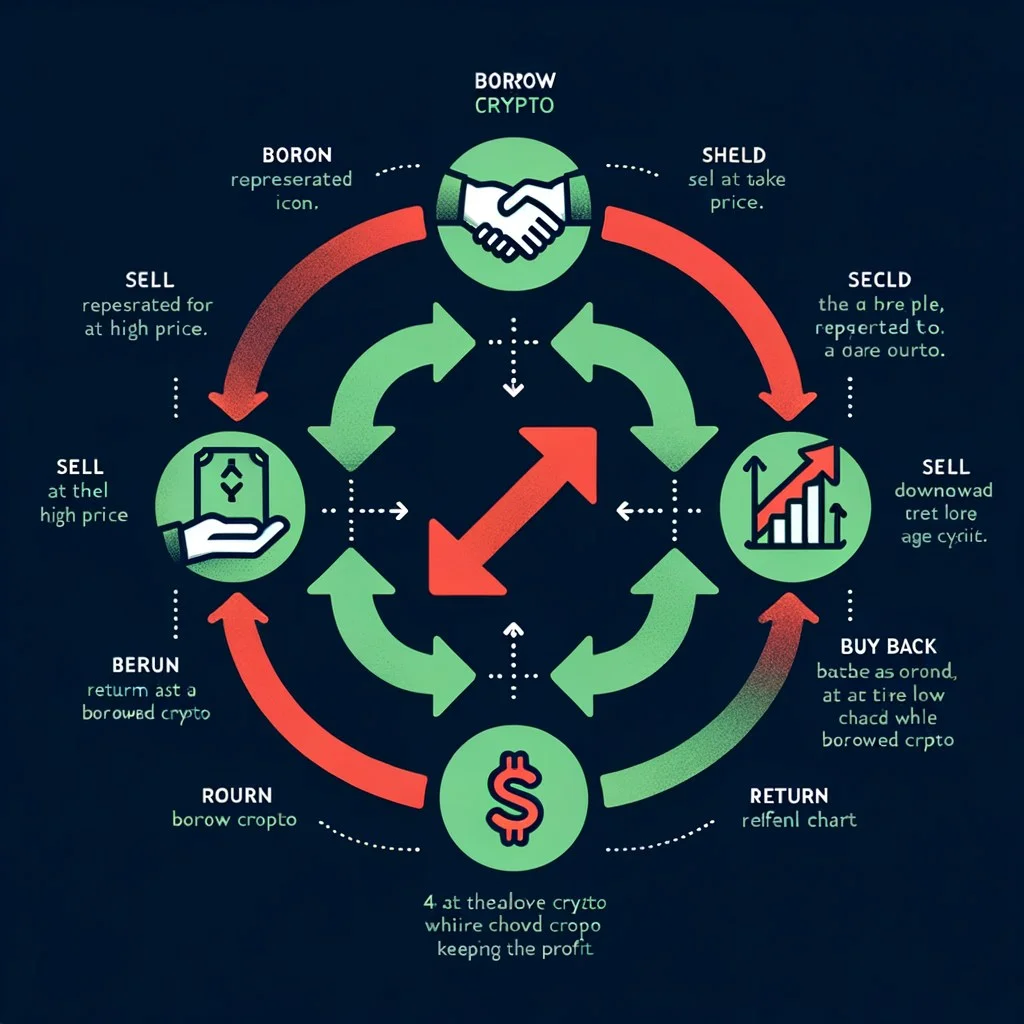
The classic analogy is borrowing your neighbor's bike. Imagine your neighbor lends you their bike that is worth 1,000 dollars today. You immediately sell it on the street for 1,000 dollars cash. A month later, that bike model has been replaced by a new version, and used ones now sell for only 700 dollars. You buy back an identical bike for 700 dollars, return it to your neighbor, and keep the 300 dollar difference as profit. You never owned the bike, you simply borrowed it, sold it high, and bought it back low. Shorting Bitcoin or any other crypto works on the exact same principle, except the borrowing and lending is handled by an exchange or a smart contract.
In practice, modern crypto traders rarely physically borrow the underlying coin. Instead, they use derivatives like perp futures or options that synthetically replicate the short payoff without the headache of locating actual borrow inventory. The result is the same: your PnL moves inversely to the price of the asset. If Bitcoin drops 10 percent, your short position gains 10 percent (before leverage, fees, and funding). For a deeper conceptual comparison between the two sides of the trade, see our dedicated guide on long vs short positioning.
How Short Selling Works Mechanically
Even if you never touch a margin desk, understanding the four core steps of a short trade is essential. Every method of shorting crypto, no matter how exotic the wrapper, ultimately reduces to this same sequence. Once you internalize it, exotic instruments like inverse tokens or quarterly futures stop feeling mysterious.
Let us put real numbers to it. Suppose Bitcoin is trading at 80,000 dollars and you believe a correction to 65,000 is coming. You borrow 1 BTC from the exchange and sell it immediately, banking 80,000 dollars in your account. Three weeks later, the price has fallen to 65,000. You take 65,000 dollars from your account, buy 1 BTC at the new lower price, and hand it back to the exchange. You keep the 15,000 dollar difference, minus any borrow fees or funding costs accumulated along the way. That is the entire trade in a nutshell.
The critical detail that separates shorting from going long is the asymmetric loss profile. If you buy 1 BTC at 80,000 and the price goes to zero, you lose 80,000 dollars. Painful, but finite. If you short 1 BTC at 80,000 and the price moons to 200,000, you lose 120,000 dollars: more than your original notional. Theoretically there is no upper bound on how much you can lose because there is no upper bound on price. This is why every short position must be paired with a hard stop loss.
5 Ways to Short Crypto in 2026
Not all shorts are created equal. Each instrument has its own fee structure, risk profile, capital efficiency, and operational quirks. The choice depends on your time horizon, your conviction, your jurisdiction, and how much complexity you are willing to handle. Here is the comparison grid traders use to pick the right tool for the job.
Borrow spot coins from the exchange, sell them, buy back later.
Synthetic short with no expiry, settled in stablecoins or the coin.
Fixed-date contracts that expire every three months.
Buy a put option for the right to sell at a strike price.
Leveraged short tokens like BTC3S that auto-rebalance daily.
Regulated short Bitcoin products like BITI traded on stock exchanges.
Method 1: Margin Trading on a Centralized Exchange
Margin trading is the closest digital equivalent of the bike-borrowing analogy from earlier. You borrow actual spot coins from the exchange's lending pool, sell them on the open order book, and later buy back the same coins to return to the lender. The exchange charges hourly interest on the borrowed amount, just like a traditional securities lending desk. This is the original way to short crypto and remains popular for traders who want exposure to the underlying coin rather than a synthetic derivative.
To open a margin short on a major exchange like Binance, Kraken, or OKX, you first deposit collateral into a dedicated margin wallet. The collateral can be stablecoins, the coin you want to short, or even cross-collateralized portfolios in advanced setups. The exchange then lets you borrow up to a certain multiple of your collateral, typically between 3x and 10x depending on the platform and the asset. You sell the borrowed coin immediately, and now you owe the exchange those coins plus interest. When you are ready to close, you buy back the coins on spot, return them, and pocket the difference. For a deeper dive into the broader topic, our sibling guide on margin trading walks through every nuance.
The main drawback of margin shorting compared to perpetuals is capital efficiency and cost. Borrow rates can spike during volatile markets, sometimes reaching 0.1 percent per hour, which annualized exceeds 870 percent. If you hold a margin short open for weeks, the interest can devour your profit even if the price drops as expected. Margin trading also tends to offer lower maximum leverage than futures and is increasingly restricted or banned for retail traders in many jurisdictions, so check your local rules before you start.
Method 2: Perpetual Futures, the Workhorse of Crypto Shorting
Perpetual futures, also called perpetual swaps or simply perps, are by far the most traded financial instrument in all of crypto. They are derivative contracts that track the underlying spot price but have no expiry date, which means you can hold a short open for as long as you want, provided you remain solvent. The market for BTC perpetuals alone routinely sees more than 50 billion dollars in daily volume. If you are going to short crypto seriously, you will almost certainly do it with perps.
The genius of the perpetual contract is the funding rate mechanism. Because there is no expiry to anchor the contract price to the spot price, exchanges use a small periodic payment between longs and shorts to keep the perp price tethered to the underlying. Every eight hours (sometimes every hour on certain venues), if the perp is trading above spot, longs pay shorts. If it is trading below spot, shorts pay longs. In a strong bull trend, shorts often receive funding for being on the unpopular side, which is a small consolation prize for taking the contrarian position.
From a practical standpoint, opening a short perp looks almost identical to opening a long. You deposit USDT or USDC as collateral, select your leverage (typically anywhere from 2x to 100x or even higher on some venues), choose between isolated margin and cross margin, and submit a sell order. Your PnL is marked to market in real time, and if the price moves too far against you, the engine will trigger a liquidation price that closes your position automatically to protect the exchange from losses. Understanding leverage trading mechanics is non-negotiable before you place your first perp short.
Method 3: Quarterly Futures and Basis Trading
Quarterly futures are the original futures contracts adapted for crypto. They have a fixed expiry date, usually the last Friday of March, June, September, and December. Because they expire, there is no need for a funding rate mechanism. Convergence to spot is enforced naturally at settlement, when the contract price must match the underlying price by definition. This makes quarterlies attractive for traders who want to hold a directional short for several months without bleeding funding payments to the long side.
The price of a quarterly future is rarely identical to spot. The difference is called the basis. In a healthy bull market, quarterlies typically trade at a premium to spot (called contango), because traders are willing to pay extra for leveraged long exposure into the future. When you short a quarterly in contango, you are not just betting on the price falling, you are also collecting the premium as it decays toward spot at expiry. This is the foundation of basis trading, a market-neutral strategy where you go long spot and short the quarterly, locking in the annualized yield of the basis.
The downsides of quarterlies are reduced liquidity compared to perps, basis risk if you need to roll the position to the next quarter, and the operational complexity of managing expiry dates. They are best suited to swing traders and arbitrageurs rather than scalpers. Binance, OKX, Bybit, and Deribit all offer deep markets in BTC and ETH quarterly contracts, while altcoin quarterlies tend to be thinner.
Method 4: Options and Put Contracts
Options give you the right, but not the obligation, to sell an asset at a fixed strike price before a certain expiration date. Buying a put option is the most common way to express a short view with strictly defined risk. The maximum you can lose is the premium you paid to buy the option. The maximum you can win is bounded by the strike price falling to zero, but in practice you can multiply your premium many times over if the underlying crashes sharply. This asymmetric payoff is what makes puts so attractive for hedging and for high-conviction bearish bets.
For example, suppose Bitcoin is at 80,000 and you buy a 75,000 dollar strike put with one month to expiry for 1,500 dollars in premium. If at expiry Bitcoin is at 60,000, your put is worth 15,000 dollars (75,000 minus 60,000), netting a 13,500 dollar profit on a 1,500 dollar risk. If Bitcoin instead rallies to 90,000, your put expires worthless and you lose only the 1,500 dollar premium. Compare this to a short perp where a rally to 90,000 could blow up your entire margin account if you were leveraged.
The catch with options is time decay, also called theta. Every day that passes without the price moving in your favor, the put loses a little bit of value, accelerating into expiry. You cannot just buy a put and sit on it for months hoping for a crash. Implied volatility also matters: puts are more expensive when the market is already nervous, so the best time to buy protection is when nobody else wants it. Deribit dominates crypto options volume in 2026, with newer venues like Bybit and OKX growing fast. Make sure you also study how take profit vs stop loss rules adapt to non-linear instruments like options.
Method 5: Inverse Tokens and Leveraged Short ETPs
Inverse tokens are tradeable ERC-20 or BEP-20 tokens whose price is engineered to move opposite to an underlying crypto, often with built-in leverage. The naming convention is usually clear: BTC3S means a token that gives you roughly 3x short Bitcoin exposure. Buy 100 dollars of BTC3S and if Bitcoin falls 1 percent on the day, BTC3S rises about 3 percent. These tokens were popularized by exchanges like FTX and Binance, and continue to be offered by KuCoin, MEXC, and various smaller platforms.
The appeal is simplicity. You just buy the token like any other coin on the spot market. There is no margin to manage, no liquidation price to track, no funding rate to pay. You cannot lose more than what you put in, because the worst case is the token going to zero. For a beginner who wants short exposure without learning about isolated margin and liquidation engines, inverse tokens look like the perfect entry point.
The hidden danger is volatility decay. Because the tokens rebalance daily to maintain their leverage ratio, sideways price action erodes value over time even if the underlying ends flat. Imagine a coin that drops 10 percent on Monday and recovers 10 percent on Tuesday. The underlying is roughly back where it started (actually down 1 percent due to the math). A 3x short token, however, might be down 5 to 8 percent after both moves because the daily rebalance locks in losses on the recovery day. The lesson: inverse tokens are short-term tactical tools, not long-term position vehicles.
Step by Step: How to Open Your First Short on Binance or Bybit
Time to put theory into practice. The following walkthrough uses Binance Futures and Bybit as examples because they have the deepest liquidity, the cleanest interfaces, and the most resources for learning. The exact buttons differ slightly between venues, but the workflow is universal. If you have not picked a platform yet, our breakdown of exchanges compares the major options.
Step 1: Deposit collateral. Transfer USDT or USDC from your spot wallet to your futures wallet. Most beginners start with 200 to 500 dollars, which is enough to learn without losing rent money. Never deposit more than you can afford to lose entirely, because liquidation can take all of it.
Step 2: Pick the contract. Search for BTCUSDT perpetual on Binance Futures or Bybit Derivatives. Confirm you are on the USDT-margined linear contract, not the coin-margined inverse contract. Linear contracts are easier for beginners because PnL is denominated in stablecoins.
Step 3: Configure leverage and margin mode. Click the leverage selector and set it to a conservative value. For a first trade, 2x to 5x is plenty. Avoid the temptation to crank it to 50x or 100x. Then choose isolated margin, which caps your loss on this single trade to the margin you assign. Cross margin uses your entire account balance as collateral, which is efficient for experienced traders but catastrophic for beginners.
Step 4: Place the short order. Enter the size you want to short, double-check that the side selector shows "Sell" or "Short", and submit a limit order at the price you want to enter (or a market order if you are in a hurry). The platform will show you the estimated liquidation price before you confirm. If that liquidation price is uncomfortably close to current price, reduce your leverage or your position size until it is not.
Step 5: Set a stop loss immediately. The moment your short fills, attach a stop loss order above your entry. A common rule of thumb is to set the stop at a level where the trade thesis is invalidated, for example just above a recent swing high. Never trade without a stop. The crypto market has zero respect for ego, and a trade without a stop loss is a trade waiting to liquidate. Also consider setting a take profit order at a level that gives you a reasonable risk-reward ratio (2:1 or 3:1 minimum).
Step 6: Monitor funding and watch the tape. Once the position is open, your job is to manage it, not to obsessively refresh the PnL counter. Check the funding rate every eight hours and consider whether your thesis still holds. If the market structure changes, do not be afraid to close early or to scale out of the position in tranches.
Funding Rates: The Hidden Cost of Holding Short Perps
The funding rate is the most misunderstood mechanic of perpetual contracts, and for shorts it can be either a helpful tailwind or a painful drain. Most exchanges calculate funding every eight hours, settling at 00:00, 08:00, and 16:00 UTC. The rate is published as a small percentage, for example 0.01 percent. That tiny number is paid from one side of the market to the other based on whether the perp is trading above or below the spot index price.
Here is what most beginners miss: in a roaring bull market, perpetuals tend to trade at a persistent premium to spot because long demand exceeds short demand. In those conditions, longs continuously pay funding to shorts. If you are short during such a regime, you are literally being paid to hold the position. Annualized funding of 30 to 50 percent paid to shorts is not uncommon during euphoric phases. The reverse is also true: in a sharp bear market, shorts may end up paying longs as bears pile in and the perp trades below spot.
Concrete example. You short 10,000 dollars of BTC perpetual at a funding rate of 0.01 percent paid every 8 hours, in a regime where longs are paying shorts. Each funding interval you receive 1 dollar on a 10,000 dollar position. Over a 30 day period, that is 90 dollars of pure passive income on top of any directional PnL. Now flip the scenario: you are short 10,000 dollars at a funding rate of negative 0.05 percent every 8 hours (shorts paying longs). That same 30 day hold costs you 450 dollars in funding, easily wiping out a modest profit on the directional move. Always check the funding history of a contract before opening a position you plan to hold for more than a few hours.
Short Squeezes: Why Crowded Shorts Get Liquidated
A short squeeze is the single most dangerous event in the life of a short trade. It is what happens when the price moves up sharply, forcing leveraged shorts to either add margin or get liquidated. Each liquidation is mechanically a buy order on the order book (you have to buy back the asset to close the short), which pushes the price even higher, which triggers the next layer of liquidations, which pushes the price higher still. This is a feedback loop that can move markets by 10, 20, or even 50 percent in minutes.
The classic case study from traditional markets is the GameStop saga of January 2021, where retail traders on Reddit identified that institutional funds had shorted more shares of GME than actually existed in float. When buying pressure forced the stock from 20 dollars to over 400 dollars, the shorts could not exit without massive losses. Crypto sees its own version of this dynamic on a much shorter timeframe. The October 2024 squeeze in DOGE saw the token rip 40 percent in an hour, liquidating over 200 million dollars of short positions across exchanges. The May 2025 squeeze in HYPE wrecked even seasoned traders who thought the rally was overextended.
The signature of an imminent squeeze is a combination of factors: open interest at all-time highs on the short side, funding rates deeply negative (shorts paying heavily to stay short), price grinding higher despite bearish sentiment in social channels, and a clear technical level like a multi-month resistance breaking out. When you see these conditions stacking up while you are short, the right move is usually to close or hedge, even if your fundamental thesis still holds. Markets can stay irrational longer than you can stay solvent, especially on the short side.
Top Venues to Short Crypto in 2026
Liquidity is everything when you are shorting. Thin order books mean wide spreads, brutal slippage on entry and exit, and a higher chance of getting wicked out by a manipulated candle. Below are the venues professional traders actually use in 2026, in no particular order of preference.
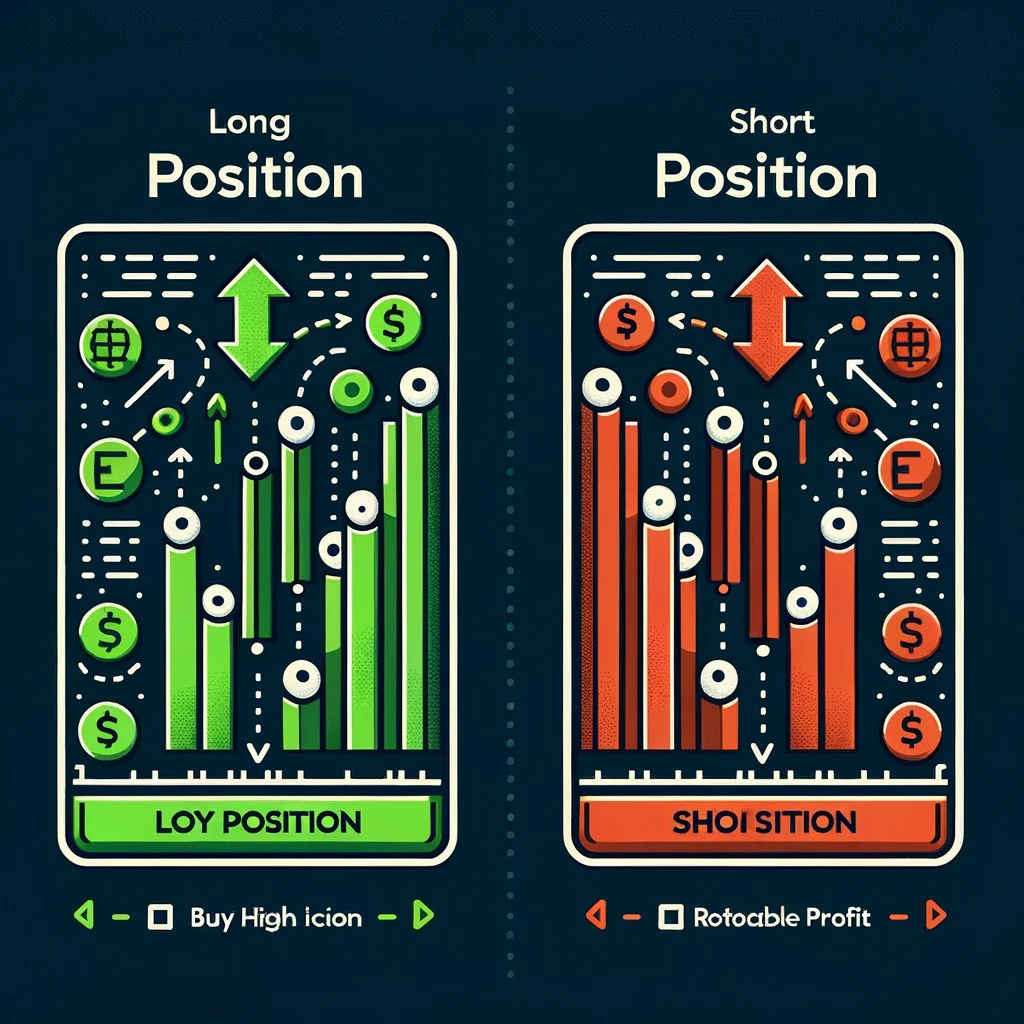
Long vs Short: The Asymmetry That Defines Crypto
Beginners often treat long and short as symmetrical mirror images. They are not. The two sides of the market behave very differently, and a trader who copies their long playbook directly to the short side is going to get hurt. Here is the comparison every short seller should internalize before clicking sell.
- Entry: Buy at expected low
- Profit if: Price rises
- Max loss: 100% of capital (price to zero)
- Time bias: Crypto trends up long term
- Funding (perp): Usually pays funding
- Emotional pull: Greed-driven, easier to hold
- Entry: Sell at expected high
- Profit if: Price falls
- Max loss: Theoretically unlimited
- Time bias: Working against secular trend
- Funding (perp): Can pay or receive
- Emotional pull: Fear-driven, harder to hold
The asymmetry is brutal. A long held through a 90 percent crash gives you back 10 cents on the dollar. A short held through a 10x rally costs you 900 percent of your initial notional. This is why position sizing on shorts must be more conservative than on longs, why hard stops are non-negotiable, and why most professional traders use options rather than perps when expressing long-duration bearish views.
The Real Risks of Shorting Crypto
If you take only one lesson from this guide, let it be the risk section. Shorting is the path where most retail traders blow up their accounts, even those who have profitable long records. The risks compound on each other in ways that are difficult to appreciate until you experience them firsthand.
Unlimited theoretical loss. As established earlier, an asset can rise by an arbitrary amount, so your loss has no fixed ceiling. Bitcoin going from 50,000 to 150,000 in nine months has happened multiple times in history. If you were short during such a move, leveraged or not, the damage was severe. Always size short positions assuming the price could double from your entry.
Liquidation cascades. Leverage amplifies your gains and your losses. A 10x short gets liquidated by a roughly 10 percent move against you, before fees and funding eat into your margin. In thinly traded altcoin contracts, a single whale order can move the price 10 percent in seconds, taking out every leveraged short in its path. This is not a theoretical risk, it happens every week somewhere in the crypto ecosystem.
Funding bleed. Even when the directional thesis is correct, persistent negative funding on a contract you are short can quietly drain your account over weeks. A 1 percent per day funding cost compounds to roughly 37 percent per month. If your thesis takes longer than expected to play out, funding will eat the profit before the price catches up.
Exchange counterparty risk. When you short on a centralized exchange, you are trusting that exchange to honor your trade, pay your profits, and not abscond with your collateral. The history of crypto is littered with exchange failures, from Mt. Gox to FTX. Distribute risk across multiple venues, use cold storage for funds you are not actively trading, and consider non-custodial venues like dYdX, GMX, and Hyperliquid for a portion of your activity.
Auto-deleveraging (ADL). Even if you do not get liquidated, profitable shorts on some exchanges can be force-closed if the platform's insurance fund is depleted by a wave of long liquidations. ADL is rare but devastating because it strips you of your profitable position at exactly the wrong moment. Read each exchange's ADL policy before depositing significant capital.

Tax Implications of Shorting Crypto
Tax treatment of crypto shorting varies dramatically by jurisdiction, and you should always consult a local tax professional rather than rely on internet articles. That said, a few general principles apply in most countries. Realized gains and losses from shorting are typically taxed as either capital gains or as ordinary income depending on the instrument and your local rules.
In the United States, short positions on commodities and futures are generally treated under Section 1256, which applies a 60/40 blended rate (60 percent long-term, 40 percent short-term) regardless of holding period for qualifying contracts. CFTC-regulated Bitcoin futures fall under this regime. Perpetual contracts on offshore exchanges, options on Deribit, and tokens like BTC3S are usually treated as ordinary capital gains, taxed at your short-term rate if held less than a year. Interest paid on borrowed coins in margin trades is typically deductible against investment income.
In the European Union, treatment varies country by country. Germany famously treats long-term crypto holdings (over one year) as tax-free, but derivatives like perps are generally taxed as Kapitalertragsteuer regardless. The United Kingdom treats most crypto derivatives gains as capital gains, while spread betting accounts (where available) can be tax-free. The bottom line: keep detailed records of every short trade, including entry, exit, funding paid or received, and any borrow interest, and bring them to a qualified accountant.
When NOT to Short Crypto
Knowing when to stay out is as valuable as knowing when to enter. There are entire market regimes where shorting crypto is statistically a money loser even for skilled traders. Recognizing these conditions can save you from grinding losses that destroy both capital and confidence.
Alt-season melt-ups. When Bitcoin dominance is falling and money is rotating aggressively into altcoins, shorting any individual alt is a recipe for getting blown out. Coins can 5x in a week with zero fundamental justification, and short interest gets squeezed mercilessly. Wait for clear distribution patterns and broad market exhaustion before fading parabolic alts.
Post-halving bull cycles. The roughly 18 to 24 month window after each Bitcoin halving has historically been a relentless uptrend, with corrections that look like crashes in the moment but recover within weeks. Shorting BTC during the first year after a halving is a low-probability bet. The April 2024 halving played out through 2025 in textbook fashion, and the next cycle peak will likely be no different.
Low implied volatility regimes. When option premiums are crushed and realized volatility is sub-30 percent annualized, the market is in a low-energy state where small moves are the norm. Shorts in these regimes tend to die from a thousand cuts of positive funding and slow grind upward. Either wait for volatility to expand or use long-dated puts that benefit from a volatility expansion as much as a price drop.
Major positive catalysts ahead. Approaching a known catalyst like an ETF approval, a major upgrade (next ETH hard fork, a Bitcoin softfork), or a US election cycle traditionally favorable to crypto, the asymmetric risk shifts hard against shorts. Even if you think the news is priced in, the surprise tends to be upward more often than not.
Frequently Asked Questions
Can you short crypto on Coinbase?
Yes and no. Coinbase's main retail app does not offer direct margin shorting for most users, especially in the United States after regulatory pressure. However, Coinbase Advanced and Coinbase Derivatives (formerly FairX) offer regulated perpetual and nano futures contracts on BTC and ETH that let qualified US users go short with leverage. Outside the US, Coinbase International Exchange offers full perp derivatives with up to 20x leverage on majors. If you want the simplest direct experience, Kraken Pro, Binance, or Bybit remain more flexible for shorting than the standard Coinbase app.
What is the best way to short crypto?
For most traders, perpetual futures on a major centralized exchange (Binance, Bybit, OKX) offer the best combination of liquidity, leverage flexibility, and ease of use. They allow precise position sizing, real-time PnL tracking, and instant entry and exit. For traders who want defined risk and are willing to learn more complex mechanics, put options on Deribit provide superior payoff profiles for high-conviction directional bets. Decentralized alternatives like dYdX, GMX, and Hyperliquid are excellent for users who want self-custody. The "best" method ultimately depends on your time horizon, your jurisdiction, and your risk tolerance.
Is shorting crypto profitable?
It can be extremely profitable during bear markets and sharp corrections, but it is statistically harder than going long because crypto trends up over the long run. Professional traders who specialize in shorting use rigorous risk management, focus on overextended assets with clear distribution patterns, and pair shorts with longs in market-neutral strategies. For pure directional retail shorting, win rates tend to be lower than longs, but winning short trades often have much larger payouts per unit of capital. Profitability requires discipline more than skill.
What happens in a short squeeze?
A short squeeze occurs when the price of an asset rises sharply, forcing short sellers to close their positions at a loss by buying back the asset. Those forced buy orders push the price even higher, triggering more short stops and liquidations in a positive feedback loop. Squeezes can move prices by 20 to 50 percent or more in minutes, especially when short interest is heavily concentrated. The signature warning signs are extremely negative funding rates on perpetuals, record-high open interest on the short side, and bullish technical breakouts despite bearish sentiment. If you see these signs while short, the right move is usually to reduce exposure immediately.
Can I short Bitcoin without margin?
Yes, there are several ways to gain short Bitcoin exposure without using leveraged margin accounts. You can buy inverse leveraged tokens like BTC1S or BTC3S on exchanges that offer them, which give you spot short exposure without managing a margin account. You can buy put options on Deribit, which gives you defined-risk short exposure for the price of the premium. You can also buy inverse Bitcoin ETPs and ETFs like BITI on traditional stock exchanges through a regular brokerage account. None of these methods require you to post margin or manage liquidation prices, although each has its own cost structure to understand.
How much money do I need to start shorting crypto?
You can technically start shorting crypto with as little as 10 to 20 dollars on most major exchanges thanks to perpetual contracts with small minimum sizes. However, realistically you want at least 200 to 500 dollars in your trading account so you can size positions appropriately, use conservative leverage, and survive normal market noise without immediate liquidation. Treat your first months of shorting as paid tuition. Expect to lose your initial capital while you learn the mechanics, and only scale up once you have demonstrated consistent profitability over a meaningful sample of trades.
Final Thoughts: Short With Discipline or Not at All
Shorting crypto is one of the most powerful skills a trader can develop. It transforms bear markets from periods of misery into periods of opportunity, lets you hedge long holdings during turbulent regimes, and opens up market-neutral strategies that compound returns regardless of direction. The traders who master shorting are the ones who survive full crypto cycles instead of being wiped out by every bear phase.
But shorting is also the discipline where most traders blow up. The asymmetric loss profile, the funding bleed, the constant threat of squeezes, and the sheer emotional difficulty of betting against an asset class with a long-term bullish drift make it harder than going long in every measurable way. If you are not willing to use stop losses religiously, size conservatively, and exit losing trades quickly, you should not be shorting at all. Stick to spot longs and dollar-cost averaging until your risk discipline is rock solid.
For those ready to take the next step, start small. Open a futures account on Binance or Bybit, deposit an amount you are genuinely fine losing, and place a single short with 2x leverage and a hard stop loss. Watch how the position behaves over a week. Note how funding accrues, how your emotions react, how the liquidation price moves with leverage adjustments. After 10 to 20 such trades, you will have a foundation that no article can give you. The market is the only teacher that matters, and shorting is the toughest classroom it offers. Trade safe, manage risk, and remember: the goal is not to be right, it is to survive and compound over decades.