Hot Wallet vs Cold Wallet: Which Is Safer? (2026)
— By Tony Rabbit in Tutorials

Hot wallet vs cold wallet compared: security, convenience and best use cases. Learn which crypto wallet type fits you and how to use both safely.
If you hold cryptocurrency, the single most important decision you will make is how you store it. The debate between hot wallets and cold wallets has been ongoing since the early days of Bitcoin, and in 2026, the stakes are higher than ever. With billions of dollars lost to hacks, phishing attacks, and exchange collapses, understanding the difference between these two wallet types is not optional. This guide breaks down everything you need to know about hot wallets vs cold wallets so you can protect your assets and use them with confidence.
Intent check: This page is the concept-level comparison between online and offline storage. If you already know you want hardware options ranked, read Best Cold Wallets in 2026
Before diving into the comparison, make sure you understand what a crypto wallet actually is and how it works at a fundamental level.

What Is a Hot Wallet?
A hot wallet is any cryptocurrency wallet that maintains a persistent connection to the internet. When you install a wallet app on your phone, add a browser extension, or use a web-based wallet on an exchange, you are using a hot wallet. The defining characteristic is simple: the private keys that control your funds are stored on a device that is online.
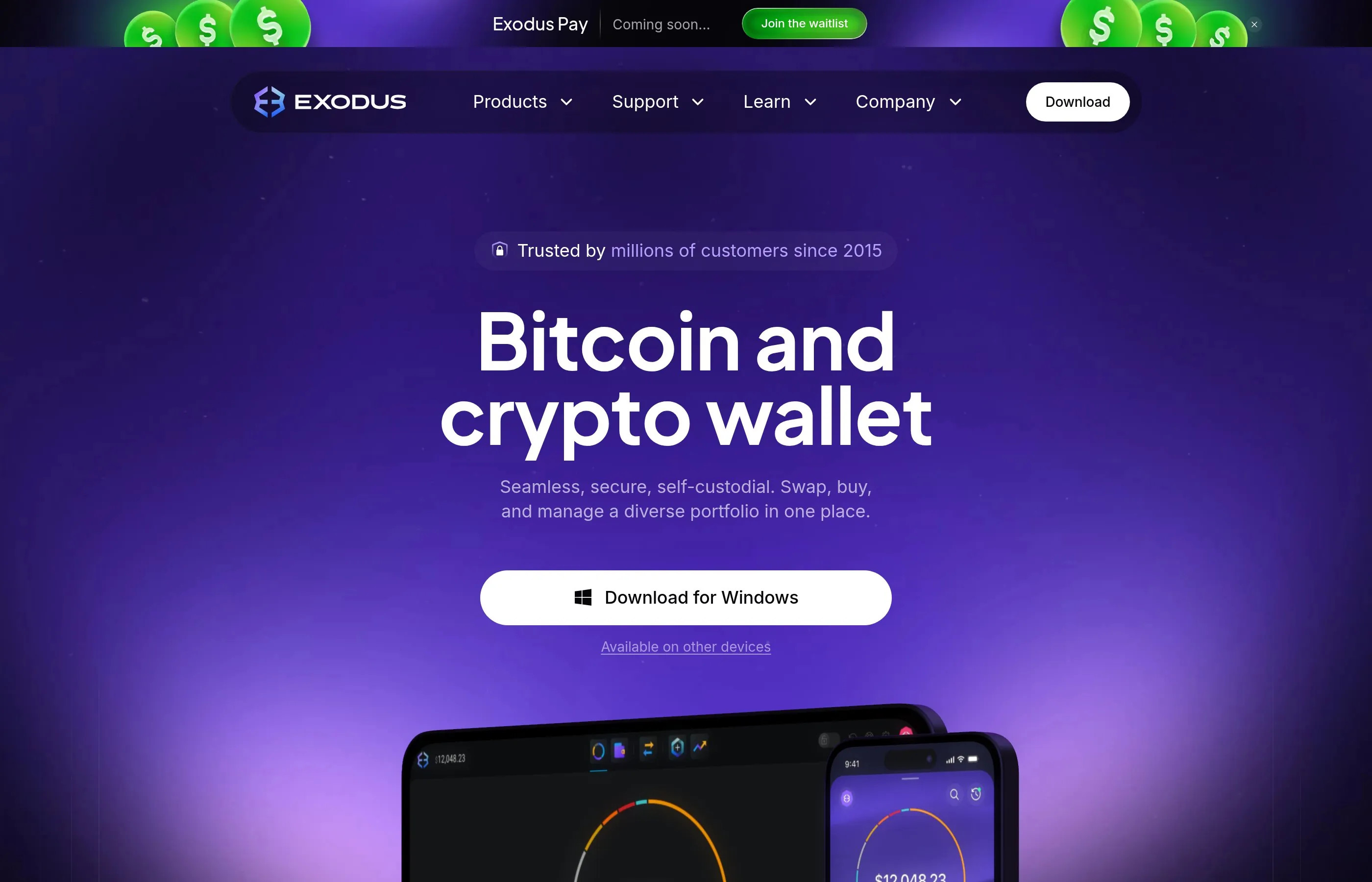
Hot wallets come in several forms. Browser extension wallets like MetaMask allow you to interact with decentralized applications directly from your web browser. Mobile wallets like Trust Wallet let you manage crypto on the go. Desktop wallets like Exodus store keys on your computer. And exchange wallets, such as those on Coinbase or Binance, hold your keys on the exchange's servers.
Free to use
Instant transactions
Higher risk
Best for daily trading
$50-$400 cost
Manual signing
Maximum security
Best for long-term holding
Another popular hot wallet is Phantom Wallet, which has become the go-to choice for Solana users and now supports multiple blockchains including Ethereum and Polygon.
How Hot Wallets Work Technically
When you create a hot wallet, the software generates a pair of cryptographic keys: a public key (your wallet address) and a private key (your secret password that signs transactions). The wallet also produces a seed phrase, typically 12 or 24 words, that can recreate your private keys if needed.
In a hot wallet, these private keys are stored in encrypted form on the device's local storage or in the browser's extension data. When you initiate a transaction, the wallet decrypts the private key in memory, signs the transaction, and broadcasts it to the blockchain network. The entire process happens on an internet-connected device, which is both the strength and weakness of hot wallets.
The encryption layer protects your keys at rest, but when the device is online, the keys are vulnerable to malware, keyloggers, clipboard hijackers, and phishing attacks that can intercept the signing process or trick you into approving malicious transactions.
💡 Security Tip
Always write your seed phrase on paper or metal. Never store it digitally. Test your backup by recovering on a different device.
💡 Security Tip
Always write your seed phrase on paper or metal. Never store it digitally. Test your backup by recovering on a different device.
What Is a Cold Wallet?
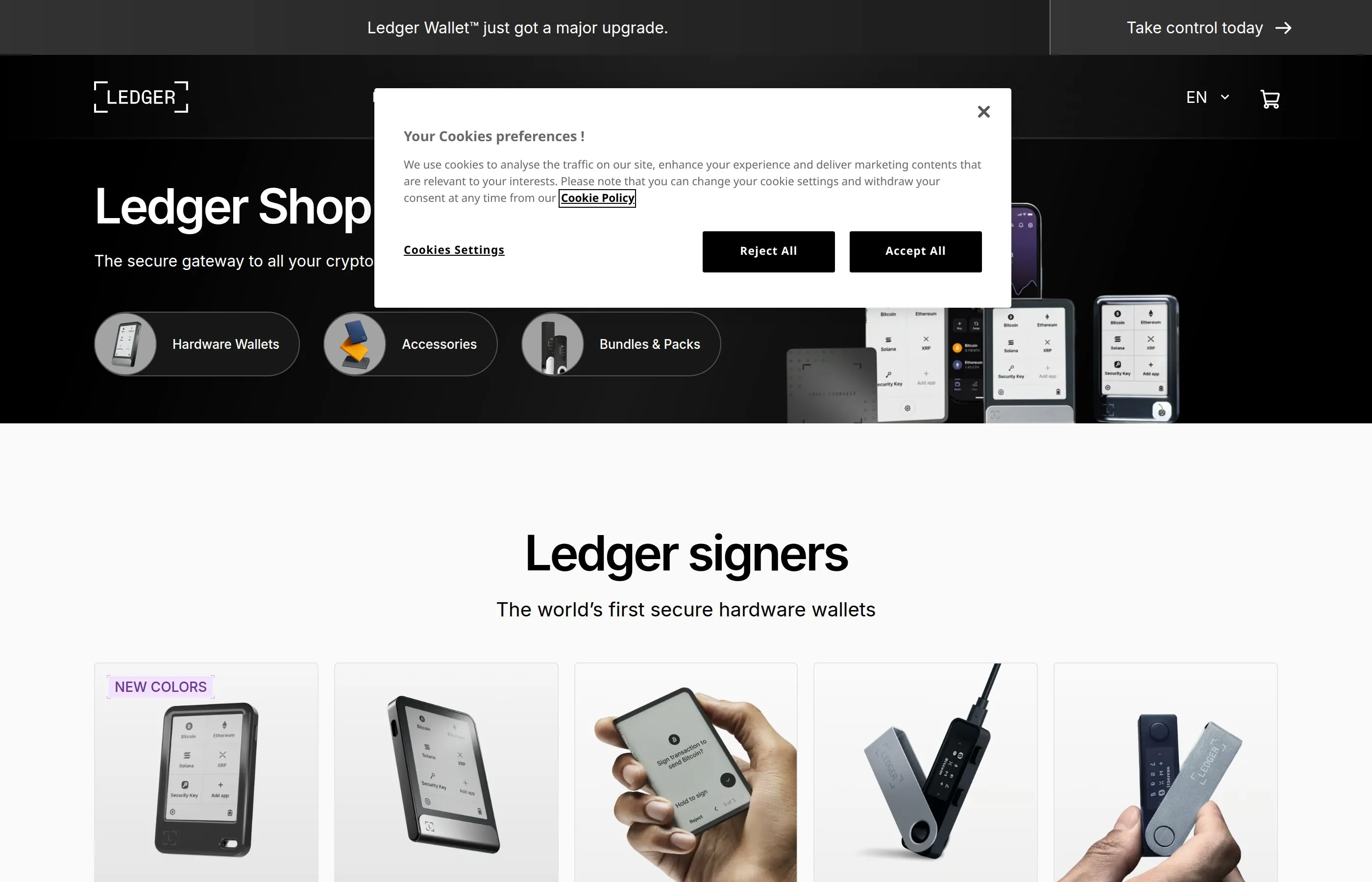
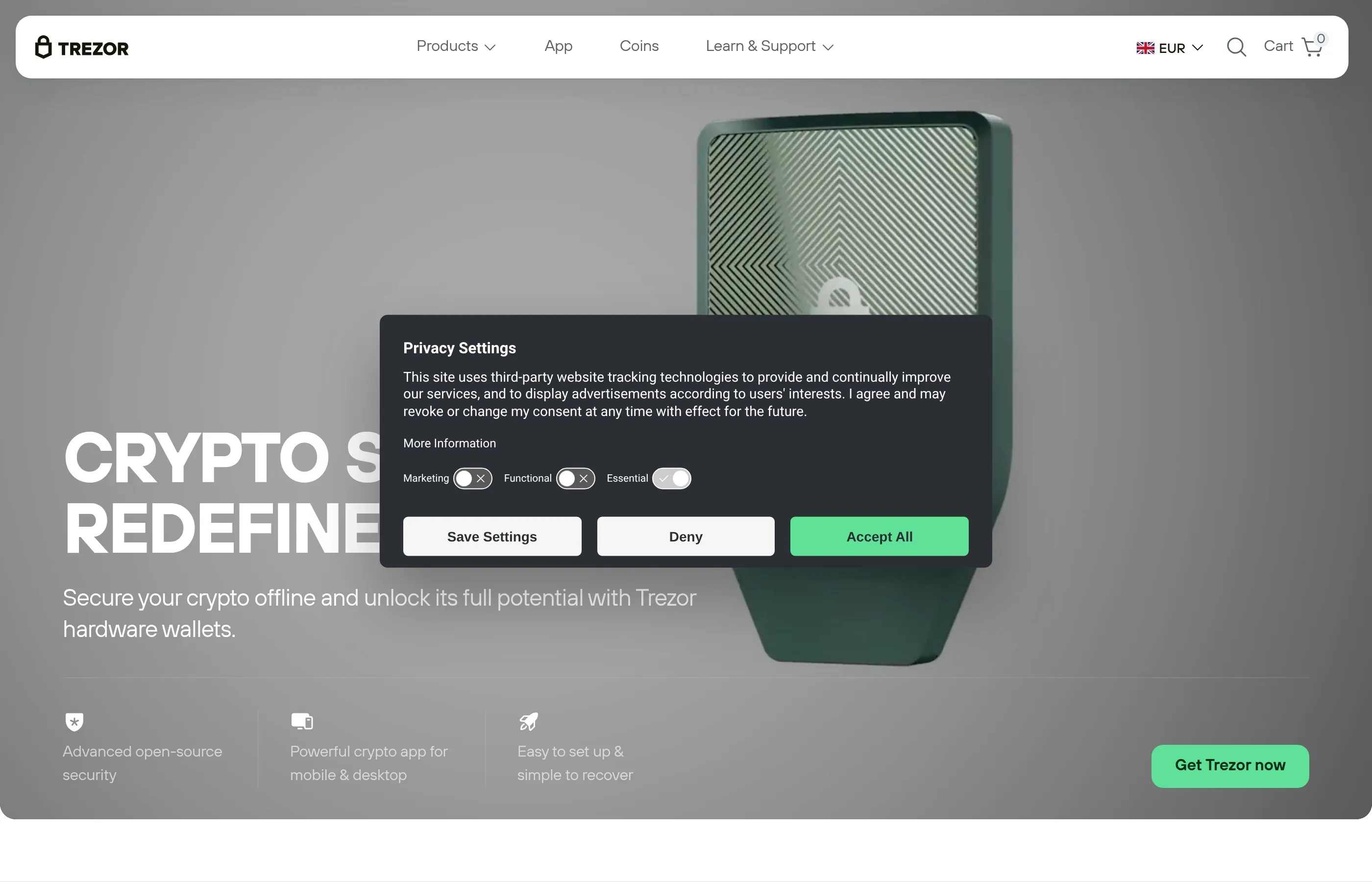
A cold wallet is any cryptocurrency wallet that stores private keys completely offline, never exposing them to an internet-connected environment. The most common types of cold wallets are hardware wallets (physical devices like Ledger and Trezor), paper wallets (printed private keys), and air-gapped computers that have never been connected to the internet.
For a detailed breakdown of the best options available right now, check out our best cold wallets of 2026 comparison guide.

How Cold Wallets Work Technically
Hardware wallets contain a secure element chip, similar to what you find in a credit card or passport. This chip generates and stores private keys internally and is designed so that the keys can never be extracted, even if the device is connected to a compromised computer.
When you want to send a transaction, here is what happens: your computer or phone creates an unsigned transaction and sends it to the hardware wallet via USB or Bluetooth. The hardware wallet displays the transaction details on its own screen for you to verify. You physically press a button on the device to approve. The secure element signs the transaction internally and sends only the signed transaction back to the computer. At no point does the private key leave the device.
Paper wallets work differently. You generate a key pair on an offline computer, print the public and private keys (often as QR codes), and then securely destroy the digital copies. To spend funds, you must import the private key into a hot wallet, which effectively converts it into a hot wallet at that point. This makes paper wallets single-use for maximum security.
🔑 Key Point
The crypto ecosystem moves fast. What matters is understanding the fundamentals - those do not change regardless of market conditions.
Air-gapped wallets use a dedicated computer that has never touched the internet. Transactions are transferred via QR codes or microSD cards between the air-gapped machine and an online device.
Security Comparison: Hot Wallet vs Cold Wallet
Security is where the hot wallet vs cold wallet debate gets most heated. Understanding the attack surface of each type is critical for protecting your portfolio. We strongly recommend reading our full guide on how to protect your crypto from hackers alongside this section.
🔑 Key Point
The crypto ecosystem moves fast. What matters is understanding the fundamentals - those do not change regardless of market conditions.
Hot Wallet Attack Surface
Hot wallets are vulnerable to a wide range of digital threats. Malware and spyware can scan your device for wallet files and extract private keys. Phishing websites can mimic legitimate DApps to trick you into signing malicious smart contract approvals. Clipboard hijackers can swap the destination address when you copy and paste. Browser extension vulnerabilities can expose your keys. SIM swap attacks can compromise SMS-based two-factor authentication. Man-in-the-middle attacks can intercept your connection to blockchain nodes.
In 2025 and into 2026, the most common attack vector has been malicious transaction signing. Attackers create fake DApp interfaces or compromise legitimate ones, tricking users into approving transactions that drain their wallets. Because hot wallets sign transactions on the same device that browses the web, the attack surface is substantial.
Cold Wallet Attack Surface
Cold wallets dramatically reduce the attack surface. Because private keys never touch an internet-connected device, remote hackers cannot access them. The primary threats to cold wallets are physical: theft of the device, discovery of the seed phrase backup, supply chain attacks (tampered devices), and social engineering (tricking the user into entering their seed phrase on a fake website).
🔑 Key Point
This is where most people stop reading. If you made it this far, you understand more than 90% of crypto users. The next step is to actually try it with a small amount.
Hardware wallets add another layer by displaying transaction details on the device's own screen. Even if your computer is completely compromised, you can verify the recipient address and amount on the hardware wallet's display before confirming. This eliminates address-swap attacks that plague hot wallet users.
Private Key Storage Comparison
In a hot wallet, private keys are stored in software, encrypted by your password, on an internet-connected device. The encryption is only as strong as your password and the device's security. In a cold wallet, private keys are stored in a dedicated secure element that is physically isolated from the internet. Even physical access to the device does not reveal the keys thanks to tamper-resistant chip design.
Convenience Comparison
While cold wallets win on security, hot wallets dominate in convenience. Here is how they stack up for everyday use.
Hot wallets let you send and receive crypto in seconds. You can interact with DeFi protocols, swap tokens, mint NFTs, and participate in governance votes without any additional hardware. Mobile hot wallets like Trust Wallet mean your crypto is always in your pocket. Browser extension wallets like MetaMask connect to thousands of DApps with a single click.
🔑 Key Point
This is where most people stop reading. If you made it this far, you understand more than 90% of crypto users. The next step is to actually try it with a small amount.
Cold wallets require extra steps. You need to plug in your device (or connect via Bluetooth), open the companion app, navigate to the correct wallet, create the transaction, verify it on the device screen, and physically confirm. This process takes anywhere from 30 seconds to several minutes depending on the transaction type. For DeFi interactions, you often need to approve multiple transactions sequentially, each requiring physical confirmation.
That said, modern hardware wallets have improved significantly. Ledger Live now supports DeFi access, staking, and NFT management directly through its interface. Trezor Suite offers a clean, integrated experience. The convenience gap has narrowed, but hot wallets still provide the fastest and most frictionless experience.
Hot Wallet vs Cold Wallet: Complete Comparison Table
When to Use a Hot Wallet
Hot wallets are the right choice in several specific scenarios. If you are actively trading on decentralized exchanges and need to execute swaps quickly, a hot wallet is essential. DeFi farming, liquidity provision, and yield strategies require constant interaction with smart contracts, making hot wallets the practical choice.
Use a hot wallet when you are minting NFTs, participating in token launches, or engaging in time-sensitive activities where speed matters. If you are a developer testing smart contracts or building DApps, a hot wallet is your daily driver. For small amounts of crypto that you use regularly, the convenience of a hot wallet outweighs the security trade-off.
Our top 5 crypto wallets for 2026 guide covers the best hot wallet options available right now.
When to Use a Cold Wallet
Cold wallets are non-negotiable for certain situations. If you hold more than $1,000 worth of cryptocurrency, you should have a cold wallet. For long-term holdings that you do not plan to touch for months or years, a cold wallet provides peace of mind that no remote attacker can reach your funds.
If crypto represents a significant portion of your net worth, cold storage is mandatory. Institutional investors, DAOs, and anyone managing funds for others should always use cold wallets as the primary storage method. If you have been a victim of a hot wallet hack in the past, migrating to cold storage prevents repeat incidents.
The Optimal Setup: Using Both Together
The smartest approach is not choosing between hot and cold wallets but using both strategically. Think of it like your physical finances: you keep spending money in your regular wallet and savings in a bank vault. The same logic applies to crypto.
The Two-Wallet Strategy
Set up a hot wallet (such as MetaMask or Phantom) for your daily activities: trading, DeFi interactions, NFT minting, and small transfers. Keep only what you need for the next week or two in this wallet. Think of it as your checking account.
Set up a cold wallet (such as Ledger or Trezor) for the bulk of your holdings. This is your savings account. Move profits from your hot wallet to cold storage regularly. Only transfer from cold to hot when you need to replenish your active trading funds.
How Much to Keep in Each Wallet
There is no universal rule, but here are practical guidelines based on portfolio size:
Portfolio under $5,000: Keep 20-30% in a hot wallet for active use and 70-80% in cold storage. At this level, a Ledger Nano S Plus or Trezor Safe 3 provides affordable cold storage.
Portfolio $5,000 - $50,000: Keep 10-15% in a hot wallet and 85-90% in cold storage. Consider a mid-range hardware wallet like the Ledger Nano X or Trezor Safe 5 for Bluetooth convenience.
Portfolio over $50,000: Keep no more than 5-10% in a hot wallet. Use a premium hardware wallet, and consider splitting cold storage across multiple devices or locations. At this level, some investors use multi-signature setups requiring multiple hardware wallets to approve a single transaction.
Portfolio over $500,000: Keep the absolute minimum in hot wallets (under 3%). Use multiple cold storage solutions, geographic distribution of seed phrase backups, and consider institutional-grade custody solutions. Multi-sig with 2-of-3 or 3-of-5 hardware wallets is strongly recommended.
Hot Wallet: Pros and Cons
Pros of Hot Wallets
Instant access: Send, receive, and interact with DApps in seconds. No physical device needed.
Free to use: Every major hot wallet is completely free to download and use. You only pay network gas fees for transactions.
DeFi native: Hot wallets integrate seamlessly with the entire DeFi ecosystem. Swap tokens, provide liquidity, stake, bridge across chains, and interact with any smart contract.
Multi-chain flexibility: Wallets like MetaMask support Ethereum and all EVM-compatible chains. Trust Wallet supports over 70 blockchains. Phantom covers Solana, Ethereum, Polygon, and Bitcoin.
Beginner friendly: The learning curve is minimal. Download, create a wallet, save your seed phrase, and you are ready to go in under five minutes.
Mobile access: Manage your crypto from anywhere with mobile wallet apps. Check balances, approve transactions, and respond to market movements on the go.
Cons of Hot Wallets
Vulnerable to hacks: Internet-connected devices are targets for malware, phishing, and remote exploits. Hot wallets have been responsible for the majority of individual crypto losses.
Phishing risk: Fake DApp sites, malicious browser extensions, and social engineering attacks can trick you into signing transactions that drain your wallet.
Malicious approvals: Interacting with smart contracts means granting token approvals. A malicious or compromised contract can use unlimited approvals to steal your tokens later.
Device dependency: If your phone or computer is compromised, stolen, or destroyed, your hot wallet is at risk (though recovery via seed phrase is possible).
No physical confirmation: Transactions are signed with a click. There is no physical verification step to catch mistakes or malicious transactions.
Cold Wallet: Pros and Cons
Pros of Cold Wallets
Maximum security: Private keys never touch the internet. Remote hacking is virtually impossible.
Physical verification: Every transaction must be confirmed on the device's screen with a physical button press. This catches address-swap attacks and malicious transactions.
Tamper-resistant hardware: Secure element chips are designed to resist physical extraction attempts. Even if someone steals your device, they cannot access your keys without your PIN.
Peace of mind: Knowing your crypto is in cold storage removes the constant anxiety of potential hacks. You can sleep at night without worrying about wake-up-to-zero scenarios.
Seed phrase recovery: If your hardware wallet is lost, stolen, or damaged, you can recover all your funds on a new device using your seed phrase.
Multi-account management: Hardware wallets can manage dozens of accounts across multiple blockchains from a single device and seed phrase.
Cons of Cold Wallets
Upfront cost: Hardware wallets range from $59 for entry-level models to $399+ for premium devices. This is an investment, though small relative to the value they protect.
Less convenient: Every transaction requires the physical device. You cannot make quick trades or respond to market movements as fast as with a hot wallet.
Learning curve: Setting up a hardware wallet, understanding firmware updates, and learning to verify transactions on the device takes time and effort.
Physical risk: The device can be lost, stolen, damaged by water or fire, or malfunction. Proper seed phrase backup mitigates this, but it is an additional responsibility.
Limited DeFi: While improving, cold wallet DeFi access still lags behind hot wallets. Some DApps do not support hardware wallet connections, and the multi-step confirmation process can be cumbersome for complex DeFi strategies.
Firmware updates required: Hardware wallets need periodic firmware updates to support new blockchains, fix bugs, and patch security vulnerabilities. Forgetting to update can limit functionality.
Common Mistakes to Avoid
Whether you use hot wallets, cold wallets, or both, these mistakes have cost crypto holders millions:
Storing your seed phrase digitally: Never save your seed phrase in a notes app, cloud storage, email, or screenshot. If your device is compromised, the attacker gets your seed phrase and every wallet derived from it. Write it on paper or stamp it on metal and store it offline.
Using a single wallet for everything: Keeping your life savings in the same hot wallet you use to mint random NFTs is asking for trouble. Separate active funds from stored funds.
Ignoring token approvals: Every time you interact with a DeFi protocol through a hot wallet, you likely approve token spending. These approvals persist forever unless revoked. Regularly review and revoke unnecessary approvals.
Buying hardware wallets from unofficial sources: Only purchase cold wallets directly from the manufacturer or authorized retailers. Tampered devices from third-party sellers on Amazon or eBay have been used to steal crypto.
Skipping firmware updates: Outdated firmware can contain security vulnerabilities. Always update your hardware wallet when prompted by the official companion app.
Not testing recovery: Many people write down their seed phrase and assume it works. Test your backup by recovering on a secondary device before storing large amounts. A single wrong word means total loss.
Sharing your wallet publicly: Posting your wallet address on social media makes you a target. Attackers monitor public addresses and use that information for targeted phishing campaigns.
Reusing a compromised wallet: If a hot wallet has been hacked or exposed, do not simply change the password. Create an entirely new wallet with a new seed phrase and transfer your remaining funds.
Falling for fake support: No wallet company will ever DM you on Twitter, Discord, or Telegram asking for your seed phrase. Every such request is a scam, no exceptions.
Neglecting physical security: A fireproof safe for your seed phrase backup costs $30-50. Metal seed phrase plates survive fires, floods, and corrosion. The cost is negligible compared to what they protect.
For a comprehensive overview of every threat and how to defend against them, read our complete crypto security guide.
Hot Wallet vs Cold Wallet for Beginners
If you are brand new to crypto, start with a hot wallet. The learning curve is gentler, and it allows you to explore the ecosystem without an upfront investment. Trust Wallet is an excellent starting point because of its simple interface and multi-chain support.
Once your portfolio grows past $500-1,000, purchase a hardware wallet and begin moving the majority of your holdings to cold storage. Keep your hot wallet for active use, but treat your cold wallet as your primary vault. This transition is a natural part of every crypto holder's journey.
The most important thing for beginners is understanding how seed phrases work. No matter which wallet type you choose, your seed phrase is your ultimate backup. Lose it, and you lose everything. Protect it, and you can always recover your funds.
Advanced Security Tips for Both Wallet Types
For hot wallet users: Use a dedicated browser profile or device for crypto. Enable all available security features like biometric locks and transaction notifications. Use a hardware wallet as a signer for your hot wallet (MetaMask supports Ledger and Trezor as signing devices, giving you hot wallet convenience with cold wallet security for confirmations).
For cold wallet users: Store your seed phrase in at least two geographically separate locations. Consider a metal backup that resists fire and water damage. Use a strong PIN on your device and enable passphrase protection for an additional layer of security. Never enter your seed phrase on any website or digital device unless you are recovering your wallet on an official app.
For both: Use unique, strong passwords for every crypto-related account. Enable two-factor authentication with an authenticator app (not SMS). Keep your wallet software and firmware updated. Be skeptical of every link, message, and "opportunity" in the crypto space.
The Future of Wallet Technology in 2026 and Beyond
The line between hot and cold wallets is blurring. Hardware wallets now offer DeFi integration, NFT support, and staking capabilities that were once exclusive to hot wallets. Meanwhile, hot wallets are integrating with secure enclaves on modern smartphones, bringing hardware-level key isolation to software wallets.
Multi-party computation (MPC) wallets represent a new category entirely. They split private keys across multiple servers and devices so that no single point of failure exists. Social recovery wallets let you designate trusted contacts who can help you regain access without a seed phrase. Account abstraction on Ethereum is enabling smart contract wallets with features like spending limits, session keys, and gasless transactions.
Despite these advances, the fundamental principle remains unchanged: the more isolated your private keys are from the internet, the more secure your funds. The hot wallet vs cold wallet framework will remain relevant even as the technology evolves.
Video Explainer
Watch this video for a visual walkthrough of the concepts covered above.

Frequently Asked Questions
Can I use a hot wallet and cold wallet together?
Yes, and this is the recommended approach. Use a hot wallet for daily transactions and DeFi interactions while keeping the bulk of your holdings in a cold wallet. You can even connect a hardware wallet to MetaMask or Phantom to get hot wallet convenience with cold wallet signing security.
Is a phone wallet a hot wallet?
Yes. Any wallet installed on a smartphone is a hot wallet because the phone is connected to the internet. This includes MetaMask Mobile, Trust Wallet, Phantom, Coinbase Wallet, and all other mobile wallet apps.
Can a cold wallet be hacked?
A properly used cold wallet is extremely difficult to hack remotely. The primary risks are physical theft of the device combined with knowledge of your PIN, supply chain attacks with tampered devices, and social engineering that tricks you into revealing your seed phrase. No remote-only hack of a major hardware wallet has been documented when the device was used correctly.
What happens if my hardware wallet breaks?
Your crypto is safe as long as you have your seed phrase. Your funds are stored on the blockchain, not on the device itself. The hardware wallet is simply a key to access those funds. Purchase a new device (same brand or compatible), restore using your seed phrase, and you will have full access to all your accounts and funds.
Are exchange wallets hot or cold?
Exchange wallets are hot wallets. When you hold crypto on an exchange like Coinbase or Binance, the exchange controls the private keys. While exchanges use a mix of hot and cold storage internally, your account is accessed online, making it a hot wallet from your perspective. The phrase "not your keys, not your coins" applies here.
How much does a cold wallet cost?
Entry-level hardware wallets like the Ledger Nano S Plus cost around $79 and the Trezor Safe 3 costs around $79. Mid-range options like the Ledger Nano X run about $149. Premium devices like the Ledger Stax or Trezor Safe 5 cost $249-$399. Given that they protect potentially thousands or millions of dollars in crypto, the cost is a worthwhile investment. Check our best cold wallets guide for current pricing and recommendations.
Can I store all cryptocurrencies on one cold wallet?
Most major hardware wallets support thousands of cryptocurrencies across multiple blockchains. Ledger supports over 5,500 tokens through the Ledger Live app. Trezor supports thousands through Trezor Suite and compatible third-party wallets. However, you may need to install specific apps on the device for each blockchain, and device storage limits how many apps can be installed simultaneously.
Is a paper wallet a good cold storage option?
Paper wallets were popular in Bitcoin's early days but are now considered outdated and risky. They are difficult to create securely (you need a truly offline computer), easy to damage (water, fire, fading ink), and require importing the private key into a hot wallet to spend, which defeats the purpose of cold storage. Hardware wallets are superior in every practical way.
How often should I move crypto from hot to cold storage?
There is no fixed schedule, but a good practice is to transfer funds whenever your hot wallet balance exceeds what you need for the next one to two weeks of activity. Some traders move funds weekly, while long-term holders might do it monthly after their regular DCA purchases. The key is to never leave more in your hot wallet than you are comfortable potentially losing.
Do I need multiple cold wallets?
For most individuals, a single hardware wallet is sufficient. However, if you hold a substantial portfolio (over $100,000), using two or more cold wallets provides redundancy and allows for multi-signature setups. You might use one Ledger and one Trezor for brand diversification, or keep one at home and one in a safe deposit box. Multi-sig requires multiple devices to approve a transaction, eliminating single points of failure.
What is the safest hot wallet in 2026?
No hot wallet is "safe" in the way a cold wallet is, but some are more secure than others. MetaMask, Phantom, and Trust Wallet are all well-audited, widely used, and regularly updated. The safest hot wallet setup combines a software wallet with a hardware wallet as the signer, giving you the convenience of a hot wallet with the signing security of cold storage. See our top 5 wallets for 2026 for detailed recommendations.
Can someone steal my crypto if they know my public wallet address?
No. Your public address is like your email address. Anyone can see it and send you funds, but they cannot access or withdraw your crypto without your private key. However, sharing your public address can make you a target for phishing attacks, and blockchain analysis can reveal your transaction history and approximate balance, so practice discretion.
Final Verdict: Hot Wallet or Cold Wallet?
The answer is both. A hot wallet for convenience and daily use, a cold wallet for security and long-term storage. This combination gives you the best of both worlds and is the approach used by experienced crypto holders, institutions, and security experts worldwide.
If you can only choose one to start with, choose based on your primary use case. Active traders and DeFi users should start with a quality hot wallet like MetaMask. Long-term holders and savers should start with a hardware cold wallet. But plan to add the other type as soon as possible.
Your crypto security is only as strong as your weakest link. Understand the trade-offs, use the right tool for the right job, and never stop learning about the threats in this space. The hot wallet vs cold wallet decision is just the beginning of your security journey.