Cryptocurrency for Beginners: Everything You Need to Know (2026)
— By Tony Rabbit in Tutorials

Cryptocurrency for beginners 2026: how to buy your first crypto, store it safely, avoid scams, start with $50, DCA strategy, and a 30+ term glossary. No experience needed.
Cryptocurrency can feel overwhelming when you are just getting started. Between the strange acronyms, volatile price swings, and endless opinions on social media, it is easy to feel lost before you even buy your first coin. But here is the good news: millions of everyday people have already made the leap, and it is far simpler than most "experts" make it sound.
This guide was written specifically for absolute beginners. No finance degree required, no coding knowledge needed. By the time you finish reading, you will understand what cryptocurrency actually is, how to buy it safely, how to store it, which mistakes to avoid, and how to build confidence as a new investor in 2026.
What Is Cryptocurrency in Plain Language?
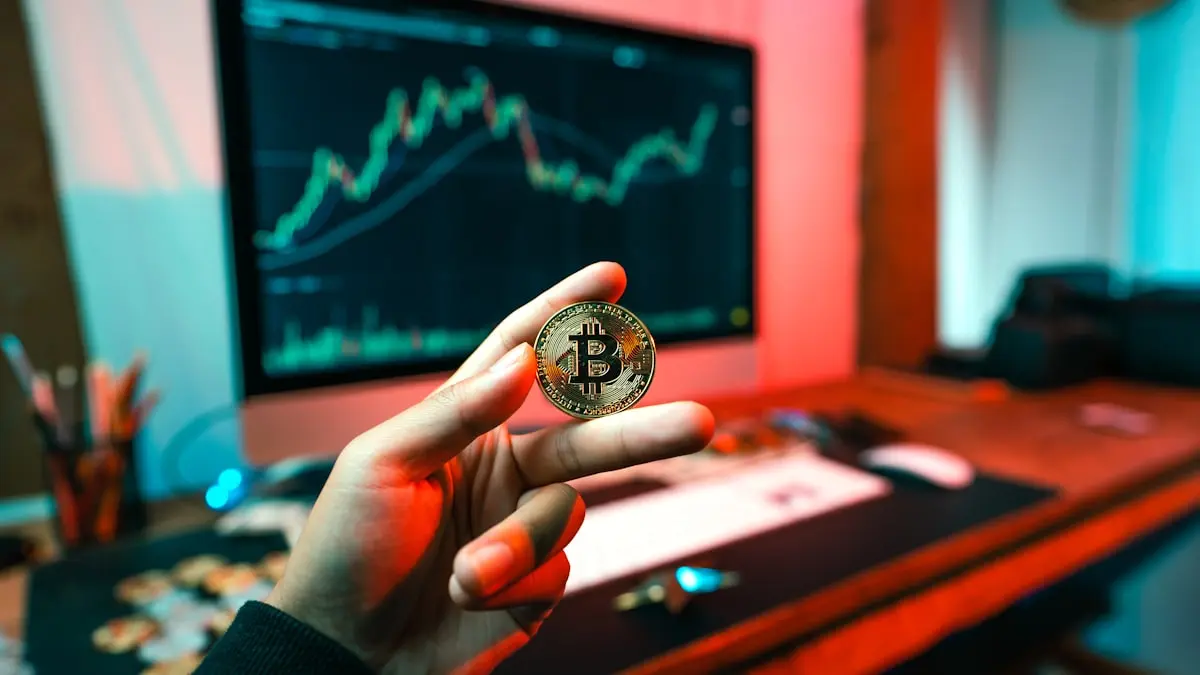
At its core, cryptocurrency is digital money. Unlike the dollars or euros in your bank account, crypto is not controlled by any single government, bank, or company. Instead, it runs on a technology called blockchain, which is essentially a shared digital ledger that records every transaction across thousands of computers worldwide.
Think of it like a Google spreadsheet that everyone can view but nobody can secretly edit. Every time someone sends or receives crypto, that transaction gets recorded permanently. No single person or institution can change it after the fact, which is what makes the system trustworthy without needing a middleman like a bank.
Beginner Checklist - Before You Buy
The first and most well-known cryptocurrency is Bitcoin, which was created in 2009 by a mysterious figure (or group) known as Satoshi Nakamoto. Since then, thousands of other cryptocurrencies have been created, including Ethereum, Solana, Cardano, and many more. Each one has a different purpose, technology, and community behind it.
The important thing to understand right now is this: cryptocurrency lets you send value to anyone in the world, at any time, without asking permission from a bank or government. That simple idea is what drives the entire industry.

Why Do People Buy Cryptocurrency?
People invest in crypto for many different reasons. Understanding these motivations will help you figure out your own "why" before you put any money in.
🔑 Key Point
Understanding this concept is fundamental to navigating the crypto ecosystem. Take your time with each section before moving on.
🔑 Key Point
Understanding this concept is fundamental to navigating the crypto ecosystem. Take your time with each section before moving on.

Potential for Growth
Bitcoin went from being worth less than a penny in 2009 to trading at tens of thousands of dollars. Early investors in Ethereum, Solana, and other projects saw massive returns. While past performance never guarantees future results, many people see crypto as a long-term growth opportunity, especially as adoption continues worldwide.
Protection Against Inflation
Bitcoin has a fixed supply of 21 million coins. Unlike government currencies that can be printed endlessly, no one can create more Bitcoin. This scarcity is why some investors call it "digital gold" and use it as a hedge against currency devaluation.
Financial Freedom and Access
Over a billion people worldwide do not have access to traditional banking. Crypto only requires an internet connection and a smartphone. It allows people in underbanked regions to save, send, and receive money without needing a bank account.
Decentralization
Many people are attracted to the idea that no single entity controls the network. Your crypto cannot be frozen by a bank, and transactions cannot be censored by a government. This appeals to people who value financial sovereignty.
Innovation and Technology
Beyond just money, blockchain technology enables smart contracts, decentralized finance (DeFi), non-fungible tokens (NFTs), and entirely new types of applications. Some investors buy crypto because they believe in the underlying technology and want to support its development.
🔑 Key Point
The crypto ecosystem moves fast. What matters is understanding the fundamentals - those do not change regardless of market conditions.
Is Cryptocurrency Safe?
This is one of the first questions every beginner asks, and it deserves an honest answer: cryptocurrency itself is built on extremely secure technology. The Bitcoin blockchain has never been hacked in its entire history. However, the people and platforms around crypto can be vulnerable.
Here is a balanced breakdown:
🔑 Key Point
The crypto ecosystem moves fast. What matters is understanding the fundamentals - those do not change regardless of market conditions.
What Makes Crypto Secure
- Blockchain technology uses advanced cryptography that is practically impossible to break
- Transactions are verified by thousands of independent computers, not a single server
- Once confirmed, transactions cannot be reversed or altered
- Open-source code means anyone can audit how the system works
What Makes Crypto Risky
- Prices can swing 10-20% or more in a single day
- Scammers actively target beginners with fake projects and phishing attacks
- If you lose your private keys or seed phrase, your crypto is gone forever
- Some exchanges have been hacked or gone bankrupt (remember FTX)
- Regulations are still evolving, which creates uncertainty
The bottom line: crypto is safe when you take proper precautions. The biggest risks come from user error and scams, not from the technology itself. This guide will teach you exactly how to protect yourself.
How to Buy Your First Cryptocurrency (Step by Step)
Let us walk through the exact process of buying your first crypto using Coinbase, which is one of the most beginner-friendly platforms available in 2026. If you want to explore other options, check out our guide to the top 5 crypto exchanges.
Step 1: Choose an Exchange
A cryptocurrency exchange is where you buy, sell, and trade crypto. Think of it like the App Store for crypto. For beginners, we recommend starting with Coinbase because of its simple interface, strong security track record, and insurance on funds held on the platform. Other popular options include Kraken, Gemini, and Binance.
⚠ Common Mistake
Do NOT chase coins that already pumped 500%. By the time you see it on social media, smart money already took profits. Focus on established projects first.
Before choosing, read our full breakdown of how to buy cryptocurrency to compare your options.
Step 2: Create and Verify Your Account
Download the Coinbase app or visit coinbase.com. You will need to provide your full name, email address, and phone number. Then you will go through identity verification (KYC), which requires a government-issued ID like a driver's license or passport. This usually takes 5-15 minutes.
KYC is required by law on all legitimate exchanges. If a platform does not ask for ID, that is actually a red flag.
Step 3: Secure Your Account
Before depositing any money, set up two-factor authentication (2FA). Use an authenticator app like Google Authenticator or Authy instead of SMS verification. SMS can be intercepted through SIM swap attacks, which are one of the most common ways crypto gets stolen.
⚠ Common Mistake
Do NOT chase coins that already pumped 500%. By the time you see it on social media, smart money already took profits. Focus on established projects first.
Step 4: Add a Payment Method
Link your bank account or debit card. Bank transfers (ACH) usually have lower fees but take 1-3 business days. Debit cards are instant but charge higher fees (around 2-3%). For your first purchase, a debit card is fine since convenience matters more than saving a few dollars.
Step 5: Buy Your First Crypto
Navigate to the "Buy" section, select Bitcoin (BTC) or Ethereum (ETH), and enter the amount you want to spend. For your very first purchase, start with something small like $50-100. You do not need to buy a whole Bitcoin. You can buy a fraction of any cryptocurrency.
Review the transaction details, confirm the fees, and hit "Buy." Congratulations, you now own cryptocurrency.
Step 6: Understand What You Just Bought
Your crypto now sits in your Coinbase account, which acts as a "custodial wallet." This means Coinbase holds the keys to your crypto on your behalf. For small amounts, this is perfectly fine. As your holdings grow, you will want to move to a personal wallet for better security, which we cover in the next section.
How to Store Your Cryptocurrency Safely
One of the most important concepts in crypto is: "Not your keys, not your coins." This means that if you leave your crypto on an exchange, you are trusting that company to keep it safe. History has shown that exchanges can be hacked, go bankrupt, or freeze withdrawals.
The solution is to use your own cryptocurrency wallet. Learn the full process in our how to create a crypto wallet guide.
Types of Wallets
Hot Wallets (Software Wallets)
These are apps on your phone or computer that store your crypto. They are connected to the internet, which makes them convenient but slightly less secure. Popular options include MetaMask (great for Ethereum and DeFi), Trust Wallet, and Phantom (for Solana).
Hot wallets are free, easy to set up, and perfect for crypto you plan to use regularly or trade.
Cold Wallets (Hardware Wallets)
These are physical devices (similar to USB drives) that store your crypto completely offline. Because they never connect to the internet, they are virtually immune to hacking. Popular options include the Ledger Nano X and Trezor Model T. Check out our full review of the best cold wallets for 2026.
Cold wallets cost between $60-200 and are essential for anyone holding more than a few hundred dollars in crypto.
Paper Wallets
A paper wallet is simply your private keys printed on a piece of paper. While technically secure from hacking, paper wallets are fragile, can be lost, and are not practical for regular use. Most beginners should skip paper wallets entirely.
The Golden Rule of Wallet Security
When you create any wallet, you will receive a seed phrase (also called a recovery phrase). This is usually 12 or 24 random words. This phrase is the master key to your crypto. Write it down on paper, store it in a fireproof safe, and never share it with anyone. Never store it digitally (no photos, no cloud storage, no notes app). If someone gets your seed phrase, they can steal everything.
Common Cryptocurrency Scams to Avoid
Scammers love targeting beginners because they know you are still learning. Here are the most common scams in 2026 and how to protect yourself:
Phishing Attacks
Scammers create fake websites that look exactly like real exchanges or wallet providers. They send you emails or messages with links to these fake sites. When you enter your login credentials, they steal your information. Always double-check URLs, bookmark your exchange, and never click links in unsolicited emails.
Fake Giveaways
"Send me 1 BTC and I will send back 2 BTC." This is always a scam, no matter who supposedly posted it. No legitimate person or company will ever ask you to send crypto first. These scams are rampant on YouTube, X (Twitter), and Telegram.
Pump and Dump Schemes
A group of people secretly buy a low-value coin, then aggressively promote it to drive up the price. Once enough beginners buy in, the group sells everything, crashing the price and leaving you with worthless tokens.
Rug Pulls
A development team launches a new token, builds hype, collects investor money, and then abandons the project and disappears with the funds. Always research the team, check if the code has been audited, and be extremely skeptical of new projects promising guaranteed returns. Read our full guide on how to do your own research (DYOR).
Romance and Social Engineering Scams
Scammers build relationships with victims online, then gradually convince them to "invest" in crypto through fake platforms. If anyone you meet online starts talking about crypto investment opportunities, be extremely cautious.
Fake Customer Support
If you post about a problem on Reddit or Twitter, scammers will message you pretending to be customer support. They will ask for your seed phrase or private keys to "fix" the issue. Real customer support will never ask for these.
How to Protect Yourself
- Never share your seed phrase or private keys with anyone, ever
- Use two-factor authentication on every account
- Bookmark exchange websites and wallet portals instead of clicking links
- Be skeptical of any "guaranteed returns" or "risk-free" investments
- Research projects thoroughly before investing (check the team, whitepaper, and community)
- Start with small amounts while you are still learning
- If something sounds too good to be true, it is
How Much Should You Invest as a Beginner?
The golden rule of crypto investing is simple: never invest more than you can afford to lose completely. Cryptocurrency is volatile, and while the long-term trend for major coins like Bitcoin has been upward, short-term crashes of 30-50% are normal.
Start Small: $50-100
For your very first investment, start with $50 to $100. This amount is large enough to be meaningful and motivate you to learn, but small enough that losing it would not affect your life. Think of it as tuition for your crypto education.
The 5% Rule
Many financial advisors suggest keeping crypto at no more than 5-10% of your total investment portfolio. If you have $10,000 in savings, that means $500-1,000 in crypto at most. As you gain experience and confidence, you can adjust this percentage.
Never Use Money You Need
Do not invest your rent money, emergency fund, or money earmarked for bills. Crypto should only come from money you have set aside specifically for investing, after your essential expenses are covered.
Build Over Time
Instead of going all in at once, consider adding a small amount regularly. This brings us to one of the most powerful strategies for beginners: dollar-cost averaging.
Dollar-Cost Averaging (DCA) Explained
Dollar-cost averaging is the simplest and most stress-free way to invest in crypto. Instead of trying to time the market (which even professionals fail at), you invest a fixed amount at regular intervals regardless of the price.
For a complete walkthrough, read our dedicated guide on how to dollar-cost average (DCA).
How DCA Works in Practice
Let us say you decide to invest $50 into Bitcoin every Monday. Here is what that might look like over four weeks:
- Week 1: Bitcoin at $65,000. Your $50 buys 0.000769 BTC
- Week 2: Bitcoin drops to $58,000. Your $50 buys 0.000862 BTC
- Week 3: Bitcoin at $62,000. Your $50 buys 0.000806 BTC
- Week 4: Bitcoin rises to $70,000. Your $50 buys 0.000714 BTC
After four weeks, you have invested $200 and accumulated 0.003151 BTC at an average price of about $63,472 per Bitcoin. You automatically bought more when the price was low and less when it was high, without having to predict anything.
Why DCA Works for Beginners
- Removes the stress of trying to find the "perfect" entry point
- Smooths out volatility over time
- Builds discipline and consistent investing habits
- Works well in both bull and bear markets
- Can be automated on most exchanges (set it and forget it)
How to Set Up DCA on Coinbase
On Coinbase, go to the asset you want to buy, tap "Buy," then select "Recurring Purchase." Choose your amount and frequency (daily, weekly, biweekly, or monthly). Coinbase will automatically make the purchase for you on schedule. It takes less than two minutes to set up.
Reading Crypto Charts: The Basics
You do not need to become a chart expert to invest in crypto, but understanding the basics will help you make more informed decisions and avoid panic selling.
Candlestick Charts
Most crypto charts use "candlesticks." Each candlestick represents a specific time period (1 hour, 1 day, 1 week, etc.). A green candle means the price went up during that period. A red candle means it went down. The "body" of the candle shows the opening and closing prices, while the thin lines (wicks) show the highest and lowest prices reached.
Key Terms for Charts
- Support: A price level where the asset tends to stop falling and bounce back up. Think of it as a floor.
- Resistance: A price level where the asset tends to stop rising and pulls back. Think of it as a ceiling.
- Volume: How much of the asset is being traded. High volume on a price move means stronger conviction behind that move.
- Market Cap: The total value of all coins in circulation. Calculated as price multiplied by total supply. This is more useful than price alone for comparing different cryptocurrencies.
- All-Time High (ATH): The highest price the asset has ever reached.
What Beginners Should Focus On
Forget about complex indicators and patterns for now. As a beginner, focus on just three things: the overall trend direction (is it generally going up or down over months?), the trading volume (are people actively buying and selling?), and the market cap (is this a large established coin or a tiny speculative one?). Everything else can wait until you have more experience.
Top 5 Mistakes Crypto Beginners Make
Learning from the mistakes of others will save you money and frustration. Here are the five most common errors new crypto investors make, and we have a full article covering the top 5 mistakes crypto beginners should avoid.
1. Investing More Than They Can Afford to Lose
This is the number one mistake and the most dangerous. When Bitcoin is pumping and social media is buzzing, it is tempting to throw in your savings. But crypto is unpredictable. Markets can crash 40-60% and stay down for months or even years. Only invest what you would be okay losing entirely.
2. Not Doing Their Own Research (DYOR)
Buying a coin because someone on TikTok or Telegram said it will "100x" is not a strategy. Before investing in any cryptocurrency, understand what it does, who built it, what problem it solves, and why it might (or might not) succeed. Read whitepapers, check the team, look at the tokenomics. Our guide on how to DYOR shows you exactly how.
3. Panic Selling During Dips
When the market drops 20% overnight, the natural reaction is fear. Many beginners sell at the bottom, lock in their losses, and then watch the price recover. If you believe in your investment long-term, a dip is not a reason to sell. In fact, for DCA investors, dips are buying opportunities.
4. Keeping All Crypto on an Exchange
Exchanges are convenient, but they are also targets for hackers and can go bankrupt. The collapse of FTX in 2022 wiped out billions in customer funds. For any significant amount, transfer your crypto to a personal wallet. Use a hot wallet for active trading and a cold wallet for long-term storage.
5. Chasing Hype Coins and Meme Tokens
New coins pop up daily promising revolutionary technology or insane returns. Most of them go to zero. As a beginner, stick with established projects like Bitcoin and Ethereum until you have enough knowledge to evaluate newer projects. The boring strategy is usually the profitable one.
Cryptocurrency Pros and Cons
Pros
- High growth potential: Major cryptocurrencies have outperformed most traditional assets over the past decade
- Decentralized: No single entity controls the network, reducing censorship and single points of failure
- 24/7 markets: Unlike stocks, crypto markets never close. You can buy, sell, or trade any time
- Low barriers to entry: Anyone with a smartphone and internet connection can participate
- Fractional ownership: You can buy $10 worth of Bitcoin. You do not need to buy a whole coin
- Fast and cheap transfers: Send money anywhere in the world in minutes, often for less than a dollar
- Transparency: All transactions are recorded on a public blockchain for anyone to verify
- Programmable money: Smart contracts enable automated financial products and services
Cons
- Extreme volatility: Prices can swing dramatically in hours, which can be stressful and lead to losses
- Irreversible transactions: If you send crypto to the wrong address, there is no way to get it back
- Security responsibility: You are responsible for your own security. Losing your seed phrase means losing your funds
- Regulatory uncertainty: Laws vary by country and are constantly changing
- Scams and fraud: The industry attracts bad actors who target inexperienced investors
- Tax complexity: Crypto taxes can be complicated, especially if you trade frequently
- Environmental concerns: Some cryptocurrencies (like Bitcoin's proof-of-work) consume significant energy
- Learning curve: Understanding wallets, keys, gas fees, and blockchain technology takes time
Cryptocurrency Tax Basics
Yes, you have to pay taxes on your cryptocurrency gains in most countries. In the United States, the IRS treats cryptocurrency as property, which means every time you sell, trade, or use crypto to buy something, it is a taxable event.
For a complete breakdown of what you owe and how to report it, check our crypto tax guide.
Key Tax Points for Beginners
- Buying crypto is not taxable. You only owe taxes when you sell, trade, or spend it
- Short-term gains (held less than one year) are taxed at your regular income rate
- Long-term gains (held more than one year) are taxed at lower capital gains rates (0%, 15%, or 20%)
- You can deduct losses. If you sold crypto at a loss, you can use that to offset other gains
- Keep records of everything. Track every buy, sell, and trade with dates and amounts
Use crypto tax software like CoinTracker, Koinly, or TaxBit to automatically calculate your obligations. Most exchanges also provide tax reports you can download.
Glossary of Cryptocurrency Terms (30+ Essential Terms)
Crypto has its own language. Here is every term you need to know as a beginner, listed alphabetically:
- Address: A unique string of characters that serves as your crypto "account number." You share this to receive funds
- Altcoin: Any cryptocurrency that is not Bitcoin. Ethereum, Solana, and Cardano are all altcoins
- ATH (All-Time High): The highest price a cryptocurrency has ever reached in its history
- Bear Market: A prolonged period of falling prices, typically a decline of 20% or more from recent highs
- Block: A bundle of transactions that gets added to the blockchain. Think of it as one page in the ledger
- Blockchain: A decentralized digital ledger that records all transactions across a network of computers
- Bridge: A protocol that allows you to transfer assets between different blockchains (e.g., from Ethereum to Solana)
- Bull Market: A prolonged period of rising prices and positive market sentiment
- Burn: Permanently removing tokens from circulation, usually to reduce supply and increase scarcity
- CEX (Centralized Exchange): A crypto exchange run by a company, like Coinbase or Kraken
- Cold Wallet: A hardware device that stores your crypto offline for maximum security
- Consensus Mechanism: The method a blockchain uses to verify transactions (e.g., Proof of Work, Proof of Stake)
- DApp (Decentralized Application): An application that runs on a blockchain rather than a centralized server
- DCA (Dollar-Cost Averaging): Investing a fixed amount at regular intervals, regardless of price
- DeFi (Decentralized Finance): Financial services built on blockchain that operate without banks or intermediaries
- DEX (Decentralized Exchange): A crypto exchange that operates without a central authority, like Uniswap or Jupiter
- Diamond Hands: Holding your crypto through price drops without selling. The opposite of paper hands
- DYOR (Do Your Own Research): A reminder to investigate a project yourself before investing, rather than relying on others
- FOMO (Fear of Missing Out): The anxiety that drives people to buy impulsively when prices are rising
- FUD (Fear, Uncertainty, and Doubt): Negative information or rumors spread to cause panic selling
- Gas: The fee you pay to process a transaction on a blockchain like Ethereum. Gas fees vary based on network demand
- Genesis Block: The very first block ever created on a blockchain
- Halving: An event where Bitcoin's mining reward is cut in half, occurring roughly every four years. This reduces the rate of new Bitcoin entering circulation
- Hash Rate: The total computing power being used to mine and process transactions on a blockchain
- HODL: A misspelling of "hold" that became a crypto meme. It means holding your crypto long-term instead of selling during dips
- Hot Wallet: A software wallet connected to the internet, used for convenient everyday transactions
- KYC (Know Your Customer): Identity verification required by exchanges to comply with regulations
- Layer 1: The base blockchain itself (e.g., Bitcoin, Ethereum, Solana)
- Layer 2: A secondary network built on top of a Layer 1 to improve speed and reduce fees (e.g., Lightning Network, Arbitrum)
- Liquidity: How easily an asset can be bought or sold without significantly affecting its price
- Market Cap: The total value of a cryptocurrency, calculated as price multiplied by circulating supply
- Memecoin: A cryptocurrency created as a joke or based on internet memes, like Dogecoin or Shiba Inu
- Mining: The process of using computer power to verify transactions and earn crypto rewards (used by Proof of Work blockchains)
- NFT (Non-Fungible Token): A unique digital asset verified on the blockchain, often used for art, collectibles, and gaming items
- Node: A computer that helps run and maintain a blockchain network by storing a copy of the ledger
- Paper Hands: Selling your crypto at the first sign of a price drop. The opposite of diamond hands
- Private Key: A secret code that gives you access to your cryptocurrency. Never share this with anyone
- Proof of Stake (PoS): A consensus mechanism where validators lock up (stake) their crypto to verify transactions and earn rewards
- Proof of Work (PoW): A consensus mechanism where miners use computing power to solve complex puzzles and verify transactions
- Public Key: A code derived from your private key that others can use to send you cryptocurrency
- Satoshi (Sat): The smallest unit of Bitcoin, equal to 0.00000001 BTC. Named after Bitcoin's creator
- Seed Phrase: A series of 12 or 24 words that acts as the master backup for your wallet. Write it down and store it securely offline
- Slippage: The difference between the expected price of a trade and the actual price at execution
- Smart Contract: Self-executing code on a blockchain that automatically carries out actions when specific conditions are met
- Stablecoin: A cryptocurrency designed to maintain a stable value, usually pegged to the US dollar (e.g., USDC, USDT)
- Staking: Locking up your crypto to support a blockchain network and earning rewards in return
- Token: A cryptocurrency that runs on another blockchain (e.g., USDC is a token on the Ethereum blockchain)
- Tokenomics: The economic model behind a cryptocurrency, including supply, distribution, and incentive structures
- Validator: A participant in a Proof of Stake network who verifies transactions and maintains the blockchain
- Volatility: The degree of price fluctuation. High volatility means large, rapid price swings
- Wallet: A software or hardware tool that stores your crypto keys and lets you send and receive cryptocurrency
- Whale: An individual or entity that holds a very large amount of cryptocurrency, enough to influence market prices
- Yield Farming: Earning rewards by providing liquidity to DeFi protocols
Video Explainer
Watch this video for a visual walkthrough of the concepts covered above.

Frequently Asked Questions (FAQ)
What is the best cryptocurrency for beginners?
Bitcoin (BTC) and Ethereum (ETH) are the best starting points for beginners. Bitcoin is the most established and widely recognized cryptocurrency with the longest track record. Ethereum powers most of the decentralized applications and DeFi ecosystem. Both are available on every major exchange and have the most liquidity. Start with one or both of these before exploring smaller altcoins.
How much money do I need to start investing in crypto?
You can start with as little as $1 on most exchanges. However, we recommend starting with $50-100 so the investment feels meaningful enough to motivate you to learn. Remember, you can buy fractions of any cryptocurrency, so you never need thousands of dollars to get started.
Is it too late to invest in cryptocurrency in 2026?
Many people thought it was "too late" when Bitcoin hit $1,000, $10,000, and $50,000. Cryptocurrency adoption is still in its early stages globally. Less than 10% of the world's population owns crypto. Whether prices will continue to rise is not guaranteed, but the technology and adoption curve suggest significant room for growth. The best time to start is when you are ready and educated.
Can I lose all my money in crypto?
Yes, it is possible, especially with smaller altcoins that can go to zero. Bitcoin and Ethereum are unlikely to become completely worthless given their market position and adoption, but they can still lose 50-80% of their value during bear markets. This is why you should only invest what you can afford to lose and diversify your overall investment portfolio beyond just crypto.
What is the difference between a coin and a token?
A coin operates on its own native blockchain (Bitcoin on the Bitcoin blockchain, Ether on the Ethereum blockchain). A token is built on top of someone else's blockchain (USDC and thousands of other tokens run on the Ethereum blockchain). In everyday conversation, people often use the terms interchangeably, but this is the technical distinction.
Do I need to buy a whole Bitcoin?
Absolutely not. Bitcoin is divisible down to eight decimal places. The smallest unit (0.00000001 BTC) is called a satoshi. You can buy $10 worth of Bitcoin, which would give you a fraction of a coin. This is the same for virtually all cryptocurrencies.
What happens if I forget my wallet password?
If you forget the password to a software wallet, you can usually recover your funds using your seed phrase (those 12 or 24 words you wrote down when creating the wallet). If you lose both your password and your seed phrase, your crypto is permanently gone. There is no "forgot password" button or customer support that can help. This is why properly storing your seed phrase is absolutely critical.
Should I use a hot wallet or a cold wallet?
Use both. A hot wallet (like MetaMask or Trust Wallet) is ideal for small amounts you want quick access to, for interacting with DeFi applications, and for regular trading. A cold wallet (like Ledger or Trezor) is essential for larger amounts you plan to hold long-term. Think of a hot wallet as your everyday spending wallet and a cold wallet as your savings vault.
How do I avoid crypto scams?
Follow these rules: never share your seed phrase or private keys with anyone. Do not trust unsolicited messages about investment opportunities. Verify website URLs carefully before entering login credentials. Use two-factor authentication on every account. Research any project thoroughly before investing. If someone promises guaranteed returns, it is a scam. Period.
What are gas fees and why are they so high?
Gas fees are the cost of processing a transaction on a blockchain network. On Ethereum, gas fees are paid in ETH and can vary dramatically based on network congestion. During busy periods, a simple transfer might cost $5-20, while complex smart contract interactions can cost $50-100 or more. Alternative networks like Solana, Avalanche, and Polygon offer much lower fees, which is one reason they have gained popularity.
Is cryptocurrency legal?
Cryptocurrency is legal in most countries, including the United States, European Union, United Kingdom, Canada, and Australia. However, regulations vary significantly. Some countries have outright bans (like China), while others have embraced it with clear frameworks. In the U.S., the SEC and other agencies have been developing clearer regulatory guidelines throughout 2025 and 2026. Always check the regulations in your specific country before investing.
How do I sell my cryptocurrency?
Selling is essentially the reverse of buying. On your exchange (like Coinbase), navigate to the asset you want to sell, select "Sell," enter the amount, review the fees, and confirm. The funds will be deposited to your linked bank account, usually within 1-3 business days. If your crypto is in a personal wallet, you will need to transfer it back to an exchange first before selling.
What is staking and should beginners do it?
Staking is like earning interest on your crypto. You lock up certain cryptocurrencies (like Ethereum, Solana, or Cardano) to help secure their network, and in return, you earn rewards (typically 3-8% annually). Many exchanges like Coinbase offer easy staking with just a few clicks. It is a good way for beginners to earn passive income on crypto they plan to hold long-term. Just be aware that staked crypto may be locked for a period and cannot be sold immediately.
What is DeFi and is it safe for beginners?
DeFi (Decentralized Finance) refers to financial services that operate on blockchain without traditional intermediaries. This includes lending, borrowing, trading, and earning interest. While DeFi offers exciting opportunities, it carries additional risks including smart contract bugs, protocol hacks, and complex interfaces. Beginners should master the basics of buying, storing, and understanding crypto before venturing into DeFi.
How is crypto different from stocks?
Stocks represent ownership in a company, while cryptocurrencies represent ownership of a digital asset or network participation. Crypto markets operate 24/7 (stocks trade limited hours). Crypto is generally more volatile than stocks. There are no circuit breakers in crypto (stocks halt trading during extreme moves). Crypto can be self-custodied (you cannot hold physical stock certificates anymore in most cases). Both can be part of a diversified investment portfolio.
Your Next Steps
You now have a solid foundation in cryptocurrency. Here is a simple action plan to get started:
- Open an account on a reputable exchange like Coinbase and complete verification
- Secure your account with two-factor authentication using an authenticator app
- Make your first purchase of $50-100 in Bitcoin or Ethereum by following our how to buy cryptocurrency guide
- Set up a personal wallet for better security as your holdings grow. Our wallet creation guide walks you through it
- Start dollar-cost averaging with a small weekly or monthly buy to build your position over time
- Keep learning by reading our guides on doing your own research and avoiding the top beginner mistakes
Cryptocurrency is still an emerging asset class with real risks and real opportunities. The investors who do best are the ones who take the time to educate themselves, start small, and stay disciplined. You have already taken the most important step by reading this guide. Now it is time to put that knowledge into action.
Frequently Asked Questions
What is cryptocurrency and how does it work?
Cryptocurrency is a digital asset designed to work as a medium of exchange using cryptography to secure transactions and control the creation of new units. It operates on a decentralized network called a blockchain.
What are the best cryptocurrencies for beginners in 2026?
For beginners in 2026, well-established cryptocurrencies like Bitcoin and Ethereum are often recommended due to their market capitalization and widespread adoption. Researching their use cases and underlying technology is crucial.
How do I buy and store cryptocurrency safely?
You can buy cryptocurrency through exchanges like Coinbase or Binance. For storage, hardware wallets (e.g., Ledger, Trezor) offer the best security for long-term holdings, while software wallets are convenient for smaller amounts.
What are the risks associated with investing in cryptocurrency?
Cryptocurrency investments carry risks including high volatility, potential for regulatory changes, and cybersecurity threats. It is important to only invest what you can afford to lose and conduct thorough research.
Will cryptocurrency be regulated more heavily by 2026?
Regulatory landscapes for cryptocurrency are evolving globally. By 2026, increased clarity and potentially more comprehensive regulations are anticipated in many jurisdictions, impacting areas like taxation and consumer protection.