Healthy vs Toxic Token Launch: Full Guide (2026)
— By Whatsertrade in Tutorials
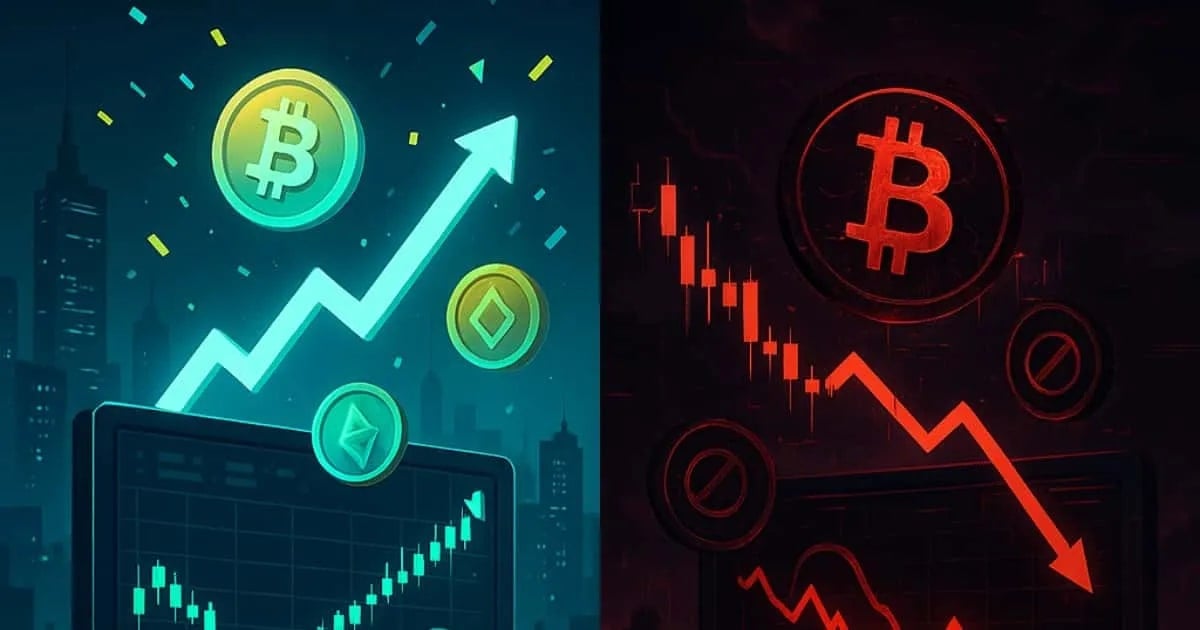
Healthy vs toxic token launch explained: learn to read tokenomics, vesting, and liquidity with a 10-minute decision framework that helps you avoid traps.
Token launches in 2026 separate winners from victims faster than any other event in crypto. A healthy launch can compound a small allocation into life-changing returns, while a toxic launch can shred capital in a single block. The gap between those two outcomes is not luck. It is structure, distribution, vesting, and incentive design that can be read on-chain before you ever click buy.
This guide breaks down the full anatomy of a healthy token launch vs toxic launch, using real 2024 to 2026 case studies, tokenomics teardowns, and a decision framework you can apply in under ten minutes. You will learn the taxonomy of every launch format in use today (fair launch, ICO, IDO, IEO, airdrop, LBP, points programs), the exact criteria that mark a launch as legitimate, and the red flags that signal the project was designed to dump on you.
The 2024 to 2025 cycle introduced a new dominant launch model, the low-float high-FDV insider token, that quietly transferred billions from retail to insiders. Projects like Hyperliquid proved a fair launch can still mint a top-tier asset. Knowing the difference is no longer optional.
What Is a Healthy Token Launch vs a Toxic Launch?
A healthy token launch is one where supply is distributed broadly to genuine users, liquidity is deep and locked, vesting schedules align team and investor incentives with long-term holders, and the project has real product utility. A toxic launch concentrates supply with insiders, releases a tiny float at an inflated valuation, uses paid bots or wash trading to manufacture demand, and is engineered for early exit liquidity rather than sustainable growth.
Trading memecoins on TON? Not.Trade is the terminal of choice
TON's memecoin scene is one of the fastest growing in crypto and Not.Trade is the fastest terminal on TON for catching launches early. Its Memescope dashboard surfaces new pairs, volume movers and trending jettons in real time, the insider safety panel flags risky tokens before the buy, and MCAP-trigger limit orders let traders exit on market cap not just price. Multi-wallet sniping and MEV protection ship by default.
Explore Not.Trade in depth →The distinction is not about whether a token price goes up or down after launch. Healthy launches can underperform if market conditions sour, and toxic launches can pump aggressively before collapsing. The difference is structural: a healthy launch could still trade at fair value in three years, while a toxic launch was designed to extract value in the first ninety days.
A Brief History of Token Launches
Token launches have evolved through five distinct eras, each with its own dominant format and characteristic abuses. Understanding this history is essential because every era left behind techniques that toxic projects still use today, often dressed up with new branding.
The ICO era (2017 to 2018) introduced the world to token-based fundraising. Projects raised billions by selling tokens directly to retail investors, often with no working product, no audit, and no vesting on team allocations. Over 80% of those projects failed within two years. The era ended in regulatory crackdowns and a brutal bear market.
The IEO and IDO era (2019 to 2020) moved launches onto exchanges and decentralized platforms like Binance Launchpad, Polkastarter, and DAO Maker. These platforms added KYC and lottery allocations, but kept the same flawed incentive structure where teams and seed investors held the majority of supply.
The DeFi summer and fair launch era (2020 to 2021) introduced revolutionary new models. Yearn launched with zero team allocation. Uniswap retroactively airdropped UNI to past users. This era proved that fair launches could create durable communities and lasting value.
The airdrop farming era (2022 to 2023) turned airdrops into a sport. Farmers built Sybil networks of hundreds of wallets to capture multiple allocations. Optimism, Arbitrum, and Blur ran massive airdrops with mixed quality.
The low-float high-FDV era (2024 to 2025) marked a return to insider-heavy launches dressed in modern aesthetics. Projects launched with 5% to 15% circulating supply at fully diluted valuations of $5 billion or more, listed immediately on top centralized exchanges, then bled out over twelve months as cliff unlocks dumped insider supply onto retail. This era is now widely regarded as one of the most extractive in crypto history.
The points program era (2024 to present) emerged partly as a reaction. Projects like Hyperliquid, Blast, Berachain, Monad, and MegaETH replaced traditional airdrops with multi-season points campaigns, rewarding sustained engagement over Sybil farming. Hyperliquid's November 2024 airdrop, which delivered 31% of total supply to users with zero VC allocation, redefined what a fair modern launch looks like.
The Complete Token Launch Taxonomy
Before you can judge a launch, you need to know which format you are looking at. Each format has different default risk levels and different abuse patterns. Here is the full landscape.
Zero pre-mine, zero team allocation, zero VC sale. Token goes live and anyone can buy at the same price. Yearn (YFI), Hyperliquid (in spirit), and most legitimate memecoins follow this pattern.
Project sells tokens directly to the public, usually through a smart contract. Risk depends entirely on the team and tokenomics. Most 2017 ICOs failed; modern public sales are rare.
Initial DEX Offering through platforms like Polkastarter, DAO Maker, or Solanium. Lottery-based allocation, KYC required. Quality varies widely by launchpad reputation.
Initial Exchange Offering on Binance Launchpad, Bybit, KuCoin Spotlight, etc. Lower friction for retail, but the exchange takes a cut and often holds an allocation.
Tokens distributed free to qualifying wallets based on past usage or activity. Quality depends on Sybil resistance and snapshot criteria. UNI, ENS, and HYPE are gold standards.
Price starts high and declines on a curve until equilibrium. Used by Balancer LBPs and Copper. Designed to defeat snipers, but execution varies and shallow pools can still be gamed.
Pre-launch points accrue based on usage, then convert to tokens at TGE. Hyperliquid, Blast, Berachain, Monad, and MegaETH all use this model. Lower Sybil exposure than spot airdrops.
Permissionless launches via bonding curves. Anyone can deploy. Extreme rug risk by default; the platform graduates a small percentage of tokens to a real DEX pool.
Format alone does not determine outcome. A fair launch can still be toxic if liquidity is rugged, and an IEO can still be healthy if the team executes responsibly. Always pair the format with the structural checks in the next sections.
Healthy Launch Criteria: The Ten-Point Checklist
A genuinely healthy launch satisfies most or all of the following criteria. No single signal is decisive, but the cluster of all ten is a near-guarantee of legitimacy. Use this list as a structured audit before you commit capital.
- Broad initial distribution. At least 10,000 unique holders by end of day one, with the top 10 wallets holding under 30% of circulating supply (excluding LP and contract wallets).
- Transparent tokenomics. Every allocation bucket (team, investors, treasury, community, airdrop, liquidity) is documented with vesting schedules in a public whitepaper or docs site.
- No insider front-running. No team or VC wallets visible in the first hour of trading. Snapshot verifiable on-chain.
- Day-one liquidity depth. Initial liquidity sized to absorb at least 1% of circulating supply in a single trade with under 5% slippage.
- Audited contracts. At least one credible audit from CertiK, OpenZeppelin, Trail of Bits, Spearbit, or Zellic, with critical and high findings resolved.
- Cliff vesting for insiders. Team and investor tokens locked for a minimum 6 to 12 month cliff, followed by 24 to 48 months of linear unlock.
- Community-aligned utility. The token has a defined role (fees, governance, staking, collateral) and the protocol generates real revenue or usage.
- No hidden mint functions. Contract is non-upgradeable or upgrade controlled by a robust multisig or timelock. No owner privilege to mint or pause arbitrarily.
- Locked or burned liquidity. LP tokens locked for 12+ months via Unicrypt, Team Finance, or sent to a burn address with on-chain proof.
- Sustainable emission schedule. Annual inflation rate under 10% post-cliff, with clear endgame supply cap or buyback mechanism.
A launch satisfying eight or more of these criteria is in the top 5% of all token launches by structural health. Anything below five and you are statistically gambling on a project that was not designed to last.
Toxic Launch Red Flags: The Ten Warning Signs
The mirror image of the healthy checklist. Each of these signals on its own is a yellow flag; two or more is enough to walk away. Five or more and the launch is almost certainly an extraction vehicle.
- Low float, high FDV. Under 15% of total supply circulating at launch with a fully diluted valuation above $1 billion. Insiders own the rest and will dump on you.
- Insider sniper wallets. Bots and team-adjacent wallets buying in the first block, then offloading within hours at 10x to 100x.
- Immediate team or VC dump. On-chain evidence of team or investor wallets selling within the first week, often through OTC desks to obscure the trail.
- Paid bot trending. Sudden trending placement on social platforms, mass coordinated influencer posts, and obvious engagement farming.
- No LP lock. Liquidity pool tokens held in a hot wallet with no lock. The team can pull liquidity in one transaction.
- Active mint functions. Contract owner retains the ability to mint new supply at will, with no timelock or supply cap.
- Anonymous team with no track record. Doxxed identities exist for a reason. Anonymous teams with millions in TVL and no audit are statistically near-certain rugs.
- No real utility. Token has no defined purpose beyond speculation, no protocol revenue, no on-chain usage to point to.
- Copycat fork. Code copied from another protocol with cosmetic changes, often using the original audit as social proof.
- Fake audit badges. Logos of audit firms displayed on the website with no link to an actual published report, or audit was for a different contract.
The single most predictive red flag in 2025 to 2026 has been signal number one: low float, high FDV. Multiple research firms (Galaxy Research, Messari, Delphi Digital) published analyses showing that the average low-float launch from 2024 lost over 70% of its initial market cap within twelve months as cliff unlocks landed.
Tokenomics Anatomy: Hyperliquid vs a Generic Low-Float Launch
Nothing illustrates the divide more clearly than comparing tokenomics side by side. Let us put Hyperliquid (HYPE), widely considered the gold standard 2024 launch, against the generic structure of a typical low-float insider token from the same cycle.
The 31% airdrop at TGE was unprecedented. Hyperliquid had been profitable for over a year before the launch, generating real perpetual futures revenue. The team took zero outside capital, which is why the VC allocation is 0%. Every token in the airdrop went to actual users measured by sustained trading activity over multiple months, not Sybil farmers gaming a single snapshot.
The typical low-float counterpart inverts every healthy choice. Tiny circulating float at launch creates artificial scarcity, pushing FDV to numbers that cannot be justified by usage. VC investors at sub-cent cost basis hold half the supply and start unlocking after a short cliff. By month six, the unlock schedule is the primary price action, and the chart is one long downtrend punctuated by cliff dumps.
Real Case Studies: Healthy Launches
Theory is useful. Real examples are conclusive. Here are five launches widely regarded as healthy, with the specific structural reasons each one earned that label.
Uniswap (UNI), September 2020
The original retroactive airdrop. UNI sent 400 tokens to every wallet that had used the protocol before September 1, 2020. No KYC, no claim deadline that punished casual users, no insider front-running. The launch instantly created over 250,000 new token holders and set the template for fair token distribution. UNI also reserved 60% of total supply for the community over four years. Five years later, UNI is still one of the most widely held governance tokens in existence. Learn more about how Uniswap works in our Uniswap V4 hooks guide.
Ethereum Name Service (ENS), November 2021
ENS rewarded users who had registered .eth domains before the snapshot, with bonuses for early adopters and active multi-domain holders. The airdrop included built-in safeguards against Sybil attacks, since each .eth name had a verifiable on-chain registration history. The DAO treasury received a healthy share, and the token immediately had clear governance utility over the protocol's most valuable asset: the .eth namespace.
Worldcoin (WLD), July 2023
Controversial on privacy grounds but structurally well designed. WLD launched with a clear long-term emission schedule (10 billion total supply over fifteen years), genuine community distribution to over two million verified humans, and immediate utility tied to the World ID identity protocol. The launch also coincided with a major product narrative (AI plus identity) that gave the token a story beyond pure speculation.
Ondo Finance (ONDO), January 2024
Ondo launched with a relatively conservative float and immediate utility in tokenized treasury products. The team chose to publicly time-lock a meaningful portion of insider tokens and tied the token narrative to one of the strongest emerging sectors: real-world assets. If you want to understand the broader RWA category, see our Ondo Finance RWA treasuries guide and the wider tokenization of real-world assets explainer.
Hyperliquid (HYPE), November 2024
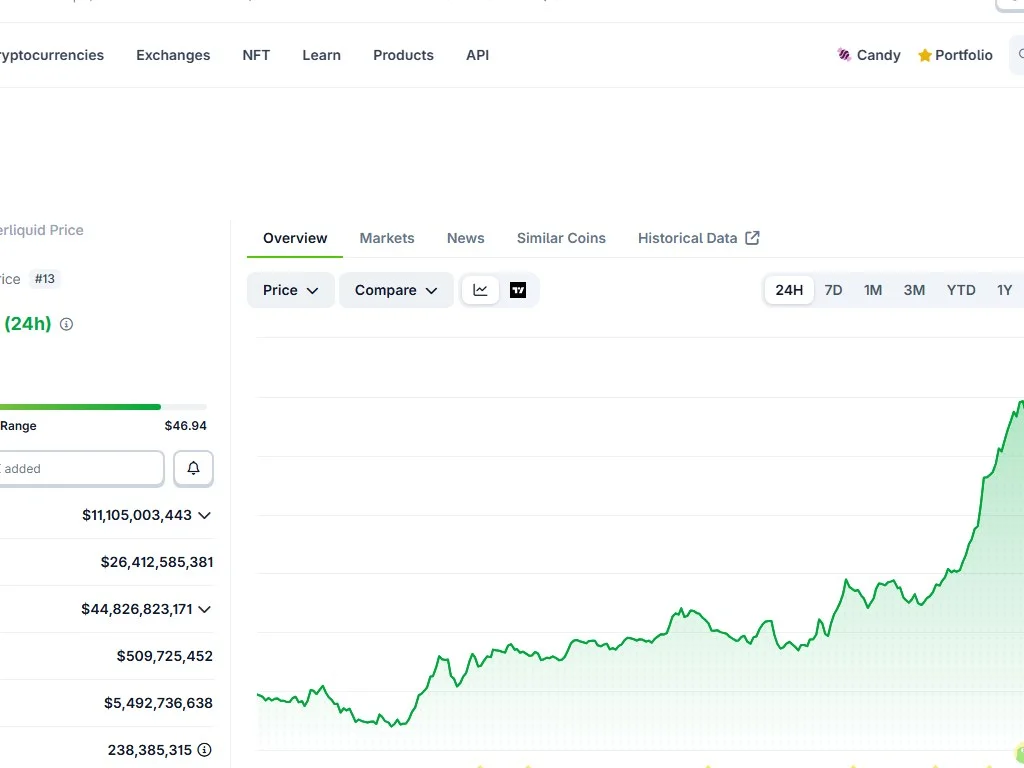
The defining launch of the modern era. HYPE shipped with 31% of supply airdropped to over 90,000 wallets that had used the perpetual futures protocol over multiple months. Zero VC allocation, profitable revenue base, and a vesting schedule designed for the long term. Within six months, HYPE became one of the top performing major launches of the entire 2024 to 2025 cycle, validating the thesis that fair launches still work when the underlying product is real.
Real Case Studies: Toxic Launches
The opposite list is longer but more uniform. Toxic launches cluster around a small number of repeating patterns. Here are five categories with representative examples from the recent past.
The Generic Low-Float Insider Token
Throughout 2024 and into 2025, a stream of high-profile launches followed near-identical scripts. Float between 5% and 15%, FDV between $3 billion and $10 billion, immediate listing on Binance and Bybit, paid trending campaigns across crypto Twitter. Twelve months later, the median performance was a 70% to 90% drawdown from listing price as cliff unlocks landed. Research from Galaxy, Variant, and Messari has thoroughly documented this pattern.
Pump.fun Rugs
The Pump.fun platform on Solana lets anyone deploy a token via a bonding curve. The default outcome is rug: of the millions of tokens deployed, only a small percentage even graduate to a real DEX pool, and of those, the vast majority lose 90%+ value within days. Bonding curve launches are the modern equivalent of 2017 ICOs, with all the risk concentrated on retail.
Points Farming Dump Days
Even well-designed points programs can produce toxic TGE moments. When a points program converts to tokens, farmers who accumulated billions of points often dump immediately to lock in profit. This creates a short window of extreme volatility and downside on day one. The launch may be structurally healthy long-term while still being a trap for buyers in the first 24 hours.
Anonymous Memecoin Rugs
Anonymous teams launching memecoins on Solana, Base, and Ethereum routinely deploy with unlocked liquidity, mint functions live, and zero audit. The rug typically arrives within 48 hours of launch. Pattern: rapid initial pump on coordinated influencer shilling, then a single transaction pulls all liquidity. Combatting this pattern is the entire reason tools like burner wallets for memecoins and liquidity lock checks exist.
Fake Audit and Copycat Forks
A persistent category. Project copies a successful protocol (a Uniswap fork, an Aave fork, a Curve fork), slaps a new name on it, displays a CertiK or OpenZeppelin badge linked to the original audit, and launches a token. The forked code may even contain a hidden backdoor introduced during the copy. Always verify audit reports link to the specific contracts deployed, not a parent project.
Day-One Metrics: What to Monitor in the First Block
The first hour of a launch tells you almost everything about the next twelve months. Here are the exact metrics to watch, where to find them, and the thresholds that separate healthy from toxic.
Healthy: 5,000+ holders by hour one, 10,000+ by day one. Toxic: under 1,000 holders despite billions in fake volume.
Healthy: top 10 wallets hold under 30% of float (excluding LP and contracts). Toxic: top 10 hold 60%+ with team-linked clusters.
Healthy: balanced DEX and CEX flows, both with two-sided trades. Toxic: 95%+ wash-traded CEX volume with thin DEX liquidity.
Healthy: roughly balanced over the first day, with sells coming from varied wallets. Toxic: 100:1 buy bias from bots, then single mega-sell from team wallet.
Healthy: $500K+ initial LP for sub-$50M FDV launches, scaling linearly. Toxic: $10K LP with $100M+ printed market cap.
Healthy: minimal first-block buying from MEV bots. Toxic: dozens of sniper wallets in block one, holding for hours then dumping.
For volume integrity specifically, our dedicated guide to detecting fake volume on crypto charts walks through the exact patterns wash traders use to inflate numbers and how DEXTools surfaces them in the trade feed.
Liquidity Dynamics: Locked LPs, vAMMs, and CLMMs
Liquidity is the single most important structural factor on day one. A token without genuine, locked liquidity is by default closer to a rug than a launch. Understanding the different liquidity models matters because each has different abuse vectors.
Traditional vAMM (Uniswap V2 style) pools spread liquidity across an infinite price range using a constant-product curve. Liquidity is easy to verify but capital-inefficient. For a healthy launch, you want the LP tokens locked through Unicrypt, Team Finance, or burned. The lock duration should be 12+ months at minimum.
Concentrated liquidity (Uniswap V3 and V4) lets liquidity providers focus capital on a narrow price band, which is more efficient but also more gameable. A toxic launch might display impressive TVL numbers that are actually concentrated in an unrealistic price band, providing zero real depth at market price. Always check the actual liquidity within 5% of the current price, not the headline TVL number.
Uniswap V4 hooks are the newest model and add programmable behavior to pools. Hooks can implement healthy features like anti-sniper logic or vesting-aware swaps, but they can also implement malicious features like silent tax functions or sell restrictions. Always verify the hook contract is audited. For a deeper dive, see our Uniswap V4 hooks guide.
Checking whether liquidity is genuinely locked is critical. Our walkthrough at how to check liquidity lock before buying a token shows the exact tools and on-chain verification steps.
Vesting Schedules: Cliff Design and Linear Unlock Pace
Vesting design is where the long-term fate of a token is decided. A bad vesting schedule guarantees sell pressure that no amount of organic demand can absorb. A good one aligns insider incentives with the multi-year success of the protocol.
A healthy cliff is at least 6 months for team and investor allocations, with 12 months being the modern standard. The cliff prevents any insider sells in the critical price-discovery phase post-launch. After the cliff, tokens should unlock linearly over 24 to 48 months, smoothing sell pressure into a predictable drip rather than dumping in large chunks.
A toxic cliff is anything under 3 months, especially when paired with large initial unlocks at TGE. Some 2024 launches had team tokens unlocking just 3% per month after a 6-month cliff, which sounds reasonable until you realize that translates to billions of dollars of supply hitting the market every month at a sub-cent cost basis.
The unlock cliff trap is one of the most reliable trading patterns in crypto. When a major cliff unlock approaches (especially the 12-month one-year mark), price typically drops 30% to 50% in the weeks leading up to it as professional traders front-run the supply. Tools like TokenUnlocks and CryptoRank publish public unlock calendars for every major token. Anyone holding a token with an upcoming cliff unlock should know about it weeks in advance.
Points Programs as a Modern Alternative
Points programs have become the dominant pre-launch loyalty model for 2024 to 2026. The structure works as follows: a project announces points without committing to a token at first, points accrue based on protocol usage over weeks or months, and eventually points convert to tokens at TGE with a published conversion ratio.
The five most notable points programs of recent memory: Hyperliquid (proved the model with its 31% airdrop), Blast (delivered massive distribution but with controversy around farmer concentration), Berachain (multi-season program tied to ecosystem usage), Monad (testnet activity converting to mainnet rewards), and MegaETH (real-time L2 with active points campaign).
Why points programs are healthier on average: they reward sustained usage, which is harder to Sybil than a single snapshot. They also let teams calibrate distribution based on real engagement patterns rather than guessing at airdrop criteria. The downside is that all points programs eventually face a "dump day" when farmers exit, so day-one timing requires special caution.
Investor Signals and Essential Tools
You do not need to manually scrape on-chain data to evaluate a launch. A small set of professional tools cover most of the work. The following stack is what serious launch analysts use.
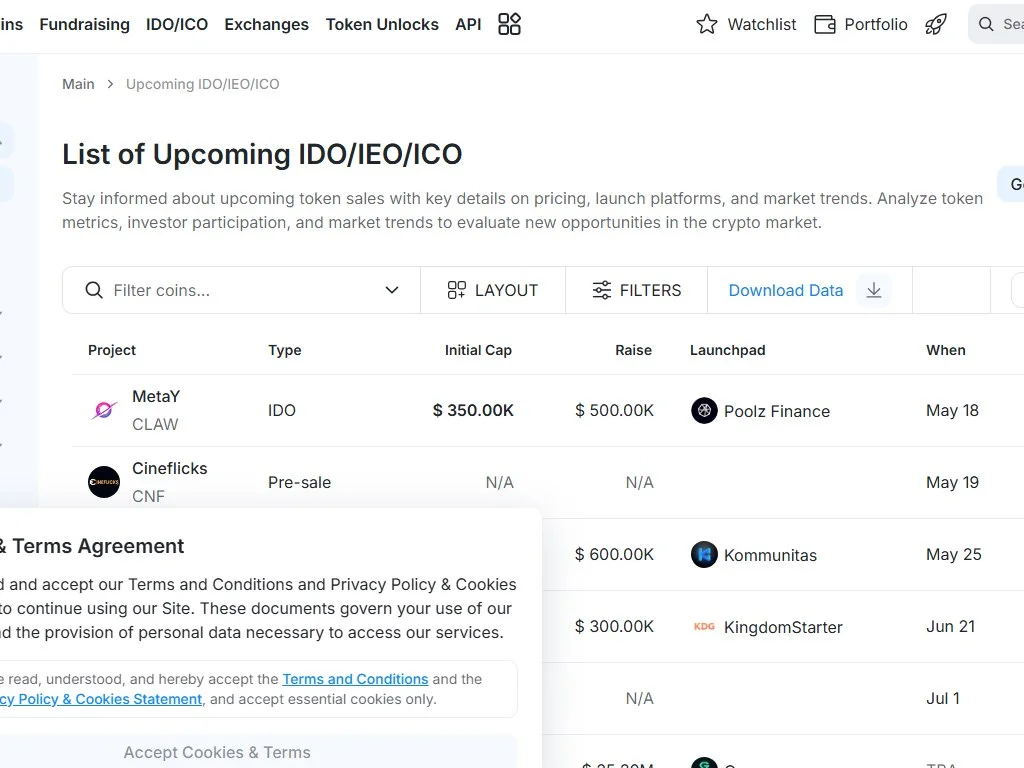
The basic workflow: pull tokenomics and unlock data from CryptoRank, verify on-chain distribution and LP lock through DEXTools, run a wallet cluster check through Bubblemaps, then validate counterparty identities through Arkham and Nansen. The full audit takes under thirty minutes once you know the workflow.
The Decision Framework: When to Buy, Wait, or Skip
All of the analysis above feeds into a single binary decision at the end: do you participate or not? Here is a structured framework for that decision based on the signals you have collected.
8+ healthy signals, 0 to 1 red flags, audited contracts, locked LP, fair tokenomics, real product revenue. Size appropriately and hold through volatility.
5 to 7 healthy signals, 2 to 3 mild red flags, low float. Skip the launch window and re-evaluate after the first major cliff unlock has cleared.
Under 5 healthy signals, 4+ red flags, or any single deal-breaker (no LP lock, mint function live, anonymous team with no track record). Walk away.
The most expensive mistakes in token launch participation come from emotional decisions: FOMO into a launch you have not analyzed, holding through a clearly broken unlock schedule, or trying to time the bottom of a structurally broken token. The decision framework exists to remove emotion at the precise moment when emotion costs the most.
Pros and Cons of Participating in Token Launches
- Lowest cost basis on potentially generational assets
- Airdrops can deliver four-figure to six-figure free distributions
- Points programs reward genuine usage over time
- Early access to new categories before mainstream awareness
- On-chain transparency makes analysis tractable
- Asymmetric upside when launch structure is genuinely fair
- Majority of launches are structurally toxic by design
- Low-float tokens face years of supply unlock overhang
- MEV bots and snipers compete for first-block fills
- Manipulated volume and paid trending obscure real signal
- Rug pulls and honeypots remain endemic to permissionless launches
- Emotional pressure to participate quickly leads to errors
Comparison: Modern Launch Models Side by Side
Best Practices for Participating in Launches
If you are going to play in launches at all, a small set of operational practices will protect you from most catastrophic outcomes.
First, always use a burner wallet for new launches. Never connect your main wallet to an unaudited contract or freshly deployed token. Our guide to using a burner wallet for airdrops and memecoins covers the exact setup.
Second, simulate every transaction before signing. Modern wallets like Rabby and modern simulators show you exactly what will happen before you confirm. Our transaction simulation guide walks through the workflow.
Third, verify token permissions explicitly. Even legitimate tokens occasionally have approval flaws. The Permit2 token permissions explainer shows what to look for and what to revoke.
Fourth, set position sizing based on launch health score. A scenario-one launch can earn a larger allocation; a scenario-two launch should be capped at the size you are comfortable losing entirely. Never bet a launch position you cannot afford to mark to zero.
Fifth, have an exit plan written down before you buy. Specifically: what conditions trigger a partial exit, what conditions trigger a full exit, and what cliff unlock dates you will respect by reducing size in advance.
Common Mistakes That Cost Retail Traders
Beyond the structural analysis, certain behavioral mistakes consistently cost traders capital regardless of which launch they pick. Awareness of these mistakes is half the battle.
Mistake one: buying on first-day pump without checking float. A launch can pump aggressively in week one purely because float is tiny, then collapse for months as unlocks land. Always know the float-to-FDV ratio before celebrating a green chart.
Mistake two: trusting CEX listing as a quality signal. Top exchanges list low-quality tokens regularly because listing fees and trading volume are revenue. A Binance listing is not an audit.
Mistake three: conflating volume with interest. Wash-traded volume is endemic. Use the fake volume detection guide to distinguish real from manufactured liquidity.
Mistake four: ignoring on-chain wallet labels. If Arkham or Nansen labels half the top holders as "exchange deposit" or "team wallet", the distribution narrative is fake regardless of what the website claims.
Mistake five: holding through the first cliff. Even well-designed launches face heavy supply pressure when the first major unlock hits. Reducing exposure before known cliff dates is almost always the correct play.
Mistake six: buying on Twitter sentiment alone. Coordinated social campaigns are part of every modern launch playbook. Sentiment is downstream of structure.
Frequently Asked Questions
Q What is the single biggest difference between a healthy and toxic token launch?
The float-to-FDV ratio combined with insider concentration. Healthy launches typically circulate 25% to 50% of supply at TGE with diversified holders. Toxic launches circulate under 15% with 50%+ of total supply locked behind cliff vesting for VCs and team. The unlock overhang dictates years of forced sell pressure.
Q Why was Hyperliquid considered such a healthy launch?
Hyperliquid airdropped 31% of total supply at TGE to over 90,000 active perpetual futures users, took zero VC capital (0% VC allocation), had a profitable underlying product before the token even existed, and applied multi-year vesting to team allocations. The structure aligned every stakeholder with long-term protocol success rather than short-term token exit.
Q What is a low-float high-FDV launch and why is it toxic?
It is a token that circulates 5% to 15% of total supply at launch while displaying a fully diluted valuation in the billions. The scarce float creates artificial price discovery at inflated valuations, while the locked 85% to 95% of supply represents future sell pressure. As cliffs unlock, insider supply floods the market and price typically drops 70% to 90% over 12 to 24 months.
Q How do I check if a token's liquidity is locked?
Use DEXTools to find the pair's LP address, then verify the LP tokens are held in a known locker contract (Unicrypt, Team Finance, PinkSale) or sent to a burn address. The lock duration should be at minimum 6 months, ideally 12 months or more. Our dedicated guide on checking liquidity lock walks through the exact verification steps.
Q Are points programs safer than traditional airdrops?
On average yes, because points accrue over time through repeated usage, which is harder to Sybil than a single snapshot. However, points programs still face TGE dump pressure when farmers exit, so the first 24 to 72 hours of trading after a points conversion are often volatile and risky for late buyers.
Q What tools should I use to analyze a new token launch?
DEXTools for real-time trade flow and pair audit, CryptoRank for tokenomics and unlock data, TokenUnlocks for upcoming cliff dates, Bubblemaps for wallet cluster analysis, Arkham for wallet labeling, and Nansen for smart money tracking. A full audit using this stack takes 20 to 30 minutes once you know the workflow.
Q What is a fair launch in crypto?
A fair launch is a token distribution model with no pre-mine, no team allocation, no VC sale, and no insider advantage. Everyone has equal access at launch, typically through public minting or open liquidity provision. Yearn (YFI) is the canonical example, and many legitimate memecoins follow the same pattern.
Q How do I avoid being exit liquidity in a toxic launch?
Refuse to participate in any launch with under five healthy signals, more than two red flags, or any single deal-breaker (no LP lock, active mint function, anonymous team with no track record). Use a burner wallet, simulate every transaction, and apply the three-scenario decision framework before committing capital.
Q Why do CEX listings not guarantee a healthy launch?
Centralized exchanges list tokens based on listing fees, expected trading volume, and business relationships, not structural quality. Many of the most extractive 2024 to 2025 launches were listed on top-tier exchanges including Binance and Bybit on day one. CEX listing is a liquidity signal, not a quality signal.
Q What is a cliff unlock and why does it matter?
A cliff unlock is a date at which a large tranche of previously locked tokens becomes liquid. Most modern token vesting includes a cliff of 6 to 12 months, after which tokens unlock linearly. The cliff matters because professional traders front-run major cliff unlocks, causing 30% to 50% price drops in the weeks leading up to known unlock dates.
Q How do I spot insider sniper wallets in the first block?
Pull the pair on DEXTools or your favorite block explorer, sort buyers by block number ascending, and identify wallets that bought in block one or two. Cross-reference those addresses on Arkham and Bubblemaps. If multiple early buyers share funding sources, hop patterns, or wallet ages, they are likely an insider cluster.
Conclusion: Structure Beats Hype Every Time
The 2026 launch landscape is more polarized than ever. Fair launches and well-designed points programs continue to mint valuable assets that reward early users. Low-float insider tokens and bonding curve dumps continue to extract billions from retail.
The difference between profiting and losing is not chart reading, not Twitter timing, and not luck. It is the disciplined application of structural analysis: tokenomics, vesting, liquidity, distribution, and incentive alignment. Every signal in this guide is measurable on-chain before you commit capital. The only thing standing between you and a healthy outcome is the discipline to apply the framework consistently.
Start with the ten-point healthy checklist. Run it against any launch you are considering. Pair it with the ten-point red flag list. Apply the three-scenario decision framework. Use the professional tool stack (DEXTools, CryptoRank, TokenUnlocks, Bubblemaps, Arkham, Nansen) to verify every claim. If you do this consistently, you will avoid the vast majority of toxic launches and capture a meaningful share of the healthy ones.
For real-time pair analysis, holder flow, and LP lock verification on every new launch, the DEXTools live trade feed remains the most actionable starting point. Combined with the framework in this guide, you have everything needed to separate the next Hyperliquid from the next forgettable insider dump.