What Is Centrifuge (CFG)? RWA Tokenization Protocol Guide 2026
— By Whatsertrade in Tutorials
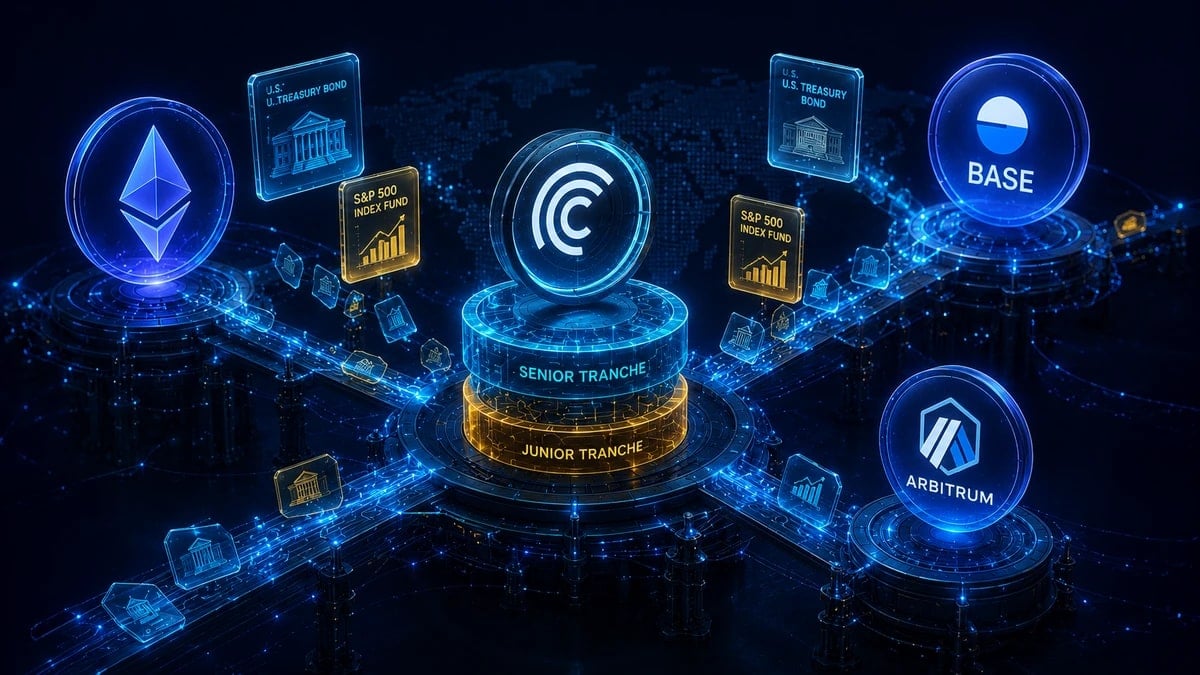
Centrifuge (CFG) is the multichain RWA tokenization protocol bringing US Treasuries, real estate, and credit pools onchain. Tinlake, V3, DROP and TIN tranches, Anemoy and Janus Henderson partnerships, plus how it compares to MANTRA, Plume, and Ondo. Complete 2026 evergreen guide.
What Is Centrifuge (CFG)? The RWA Tokenization Protocol Bridging TradFi and DeFi Explained in 2026
The real world asset tokenization wave that crypto natives kept promising since 2018 is finally happening at scale in 2026, and Centrifuge sits near the center of it. While newer entrants like MANTRA and Plume have grabbed headlines launching dedicated RWA layer ones, Centrifuge has quietly been building the plumbing for tokenized credit, treasuries, real estate, and trade receivables for eight years, surviving an entire crypto winter and emerging with more than half a billion dollars in total value locked across institutional partners that actually move regulated capital.
If you are reading this because you searched "what is Centrifuge crypto" or you saw the CFG token rip on a 24 hour candle and wondered what the protocol actually does, the short answer is that Centrifuge is a multichain protocol, not a standalone blockchain, that lets asset managers, credit issuers, and treasury desks bring off chain financial instruments onchain as transferable tokens with verifiable risk structures. The longer answer involves senior and junior tranches, EVM rails on Ethereum, Base and Arbitrum, a governance token that secures the network, and a multi year partnership map that includes Anemoy, Janus Henderson, BlockTower Credit, and MakerDAO.
This guide is the evergreen 2026 reference for understanding how Centrifuge works, who actually uses it, what changed between Tinlake and Centrifuge V3, how the CFG token captures value, and where the protocol stands in a crowded RWA landscape that now includes MANTRA Chain, Plume Network, and Ondo Finance. We will be honest about the risks, the institutional gating, and the parts of the design that newcomers misunderstand. By the end you should know whether Centrifuge fits the role of curious learner, retail investor in a senior tranche, asset issuer onboarding a pool, or holder of CFG governance rights.
FEATURED SNIPPET
Centrifuge is a multichain real world asset tokenization protocol that lets institutions issue onchain pools backed by off chain assets like US Treasuries, invoices, real estate, royalties, and credit portfolios. Built on EVM rails across Ethereum, Base, and Arbitrum, it uses a senior tranche (DROP) and junior tranche (TIN) risk structure to separate fixed yield from first loss capital. The native CFG token governs the protocol, secures the network, and pays for issuance and oracle services. As of 2026 Centrifuge surpassed five hundred million dollars in TVL and counts Anemoy, Janus Henderson, BlockTower Credit, and MakerDAO among its institutional users.
What Is Centrifuge in Plain English
Imagine a small business in Singapore that just shipped goods to a buyer in Germany. The invoice will be paid in ninety days, but the business needs working capital today to fund the next batch. In traditional finance the business would discount that invoice with a bank or a private credit fund, paying a fee in exchange for immediate cash. Centrifuge does the same thing using onchain pools where global investors fund the invoice in exchange for yield, and the original issuer gets working capital denominated in stablecoins within hours instead of weeks.
Now scale that mental model up. Replace the invoice with a portfolio of US Treasury bills managed by Anemoy. Replace it again with real estate equity loans, mortgages, royalty streams, trade receivables, or even tokenized exposure to an S&P 500 index product. Centrifuge is the rails that lets the asset originator package these flows, get them verified, structure the risk into senior and junior tranches, and offer them to onchain capital. It is the boring infrastructure that makes real world asset tokenization work without each issuer having to rebuild legal wrappers, smart contracts, and investor onboarding from scratch.
Two clarifications matter before going deeper. First, Centrifuge is a protocol, not a chain. The original Centrifuge Chain still exists as part of the governance and accounting stack, but the action moved to Ethereum, Base, and Arbitrum where institutional capital lives. Second, Centrifuge is not retail focused in the way Aave or Curve are. Most pools require know your customer verification, accredited investor status, and minimum tickets that put them out of reach for someone with a hundred dollars to deploy. The CFG governance token trades freely, but the underlying pools are gated by design because the assets behind them are regulated.
The Onchain Capital Markets Vision
The pitch Centrifuge has carried since 2017 is that capital markets in the traditional world are slow, opaque, jurisdiction limited, and structurally favor incumbents. A factoring company in Buenos Aires cannot easily tap a yield seeking family office in Zurich. A real estate developer in Lisbon cannot raise from a credit fund in Singapore without months of legal and operational friction. The premise is that programmable money, transparent risk reporting, and standardized issuance templates can collapse that friction by an order of magnitude.
Centrifuge calls this onchain capital markets. The vision treats real world assets as composable Lego blocks: a pool of tokenized treasuries can serve as collateral inside a DeFi lending market, a senior tranche of an invoice pool can be wrapped into a yield bearing stablecoin, and a basket of credit pools can become a structured product purchasable from a single interface. The same way ERC 20 unlocked tradable tokens and ERC 721 unlocked NFTs, Centrifuge wants standards that unlock institutional grade tokenized credit and equity exposures.
Whether this vision will fully arrive is a separate debate. What is uncontested in 2026 is that the protocol is one of three RWA platforms to have crossed a billion dollars in cumulative tokenization volume according to several institutional reports, alongside Maple Finance and Ondo. The total value locked at any given snapshot oscillates around five hundred million dollars depending on which pools are active, which is large enough to matter for the asset managers using it and small enough that we should be honest about how early the category still is.
Lucas Vogelsang, Martin Quensel and the Founding Team
Centrifuge was founded in 2017 by Lucas Vogelsang and Martin Quensel, two engineers who came out of payments infrastructure rather than the typical crypto trader background. Quensel previously cofounded Taulia, a working capital and supply chain finance platform that processed tens of billions of dollars in invoice flows for Fortune 500 buyers. That operational background mattered because Centrifuge from day one was less interested in speculative token mechanics and more interested in solving the boring problem of how a real receivable becomes a digital instrument that capital can underwrite.
Vogelsang has remained the public face of the protocol, regularly speaking at TradFi conferences alongside representatives from BlackRock, Franklin Templeton, and the Bank for International Settlements. The team grew from a small Berlin cell to a distributed organization with research, smart contract, legal, and partnerships functions spread across Europe, North America, and Asia. Centrifuge raised through several venture rounds including backing from Coinbase Ventures, BlueYard, and IOSG, with the CFG token launch in 2021 establishing community governance over protocol direction.
Worth noting: Centrifuge does not run pools itself. The team builds protocol primitives and onboards issuers, but the actual underwriting, asset selection, and pool management are performed by independent partners like Anemoy, BlockTower, and various private credit boutiques. This separation is deliberate. It mirrors how a stock exchange does not pick which companies will succeed; it provides the venue and rules under which qualified issuers can list. The credit risk on any given pool belongs to the issuer and the investors, not to Centrifuge as a platform.
Centrifuge Timeline: From Tinlake to V3
Centrifuge founded in Berlin by Lucas Vogelsang and Martin Quensel with a thesis around tokenizing invoices and supply chain receivables.
Tinlake launches as the first asset pool product, allowing issuers to mint DROP and TIN tranche tokens against pools of real world collateral.
First Centrifuge pool used as collateral inside MakerDAO, establishing the protocol as a serious source of RWA backing for the DAI stablecoin.
CFG governance token launches and the Centrifuge Chain goes live as a Polkadot parachain dedicated to RWA accounting and governance.
BlockTower Credit launches structured credit pools and Centrifuge becomes the largest RWA collateral provider to MakerDAO during the bear market.
Anemoy launches the first onchain Treasury fund on Centrifuge, opening the door to tokenized US government debt as a flagship category.
Centrifuge V3 ships, repositioning the protocol from a single chain stack to multichain institutional rails native to Ethereum, Base and Arbitrum.
Janus Henderson partnership announced, bringing one of the world's largest asset managers into onchain product structuring on Centrifuge rails.
Centrifuge crosses five hundred million dollars in TVL, ranks as a top three RWA protocol globally, and expands tokenization to S&P 500 index exposures.
Reading the timeline this way it is easier to see why Centrifuge matters more than its token price might suggest. The protocol survived two full crypto cycles, persisted through a regulatory environment that punished half its peers, and ended 2026 as a permanent fixture in conversations about how real assets reach blockchain rails. That is not the trajectory of a hype project. It is the trajectory of infrastructure.
How Centrifuge V3 Multichain Architecture Works

The single biggest evolution in 2024 was the move to Centrifuge V3, which collapsed the prior dual chain architecture into something cleaner and more compatible with how institutional capital actually flows. In the old model, asset pools lived on the Centrifuge Chain and synced state to Ethereum through bridge contracts. That worked but created friction for institutions whose risk teams did not want to deal with a Polkadot parachain just to access pools. V3 inverts the design so that pools, tranche tokens, and investment logic live natively on EVM chains using Solidity smart contracts, while the Centrifuge Chain continues to coordinate governance, asset documents, and protocol level metadata.
In practical terms a 2026 Centrifuge pool launched by Anemoy or another issuer is deployed on Ethereum, Base, or Arbitrum, denominated in stablecoins like USDC, and accessed through a standard Ethereum wallet by approved investors. The senior tranche token (DROP) and junior tranche token (TIN) are ERC 20 contracts. The pool accountant logic, asset valuations, and net asset value computations sit in Solidity contracts that can be inspected like any other DeFi primitive. Documents and offchain attestations are still anchored on the Centrifuge Chain for auditability and dispute resolution.
This matters for three reasons. First, EVM native pools can be composed with the rest of the Ethereum ecosystem, so a tokenized Treasury fund on Centrifuge can be used as collateral inside Aave or wrapped into a stablecoin. Second, deploying on Base and Arbitrum drops gas costs to a fraction of mainnet, which makes smaller ticket institutional flows economically viable. Third, multichain deployment hedges against single chain risk and lets issuers pick the venue closest to their investor base.
Worth flagging: the multichain story is not about chasing TVL across every L1 like some lending protocols do. Centrifuge expanded into specific chains where its institutional partners already operate. Ethereum is the heavyweight for serious capital. Base brought lower fees and Coinbase distribution. Arbitrum offered deep stablecoin liquidity and DeFi composability. The protocol could expand further if partner demand justifies it, but the bias is toward depth on chosen chains rather than breadth across many.
RWA Pool Lifecycle in Three Steps
Issuer Onboards
An asset manager like Anemoy proposes a pool, completes KYB and legal wrappers, defines collateral, tranche split, and terms, then deploys pool contracts on Ethereum, Base or Arbitrum.
Investor Deposits
KYC verified investors deposit stablecoins and mint DROP (senior) or TIN (junior) tokens. The pool deploys capital into the underlying real world assets the issuer selected.
Returns Flow
As assets generate yield (coupon, interest, rent), the pool accrues NAV. Investors can redeem tranche tokens for stablecoins after lockups, with senior holders paid first and junior absorbing any first losses.
Tinlake Pools and Senior Junior Tranches Explained
Tinlake was the original Centrifuge pool product, launched in 2018 and named after the Tin Lake aquifer that historically supplied mining and metallurgy. The metaphor is on the nose: capital flows in, assets mine yield, returns flow out. Although Centrifuge V3 is now the active issuance stack, the Tinlake architecture pioneered the senior junior tranche model that the protocol still uses, so understanding Tinlake is essential to understanding modern Centrifuge.
Every Tinlake style pool issues two tokens. DROP, the senior tranche, represents a fixed yield position with priority claim on cash flows. If a pool yields six percent annualized and the senior is set to four percent, DROP holders receive four percent before the junior gets anything. TIN, the junior tranche, absorbs the first losses if any loans default or assets impair, and in exchange captures the excess yield above what was promised to senior. If the pool earns more than expected the TIN holders benefit. If it earns less, TIN takes the hit before DROP is touched.
This structure mirrors how traditional structured credit works in private credit funds and asset backed securities, but with two important differences. The first is transparency. Both DROP and TIN are onchain tokens with public balances, and the pool itself reports asset composition, default rates, and net asset value continuously. The second is composability. DROP tokens are themselves transferable and have historically been used as collateral in other DeFi protocols, creating yield stacking strategies that simply do not exist in TradFi.
Worth noting: the minimum TIN allocation is set per pool, typically between five and fifteen percent. This means for every dollar of DROP issued there must be a corresponding chunk of TIN absorbing first loss risk. If the TIN ratio drops too low (because junior holders have been paid out or losses have eaten into it), the pool stops accepting new senior deposits until balance is restored. This is automatic, enforced by the smart contract, and is one of the underrated risk controls of the design.
Asset Categories Tokenized on Centrifuge
One of the underappreciated aspects of Centrifuge is the sheer breadth of asset categories that have been tokenized through its rails. Many RWA platforms are essentially single product shops focused on tokenized treasuries. Centrifuge by contrast has hosted pools across at least seven distinct asset classes, each with its own underwriting profile, regulatory wrapper, and investor base.
- US Treasury bills through Anemoy and other treasury managers, tokenized as yield bearing exposures denominated in stablecoins.
- Trade receivables and invoices from supply chain finance issuers, the original Centrifuge use case from 2018.
- Real estate equity loans backed by physical property in various jurisdictions, often with senior debt structure.
- Consumer and SME credit portfolios from established credit boutiques, structured as diversified pool exposures.
- Mortgages and mortgage backed exposure for institutional investors seeking real estate cash flow without direct ownership.
- Royalty streams from music, intellectual property, and licensing deals, packaged as future cash flow tokens.
- S&P 500 index exposure through partner structured products, a 2026 expansion category.
Not every category is large by TVL. Treasuries dominate in 2026 because that is where institutional capital is most comfortable. But the existence of pools across this many asset classes proves a key point: Centrifuge is not a single product company. It is general purpose tokenization infrastructure, which is the right shape if you believe the long term endgame is most financial instruments having an onchain representation.
Anemoy, Janus Henderson and BlockTower Partnerships

Anemoy is the partner most readers will encounter first. Set up specifically to operate tokenized treasury funds on Centrifuge, Anemoy structures regulated investment vehicles whose underlying holdings are short duration US government debt. When you see references to a tokenized Treasury yield on Centrifuge, in most cases that yield is being produced by an Anemoy operated fund. The vehicle handles the offchain compliance, regulated fund administration, audits, and trustee functions, while Centrifuge provides the onchain accounting, tranche issuance, and investor interface.
Janus Henderson, announced as a Centrifuge partner in 2025, is the heavyweight name on the roster. With several hundred billion dollars under management globally, Janus Henderson does not partner with crypto rails on a whim. Their work with Centrifuge has focused on bringing money market fund style products and structured fixed income exposures onchain in a form acceptable to institutional risk committees. The partnership is less about TVL today and more about establishing a template other large asset managers can replicate over the next decade.
BlockTower Credit is the longest running structured credit partner. From 2022 onward, BlockTower has operated diversified credit pools that brought institutional grade underwriting to Centrifuge, helping the protocol prove that onchain rails could host private credit strategies of meaningful size. The relationship was not without friction (some legacy pools experienced challenges typical of bear market credit cycles), but the broader collaboration solidified Centrifuge as a venue serious credit teams take seriously.
MakerDAO deserves a separate paragraph because the relationship transformed both protocols. From 2020 through 2024, Centrifuge issued pools that were used as collateral inside MakerDAO, allowing DAI to be minted against real world assets rather than only crypto collateral. At peak, Centrifuge backed MakerDAO pools held more than two hundred million dollars in tokenized credit, which made the protocol the single largest RWA collateral provider to the DAI ecosystem. The relationship evolved as MakerDAO restructured into Sky, but the playbook of pairing onchain stablecoins with offchain yield bearing collateral was largely defined by this collaboration.
CFG Tokenomics and Governance
CFG is the native token of the Centrifuge ecosystem. It does three things: it secures the Centrifuge Chain through staking and validator economics, it grants voting rights over protocol changes and treasury usage, and it serves as the unit of account for protocol level fees and oracle services. CFG launched in 2021 with a community distribution that included grants, rewards for pool participants, and allocations to early backers and the team under standard vesting schedules.
Token holders who actively participate in governance can vote on a wide range of decisions, including which new asset issuers should be onboarded, what protocol fees should look like, how the protocol treasury should be deployed, and what upgrades the smart contract stack should accept. In practice governance has been less hyperactive than at protocols like Aave, partly because Centrifuge governance attracts a more institutional crowd that prefers fewer but more deliberate decisions.
For staking, CFG holders can bond their tokens to validators on the Centrifuge Chain and earn protocol rewards in CFG. The staking yield varies based on total bonded supply and protocol parameters, and like most proof of stake systems it is subject to slashing if validators misbehave. This is similar in spirit to how Ethereum staking works, though the parameters and security assumptions differ. Many CFG holders treat the staking yield as a baseline return on top of any speculative price exposure.
Importantly, CFG is not the asset you earn in the underlying pools. If you buy DROP in an Anemoy Treasury pool, your yield comes in stablecoins (typically USDC), not in CFG. The CFG token is the governance and security layer; the pool returns flow in whatever currency the pool is denominated in. This separation matters when thinking about TVL versus token market cap. They are related but not identical, and conflating them leads to confusion about how the protocol captures value.
Investor and Issuer Workflows
From an investor perspective the Centrifuge experience in 2026 is closer to a hybrid between a DeFi app and a private credit platform. You connect a wallet to the Centrifuge interface, browse available pools by issuer, asset type, geography, and tranche, then go through KYC or accredited investor verification before you can deposit. The verification step is jurisdiction specific and is the main reason retail traders accustomed to permissionless DeFi find Centrifuge friction heavy. The friction is intentional. The pools are regulated, the underlying assets are regulated, and the issuers operate under fund administration and audit requirements that simply do not exist in pure DeFi.
Once verified, an investor selects DROP or TIN exposure in a given pool, deposits stablecoins, and receives the corresponding tranche tokens. Many pools have minimum tickets ranging from a few thousand dollars for retail accredited tiers to six and seven figure minimums for institutional pools. Redemption is governed by pool specific lockups and queues, since the underlying assets often cannot be liquidated instantly. This is not a money market where you exit on demand; it is a structured credit position with predictable but not instantaneous liquidity.
From an issuer perspective the workflow is more involved. An asset manager who wants to launch a Centrifuge pool engages with the protocol team and legal partners to define the pool structure, draft the legal wrappers (often involving a Cayman, Luxembourg, or BVI vehicle), set up the offchain operations, and deploy the onchain contracts. The pool then goes through a launch process where initial junior capital is committed, senior tranches are opened to investors, and the operational rhythm of capital deployment, reporting, and yield distribution begins. Issuers pay protocol fees, often denominated in CFG or stablecoins, and are responsible for ongoing transparency, audits, and investor reporting.
Centrifuge vs MANTRA vs Plume vs Ondo

The RWA category has become crowded in 2026, and three names come up most often when investors ask how Centrifuge compares. MANTRA Chain is a Cosmos based layer one focused specifically on RWA, with strong distribution in the Middle East and Asia. Plume Network is an EVM compatible RWA chain that branded itself heavily around making tokenization developer friendly. Ondo Finance is a tokenized treasuries specialist whose USDY and OUSG products have become reference points for onchain Treasury exposure.
Where Centrifuge differs is in scope and philosophy. Unlike MANTRA and Plume, Centrifuge is not its own layer one. It explicitly chose to deploy on existing EVM chains because that is where institutional capital and DeFi composability already live. This avoids the cold start problem that any new RWA layer one faces. The tradeoff is that Centrifuge does not capture chain level economics (gas fees, sequencer revenue) and instead relies on protocol level fees and the value of governance over a multi chain footprint.
Unlike Ondo, Centrifuge is not single product. Ondo built around tokenized Treasuries and adjacent products. Centrifuge is general purpose tokenization rails that happen to host Treasuries through Anemoy among many other categories. The two protocols often get framed as competitors but they are closer to complements: Ondo could in principle issue products on Centrifuge rails, and the broader category benefits when more issuers, not fewer, can bring assets onchain.
Honest comparison: Ondo has the strongest brand for retail accessible Treasuries today, Plume has aggressive developer outreach and grants, MANTRA has strong regional capital partnerships, and Centrifuge has the deepest institutional partner roster and the longest track record. Each is a different bet on how RWA evolves. A diversified researcher would hold opinions on all four rather than treating it as a winner take all market, because the category itself is large enough to sustain several winning approaches.
Risks and Honest Tradeoffs
Centrifuge is interesting precisely because it is one of the most credible RWA protocols, but credibility does not mean risk free. The honest risk inventory has at least five entries that every investor, issuer, or CFG holder should think about clearly.
Credit risk lives at the pool level. If an issuer underwrites poorly, if borrowers default, if invoices go unpaid, the junior tranche absorbs losses first and the senior can be impaired if losses are severe. This is structural credit risk, not crypto specific, but it does not disappear because the wrapper is onchain. Some Centrifuge pools have experienced underperformance during stress periods, and dishonest narratives about RWA yields being risk free should be ignored.
Regulatory risk is real and ongoing. Tokenizing real world assets sits at the intersection of securities law, fund regulation, KYC and AML rules, and jurisdiction specific tax treatment. Centrifuge works hard with regulated counterparties to navigate this, but the regulatory landscape is still evolving and rules in major jurisdictions could tighten in ways that affect issuance, distribution, or secondary trading.
Liquidity risk is structural. Tranche tokens are not always quickly redeemable because the underlying assets need time to be liquidated or roll off. This is a feature when you understand it (you are not supposed to redeem a credit position instantly) and a problem if you assumed DeFi style instantaneous exit. Read the redemption terms before depositing.
Smart contract risk applies to Centrifuge V3 like any EVM protocol. The contracts have been audited and battle tested through several years of operation, but no smart contract is bug free. Diversification across pools, modest position sizing, and avoiding excessive composability leverage on top of tranche tokens are basic hygiene.
Address poisoning and phishing scams target every onchain user, and RWA investors are particularly attractive targets because position sizes can be large. Always verify pool addresses, learn how to avoid crypto address poisoning scams, and double check any official link before interacting with what you think is a Centrifuge interface.
Pros and Cons of Centrifuge
Pros
- Longest operating track record in RWA tokenization
- Multichain EVM deployment with deep composability
- Institutional grade partners (Anemoy, Janus Henderson, BlockTower)
- Senior junior tranche structure with transparent risk separation
- Wide asset category coverage beyond just Treasuries
- Proven role as MakerDAO RWA collateral provider
- CFG governance token with active community process
Cons
- Pools gated by KYC and minimum tickets, limiting retail access
- Liquidity in tranche tokens is not instantaneous
- Credit risk is real and varies by pool issuer quality
- Regulatory environment for RWA is still evolving
- CFG token does not directly capture pool yields
- Competition intensifying from MANTRA, Plume, Ondo and newer entrants
- Smart contract risk applies despite multiple audits
Best Practices for Investors and Asset Managers
For investors approaching Centrifuge for the first time, start by reading the documentation, then read the specific pool prospectus for any pool you are considering. The pool prospectus details the asset composition, underwriting criteria, expected yields, lockup terms, and risk factors. If you cannot understand what the pool actually holds and how it will produce yield, do not deposit. This sounds obvious and is regularly ignored in crypto.
Size positions conservatively. Tranche tokens are interesting but they are not stablecoins. Treat any Centrifuge exposure as part of your higher risk yield bucket, not as a cash equivalent. If a particular pool offers yields meaningfully above comparable TradFi private credit, ask yourself what extra risk is being taken to produce that spread. Higher yield is rarely free money, especially in credit.
Consider holding the CFG token separately from holding tranche positions, because they are exposures to different parts of the stack. CFG is leveraged to overall protocol growth, governance decisions, and token economics. Tranche tokens are exposures to specific credit pools. Holding both is fine; conflating them is not. Track each separately and rebalance with intent.
For asset managers considering issuing on Centrifuge, the right way to start is to talk to the team and to issuers already on the platform. The legal and operational setup of a pool is non trivial, and the protocol team has institutional knowledge about how to make pools succeed. Underbaked pools with thin junior capital and inadequate diversification have struggled historically, while well structured pools with strong issuer brands have grown steadily. The shape of the issuance matters as much as the asset behind it.
Finally, if you are simply curious and want to track Centrifuge without participating yet, set up watchlists for the CFG token on aggregators, follow the Centrifuge research and governance forum, and use a tool like DEXTools to monitor CFG trading activity and liquidity dynamics across pairs. Familiarity with the protocol and its rhythm of issuance, partnership, and governance is the cheapest education you can get before deploying capital.
Frequently Asked Questions
What is Centrifuge in one sentence?
Centrifuge is a multichain real world asset tokenization protocol that lets institutions issue onchain pools backed by off chain financial assets like Treasuries, credit, real estate, and invoices.
Is Centrifuge a blockchain or a protocol?
Both, but primarily a protocol in 2026. The Centrifuge Chain coordinates governance and metadata, while pool issuance happens on Ethereum, Base, and Arbitrum through Solidity contracts.
How does Centrifuge tokenize real world assets?
An issuer wraps assets in a regulated legal vehicle, deploys a Centrifuge pool, and mints senior (DROP) and junior (TIN) tranche tokens that represent claims on the pool's cash flows.
What is Tinlake and how is it different from V3?
Tinlake was the original 2018 pool product that pioneered the DROP and TIN tranche model. Centrifuge V3 is the 2024 evolution that brought multichain EVM deployment and institutional grade rails.
What are DROP and TIN tranches?
DROP is the senior tranche with priority on cash flows and a fixed target yield. TIN is the junior tranche that absorbs first losses but captures the excess yield above the senior target.
What is the CFG token used for?
CFG secures the Centrifuge Chain via staking, grants governance votes over protocol decisions, and pays for protocol level fees and oracle services across the multichain stack.
Who uses Centrifuge, institutions or retail?
Primarily institutions and accredited investors, because pools are KYC gated and often have minimum tickets. Retail can hold CFG freely but pool access requires verification.
How does the MakerDAO partnership work?
From 2020 onward Centrifuge issued pools that MakerDAO used as RWA collateral backing DAI. At peak, more than two hundred million dollars in tokenized credit secured DAI through this channel.
What does Anemoy do with Centrifuge?
Anemoy operates tokenized US Treasury funds on Centrifuge rails, handling the offchain regulated fund administration while Centrifuge provides the onchain pool, tranche, and investor interface.
How is Centrifuge different from MANTRA or Plume?
Centrifuge is a multichain protocol, not its own layer one. MANTRA and Plume built dedicated RWA chains. Centrifuge bets on EVM composability over capturing chain level economics.
What are the main risks of investing in pools?
Credit risk on underlying assets, regulatory risk on RWA wrappers, limited liquidity due to lockups and redemption queues, smart contract risk, and operational risk at the issuer level.
Where can I buy CFG and stake it?
CFG trades on major centralized exchanges and on decentralized venues. Staking is available by bonding CFG to validators on the Centrifuge Chain. Always verify official contract addresses before any transaction.
The Bottom Line on Centrifuge in 2026
If real world asset tokenization is the multi trillion dollar opportunity that institutional researchers keep modeling, Centrifuge is one of the small handful of protocols positioned to capture a meaningful slice of it. The combination of a long track record, a credible institutional partner roster, a thoughtful multichain V3 architecture, and a flexible tranche based pool design makes it stand out from both newer RWA layer ones and from single product Treasury issuers. The protocol is not flashy, the token does not pump on memes, and the pools require homework before participation. Those are features for the kind of patient capital that real world finance attracts.
For most readers the right next steps are modest. Read the Centrifuge documentation. Track a couple of live pools and understand how their NAV, yields, and tranche balances evolve. If CFG fits your portfolio thesis, size the position with the same discipline you would apply to any infrastructure token. If you might one day deposit into a pool, run through the KYC process well before you need to, so you are not scrambling when an interesting issuance opens. And if you build in DeFi, think about how tokenized real world assets could become part of products you ship, because the composability story between stablecoins and tranche tokens is one of the more interesting open frontiers heading into the rest of the decade.
The boring infrastructure thesis usually wins in financial technology, even when louder competitors capture more attention in the short term. Centrifuge has spent the better part of a decade quietly building the rails for onchain capital markets. If the next decade of crypto is defined less by speculative tokens and more by the migration of regulated finance onto programmable rails, this is exactly the kind of protocol that ends up under the hood of products you use without thinking about it. That outcome is not guaranteed, but it is plausible enough that understanding Centrifuge in 2026 is a small investment of attention with a large potential payoff in how you read the rest of the RWA category as it matures.
Related Guides
- What is Centrifuge (CFG)? Real-World Assets on Chain
- What Is Tokenization? How Real World Assets Become Onchain Claims (2026)
- What Is MANTRA Chain (OM)? Regulated RWA Tokenization L1 Guide 2026
- RWA Tokenization: A Beginner's Guide to Real-World Assets
- Pendle Finance Explained: Yield Tokenization, PT, YT and Fixed-Rate DeFi (2026)