TON Tokenomics: Toncoin Supply, Distribution and Inflation Explained (2026)
— By Tony Rabbit in Tutorials
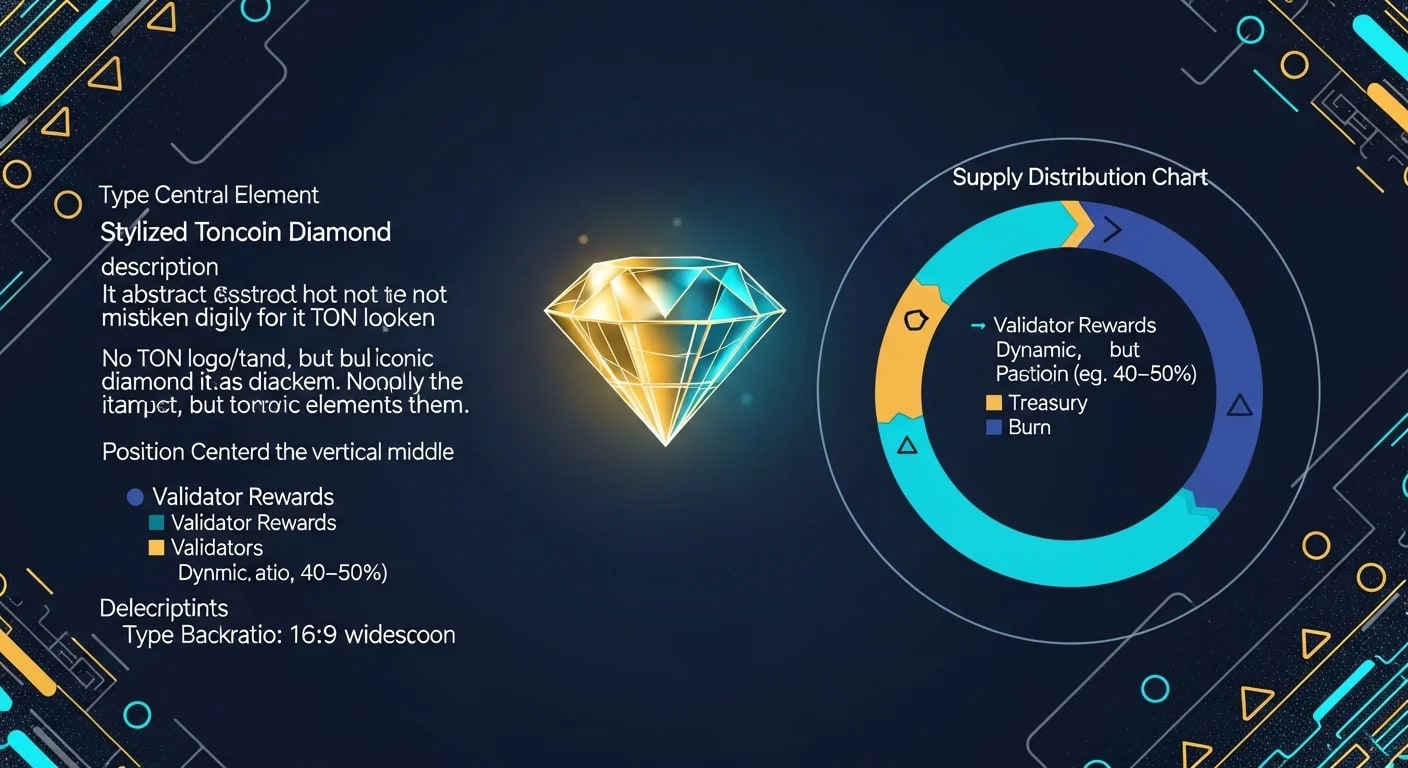
Toncoin's tokenomics shape long-term incentives across validators, holders, and users. This guide explains supply, distribution, validator inflation, fee burns, and how the curve has evolved since the network restart.
Toncoin tokenomics is one of the more interesting topics in the ecosystem because the network restarted under community ownership rather than launching from scratch. The supply, distribution, and emission curves all evolved through governance and community decisions instead of being fixed by a single team. Reading the current tokenomics requires holding both the original 2018 design and the post-2020 community-led adjustments in mind.
Quick answer: TON has an inflationary supply curve. New TON is minted continuously to pay validators for securing the network. Some of the network's transaction fees are burned, which counters part of the inflation. Total supply is not fixed; it grows over time at a rate set by validator rewards and offset by burns. Distribution covers validator emissions, ecosystem grants, treasury programs, and a community-overseen mechanism for previously locked allocations.
- Supply is inflationary. New TON is minted to pay validators on every block.
- Some fees are burned. Burns offset part of the inflation but do not eliminate it.
- Validator emissions dominate. The largest source of new supply is block rewards.
- Treasury and ecosystem programs distribute TON. Grants, hackathons, and incentive campaigns put TON into builders' hands.
- Net inflation is modest. Once burns and validator emissions net out, real inflation is in the low single digits.
Supply mechanics
Toncoin's supply changes over time through two mechanisms: validator emissions add new TON, and fee burns remove some.
Trade TON with Not.Trade, the fastest terminal on TON
Not.Trade is purpose built for TON traders: real-time on-chain charts for every jetton, insider safety scoring (Top 10 wallets, snipers, dev movement, bundlers, LP lock), MCAP-trigger limit orders, multi-wallet sniping, MEV protection and one-click swaps routed across STON.fi and DeDust. It runs natively inside Telegram and as a fast web terminal, with TON Connect non-custodial wallet support.
Read the full Not.Trade guide →Validator emissions
Each block, validators are rewarded with newly minted TON. The reward depends on parameters set by governance, the active validator set, and the network's current configuration. Emission shapes net inflation more than any other mechanism.
Fee burn
A portion of network transaction fees is burned, removing TON from circulation. Burn does not match emission one-for-one; it counters part of the inflation but rarely all of it. Net supply growth is the difference between emissions and burns.
Total versus circulating supply
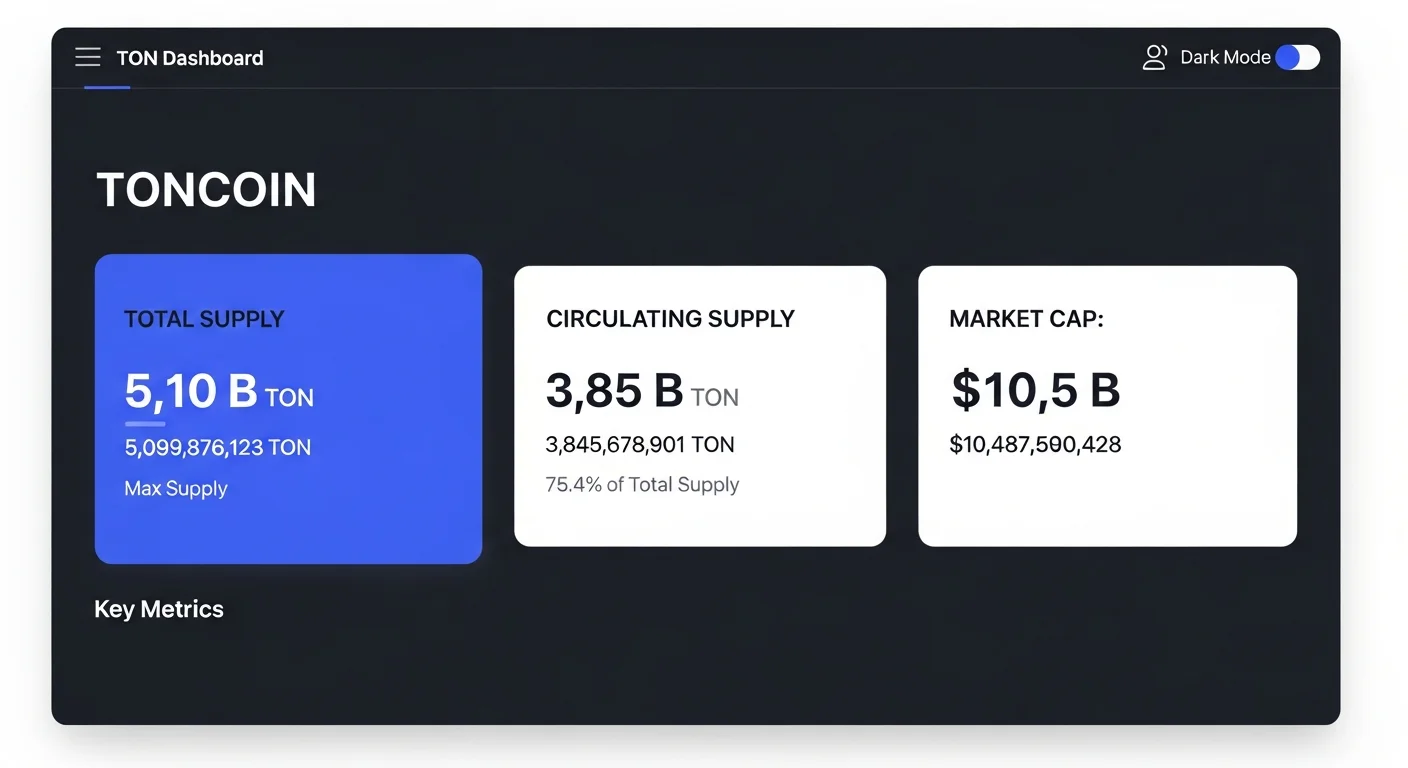
Total supply includes all TON ever minted minus burns. Circulating supply is the subset of total supply currently liquid in wallets and on exchanges. Long-locked allocations and treasury balances may sit in total but not in practical circulating supply.
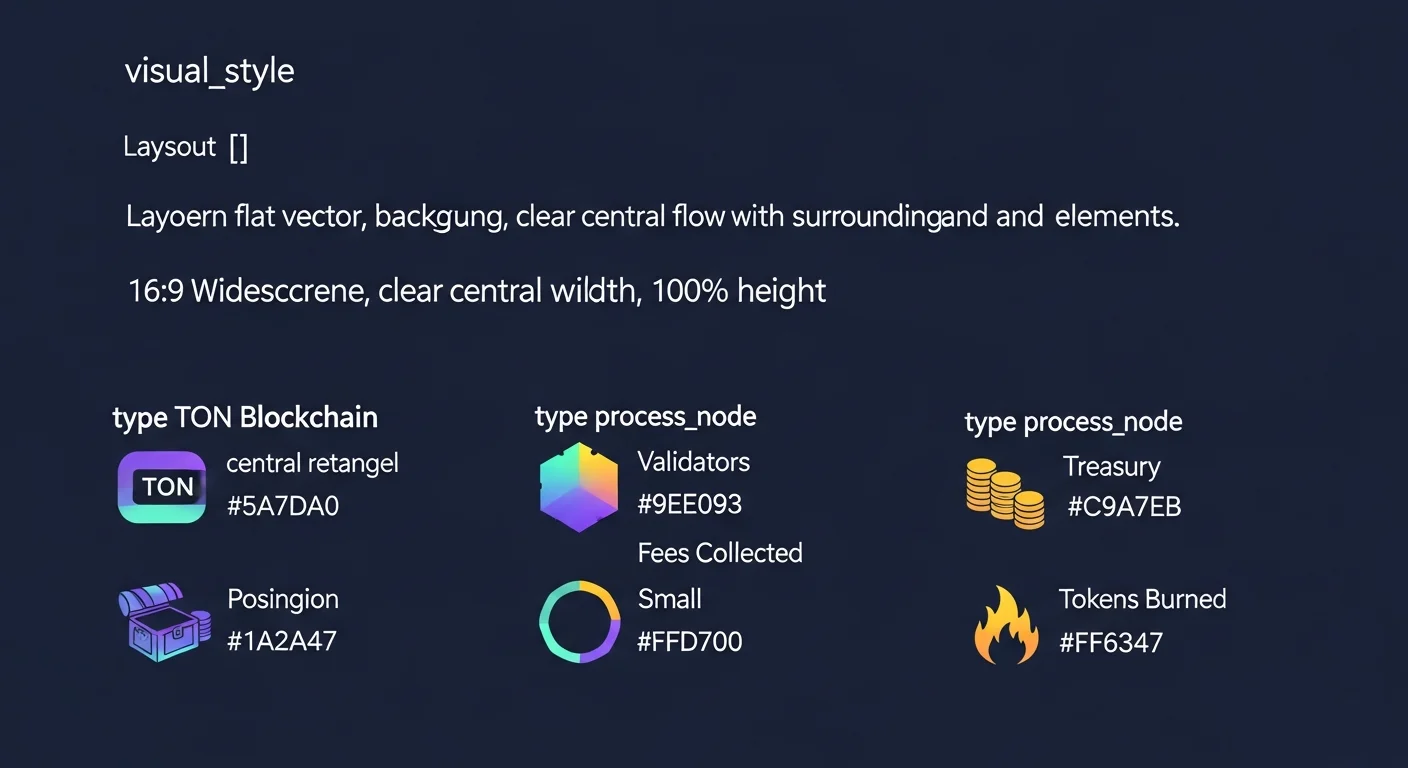
Distribution and allocation
Distribution covers where new TON goes and where the existing supply sits.
Validators
The bulk of new TON is paid to active validators (and through them to delegators on liquid-staking protocols and nominator pools). This is the structural distribution of inflation: it rewards the actors keeping the network secure.
Treasury and grants
The TON Foundation and adjacent community organizations operate treasuries that fund ecosystem development, grants, hackathons, marketing, and infrastructure. Grant programs distribute TON to builders, communities, and integration partners.
Locked and historical allocations
Following the network's restart and community-driven custodial reforms, large historical allocations have been processed through transparency and lock-up mechanisms. Following these processes, much of the early-investor and team supply has been brought into a managed framework that affects circulating supply over time.
Inflation rate in practice
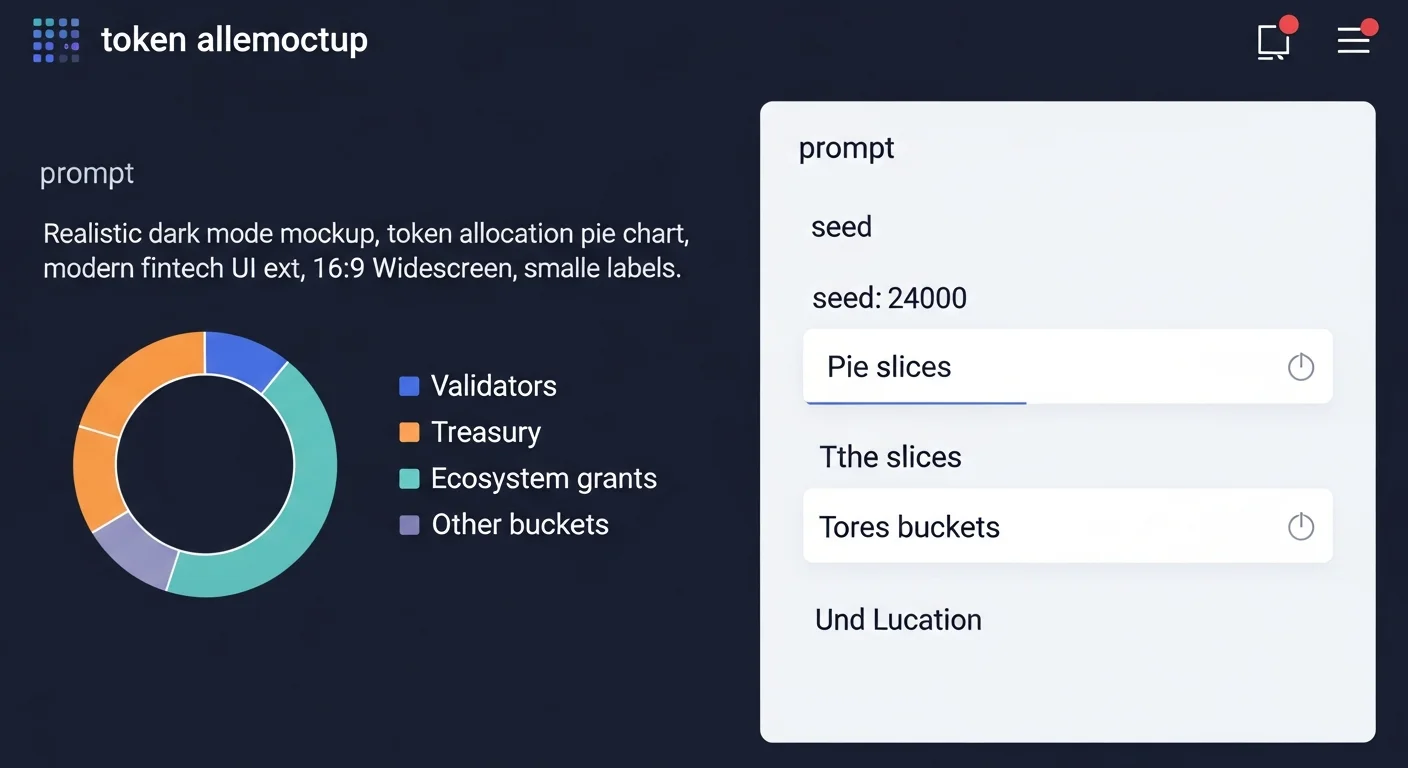
Headline inflation depends on the current emission and burn parameters. Net inflation has typically run in the low single digits annually, similar in scale to other PoS networks but lower than some.
Components of net inflation
Net inflation = validator emission rate - fee burn rate. Both numbers are observable on TON network dashboards. Burns scale with usage; periods of intense network activity tend to push burns up and lower net inflation, while quiet periods do the opposite.
How governance affects inflation
Validator reward parameters can be adjusted through governance. Major changes are infrequent, but they do happen, and they shift the supply curve incrementally. Stakers and active holders should track governance proposals that touch reward parameters.
Ecosystem programs and demand
Beyond raw supply mechanics, the demand side of Toncoin matters for tokenomics analysis.
Gas demand
Every Jetton transfer, NFT mint, dApp interaction, and Mini App purchase consumes a small amount of TON for gas. As Telegram-driven activity grows, gas demand grows alongside it.
Validator demand
Validators stake TON to participate. Liquid staking protocols delegate large amounts of TON to validators. The combined effect is meaningful TON locked in security duties at any given time.
Storage and infrastructure demand
TON Storage payments, .ton domain auctions, Fragment auctions, and other infrastructure-level activities all consume TON. As more applications use TON-native services, this baseline demand compounds.
Stars-to-TON conversion flows
Telegram Stars purchased by users eventually flow into TON when creators convert their earnings. This pipe is one of the largest organic fiat-to-crypto onramps in 2026 and adds buy-side pressure on TON over time.
TON tokenomics vs ETH and SOL
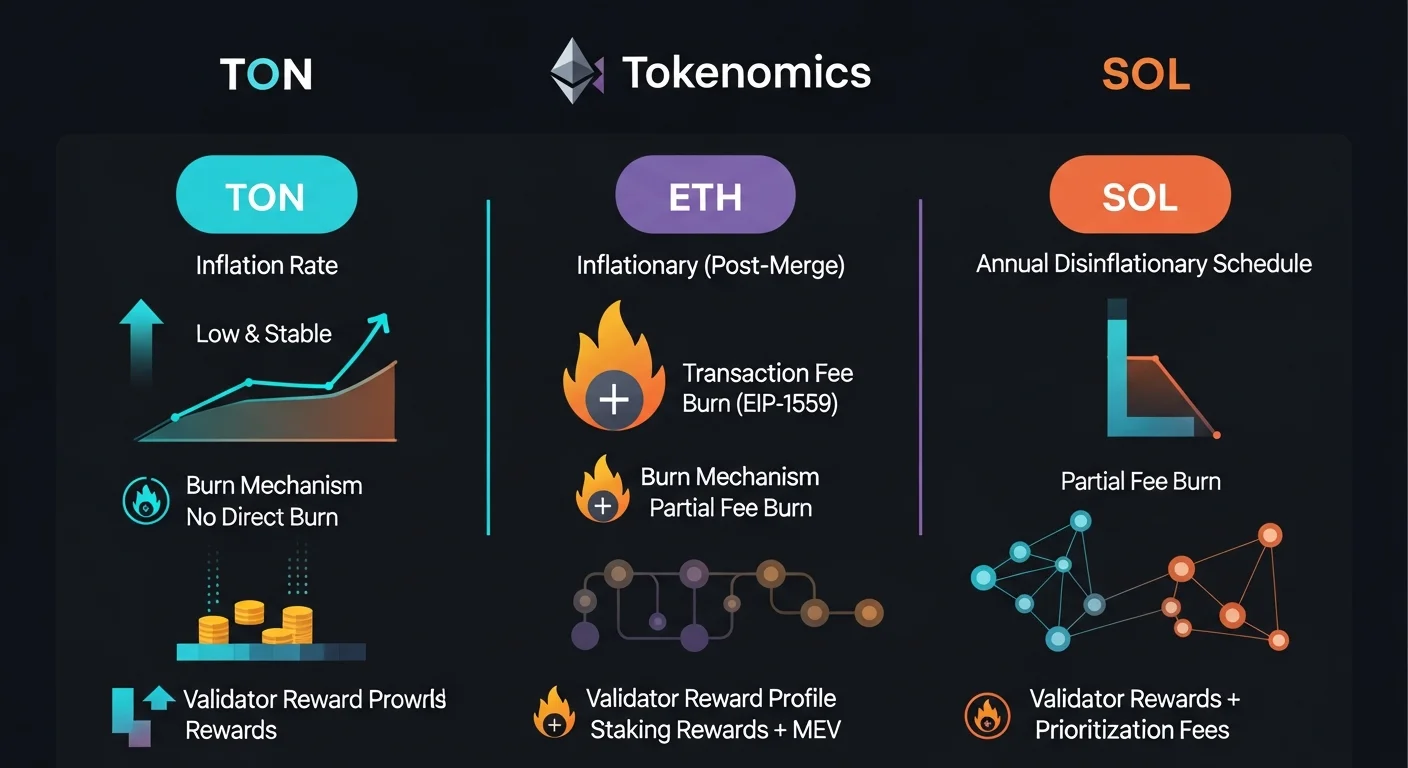
| Property | TON | Ethereum | Solana |
|---|---|---|---|
| Supply cap | No hard cap | No hard cap | No hard cap |
| Inflation type | Validator emissions | Validator emissions | Validator emissions |
| Burn mechanism | Partial fee burn | EIP-1559 base fee burn | Partial fee burn |
| Net inflation | Low single digits | Near zero or slightly negative | Mid single digits, declining schedule |
| Distribution edge | Telegram-driven demand | DeFi-driven gas demand | Mobile + DeFi demand |
Risks and watch points
- Validator concentration: a smaller validator set means inflation accrues to a narrower group.
- Governance changes: major reward-parameter changes shift the supply curve.
- Net inflation uncertainty: burn rates depend on usage and can swing.
- Locked-supply unlock cadence: historical allocations entering circulation can affect liquidity.
- Telegram-dependent demand: if Telegram product strategy shifts, gas and Stars-driven demand could move.
Practical analyst workflow
- Pull live supply data. Total, circulating, and recent inflation rate from a TON-aware dashboard.
- Estimate burn vs emission. Net inflation tells you the structural supply pressure.
- Map demand drivers. Gas, validator stake, Stars-to-TON flow, infrastructure usage.
- Watch governance. Major TIPs that change reward parameters are the biggest tokenomics events.
- Compare with peers. Use ETH and SOL as benchmarks for inflation and burn shapes.
Frequently asked questions
Does TON have a maximum supply?
No. TON does not have a fixed cap. Supply grows through validator emissions and shrinks slightly through fee burns.
Is TON inflationary or deflationary?
Net inflationary at typical activity levels. Burns counter part of the emission but rarely all of it.
Where do new Toncoins come from?
Validators are rewarded with newly minted TON for producing blocks. Liquid staking protocols pass a portion to delegators.
How much of TON's supply is staked?
A meaningful portion sits in nominator pools and liquid staking protocols. Live numbers are visible on TON network dashboards.
Are old TON allocations still locked?
Historical allocations have been processed through transparency and locked-supply frameworks. Some remain locked or under managed processes.
Final takeaway: TON tokenomics combine modest validator-driven inflation, partial fee burn, and a strong distribution edge through Telegram. The supply curve is not fixed by a whitepaper from 2018; it is shaped by ongoing governance, ecosystem programs, and real network usage. Track the live numbers rather than relying on snapshots.
Disclaimer: This guide is for educational purposes only and does not constitute investment, financial, legal, or trading advice. Tokenomics parameters can change through governance.
Related Guides
- How to Evaluate Tokenomics: Supply, Emissions and Unlock Risk Guide (2026)
- What Is Toncoin (TON)? Beginner Guide Explained 2026
- Toncoin in 2026: Telegram Economy, Catchain 2.0 and USDT on TON
- TON to USD Converter: Toncoin Price Today (Live)
- TON Staking Calculator: Estimate Toncoin Rewards Live (2026)
Frequently Asked Questions
What is Toncoin used for on the TON network?
Toncoin is the native asset of the TON blockchain, used to pay transaction fees, secure the network through staking, and participate in on-chain activity. It is the resource that powers operations across the ecosystem.
How does inflation work for Toncoin?
New Toncoin can be created to reward validators for securing the network, which adds to circulating supply over time. Mechanisms such as fee burns can offset some of this issuance depending on network usage.
What role do validators play in TON tokenomics?
Validators stake Toncoin to help produce blocks and secure the network, and they earn rewards for doing so. Their staking and rewards are central to how supply and incentives are balanced.
How can fee burns affect Toncoin supply?
When a portion of transaction fees is burned, those tokens are permanently removed from circulation. If burning offsets new issuance, net supply growth can be reduced, though the balance depends on network activity.