What Is Toncoin (TON)? Beginner Guide Explained 2026
— By Tony Rabbit in Tutorials
Toncoin (TON) explained for beginners: understand how the TON network works, what the token pays for, and where staking and Telegram apps fit in 2026.
Intent check: This page is the definition-first explainer for Toncoin and the TON network. If you are ready to actually buy TON on an exchange and move it into a wallet, read How to Buy Toncoin (TON) in 2026.
Toncoin, usually shortened to TON, is the native asset of The Open Network, a layer-1 blockchain that became the de facto on-chain layer for Telegram in the past few years. The network was originally designed by the Telegram team, then handed to an independent foundation, and reached real adoption when Telegram added in-app TON payments and Mini App support. For most users, TON is the chain that turns the world's biggest messenger into a crypto wallet, store, and game console.
Quick answer: TON (The Open Network) is a fast, low-fee blockchain whose native asset is Toncoin. It uses dynamic sharding, near-instant finality, and a workchain design that lets the network scale far beyond a single chain. Telegram does not control TON, but the messenger's deep integration (TON Connect, @wallet, Mini Apps, Telegram Stars) is what made TON one of the largest crypto ecosystems by user count in 2026.
- TON is its own L1, not a Telegram subsidiary. Telegram integrates with TON, but the chain is operated by an independent foundation and validators.
- Toncoin is the gas asset. Every transaction and Jetton transfer pays fees in TON.
- Fees are tiny and finality is fast. Sub-second confirmations and fee-per-transfer often below a cent.
- Dynamic sharding is the scaling trick. The network splits into shardchains automatically when demand grows.
- Telegram is the funnel. Mini Apps and the in-app wallet bring hundreds of millions of potential users into TON.
What TON is and why it exists
TON began as a project from the Telegram team in 2018, designed to give the messenger a high-throughput payment and dApp layer. After regulatory pressure forced the original launch to be cancelled, the open-source code was picked up by an independent community that rebooted the project as The Open Network. By 2026, TON had matured into a real layer-1 with a thriving DeFi, NFT, and Mini App ecosystem.
Trade TON with Not.Trade, the fastest terminal on TON
Not.Trade is purpose built for TON traders: real-time on-chain charts for every jetton, insider safety scoring (Top 10 wallets, snipers, dev movement, bundlers, LP lock), MCAP-trigger limit orders, multi-wallet sniping, MEV protection and one-click swaps routed across STON.fi and DeDust. It runs natively inside Telegram and as a fast web terminal, with TON Connect non-custodial wallet support.
Read the full Not.Trade guide →Toncoin, the native asset
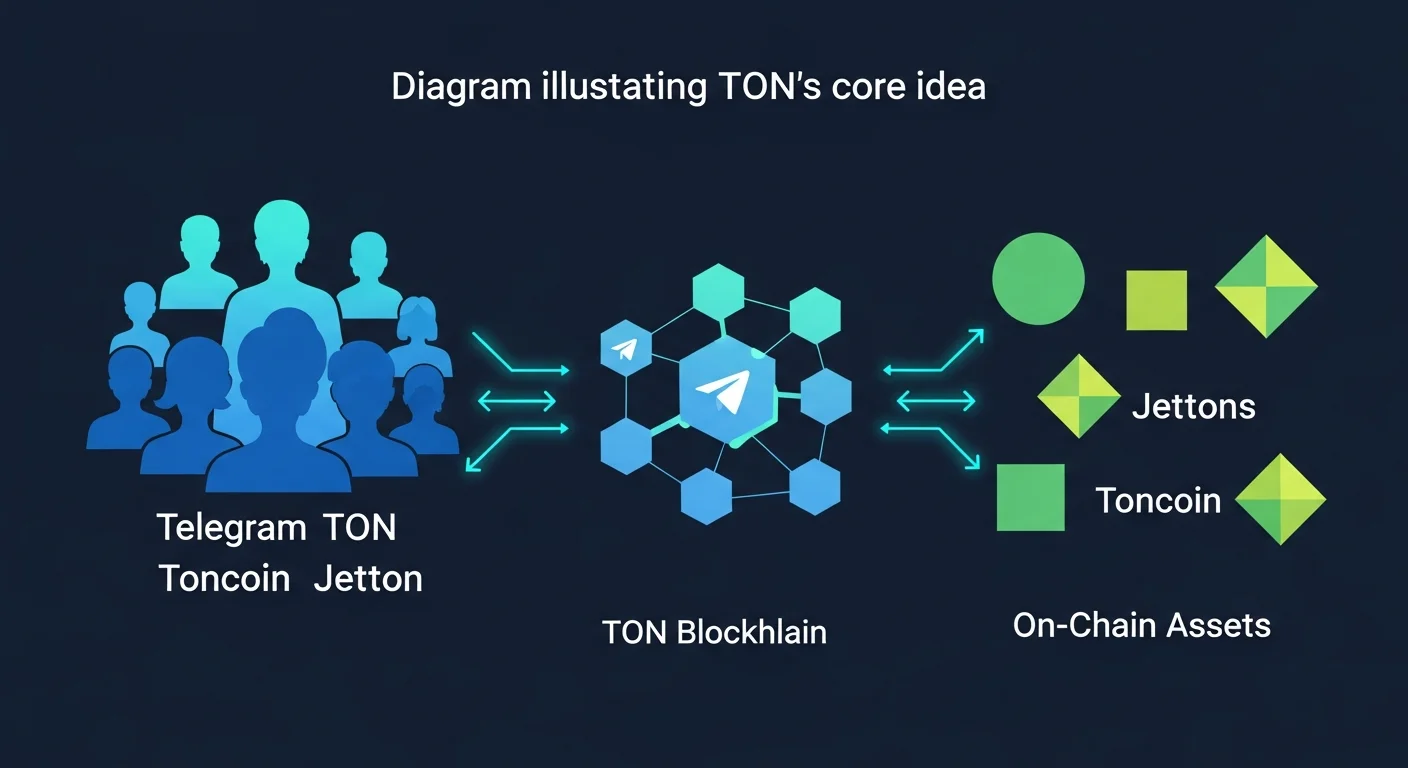
Toncoin (TON) is the gas token of the network. Every transfer, swap, NFT mint, and Mini App interaction pays fees in TON. Validators stake TON to secure the chain. Holders can use TON to pay for services like TON DNS domains, TON Sites hosting, and storage on TON Storage.
How TON connects to Telegram
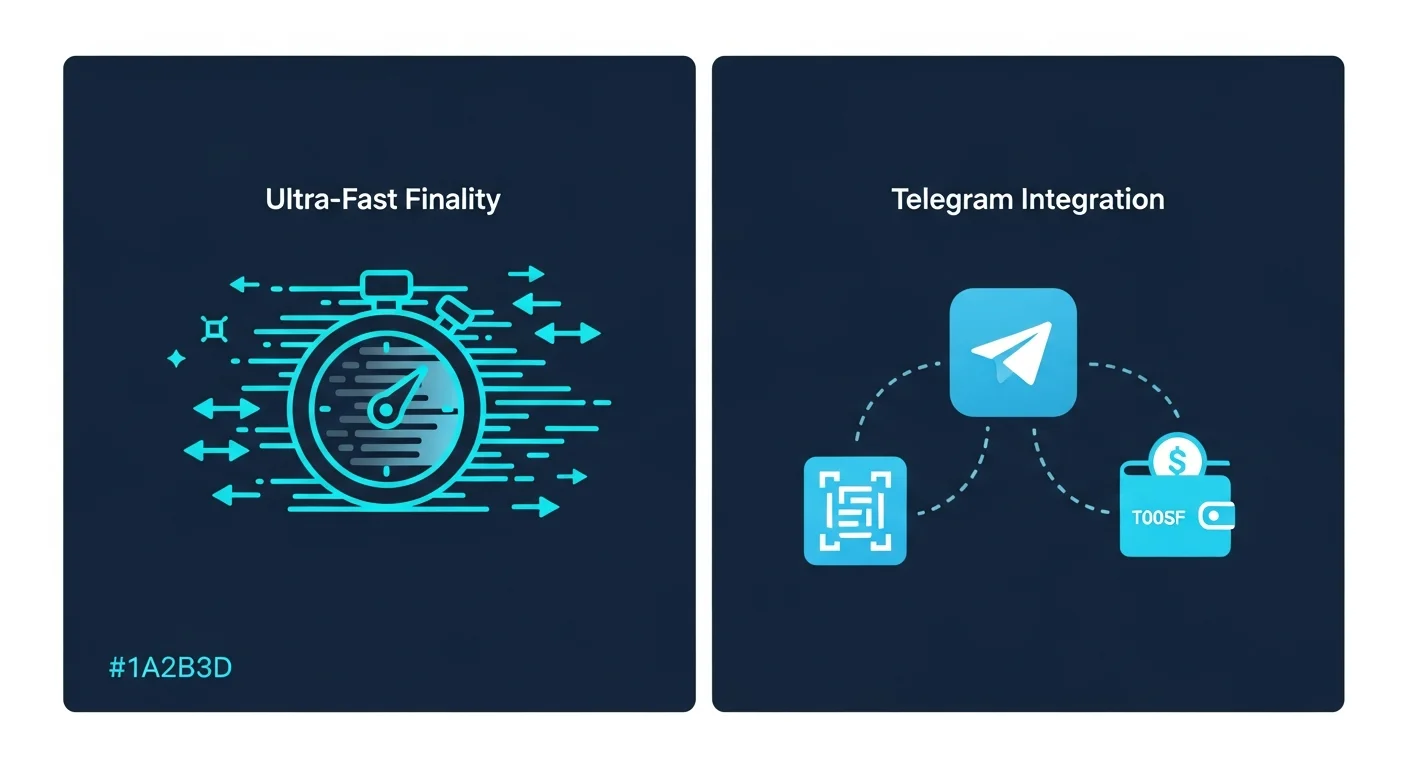
Telegram is not the operator of TON, but the messenger built deep integrations: an in-app wallet (@wallet bot), TON Connect for dApp logins, Mini Apps that run inside Telegram chats, and Telegram Stars for in-app purchases that flow through TON-related rails. This is why TON has the largest user funnel of any L1 in 2026.
TON's architecture in plain English
TON's design is unusual relative to Ethereum or Solana. Instead of a single chain, TON is built as a hierarchy of chains that scale automatically with demand.
Masterchain, workchains and shardchains
The masterchain is the top of the hierarchy. It coordinates everything else and stores validator and configuration data. Below it, workchains can host different rule sets and applications. Each workchain can split into shardchains when load increases, and merge back when load drops. This is what TON calls "dynamic sharding," and it is the main reason the chain can keep fees low even at peak usage.
Why finality is fast
Most TON transactions confirm in well under a second. Validators run a Byzantine-fault-tolerant consensus protocol that produces blocks rapidly across the masterchain and active shards. The end-user experience is closer to a Web2 service than to most blockchains.
Why fees are so low
Because the network can scale horizontally through sharding, no single chain becomes a bottleneck. Fees stay measured in fractions of a cent for typical transfers. This is the structural reason TON quickly became a popular rail for stablecoins and small-value payments.
The TON ecosystem in 2026
TON's ecosystem is much wider than most beginners expect. The chain is not just a payment rail, it is a Mini App platform, NFT venue, DeFi market, and decentralized DNS layer.
Wallets
Tonkeeper is the most popular standalone TON wallet. Inside Telegram, the @wallet bot offers the simplest custodial path. TON Space is a non-custodial wallet built into Telegram itself. Hardware wallet support exists through Ledger.
DEXs and DeFi
STON.fi and DeDust are the leading TON-native DEXs. Liquid staking protocols like tsTON, stTON, and hTON cover the staking-derivative side. Lending and synthetic asset protocols round out a real DeFi stack.
NFTs, gifts, and DNS
TON has a strong NFT ecosystem, including Telegram Gifts (in-Telegram NFT-style items) and TON DNS (.ton domains). NFTs on TON often surface as profile picture sets, in-game items, or tradable usernames.
Mini Apps and tap-to-earn
Mini Apps are dApps that run inside Telegram. The most viral examples have been tap-to-earn games like Notcoin and Hamster Kombat, which converted hundreds of millions of Telegram users into TON wallet holders.
How to start using TON
Getting onto TON is simpler than most chains because the entry point can be Telegram itself.
Pick a wallet
For the smoothest start, install Tonkeeper or use the @wallet bot inside Telegram. We have a deeper tutorial at how to use Tonkeeper and one for the Telegram wallet at how to use Telegram wallet.
Buy or receive TON
Most major exchanges support TON deposits and withdrawals. You can also buy TON directly through an on-ramp inside Tonkeeper or @wallet. For a step-by-step purchase walkthrough, see how to buy Toncoin.
Try a transaction
Send a small amount of TON to a friend's Tonkeeper or @wallet address to feel how fast finality is. Then try connecting to a DEX like STON.fi via TON Connect to swap into a Jetton.
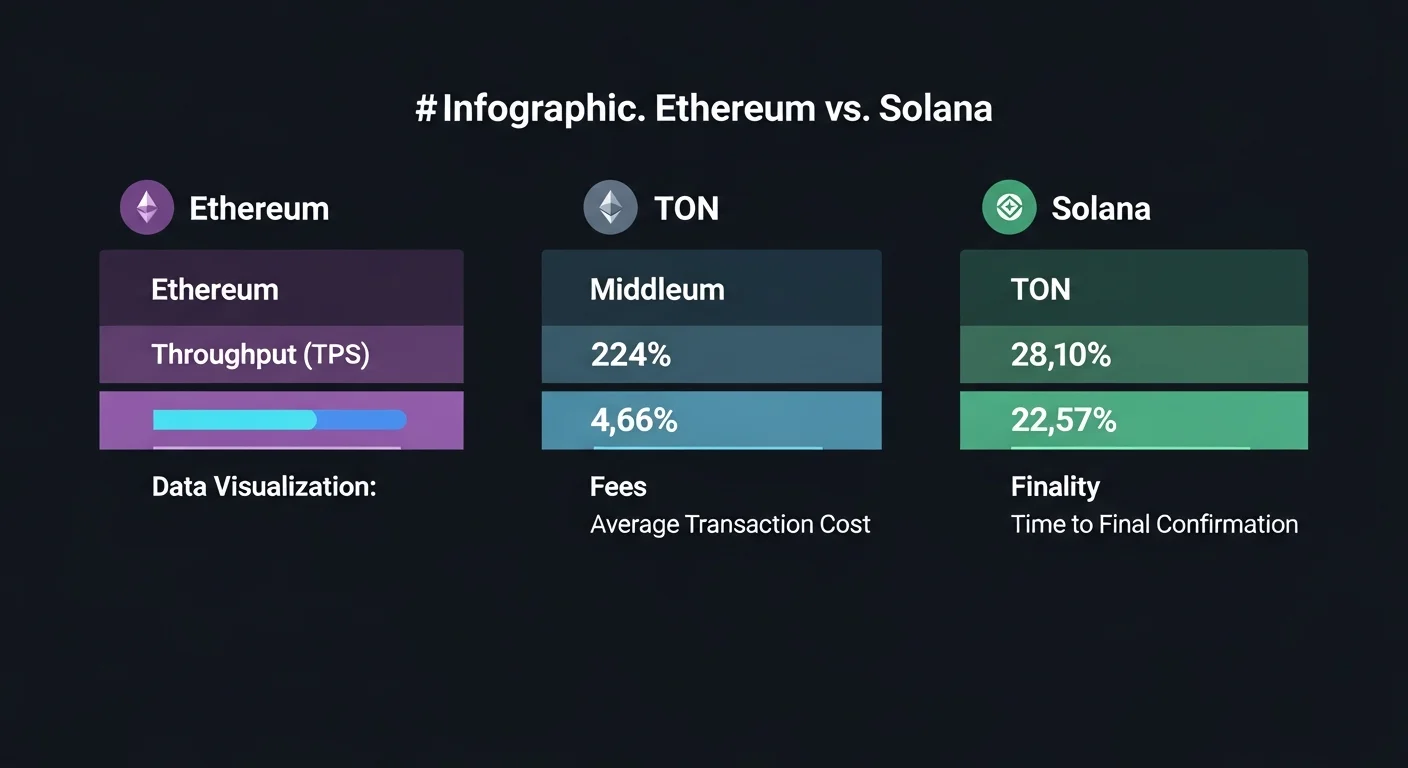
TON vs Ethereum and Solana at a glance
| Network | Throughput | Typical fee | Finality |
|---|---|---|---|
| TON | Very high (sharded) | Sub-cent | Sub-second |
| Ethereum | ~15 TPS L1, more on L2 | Several dollars on L1 | ~12 minutes economic finality |
| Solana | Very high single chain | Sub-cent | Sub-second |
Risks worth knowing
- Telegram dependency. Network demand is heavily linked to Telegram product decisions and policies.
- Validator centralization. Like every fast L1, TON's validator set is more concentrated than older PoS chains.
- Mini App scams. The same speed and openness that bring users in also let scammers ship fake apps.
- Bridge risk. Cross-chain bridging is the largest exploit category in DeFi history. Use canonical paths.
- Custodial wallet limits. The @wallet bot is convenient but custodial. For larger balances, use Tonkeeper or Ledger.
Practical workflow for first-week TON users
- Install Tonkeeper from the official store and back up the seed phrase offline.
- Buy a small amount of TON through an in-wallet on-ramp or a major exchange.
- Send a tiny transfer to test finality and the recipient flow.
- Try TON Connect with STON.fi or DeDust to swap into a Jetton.
- Explore a Mini App safely; see how to use TON Telegram bots and Mini Apps safely.
Frequently asked questions
Q Is TON the same as Telegram?
No. TON is an independent blockchain operated by a foundation and validators. Telegram integrates with TON but does not control the chain.
Q What is Toncoin used for?
Toncoin pays for transaction fees, secures the network through staking, funds TON DNS and Storage, and acts as the base trading asset across the TON ecosystem.
Q How fast and cheap is TON?
Transactions usually confirm in under a second and cost a fraction of a cent for typical transfers. Heavier interactions can cost more but rarely above a few cents.
Q Can I use TON without Telegram?
Yes. Tonkeeper, Ledger, and other wallets work independently. The Telegram funnel is a feature, not a requirement.
Q What is the difference between Toncoin and Jettons?
Toncoin is the native gas asset. Jettons are TON's token standard for non-native assets, similar to ERC-20 on Ethereum.
Final takeaway: TON's appeal is structural: a fast, sharded L1 with a Telegram funnel that turns ordinary chat users into wallet holders without forcing them to learn a new app. Start small, get comfortable with the wallet flow, and you will see why TON became one of the most active ecosystems of the past two years.
Disclaimer: This guide is for educational purposes only and does not constitute investment, financial, legal, or trading advice. Crypto is volatile and on-chain operations are usually irreversible.
Related Guides
- Toncoin in 2026: Telegram Economy, Catchain 2.0 and USDT on TON
- TON Tokenomics: Toncoin Supply, Distribution and Inflation Explained (2026)
- TON to USD Converter: Toncoin Price Today (Live)
- TON Staking Calculator: Estimate Toncoin Rewards Live (2026)
- How to Buy Toncoin (TON) in 2026: Exchanges, Wallet Setup and First Purchase Guide