Chain Abstraction: Why 2026 Ends the L1 vs L2 War
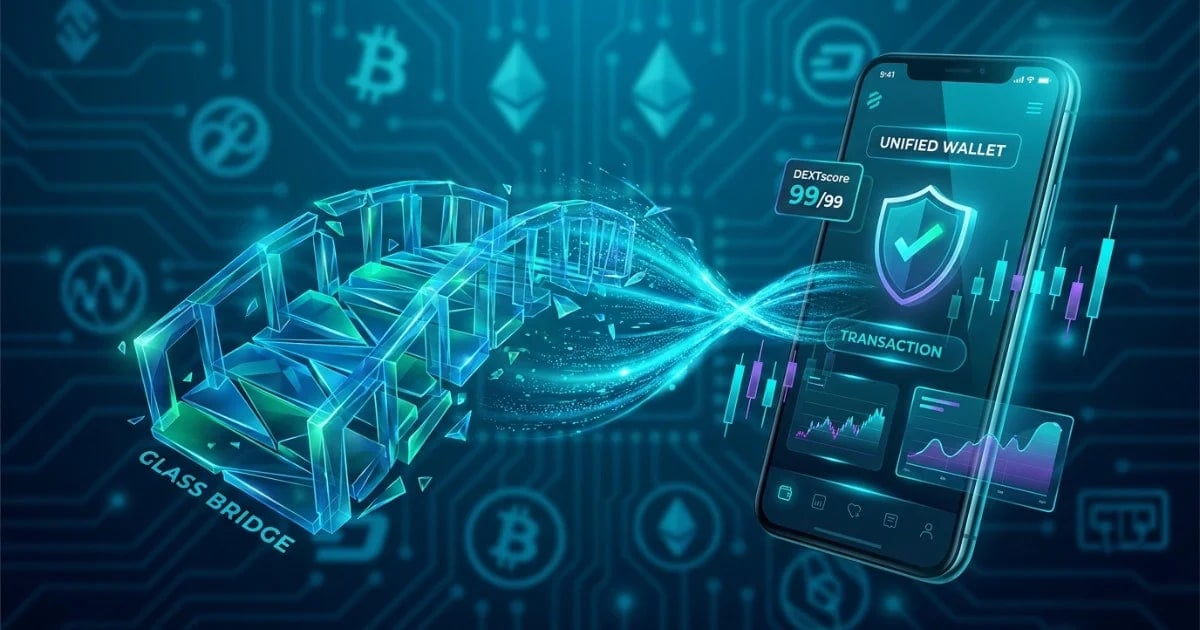
Chain abstraction is turning blockchains into invisible infrastructure. Learn why 2026 ends the L1 vs L2 war as users focus on apps, not networks.
The "DNS Moment" of Web3
- The blockchain industry has shifted from competing over network supremacy to competing for application dominance. For years, the "Layer Wars" consumed developer resources and investor attention, focusing on whether Ethereum’s rollup-centric roadmap or Solana’s monolithic architecture would prevail.
- Today, that debate has been largely neutralized by the emergence of Chain Abstraction.
- Blockchain technology is transitioning into a phase where the underlying network is becoming invisible infrastructure rather than a visible destination. The real competition is no longer between Ethereum, Solana, Base, or Polygon, but between the applications that provide the most seamless user experience.
The "DNS Moment" of Web3
- To understand the 2026 landscape, we must look at the evolution of the internet. In its early days, users navigated via IP addresses-a manual, technical, and friction-heavy process. The introduction of URLs and DNS allowed the network to disappear behind a user-friendly interface.
- Crypto has reached a similar milestone. In the previous cycle (2021-2024), users acted as their own network administrators, manually managing RPCs, bridging assets, and tracking gas tokens. In 2026, these technical hurdles have been abstracted away. A user on a Base application can now spend Solana-based USDC without ever realizing they are interacting with two distinct networks.
The End of the "UX Tax": Why Bridges Failed
For the better part of a decade, bridges were considered essential infrastructure. However, looking back from 2026, it is clear that bridges were not infrastructure: they were a UX tax. They created significant friction that hindered mainstream adoption due to several confirmed factors:
Security Vulnerabilities: Bridge hacks resulted in billions of dollars in lost funds, creating a "trust deficit" for cross-chain activity.
Liquidity Fragmentation: Capital was trapped in silos, making markets inefficient and confusing for retail participants.
Gas Token Friction: The "dust" problem (having assets on a chain but no native token to pay for fees) was a primary cause of user churn.
Cognitive Overload: Forcing users to understand "finality times" and "trust assumptions" made Web3 feel like a technical chore rather than a financial tool.
The Technological Architecture of Invisibility
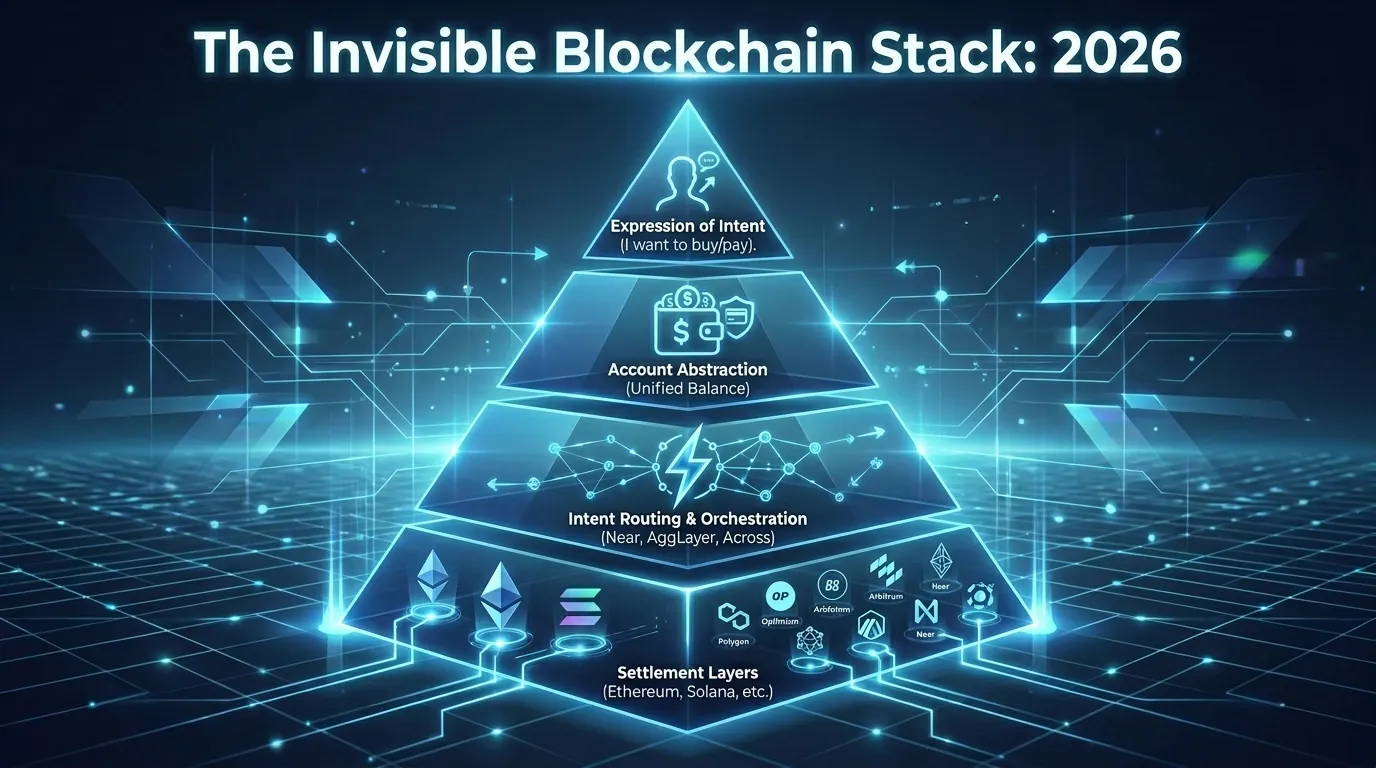
The 2026 shift toward a unified experience is driven by several verified technological pillars:
1. Intent-Based Execution
Systems like UniswapX, Across, and Socket have replaced manual "transaction" logic with "Intent" logic. A user no longer "bridges USDC from Solana to Base"; they simply sign an intent to "Pay 10 USDC." A network of competitive solvers then executes the most efficient path behind the scenes.
2. Unified Liquidity Layers
Protocols such as Near’s Chain Abstraction and Polygon’s AggLayer allow for near-instant, atomic cross-chain state sharing. This enables liquidity to move between connected chains as if they were a single network.
3. Universal Accounts
Projects like Particle Network, OneBalance, and Near have standardized Account Abstraction. This allows users to maintain a single unified balance that is portable across all chains, removing the need for network switching.
Blockchains as Settlement Layers, Not Destinations
The strategic conclusion of this era is that blockchains are becoming settlement layers, not user-facing products. In 2024, users went "to Solana" or "to Base." In 2026, they go to applications. The choice of the underlying blockchain is now a backend decision made by developers, based on cost, security, and finality. UX has moved entirely to the application and wallet layers.
Who Wins in the Chain Abstraction Paradigm?
Applications: Those that own the user relationship and hide the technical complexity.
Wallets: Acting as "Intent Routers" that decide where to send user requests.
Intent Solvers: The market makers of 2026 who fulfill orders across fragmented pools.
Liquidity Routers: Protocols like Across that facilitate the instant movement of assets.
Technical superiority of an L1 or L2 is no longer enough to guarantee success; if an application can’t easily "abstract" the chain, it will lose users to those that can.
Conclusion: The Innovation of Disappearance
The most significant innovation in crypto was not building another blockchain, but making the blockchain disappear for the end user. By 2026, the success of a network is measured by how little its users know it exists.
To monitor the DeFi market in an agile and secure way in real-time and trade across this abstracted landscape with the help of the best crypto tools, you can access DEXTools here.
Disclaimer: This article is for informational purposes only and does not constitute investment advice, financial advice, trading advice, or any other kind of advice. DEXTools does not recommend buying, selling, or holding any cryptocurrency or token. Users should conduct their own research and consult with a qualified financial advisor before making any investment decisions. Cryptocurrency investments are volatile and high-risk. DEXTools is not responsible for any losses incurred.
Related Guides
- Ethereum Roadmap: Beyond 10k TPS and Invisible Infra
- What is VeChain (VET)? Supply Chain Blockchain Explained
- Tezos (XTZ) Explained: Self-Amending Blockchain
- Sui Network Architecture: Object-Centric Design, Parallel Execution and DeFi Apps (2026)
- What Is Sui? Beginner Guide to the Move-Based L1 and SUI Token (2026)
Frequently Asked Questions
What is the 'DNS Moment' of Web3?
The 'DNS Moment' of Web3 refers to the transition where blockchain technology becomes invisible infrastructure, similar to how URLs and DNS made internet navigation user-friendly, allowing users to interact with applications without needing to understand the underlying networks.
How have bridges impacted user experience in blockchain?
Bridges have been seen as a 'UX tax' due to security vulnerabilities, liquidity fragmentation, and cognitive overload, which created friction and hindered mainstream adoption of blockchain applications.
What are Intent-Based Execution Systems?
Intent-Based Execution Systems, like UniswapX and Across, allow users to express their intentions for transactions without manually managing the underlying processes, streamlining the user experience in blockchain applications.
How is blockchain technology evolving by 2026?
By 2026, blockchain technology is evolving to focus on applications rather than networks, with blockchains serving as settlement layers and user interactions happening seamlessly through applications.
What role do wallets play in the 2026 blockchain landscape?
In 2026, wallets act as 'Intent Routers' that manage user requests and determine the most efficient paths for transactions across different blockchain networks.