JustLend Tutorial: Lend and Borrow on TRON 2026
— By Tony Rabbit in Tutorials
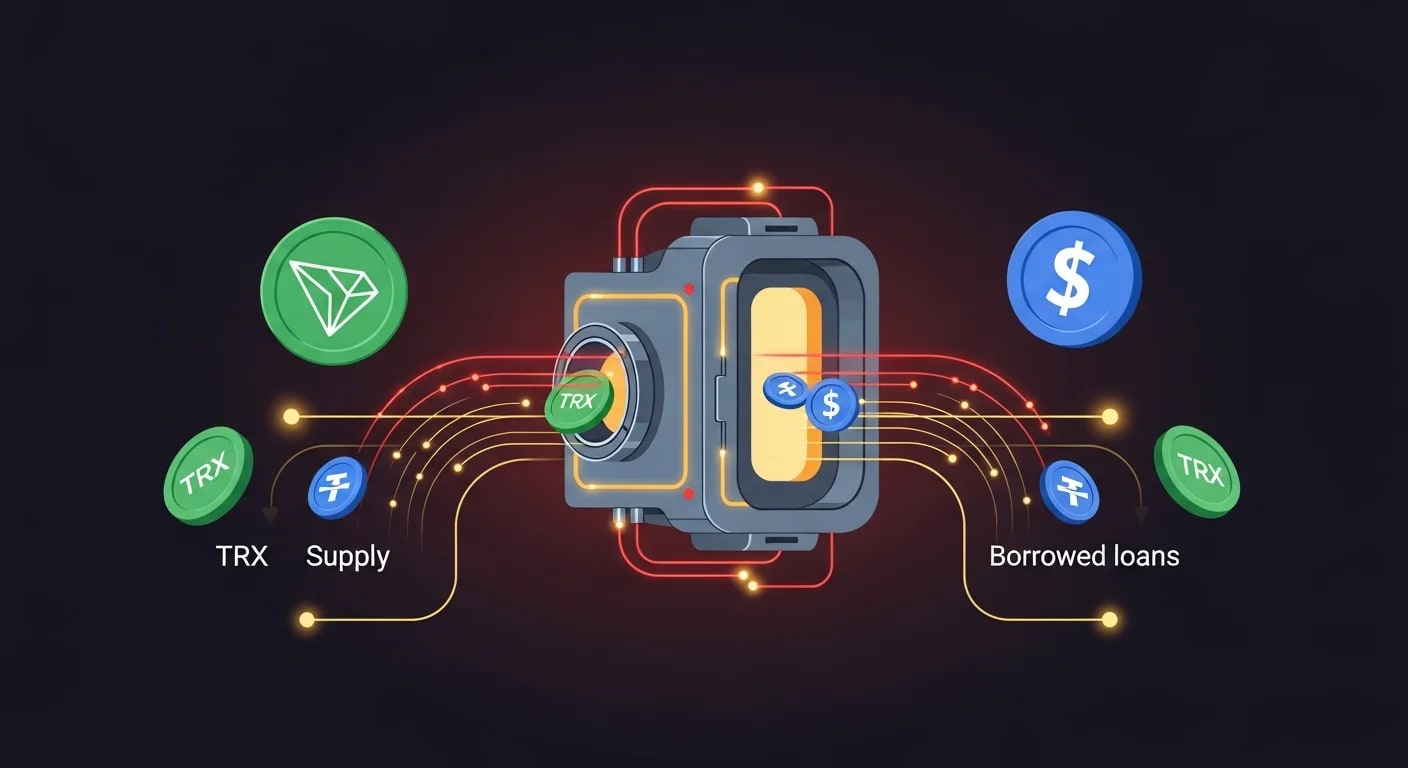
JustLend tutorial for TRON: learn how to supply, borrow, manage your health factor, and earn yield while avoiding liquidations on TRON's lending market.
JustLend is the largest lending protocol on TRON. It works like Aave or Compound on Ethereum, but with TRON-native assets: TRX, USDT-TRC20, USDD, BTT, and a few others. Suppliers earn interest. Borrowers take loans against their collateral. Liquidators clean up positions that fall below the safety threshold. The mechanics are familiar to any DeFi user, but the TRON-specific details around energy, USDT, and governance shape how to use it.
Quick answer: To use JustLend, connect a TRON wallet, supply TRX or stablecoins to earn APY, optionally enable that supply as collateral, and borrow other assets up to a fraction of your collateral's value. Watch the health factor: if it drops to 1, your position becomes liquidatable. Most beginners should start with stablecoin supply only and stay well above 1.5 health factor before borrowing anything.
- Supply earns variable APY. Rates float with utilization, so check before depositing for a specific yield.
- Borrowing requires collateral. Collateralization ratios are different per asset and change with governance.
- Health factor is the only number that really matters. If it crosses 1, the position can be liquidated.
- Stablecoin loops have hidden risk. Even "stable" pairs can liquidate if a depeg happens.
- JustLend uses TRON energy. Each interaction consumes energy, so keep TRX or staked resources ready.
What JustLend is
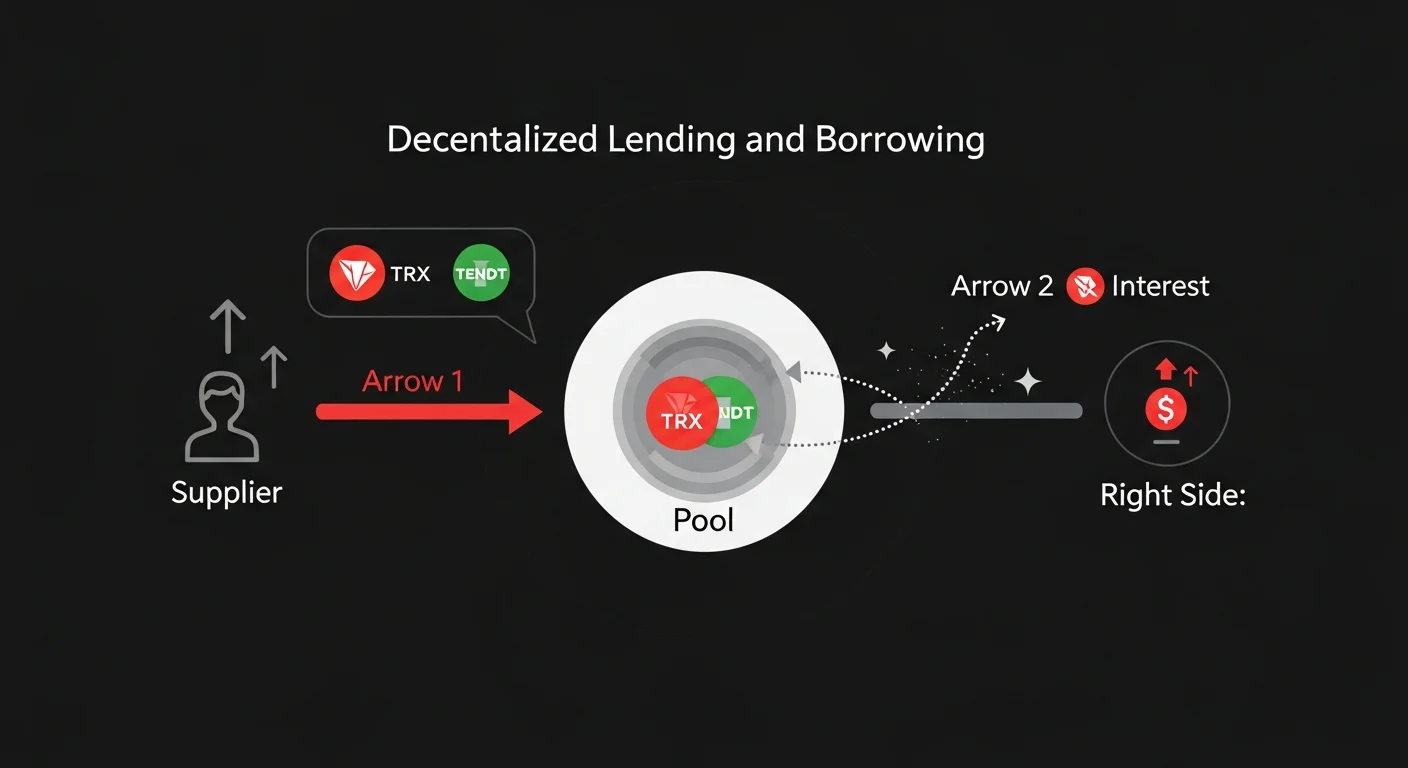
JustLend is a money market on TRON. Suppliers deposit assets into a pool. Borrowers take loans from the same pool by posting collateral worth more than the amount borrowed. Both sides interact with the protocol's smart contracts directly, not with each other, which is why the rates change with utilization rather than through a manual matching process.
Suppliers and jTokens
When you deposit, JustLend mints jTokens that represent your share of the supply pool. These tokens accrue interest automatically as the pool earns from borrowers. To withdraw, you redeem the jTokens back into the underlying asset, plus accrued interest.
Borrowers and collateral factors
Borrowers post supplied assets as collateral. Each asset has a collateral factor, which is the maximum fraction of its value you can borrow against. Stablecoins typically have higher factors than volatile assets because they are less likely to swing into liquidation.
How to supply assets and earn yield
The simplest way to use JustLend is supply only, with no borrowing. The risk surface is much smaller and the workflow is familiar.
Connect a TRON wallet
Open justlend.org and click Connect Wallet. Choose TronLink or another TRC-20 wallet. Confirm the connection prompt and verify the domain. Phishing copies of major TRON dApps exist, and the only reliable defense is reading the domain carefully.
Pick the asset to supply
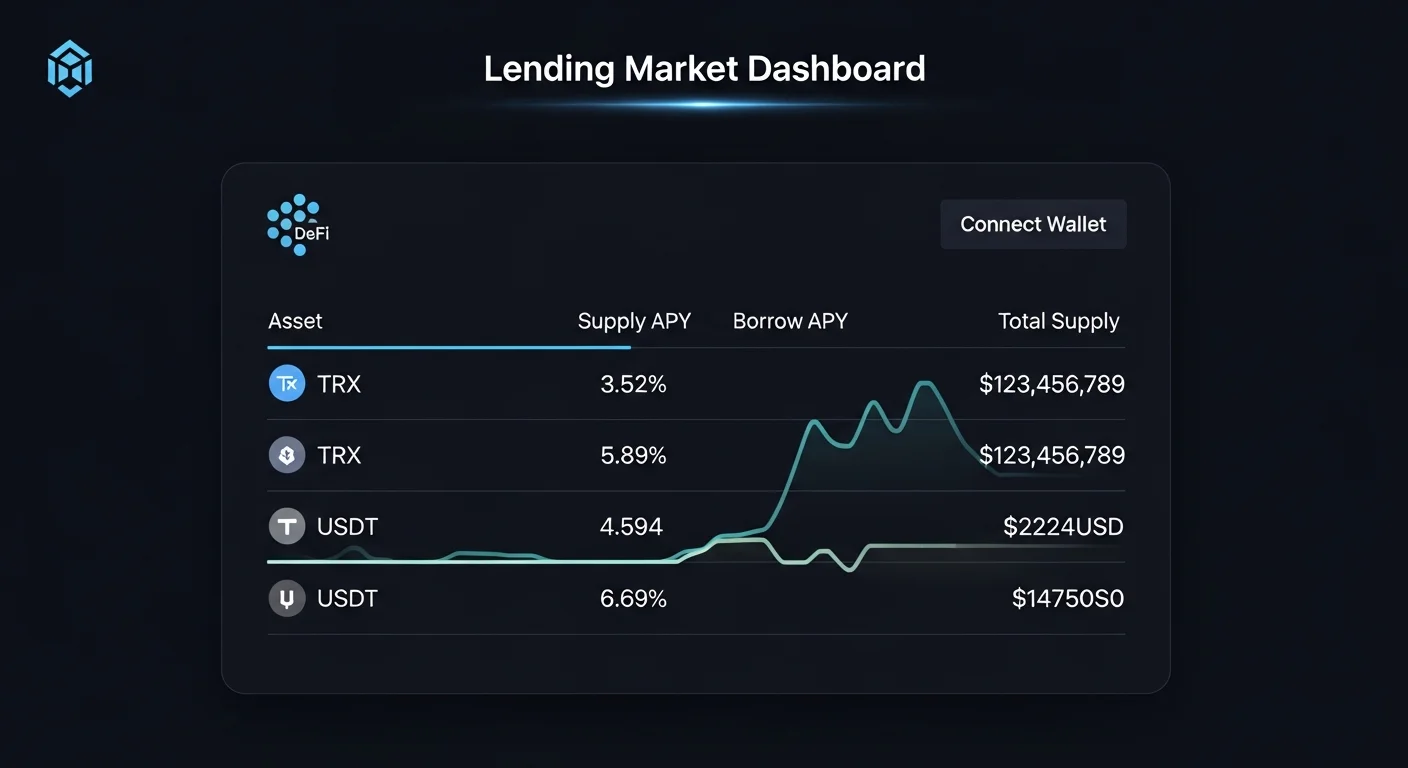
From the markets list, choose the asset to supply. Stablecoins like USDT and USDD are the conservative choices. TRX itself can be supplied and used as collateral. Each row shows the current supply APY, which fluctuates with borrow demand.
Deposit and (optionally) enable as collateral
Approve the asset for the protocol if you have not before, then deposit. To use the deposit as collateral for a future loan, toggle the Use as Collateral switch on. If you only want yield without borrowing, leave it off.
How to borrow and manage the health factor
Borrowing on JustLend is where the real risk lives. The protocol does not care whether the user "needs" the loan. It only cares whether the collateral value stays above the liquidation threshold.
How borrowing works
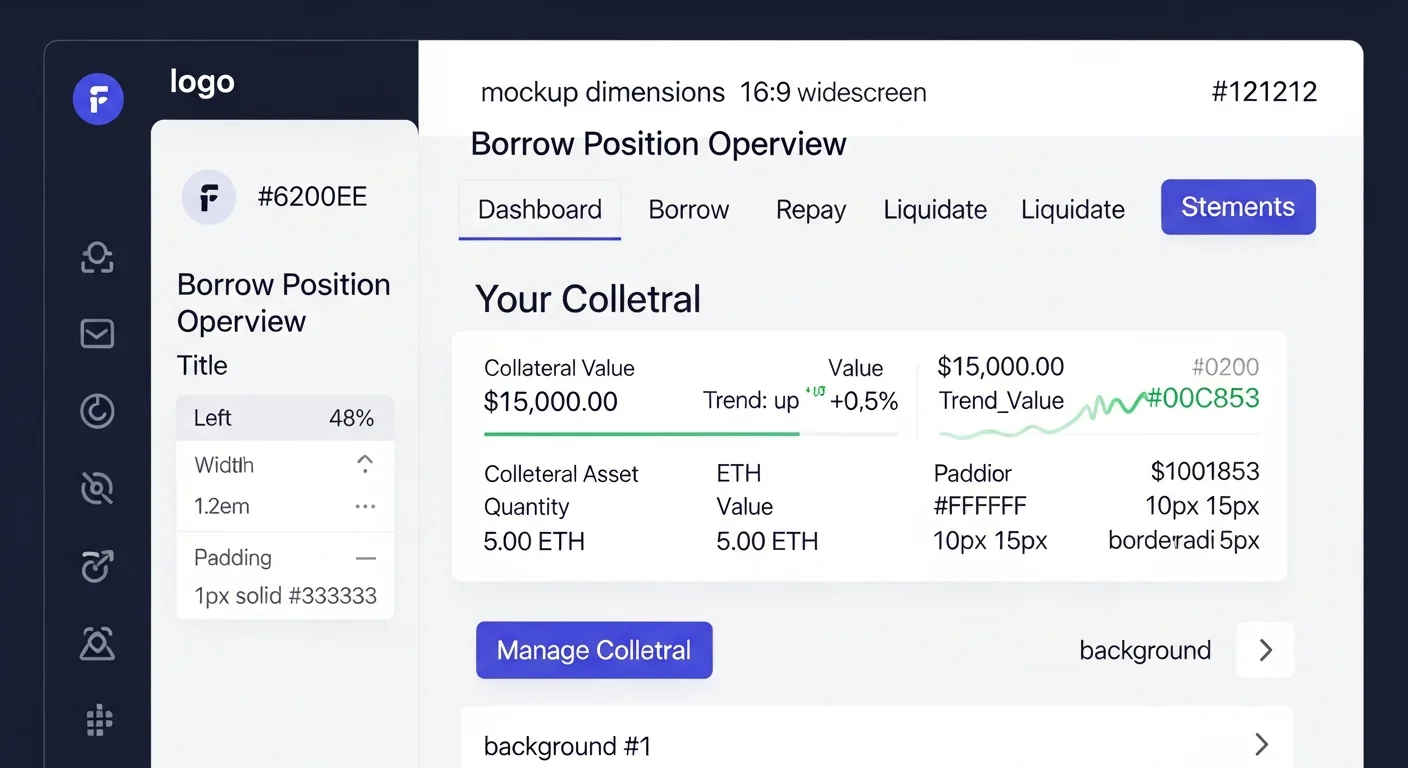
With collateral enabled, the dashboard shows your borrowing power. You can borrow up to that amount of any supported asset. The borrow rate floats with utilization. If too many people are borrowing the same asset, the rate climbs sharply, sometimes faster than borrowers expect.
Health factor in plain English
Health factor is a single number that summarizes how safe your borrow position is. A health factor of 2.0 means your collateral is twice the size of your debt at the liquidation threshold. A health factor of 1.0 means you are at the edge of liquidation. Below 1.0, the position can be liquidated, and a portion of your collateral is sold at a discount to repay the debt.
Conservative borrowing in practice
Most experienced users keep health factor well above 1.5 to absorb sudden price swings. Aggressive borrowers may run lower, but they also lose collateral more often during sharp moves. There is no honor in clever borrowing if a single hour of volatility unwinds the position.
Common JustLend strategies
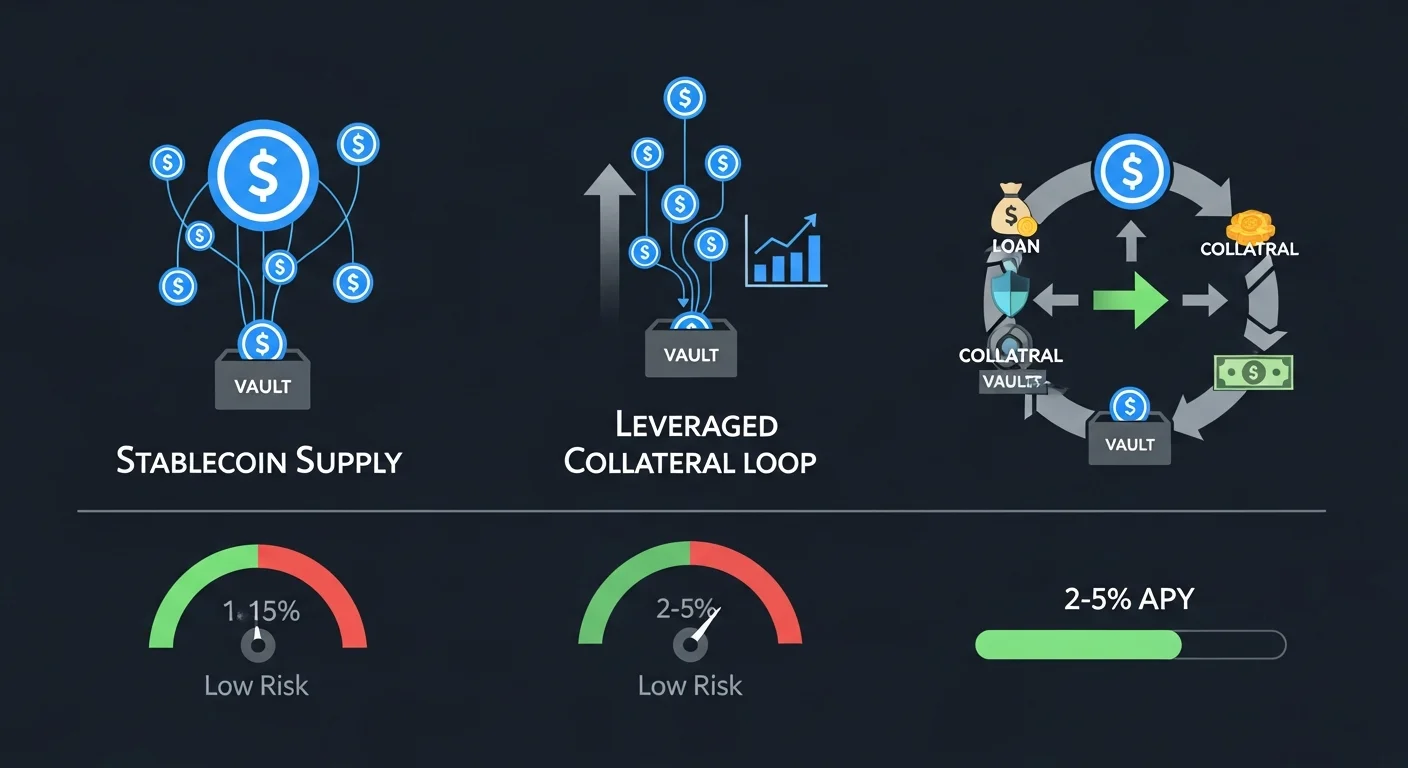
Most JustLend users fall into one of three patterns, each with different risk and reward profiles.
Stablecoin supply only
Deposit USDT or USDD, do not borrow, and earn variable APY. This is the lowest-risk pattern, with the only meaningful exposures being smart contract risk and the small but non-zero risk of stablecoin depeg.
Leveraged collateral loops
Some users supply TRX, borrow stablecoins against it, swap back into more TRX, and supply again. This loops the collateral position and increases yield exposure if TRX price holds. It also amplifies losses sharply if TRX price drops, because the leveraged position liquidates earlier than a simple long.
Borrow for spending or trading
Users with long-term TRX holdings sometimes borrow stablecoins instead of selling, to maintain crypto exposure while spending fiat-equivalent. The catch is that this still creates liquidation risk if TRX price falls and the borrow has to be repaid quickly.
Risks beyond simple liquidation
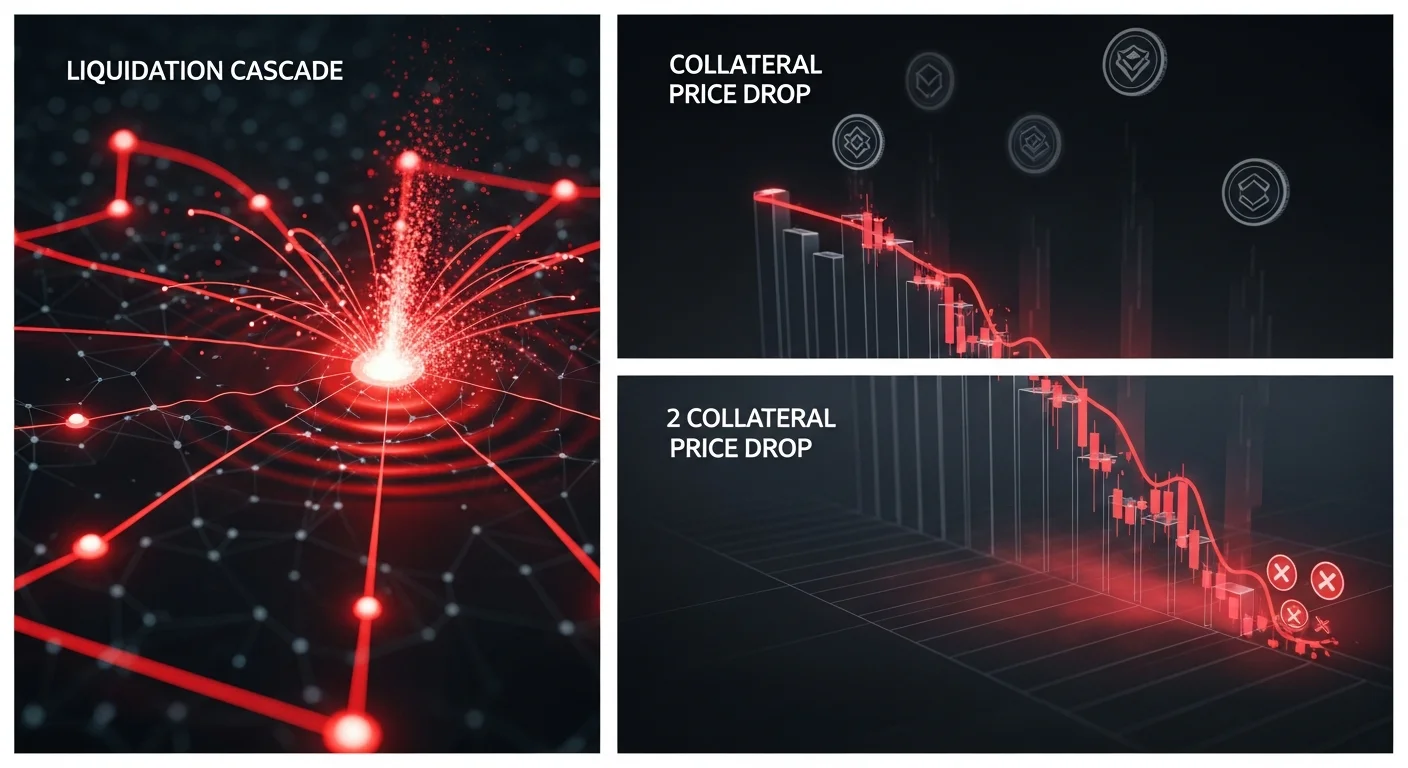
The visible risk on a dashboard is liquidation. The real risk surface is a bit broader.
- Smart contract risk: JustLend has been audited and operating for years, but no DeFi protocol can promise immunity to exploits.
- Oracle risk: liquidation thresholds are calculated from oracle prices. Oracle issues can cause wrongful liquidations.
- Stablecoin depeg: if a supplied stable depegs, your collateral can drop in value sharply.
- Rate volatility: borrow rates can spike if utilization climbs, eating into the math behind your position.
- Network congestion: on extreme volatility days, getting transactions through can be hard, which is exactly when you may need to add collateral.
JustLend vs other TRON yield options
| Option | Stronger for | Main caution |
|---|---|---|
| JustLend supply | Variable yield on TRX, USDT, USDD | Smart contract and oracle risk |
| JustLend borrow | Leverage and short-term liquidity | Liquidation risk, rate volatility |
| SunSwap LP | Trading fees from real volume | Impermanent loss |
| SR voting rewards | Stable, governance-aligned yield | Lower headline APY than DeFi |
Practical workflow for first-time JustLend users
- Start with a small supply test. Confirm the deposit, claim the jTokens, and check yield accrual.
- Do not enable collateral until you actually plan to borrow. Collateral on increases the surface for liquidation logic.
- Set a personal health factor floor. 1.5 is a reasonable starting point for new borrowers.
- Plan an emergency repayment path. Know exactly which TRX or stables you can pull in fast if HF drops.
- Check the protocol's official channels for governance changes. Collateral factors and rates can change.
Frequently asked questions
Is JustLend safe?
It is one of the most-used and most-audited protocols on TRON, but no DeFi protocol is risk-free. Smart contract, oracle, and stablecoin risks remain.
What is the minimum deposit on JustLend?
There is no protocol minimum, but each transaction consumes TRON energy and may require a small TRX buffer for fees.
Can I borrow against TRX?
Yes. TRX is a supported collateral asset, with a collateral factor lower than stablecoins because of its volatility.
How is the JustLend interest calculated?
Rates are derived from utilization. As more of the supply is borrowed, both supply APY and borrow APY climb. The same dynamic works in reverse when utilization drops.
What happens during a liquidation?
If health factor falls below 1, liquidators can repay part of the debt and receive a portion of the collateral at a discount. The borrower keeps the remaining collateral minus the discount and the unpaid debt.
Final takeaway: JustLend is a powerful TRON-native money market. Supply-only is a calm way to earn variable yield; borrowing turns it into a leverage tool that punishes carelessness. Watch the health factor, plan the unwind, and keep TRX energy available for the moments that matter.
Disclaimer: This guide is for educational purposes only and does not constitute investment, financial, legal, or trading advice. DeFi positions can be liquidated quickly during volatile markets.
Related Guides
- How to Use Aave: Deposit, Borrow, Repay and Manage Health Factor (2026)
- EVAA Protocol Tutorial: TON Lending and Borrowing (2026)
- NFT Lending Explained: How to Borrow Against Your NFTs
- Borrow Cap vs Supply Cap: How Lending Limits Protect DeFi Markets
- Base Chain dApp Guide: Bridge, Swap, Lend and Use Base App (2026)
Frequently Asked Questions
What is JustLend on TRON?
JustLend is a decentralized lending and borrowing protocol on the TRON network where users can supply assets to earn yield or borrow against collateral. Interest rates adjust based on supply and demand within each market.
How does lending and borrowing work on JustLend?
You supply a supported asset to a pool to earn interest, and you can borrow other assets by posting collateral, keeping your borrowed amount below a safe limit. Rates and available liquidity vary by market and change with usage.
What is a health factor in lending protocols?
A health factor reflects how safe your borrowing position is relative to your collateral, and a low value means you are close to liquidation. Keeping a comfortable buffer and monitoring price moves helps you avoid forced closure of your position.
How can I avoid liquidation on JustLend?
Borrow well below your maximum limit, keep extra collateral, and watch the market price of your collateral so a drop does not push you past the threshold. Repaying part of a loan or adding collateral early restores your safety margin.