How to Bridge ETH to Avalanche Safely: 7 Bridges (2026)
— By Tony Rabbit in Tutorials

Learn how to bridge ETH to Avalanche safely in 2026: 7 bridges ranked, Core Bridge and Stargate step by step, gas drop for AVAX, fees and security.
Bridging ETH to Avalanche in 2026 is no longer a one-click novelty: it is a routine portfolio operation, an entry ticket to high-throughput DeFi, and a security decision that can cost you everything if you pick the wrong route. The Avalanche C-Chain runs sub-two-second finality, charges fractions of a cent in gas, and hosts a mature DeFi stack ranging from Trader Joe and GMX to Benqi, Pharaoh, and the GoGoPool liquid staking layer. Getting your ETH there safely matters because every dollar of yield you chase on Avalanche is only as secure as the bridge that delivered the principal.
This guide walks you through every viable route from Ethereum mainnet to Avalanche C-Chain in 2026, ranks the seven major bridge providers by trust model, security history, fees, and finality, and gives you the exact step-by-step flow for the two most common paths: the official Avalanche Core Bridge and the LayerZero-powered Stargate route. It covers Avalanche's new Interchain Token Transfer (ICTT) protocol, the gas-drop pattern for getting your first AVAX, the difference between wrapped ETH.e and native USDC via Circle's CCTP, and the bridge hack history that still shapes how modern routes are designed.
You will also find a security checklist, a fee and finality comparison table, troubleshooting steps for stuck or missing funds, and a deep look at Subnet bridging now that Avalanche L1s (the rebranded Subnets) are first-class citizens. By the end, you will know exactly which bridge to use for your specific situation, why, and how to verify the result before you touch a single DeFi protocol.
What Does It Mean to Bridge ETH to Avalanche?
Bridging ETH to Avalanche means moving Ether from the Ethereum mainnet into the Avalanche C-Chain, where it lands as either a wrapped representation (typically WETH.e) or as native ETH on an Avalanche L1 that supports it. The asset stays the same in economic value, but the chain, the gas token, and the smart contract environment all change. You hold the same exposure to ETH with the speed and fee profile of Avalanche.
Underneath, every bridge solves the same problem in a different way. Some lock ETH on Ethereum and mint a one-to-one wrapped representation on Avalanche. Others use a liquidity network, where market makers on the destination side instantly release ETH from a pre-funded pool while the bridge later settles internally. A third class, intent-based bridges like Across, lets relayers compete to fill your transfer in seconds, taking on the inventory risk themselves. The mechanism you pick determines fee size, finality time, security assumptions, and what happens when something goes wrong.
Why Bridge ETH to Avalanche in 2026?
The case for bridging ETH to Avalanche in 2026 is stronger than at any point since the network launched. Avalanche's HyperSDK upgrade and the Etna release matured Subnet economics into the L1 model, where projects launch their own validator sets, pay a flat monthly fee, and customize gas tokens. The C-Chain itself remains the liquidity hub, with billions in TVL across Aave, Benqi, Trader Joe v2.2, Pharaoh, and GMX V2. For ETH holders, this means deep markets, leveraged perps, and yield strategies that simply cost too much on Ethereum mainnet.
You also bridge for ecosystem access. Trader Joe is the dominant native DEX with its Liquidity Book design; GMX runs perpetuals with shared liquidity across Arbitrum and Avalanche; Benqi powers both money markets and the sAVAX liquid staking token; and GoGoPool offers permissionless minipools for AVAX validation. None of these can be accessed from Ethereum directly. ETH bridged into Avalanche becomes pristine collateral for borrowing, leverage, or simply parking in lending markets at rates that swing meaningfully above what Ethereum mainnet Aave offers.
Avalanche C-Chain transactions typically settle for fractions of a cent, freeing complex DeFi strategies that are uneconomic on Ethereum mainnet.
Trader Joe, Benqi, GMX V2, Pharaoh, and Aave V3 give bridged ETH an immediate productive home with serious volume.
Snowman consensus delivers sub-two-second finality, so once funds land they are usable immediately without re-org risk.
From C-Chain you can hop into Avalanche L1s like Dexalot, Beam, and Pulsar via ICTT for app-specific environments.
Brief History: How ETH Got to Avalanche
When Avalanche mainnet launched in September 2020, there was no clean way to move ETH onto it. The original Avalanche-Ethereum Bridge (AEB) appeared in early 2021, run by a network of relayers, and offered the first painful but functional path. It was slow, expensive in gas on the Ethereum side, and required confirmations that stretched into hours. Total volume in those early months barely cracked a few million dollars per week.
In July 2021 the Avalanche Bridge (AB) replaced AEB. It used an Intel SGX enclave to manage signing, dropping fees by an order of magnitude and cutting confirmation time to roughly ten minutes for the Ethereum side. By Q4 2021, AB was processing more than $1 billion in weekly volume during the DeFi summer aftermath, and Avalanche's TVL crossed $12 billion. The bridge was so successful that "bridge to Avalanche" became shorthand for moving into a high-throughput EVM environment.
The landscape diversified through 2022 and 2023. LayerZero launched and Stargate built on top of it with unified pooled liquidity. Across went live with its intent-based design. Synapse pushed cross-chain swaps. Circle released the Cross-Chain Transfer Protocol (CCTP) in 2023, enabling native USDC burns and mints across chains, eliminating the bridged-USDC fragmentation problem. By 2024, Avalanche introduced ICTT (Interchain Token Transfer) as the canonical primitive for moving assets between the C-Chain and Avalanche L1s.
The hack history matters. Ronin lost $625 million in March 2022 to compromised validator keys. Wormhole was drained for $326 million the month before via a signature verification bug. Nomad lost $190 million in August 2022 after an init bug let anyone replay messages. Multichain collapsed in mid-2023 with more than $200 million missing after its CEO was reportedly detained. Every modern bridge design carries scars from those events, and you can trace the security model of today's leading routes back to specific lessons from each disaster.
How Bridges to Avalanche Actually Work
Modern bridges to Avalanche split into four architectural families, each with very different security and UX tradeoffs. Understanding which family a bridge belongs to is the single most important security check you can perform before sending a meaningful amount.
The lock-and-mint model locks ETH in a contract on Ethereum and mints a wrapped IOU on Avalanche. The Avalanche Core Bridge follows this pattern, with the signing committee secured by Intel SGX. The trust assumption is that the signer set cannot be compromised. The advantage is canonical wrapped tokens (like WETH.e and USDC.e historically) that all downstream protocols recognize.
The liquidity network model maintains pools of pre-funded assets on both sides. Stargate (built on LayerZero) is the canonical example. When you bridge, your ETH joins the source-side pool and an equivalent amount of ETH is released from the destination-side pool instantly. The trust assumption shifts to the LayerZero oracle and relayer set, plus the solvency of the pool. The advantage is near-instant delivery and a uniform asset (unified liquidity, no exotic wrappers).
The intent-based model turns the bridge into an auction. You sign a message expressing what you want (X ETH on Avalanche), and competing relayers race to fill it from their own inventory. Across is the leading example. The relayer takes the inventory risk and gets reimbursed later by the underlying UMA optimistic oracle settlement. The trust assumption is the UMA dispute window, and the advantage is that fills typically happen in under thirty seconds.
The burn-and-mint model is unique to Circle's CCTP. Native USDC is burned on Ethereum and an attestation is signed by Circle's signer set. You submit that attestation to the Avalanche side and native USDC is minted. There is no wrapped variant and no liquidity pool risk. The trust assumption is Circle itself.
The Seven Best Bridges from ETH to Avalanche, Ranked
Here is the 2026 ranking based on security track record, liquidity depth, finality, fees, and route quality for ETH-to-Avalanche specifically. There is no single right answer; the best bridge depends on the amount, the urgency, and whether you want a wrapped asset or a native one.
1. Avalanche Core Bridge (Official, ICTT-aware)
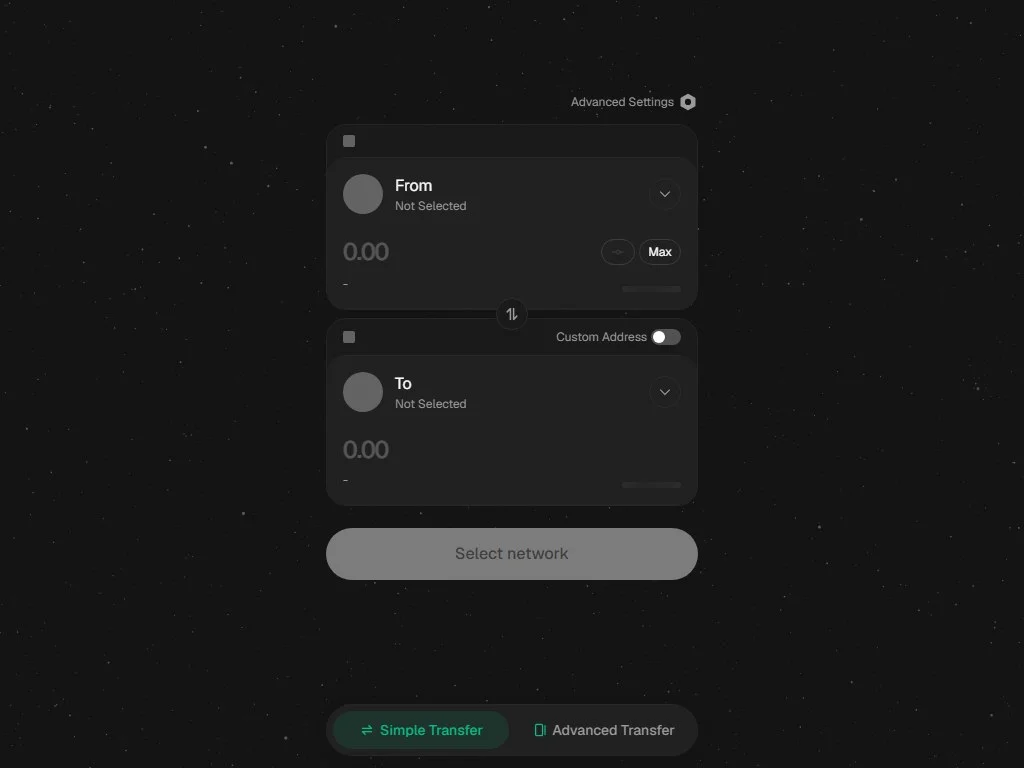
The Core Bridge embedded in the Avalanche Core wallet is the canonical official route. It produces wrapped ETH.e on the C-Chain, integrates with Avalanche's new ICTT protocol for moving onward to Avalanche L1s, and carries the lowest counterparty risk because the signer infrastructure is operated by Ava Labs with SGX-enclave key custody. Fees are competitive (typically a flat dollar-equivalent plus Ethereum gas), and confirmation usually completes within 15 minutes once Ethereum finalizes. Best for: users who want the canonical wrapped representation that every Avalanche-native protocol indexes.
2. LayerZero/Stargate (Deep Pooled Liquidity)
Stargate routes ETH from Ethereum to Avalanche through unified liquidity pools, settling in a matter of minutes with a single click. The trust assumption is the LayerZero security stack (oracle plus relayer, with optional DVN customization), which has not been exploited at the protocol level despite multiple attempts. Fees are competitive, and very large transfers benefit from the depth of the pools. Best for: medium-to-large transfers where you want a delivered ETH balance without dealing with exotic wrapped tokens. Pairs well with aggregators like 1inch for downstream swaps.
3. Across Protocol (Fastest, Intent-Based)
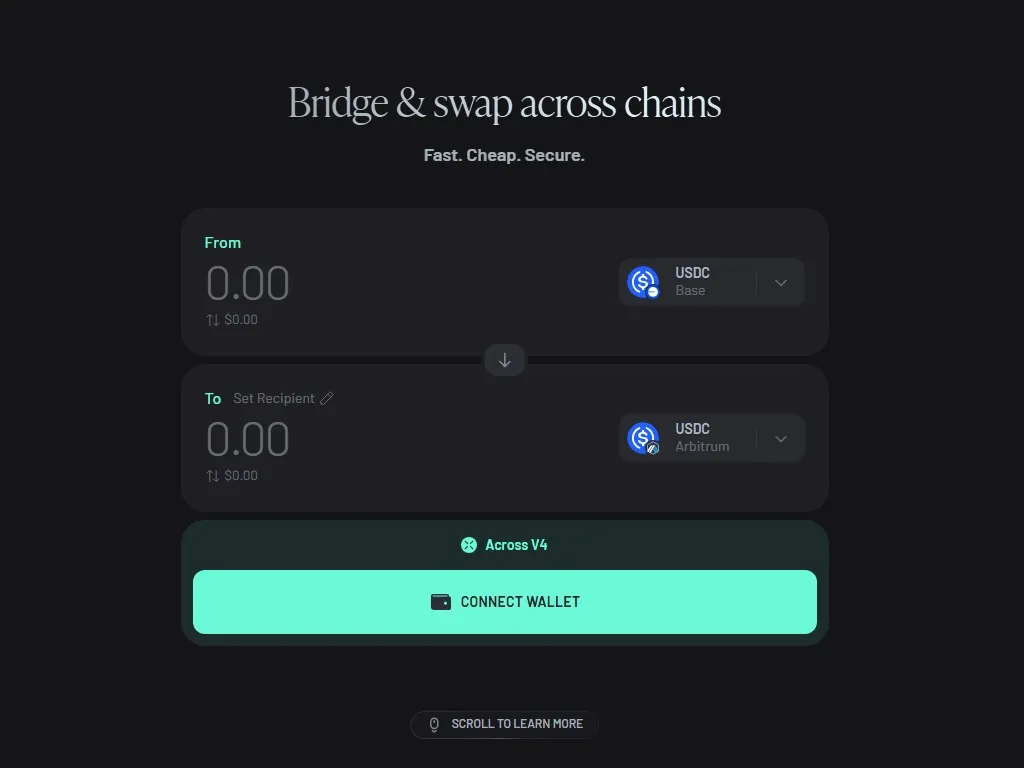
Across consistently delivers ETH to Avalanche in 15-60 seconds, far faster than any lock-and-mint design. Relayers fill from their inventory and are reimbursed via UMA's optimistic oracle. Fees are among the lowest because relayers compete in real time. The tradeoff is route-availability volatility for very large amounts, where inventory may not be sufficient. Best for: small-to-medium transfers where speed matters more than anything.
4. deBridge (Low Fees, DLN)
deBridge operates the DLN (deBridge Liquidity Network) using a similar intent-style model. Fees are typically a flat amount in basis points, and the protocol has expanded aggressively onto Avalanche. Settlement is in the one-to-two minute range. Best for: cost-conscious medium transfers, especially for non-ETH assets.
5. Squid Router (Cross-DEX Aggregation)
Squid sits on Axelar's general message passing and routes the trade through DEXs on both ends, so you can go from ETH on Ethereum to any token on Avalanche in one transaction. The Axelar validator set provides bridge security. Best for: users who want a final asset (say sAVAX or JOE) on the destination without a separate swap step.
6. Synapse Protocol
Synapse uses its own liquidity pools and validator network. It survived the 2022 hack wave intact and supports a wide range of assets and chains. Fees are slightly higher than the leaders but predictable. Best for: users who already know the Synapse interface and want a stable, well-trafficked route.
7. CCTP (USDC-Native, Burn and Mint)
CCTP is technically not a route for ETH itself, but it deserves the slot because most users bridging into Avalanche end up converting to USDC for trading. CCTP burns native USDC on Ethereum and mints native USDC on Avalanche, eliminating any wrapped-USDC fragmentation. Best for: pre-swap your ETH to USDC on Ethereum first, then use CCTP for the cleanest possible stablecoin landing.
Fees, Finality, and Trust: The Comparison Table
Step-by-Step: Avalanche Core Bridge (Wrapped ETH.e)
The Avalanche Core Bridge is the safest default for users who want a canonical wrapped ETH balance on the C-Chain. The flow below assumes you are starting with ETH in a MetaMask or Core wallet on Ethereum mainnet.
Step 1: Install or open Core. Download Core wallet from core.app (avoid every other URL claiming to be Core) or use the web interface at core.app/bridge. Core also connects via WalletConnect if you prefer to keep your existing wallet. Always verify the URL letter-for-letter before connecting; phishing clones are the single largest cause of bridge loss in 2026.
Step 2: Add the Avalanche C-Chain network. Network name: Avalanche C-Chain. RPC: https://api.avax.network/ext/bc/C/rpc. Chain ID: 43114. Currency symbol: AVAX. Explorer: snowtrace.io. Core adds this automatically; in MetaMask you can use the "Add network automatically" prompt at chainlist.org once you have verified the URL.
Step 3: Select the route. In Core Bridge, pick Ethereum as the source and Avalanche as the destination. Choose ETH as the asset. Enter the amount. The interface displays the exact ETH.e you will receive after fees, and the estimated Ethereum gas you will pay for the lock transaction.
Step 4: Approve and sign. First transaction is the ERC-20 approval if ETH is being routed through a wrapped contract (often skipped for native ETH). Second transaction locks ETH on Ethereum. Both require ETH on mainnet for gas, which can be significant during congested periods. Check Ethereum gas prices in gwei before confirming if cost matters.
Step 5: Wait for finality and verify on C-Chain. The bridge waits for Ethereum finality (~13 minutes under post-merge conditions, sometimes faster with checkpointed rollup-style proofs). Once finalized, ETH.e mints on the C-Chain. Switch your wallet network to C-Chain and confirm the balance. If ETH.e does not show automatically, add the token contract manually from the official Avalanche docs.
Step-by-Step: Stargate (LayerZero, Unified Liquidity)
Stargate is the go-to route when you want fast settlement, deep liquidity, and a delivered ETH balance with no exotic wrapper considerations. Here is the canonical flow.
Step 1: Open stargate.finance and connect. Verify the URL character by character. Connect MetaMask, Rabby, or any WalletConnect wallet. Make sure you are on Ethereum mainnet.
Step 2: Configure the transfer. Source chain: Ethereum. Destination chain: Avalanche. Asset: ETH (Stargate routes ETH natively across LayerZero on both sides). Amount: enter what you want to bridge. Stargate displays the fee breakdown including the LayerZero messaging fee, the pool fee, and the destination gas drop if any.
Step 3: Review and approve. If you have never bridged ETH on Stargate before, you sign a one-time ERC-20 approval. Then sign the bridge transaction. Stargate locks your ETH on Ethereum's source pool.
Step 4: Wait and verify. Stargate's UI shows a real-time progress bar. ETH is released from the Avalanche-side pool within minutes. Switch your wallet to Avalanche C-Chain and verify the balance. You will receive ETH (not a wrapped variant) credited to your same address on Avalanche.
How to Get AVAX for Gas After Bridging
One of the most common post-bridge mistakes is landing ETH on Avalanche and discovering you have zero AVAX to pay for gas. The C-Chain uses AVAX as the gas token, not ETH. Without AVAX you cannot swap, transfer, or interact with any protocol, even though your bridged ETH sits visibly in your wallet.
The Avalanche faucet does not work for this case (it requires Twitter verification and only drips tiny amounts to new addresses, and even then is rate-limited). Instead, use one of these proven paths.
Wrapped ETH.e vs Native USDC: What Actually Lands
One of the most confusing parts of bridging is figuring out exactly what arrives on the destination. The Avalanche Core Bridge mints ETH.e, which is a wrapped ERC-20 representation that every Avalanche DeFi protocol recognizes by default. Stargate delivers ETH that you can use natively. Across and deBridge typically also deliver ETH directly. Squid delivers whatever final asset you specified.
For stablecoins, the story is even more nuanced. Historically, USDC bridged via the Avalanche Core Bridge landed as USDC.e, a wrapped variant. After Circle launched CCTP in 2023 and native USDC went live on Avalanche, the canonical asset became plain USDC. Most protocols by 2026 have migrated to native USDC, and bridged USDC.e is being phased out. If you are bridging stables, swap your ETH to USDC on Ethereum first and use CCTP for the cleanest result.
Security Models and Bridge Hack History
Bridges have lost more cumulative value to exploits than any other single category of DeFi infrastructure. Understanding why those hacks happened tells you exactly what security model each modern bridge has hardened against. Personal wallet security is only half the equation; the bridge itself is the other half.
Ronin (March 2022, $625M). Sky Mavis's bridge for Axie Infinity used a 5-of-9 multisig where the attacker compromised five validator keys through a single spear-phishing campaign. Lesson: any multisig with low threshold and operationally co-located signers is a single point of failure.
Wormhole (February 2022, $326M). A signature verification bug in the Solana side let an attacker forge a valid signature for a mint they were not entitled to. Lesson: signature verification is where bridges live and die. Audit it three times.
Nomad (August 2022, $190M). A botched contract upgrade marked the zero hash as valid for any message, turning the bridge into a free-for-all. The attack went viral because anyone could copy the attacker's transaction and substitute their own address. Lesson: upgrade processes must be at least as carefully reviewed as the initial deployment.
Multichain (mid-2023, $200M+). The CEO of the team running the bridge was reportedly detained by Chinese authorities, and the multisig keys were under his control. Funds were frozen, then drained. Lesson: keys controlled by individuals are not decentralization, regardless of how the bridge is marketed.
Modern designs mitigate these in specific ways. Avalanche Core Bridge uses Intel SGX enclaves to make key extraction physically harder. LayerZero introduced configurable DVNs (Decentralized Verifier Networks) so projects can require multiple independent verification stacks. Across leans on UMA's optimistic oracle with a dispute window. CCTP relies on Circle as a regulated entity with all the compliance infrastructure that implies. None of these are perfect, but each addresses a specific historical failure mode.
ICTT: The New Cross-Avalanche Standard
Interchain Token Transfer (ICTT) is Avalanche's canonical primitive for moving tokens between the C-Chain and Avalanche L1s (the rebranded Subnets). It launched in 2024 and matured through 2025. ICTT replaces ad-hoc bridges between C-Chain and L1s with a single standard built on Avalanche Warp Messaging (AWM), the native cross-chain messaging layer secured by validator BLS signatures.
For users bridging ETH from Ethereum, ICTT becomes relevant once your ETH lands on the C-Chain and you want to move onward to an L1 like Dexalot (orderbook DEX), Beam (gaming), or Pulsar. From Core wallet you select the L1 destination, and ICTT handles the transfer atomically. Fees are tiny (just C-Chain gas plus a small validator signature aggregation cost) and finality is near-instant because both ends are under the same validator set.
The practical impact for ETH bridgers: a two-hop flow (Ethereum to C-Chain via a major bridge, then C-Chain to L1 via ICTT) is now safer and cheaper than any direct one-hop bridge from Ethereum to a specific L1, which would require trusting an external bridge with limited validator coverage of that L1.
Subnet (Avalanche L1) Bridging Considerations
If your final destination is an Avalanche L1 rather than the C-Chain itself, a few extra factors matter. First, not every external bridge supports every L1 directly. Stargate, Across, and the Core Bridge support the C-Chain natively, but onward routing to L1s relies on ICTT or app-specific bridges deployed by the L1 team.
Second, gas tokens differ across L1s. Some L1s use AVAX, others use a custom token (Beam uses BEAM, Dexalot uses ALOT for fees). You need a small balance of the L1's native gas token before you can interact, similar to the AVAX-for-gas problem on the C-Chain but with another layer.
Third, finality and validator overlap matter. L1s that share validators with the Avalanche Primary Network have stronger cross-chain finality guarantees via AWM, while L1s with their own isolated validator set introduce additional trust assumptions in the bridge. Always check the L1's documentation for validator topology before bridging large amounts.
Common Errors and How to Fix Them
Bridge errors are stressful because funds appear to be in flight. Here are the most common situations and how to resolve them without making things worse.
Transaction stuck on Ethereum. If your source-side transaction is pending in the mempool for hours, gas was likely too low. You can speed it up by submitting a replacement transaction with the same nonce and higher gas. If you accidentally mess up the nonce, the new transaction will not replace; cancel it carefully or wait for mempool eviction.
Funds left source chain but never arrived. Wait at least double the bridge's quoted time before panicking. Ethereum finality alone is ~13 minutes post-merge, and lock-and-mint bridges add their own confirmation buffers. Check the bridge's status page (Stargate, Across, Core all have one) with your source transaction hash.
Wrong destination address. If you sent to an address you do not control on Avalanche, the funds are gone unless the bridge has a recovery procedure (most do not). Always send a small test amount first when bridging to a new address.
Token not visible after arrival. Switch network to Avalanche C-Chain. If the token still does not appear, add the token contract manually. ETH.e, USDC.e, and USDT.e all have well-published contract addresses on the official Avalanche docs.
Insufficient AVAX for gas. See the gas-getting strategies above. This is the most common "everything went fine but I cannot do anything" situation.
Security Checklist Before You Bridge
- Verify the bridge URL letter by letter; bookmark official sites and never click links from emails or DMs.
- Confirm the source chain is Ethereum mainnet and the destination is Avalanche C-Chain (chain ID 43114).
- Match the destination address exactly to your own Avalanche address; copy-paste, do not retype.
- Read the asset arriving on Avalanche: ETH.e (wrapped) versus ETH (native delivery) versus another wrapper.
- Send a small test transaction first if this is your first time using the bridge or a new wallet pair.
- Ensure enough ETH on Ethereum to cover the bridge gas, not just the bridge fee.
- Plan how you will get AVAX for gas on the destination side (gas drop, CEX withdrawal, or paymaster).
- Use a burner wallet when testing new bridges or unfamiliar protocols on the destination.
Pros and Cons of Bridging ETH to Avalanche
- Sub-cent C-Chain gas frees complex DeFi strategies
- Sub-two-second finality with Snowman consensus
- Mature DeFi: Trader Joe, GMX V2, Benqi, Aave V3
- ICTT gives clean access to Avalanche L1s
- Multiple competing bridges keep fees down
- Native USDC via CCTP avoids wrapper fragmentation
- Ethereum-side gas can dominate small-transfer economics
- Need AVAX separately for destination gas
- Bridge counterparty risk varies by trust model
- Wrapped ETH.e is not the same as native ETH for some protocols
- Phishing clones of bridge UIs cause real losses
- L1 onward routing adds another layer to verify
Best Practices for Repeated Bridging
If you bridge to Avalanche regularly, a few habits keep the friction and risk low. First, stick to two or three trusted routes rather than chasing the cheapest option every time. Familiarity with a UI is itself a security feature; you notice when something looks off. Second, pre-fund a small AVAX balance on the destination side so you are never stuck. Third, batch larger amounts rather than dripping small transfers, because Ethereum gas dominates the cost curve for small bridges.
Track your transactions. Save the source tx hash, the bridge UI's status link, and the destination tx hash for every meaningful transfer. If something later requires a support ticket or a tax export, you will have the trail. Finally, when new bridges launch, give them at least six months of clean operation under non-trivial TVL before trusting meaningful amounts. Most bridge exploits happen in the first year.
Frequently Asked Questions
Q What is the safest way to bridge ETH to Avalanche in 2026?
The Avalanche Core Bridge is the canonical official route with SGX-enclave signer custody and produces wrapped ETH.e on the C-Chain. For faster delivery with comparable security, Stargate (LayerZero) and Across are well-audited and battle-tested. Always verify the URL before connecting your wallet.
Q How long does it take to bridge ETH from Ethereum to Avalanche?
Across delivers in 15 to 60 seconds. Stargate and deBridge take 1 to 5 minutes. The official Avalanche Core Bridge takes roughly 15 minutes because it waits for Ethereum finality. CCTP for USDC takes about 13 minutes after Circle issues the attestation.
Q How much does it cost to bridge ETH to Avalanche?
You pay Ethereum gas for the source transaction (often the largest line item, varies with network congestion) plus the bridge's protocol fee. Stargate charges about 0.06 percent, Across 0.02 to 0.10 percent, deBridge around 0.04 percent. The Avalanche Core Bridge charges a flat amount in dollar terms. CCTP itself is free at the protocol level for USDC.
Q Do I need AVAX before bridging or can I get it after?
You can get AVAX after bridging by enabling the gas-drop option on Stargate, Across, or Squid; by withdrawing a small amount of AVAX directly from a centralized exchange; or by using a paymaster-enabled wallet that lets you pay your first AVAX gas with the bridged token. The Avalanche faucet is not a reliable option for established addresses.
Q What is the difference between ETH.e and native ETH on Avalanche?
ETH.e is a wrapped ERC-20 representation of ETH minted by the Avalanche Core Bridge after locking real ETH on Ethereum. It is recognized by every native Avalanche DeFi protocol. Native ETH delivered via Stargate or Across is functionally equivalent for most purposes but may carry a different contract address. Always confirm which version your destination protocol expects.
Q What is ICTT and do I need to use it?
ICTT (Interchain Token Transfer) is Avalanche's canonical primitive for moving tokens between the C-Chain and Avalanche L1s (formerly called Subnets). You only need it if your final destination is an L1 rather than the C-Chain. From Core wallet it is a one-click extension to the bridging flow with near-instant settlement.
Q Why are some bridge transactions stuck and what should I do?
Most "stuck" transactions are not actually stuck. They are waiting for Ethereum finality (about 13 minutes post-merge) or for the bridge's internal confirmation buffer. Check the bridge's status page with your source tx hash before assuming failure. If the source transaction itself is pending in the mempool, replace it with a higher-gas transaction at the same nonce.
Q Has any major bridge to Avalanche been hacked?
The Avalanche Core Bridge, Stargate, Across, deBridge, and CCTP have not had protocol-level exploits at the time of writing. The broader bridge category has lost more than a billion dollars across Ronin, Wormhole, Nomad, and Multichain incidents, which is why modern bridges have hardened their signature verification, validator topology, and upgrade processes specifically.
Q Can I bridge ETH directly to an Avalanche L1 like Dexalot or Beam?
Some L1s offer direct bridges, but the safer pattern is to bridge ETH to the C-Chain via a major route and then use ICTT to hop onward to the L1. This isolates the cross-Avalanche trust assumption to the native Warp Messaging layer rather than an external bridge with limited L1 validator coverage.
Q Is it cheaper to bridge ETH or to withdraw AVAX from an exchange and swap?
For small amounts, withdrawing AVAX directly from a CEX and swapping on Trader Joe or Pharaoh can be cheaper because you avoid Ethereum gas entirely. For larger amounts or when you specifically want ETH exposure on Avalanche, bridging is more efficient because exchange withdrawal fees and CEX-side spreads add up.
Q What wallets work best for bridging to Avalanche?
Core wallet is built specifically for Avalanche and handles C-Chain plus all L1s natively. MetaMask works with every major bridge. Rabby gives stronger transaction simulation, which is valuable when reviewing bridge approvals. Any WalletConnect-compatible wallet can connect to Stargate, Across, and the others.
Q Should I use a hardware wallet when bridging large amounts?
Yes. For any meaningful amount, a Ledger or Trezor connected through Core or MetaMask signs the bridge transaction on-device, ensuring that even a compromised browser cannot quietly redirect funds. The bridge UX is the same; only the signing happens on hardware.
Conclusion: Bridge Smart, Verify Always
Bridging ETH to Avalanche in 2026 is faster, cheaper, and safer than it has ever been, but the variance between routes is also wider than it has ever been. The Avalanche Core Bridge is the canonical safe default; Stargate and Across cover the speed and unified-liquidity use cases; CCTP handles native USDC; ICTT extends the network into Avalanche L1s with first-class security. Every one of those choices implies a different trust model, fee profile, and finality time, and the right pick depends on what you are trying to do next.
The non-negotiables are verification and habit. Verify URLs letter by letter. Verify the destination address. Verify the arriving asset and chain. Use a hardware wallet for large transfers. Plan how you will get AVAX for gas before you start. Send a test transaction the first time you use a new route. The bridges themselves are mature; the failures in 2026 are overwhelmingly phishing, address poisoning, and operator error, not protocol exploits.
If you want to dig deeper, our complete Ethereum guide covers the source-chain mechanics in depth, the DeFi overview walks through what you can do once your ETH lands on Avalanche, and the transaction simulation guide teaches you to preview every bridge approval before signing. For ongoing security hygiene, read our Permit2 guide and our piece on how cryptocurrencies work under the hood.
Disclaimer: This article is for educational purposes only and does not constitute investment, tax, or legal advice. Bridge routes, fees, supported assets, and Avalanche ecosystem details can change. Always confirm live conditions, official URLs, and destination addresses before moving funds.