How to Bridge ETH to TRON: Cross-Chain Guide 2026
— By Tony Rabbit in Tutorials
Bridge ETH to TRON for cheap stablecoin transfers and DeFi: compare exchange routing, third-party bridges and issuer rails with key safety checks.
To bridge ETH to TRON, the two safest routes are depositing ERC-20 USDT on a centralized exchange and withdrawing TRC-20 USDT, or using a stablecoin issuer's official bridge. Third-party bridges carry additional smart contract risk and have been a significant source of cross-chain hacks in DeFi history.
Bridging from Ethereum to TRON is one of the most common operations a multi-chain user runs. The destination is usually USDT-TRC20, since TRON's cheap fees make it the default rail for retail dollar transfers. The mechanics, though, can vary a lot depending on the asset, the bridge, and how comfortable the user is with smart contract risk. The right path depends on size, time horizon, and how much trust the user is willing to put into a bridge contract.
Quick answer: The two safest routes from Ethereum to TRON are: deposit ERC-20 USDT on a centralized exchange and withdraw TRC-20 USDT, or use a stablecoin issuer's official bridge if available. Third-party bridges work but add smart contract risk, and they have been the largest source of cross-chain hacks in DeFi history. ETH itself does not run on TRON natively, so bridging usually means converting to a stablecoin first or to a wrapped representation.
- Native ETH does not exist on TRON. Bridging usually means swapping into a stablecoin or a wrapped asset.
- CEX routing is the safest path. Deposit on Ethereum, withdraw on TRON, no third-party bridge contract risk.
- Issuer bridges exist for some assets. Tether and Circle have official cross-chain rails for USDT and USDC.
- Third-party bridges are the riskiest. Cross-chain bridges have lost more in DeFi exploits than any other category.
- Test small first. Always send a tiny amount before bridging the real position.
Why people bridge from Ethereum to TRON
The most common reason is fees. Sending USDT-TRC20 costs cents and lands in seconds. Sending USDT-ERC20 can cost several dollars and takes longer. Beyond cost, TRON has its own DeFi ecosystem with JustLend, SunSwap, and SunPump, where users may want to deploy capital that originated on Ethereum.
Stablecoin transfers
Most retail bridging is USDT or USDC moving from Ethereum to TRON for cheaper transfers between people, payment vendors, or exchanges. The on-chain dollar is the same target value; the rail change is what saves the fees.
TRON DeFi participation
Active DeFi users may bridge to access JustLend yields, SunSwap LP positions, or speculative opportunities on SunPump. The capital arrives on TRON, gets deployed in TRON-native protocols, and exits the same way.
Bridging via a centralized exchange
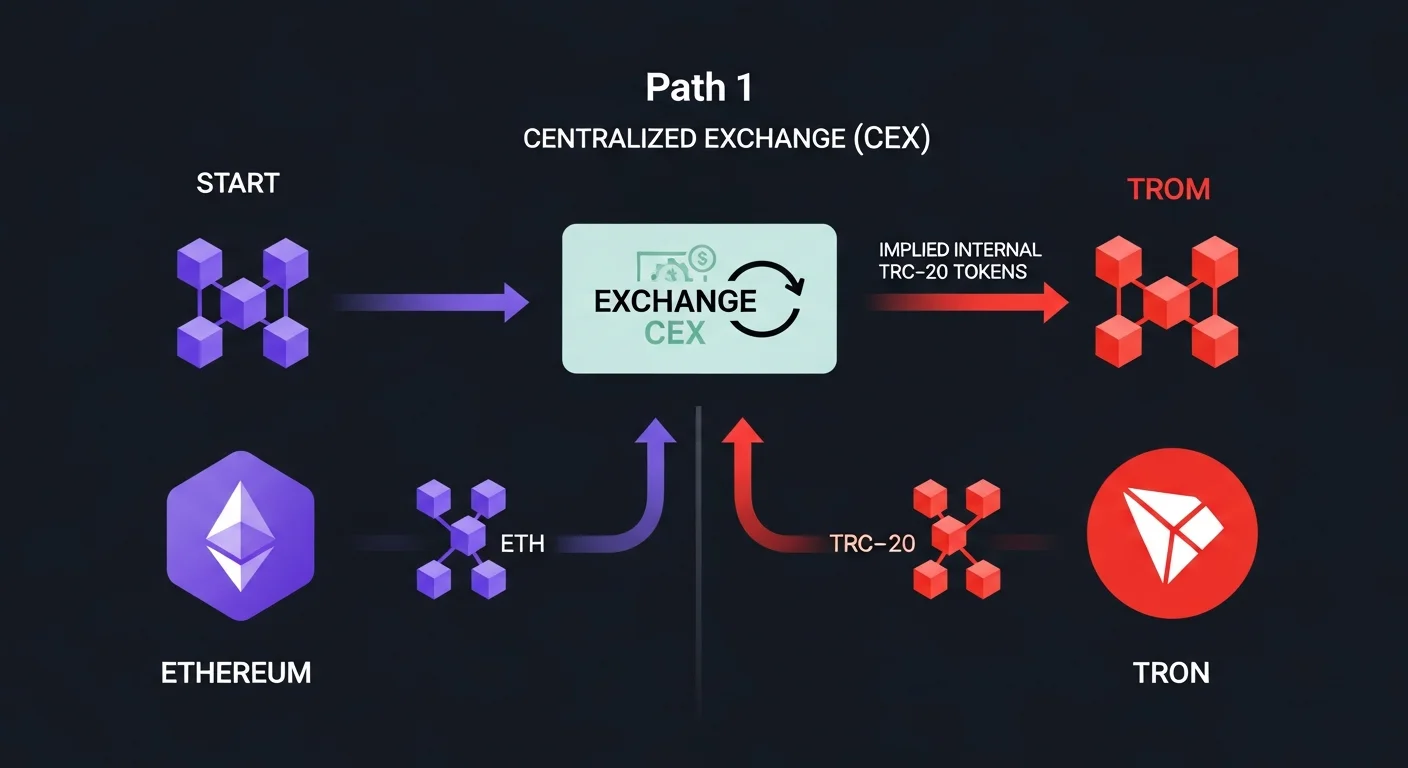
The most reliable route for most users is a centralized exchange. The exchange acts as the bridge: you deposit on one network and withdraw on the other.
Step-by-step CEX routing
Pick an exchange that supports both ERC-20 deposits and TRC-20 withdrawals for the asset you want to move (most major exchanges do this for USDT and USDC). Deposit your ERC-20 asset to the exchange address on Ethereum. Wait for confirmations. Then withdraw the same balance to your TRON wallet using the TRC-20 (TRON) network. The asset arrives in seconds at TRC-20 fee levels.
Advantages
No bridge smart contract risk. The exchange holds the assets between deposit and withdrawal, but it does not run extra cross-chain logic that can be exploited. The fees are usually competitive, sometimes free for stablecoin withdrawals.
Tradeoffs
You need an account on the exchange and you need to pass KYC. Deposits and withdrawals can be paused during high-volume periods or for compliance reviews. For users with privacy preferences or who do not want to expose to a CEX, the issuer bridges and third-party bridges are alternatives.
Issuer bridges (Tether and Circle)
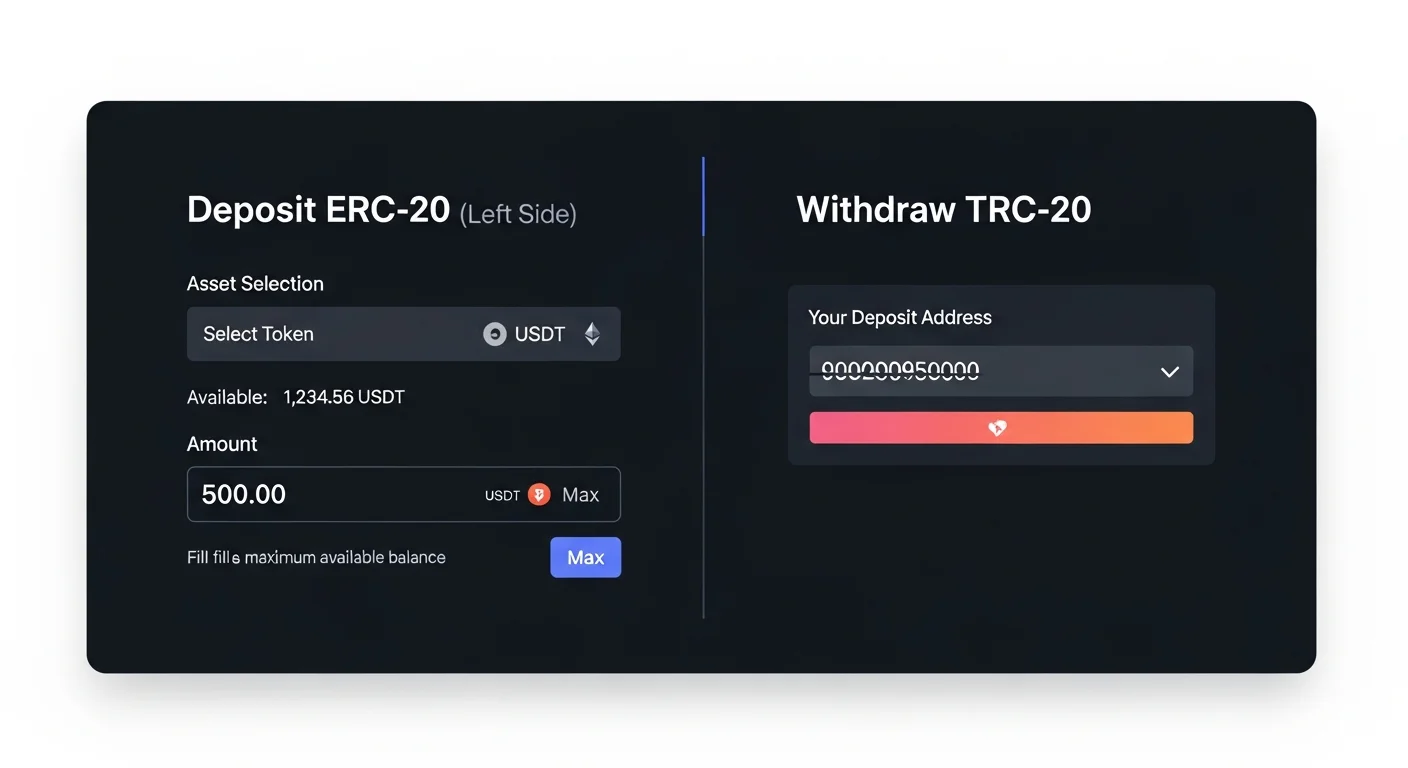
For some assets, the issuer runs an official cross-chain bridge. These are usually safer than generic third-party bridges because the issuer controls both sides of the supply.
Tether's bridging tools
Tether has historically run swap mechanisms that allow USDT holders to convert between chains. Availability and process can vary by region and counterparty. The official Tether website lists current cross-chain options.
Circle's CCTP
Circle's Cross-Chain Transfer Protocol allows native USDC to move between supported chains by burning on the source and minting on the destination. TRON support depends on Circle's roadmap and integration with downstream wallets and dApps.
Third-party bridges
Third-party bridges provide a more direct user experience: connect a wallet, pick the asset and amount, and the bridge handles the rest. The convenience comes with smart contract risk.
How a typical bridge works
The bridge has contracts on both Ethereum and TRON. You lock or burn the asset on Ethereum and the bridge mints or releases an equivalent on TRON. Reversing the operation requires the same flow in reverse.
Bridge security in 2026
Cross-chain bridges have been the largest single category of DeFi exploits over the past few years. Audits help. Time-tested bridges with no exploit history are safer. Even so, the right approach is to bridge what you actively need, not your full bag, and to spread larger transfers across multiple smaller ones.
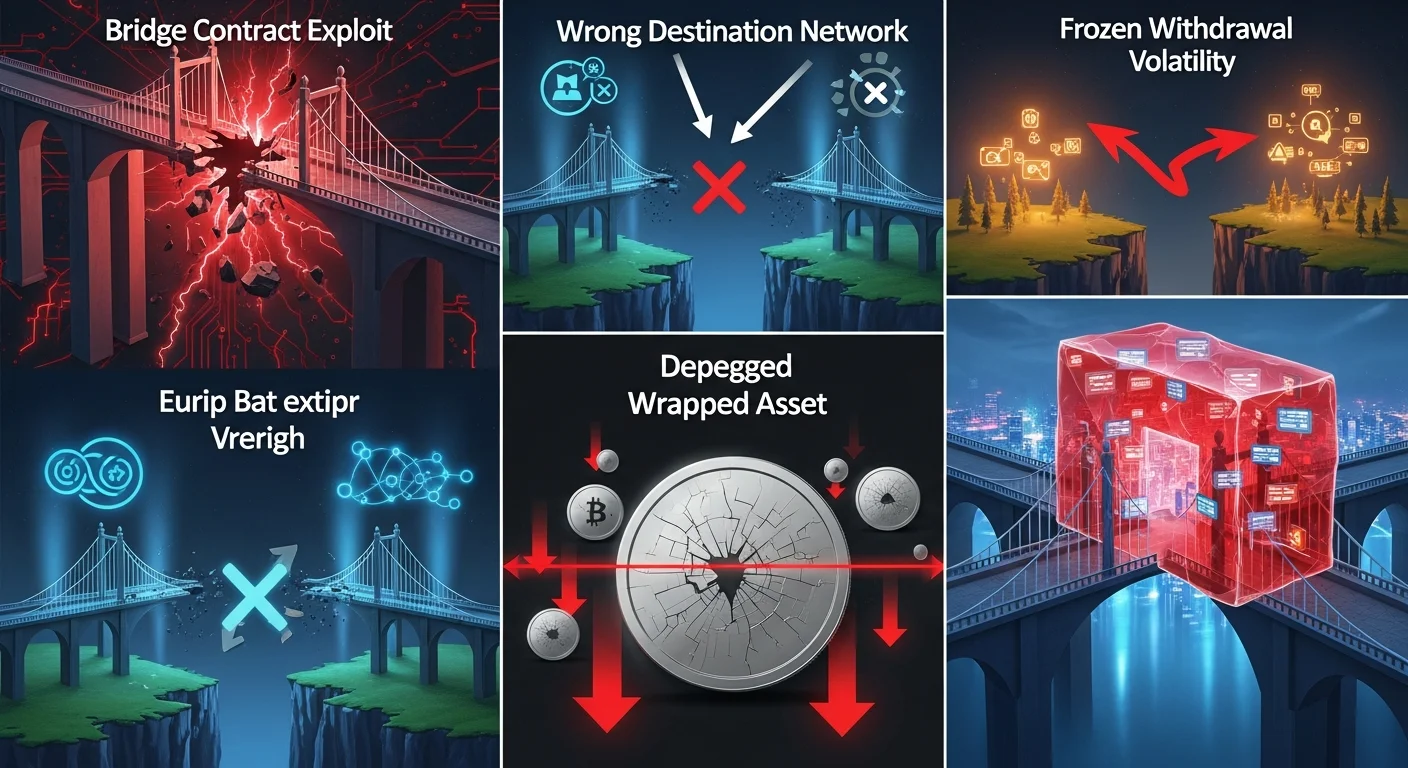
Risks every bridger should price in
- Bridge contract exploits. The most common DeFi loss category in recent years.
- Wrong destination address or network. A 0x-address is not a TRON destination.
- Depegged wrapped assets. Some bridge-issued assets diverge from their underlying when the bridge is in trouble.
- Frozen withdrawals. Centralized exchanges can pause withdrawals at exactly the moment you want to bridge.
- Slippage on swap-bridges. Swap-and-bridge products may quote optimistic outputs and deliver less.
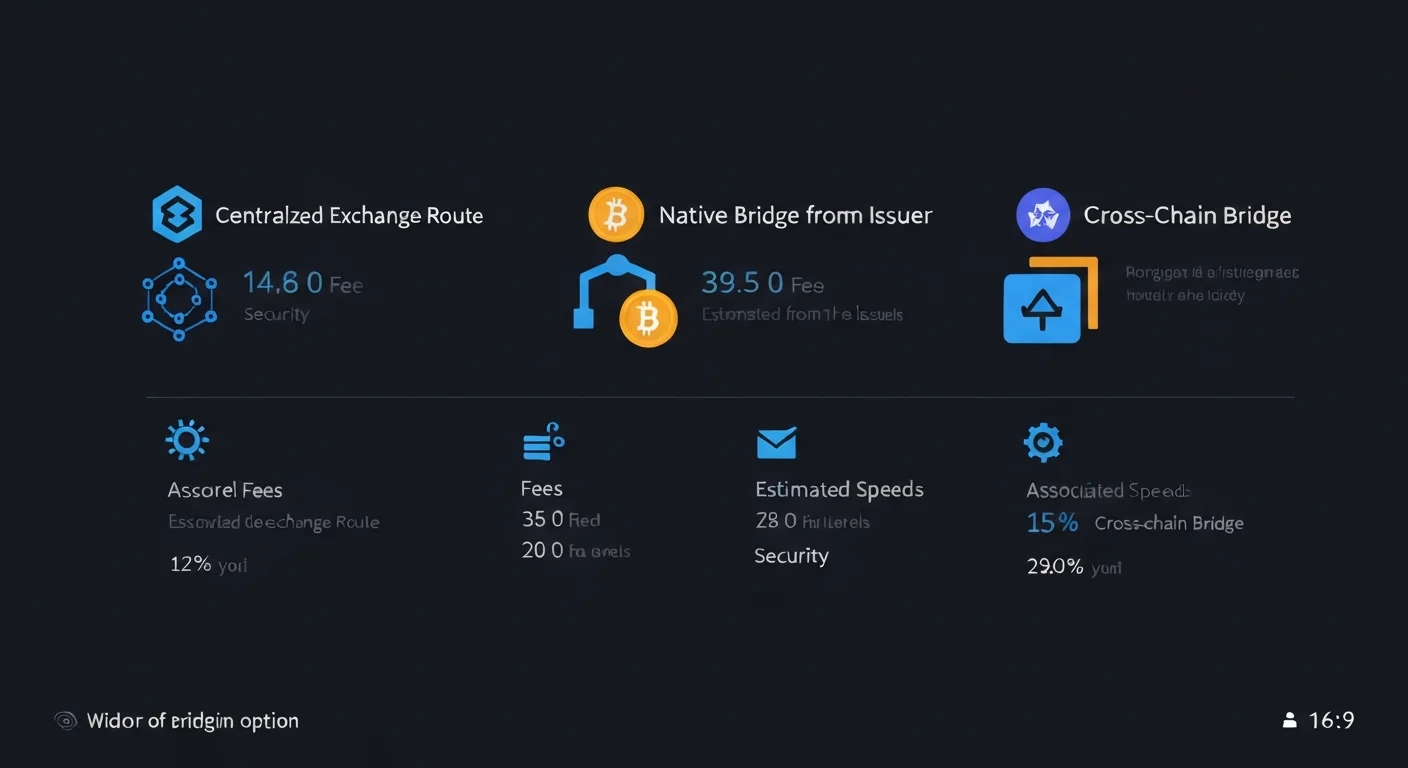
CEX vs issuer bridge vs third-party bridge
| Path | Stronger for | Main caution |
|---|---|---|
| Centralized exchange | Safety, low fees, large amounts | KYC, withdrawal pauses |
| Issuer bridge | Native asset preservation | Limited asset and chain coverage |
| Third-party bridge | Convenience, no KYC | Smart contract risk, exploit history |
Practical bridging workflow
- Decide what asset you actually need on TRON. USDT-TRC20 is the most common destination.
- Pick the safest available route. CEX first if you have an account, issuer bridge if available, third-party only if necessary.
- Send a small test bridge first. Confirm the destination receives correctly.
- Verify the asset on TRON. Check that the resulting token is the canonical one, not a wrapped lookalike.
- Spread larger transfers. If you must use a third-party bridge, multiple smaller transfers reduce single-exploit risk.
Frequently asked questions
Can I bridge native ETH to TRON?
Native ETH does not exist on TRON. The practical move is to swap ETH into USDT or USDC on Ethereum first, then bridge the stablecoin to TRON.
Which is the safest way to bridge?
For most users, a major centralized exchange supporting both networks is the safest. It avoids smart contract risk on the bridge itself.
How long does an Ethereum to TRON bridge take?
Typically minutes for a CEX route, often under a minute for an issuer bridge, and a few minutes to longer for third-party bridges depending on confirmations.
Are bridge fees high?
The largest cost is usually the source-chain transaction fee on Ethereum. Bridge fees themselves are often small, but they add up if you use third-party bridges with multiple steps.
What can go wrong with a bridge?
Smart contract exploits, oracle failures, frozen withdrawals, and depegged wrapped assets. The history of cross-chain bridges shows these risks are real, not theoretical.
Final takeaway: Bridging from Ethereum to TRON unlocks cheap stablecoin transfers and TRON DeFi participation, but bridges have been the highest-risk category in crypto. Use a centralized exchange or issuer bridge when possible, send a small test, and only scale up after the path is proven.
Disclaimer: This guide is for educational purposes only and does not constitute investment, financial, legal, or trading advice. Bridge operations are usually irreversible and may carry exploit risk.
Related Guides
- What Is Crypto Bridge Slippage? Why Cross-Chain Transfers Drift (2026)
- Top 5 Crypto Bridge Tools in 2026: Best Cross-Chain Options Compared
- Jumper Exchange Tutorial 2026: Cross-Chain Bridge Master
- deBridge Tutorial 2026: DLN Cross-Chain Bridge Guide
- How to Use Across Bridge: Complete Cross-Chain Tutorial (2026)
Frequently Asked Questions
How do I bridge ETH to TRON?
You can move value from Ethereum to TRON using a centralized exchange, a third-party cross-chain bridge, or issuer-supported rails for certain assets. Each option differs in cost, speed, and the trust assumptions involved.
Why bridge from Ethereum to TRON?
Many users bridge to TRON for cheaper transaction fees, especially for moving stablecoins. TRON is commonly used for low-cost transfers, while Ethereum often carries higher network fees.
Is bridging ETH to TRON safe?
Bridges can carry smart contract and custody risks, so safety depends on the route and provider you choose. Verify the official platform, double-check destination addresses, and test with a small amount first.
Can I send the same token directly across both chains?
Tokens are not automatically the same across chains, so a token on Ethereum and its TRON version are distinct and must be converted or issued separately. Always confirm you are receiving the correct chain's version of the asset.