APY vs APR in Crypto: The Real Yield Difference (2026)
— By Tony Rabbit in Tutorials
Learn the real difference between APY and APR in crypto, how compounding changes returns, why the headline number misleads, and how to compare yields.
APY vs APR in crypto is one of those topics that sounds simple until real money is involved. Many platforms show a yield number that looks attractive, but traders and investors often do not stop to ask the most important question: is that number simple annual return, or does it include compounding?
Intent check: This page is the comparison guide. If you only need the APY definition first, read What Is APY in Crypto?
That difference matters because two offers can show similar-looking percentages while producing meaningfully different real outcomes. In crypto, where yields often come from staking, lending, or DeFi incentives, misunderstanding APY and APR can lead to bad comparisons, inflated expectations, and weaker decisions.
Quick answer
- APR is the simple annual rate without built-in compounding.
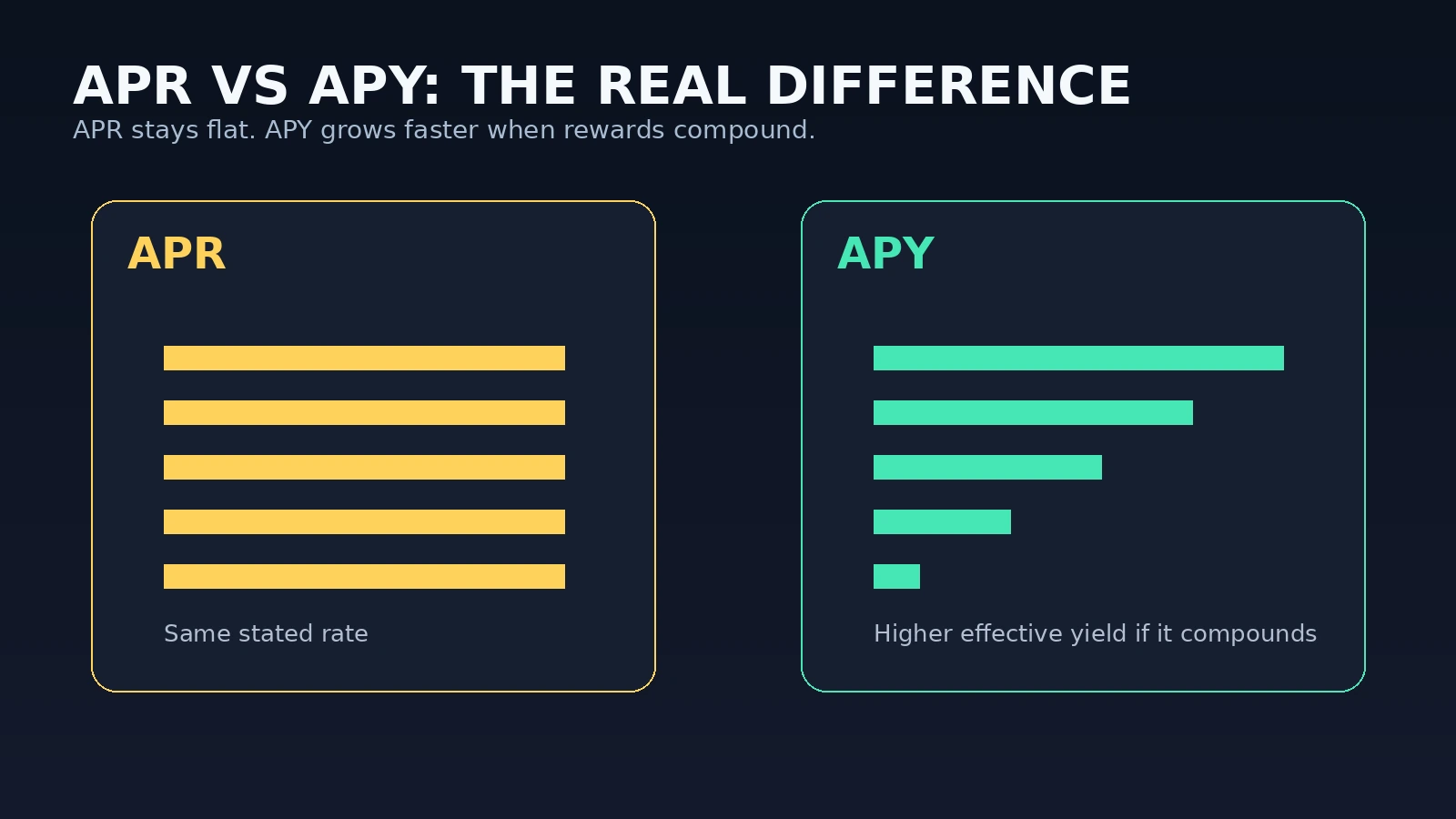
- APY includes the effect of compounding, so the effective return can be higher.
- In crypto, the headline number is not enough. You also need to check reward token risk, lockups, fees, and whether compounding is automatic.
- If two offers use different rate types, do not compare them casually. Normalize them first.
What APR Means in Crypto
APR stands for annual percentage rate. In simple terms, it tells you the yearly return without assuming that rewards are continuously rolled back into the position. If a platform shows a 10% APR, the clean reading is that the position pays a simple annual rate, not an automatically compounded one.
That makes APR useful because it is easy to understand. But it can also make offers look smaller than they might become in practice if rewards are regularly reinvested. The key is that APR itself does not promise compounding. Any higher effective return depends on what you do after rewards arrive.
What APY Means in Crypto
APY stands for annual percentage yield. Unlike APR, APY includes the impact of compounding. If rewards are reinvested into the same position at regular intervals, the effective return becomes higher than the simple rate because you are earning on prior rewards too.
That is why APY usually looks better than APR when the underlying rate is similar. But the number only stays meaningful if the compounding mechanism is realistic. In crypto, some platforms show APY because compounding happens automatically, while others rely on users to claim and manually restake. That difference changes the real result.
Why APY vs APR Confuses Crypto Users
Crypto makes this more confusing because yield does not come from one clean product type. You might be looking at staking rewards, liquid staking, DeFi lending, yield farming, or promotional token incentives. Different platforms describe those returns differently, and sometimes the marketing puts the biggest number first while the real conditions stay in smaller text.
This is why APY vs APR is not just a math issue. It is a reading-comprehension issue. If you compare a 12% APR lending offer with a 12% APY staking offer as if they were identical, you are already distorting the decision.
When APY Is More Useful Than APR
APY is more informative when the product genuinely compounds and users can capture that compounding without too much friction. That often happens in auto-compounding vaults or products where rewards are continuously reinvested inside the strategy.
In those cases, APY gives a better picture of effective yield than simple APR. But it still needs context. If the APY depends on a reward token that can fall hard, or if it reflects short-lived incentives, the number may still overstate the quality of the opportunity.
When APR Is the Better Reality Check
APR is often the better reality check when rewards are claimed manually, when gas or platform fees reduce reinvestment efficiency, or when you are comparing cleaner base yields across different platforms. In those situations, APR can keep you grounded because it strips out the optimistic assumption that compounding will always happen smoothly.
This matters especially in DeFi. A strategy may advertise APY, but if claiming rewards is expensive and the reward token is volatile, your realized return can end up much closer to a rough APR-style outcome than the headline APY implies.
How to Compare Crypto Yield Offers Properly
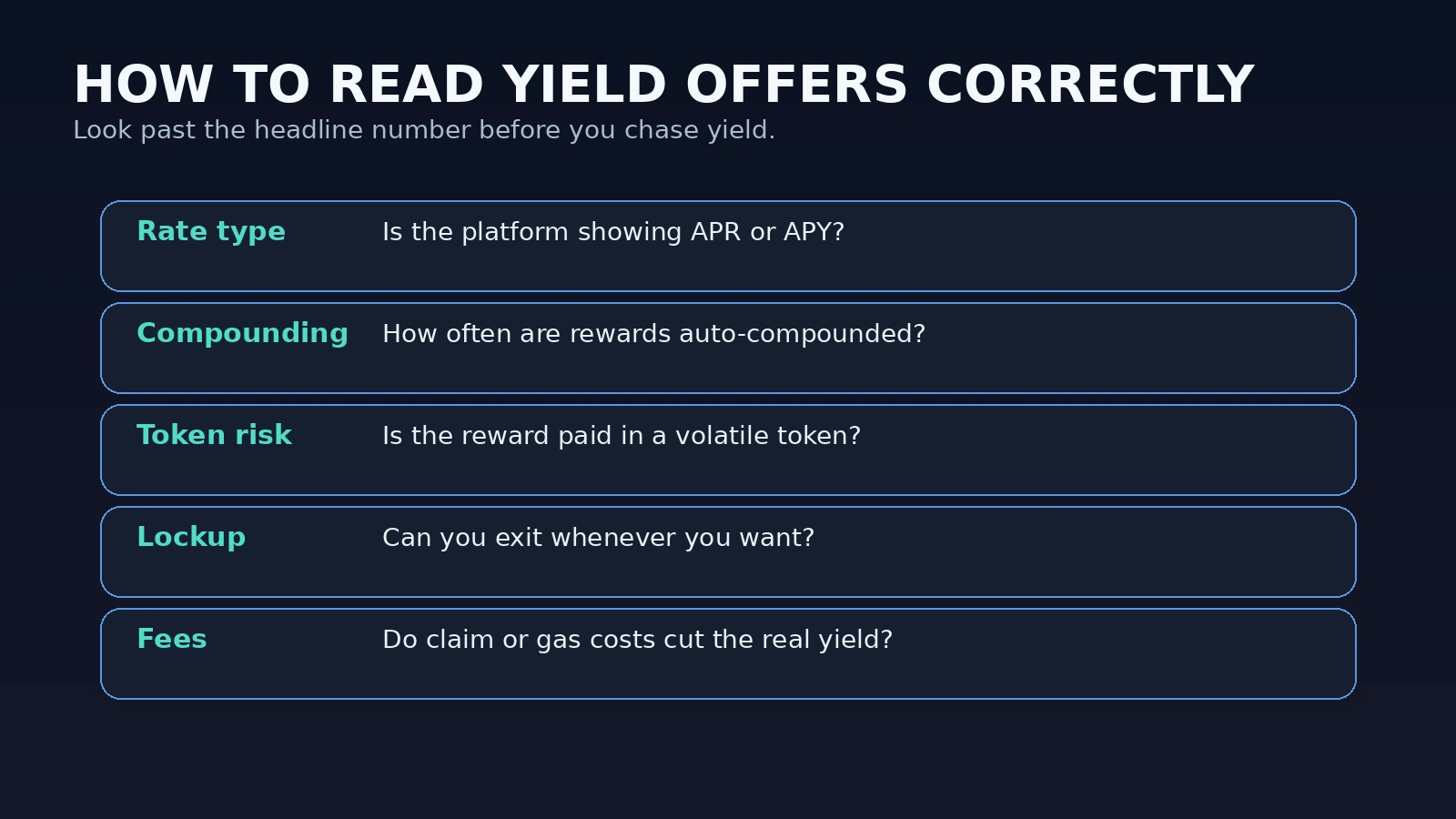
If you want to compare two offers, do not stop at the displayed percentage. Ask five practical questions:
- Is the platform showing APR or APY?
- How often does compounding really happen?
- Are rewards paid in the same asset or in a more volatile token?
- Are there fees, gas costs, or lockups that reduce flexibility?
- Would the opportunity still look attractive if the headline number fell?
This is the discipline that keeps you from chasing numbers without understanding the tradeoffs underneath them.
The Biggest APY vs APR Mistake
The biggest beginner mistake is assuming the bigger displayed percentage is automatically the better opportunity. It is not. Real yield quality depends on how the return is produced, whether it compounds in practice, what token risk sits underneath it, and how easy it is to actually capture the rewards.
In other words, APY vs APR is not just terminology. It is part of risk management. If you read the yield wrong, you compare the opportunity wrong too.
Frequently Asked Questions
What is the main difference between APY and APR in crypto?
APR is the simple annual rate, while APY includes the effect of compounding. That means APY can show a higher effective return when rewards are reinvested.
Is APY always better than APR?
Not automatically. APY can look better on paper, but the real outcome depends on whether compounding is actually captured and whether fees or token risk reduce the result.
Why do crypto platforms use APY so often?
Because compounding can produce a bigger headline number, especially in DeFi products and auto-compounding strategies.
Can a high APY still be a bad opportunity?
Yes. A high APY paid in a weak token, with poor liquidity, lockups, or high claim costs, can still be worse than a lower and cleaner yield.
What is the best way to compare APY and APR offers?
First normalize the rate type, then check compounding frequency, reward token quality, fees, and exit flexibility before deciding.
Related reading
Disclaimer: This article is for educational purposes only and does not constitute investment, tax, legal, or financial advice. Yield rates, reward tokens, and compounding assumptions can change quickly across crypto platforms.
Related Guides
- How to Evaluate Yield Farms in Crypto: APY Quality, Risks and Red Flags (2026)
- Yield Farming Strategies, APY Quality and Risk Management (2026)
- What Are Real World Assets (RWA) in Crypto? Asset Types, Yield and Risks (2026)
- Spot ETH vs. Sepolia ETH: Understanding the Difference
- Coin vs Token in Crypto: What Is the Difference?