TRON vs Solana: Speed, Fees and Use Cases Compared (2026)
— By AliceOnChain in Tutorials

A deep dive into the TRON vs Solana debate. We compare technical specs, fee structures, and market dominance to see which network wins the DeFi war.
TRON vs Solana: Speed, Fees and Use Cases Compared
The blockchain wars of 2026 have moved beyond mere theory. Today, traders using DEXTools demand high-performance networks that can handle massive throughput without draining their wallets in gas fees. Two titans dominate this space: TRON and Solana.
While both networks aim to solve the scalability trilemma, they cater to different sectors of the crypto economy. Whether you are hunting for the next meme coin gem on Solana or moving massive amounts of stablecoin liquidity on TRON, understanding the technical nuances is crucial for your bottom line.
Network Speed: Real-World Performance
When comparing TRON vs Solana, the first metric every trader looks at is "Time to Finality" and TPS (Transactions Per Second).
Solana remains the undisputed king of raw speed. With its unique Proof of History (PoH) mechanism, it frequently processes over 2,000 "real" user transactions per second, with theoretical limits reaching much higher. For a DEXTools user, this means near-instant execution when sniping a new pair.
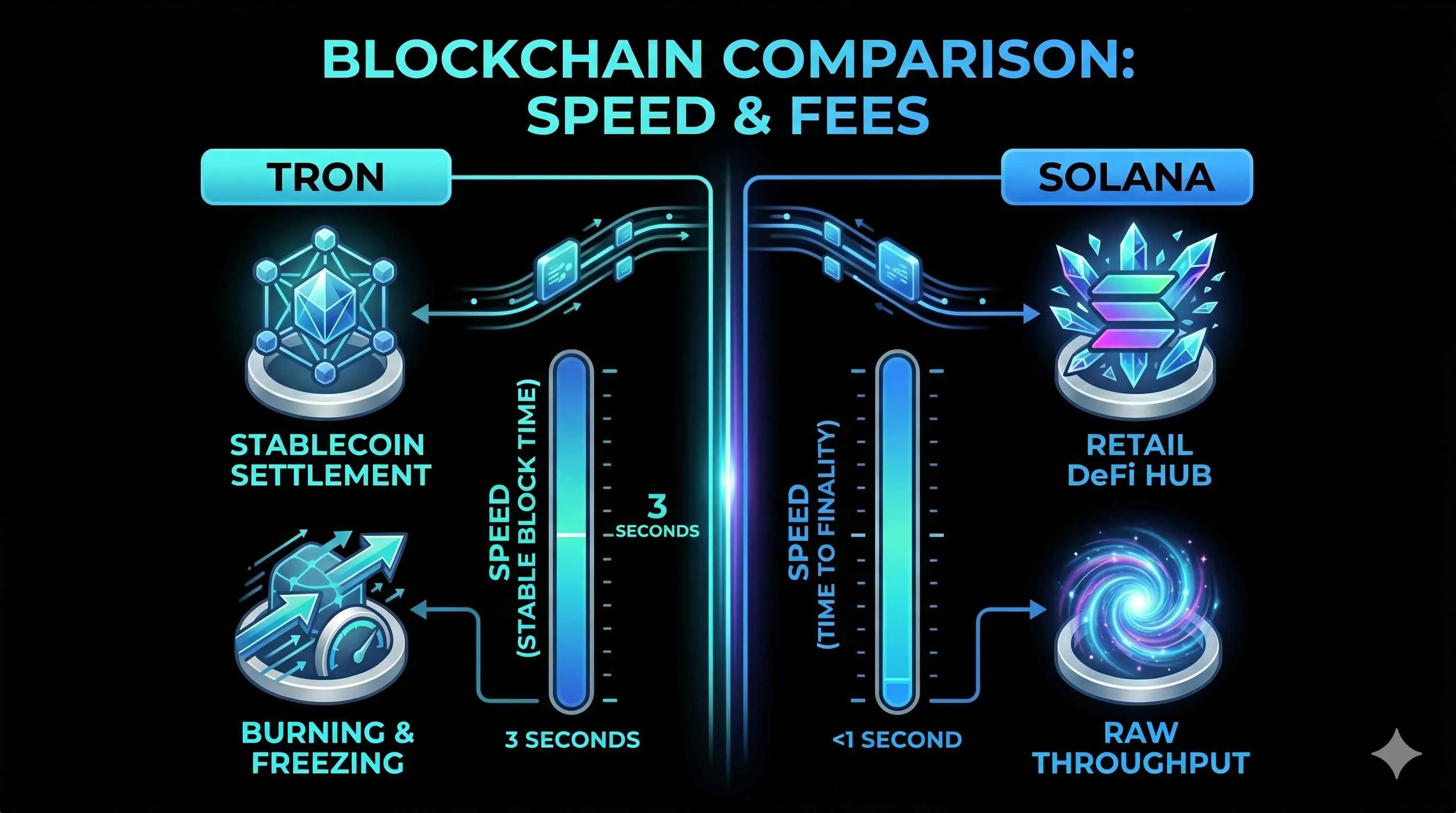
TRON, while slower in raw block times than Solana, offers incredible stability. It utilizes a Delegated Proof of Stake (DPoS) model that provides a consistent 3-second block time. While it may not match Solana’s sub-second finality, TRON has proven to be one of the most reliable networks during periods of extreme market congestion.
Fee Structures: The Cost of Doing Business
Cost efficiency is where the TRON vs Solana debate gets interesting.
Solana: Known for its ultra-low fees, often costing less than $0.001 per swap. This makes it the playground for high-frequency traders and retail investors dealing with smaller capital.
TRON: Operates on a unique Energy and Bandwidth model. While a standard transfer can cost a few dollars in TRX, users who stake their assets can execute transactions for free. This "burn-or-stake" model is highly attractive for institutional players and large-scale USDT movers.
On the DEXTools Pair Explorer, you’ll notice that Solana pairs often have higher trade frequency due to the negligible fees, whereas TRON pairs tend to show larger, more deliberate volume spikes.
Dominant Use Cases: Stablecoins vs. DeFi Innovation
The TRON vs Solana comparison isn't just about tech; it's about what people actually do on these chains.
TRON: The Global Settlement Layer
TRON has carved out a massive niche as the preferred network for USDT (Tether). In 2026, a significant percentage of global stablecoin volume moves over TRON due to its reliability and deep integration with centralized exchanges. If your goal is cross-border payments or moving liquidity between platforms, TRON is often the default choice.
Solana: The Hub of Retail DeFi and Meme Culture
Solana has become the epicenter of retail activity. Its ecosystem—led by powerhouses like Jupiter and Raydium—offers a seamless DeFi experience that rivals centralized exchanges. The "Solana Summer" energy has evolved into a permanent fixture of the market, where most new community-driven projects choose to launch.
Security and Decentralization
From a security standpoint, both networks take different approaches. Solana has a larger and more diverse validator set, though it has faced scrutiny in the past regarding network uptime. TRON relies on 27 Super Representatives, which some argue is more centralized, but it has maintained a near-flawless record of 100% uptime since its inception.
Traders on DEXTools often use our DEXTscore to evaluate the safety of individual tokens on these chains. Regardless of the network’s inherent security, individual smart contract audits remain the best defense against rugs and exploits.
Making the Choice: Which One for You?
The "winner" in the TRON vs Solana standoff depends entirely on your trading persona:
The DeFi Explorer: If you want to engage in complex yield farming, NFT trading, or sniping the latest trending tokens, Solana is your best bet. Its ecosystem integration on DEXTools is second to none.
The Liquidity Manager: If you are focused on moving large amounts of capital via stablecoins or want a predictable environment with the option for free transactions through staking, TRON remains the industry standard.
Final Thoughts
In the current market, it is rarely a case of one replacing the other. Most successful traders maintain presence on both. By using DEXTools to monitor the liquidity flows between these two giants, you can position yourself to catch the next wave of volatility, regardless of which chain it starts on.
Keep a close eye on the Hot Pairs list. Whether it’s a TRX-based utility token or a SOL-based viral hit, the data on DEXTools will always show you where the real money is moving.
- How to Bridge Crypto Between Chains: Complete Cross-Chain Tutorial 2026
- How to Use 1inch: Complete DEX Aggregator Swap Tutorial (2026)
- How to Use OKX Web3 Wallet: Multi-Chain DeFi Hub Guide (2026)
Disclaimer: This article is for informational purposes only and does not constitute investment advice, financial advice, trading advice, or any other kind of advice. DEXTools does not recommend buying, selling, or holding any cryptocurrency or token. Users should conduct their own research and consult with a qualified financial advisor before making any investment decisions. Cryptocurrency investments are volatile and high-risk. DEXTools is not responsible for any losses incurred.
Related Guides
- Top 5 Crypto Mixers in 2026: Privacy, Fees and Speed Compared
- AnySwap vs ChangeNOW 2026: Fees, KYC and Speed Compared
- Raydium vs Orca: Best Solana DEX Compared (2026)
- NEAR vs Solana: Layer 1 Blockchains Compared (2026)
- Cardano vs Solana: Layer 1 Blockchains Compared (2026)
Frequently Asked Questions
What is TRON vs Solana: Speed, Fees and Use Cases Compared ( )?
TRON vs Solana: Speed, Fees and Use Cases ComparedThe blockchain wars of 2026 have moved beyond mere theory. Today, traders using DEXTools demand high-performance networks that can handle massive throughput without draining their wallets in gas fees.
What should readers know about TRON vs Solana: Speed, Fees and Use Cases Compared?
The blockchain wars of 2026 have moved beyond mere theory. Today, traders using DEXTools demand high-performance networks that can handle massive throughput without draining their wallets in gas fees.
What should readers know about Network Speed: Real-World Performance?
When comparing TRON vs Solana, the first metric every trader looks at is "Time to Finality" and TPS (Transactions Per Second). Solana remains the undisputed king of raw speed.
What should readers know about Fee Structures: The Cost of Doing Business?
Cost efficiency is where the TRON vs Solana debate gets interesting. Solana: Known for its ultra-low fees, often costing less than $0.
What should readers know about Dominant Use Cases: Stablecoins vs. DeFi Innovation?
The TRON vs Solana comparison isn't just about tech; it's about what people actually do on these chains.