How to Use Rango Exchange: Multi-Chain Swap Guide
— By Whatsertrade in Tutorials

Use Rango Exchange in 2026: learn wallet connection, route selection, fixed vs floating rates, and how to avoid wrong-chain cross-chain swap mistakes.
Rango Exchange is a multi-chain DEX and bridge aggregator designed to simplify cross-chain swaps. It allows users to move assets between various blockchain ecosystems, wallets, and tokens through a single interface, offering route optimization, non-custodial usage, and no KYC requirements for navigating the complex DeFi landscape.
Rango Exchange is interesting because it solves a real multi-chain problem instead of pretending the crypto ecosystem is already simple. Users do not live on one chain anymore. They move between ecosystems, wallets, tokens, and bridge routes, and they want one interface that can help them navigate that mess without forcing them into a custodial account every time.
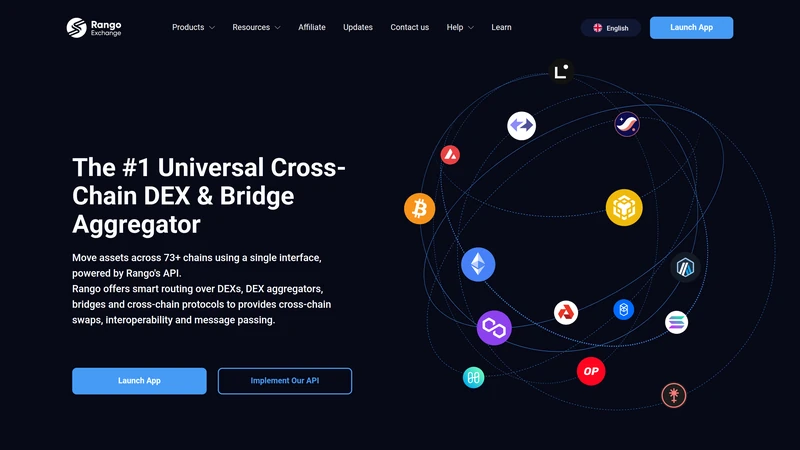
Rango’s homepage leans directly into that pitch. It frames the product as a universal cross-chain DEX and bridge aggregator, highlights support across dozens of chains and many route providers, and emphasizes route optimization, non-custodial usage, and no KYC requirements. That is exactly what makes the keyword worth attacking with a proper tutorial.
Where this page fits This page is the Rango-specific workflow. Need the broader bridge guide first? Read How to Bridge Crypto Between Chains. Need product comparison first? Use Top 5 Crypto Bridge Tools.
Quick answer
- Connect a supported wallet and treat the source and destination chains as the first decision.
- Review the route, fees, and rate mode before confirming, especially on longer cross-chain paths.
- Double-check token and network details because wrong-chain mistakes can still be expensive even in a better aggregator UI.
What Rango Exchange Is Best Used For
Rango is best when your real need is not “swap token A for token B” but “move value across chains and still get a clean route.” That is a different job. It requires chain support, wallet support, route intelligence, and good execution detail. Rango matters because it tries to bundle those layers together instead of making the user stitch them manually from five different products.
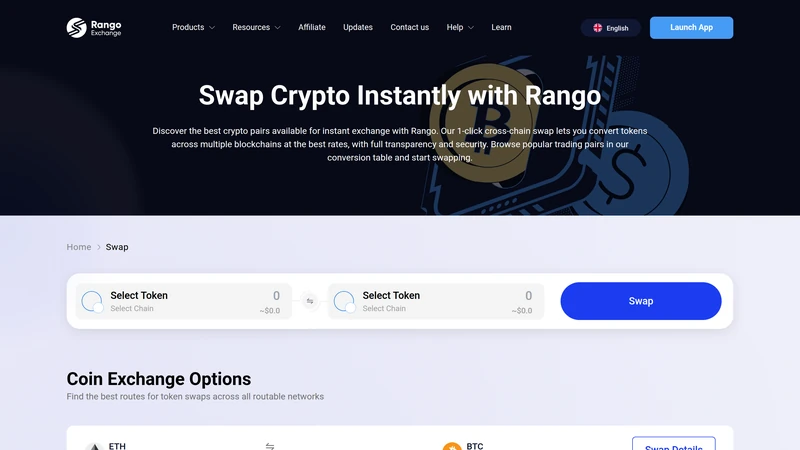
The product is especially useful for users who touch more than one ecosystem. The homepage emphasizes broad chain coverage and smart routing. The swap page adds practical details that matter to actual users, such as minimum and maximum amounts, fixed versus floating rates, and the fact that you can connect a wallet without creating a platform account first.
Where Rango is strongest
What to Prepare Before You Use Rango
The safest setup starts with clarity. Know the source token, the source chain, the destination token, the destination chain, and the wallet you are using for the flow. Then decide whether you care more about locked-in rate behavior or route flexibility. Rango’s swap FAQ explicitly distinguishes fixed and floating rates, which is exactly the kind of detail users should understand before they confirm anything.
What to review before you confirm a Rango route
How to Use Rango Exchange Step by Step
Start by connecting a supported wallet and building the swap around the exact source and destination you want. Once the route is visible, spend time here. Rango’s advantage is not that it lets you click faster. It is that it gives you better route intelligence across more networks. That advantage disappears if you stop reading at the first available route and never check whether the output is the one you actually wanted.
When you are happy with the route, confirm the transaction and monitor it like a serious multi-chain action. The swap FAQ is refreshingly direct about the main operational truths: most swaps finish within minutes, no account is required, and the wrong token or network can still create recovery pain or outright loss. That is exactly why clean route review matters more than hype around convenience.
A better Rango workflow
How to Compare Rango Routes Properly
Rango’s value is not just that it shows a route. It is that it helps users compare multiple possible paths across chains, bridges, and liquidity sources. But that only works if the user reads the comparison properly. The best route is not always the one with the smallest visible fee or the flashiest quote. It is the one that gets the right asset to the right destination in the cleanest way for your actual objective.
That means a strong Rango user looks at route complexity, output quality, chain compatibility, and rate behavior together. If one route looks slightly cheaper but introduces more uncertainty or a less useful output, it may not actually be the better decision. Aggregators become powerful when users compare intelligently, not when they blindly click the first option.
What a good Rango route usually looks like
Fees, Limits, and Swap Timing Expectations
Rango’s swap page is useful because it surfaces practical execution questions that many “how to use” pages skip. Minimum amounts, maximum amounts, route-dependent fees, and timing all matter. Those details are especially important on cross-chain swaps because the total experience is affected by network confirmations and the route design, not just by the swap quote itself.
This is also where users should think about fixed versus floating rates more seriously. A fixed rate can feel safer when price certainty matters. A floating rate can be fine when the route quality is still strong and the user understands that the final amount may move a little before settlement. The key is not picking one mode forever. The key is knowing why you picked it this time.
Common Rango Mistakes to Avoid
Rango mistakes usually come from overconfidence. Users assume that because the product is route-aware, they do not need to be. They skim the source side, forget the destination chain, or fail to notice whether they selected a fixed or floating rate route. Then they blame the interface for a decision they did not properly review.
Mistakes that turn a good route into a bad experience
How to Troubleshoot a Rango Swap That Feels Wrong
First, figure out whether the issue is route execution time, destination visibility, or an actual token/network mismatch. Rango notes that many swaps complete within minutes, but timing still depends on network congestion and confirmations. That means a slightly slow route is not automatically a broken route.
If the problem is more serious, check the exact route details and transaction hash before escalating. That will help you separate wallet-side visibility problems from wrong-route problems. If the wrong token or network was used, the path to recovery may be limited, which is why route review up front matters so much.
Helpful next reads on DEXTools
Frequently Asked Questions
Do I need an account to use Rango Exchange?
No. Rango’s swap page states that you can connect a supported wallet and start swapping without creating an account.
What is the difference between fixed and floating rates on Rango?
A fixed rate is locked for a short period, while a floating rate can change slightly before the swap is finalized.
How long do Rango swaps usually take?
Often only a few minutes, but actual timing depends on the route, confirmations, and network conditions.
What happens if I send the wrong token or network on Rango?
The route can fail or require a difficult recovery workflow. In some cases funds may be lost, so double-checking the route is essential.
What is the safest way to use Rango for the first time?
Use a small amount, review both chains carefully, check rate mode and fees, and verify the destination output before using larger size.
Is a fixed rate always better than a floating rate on Rango?
Not always. A fixed rate can be useful when price certainty matters most, while a floating rate can still be perfectly reasonable when the route is strong and you understand the trade-off.
Why does Rango show multiple routes for one swap?
Because different bridges, DEXs, and route structures can produce different trade-offs in price, complexity, speed, and final output quality.
Related reading
Disclaimer: This article is for educational purposes only and not financial, legal, or tax advice. Route quality, fees, and chain support can change. Always confirm live route details before swapping funds.
Related Guides
- Zapper Tutorial: Navigate DeFi Dashboards and Manage Multi-Chain Portfolios (2026)
- What Is KyberSwap (KNC)? Multi-Chain DEX Aggregator Guide 2026
- Wormhole Bridge Tutorial 2026: Multi-Chain Setup Guide
- How to Use Trust Wallet: Multi-Chain Beginner Guide (2026)
- How to Use Rabby Wallet: Complete Multi-Chain EVM Wallet Tutorial (2026)