How to Use the Moonshot App: Crypto Guide 2026
— By Tony Rabbit in Tutorials

Learn how to use the Moonshot app to buy Solana memecoins with Apple Pay: setup, fees, security and how it compares to Phantom and BonkBot.
If you have ever wanted to buy a Solana memecoin in under sixty seconds using nothing but Apple Pay, the Moonshot app is the product that made it real. It is a mobile-first crypto trading app, owned by DEXscreener, that compresses fiat onramp, memecoin discovery, and swap execution into a swipe-to-confirm flow closer to ordering a coffee than placing a DeFi trade.
Moonshot launched quietly in early 2024 but exploded into the mainstream in January 2025 when the official TRUMP token went live on Solana and Moonshot was one of the few apps that let retail users buy it instantly with a debit card. App Store rankings spiked, hundreds of thousands of new wallets were created in a single weekend, and consumer crypto apps finally caught up with fintech onboarding.
This guide covers what Moonshot is, who built it, how the fiat onramp and swipe-to-buy mechanics work, how to set up and fund the app step by step, how Moonshot compares to Phantom, BonkBot, and Pump.fun, what the fees look like, where the custodial debate sits in 2026, and which workflows give you the best chance of trading memecoins without letting the smooth interface make your decisions for you.
What Is the Moonshot App?
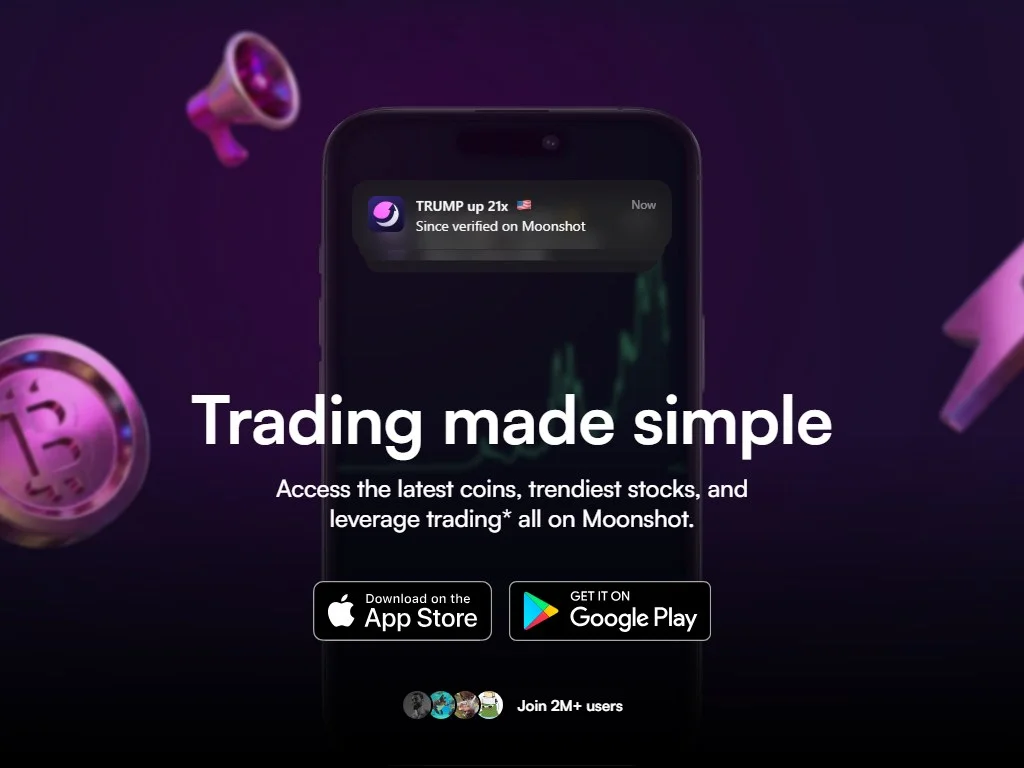
Moonshot is a mobile-first cryptocurrency trading app that lets users buy and sell memecoins on Solana, Base, and other supported chains using familiar payment methods like Apple Pay, Google Pay, debit cards, and direct transfers from Coinbase, Robinhood, or USDC bridges. It was acquired by DEXscreener in late 2023 and serves as the consumer-facing front door to DEXscreener's massive on-chain data infrastructure. The app is available on iOS, Android, and via a web client.
The core promise is simple: turn the seven-to-ten-step process of "download wallet, write seed phrase, buy stablecoin on exchange, withdraw to wallet, bridge to Solana, swap on Jupiter, manage gas" into roughly three taps. Moonshot abstracts the wallet, the onramp, and the DEX into a single product. For experienced users that abstraction is sometimes frustrating, but for the millions of users who never made it past step three of the old workflow, it is the reason memecoin trading finally feels possible on a phone.
Importantly, Moonshot is not a centralized exchange in the traditional Binance or Coinbase sense. Trades execute on-chain against real liquidity pools (primarily on Solana DEXs aggregated through DEXscreener data), the wallet keys are managed via a smart-wallet architecture, and every transaction is verifiable on Solscan or the relevant block explorer.
A Short History: From Quiet Launch to TRUMP Coin Catalyst
Moonshot was founded as an independent project in 2023, built on the observation that the biggest barrier to memecoin adoption was not the trading interface but the onramp. The team focused on Apple Pay and Google Pay integration, which required navigating the strict approval processes of Apple and the regulatory frameworks of payment partners. By the iOS launch in early 2024, it already had a card-to-Solana swap working in under thirty seconds.
In late 2023, DEXscreener, the dominant on-chain charting and discovery platform for memecoins, acquired Moonshot. The strategic logic was obvious. DEXscreener had the data, the trending lists, the pair pages, and community trust. What it lacked was a way to convert "user scrolled DEXscreener.com" into "user actually bought the token." Moonshot solved that conversion problem.
The breakout moment came on January 17, 2025, when the official TRUMP token launched on Solana hours before the US presidential inauguration. Demand was extreme. Most onramps choked, most exchanges did not list the token for hours, and Phantom users had to manually navigate Jupiter to swap. Moonshot had TRUMP available with Apple Pay onramp almost immediately. The app rocketed to number one in the App Store finance category and processed hundreds of millions in volume that weekend.
The TRUMP launch was not just a viral moment. It was the first time a consumer crypto app demonstrated, in front of mainstream media, that fiat-to-memecoin in under a minute was a solved product. After that weekend, Moonshot stopped being "another wallet app" and started being treated as a category leader.
How Moonshot Works Under the Hood
From a user perspective, Moonshot is a swipe-and-tap mobile app. Architecturally, it is three things stitched together: a smart-wallet system that manages keys, a payment processor stack for fiat onramp via Apple Pay, Google Pay, and card rails, and an execution layer that routes trades through on-chain DEX liquidity using DEXscreener's data feeds. Each layer matters for understanding why Moonshot feels fast but is meaningfully different from a centralized exchange.
The wallet layer is where the key design choice sits. Moonshot uses a "smart wallet" architecture: keys are generated and stored so users sign transactions via biometric authentication, with provider-side recovery available. This is closer to a custodial app than a self-custodial wallet like Phantom, but on-chain assets are still tied to user-controlled addresses. We return to the custodial debate in the security section.
The onramp layer is where Moonshot's real innovation lives. Most crypto apps require users to fund a centralized exchange, buy USDC or SOL, withdraw to a wallet, and swap. Moonshot collapses that into a single Apple Pay or Google Pay tap by partnering with licensed payment processors that deliver the token to the user's wallet within a single block. The price bakes in the onramp fee (around 1.5 percent) plus DEX swap fees.
The execution layer is where DEXscreener's data heritage shows. Every token visible in Moonshot is sourced from DEXscreener's indexed pools, so new tokens (including tokens with fake volume signatures you should learn to detect) appear within seconds of their first traded block. Trades route through Raydium, Meteora, and other Solana AMMs, and through similar aggregator infrastructure on Base.
How to Use Moonshot: Step by Step
This section walks through the actual end-to-end workflow, from downloading the app to executing your first trade. Read this once before opening Moonshot. The pattern of taking thirty seconds to plan a trade before tapping is the single highest-return habit you can build in a mobile-first crypto app.
Step 1: Download the Moonshot App
On iOS, search "Moonshot" in the App Store and look for the version published by Moonshot Labs (verify the publisher field, since copycat apps appear regularly around memecoin catalysts). On Android, install from the Google Play Store using the same verification approach. There is also a web version at moonshot.com if you want to test the interface without committing a phone app. Whichever surface you choose, verify the URL or publisher carefully because phishing copies of crypto apps are a constant problem.
Step 2: Create or Import a Solana Wallet
On first launch, Moonshot will offer to create a new smart wallet for you or import an existing Solana wallet via seed phrase. For new users, the create flow is the natural path: authenticate with Face ID or fingerprint, set a recovery method, and the app provisions a Solana address in seconds. Experienced users who already have a Phantom or Solflare wallet can import using the standard 12-word seed phrase flow. Write down any recovery material physically and store it offline.
Step 3: Fund the App via Apple Pay, Google Pay, Card, or Crypto Transfer
This is where Moonshot earns its reputation. Tap the Deposit or Buy flow and select the funding source. Available options typically include Apple Pay, Google Pay, debit card, credit card, direct transfer from Coinbase, direct pull from Robinhood, and USDC bridge from another chain. The Apple Pay path is the fastest: enter the dollar amount, confirm with biometrics, and the equivalent in SOL or USDC appears in your wallet usually within thirty seconds. The onramp fee is baked into the displayed price.
Step 4: Browse Trending Memecoins via DEXscreener Data
Open the Discover or Trending tab. Tokens are ranked using DEXscreener-style metrics: 24-hour volume, price change, transaction count, holder growth, and liquidity depth. Each token card shows the chart, market cap, liquidity, and key links. Tap into a token to see the full pair page, which mirrors much of what you would see on DEXscreener.com itself. Before tapping buy, scroll the pair page and check liquidity, holder count, and whether the chart shows organic activity or suspicious patterns.
Step 5: Tap Buy and Choose Amount
Hit the buy button. Moonshot lets you specify either a USD amount ("buy $50 of this token") or a token amount ("buy 1,000,000 tokens"). The USD path is friendlier for beginners because it removes the cognitive load of token denominations on memecoins with millions or billions of supply. The app shows the estimated tokens you will receive, the price impact, and the total cost including fees before you confirm.
Step 6: Swipe to Confirm
This is the signature Moonshot gesture. To execute, swipe the buy button from left to right. The swipe acts as a confirmation buffer that prevents accidental taps on a phone screen, and is a deliberate UX decision lifted from how fintech apps confirm money transfers. After the swipe, the trade routes through the DEX aggregator and the token appears in your portfolio within seconds.
Step 7: Monitor Your Portfolio
The Portfolio tab tracks open positions with live P&L, percentage change, and the current token chart. You can set price alerts and notifications for individual tokens. For active traders this is also where you can spot the tendency to over-monitor positions in a way that pushes you into reactive trading rather than your original plan.
Step 8: Sell, Set Take Profit, or Withdraw
To exit, tap the token in your portfolio and choose Sell. The same swipe-to-confirm flow applies. Moonshot supports partial sells (e.g., sell 50 percent at this price), and increasingly supports take-profit and stop-loss style triggers depending on app version. Once the position is closed, you can either redeploy the capital into the next idea, withdraw to a self-custody wallet you control, or off-ramp back to fiat depending on the regional availability of fiat off-ramp partners.
Key Features That Set Moonshot Apart
Moonshot is not the only mobile crypto app, but it has accumulated a specific feature set that distinguishes it from competitors. Each feature ties back to the core thesis of "fintech-grade UX on top of permissionless on-chain markets."
The signature feature. Roughly 1.5 percent fee on fiat onramp, completed in under thirty seconds, no exchange account or bank transfer required.
Biometric signing, gasless approvals where possible, and recovery infrastructure that lets users restore access without writing seed phrases.
Real-time trending lists, pair pages, and liquidity metrics powered by the same backend that institutional traders use on DEXscreener.com.
Token cards link to the official Twitter/X handles, telegram groups, and websites of projects, helping users vet narratives without leaving the app.
When tokens graduate from Pump.fun's bonding curve to Raydium, Moonshot often surfaces them within minutes, giving mobile users early access.
Solana is the primary chain, but Base and other EVM chains are increasingly supported, broadening the universe of accessible tokens.
Supported Chains: Solana First, Base Growing
Moonshot's primary focus has always been Solana, and for good reason. Solana hosts the vast majority of high-velocity memecoin trading in 2026, has cheap transaction fees that make small-dollar trades economically viable, and integrates cleanly with the Pump.fun bonding-curve launch infrastructure that produces most of the trending tokens Moonshot surfaces. If you only ever use Moonshot for one chain, it will likely be Solana.
That said, Base, the Coinbase-incubated Ethereum Layer 2, has grown to become Moonshot's second-most-important chain. Base offers cheap fees relative to Ethereum mainnet, native compatibility with Coinbase's onramp infrastructure, and a memecoin culture that has produced several breakout tokens of its own. Other EVM chains are supported in more limited capacity, with the feature set varying by app version. The general rule of thumb is: if a token is trending on DEXscreener for a supported chain, it is probably available to trade in Moonshot.
Moonshot vs Phantom vs BonkBot vs Pump.fun
One of the most common questions from new users is how Moonshot stacks up against the other major Solana memecoin tools. Each product solves a slightly different problem, and most active traders end up using more than one of them. The comparison below is opinionated but honest about what each tool does best.
The honest summary: Moonshot is for users who want a mobile-native, fiat-friendly entry into memecoins without managing seed phrases or bridging assets. Phantom is for users who already understand how on-chain crypto works and want full self-custody. BonkBot is for Telegram-native traders who want the fastest possible execution from inside a chat client. Pump.fun is for users at the launch end of the spectrum, either creating new tokens or trading them while still on the bonding curve.
One important distinction is the mobile-first versus Telegram-bot comparison. BonkBot and similar bots (Trojan, Maestro, Bonk) dominated Solana memecoin sniping in 2024 because they offered keyboard-driven speed inside Telegram. Moonshot's bet was that the next wave of users would not come from Telegram power-traders but from smartphone-native retail. That bet has largely paid off: Telegram bots remain dominant for fast-finger sniping, but app-store-downloadable Moonshot reaches an audience that would never install a custom Telegram bot.
Fees: What You Actually Pay
Fee transparency is one of the areas where Moonshot has historically faced criticism, mostly because the displayed price bakes multiple fee layers into a single number. Here is the actual breakdown so you know what you are paying for.
The fiat onramp fee is typically around 1.5 percent, paid to the licensed payment processor partner that converts your Apple Pay or card transaction into crypto. This is competitive with other crypto onramps (MoonPay, Transak, and Ramp typically charge 1 to 4 percent depending on payment method and region), but it is meaningfully higher than depositing USD to Coinbase or Kraken and buying crypto on the exchange directly. The convenience premium is real but it is also genuinely small in absolute terms for the speed it buys.
The DEX swap fee depends on the routing. On Solana, most trades pay the underlying AMM fee (Raydium typically 0.25 percent, Meteora variable, Orca 0.30 percent depending on pool), plus a small platform fee charged by Moonshot itself (this has varied over time and you should always check the displayed quote, which shows the all-in cost). On Base and EVM chains, similar logic applies with the underlying DEX fee plus Moonshot's platform layer.
Network gas fees on Solana are negligible (fractions of a cent per transaction), which is part of why Solana is the dominant chain for this category. On Base, fees are typically under a dollar per swap. The combination of low chain fees plus baked-in platform fees means a typical $100 trade on Moonshot might cost you roughly $2.50 to $3.50 total in fees, depending on the chain and the specific routing.
Security: The Custodial vs Non-Custodial Debate
This is the most important section of this guide for users who plan to put meaningful capital through Moonshot. The smart wallet architecture sits in a hybrid zone that has generated active debate in the crypto community. Here is the honest framing.
Moonshot is not a fully custodial exchange in the Binance or Coinbase sense, where the platform holds your private keys and you have an IOU. The on-chain assets do live in addresses that are tied to your user account. But it is also not a fully self-custodial wallet in the Phantom sense, where only you ever have access to the private key material and seed phrase. The smart wallet design uses provider-side infrastructure for key management and recovery, which creates convenience but also creates trust assumptions.
For practical purposes, this means a few things. First, if Moonshot or its infrastructure partners ever face a security incident, the blast radius could include funds held in smart wallets, in ways that a pure self-custody wallet would not. Second, Moonshot's terms of service and the regulatory framework it operates under will shape what happens to your funds in edge cases like account disputes or freezes. Third, the convenience of biometric recovery genuinely does protect users from the leading cause of lost crypto, which is users losing their own seed phrases.
The pragmatic recommendation is: use Moonshot for active trading capital that you are comfortable holding in a smart wallet, but for any meaningful position you want to hold for weeks or months, withdraw to a self-custody wallet like Phantom or Solflare and ideally a hardware wallet for the largest balances. Treat Moonshot like a fintech app: great for the in-and-out, not the right vault for long-term storage. The same logic applies to avoiding address poisoning when you do withdraw: always verify the full destination address character by character.
Top Trending Memecoins and Pump.fun Migrations
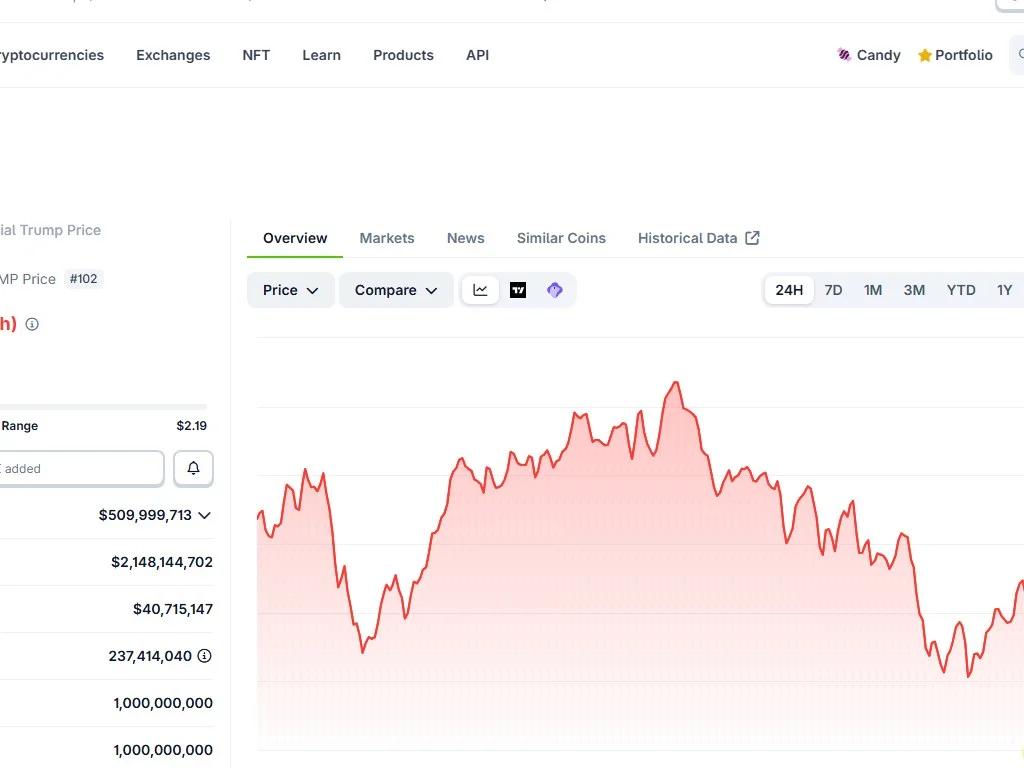
One of Moonshot's most-used surfaces is the trending tab. The list reflects DEXscreener's ranking signals: volume, price change, transaction count, holder growth, and liquidity. In practice, the trending tab tends to be dominated by Solana memecoins, with periodic spikes of attention on Base, sometimes Ethereum mainnet tokens with enough liquidity to matter, and frequent appearances by tokens that just migrated from Pump.fun's bonding curve to Raydium liquidity.
Pump.fun migrations are particularly important because they represent a recurring opportunity (and risk) pattern. When a Pump.fun token reaches its bonding-curve cap (around $69,000 of market cap historically, though the exact mechanic varies by version), it migrates to a Raydium liquidity pool and becomes broadly tradable. Moonshot tends to surface these migrations quickly, which means mobile users can participate in the post-migration price action without monitoring Telegram channels or Pump.fun directly.
The recurring risk is that trending appearance is not quality. Many tokens that trend on Moonshot are pure attention plays with thin underlying liquidity, anonymous teams, and contract patterns that resemble market manipulation rather than organic market making. Use the trending tab as a discovery surface, not as a buy signal. Tap into each token, scroll the chart, look at the holder distribution, check the liquidity depth, and make a conscious decision before swiping to confirm.
Mobile UX Advantages Over Telegram Bots and Browser Wallets
Moonshot's persistent advantage is mobile UX. Crypto, for most of its history, has been designed for users sitting at a computer with a browser extension wallet and a multi-tab workflow. That model excludes the overwhelming majority of smartphone-native users, particularly outside the United States. Moonshot is designed mobile-first, which produces a handful of concrete advantages.
Notifications and price alerts feel natural because they integrate with the phone's native notification system. Funding feels natural because Apple Pay and Google Pay are familiar gestures users already trust for everyday purchases. Confirmation feels natural because the swipe-to-buy pattern mirrors what fintech apps have been training users to do for years. The cumulative effect is that a user who would never get past "install browser extension, write seed phrase, fund via centralized exchange" can complete their first trade on Moonshot in under five minutes.
This is also where the trade-offs show. Mobile UX prioritizes simplicity, which sometimes hides information that a power user would want surfaced (deep liquidity routing details, full slippage configuration, MEV protection options). For most retail users this is the right trade-off. For active traders moving meaningful size, it is a reason to keep Phantom installed alongside Moonshot for trades where you want granular control. Understanding how to set slippage on any DEX is particularly useful for memecoin trades where price impact and front-running risk are elevated.
Regulatory Considerations and Availability
Moonshot operates as a consumer crypto app, which means it sits at the intersection of payment regulation, securities frameworks, and crypto-specific rules that vary widely by jurisdiction. The app is available in the United States and most of Europe, with availability of specific features (especially fiat onramp methods) varying by region based on local payment processor partnerships and regulatory approvals.
For US users, Moonshot has navigated the App Store and Google Play Store approval processes, which is non-trivial for any crypto app. Apple in particular has historically been restrictive about which crypto apps it allows, and Moonshot's presence as a top-charting finance app is partly a testament to the regulatory and product diligence it has invested in. That said, the regulatory environment for consumer crypto apps in the US remains in flux, and the specific tokens available to trade in any given week can shift based on legal developments.
For international users, the experience varies. Solana is permissionless, so the underlying ability to trade memecoins is global, but the fiat onramp partners that make Apple Pay work depend on local licensing. In some regions, users may need to fund via crypto transfer rather than card. Always check Moonshot's in-app deposit options for your specific region.
Best Practices for Trading Memecoins on Moonshot
The biggest leverage point for new users is not learning more app features. It is internalizing a handful of disciplines that the mobile-first UX makes easy to skip. These habits are not Moonshot-specific, but Moonshot's smoothness makes them especially important.
Set the dollar amount you are willing to lose entirely on a single memecoin before opening the buy modal. The right size is one that does not change your mood if it goes to zero.
Look at the liquidity depth on the pair page. If your trade size is a meaningful fraction of the pool, slippage and exit risk are real, especially during sell pressure.
Before swiping to buy, state your take-profit and stop-loss prices out loud. Even if you do not place hard orders, the act of saying them changes your decision-making in the moment.
Don't let realized profits sit idle in the app. Move them to self-custody or off-ramp them. The trade is not over until the capital is somewhere you control deliberately.
Common Mistakes and How to Avoid Them
Most beginner losses on Moonshot are not caused by the app failing. They are caused by users letting the polished interface convince them that the underlying market is also polished. Here are the patterns that show up most often.
The first is confusing visibility with quality. A trending token earned its slot through volume and momentum, but those signals can be manufactured by wash trading or coordinated buying. Visibility means "people are looking at this," not "this is a good trade." The trending tab is a research starting point, not a buy signal.
The second is oversizing the first trade. Because the Apple Pay onramp is frictionless, users often deploy more capital than intended in the heat of a viral moment. The fix is deciding the amount before you open the app, not after you see the trending list.
The third is forgetting the trade is an on-chain action. The swipe-to-confirm feels like a fintech gesture, but it executes an irreversible blockchain transaction. There is no customer service to reverse a bad swap, no chargeback for a rug pull, no recourse for a copycat ticker. App smoothness does not change transaction finality.
The fourth is treating the smart wallet as long-term storage. Moonshot is built for trading, not vaulting. If you bought into a memecoin you believe in for months, withdraw it to a self-custody wallet you control. Active capital in Moonshot, passive capital somewhere safer.
Pros and Cons of Moonshot
- Fastest fiat-to-memecoin flow in the consumer crypto category
- Apple Pay and Google Pay onramp removes the biggest friction barrier
- DEXscreener data heritage gives strong discovery surface
- Mobile-first UX accessible to users intimidated by browser wallets
- Smart wallet recovery prevents seed-phrase loss for new users
- App Store and Google Play availability signals regulatory diligence
- Smart wallet model is hybrid custody, not pure self-custody
- Fees baked into displayed price can obscure the all-in cost
- Mobile UX hides advanced features like granular slippage routing
- Smoothness of UX encourages overtrading and impulsive sizing
- Regional availability of features varies by jurisdiction
- Trending tab can surface low-quality or manipulated tokens
Who Should Use Moonshot (And Who Should Not)
Moonshot is a clear fit for mobile-first users who want a simple way to participate in Solana memecoin activity without managing seed phrases or bridging assets across exchanges. It is also a fit for users who want to take small positions in newly trending tokens without spending fifteen minutes setting up a Phantom wallet and funding it via Coinbase. For users in this bucket, Moonshot is probably the best product available in 2026.
Moonshot is not the right fit for power users who want full control over slippage settings, MEV protection, and routing details on every trade. It is also not the right home for long-term capital you want to vault. And it is not a substitute for understanding what you are buying. Users who treat Moonshot as a slot machine and chase every trending token will lose money quickly, regardless of how good the app's UX is. Learning basic position sizing and direction concepts matters even on a swipe-to-buy interface.
Frequently Asked Questions
Q What is the Moonshot app in crypto?
Q Is Moonshot safe to use?
Q Does Moonshot really support Apple Pay?
Q What chains does Moonshot support?
Q How much does Moonshot charge in fees?
Q Is Moonshot custodial or non-custodial?
Q Moonshot vs Phantom: which one should I use?
Q Can I buy Pump.fun tokens on Moonshot?
Q Why did Moonshot become so popular during the TRUMP coin launch?
Q Is Moonshot available in the United States?
Q How do I withdraw from Moonshot to another wallet?
Q Can I lose money on Moonshot?
Conclusion: A New Default for Mobile Memecoin Trading
Moonshot's quiet bet was that the next wave of crypto users would come not from Telegram channels or browser-extension wallets but from smartphones, and that the path of least resistance to those users ran through Apple Pay. The January 2025 TRUMP launch proved that bet in front of a global audience, and the app has spent 2025 and 2026 consolidating that position as the default consumer surface for Solana memecoin trading.
That does not make it the right tool for every workflow. Telegram bots still win for fast-finger sniping. Phantom still wins for self-custody and DeFi composability. Pump.fun still wins for launching and trading pre-graduation tokens. But for the simple, common, and culturally dominant pattern of "open phone, see trending token, fund with Apple Pay, swipe to buy," Moonshot is the cleanest expression of that workflow that exists today.
The most important takeaway is to let the smooth interface make the workflow easier without letting it make the decisions for you. Decide your size before you open the app. Check liquidity before you swipe. Pre-set your exit before you confirm. Withdraw profits before you redeploy them. The fintech-grade UX is a gift if you keep using your own judgment on top of it, and a trap if you don't. Used deliberately, Moonshot is one of the best consumer crypto products of the cycle. Used impulsively, it is a faster path to the same losses every memecoin trader has been finding for years.
Disclaimer: This article is for educational purposes only and does not constitute financial, legal, or tax advice. Memecoin trading is highly speculative and can result in total loss of capital. Always do your own research and only trade with funds you can afford to lose.
Related Guides
- What Is viem: TypeScript Clients, Transports and Ethereum App Logic (2026)
- TON Terminal: Complete Guide to Not.Trade - The Fastest TON Trading App (2026)
- How to Use Crypto.com: Complete Exchange and App Tutorial (2026)
- Coinbase App vs Advanced Trade vs Wallet: Which One Should You Use in 2026?
- Base Chain dApp Guide: Bridge, Swap, Lend and Use Base App (2026)