How to Use Avalanche Subnets: Beginner's Guide
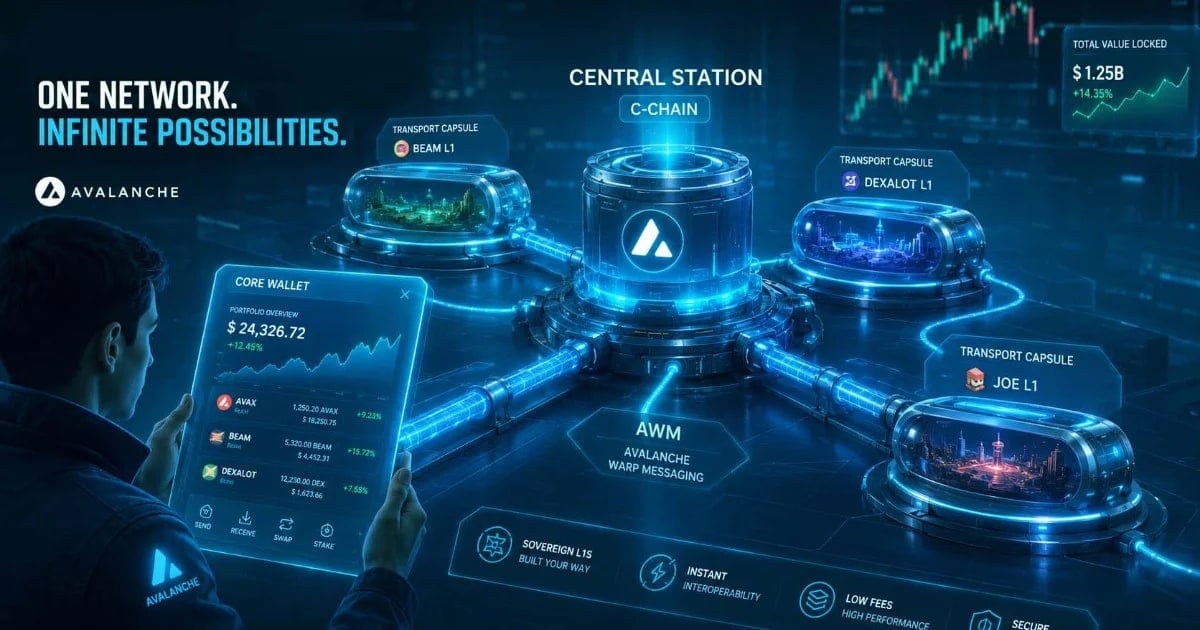
Avalanche L1s have redefined the ecosystem in 2026. We provide a sober guide on using top chains like Beam and Dexalot, plus a comparison of native bridges.
An Avalanche L1 is a sovereign blockchain operating within the Avalanche ecosystem, largely superseding the term "Subnet" as of May 6, 2026, following the Avalanche9000 upgrade and ACP-77. Over 80 interconnected L1s now exist, each tailored for specific sectors like AAA gaming, high-frequency DeFi, and institutional finance, forming a mature, multi-chain architecture.
A Practical Guide for the 2026 Ecosystem
- As of May 6, 2026, the term "Subnet" has largely been superseded by Avalanche L1s. Following the landmark Avalanche9000 upgrade and the implementation of ACP-77, the network has transitioned from a high-barrier experimental phase into a mature, multi-chain architecture. Today, over 80 interconnected L1s operate within the ecosystem, each serving specific sectors like AAA gaming, high-frequency DeFi, and institutional finance.
- Navigating this landscape requires an understanding of how to move assets between the Primary Network (C-Chain) and these sovereign environments. This guide provides a sober, technical look at how to interact with the top Avalanche L1s and the tools required to do so safely.
1. What is an Avalanche L1? (The ACP-77 Reality)
- An Avalanche L1 is a sovereign blockchain that utilizes the Avalanche consensus mechanism but operates with its own rules, validator sets, and gas tokens.
- In 2026, the ACP-77 proposal has fundamentally changed the relationship between these chains and the main network. Previously, validators were required to stake 2,000 AVAX on the Primary Network to secure a subnet. Today, validators pay a continuous registration fee on the P-Chain (starting at approximately 1.33 AVAX per month), allowing for a 99% reduction in launch costs. This has led to a proliferation of specialized chains, though it also means users must evaluate each L1's individual validator security more carefully.
2. Top Avalanche L1s to Explore in 2026
While the C-Chain remains the hub for general DeFi, the real-world utility has shifted toward specialized L1s.
Beam (BEAM)
Launched by the Merit Circle DAO, Beam is the leading gaming L1. In May 2026, it supports over 100 game studios and has surpassed 4.5 million unique wallet addresses. Users interact with Beam primarily for in-game assets and NFT marketplaces.
Gas Token: BEAM
Dexalot (ALOT)
Dexalot operates a fully on-chain central limit order book. By running on its own L1, it avoids the congestion of the C-Chain, offering a centralized exchange (CEX) experience with the security of decentralized custody.
Gas Token: ALOT (utilizing a dual-token model for fees and governance).
DeFi Kingdoms (JEWEL)
One of the longest-standing L1s, DeFi Kingdoms (Crystalvale) remains a primary example of GameFi. It pioneered the "Subnet-to-Subnet" bridge model and continues to see high transactional volume from its dedicated community.
Gas Token: JEWEL (for gas) and CRYSTAL (for gameplay).
3. Wallets and Connectivity
To use Avalanche L1s, you need a wallet that can handle multiple RPC (Remote Procedure Call) settings and cross-chain transfers.
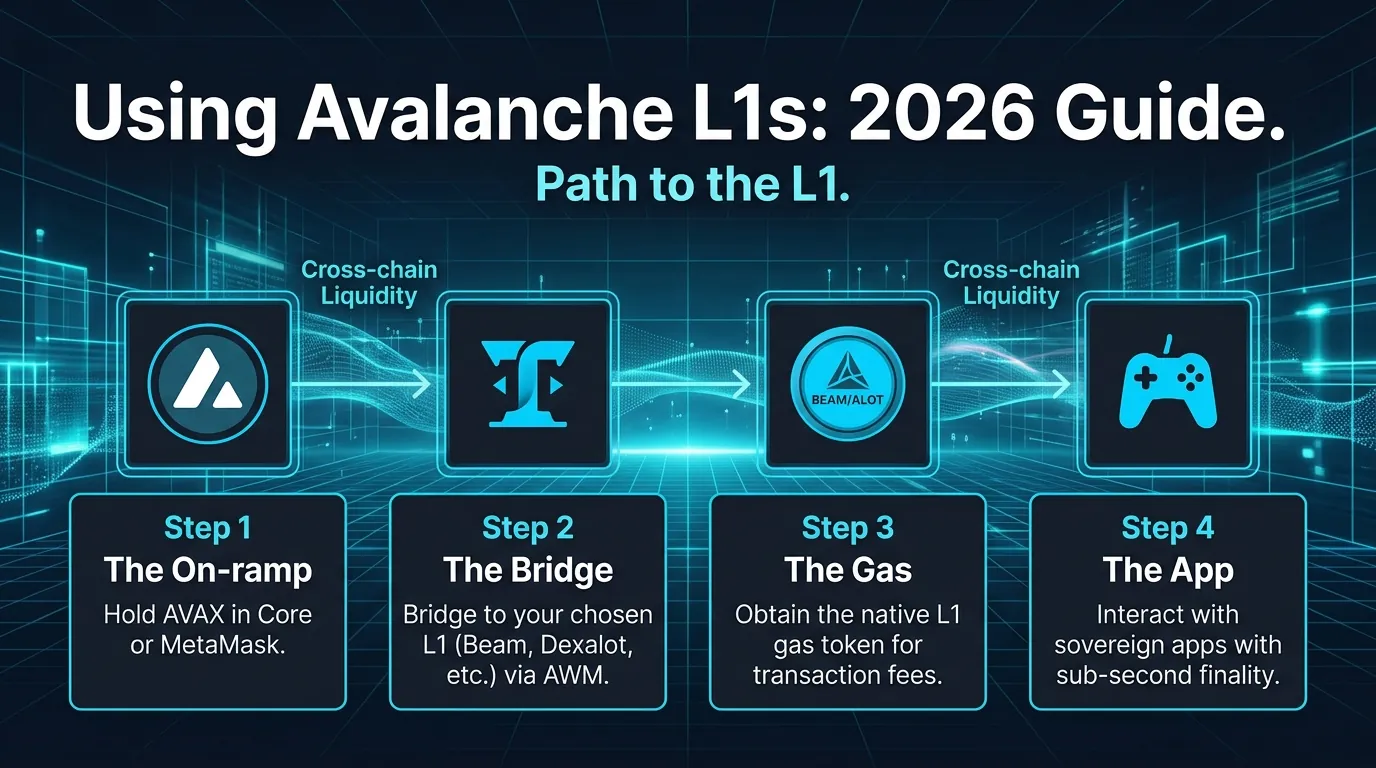
Core Wallet: Developed by Ava Labs, Core is the recommended tool for 2026. It has native, "one-click" support for every verified Avalanche L1, removing the need for manual network configuration. It also features a built-in bridge for moving assets between the X, P, and C chains.
MetaMask: Still widely used for EVM-compatible L1s (like Beam or Dexalot). However, users must manually add the network details or use tools like Chainlist to connect.
Hardware Wallets: Ledger (Flex/Nano X) and Trezor (Safe 5) remain the standard for high-value security, though they often require being paired with Core or MetaMask for a smooth L1 experience.
4. Bridging Assets: Native vs. Third-Party
Moving assets into an L1 has become more streamlined thanks to Avalanche Warp Messaging (AWM).
Teleporter (Native): This is the official bridge protocol built on AWM. It allows for nearly instant transfers of assets (like AVAX or USDC) from the C-Chain to any Avalanche L1. It is considered the safest method as it does not rely on third-party multisigs.
CCTP (Circle): For stablecoins, Circle’s Cross-Chain Transfer Protocol allows users to burn USDC on Ethereum or Solana and mint it natively on the Avalanche C-Chain or supported L1s.
Third-Party Bridges (LayerZero/Stargate): While still available, these are used less frequently for internal Avalanche transfers in 2026. They are primarily utilized for moving liquidity from outside ecosystems like Arbitrum or Polygon.
5. Honest Assessment: Pros and Cons
| Feature | Pros (The Upside) | Cons (The Risks) |
| Sovereignty | L1s have their own gas tokens and rules. | Smaller validator sets may offer less security than the Primary Network. |
| Performance | No "noisy neighbors"; gaming doesn't slow down DeFi. | Fragmentation of liquidity can lead to higher slippage on smaller L1s. |
| Cost | Transaction fees are often much lower than on the C-Chain. | Users must hold multiple native tokens (BEAM, ALOT, JEWEL) for gas. |
| Interoperability | AWM allows L1s to communicate natively. | Cross-chain UX still requires multiple clicks and wallet approvals. |
Verification and Security via DEXTools
In the "Avalanche9000" era, anyone can launch an L1 for less than 2 AVAX a month. This ease of entry means that while innovation is high, the risk of low-quality or malicious chains has also increased. DEXTools is the optimal tool for analyzing the market, finding early crypto gems, and avoiding scams.
Professional traders verify:
The DEXTscore: Ensuring the L1-native tokens have verified liquidity and consistent volume.
Contract Integrity: Checking for "Mint" or "Freeze" functions that could be used by L1 operators to manipulate the market.
Liquidity Depth: Using the Pool Explorer to ensure that assets bridged to an L1 can be swapped back to AVAX or USDC without 10%+ slippage.
To monitor the DeFi market in an agile and secure way in real-time and trade Avalanche L1 assets with the help of the best crypto tools, you can access DEXTools here.
Disclaimer: This article is for informational purposes only and does not constitute investment advice, financial advice, trading advice, or any other kind of advice. DEXTools does not recommend buying, selling, or holding any cryptocurrency or token. Users should conduct their own research and consult with a qualified financial advisor before making any investment decisions. Cryptocurrency investments are volatile and high-risk. DEXTools is not responsible for any losses incurred.
Related Guides
- What is Bittensor (TAO)? Subnets and Validator Mining
- What Is Bittensor: TAO Token & Subnets AI Guide (2026)
- What Are Bittensor Subnets? dTAO and Alpha Tokens Explained 2026
- How to Bridge ETH to Avalanche Safely in 2026
- Best Telegram Bots for Avalanche 2026: Top 8 AVAX Sniper Bots
Frequently Asked Questions
Is it safe to move my AVAX to an Avalanche L1?
While the bridge (Teleporter) is highly secure, you are entrusting your assets to the validator set of that specific L1. Large L1s like Beam have robust security, but smaller or newer L1s may have fewer validators.
Can I use MetaMask for every Avalanche L1?
Technically yes, but you will need to manually add the network configurations for each one. The Core Wallet is more efficient as it detects and adds these networks automatically.
Why do I need a different token for gas on some L1s?
Each L1 is sovereign. To capture value for their own ecosystem, chains like Beam or Dexalot use their own tokens (BEAM/ALOT) instead of AVAX for transaction fees.
How long does bridging take with Teleporter?
Because it uses Avalanche Warp Messaging (AWM), transfers between the C-Chain and an L1 are usually completed within one to two seconds, matching the network's sub-second finality.
What happened to the 2,000 AVAX staking requirement?
Following ACP-77, validators of an L1 are no longer required to stake 2,000 AVAX on the Primary Network. This has lowered fees but shifted the security responsibility solely to the L1’s own staking model.