What Is Wrapped Bitcoin (WBTC)? Uses, Risks and WBTC vs BTC (2026)
— By Tony Rabbit in Tutorials

Wrapped Bitcoin (WBTC) explained: how 1:1 custodial wrapping works, when BTC holders use WBTC in DeFi, how WBTC differs from native Bitcoin, and the custody, smart contract and depeg risks to watch in 2026.
Wrapped Bitcoin sounds simple at first: a token that represents Bitcoin on another blockchain. The reality is more nuanced. Wrapping Bitcoin trades native BTC's hard guarantees for the ability to use BTC inside DeFi, lending markets, automated market makers, and yield strategies that the Bitcoin network does not support natively. Understanding what is gained and what is given up is the entire point of this guide.
Quick answer: Wrapped Bitcoin (WBTC) is an ERC-20 token on Ethereum (and other EVM chains) that is backed 1:1 by real Bitcoin held by custodians. It is minted when a merchant deposits BTC and burned when WBTC is redeemed back into BTC. Its purpose is to bring Bitcoin's liquidity into smart contract ecosystems, where native BTC cannot operate. WBTC is not Bitcoin. It is a custodial IOU for Bitcoin that behaves like an Ethereum token.
- WBTC is an IOU, not native BTC. Real Bitcoin sits with a custodian; WBTC is the smart-contract representation.
- It is 1:1 backed. Each WBTC token corresponds to one BTC held in custody, verifiable through proof-of-reserves.
- It unlocks DeFi for Bitcoin holders. Lending, borrowing, AMMs, yield, and collateral usage become possible.
- It carries custodial risk. If the custodian fails, freezes assets, or is compromised, the peg can break.
- It is not the only wrapped Bitcoin. WBTC is the largest, but tBTC, BTCB, renBTC and others compete with different trust assumptions.
Intent split
- This page is the Wrapped Bitcoin asset explainer: what WBTC is, why it exists, and the trust tradeoffs versus native BTC.
- For the generic cross-chain asset model, read What Is a Bridged Token in Crypto?.
- For the base-layer Bitcoin concept, read What Is Bitcoin?.
What Wrapped Bitcoin actually is
Wrapped Bitcoin is a token that lives on a smart-contract-capable blockchain (Ethereum is the original home, but WBTC also exists on networks like Tron, BNB Chain, Avalanche and more) and is fully backed by Bitcoin held by a centralized custodian. Each WBTC token corresponds to exactly one BTC locked in reserve.
The reason WBTC exists is straightforward. Bitcoin's network is intentionally minimal. It does not support arbitrary smart contracts, complex DeFi logic, or token standards like ERC-20. So Bitcoin holders who want to lend their BTC, provide it as liquidity, or use it as collateral in DeFi cannot do that on the Bitcoin chain itself. Wrapping converts BTC into a format other ecosystems understand.
What "wrapping" technically means
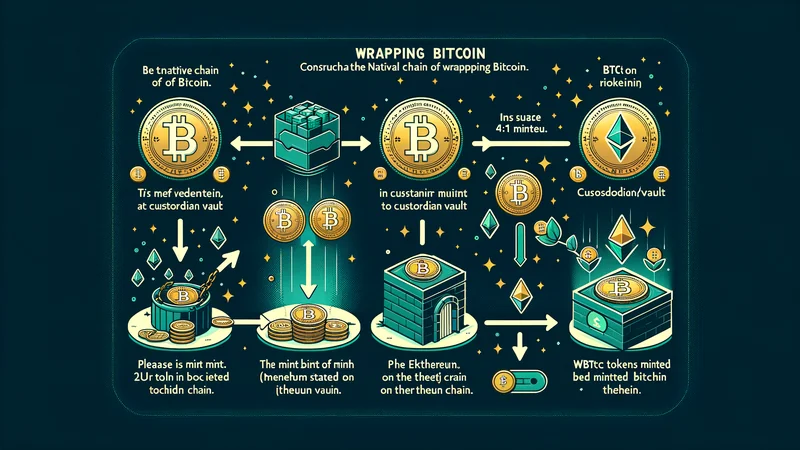
Wrapping is not a magic transformation. It is a deposit-and-mint process. The user (or a merchant on their behalf) sends BTC to a custodian's Bitcoin address. Once the custodian confirms receipt, an equivalent amount of WBTC is minted on the destination chain and sent to the user's wallet. To unwrap, the process reverses: the user burns WBTC, and the custodian releases the underlying BTC.
This is conceptually identical to how a bank issues a deposit certificate. The certificate is not the cash. It represents a claim on the cash. WBTC is not Bitcoin. It is a tokenized claim on Bitcoin.
WBTC vs native BTC, in plain English
Native BTC settles on the Bitcoin network with Bitcoin's own consensus and security. WBTC settles on Ethereum (or another smart-contract chain) with that chain's consensus and a custodian's solvency. Both can rise and fall in price together (because their value is tied to Bitcoin's), but they are technically and legally different assets. A WBTC token is only as trustworthy as the custodian behind it.

How wrapping and unwrapping work step by step
The full WBTC flow involves three distinct roles: the user, the merchant, and the custodian. Most retail users never interact directly with the custodian. They interact with merchants through DEXs and aggregators, which is why the process feels invisible most of the time.
The minting process
- User intent. The user wants WBTC. They go through a merchant (often via an aggregator or directly).
- BTC deposit. The user (or merchant on their behalf) sends real BTC to the custodian's Bitcoin address.
- Custodian confirmation. The custodian waits for Bitcoin confirmations and verifies the deposit.
- WBTC mint. The custodian triggers a mint of an equivalent amount of WBTC on the destination chain.
- Delivery. The merchant delivers the new WBTC to the user's wallet.
The burning process
Unwrapping reverses each step. The user sends WBTC to the merchant or burn contract, the custodian verifies the burn on chain, and finally releases the corresponding BTC from custody back to the user's Bitcoin address. The whole flow keeps the WBTC supply on chain perfectly aligned with the BTC sitting in reserve.
Where the trust sits
Trust does not vanish when BTC is wrapped. It is reassigned. With native BTC, the user trusts Bitcoin's consensus and their own private key management. With WBTC, the user also trusts the custodian, the smart contract on the destination chain, and the network that contract runs on. More moving parts, more potential failure surfaces.
Why anyone uses WBTC
Bitcoin holders historically had two options: hold BTC and earn nothing on chain, or sell BTC for stablecoins to participate in DeFi. WBTC is a third option: keep Bitcoin price exposure while putting it to work inside smart contract ecosystems.
DeFi use cases
- Lending and borrowing. Supply WBTC to protocols like Aave or Compound to earn yield, or borrow stablecoins against it without selling Bitcoin exposure.
- Liquidity provision. Provide WBTC paired with ETH, stables, or other assets in AMMs to earn trading fees.
- Collateral. Use WBTC as backing for stablecoin issuance (e.g. on protocols like MakerDAO/Sky).
- Cross-chain trading. Move Bitcoin liquidity across DeFi without constantly bridging.
- Yield strategies. Stack lending, LP rewards, and incentive emissions for compounding strategies that native BTC cannot access.
What WBTC does NOT solve
WBTC is useful, but it does not magically inherit Bitcoin's security model. The DeFi smart contracts WBTC interacts with can be hacked. The Ethereum network can have issues. The custodian can be compromised. Bridges to other chains add their own risks. Wrapping unlocks utility, not invulnerability.
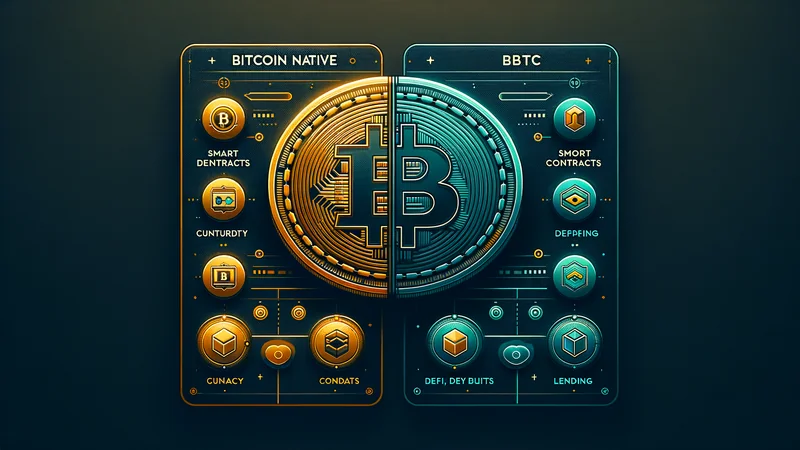
WBTC vs native BTC compared
| Property | Native BTC | WBTC |
|---|---|---|
| Settlement chain | Bitcoin | Ethereum (and other EVM chains) |
| Security model | Bitcoin Proof-of-Work | Host chain consensus + custodian |
| Smart contract usable | No (limited scripting) | Yes (full ERC-20) |
| Custodial risk | None (self-custody) | Yes (centralized custodian) |
| DeFi composability | Very limited | Native |
| Network fees | BTC fees | ETH gas (or host chain gas) |
| Peg integrity | Native | Depends on custodian's reserves |
WBTC alternatives in plain English
WBTC is the largest wrapped Bitcoin, but it is not the only option. Different alternatives reduce centralization in different ways, each with their own trade-offs.
tBTC (Threshold)
tBTC is a more decentralized wrapped Bitcoin that uses a network of nodes and threshold signatures rather than a single custodian. It aims to reduce single-custodian risk, at the cost of additional protocol complexity and historically lower liquidity than WBTC.
BTCB (BNB Chain)
BTCB is a Binance-backed wrapped Bitcoin that lives natively on BNB Chain. It is widely used in BNB Chain DeFi and is backed by Binance's own custodied BTC reserves. The trust model is centralized to a single major custodian, similar to WBTC's structure.
cbBTC (Coinbase)
cbBTC is a wrapped Bitcoin issued by Coinbase, backed 1:1 by BTC held by Coinbase. It targets users already in the Coinbase ecosystem who want Bitcoin exposure inside DeFi without bridging through additional layers.
renBTC, hBTC and historical alternatives
Some earlier wrapped Bitcoin variants (like renBTC) have wound down or migrated. Always verify the current status, audit history and proof-of-reserves of any wrapped BTC variant before depositing meaningful capital. The wrapped Bitcoin landscape changes faster than most users expect.
The risks of using WBTC
Holding WBTC is not the same as holding BTC. Five categories of risk are unique to wrapped Bitcoin.
Custodial risk
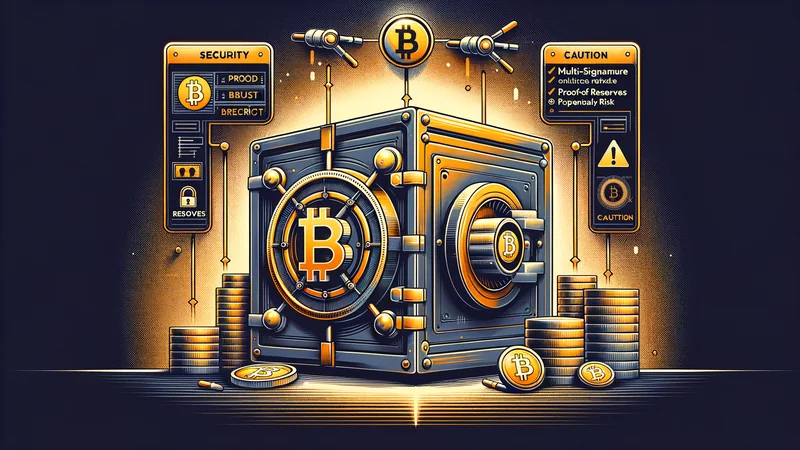
The biggest single risk is the custodian's solvency and integrity. If the custodian becomes insolvent, gets hacked, faces regulatory seizure, or simply pauses redemptions, WBTC can depeg from BTC. Reading the custodian's proof-of-reserves and audit history before sizing up matters more than most users realize.
Smart contract risk
Even if the custodian is fully solvent, the WBTC smart contract itself can be exploited. So can any DeFi protocol that uses WBTC as collateral or in an LP. Smart contract risk compounds across each protocol the user touches.
Bridge risk
WBTC on Ethereum is "native" in the sense that Ethereum is the original home. WBTC bridged to other chains adds bridge risk on top of custodial and smart-contract risk. Bridge hacks have historically been among the largest losses in crypto.
Depeg risk
In stress events, WBTC has briefly traded below 1:1 with BTC on secondary markets. Even when reserves are intact, fear and forced selling can break the spot peg temporarily. Users who buy WBTC with leverage or use it as fragile collateral can be liquidated by depegs that later resolve.
Regulatory risk
Wrapped tokens issued by centralized custodians are exposed to regulatory action against the issuer. Frozen reserves, sanctioned addresses, or jurisdictional disputes can disrupt minting and redemptions. Native Bitcoin has no equivalent risk surface.
How to get and use WBTC safely
The cleanest workflow assumes the user already holds BTC and wants exposure to DeFi without selling Bitcoin. The fewer hops, the smaller the risk surface.
- Verify the chain. Decide which chain you want WBTC on (Ethereum, BNB, Arbitrum, etc.). Each has different liquidity and risk.
- Choose the issuer carefully. WBTC, cbBTC, BTCB and tBTC have different trust assumptions. Pick consciously.
- Use trusted access points. Aggregators, reputable DEXs, and major lending platforms reduce the chance of hitting a fake contract.
- Confirm contract addresses. Always cross-check the WBTC contract address on the official issuer's site before any swap or deposit.
- Stay aware of proof-of-reserves. Custodians publishing live reserve data are preferable to those who don't.
Cross-checks before any DeFi deposit
Before parking WBTC into lending or LP positions, sanity check the protocol with the same rigor as any other DeFi position. DefiLlama for TVL, protocol lending docs, and recent audit reports. Wrapped Bitcoin in a freshly launched, thinly audited pool is asking for trouble.
Common WBTC mistakes
- Treating WBTC as Bitcoin. They share price, not security. Self-custody discipline still applies, but trust assumptions are different.
- Assuming all wrapped BTC are equal. WBTC, cbBTC, BTCB and tBTC each have distinct issuer trust profiles.
- Bridging across many chains casually. Each bridge hop adds risk. Minimize hops.
- Ignoring proof-of-reserves. Reserves data is public for the major issuers; not checking it is a process failure.
- Holding WBTC long term as a savings vehicle. If the goal is just to hold Bitcoin, native BTC in self-custody is almost always the better choice.
Frequently asked questions
Is WBTC the same as Bitcoin?
No. WBTC is a token on Ethereum (and other chains) that represents Bitcoin held in custody. It moves with Bitcoin's price, but legally and technically it is a different asset with different risks, including custodial and smart contract exposure.
Who issues WBTC?
WBTC was originally issued through a partnership of multiple custodians and merchants, with BitGo as the historical primary custodian. Custody arrangements have evolved over time, and the WBTC ecosystem now spans multiple jurisdictions and partners. Always verify the current custodian setup on the official WBTC site.
Is WBTC safe to hold?
WBTC has held its 1:1 peg most of the time and is one of the most battle-tested wrapped tokens, but it is not risk-free. Custodial, smart contract and regulatory risks all exist. For pure long-term Bitcoin exposure with no DeFi involvement, native BTC in self-custody is generally safer.
Can WBTC depeg from BTC?
Yes, temporarily. Depegs have happened during stress events even when underlying reserves were intact. They tend to resolve as redemptions normalize, but leveraged positions on WBTC pegs can be liquidated during the depeg itself.
What is the difference between WBTC and cbBTC?
Both are wrapped Bitcoin tokens backed 1:1 by BTC, but they are issued by different custodians (the WBTC consortium versus Coinbase). They have different reserve transparency models, different chains they live on natively, and different liquidity profiles. Treat them as distinct assets when sizing positions.
Final takeaway: Wrapped Bitcoin is a powerful tool for putting Bitcoin to work in DeFi, but it is a custodial IOU, not native BTC. Use it consciously: verify the issuer, monitor proof-of-reserves, prefer fewer bridge hops, and never assume the safety of the underlying Bitcoin transfers automatically to the wrapper. The right mental model is "Bitcoin's value with Ethereum's risks."
Disclaimer: This guide is for educational purposes only and does not constitute investment, financial, legal, or trading advice. Wrapped tokens carry custodial, smart contract, and bridge risks beyond those of the underlying asset.
Related Guides
- Bitcoin Wrapped on Other Chains: WBTC vs. cbBTC vs. tBTC
- ETH vs WETH in 2026: Differences, Uses and Tradeoffs
- Bitcoin Dominance (BTC.D) Explained: How Traders Read Rotation (2026)
- What Is Babylon Bitcoin Staking: Complete BTC Self-Custody Staking Guide (2026)
- BTC to USD: Live Bitcoin Price and Conversion Guide 2026
Frequently Asked Questions
What is Wrapped Bitcoin (WBTC)?
Wrapped Bitcoin is a token that represents Bitcoin on another blockchain, designed to track the value of BTC on a one-to-one basis. It lets Bitcoin value be used in ecosystems that do not natively support BTC.
How does wrapping Bitcoin work?
In a custodial model, real Bitcoin is held in reserve and an equivalent amount of the wrapped token is minted on the target chain. Redeeming the wrapped token burns it and releases the underlying BTC.
Why would someone use WBTC instead of BTC?
WBTC lets holders use Bitcoin's value in DeFi applications such as lending, trading, and liquidity provision on chains that support smart contracts. Native Bitcoin cannot directly interact with those applications.
What are the risks of holding Wrapped Bitcoin?
Key risks include trust in the custodian holding the underlying BTC, smart contract vulnerabilities, and the chance of the wrapped token depegging from Bitcoin's price. These risks do not exist in the same way when holding native BTC.