What Is Kekius Maximus (KEKIUS)? The Elon Musk Memecoin Explained in 2026
— By Whatsertrade in Tutorials
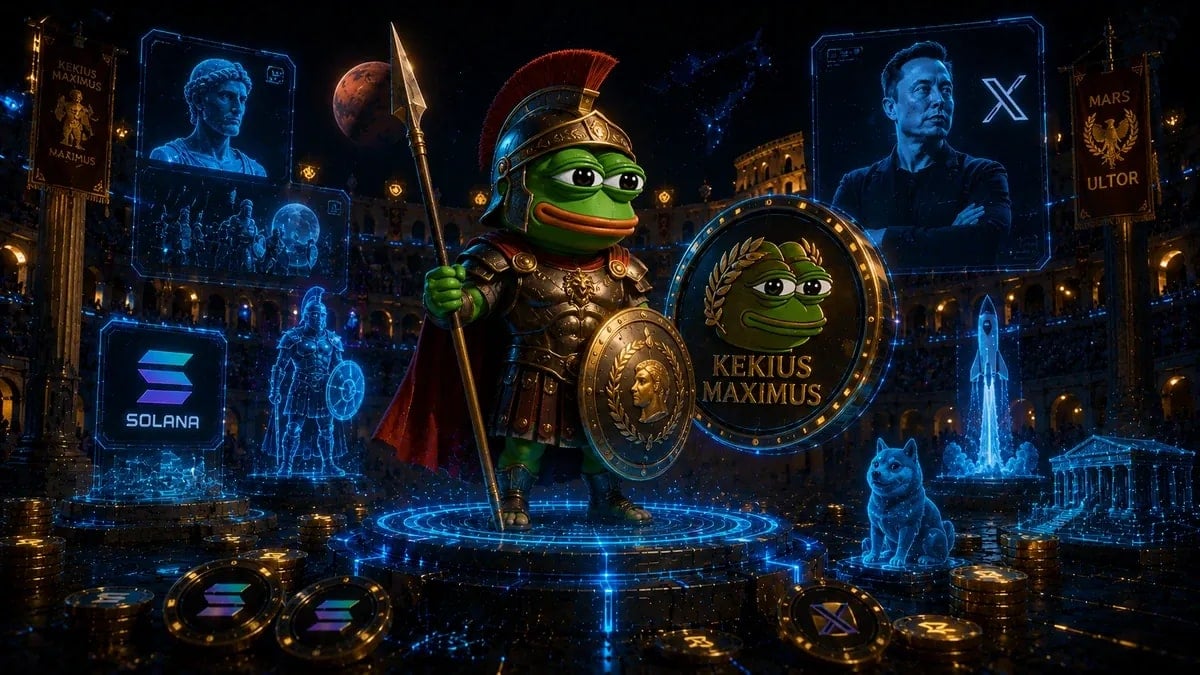
Kekius Maximus (KEKIUS) is the Pepe-meets-Gladiator memecoin that exploded on December 31, 2024 when Elon Musk renamed his X profile to Kekius Maximus, triggering a 1,700% pump in 6 hours, a $77M peak market cap, and a brutal 75% New Year's Day crash when Musk reverted the change. Full 2026 guide: the Pepe + Maximus mashup origin, multiple tokens across chains, why the Solana KEKIUS won the ticker war, the Musk catalyst, pump-and-dump anatomy, comparison vs PEPE, KEKE and KEK, and the real risks of celebrity-name memecoins.
What Is Kekius Maximus (KEKIUS)? The Elon Musk Memecoin Explained in 2026
On December 31, 2024, at roughly 14:30 UTC, Elon Musk changed his X profile name from "Elon Musk" to "Kekius Maximus" and switched his avatar to a cartoon of Pepe the Frog dressed as a Roman gladiator holding an Xbox controller. Within six hours, a Solana memecoin sharing the same name had pumped over 1,700%, briefly touching a market cap above seventy-seven million dollars. By the time New Year's bells rang in most of the world, Musk had quietly reverted his profile back to normal, and KEKIUS had bled out roughly 75% of that peak. The trade lasted less than twenty-four hours from top to crater, and it became the canonical 2024 example of a celebrity-driven memecoin pump and dump.
Kekius Maximus did not start with Musk. The mashup of Pepe the Frog and Maximus Decimus Meridius from Ridley Scott's Gladiator had circulated in meme culture for years before Musk's profile weaponized it overnight. Multiple tokens bearing the name had already deployed across Ethereum, Solana, BNB Chain and Base. When the moment came, the Solana version with the deepest liquidity won the ticker war, while a dozen copycats spawned within minutes trying to ride the wave.
This guide explains what Kekius Maximus is, why the Pepe-Gladiator mashup resonates, what Musk did on December 31, 2024, how the price action unfolded, why multiple tokens share the name, how KEKIUS stacks up against PEPE, KEKE and KEK, and what traders need to understand about celebrity-name tokens with no celebrity behind them.
Featured snippet: Kekius Maximus in 60 seconds
Kekius Maximus (KEKIUS) is a memecoin tribe built around a mashup of Pepe the Frog and Maximus Decimus Meridius, the Roman general from the 2000 film Gladiator. The character had circulated as a meme for years, but on December 31, 2024, Elon Musk renamed his X profile to "Kekius Maximus" and changed his avatar to a Pepe gladiator. The dominant Solana KEKIUS token pumped over 1,700% in six hours, peaked near a seventy-seven million dollar market cap, and crashed roughly 75% within twenty-four hours when Musk reverted his profile. Multiple tokens share the name across Ethereum, Solana, BNB Chain and Base. Musk has never endorsed any KEKIUS contract, and the entire valuation rests on community attention rather than utility.
What Is Kekius Maximus in Plain English
Strip away the New Year's Eve drama, the contract addresses and the crashed retail accounts, and the character at the center of this story is simple. Kekius Maximus is what happens when crypto Twitter takes Pepe the Frog, the green amphibian created by Matt Furie that became the unofficial mascot of internet meme culture, and dresses him up as Maximus Decimus Meridius, the bearded Roman general played by Russell Crowe in Gladiator. The mashup name puns on "kek," internet slang for "lol" that originated in StarCraft and World of Warcraft chat filters, and "Maximus," the iconic Roman general's praenomen. Put them together and you get a frog warrior with a battle cry of "are you not entertained."
The character lived in meme folders, Twitter avatars and Discord servers long before any token deployed in its name. By mid-2024, anonymous developers had started spinning up Kekius Maximus tokens on multiple chains, betting that the latent cultural energy of the mashup would eventually catalyze. Most of those tokens went nowhere. Tiny liquidity, no community, no catalyst. They sat in their respective DEX pools like dry kindling waiting for a spark.
The spark arrived on December 31, 2024. Elon Musk, the most-followed user on X with hundreds of millions of followers, changed his display name to "Kekius Maximus" and his profile picture to a Pepe gladiator holding an Xbox controller. He did not tag any token, did not promote any contract, did not say anything at all about a cryptocurrency. He simply changed two pieces of metadata on his profile. Within minutes, every crypto trader with a fast feed was scanning DEXTools for KEKIUS tokens. Within hours, the Solana version with the deepest liquidity was up over a thousand percent.
By January 1, 2025, Musk had reverted his profile. Retail buyers who bought the top, expecting sustained endorsement, watched the chart drop seventy-five percent in less than a day. Copycats on other chains imploded almost completely, but the Solana KEKIUS did not die. Against most expectations, it became a permanent fixture of the late-2024 memecoin canon.
The Pepe + Gladiator Mashup Origin
To understand why this particular mashup hit so hard, you have to understand both halves of it. Pepe the Frog, drawn by Matt Furie in the early 2000s for his comic Boy's Club, became one of the most-reposted images in internet history. Pepe variants exist for every emotion: Sad Pepe, Smug Pepe, Apu, Pepe the Investor, Pepe the King. In crypto, Pepe became a memecoin in its own right in April 2023, when the PEPE token launched on Ethereum and reached a multi-billion dollar market cap within weeks. Pepe is the default green frog of crypto, the way Doge is the default Shiba Inu.
Maximus Decimus Meridius is one of cinema's most recognizable heroic archetypes. In Gladiator (2000), Russell Crowe plays a Roman general betrayed by the emperor's heir, sold into slavery, and forced to fight in the Colosseum. The lines "my name is Maximus Decimus Meridius" and "are you not entertained" became cultural shorthand for honor, vengeance and theatrical spectacle.
Mashing Pepe with Maximus is funny in the way most great memes are: it pairs a deeply unserious symbol with a deeply serious one and lets the contradiction do the work. A frog in a gladiator helmet asking if you are not entertained captures something true about how crypto traders see themselves. The "kek" prefix anchors the whole thing in internet-native slang, signaling a chronically online joke, not a marketing campaign. The mashup also taps into crypto's broader fixation with Roman aesthetics, half ironic and half sincere, the same way the entire memecoin category does.

December 31, 2024: The Musk Profile Change Catalyst
The hour-by-hour story of December 31, 2024 is now part of memecoin folklore. Roughly mid-afternoon UTC, traders monitoring Musk's account noticed his display name had been changed to "Kekius Maximus" and his profile picture replaced with a digital painting of Pepe dressed in Roman gladiator armor, holding an Xbox controller in one hand. Musk did not tweet about the change, did not announce a project and did not link to a contract. He simply made the swap and let it sit.
Within minutes, crypto Twitter exploded. Every trader with active alerts on Musk's profile, plus every memecoin Telegram and Discord, started searching for KEKIUS tokens. Several already existed, but the question of "which Kekius" was settled fast by liquidity and chart presence. The Solana version with the most active community had the deepest pool and the cleanest setup on DEXTools, and within an hour it had become the canonical KEKIUS that everyone was charting.
The first leg of the pump was vertical. From a small market cap floor measured in low single-digit millions, KEKIUS on Solana climbed past ten million, then twenty, then forty, then sixty within roughly six hours. At peak, multiple data sources clocked the fully diluted market cap at approximately seventy-seven million dollars, with on-chain volume in the tens of millions. The candles on the one-minute and five-minute charts looked nearly straight up, with brief consolidation flags before each new leg.
Musk did not engage further. He did not retweet KEKIUS, did not promote a contract, did not respond to the thousands of replies asking what his profile meant. Bulls assumed more catalysts were coming, bears suspected the change was a one-off joke. Both were partly right: the catalyst was real, but the followthrough never came.
KEKIUS Timeline: From Meme Folder to Seventy-Seven Million
Kekius Maximus meme circulates
The Pepe-as-gladiator mashup spreads through 4chan, Discord, Twitter and meme aggregator sites. The name pairs "kek" slang with Maximus from Gladiator. No tokens yet, just culture.
First Kekius tokens deploy
Anonymous developers launch multiple Kekius Maximus tokens on Ethereum, Solana, BNB Chain and Base. Liquidity is thin, communities are small, charts mostly flatline. The Solana version on Pump.fun is the most active.
Musk changes X profile
Elon Musk renames his X profile to "Kekius Maximus" and changes his avatar to a Pepe gladiator holding an Xbox controller. He does not tweet, does not endorse any token, does not link a contract.
1,700%+ pump in 6 hours
Solana KEKIUS rockets vertically. Volume hits tens of millions of dollars on-chain. Market cap rolls through 10M, 20M, 40M, 60M and tops near 77M. DEXTools trending lists fill with KEKIUS forks and copycats.
Musk reverts, 75% crash
Musk silently swaps his profile back to "Elon Musk" with his normal avatar. KEKIUS unwinds violently, bleeding roughly 75% from the top within twenty-four hours. Copycat tokens on other chains lose nearly all their gains.
Consolidation and survival
Solana KEKIUS does not die. The community keeps Telegram and Twitter alive, fresh art drops appear weekly, and the token settles into a multi-million dollar range. CMC and CoinGecko list the dominant contract.
Smaller echo pumps
Every time Musk references gaming, Pepe imagery, or anything tangentially related, KEKIUS sees small reflexive rallies. None match the December 31 candle. The token becomes a sentiment proxy for Musk-related crypto narratives.
Permanent meme canon
KEKIUS is now a permanent fixture of the late-2024 memecoin cycle, studied as the textbook example of a celebrity-name pump and dump. The Solana version remains the canonical reference, with smaller communities still active on Ethereum and Base.
Why the Solana KEKIUS Won the Ticker War
Because no central authority owns the Kekius Maximus name in a crypto context, deploying a token with that ticker is something any anonymous developer can do in minutes. By the time Musk changed his profile on December 31, at least half a dozen Kekius Maximus tokens existed across major chains. Ethereum had several, BNB Chain had two or three, Base had at least one, and Solana had multiple. The question of which KEKIUS would absorb the Musk-driven attention was settled almost entirely by liquidity and chart visibility within the first hour.
The Solana version that became dominant had a few structural advantages. It had been deployed through Pump.fun, the Solana memecoin launchpad that automates fair-launch mechanics, graduated to Raydium with a deeper pool than its rivals, and already had a few hundred holders before the catalyst. When traders piled into DEXTools to find KEKIUS, this version surfaced at the top of the trending list with the most volume and the cleanest holder distribution. Once it climbed past a few million in market cap, the network effect was self-reinforcing: traders chase the chart that is already moving, not the dormant fork two chains away.
Solana also had a structural advantage at the chain level. The combination of subsecond block times, fees measured in fractions of a cent, and the depth of memecoin infrastructure on the chain meant that KEKIUS trading was cheaper, faster and smoother on Solana than on any other venue. The same dynamics that lifted PNUT and other Solana memecoins earlier in the cycle worked in KEKIUS's favor. If you want to understand the chain itself in more depth, our Solana beginner guide covers the architecture.
The losing tokens followed predictable paths. The Ethereum versions briefly spiked as desperate buyers tried any contract with the right name, but smaller pools and higher fees suppressed the move. Most gave back their gains within forty-eight hours. By the second week of January, Solana KEKIUS held close to 90% of total Kekius-branded liquidity and almost all of the social mindshare.
The Pump and Dump in Detail: 1,700% Up, 75% Down
Looking at the chart from December 31, 2024 through January 1, 2025 is like reading a textbook on celebrity-driven memecoin moves. The pre-catalyst price was essentially flat for weeks, trading in a tight range with thin volume. The Musk profile change appears on the chart as a near-vertical green candle on the one-minute timeframe, with each subsequent candle higher than the last for the better part of six hours. Volume profile shows a wave of buy-side aggression across the pool, almost no selling until well past the doubling point.
The peak was not a clean spike but a series of shorter rallies separated by multi-minute consolidation flags. This pattern, sometimes called a "stair-step" by chartists, indicates that each new buyer wave was bidding into existing holders willing to take profit at predefined levels. The implied behavior is rational rather than blind: early holders were systematically selling into strength, while latecomers kept buying because Musk's profile was still active. The seventy-seven million dollar peak was reached around six hours after Musk's initial change, with the fully diluted market cap and the circulating supply almost equal because the supply was already in circulation.
The reversion was textbook. When Musk's profile flipped back to its normal state, the chart inverted in real time. Within minutes, sellers were stacking the book and bid liquidity evaporated. The drop from peak to floor played out over roughly twenty-four hours, with several capitulation candles where the price dropped twenty or thirty percent in a single minute. At the bottom, KEKIUS had given back about 75% of its peak, settling in the mid teens of millions of market cap. Volume on the way down was actually higher than on the way up, reflecting the speed at which late buyers tried to exit.
For anyone studying the pattern, two specific behaviors stand out. First, the catalyst was unverified throughout the pump. Musk never linked a token. The entire move was driven by the assumption that a contract change might come, or that more profile activity would follow. When neither happened, the basis for the price evaporated. Second, the pump compressed weeks of price action into hours. Memecoin moves that would historically have taken days played out in single trading sessions, a function of better infrastructure, deeper memecoin-specific liquidity, and a more reflexive trader base.

Why Did Elon Musk Do It?
Musk has never publicly explained the Kekius Maximus profile change in any depth. His pattern of profile changes is well documented: he frequently shifts his display name and avatar for short windows, often in response to internet trends, gaming references or his own jokes. He has previously gone by "Mr. Tweet," "Lorde Edge," and other variants, and his avatar has cycled through Doge, X logos, sci-fi imagery and crypto memes. From his perspective, changing the profile to Kekius Maximus was probably just another in a long line of these self-aware online jokes.
The Xbox controller in the avatar offers a likely clue. Musk has been a vocal Path of Exile 2 and Diablo 4 player, and Pepe-as-Maximus has been used in gaming forum signatures for years. It is entirely possible Musk simply found the image funny and pinned it for New Year's Eve, with no thought about the memecoin market that would react.
From a regulatory perspective, this matters. Musk did not promote a token, link a contract, or retweet KEKIUS-related content while the pump was active. Especially since SEC scrutiny of his earlier Dogecoin tweets, he has maintained a posture that distinguishes between cultural commentary and financial endorsement. The Kekius episode reinforced that pattern: he generated attention but did not endorse anything.
For traders, the implication is that you cannot rely on Musk to ratify your bag. He triggers narratives but does not sustain them. His typical pattern is to drop a meme, watch the reaction, and move on. The KEKIUS pump and dump was, in retrospect, the predictable outcome of misunderstanding that pattern, and the same misreading has happened with other Musk-adjacent memecoins.
Multiple Tokens Same Name: How to Tell Them Apart
By the second week of January 2025, more than a dozen tokens carried "Kekius Maximus," "Kekius," or "KEKIUS" in their name across Ethereum, Solana, BNB Chain, Base, Arbitrum and even smaller chains. Some were the originals. Others were copycats deployed within minutes of Musk's profile change, hoping desperate buyers would land on them by mistake. Telling them apart requires discipline and a few specific checks before you swap anything.
First, identify the chain you want to be on. The dominant KEKIUS by market cap, liquidity and community is on Solana. If you want exposure to the canonical KEKIUS, you need a Solana wallet and access to Jupiter or Raydium. Buying KEKIUS-named tokens on other chains because they are cheaper or trending is almost always a trap, because their liquidity is shallow and their communities are not aligned with the main narrative. Knowing what an SPL token is and how to validate one on Solana is part of the basic toolkit here.
Second, verify the contract address from independent sources. CoinMarketCap, CoinGecko and DEXTools all list the dominant Solana KEKIUS with a verified contract. Cross-reference the address from at least two of those sources before pasting it into a wallet or DEX. Verified social accounts for the project, where they exist, will pin the contract address. Treat any contract you find only in a Telegram group, a YouTube comment or an unverified Twitter reply as suspicious. The lessons from address poisoning attacks apply doubly here.
Third, audit the contract before you swap. On Solana, this means checking that the mint authority has been renounced or burned, the freeze authority is revoked, and the liquidity is locked or burned. On Ethereum and EVM chains, it means confirming the contract is verified on Etherscan, that ownership is renounced, that there is no tax higher than zero or a small standard rate, and that the LP tokens are locked or burned. DEXTools surfaces all of these checks in its audit panel for the major contracts.
Fourth, look at holder distribution. Healthy memecoins have a long tail of small holders with a few large wallets representing exchanges, locker contracts and known liquidity providers. Sudden concentration in unknown wallets is a red flag. For KEKIUS specifically, you want to see that the early holders from December 31 are still distributed across many addresses, not concentrated in two or three wallets that could dump at any time. Tools like memecoin-focused dashboards and on-chain explorers make this easy to check.
Community-Driven Valuation: What Holders Are Buying
After the dust settled in early 2025, the question that mattered for KEKIUS holders was simple: with the Musk catalyst exhausted, what is this token actually worth? The answer, like every memecoin, is whatever the community decides to pay for it. KEKIUS has no cash flows, no revenue, no team token unlocks, no utility roadmap. Its valuation rests entirely on attention, narrative continuity and the willingness of the community to keep the meme alive.
In practice, the community needs to do three things. First, keep producing content: KEKIUS-themed art, video edits and raid threads are the daily output that prevents the token from drifting into irrelevance. Second, defend the contract: new variants, fake bridges and impersonator accounts pop up regularly. Third, capitalize on echo catalysts: every time Musk tweets anything tangentially related, KEKIUS sees a reflexive bump as traders bet on a repeat of December 31. None match the original magnitude, but they collectively keep the token in rotation.
Comparing KEKIUS to other narrative-driven memecoins helps put this in perspective. FARTCOIN, the Solana memecoin tied to the AI character Truth Terminal, survived its own initial catalyst and built a community around a sustained narrative. KEKIUS is in a similar category: the initial catalyst is over, but the cultural energy remains. Whether that energy is enough to sustain valuation indefinitely is the open question every memecoin holder has to live with.

KEKIUS vs PEPE, KEKE and Other Frog Memecoins
KEKIUS is part of a broader frog-memecoin tribe that has been one of the most resilient narrative clusters in crypto since 2023. To understand where it sits, it helps to compare it directly to its siblings. PEPE, launched in April 2023 on Ethereum, is the king of the tribe. With a multi-billion dollar market cap at its peaks and listings on every Tier-1 exchange, PEPE is the reference token for any frog-themed memecoin discussion. It has deep liquidity, established culture and survival across multiple cycles.
KEKE and KEK are smaller variants that lean harder into the "kek" slang. KEKE has surfaced on multiple chains as a chaotic, lower-quality counterpart to PEPE with shorter pumps and weaker communities. KEK, often deployed as a placeholder on Pump.fun, rarely survives beyond a single trading session. These tokens illustrate the bottom of the frog memecoin barrel: extremely high mortality, lottery-ticket payoffs, and almost no sustaining culture.
Where KEKIUS differentiates is the mashup. By combining Pepe with Maximus, the token tells a more specific story than a generic frog. The character has visual identity, a quotable line, and a cultural touchstone outside crypto. That richer narrative gave the token durability that pure-kek tokens lack and that most other Musk-catalyzed memes have not earned. Without the Pepe-Gladiator structure, KEKIUS would have been another forgotten Musk-pump corpse. With it, the token became permanent.
How to Buy KEKIUS: 3-Step Flow
Set up a Solana wallet
Install Phantom, Solflare or Backpack. Fund it with SOL from a centralized exchange withdrawal. The dominant KEKIUS is a Solana SPL token, so a Solana wallet is non-negotiable.
Verify the contract
Cross-reference the canonical KEKIUS contract address from CoinMarketCap, CoinGecko and DEXTools. Confirm the holder count, the locked liquidity, and the absence of mint or freeze authorities before pasting the address anywhere.
Swap on Jupiter or Raydium
Use Jupiter for best-execution aggregator routing or Raydium directly for the main pool. Set slippage carefully, never blindly accept high defaults, and always start with a small test swap before committing significant size.
Risks: Celebrity-Name Tokens Without a Celebrity
The single biggest structural risk specific to KEKIUS is the celebrity-name problem. The token derives its visibility from Elon Musk, but Musk has no financial relationship with the project, has never endorsed it, and could ignore it forever or actively distance himself from it at any time. Holders are betting on continued cultural relevance of a meme that Musk happened to surface once. That is a fragile foundation.
The second risk is the precedent itself. The December 31, 2024 pump and dump pattern is now well documented, and traders are wiser the second time around. If Musk were to repeat a similar profile change, the market reaction would likely be smaller, faster and more efficient. The original move worked partly because it caught everyone by surprise. That surprise is gone, and so is the asymmetry it created.
A third risk is regulatory. Celebrity-adjacent memecoins occupy a gray zone where impersonation, misleading marketing and pump-and-dump dynamics can attract enforcement attention. In jurisdictions where celebrity endorsements of crypto require disclosure, projects that imply endorsement without actually having it can find themselves in trouble. KEKIUS holders should monitor whether any official statements from Musk's team or from regulators target the broader category of unauthorized celebrity-name tokens.
A fourth risk is the general structural fragility of memecoins. KEKIUS has no team token unlocks (a positive) but also no roadmap, no product and no revenue. Its survival depends on cultural momentum, and when momentum stalls memecoins fade. The general framework for evaluating memecoin risk is covered in our memecoin trading guide, and rug-pull mechanics in our rug pull detection guide.
Pros and Cons of Holding KEKIUS
Pros
- Direct association with one of the most documented Musk-catalyzed pumps in memecoin history
- Strong cultural mashup combining Pepe the Frog with Maximus from Gladiator
- Solana home chain offers low fees, fast execution and deep memecoin infrastructure
- Survived initial catalyst and built a persistent community, unusual for celebrity-name memes
- Listed on CoinMarketCap, CoinGecko and DEXTools with the canonical contract clearly identified
- No team token allocation, fair-launch context, fully circulating supply
- Reflexive echo pumps on every Musk-related gaming or Pepe reference
- Recognizable name and ticker that newcomers can find without complex research
Cons
- Elon Musk has never endorsed any KEKIUS token and could publicly distance himself at any time
- December 31, 2024 peak followed by 75% crash within 24 hours sets a difficult historical benchmark
- Multiple tokens share the Kekius name across chains, creating fragmentation and scam surface
- No utility, no product, no roadmap, no cash flows
- Echo pumps decay in magnitude with each Musk reference, suggesting catalyst exhaustion
- Regulatory risk around unauthorized celebrity-name tokens in multiple jurisdictions
- Heavy retail concentration makes liquidity vulnerable to coordinated dumps
- Pepe brand association inherits Matt Furie's longstanding objections to certain Pepe usages
Best Practices for Celebrity-Memecoin Traders
If you have decided to trade KEKIUS or any celebrity-adjacent memecoin, a handful of practices help manage the very specific risk profile this category carries. First, size positions as a small percentage of your overall portfolio. Celebrity-name memecoins are designed to be high-variance bets, and they should sit alongside other high-variance bets in a disciplined risk budget. They are not core holdings, and treating them that way is the fastest way to wreck a portfolio.
Second, distinguish between catalyst trades and culture trades. A catalyst trade is a position taken specifically to ride a viral moment, with a tight stop, a defined target, and a short time horizon. A culture trade is a longer-term hold based on the belief that the meme will survive multiple cycles. These are different trades with different sizing, different exit rules and different acceptable drawdowns. Mixing them up is how retail traders end up bagholding catalyst trades for months.
Third, never chase a celebrity-name pump after the parabolic candle. By the time a token is up several hundred percent on a Musk profile change or similar catalyst, the asymmetry is gone. You are buying from the people who got in early and are now selling into your demand. The discipline to sit out a parabolic move you missed is one of the hardest and most valuable skills in memecoin trading.
Fourth, use centralized exchanges where listings exist and decentralized exchanges where they do not. For KEKIUS specifically, the centralized exchange footprint remains limited compared to PEPE or DOGE, so most trading goes through Jupiter and Raydium on Solana. That is fine, but it means you need to be comfortable with self-custody, slippage management and direct DEX interaction. Hardware wallets like Ledger or Trezor are non-negotiable for any meaningful balance.
Fifth, watch the social layer as closely as the chart. Memecoins live and die in their community channels. Follow the verified KEKIUS social accounts, monitor Telegram and Discord activity volume rather than price, and pay attention to art drops, raid threads and engagement cadence. When the social activity decays, the price usually decays with it, often before the chart confirms. Studying the on-chain data with tools like DEXTools alongside the social feed gives you a fuller picture than either alone.
Frequently Asked Questions
What is Kekius Maximus in one sentence?
Kekius Maximus is a memecoin tribe built around a mashup of Pepe the Frog and Maximus Decimus Meridius from the film Gladiator, made famous when Elon Musk renamed his X profile to "Kekius Maximus" on December 31, 2024, triggering a 1,700% pump in the dominant Solana KEKIUS token.
Did Elon Musk create or endorse KEKIUS?
No. Elon Musk has never created, endorsed, linked to or promoted any KEKIUS token. He changed his X profile name to "Kekius Maximus" on December 31, 2024 and changed his avatar to a Pepe gladiator, but he never tweeted about any specific cryptocurrency, contract address or project tied to the meme.
How much did KEKIUS pump on December 31, 2024?
The dominant Solana KEKIUS token pumped over 1,700% in roughly six hours after Musk changed his X profile, briefly reaching a market cap near seventy-seven million dollars at peak. The move was almost entirely vertical, driven by aggressive buy-side flow with thin sell-side resistance.
Why did KEKIUS crash 75%?
When Musk reverted his X profile back to "Elon Musk" with his normal avatar on or around New Year's Day, the only narrative supporting the pump disappeared. Traders unwound positions aggressively, and the price gave back roughly 75% of its peak within twenty-four hours, settling into a multi-million dollar trading range.
Why are there multiple KEKIUS tokens?
Because no central authority owns the Kekius Maximus name in a crypto context. Anonymous developers raced to deploy tokens with the name across Ethereum, Solana, BNB Chain and Base before and after the Musk catalyst. The Solana version with the deepest liquidity and most active community emerged as the dominant variant.
Which KEKIUS contract is the real one?
The canonical KEKIUS is the Solana SPL token listed on CoinMarketCap, CoinGecko and DEXTools as the dominant Kekius Maximus by market cap and liquidity. Always cross-reference the contract address from at least two of those sources before swapping. Treat any contract address you find only in a Telegram group or unverified social reply as suspicious.
What does "Kekius Maximus" actually mean?
The name is a mashup of "kek," internet slang for "lol" that originated in gaming chat filters, and "Maximus," the praenomen of Maximus Decimus Meridius, the Roman general played by Russell Crowe in the 2000 film Gladiator. The character is typically drawn as Pepe the Frog in Roman gladiator armor.
Is KEKIUS the same as PEPE?
No. PEPE is a separate Ethereum memecoin launched in April 2023 with multi-billion dollar peak market cap and Tier-1 exchange listings. KEKIUS uses Pepe imagery as part of its mashup but is a different token on a different chain (Solana) with a different community, different liquidity, and a much smaller market cap. They are culturally adjacent, not the same project.
Where can I buy KEKIUS?
Primarily on Solana DEXes including Jupiter and Raydium. Centralized exchange listings for KEKIUS remain limited compared to majors like PEPE or DOGE. To buy, you need a Solana wallet (Phantom, Solflare, Backpack), some SOL for gas and the trade, and the verified contract address from CoinMarketCap, CoinGecko or DEXTools.
Did Musk make money on the KEKIUS pump?
There is no public evidence that Musk holds, traded or profited from any KEKIUS token. He has consistently maintained a posture of cultural commentary rather than financial endorsement, especially since the SEC scrutiny of his earlier crypto-related tweets. The pump was driven by traders reacting to his profile change, not by Musk directly transacting in any token.
Is KEKIUS a good investment in 2026?
KEKIUS is a memecoin, not a productive asset, and should be sized accordingly. Its bull case rests on the survival of the Pepe-Gladiator mashup as cultural artifact and the possibility of future Musk-related echo catalysts. Its bear case rests on catalyst exhaustion and the structural fragility of celebrity-name tokens. Treat it as a high-variance bet, position small, and have explicit exit rules.
What are the main risks of holding KEKIUS?
Celebrity-name fragility (Musk has never endorsed it and could distance himself anytime), catalyst exhaustion after the December 2024 peak, fragmented tickers across chains creating scam surface, regulatory risk around unauthorized celebrity tokens, and the general structural lack of utility shared by all memecoins. Always verify contract addresses and follow basic security hygiene.
Closing Thoughts: What the Kekius Episode Taught Crypto
Kekius Maximus is going to be referenced for years as the textbook example of how a single profile change on the world's largest social platform can compress weeks of memecoin price action into a single trading session. The December 31, 2024 candle is now part of the canon, taught implicitly in every Solana trading group, screenshotted in every "lessons from the cycle" thread, and remembered with mixed feelings by everyone who held a bag through the New Year's Day reversion. The trade itself was brutal for late buyers and lucrative for early sellers, which is the universal grammar of memecoin pumps.
The deeper lesson is about the structural nature of celebrity-name tokens without celebrity backing. Musk did not create KEKIUS, did not endorse KEKIUS, and has no obligation to KEKIUS holders. He generated attention with a profile change and moved on, exactly as anyone familiar with his pattern would have predicted. The traders who lost money chasing the parabolic move into the seventy-seven million dollar peak were, in retrospect, betting on a follow-through that the historical record gave them no reason to expect. The traders who took profit on the way up did so because they recognized the catalyst was the entirety of the trade, not a starting point.
What surprised many observers is that KEKIUS did not die. Most Musk-catalyzed memes from earlier cycles flamed out within days. KEKIUS survived because the Pepe-Gladiator mashup is genuinely strong as a meme, independent of Musk. That structural strength gave the community something to build around after the catalyst passed.
For anyone arriving fresh in 2026, the takeaway is this. Kekius Maximus is a memecoin shaped by one extraordinary trading session and sustained by a community that loves the meme. It will move with sentiment, with the frog tribe, and with any future Musk-related echoes. It will not produce cash flows or have a roadmap. Its long-term value rests on whether the Pepe-Gladiator character stays funny.
If you decide to allocate, do so deliberately. Size small, verify the contract from independent sources, swap on reputable Solana venues, take profits on the way up rather than waiting for "one more leg," and keep your security hygiene tight. Use DEXTools to audit before and after every entry, and set explicit exit rules in advance. The retail traders who built wealth on memecoins almost universally followed a version of these rules. The ones who lost almost universally did not. The frog with the gladiator helmet will keep asking if you are not entertained, and whether that question is worth capital is a decision only you can make.
Disclaimer: This article is educational content, not financial advice. Cryptocurrency investments carry substantial risk including total loss of capital. Always do your own research, verify contract addresses from official sources, and never invest more than you can afford to lose. DEXTools News does not endorse any specific token. Always consult a licensed financial advisor for personal investment decisions.
Related Guides
- What Is Goatseus Maximus (GOAT)? Truth Terminal AI Memecoin Guide 2026
- What Is Turbo Coin (TURBO)? AI Memecoin Created with ChatGPT in 2026
- What Is TRUMP Coin: Official Trump Memecoin Guide (2026)
- What Is Toshi (TOSHI)? Base Memecoin from Coinbase CEO's Cat Explained in 2026
- What Is SPX6900 (SPX)? Multichain Culture Memecoin Explained in 2026