Impermanent Loss in DeFi Liquidity Pools: Worked LP Math, Break-Even and Trade-Offs (2026)
— By Tony Rabbit in Tutorials

Go deeper on impermanent loss with worked LP examples, fee offset logic, break-even thinking, and the trade-offs liquidity providers face in volatile pairs.
What Is Impermanent Loss? The Complete DeFi Liquidity Guide for 2026
If you have ever considered providing liquidity to a decentralized exchange (DEX), you have likely encountered the term impermanent loss. It is one of the most important - and most misunderstood - concepts in decentralized finance (DeFi). Understanding impermanent loss is essential before you deposit a single token into a liquidity pool, because it directly affects whether your investment grows or shrinks compared to simply holding your tokens.
Intent check: This page owns the deeper LP example and trade-off angle for impermanent loss. If you only need the beginner definition and why impermanent loss happens in the first place, read What Is Impermanent Loss in DeFi?.
In this comprehensive guide, we will explain what impermanent loss is using simple analogies, walk through the math with real examples, explore strategies to minimize it, and help you decide when providing liquidity is actually worth the risk. Whether you are a DeFi beginner or an experienced yield farmer, this tutorial will give you the knowledge to make smarter decisions.
Understanding Impermanent Loss: A Simple Analogy
Before diving into the math, let us understand impermanent loss with a simple analogy that anyone can follow.
Imagine you own a fruit stand where you sell apples and oranges. You start with 100 apples and 100 oranges, and both are worth $1 each - so your total inventory is worth $200. Now, suppose apples suddenly become very popular and their price doubles to $2 each, while oranges stay at $1.
If you had just held your 100 apples and 100 oranges in a basket at home, your inventory would now be worth $300 (100 apples at $2 + 100 oranges at $1). But because you are running a fruit stand (acting as a liquidity provider), customers have been buying your cheap apples and selling you oranges. After all the trading, you might end up with 70 apples and 140 oranges - worth $280 (70 x $2 + 140 x $1).
The $20 difference between what you would have had by just holding ($300) versus what you actually have as a liquidity provider ($280) is your impermanent loss. You did not technically lose money compared to your starting point ($280 > $200), but you missed out on $20 of gains you would have earned by simply holding.
How Automated Market Makers (AMMs) Work
To fully understand impermanent loss, you need to understand how AMMs - the engines behind decentralized exchanges - operate.
The Constant Product Formula
Most AMMs, including Uniswap, use a formula called the constant product formula: x * y = k. In this formula:
- x = the quantity of Token A in the pool
- y = the quantity of Token B in the pool
- k = a constant that must remain the same after every trade
When a trader buys Token A from the pool, they add Token B and remove Token A. The ratio of tokens changes, but the product (k) stays constant. This shifting ratio is what determines the price - and it is exactly this mechanism that creates impermanent loss for liquidity providers.
How Liquidity Providers Earn
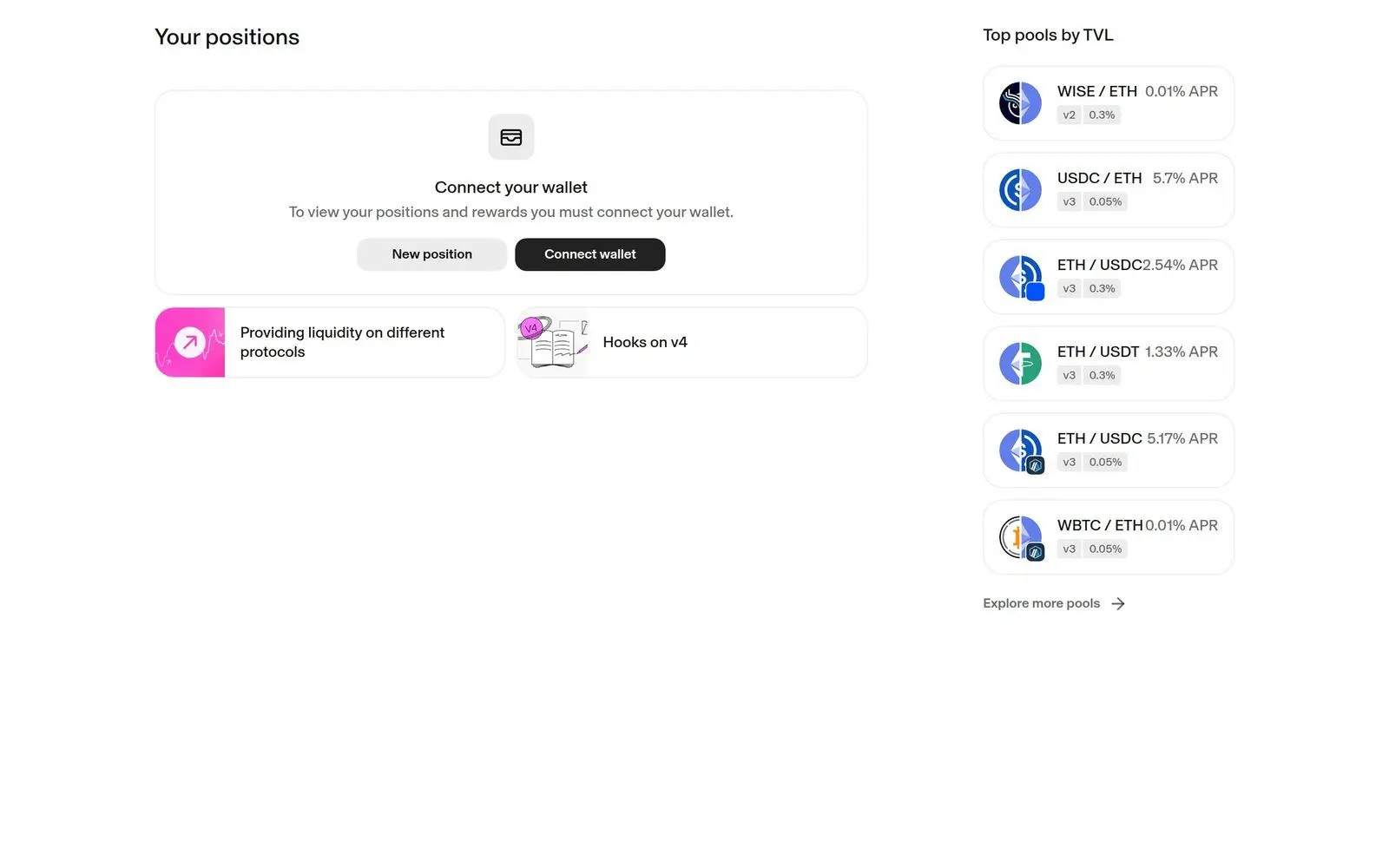
When you deposit tokens into a liquidity pool, you become a liquidity provider (LP). In return, you earn a share of the trading fees generated by the pool - typically 0.3% per trade on Uniswap v2, or variable rates on v3 and other protocols. The idea is that the trading fees you earn should more than compensate for any impermanent loss you experience.
The Math Behind Impermanent Loss
Let us walk through a concrete mathematical example to see exactly how impermanent loss is calculated.
Example: ETH/USDC Pool
Suppose you provide liquidity to an ETH/USDC pool when ETH is priced at $2,000. You deposit:
- 1 ETH (worth $2,000)
- 2,000 USDC (worth $2,000)
- Total value: $4,000
Now, suppose ETH's price increases to $4,000 (a 2x increase). If you had simply held your tokens, your portfolio would be worth:
- 1 ETH x $4,000 = $4,000
- 2,000 USDC = $2,000
- Total: $6,000
But in the liquidity pool, the AMM formula rebalances your position. Using the constant product formula, your position would now contain approximately:
- 0.707 ETH (worth $2,828)
- 2,828 USDC (worth $2,828)
- Total: $5,656
Your impermanent loss is: $6,000 - $5,656 = $344, or approximately 5.7% of what you would have had by holding.
The Impermanent Loss Formula
There is a general formula for calculating impermanent loss based on the price ratio change:
IL = 2 * sqrt(price_ratio) / (1 + price_ratio) - 1
Where price_ratio is the new price divided by the original price. Here is a quick reference table:
- 1.25x price change: 0.6% impermanent loss
- 1.5x price change: 2.0% impermanent loss
- 2x price change: 5.7% impermanent loss
- 3x price change: 13.4% impermanent loss
- 4x price change: 20.0% impermanent loss
- 5x price change: 25.5% impermanent loss
Notice how impermanent loss accelerates as the price divergence increases. A 2x move costs you about 5.7%, but a 5x move costs over 25%. This is why volatile token pairs carry higher risk for liquidity providers.
When Does Impermanent Loss Become Permanent?
The "impermanent" part of impermanent loss refers to the fact that if the token prices return to their original ratio, the loss disappears. It is only "on paper" as long as you keep your liquidity in the pool. However, there are scenarios where the loss becomes very real and permanent:
Withdrawing at a Loss
If you withdraw your liquidity while the price ratio has diverged significantly from when you deposited, your impermanent loss becomes a realized loss. You will receive fewer of the token that appreciated and more of the one that depreciated (or stayed flat).
Tokens That Never Recover
If one token in your pair experiences a permanent price decline - for example, a project that fails or a token that loses its peg - the "impermanent" loss becomes permanent. You will end up holding mostly the declining token and very little of the appreciating one. This is sometimes called "impermanent loss" becoming "permanent loss."
Rug Pulls and Exploits
In the worst-case scenario, if the token in your pair gets rug-pulled (the team drains liquidity), you could lose nearly everything. The AMM would leave you holding almost entirely the worthless token. This is why due diligence on the tokens you provide liquidity for is absolutely critical.
Strategies to Minimize Impermanent Loss
While you cannot eliminate impermanent loss entirely (it is inherent to how AMMs work), there are several proven strategies to reduce its impact:
1. Use Stablecoin Pairs
Providing liquidity to pairs where both tokens are stablecoins (like USDC/USDT or DAI/USDC) results in minimal impermanent loss because the price ratio between them rarely changes significantly. The trade-off is that fees and yields are typically lower since there is less volatility-driven trading.
2. Choose Correlated Asset Pairs
Pairs of tokens that tend to move together - like stETH/ETH (staked ETH and regular ETH) or WBTC/renBTC - experience less impermanent loss because their price ratio stays relatively stable. These pairs offer a middle ground between stablecoin yields and volatile pair yields.
3. Use Concentrated Liquidity (Uniswap v3)
Uniswap v3 introduced concentrated liquidity, which allows you to specify a price range for your liquidity. By concentrating your capital in a narrow range, you earn more fees per dollar of liquidity. However, this is a double-edged sword - if the price moves outside your range, you stop earning fees entirely and your impermanent loss can be more severe. This strategy works best for experienced LPs who actively manage their positions.
4. Look for Impermanent Loss Protection
Some protocols offer built-in impermanent loss protection. Bancor v3, for example, pioneered single-sided liquidity with IL protection that compensates LPs over time. Other protocols offer insurance-like products or bonus token rewards designed to offset potential losses.
5. Factor in Trading Fees and Rewards
High-volume pools generate substantial trading fees that can more than compensate for impermanent loss. Before providing liquidity, research the pool's volume-to-TVL ratio. A pool with $10 million in TVL and $5 million in daily volume will generate far more fees (relative to your deposit) than a pool with the same TVL but only $100,000 in daily volume.
6. Use DEXTools to Research Pools
Before committing capital to any liquidity pool, use DEXTools to research the token pair. Check the price history, trading volume, liquidity depth, and holder distribution. DEXTools provides security audits and token scores that can help you avoid scam tokens that might lead to catastrophic permanent loss.
Real-World Examples of Impermanent Loss
Example 1: Uniswap ETH/USDC During the 2021 Bull Run
During the 2021 bull run, ETH rose from about $700 in January to nearly $4,800 in November - roughly a 7x increase. Liquidity providers in the ETH/USDC pool on Uniswap v2 experienced approximately 30% impermanent loss relative to simply holding ETH and USDC. However, the most active pools generated enough trading fees (often 20-40% APY) to partially offset this loss. Whether LPs came out ahead depended heavily on when they entered and exited.
Example 2: Raydium SOL/USDC on Solana
Solana's native DEX Raydium saw similar dynamics. During SOL's explosive rise from $20 to $250+ in 2021, LPs in SOL/USDC pools faced significant impermanent loss. Raydium compensated LPs with RAY token rewards in addition to trading fees, but many LPs still would have been better off simply holding SOL. This illustrates why impermanent loss is particularly painful during strong one-directional price moves.
Example 3: Stablecoin Pool Success Story
In contrast, LPs in stablecoin pools like USDC/USDT on Curve Finance experienced virtually zero impermanent loss while earning consistent yields of 2-8% APY from trading fees and CRV rewards. These pools demonstrate that impermanent loss can be effectively neutralized with the right pair selection.
Tools to Track and Calculate Impermanent Loss
Several tools can help you monitor and calculate your impermanent loss exposure:
- DEXTools: Provides real-time pool analytics, price charts, and volume data across multiple chains. Essential for researching pools before and after providing liquidity.
- APY.vision: A dedicated LP analytics platform that calculates your exact impermanent loss, fees earned, and net P&L for positions across major DEXs.
- Revert Finance: Specializes in Uniswap v3 analytics, showing your position's performance including IL, fees, and whether your position is in range.
- DeFiLlama Yields: Aggregates yield data across protocols, helping you compare APYs while considering the IL risk of different pools.
- IL calculators: Simple web calculators like dailydefi.org's IL calculator let you input price changes to see estimated impermanent loss before committing funds.
When Is Providing Liquidity Still Worth It?
Despite the risks of impermanent loss, providing liquidity can be profitable under the right conditions:
High-Volume Pools
Pools with high trading volume relative to their TVL generate substantial fees. If the annualized fee return exceeds your expected impermanent loss, providing liquidity makes sense. Look for pools where the fee APY is significantly higher than the potential IL.
Range-Bound Markets
During periods when token prices trade within a predictable range, impermanent loss is minimal while fee income continues to accumulate. Sideways markets are actually the best environment for liquidity providers.
Incentivized Pools
Many protocols offer additional token rewards (liquidity mining) to attract LPs. These extra rewards can make providing liquidity profitable even when impermanent loss would otherwise make it unfavorable. Just be cautious of the reward token's own price risk - farming tokens that decline in value can negate the benefit.
Long Time Horizons
If you plan to provide liquidity for months or years, the accumulated trading fees have more time to compound and overcome any impermanent loss. Short-term LP positions are more vulnerable because fees have not had enough time to accumulate.
Hedging Strategies
Advanced LPs sometimes hedge their impermanent loss using options or perpetual futures on the underlying tokens. By shorting the token that might appreciate, you can offset the rebalancing effect of the AMM. This requires more capital and sophistication but can make LP positions more predictable.
Impermanent Loss in the 2026 DeFi Landscape
The DeFi ecosystem has evolved significantly since the early days of automated market making. Several developments in 2026 are changing how we think about impermanent loss:
Advanced AMM Designs
New AMM designs like concentrated liquidity (Uniswap v3/v4), dynamic fees (Trader Joe's Liquidity Book), and hybrid models are giving LPs more control over their risk exposure. These innovations allow for more capital-efficient liquidity provision with potentially lower impermanent loss.
Active Liquidity Management
Protocols like Arrakis Finance, Gamma Strategies, and Maverick Protocol offer automated liquidity management that dynamically adjusts your position to optimize fee earnings while minimizing impermanent loss. These "LP vaults" handle the complexity for you, making active LP management accessible to everyone.
Better Analytics and Transparency
Tools like DEXTools have made it easier than ever to research pools, track performance, and make data-driven decisions about where to provide liquidity. Real-time analytics across multiple chains mean you can compare opportunities and manage risk more effectively.
Video: Impermanent Loss Explained
Frequently Asked Questions About Impermanent Loss
Q What is impermanent loss in simple terms?
Impermanent loss is the difference in value between holding tokens in a liquidity pool versus simply holding them in your wallet. When you provide liquidity to a DEX, the automated market maker rebalances your token holdings as prices change. If one token's price moves significantly relative to the other, you end up with less total value than if you had just held both tokens. It is called "impermanent" because the loss reverses if prices return to their original ratio.
Q Can impermanent loss make me lose all my money?
In normal market conditions, impermanent loss alone will not wipe out your investment - it represents a relative loss compared to holding, not an absolute loss. However, if one token in your pair goes to zero (for example, a rug pull or project failure), you could lose nearly all the value in that pair. The AMM would sell your appreciating token and fill your position with the worthless one. Always research tokens thoroughly using tools like DEXTools before providing liquidity.
Q How can I calculate my impermanent loss?
You can use the formula: IL = 2 * sqrt(price_ratio) / (1 + price_ratio) - 1, where price_ratio is the new price divided by the original price. For easier calculation, use online IL calculators or analytics platforms like APY.vision, which automatically track your positions and compute your exact impermanent loss, fees earned, and net profit or loss.
Q Is it better to provide liquidity or just hold tokens?
It depends on the pool and market conditions. Providing liquidity is more profitable when trading volume is high (generating substantial fees), prices are relatively stable or range-bound, and additional farming rewards are available. Simply holding is usually better during strong trending markets where one token significantly outperforms the other. Analyze the pool's fee APY versus potential impermanent loss before deciding.
Q Do stablecoin pools have impermanent loss?
Stablecoin pools have minimal impermanent loss because the tokens in the pair maintain similar prices. A USDC/USDT pool, for example, will experience negligible IL since both tokens stay near $1. However, impermanent loss is not exactly zero - minor depegging events can cause small amounts of IL. Stablecoin pools are considered the safest option for LPs who want to earn yield with minimal risk of impermanent loss.
Start Making Smarter DeFi Decisions
Understanding impermanent loss is one of the most important steps in becoming a successful DeFi participant. Armed with this knowledge, you can evaluate liquidity pools more effectively, choose better strategies, and avoid the common pitfalls that catch many new LPs off guard.
Ready to research liquidity pools and track your DeFi positions? Visit DEXTools for real-time analytics, pool data, and token research across every major blockchain. Make informed decisions backed by data - not guesswork.
Related PancakeSwap Infinity guide
If you want the deeper LP comparison, read PancakeSwap Infinity CLAMM vs LBAMM: Which Pool Type Is Better for LPs in 2026?.
Related Guides
- Liquidity Pool Economics: Fees, Slippage and Impermanent Loss
- What Is Impermanent Loss in DeFi? Beginner LP Definition and Why It Happens (2026)
- Impermanent Loss Explained: Examples and How to Reduce It
- Bonding Curve Math in Crypto: Linear, Exponential and Sigmoid Models (2026)
- What Is Uniswap? AMM, Liquidity Pools, Fees and UNI Token Explained (2026)
- What Is a Vampire Attack in Crypto? DeFi Liquidity Wars (202