What Is Fireblocks: Digital Asset Custody, Treasury and Wallet Infrastructure (2026)
— By Tony Rabbit in Tutorials
What is Fireblocks? Learn how this digital asset infrastructure platform helps institutions manage custody, treasury, payments and wallets in 2026.
Intent check: If you want a retail wallet tutorial or simple wallet-connection flow, start with our Safe Wallet guide or our WalletConnect explainer. This page is specifically about institutional custody, treasury operations, stablecoin payments and wallet infrastructure at organizational scale.
Fireblocks is best understood as infrastructure organizations use when digital assets must move under policy, workflow and team controls rather than through a single person clicking around a wallet. It sits much closer to treasury, operations and platform infrastructure than to retail self-custody tutorials.
That branded search stays evergreen because stablecoins, treasury management, embedded-wallet products and institutional trading operations keep expanding. Once real teams, compliance requirements and counterparties are involved, the question changes from which wallet to install into how assets are secured, approved, routed and audited across an organization.
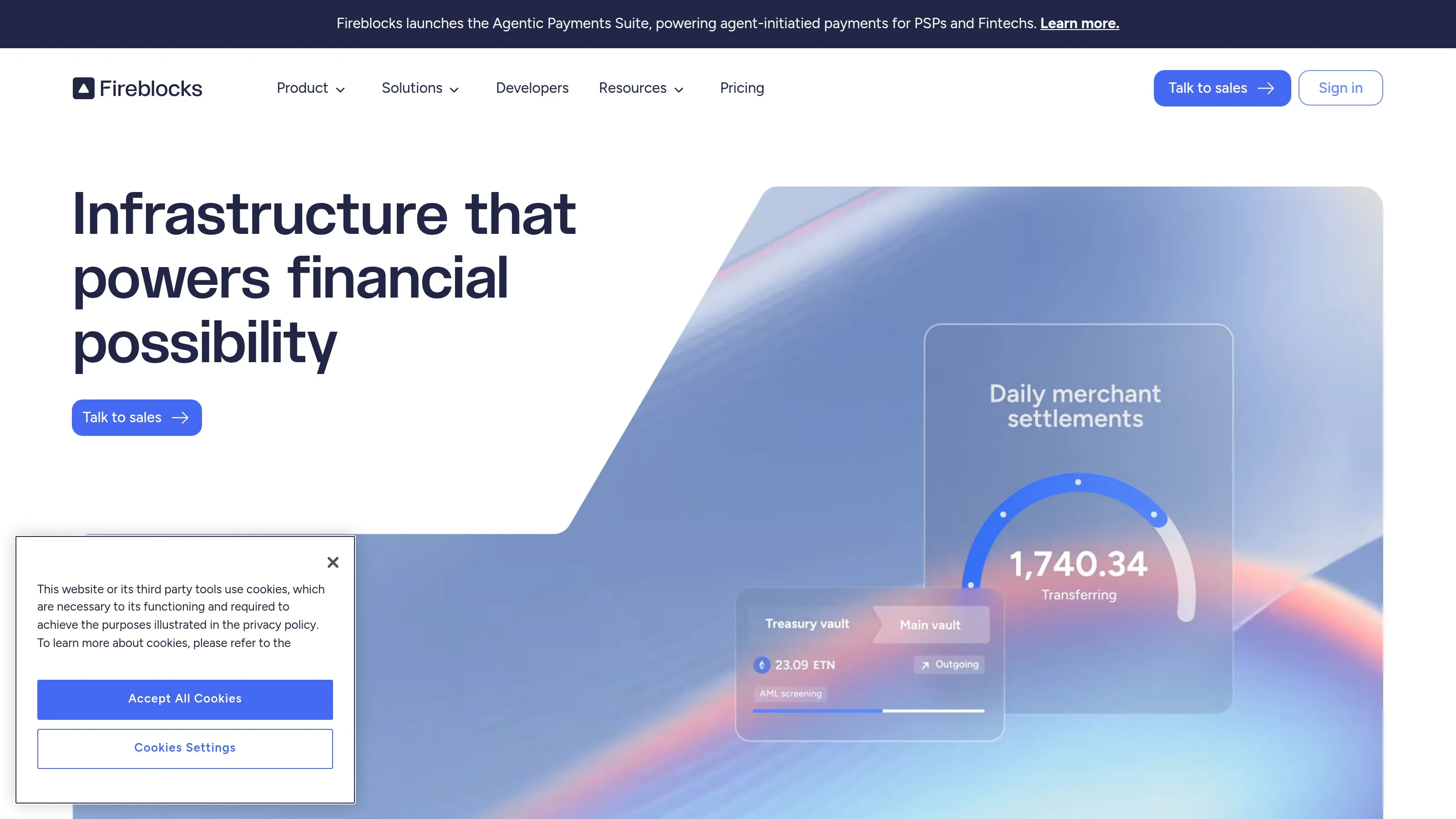
What Fireblocks does in plain English
The cleanest mental model is that Fireblocks gives organizations a governed operating system for crypto movement. Instead of relying on ad hoc hot wallets and manual coordination, teams can work through APIs, policies, workflows, vault accounts and event hooks built for business operations.
That matters because moving money at company scale is not only a signing problem. It is an approvals problem, a counterparty problem, a compliance problem and an operational-resilience problem. Fireblocks became important by packaging those needs into a platform institutions can integrate and control more systematically.
Why teams look at Fireblocks
Teams look at Fireblocks because institutional crypto operations become messy fast. Assets move across venues, products, chains and counterparties. Businesses need role-based controls, automation, auditability and infrastructure that can support treasury and payment workflows without depending on one individual holding everything together manually.
What makes Fireblocks different from adjacent tools
Compared with Safe Wallet, Fireblocks is not mainly a multisig destination product for end users or DAOs. Compared with Privy, it is not mainly a first-touch onboarding layer for consumer conversion. The branded intent here is institutional operations, custody and organizational control.
It also differs from generic API or node providers. Fireblocks is not trying to win on simple RPC access. It becomes relevant when a company needs governed asset movement, treasury coordination, wallet infrastructure and business-grade controls around real money flows.
Who it is for, and where it can feel like overkill
Fireblocks is most useful for exchanges, fintechs, banks, trading firms, payments teams and startups operating real treasury or wallet infrastructure at company scale.
It can feel like overkill for a solo user who simply wants a personal wallet or a basic dapp connection. The fit becomes obvious when approvals, teams, counterparties and operational controls enter the picture.
Final take
Fireblocks matters because institutional crypto is mostly an operations challenge disguised as a wallet challenge. Once the stakes are high, custody and treasury infrastructure need their own specialized stack.
FAQ
Related Guides
- What Is Fireblocks: Digital Asset Custody, MPC Wallets and Treasury Infrastructure (2026)
- What Is a Treasury Wallet in Crypto? Why It Matters (2026)
- How to Withdraw from a CEX to Self-Custody Wallets
- What Is a Non-Custodial Wallet: Complete Self-Custody Guide (2026)
- What Is a Custodial Wallet: Complete Crypto Custody Guide (2026)
Frequently Asked Questions
What is Fireblocks used for?
Fireblocks is a digital asset infrastructure platform that helps institutions custody, transfer and manage crypto assets securely. It is commonly used by businesses rather than individual retail users.
What is digital asset custody?
Digital asset custody is the secure storage and management of the private keys that control crypto assets. Institutional custody solutions focus on protecting keys while enabling controlled access for authorized users.
What is MPC in the context of custody?
MPC, or multi-party computation, is a technique that splits key signing across multiple parties so no single party holds a complete key. It is used in custody solutions to reduce single points of failure.
Why do institutions use specialized custody platforms?
Institutions often need strong security, access controls, policy enforcement and operational tooling that go beyond a personal wallet. Specialized custody platforms are built to meet those requirements at scale.