What Is the Crypto Market Cycle? Phases Guide (2026)
— By Tony Rabbit in Tutorials
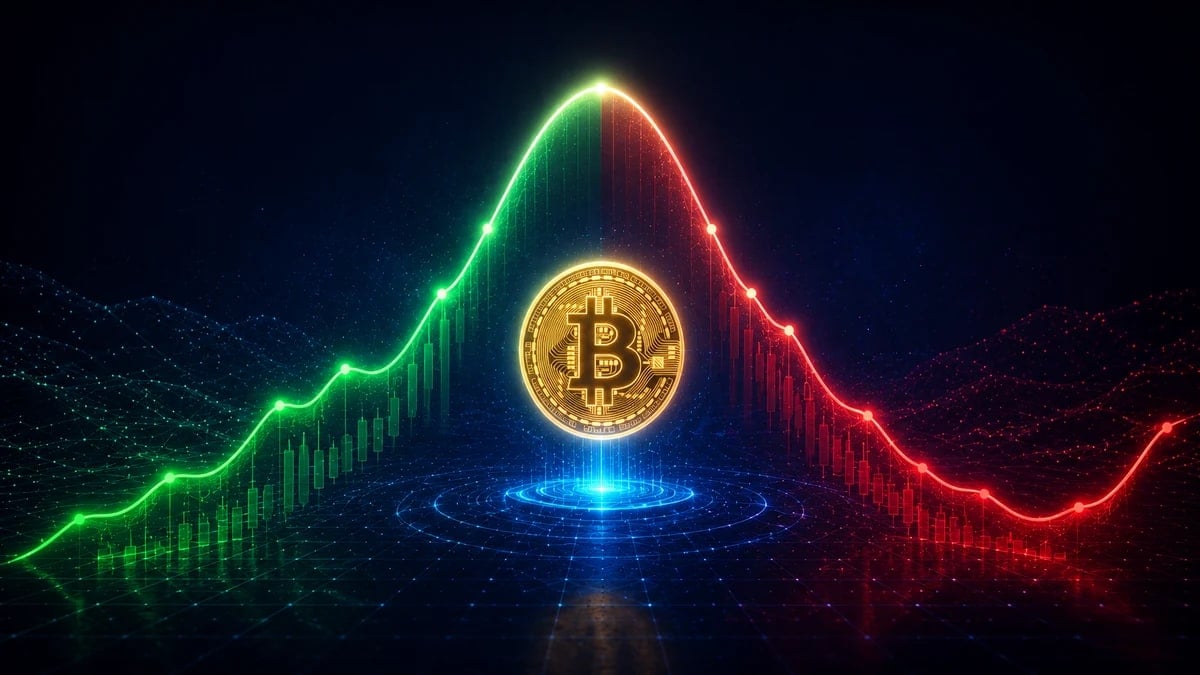
Learn what the crypto market cycle is, its four phases, the psychology behind it, the bitcoin halving narrative, and indicators traders watch.
The crypto market cycle is the repeating pattern of rising and falling prices that crypto assets tend to move through over time. Rather than going up or down in a straight line, markets cycle through phases of quiet buying, rapid rallies, topping out, and steep declines. Understanding these phases will not let you predict the future, but it can help you read sentiment, manage risk, and avoid emotional decisions.
What Is the Crypto Market Cycle?
A market cycle describes the journey from one low point to the next, passing through a peak in between. In crypto these cycles can be dramatic, with assets gaining and losing large percentages of their value. The framework most analysts use comes from the Wyckoff method, which breaks the cycle into four phases: accumulation, markup, distribution, and markdown.
These phases blend into one another, and nobody rings a bell to mark the transition. The labels are most useful in hindsight, but learning to recognize the signs in real time is what separates disciplined participants from reactive ones.
The Four Phases of the Crypto Market Cycle
Each phase has its own character in terms of price action, sentiment, and trading volume. Here is how they typically unfold.
| Phase | Price action | Sentiment | Volume |
|---|---|---|---|
| Accumulation | Flat, ranging after a decline | Apathy, disbelief, fear | Low and stable |
| Markup (bull) | Steady rise, higher highs | Hope turning to optimism and thrill | Rising |
| Distribution | Choppy, stalling near highs | Euphoria, then complacency | Elevated but uneven |
| Markdown (bear) | Sharp decline, lower lows | Anxiety, panic, capitulation | Spikes on selling |
Accumulation follows a bear market. Prices move sideways in a quiet range, news flow is negative, and most retail attention has faded. Patient buyers, sometimes called smart money, build positions while sentiment is at its worst.
Markup is the bull phase. Prices climb steadily, often with increasing volume, public interest returns, and confidence grows. This is the part of the cycle that draws headlines and new participants.
Distribution is the transition between a bull and bear market. Prices stop making higher highs and trade in a volatile range while volume stays high, often as early buyers sell into late demand.
Markdown is the bear phase. Supply overwhelms demand, prices fall, sometimes sharply, and sentiment turns to fear and eventual capitulation. This phase eventually resets conditions for the next accumulation.
Market Psychology: From Hope to Euphoria to Capitulation
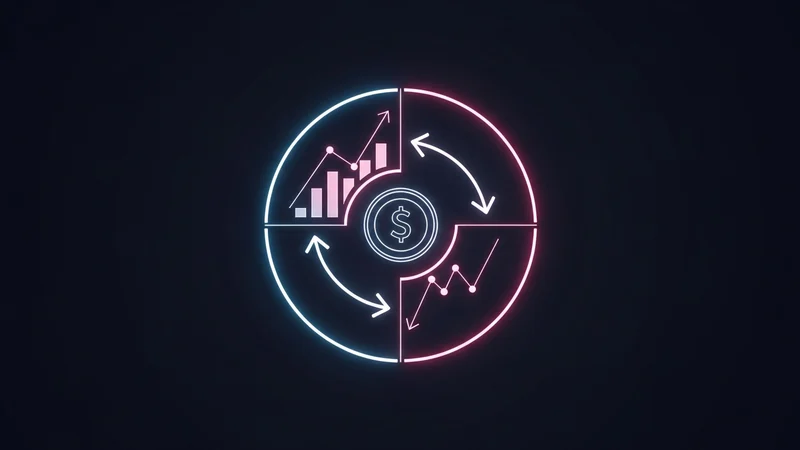
The crypto bull and bear market cycles are driven as much by emotion as by fundamentals. A popular illustration called the Wall Street Cheat Sheet maps the feelings that tend to accompany each stage of a cycle.
- Disbelief and hope: early in a recovery, few people trust the move.
- Optimism and thrill: gains build and confidence spreads.
- Euphoria: the peak, where fear of missing out replaces judgement and risk warnings get ignored.
- Complacency, anxiety, and denial: the first declines are dismissed as temporary.
- Panic, capitulation, and depression: sellers give up and the bottom forms.
The lesson many traders draw is contrarian: the moment of maximum confidence often sits near a top, while the moment of maximum pain often sits near a bottom. Recognizing your own emotions is a practical edge.
The Bitcoin Halving and the Four Year Cycle Narrative
Much of crypto cycle discussion centers on the bitcoin 4 year cycle. Roughly every four years, a programmed event called the halving cuts the rate at which new bitcoin is created. Historically, halvings have lined up with the start of new bull phases, leading many observers to describe a recurring four year rhythm.
It is important to treat this as a historical pattern, not a guarantee. The sample size is small, correlation is not causation, and past performance does not predict future results. There is also active debate that the four year cycle may be weakening. As spot exchange traded funds and institutional buyers have entered the market, some analysts argue that steady, large scale demand has changed the dynamics that drove earlier cycles, and that the direct supply impact of each halving has become less significant relative to overall market flows.
Indicators Traders Watch
No single indicator is reliable on its own, and experienced traders look for several signals pointing the same way rather than acting on one reading. Commonly cited cycle and crypto market cycle top indicators include:
- MVRV Z-score: compares market value to realized value to gauge whether bitcoin looks historically overvalued or undervalued.
- Fear and Greed Index: a 0 to 100 sentiment gauge where extreme greed has historically clustered near tops and extreme fear near bottoms.
- Pi Cycle Top: a moving average crossover that flagged some past peaks but missed others, so it is treated as a warning rather than a certainty.
- RSI: the relative strength index, a momentum oscillator that can highlight overbought or oversold conditions.
- Bitcoin dominance: bitcoin's share of total crypto market capitalization, which traders watch for shifts between bitcoin and other assets.
Treat these as context, not crystal balls. Indicators that worked in one cycle can behave differently in the next, which is exactly why the four year pattern is being questioned today. Do not assume any specific level signals a top or bottom.

Using Cycle Awareness for Risk Management
The goal of studying cycles is better decisions, not perfect timing. A few practical habits help.
- Dollar cost averaging (DCA): buying fixed amounts on a schedule smooths out your entry price across phases and reduces the pressure to time the market.
- Taking profit: deciding in advance to sell portions on the way up removes emotion from the euphoria phase.
- Position sizing: never risking more than you can afford to lose keeps a markdown phase survivable.
- Having a plan: writing down your rules before sentiment runs hot makes it easier to follow them.
Wherever you think the market sits, asking yourself where are we in crypto market cycle terms is less about a precise answer and more about staying aware of which emotions and risks dominate right now.
For tracking individual tokens through these phases, a market data platform helps. DEXTools lets you monitor on-chain token prices, trading volume, and liquidity in real time, which is useful for spotting shifts in activity as a market moves between accumulation and markup. During distribution or markdown, watching volume and liquidity on DEXTools can also help you gauge whether interest in a specific token is rising or fading.
Conclusion
The crypto market cycle is a useful mental model: four phases shaped by price, volume, and human emotion, with the bitcoin halving narrative as a recurring but unguaranteed backdrop. Use indicators and DCA for context and discipline, treat every pattern as historical rather than certain, and remember that nothing here is financial advice. The real value of cycle awareness is calmer, more deliberate decisions in a market built on extremes.
Navigating the Cycle: Beyond Simple Identification
Understanding the four phases of the crypto market cycle is foundational, but true mastery lies in discerning the subtle shifts and pre-emptive indicators that signal a transition. It is not a perfectly symmetrical sine wave, but rather a dynamic interplay of macroeconomics, technological innovation, and collective human psychology. Traders and investors who simply react to obvious phase changes often find themselves a step behind. The real edge comes from anticipating the pivot points, recognizing the early signals before they become mainstream narratives.
Consider the accumulation phase. While it is characterized by low sentiment and sideways price action, astute participants are quietly building positions, often in projects with strong fundamentals that have endured the bear market. Similarly, the distribution phase is not just about a market top, but a period where smart money begins to offload, often while retail euphoria is still peaking, lured by the promise of infinite gains.
Practical Considerations for Cycle-Aware Trading
- Monitor on-chain metrics for early signs of institutional accumulation or distribution, such as large wallet movements or exchange net flows.
- Pay attention to funding rates in perpetual futures markets; sustained negative rates can signal capitulation, while consistently high positive rates may indicate over-leveraged euphoria.
- Diversify your portfolio across different market cap tiers and sectors, as various segments of the crypto market may enter and exit phases at slightly different times.
- Develop a clear exit strategy for your assets during the euphoria and distribution phases, even if it means leaving some potential gains on the table.
- Regularly re-evaluate your investment thesis for each asset. A project that was a strong contender during accumulation might lose its edge during a bull run if its fundamentals do not keep pace.
Related Guides
- Anatomy of a Crypto Pump: Understanding the 5 Key Phases
- What Is Altseason? Altcoin Cycle Guide 2026
- The Life Cycle of a Memecoin: Launch to Survival or Fade
- When DEX Liquidity Stops Representing the Main Market After a CEX Listing
- What Is XRP Market Cap? Complete 2026 Guide
Frequently Asked Questions
What are the phases of a crypto market cycle?
Crypto market cycles are often described in four broad phases: accumulation, markup or uptrend, distribution, and markdown or downtrend. These phases reflect shifting supply, demand, and sentiment over time.
Why does psychology matter in market cycles?
Market cycles are heavily influenced by crowd emotion, swinging from fear and disinterest near lows to greed and euphoria near highs. Understanding this can help traders avoid buying at peak excitement or selling in peak fear.
How does the bitcoin halving relate to market cycles?
The bitcoin halving reduces the rate at which new bitcoin is issued, and many people associate it with a recurring narrative around supply and demand. It is a widely discussed theme, though it is not a guaranteed predictor of price.
Can you reliably time the top or bottom of a cycle?
Precisely calling tops and bottoms is extremely difficult, and no indicator works every time. Most traders use a mix of signals and risk management rather than trying to perfectly time a cycle.