What Are Memecoins? Complete Guide to the Phenomenon
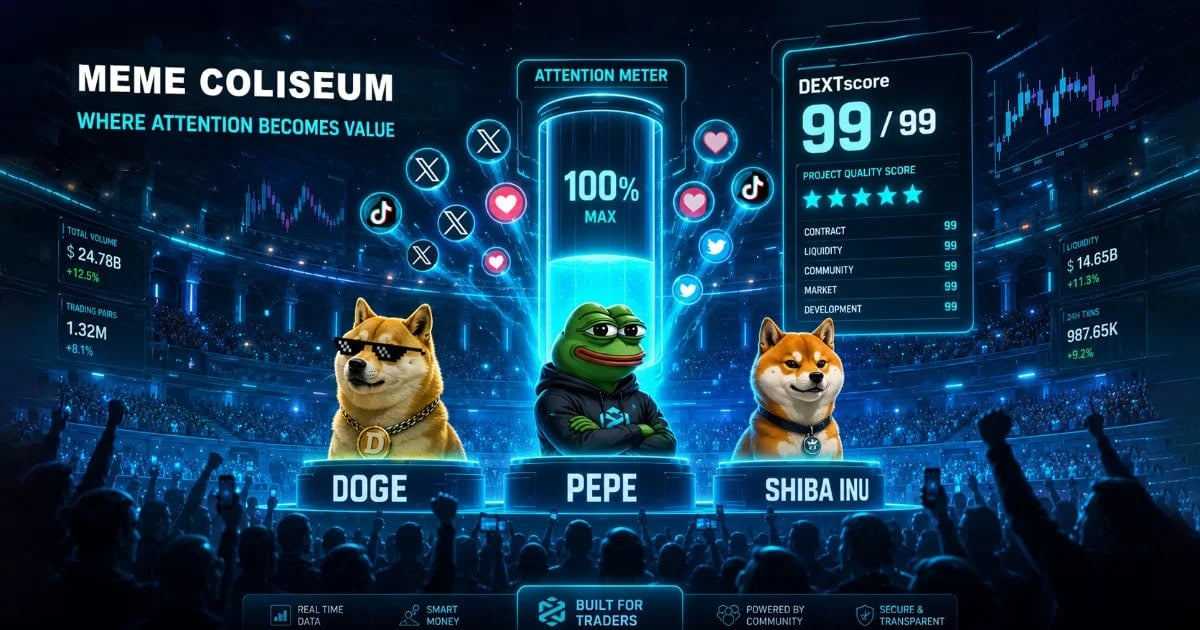
What are memecoins? A complete guide to the 2026 landscape, from blue chips like DOGE and PEPE to AI-driven and IP-based memecoin narratives.
The 2026 Guide to the Crypto Attention Economy
- As of May 14, 2026, memecoins have evolved from "internet jokes" into a dominant market sector representing approximately 4% of the total altcoin market capitalization. While critics once dismissed them as a passing fad, the "Memecoin Supercycle" (a theory popularized in late 2024) has proven resilient. In 2026, the market has bifurcated into "Classic Blue Chips" like DOGE and PEPE, and a new wave of AI-driven and IP-based assets.
This guide provides a sober analysis of the memecoin phenomenon, its history, the mechanics behind the "pumps," and the structural risks inherent in the 2026 landscape.
Trading memecoins on TON? Not.Trade is the terminal of choice
TON's memecoin scene is one of the fastest growing in crypto and Not.Trade is the fastest terminal on TON for catching launches early. Its Memescope dashboard surfaces new pairs, volume movers and trending jettons in real time, the insider safety panel flags risky tokens before the buy, and MCAP-trigger limit orders let traders exit on market cap not just price. Multi-wallet sniping and MEV protection ship by default.
Explore Not.Trade in depth →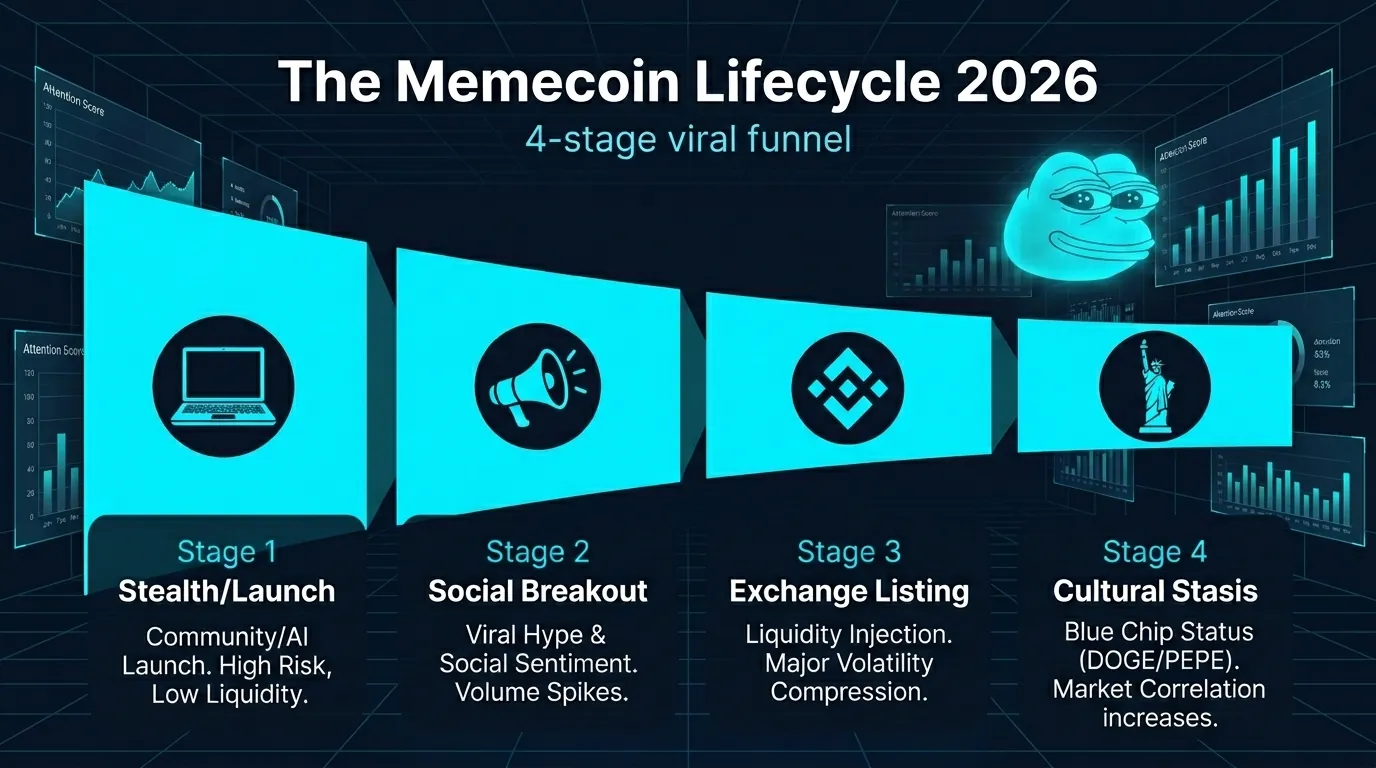
1. Definition: Culture as a Financial Asset
A memecoin is a cryptocurrency inspired by internet memes, viral jokes, or cultural trends. Unlike "utility tokens" (which power protocols) or "commodity tokens" (like Bitcoin), memecoins derive their value primarily from social consensus and community attention.
In 2026, the definition has expanded to include:
Traditional Memes: Humorous images (DOGE, PEPE).
AI Agents: Tokens governed or promoted by autonomous AI (SkyAI, ACT).
IP-Branded Tokens: Assets tied to established NFT brands or physical products (PENGU).
2. A Brief History of the Phenomenon
The memecoin timeline is marked by three distinct "Eras":
The Genesis Era (2013-2020): Dogecoin (DOGE) was launched in December 2013 as a fork of Litecoin. Created by Billy Markus and Jackson Palmer, it was a satire of the early crypto boom. It remained a niche "tipping" currency until the 2021 bull run.
The Dogecoin Killer Era (2021-2022): Driven by Elon Musk's tweets, DOGE reached a peak market cap of ~$88B. This birthed Shiba Inu (SHIB), which introduced the concept of a "memecoin ecosystem" (Shibarium L2).
The High-Velocity Era (2023-2025): The launch of PEPE (April 2023) proved that frog memes could rival dogs. This period saw the rise of Solana-based launchpads like Pump.fun, allowing anyone to create a token in seconds, leading to the "Solana Meme Summer" of 2024 with coins like WIF and BONK.
The 2026 Recovery: After a massive correction in late 2025, the market in May 2026 has returned to a "Risk-On" sentiment, with traders favoring established "Old Coins" over the daily deluge of new launches.
3. The Top 3 "Blue Chip" Memecoins in 2026
| Token | Mascot | Chain | 2026 Status |
| Dogecoin (DOGE) | Shiba Inu | Native | The "Anchor Asset." Stable at ~$15.6B market cap. |
| Shiba Inu (SHIB) | Shiba Inu | Ethereum | Evolved into an ecosystem with Shibarium and SHIB2.0. |
| Pepe (PEPE) | Pepe the Frog | Ethereum | The king of non-dog memes; high correlation with ETH. |
4. Why They Pump: The Mechanics of Hype
Memecoin price action is a study in Human Psychology and Game Theory. In 2026, pumps are driven by:
Anti-VC Narrative: Investors are increasingly weary of "Utility" coins backed by VCs that launch at high valuations and dump on retail. Memecoins are seen as "fairer" because they often launch with 100% circulating supply.
The Attention Economy: In a world of infinite content, attention is the scarcest resource. Tokens that capture a viral moment (like a political event or an AI trend) attract immediate liquidity.
The Lindy Effect: "Classic" memes like DOGE have survived multiple cycles. Traders believe they are "too big to fail," leading to a self-fulfilling prophecy of recovery during market upswings.
Technical Trade-offs and Market Realities
Strengths and Potential
Onboarding Tool: Memecoins are the #1 driver for new users entering crypto due to their low unit price and relatable branding.
Market Sentiment Indicator: They act as a "Risk-On" thermometer; when memecoins pump, it usually signals high retail confidence in the broader market.
Zero Technical Debt: Because most have no roadmap, they cannot "fail" a technical milestone. Their only failure is a loss of attention.
Critical Risks and Challenges
Extreme Fragility (ME2F): The "Memecoin Ecosystem Fragility Framework" highlights that most memecoins have fragmented liquidity. A single "whale" sell-off can trigger a -90% crash in minutes.
Sophisticated Scams: In 2025, hackers began hijacking government social media accounts to launch fraudulent memecoins. "Rug pulls" remain the leading cause of retail loss.
Lack of Fundamental Value: Memecoins do not produce revenue. They are a zero-sum game where "early" participants profit at the expense of "late" ones.
Verification and Security via DEXTools
In the 2026 market, where over 5,000 new memecoins are launched daily via AI agents and automated bots, verification is not optional. DEXTools is the industry standard for analyzing memecoin health and avoiding "honeypots."
Professional traders in May 2026 verify:
The DEXTscore: A score below 80 for a "new" meme is an immediate red flag.
Contract Renouncement: Verifying that the creator can no longer mint new tokens or freeze your ability to sell.
Whale Concentration: Using the Holders Tab to see if a few wallets control more than 5-10% of the supply.
To monitor the DeFi market in an agile and secure way in real-time and trade memecoins with the help of the best crypto tools, you can access DEXTools here.
Disclaimer: This article is for informational purposes only and does not constitute investment advice, financial advice, trading advice, or any other kind of advice. DEXTools does not recommend buying, selling, or holding any cryptocurrency or token. Users should conduct their own research and consult with a qualified financial advisor before making any investment decisions. Cryptocurrency investments are volatile and high-risk. DEXTools is not responsible for any losses incurred.
Related Guides
- Best Slippage Settings for Memecoins in 2026
- What Is a Meme Coin: Complete Beginner Guide to Memecoins in Crypto (2026)
- TON Memecoins Guide: Top Tokens and How to Trade Them (2026)
- Solana Memecoins: Complete 2026 Guide (Pump.fun + Top Tokens)
- Memecoins on Solana vs Ethereum: Which Chain to Use
Frequently Asked Questions
What is the "Memecoin Supercycle"
It is a 2026 market theory suggesting that retail investors have permanently shifted away from technical "utility" tokens toward memecoins because memes are easier to understand and lack the constant sell pressure from venture capital firms.
Why do people say memecoins have "no utility"?
Most memecoins have no technical function (like paying for gas or governance). Their only "utility" is being a medium for community building and speculation. However, some projects like SHIB (Shibarium) are attempting to build utility on top of their meme status.
How can I avoid a "Rug Pull"?
Never invest in a coin without checking DEXTools. Look for "Locked Liquidity" and "Renounced Ownership." If the top 10 holders own 50% of the supply and the liquidity isn't locked, it is likely a scam.
Are AI memecoins better than animal memecoins?
Not necessarily. While AI memecoins (like SkyAI) are the trending narrative in May 2026, they are just as volatile. The "AI" is often just a marketing layer on top of the same speculative mechanics as dog or frog coins.