TON vs Solana: Network Comparison (2026)
— By Tony Rabbit in Tutorials
TON vs Solana compared: throughput, fees, finality, DeFi depth, NFTs, and distribution edge, plus the practical question of which network to use when.
TON and Solana often share the same headlines: high throughput, low fees, fast finality, and ambitious distribution stories. The two chains target similar end-user goals through very different architectural and ecosystem choices. Picking between them depends on what you actually need to do, not on which feels louder this week.
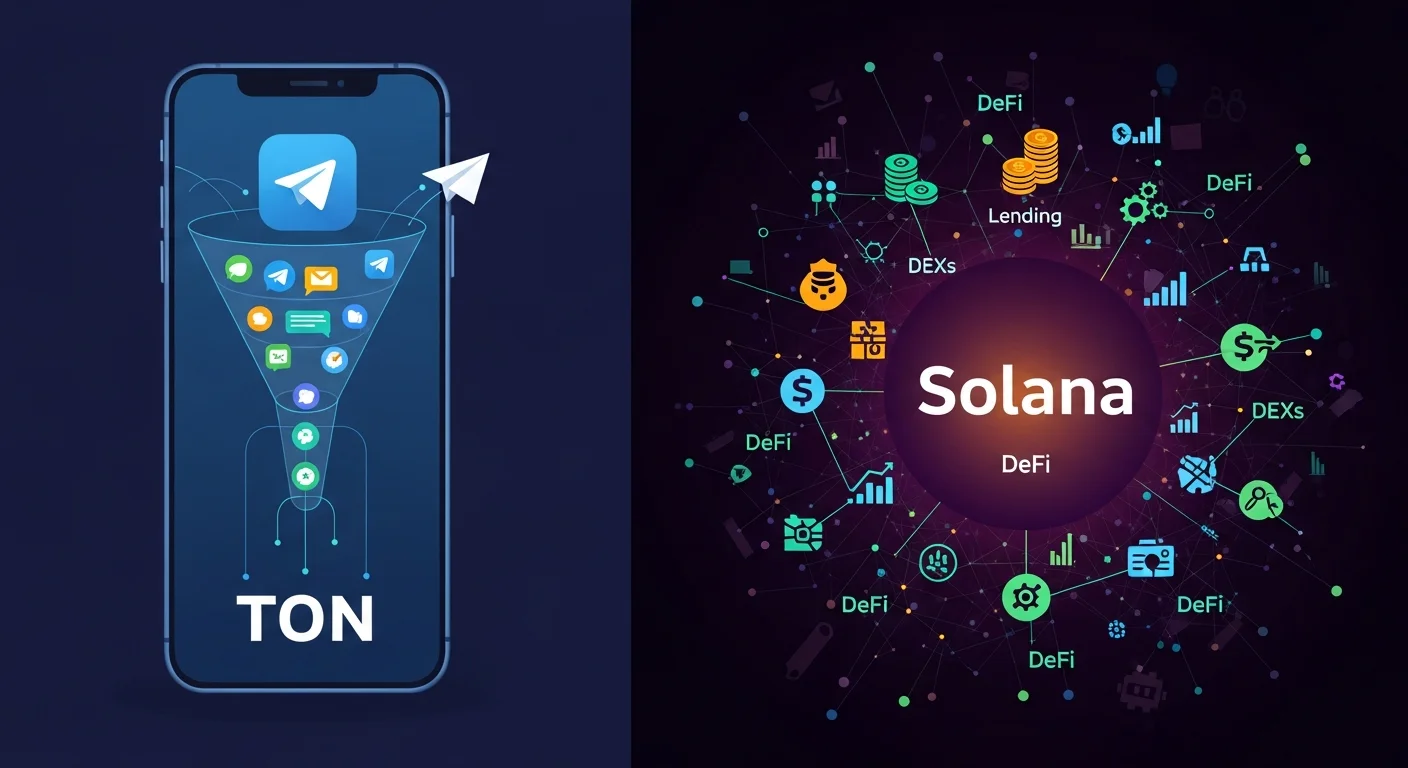
Quick answer: Solana is the largest single-chain L1 by activity, with the deepest DeFi outside Ethereum, the strongest mobile-trading culture, and a high-throughput monolithic design. TON is a sharded L1 whose distinguishing feature is the Telegram funnel: hundreds of millions of in-app users, native Mini Apps, and a Stars-to-TON pipe. Solana wins on DeFi depth and developer momentum. TON wins on consumer reach and mobile-payment UX.
- Both chains are fast and cheap. Sub-second finality and sub-cent fees on typical transfers.
- Solana's edge is DeFi. Deeper liquidity, more battle-tested protocols, the strongest perpetual DEXs in crypto.
- TON's edge is distribution. Telegram integration moves users into wallets at a scale no other L1 can match.
- Different architectures. Solana scales monolithically; TON scales through sharding.
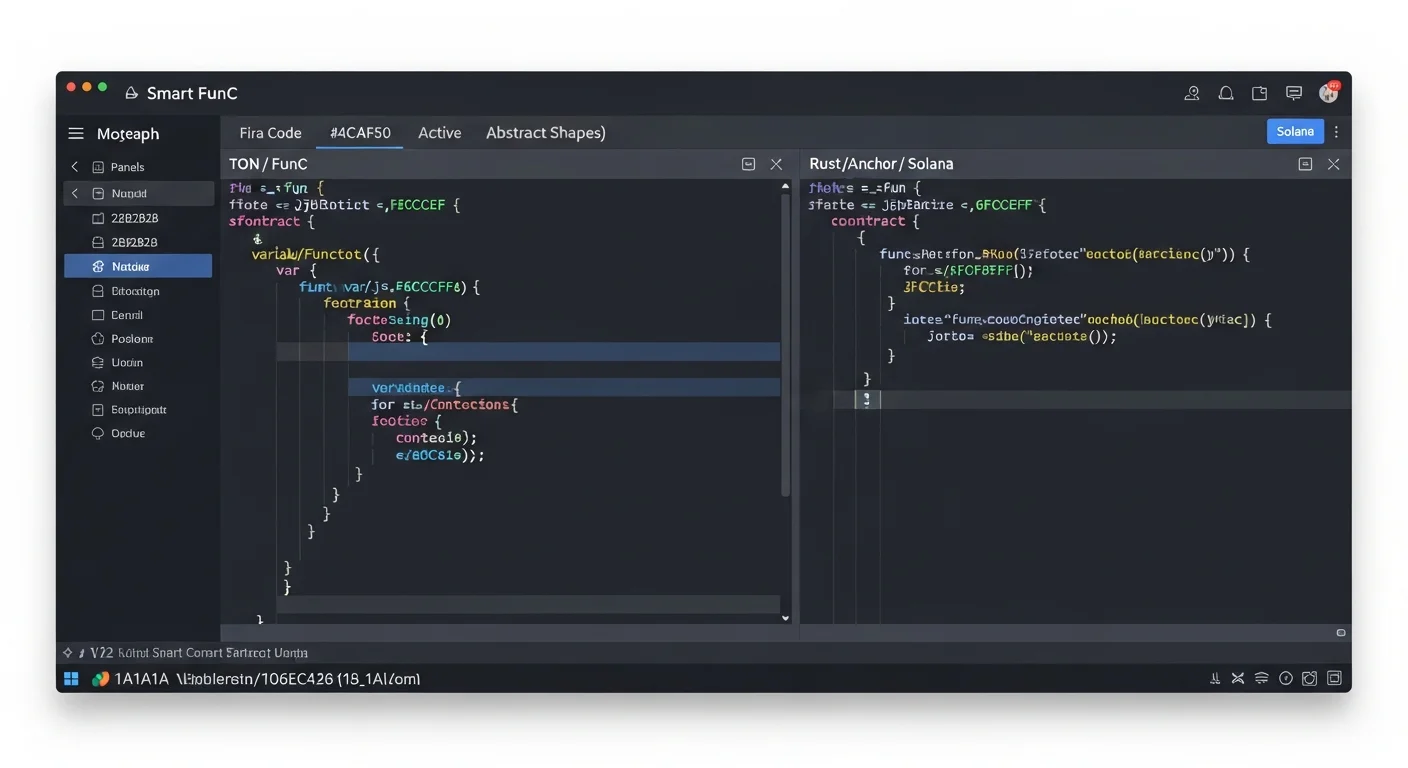
- Different developer worlds. Solana uses Rust/Anchor; TON uses FunC and Tact.
Architecture: monolithic Solana vs sharded TON
The most fundamental difference is how each chain scales.
Trade TON with Not.Trade, the fastest terminal on TON
Not.Trade is purpose built for TON traders: real-time on-chain charts for every jetton, insider safety scoring (Top 10 wallets, snipers, dev movement, bundlers, LP lock), MCAP-trigger limit orders, multi-wallet sniping, MEV protection and one-click swaps routed across STON.fi and DeDust. It runs natively inside Telegram and as a fast web terminal, with TON Connect non-custodial wallet support.
Read the full Not.Trade guide →Solana's monolithic high-throughput chain
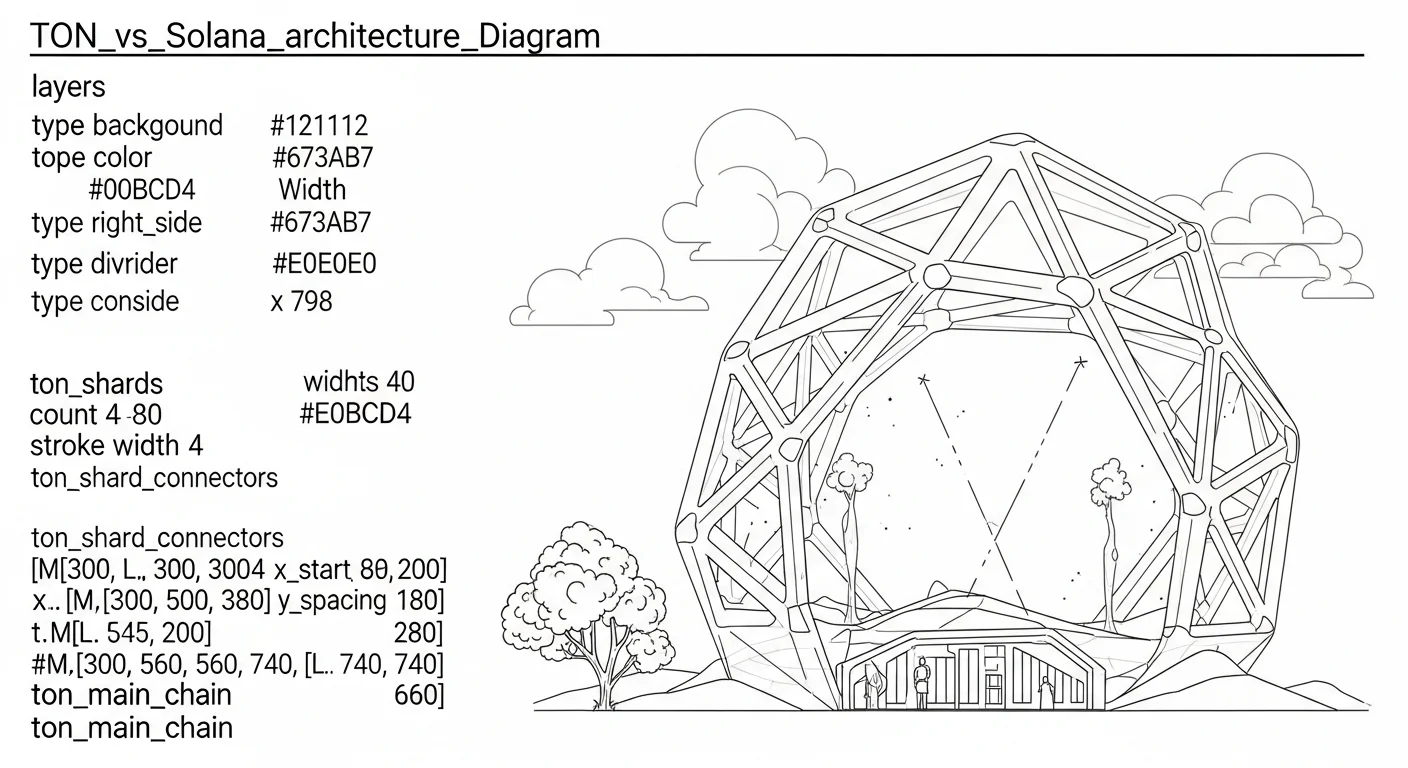
Solana is one chain with one global state. It scales by being highly optimized at the validator level: parallel transaction execution, fast block production, and aggressive hardware requirements for validators. The result is high throughput on a single ledger that all applications share.
TON's sharded hierarchy
TON is built as a hierarchy of chains: a masterchain at the top, workchains below it, and shardchains that split or merge automatically with demand. Throughput comes from running many shardchains in parallel rather than from squeezing one chain harder. The deeper architecture is covered in TON architecture.
Performance: throughput, fees, finality
For everyday user-facing operations, both chains feel fast.
Throughput
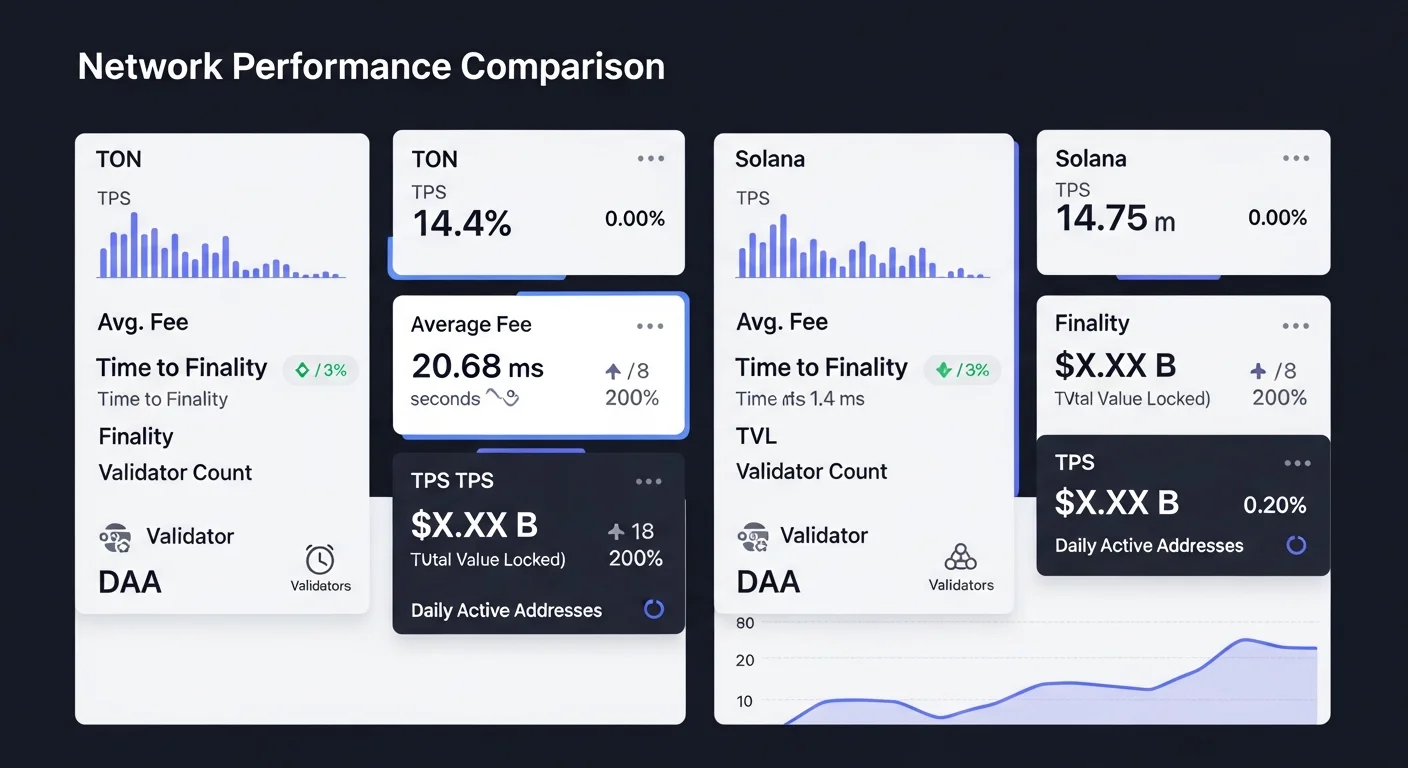
Solana settles thousands of transactions per second on a single chain when the validator fleet is healthy. TON splits work across shards, with effective throughput scaling as more shards become active. Both chains comfortably outperform a single Ethereum block.
Fees
Solana base fees are usually a tiny fraction of a cent, with priority fees during congestion. TON fees are sub-cent for ordinary transfers. Neither chain is the right place to optimize a transfer for cost; both are already very cheap by L1 standards.
Finality
Solana's "optimistic" finality is fast (under a second) with full economic finality after a number of confirmations. TON delivers similar sub-second user-facing finality. For a payment or DEX swap, both feel like a Web2 service.
Reliability and decentralization
Solana has had several network outages in its history, with stability improving meaningfully over time. TON's relatively newer mainnet has had a smoother availability record but a smaller validator set. Both are tradeoffs of speed-first L1 design.
Validator set and economic security
Solana has a larger active validator set than TON, distributed across many countries. TON's validator group is smaller and rotates across shards. Neither chain matches Ethereum's validator count, but both are sufficient for high-volume consumer use.
Outage history
Solana's outages have been the most public reliability concern in its category. The team and community have pushed firedancer (a second validator client) and other resilience efforts. TON's track record on uptime has been strong relative to its scale, though sample sizes are smaller.
Ecosystem depth: DeFi, NFTs, payments
This is where the chains diverge most.
DeFi
Solana has the deepest DeFi outside Ethereum. Jupiter (DEX aggregator), Drift and Hyperliquid-adjacent perps, MarginFi and Kamino on lending, Orca and Raydium on AMMs, plus a vibrant memecoin ecosystem on Pump.fun. TON's DeFi (STON.fi, DeDust, JustLend on TRON aside) is real but smaller.
NFTs
Solana is the second-largest NFT market by historical volume after Ethereum, with Magic Eden and Tensor as the dominant marketplaces. TON's NFT scene is unique because of Telegram-native integrations: Gifts, .ton domains, anonymous numbers, and tradable usernames. The user reach inside Telegram is unmatched.
Payments and consumer apps
TON's Telegram funnel is the largest consumer reach in crypto. Mini Apps, the @wallet bot, and Telegram Stars create a payment surface that meets users where they already are. Solana's mobile push (Saga, Seeker) and mobile-trading culture are real but reach a different audience.
Developer experience
The languages and tooling are completely different.
Solana: Rust and Anchor
Solana smart contracts (called programs) are typically written in Rust, often with the Anchor framework. The tooling is mature: Anchor for fast development, the Solana CLI, and a large library of audited program templates. The learning curve is steeper than EVM Solidity, but the developer base is large.
TON: FunC and Tact
TON contracts are written in FunC (lower level) or Tact (higher level). The TVM uses asynchronous message passing, which is a different model from both EVM and Solana's synchronous program calls. Tooling is improving with each year, but the developer community is smaller than Solana's.
When to use each chain
- Use Solana for DeFi-heavy apps, perps and serious trading interfaces, NFT collections that benefit from Magic Eden and Tensor distribution, and developer teams already comfortable with Rust.
- Use TON for consumer apps that ride Telegram, Mini Apps, in-chat payments, stablecoin transfers between people who already chat together, and creator monetization that flows through Telegram Stars.
- Use both when the application benefits from each: a Solana-backed DeFi product surfaced as a Telegram Mini App through a TON wallet on the front end.
Quick reference table
| Dimension | TON | Solana |
|---|---|---|
| Architecture | Sharded multi-chain | Monolithic single-chain |
| Typical fee | Sub-cent | Sub-cent + priority |
| Finality | Sub-second | Sub-second + economic confirmations |
| Smart contract language | FunC, Tact | Rust, Anchor |
| DeFi TVL | Smaller, growing | Largest outside Ethereum |
| Distribution edge | Telegram funnel | Mobile and DeFi-native users |
How to decide for your project or trade
- Identify the user. Telegram-native or Solana DeFi-native?
- Identify the value type. Consumer payments versus active trading versus institutional flows.
- Identify the dependencies. Existing DEX, perps, lending markets, NFT marketplaces.
- Identify the dev stack. Rust talent for Solana, FunC/Tact for TON.
- Pick the chain that wins on three of those four. Multi-chain when no single chain is clearly ahead.
Frequently asked questions
Is TON faster than Solana?
Both are very fast. TON's sharded design scales with demand. Solana's single-chain design is highly optimized. In practice, both feel near-instant to users.
Is Solana more secure than TON?
Solana has a larger validator set today. Both are smaller than Ethereum's, which is a tradeoff of speed-first L1 design.
Can Solana programs run on TON?
No. Solana uses Rust on the SVM. TON uses FunC/Tact on the TVM. Apps are rewritten between chains rather than ported.
Which has more DeFi liquidity, TON or Solana?
Solana, by a wide margin. TON's DeFi is real but a fraction of Solana's TVL.
Should I use both networks?
Many projects do. Solana for DeFi exposure, TON for consumer-facing distribution through Telegram.
Final takeaway: TON and Solana are best understood as complementary, not competitive. Solana is the deepest non-Ethereum DeFi chain with strong developer momentum. TON is the consumer onboarding machine of crypto. The right answer depends on which job your project actually needs to do.
Disclaimer: This guide is for educational purposes only and does not constitute investment, financial, legal, or trading advice.
Related Guides
- TON vs Ethereum: Complete Network Comparison Guide (2026)
- Not.Trade vs Photon: TON vs Solana Web Terminals 2026
- Not.Trade vs BonkBot: TON vs Solana Memecoin Battle 2026
- How to Bridge Assets to TON Safely: Guide (2026)
- Top 3 TON Trading Terminals 2026: Not.Trade vs STON.fi vs DeDust
Frequently Asked Questions
What is the main difference between TON and Solana?
TON uses a sharded, multi-chain architecture and is closely tied to Telegram for distribution, while Solana runs a single high-throughput chain optimized for fast, low-cost transactions. They take different design paths toward scaling.
Is TON or Solana faster?
Both networks are designed for high throughput and low fees, but real-world speed depends on network load and the specific application. Solana emphasizes a unified fast chain, while TON aims to scale by splitting work across shards.
Which has more DeFi activity, TON or Solana?
Solana generally has a deeper and more established DeFi and NFT ecosystem, while TON's ecosystem is newer and leans on Telegram integration. DeFi depth can shift over time, so check current liquidity before committing funds.
Should I use TON or Solana?
Choose based on your use case: TON can be convenient for Telegram-based apps and payments, while Solana suits broader DeFi, trading, and NFT activity. Many users hold assets on both depending on the applications they use.