TON Sites Explained: How .ton Decentralized Websites Work (2026)
— By Tony Rabbit in Tutorials
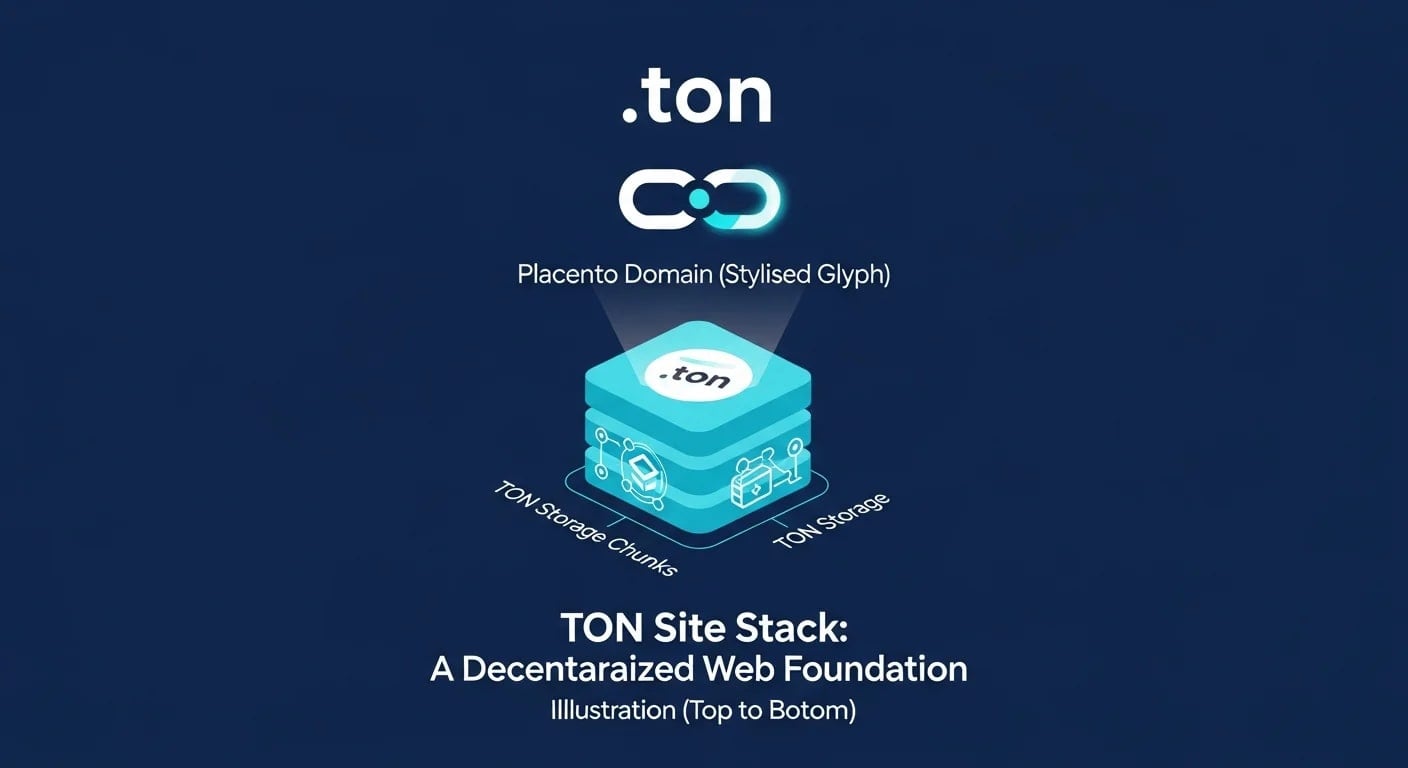
TON Sites are decentralized websites resolved through .ton domains and served from TON Storage. This guide explains the stack, how to publish a site, how to access it, and where the model is most useful.
TON Sites are decentralized websites that live on top of TON Storage and resolve through .ton domains. The whole stack stays inside the TON ecosystem: the domain is an NFT, the content is in TON Storage, payments are in TON, and access goes through the TON Proxy or a compatible browser. The model trades the convenience of traditional CDNs for censorship resistance and a payment rail tied to the same wallet that owns the domain.
Quick answer: A TON Site is a website published as a TON Storage bag, addressed by a bag ID, and resolved through a .ton domain. To visit one, you use a browser with built-in TON support or the TON Proxy gateway. To publish one, you upload your site files to TON Storage, get a bag ID, and point your .ton domain at it. Persistence depends on continued storage payments.
- Domains are NFTs. .ton domains live on TON and are owned the same way as any NFT.
- Content lives in TON Storage. The site is uploaded as a bag and addressed by hash.
- Resolution happens via .ton DNS. The domain points to the bag; visitors fetch the bag.
- Access requires TON Proxy or compatible browser. Regular browsers do not natively resolve .ton.
- Persistence depends on payment. If storage contracts lapse, the site may stop serving.
What a TON Site is
A TON Site is just a folder of HTML, CSS, JS, and assets uploaded into TON Storage and pointed to by a .ton domain. There is no server in the traditional sense. There is a content-addressed bag of files, a DNS-style mapping from domain to bag ID, and a network of storage providers willing to serve the bag for payments.
Trade TON with Not.Trade, the fastest terminal on TON
Not.Trade is purpose built for TON traders: real-time on-chain charts for every jetton, insider safety scoring (Top 10 wallets, snipers, dev movement, bundlers, LP lock), MCAP-trigger limit orders, multi-wallet sniping, MEV protection and one-click swaps routed across STON.fi and DeDust. It runs natively inside Telegram and as a fast web terminal, with TON Connect non-custodial wallet support.
Read the full Not.Trade guide →The stack in three layers
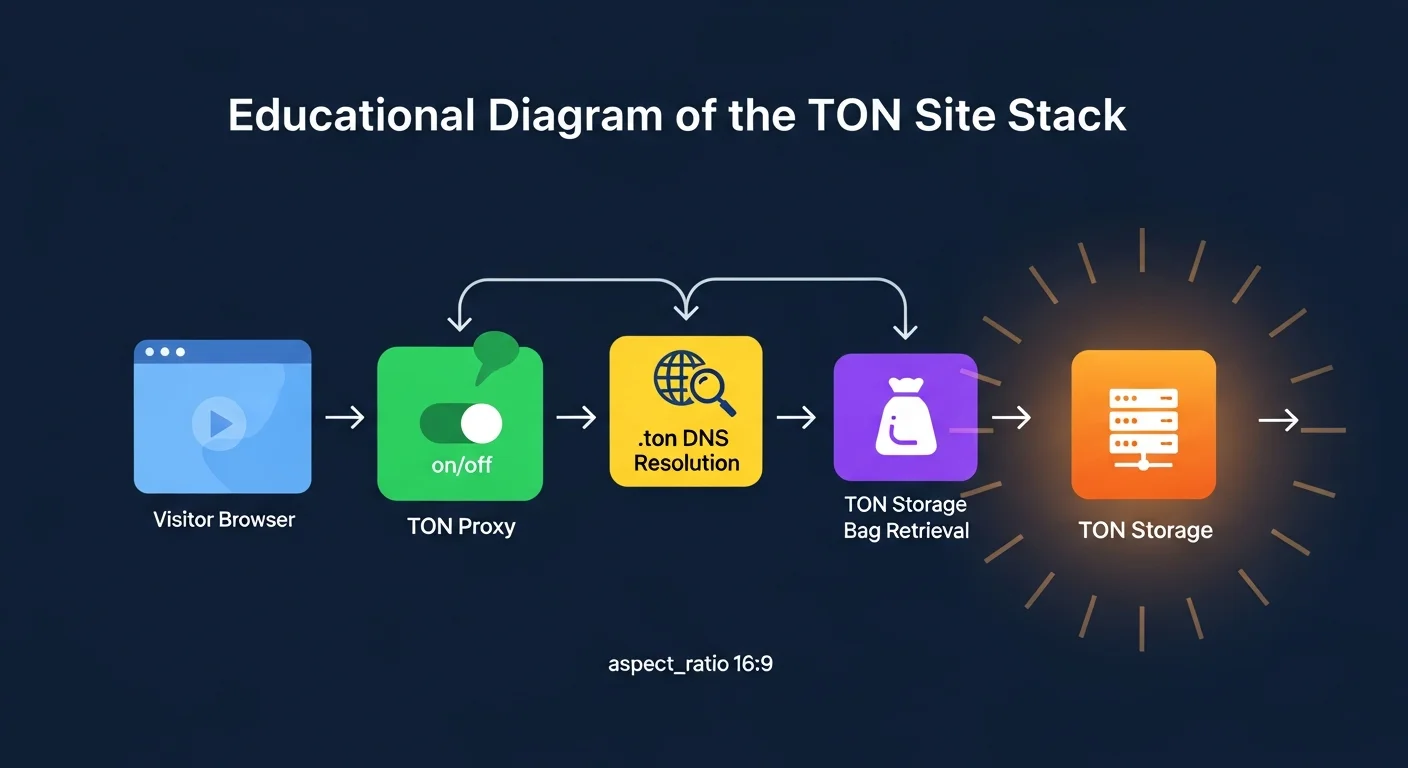
Layer 1 is the .ton domain, which is an NFT issued through TON DNS. Layer 2 is TON Storage, which holds the bag of files. Layer 3 is the access mechanism: the TON Proxy gateway or a browser that natively understands TON Sites. When you visit example.ton, the browser asks .ton DNS for the latest bag ID, asks TON Storage for the bag, and renders the site from the retrieved files.
How to publish a TON Site
The process is more like uploading to a CDN than installing a server.
Step 1: prepare the site
Build the site as a static folder of HTML, CSS, JS, and any assets. Server-side rendering does not run on TON Storage; static sites and client-side rendered apps are the natural fit.
Step 2: upload to TON Storage
Use a TON Storage upload tool to push the folder into the network. The result is a bag ID that uniquely identifies that snapshot of the site. You can re-upload as needed; each version produces a new bag ID.
Step 3: point your .ton domain at the bag
From the .ton DNS interface (Tonkeeper and several dApps support this), set the domain's storage record to your bag ID. Within minutes, visitors hitting the domain will resolve to the new bag.
Step 4: keep storage paid
Storage contracts have a duration. To keep the site live, renew the contracts before they expire or rely on providers willing to continue serving for free (which is not guaranteed).
How to access a TON Site
Regular browsers do not natively resolve .ton out of the box. Visitors need either a browser with built-in TON support or the TON Proxy gateway.
TON Proxy
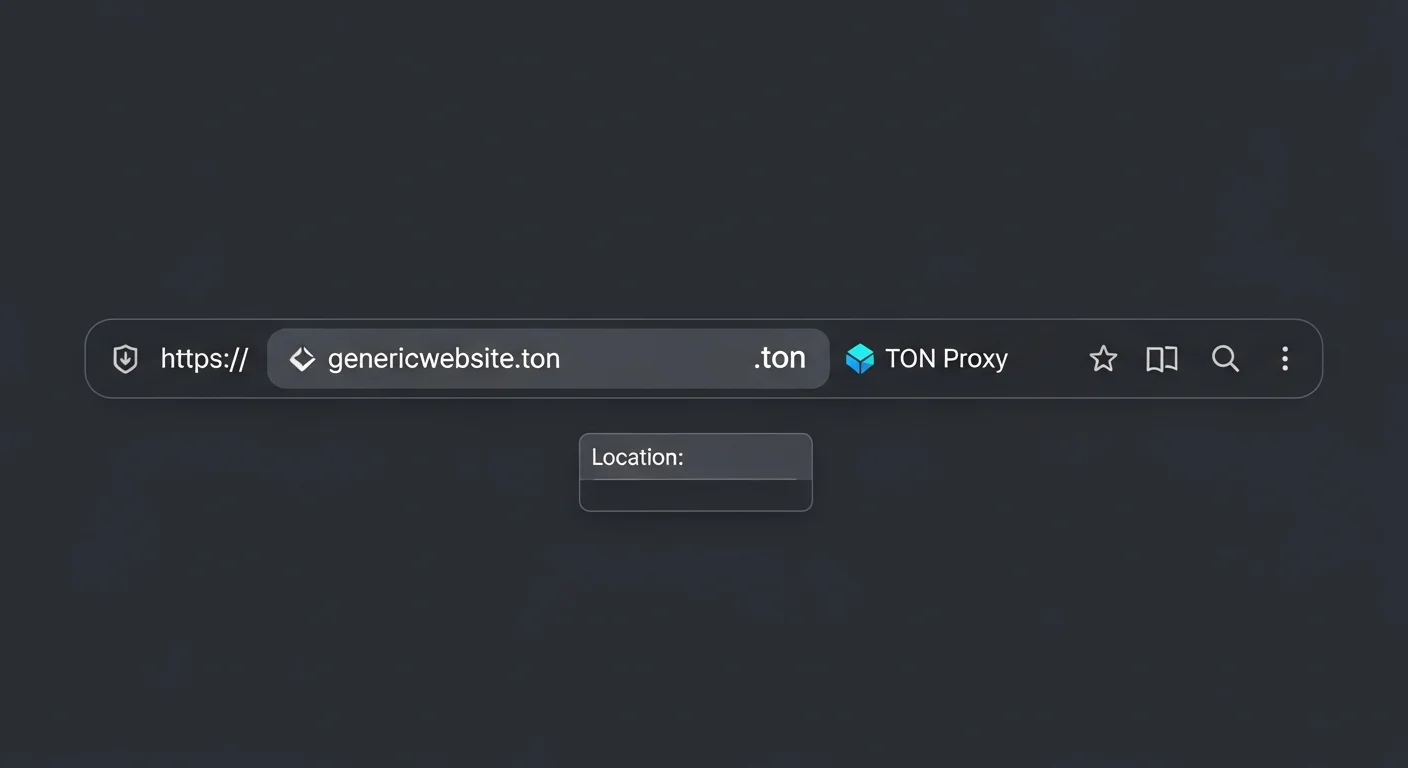
The TON Proxy is a gateway that takes a .ton domain request and returns the corresponding TON Storage content. Some browsers ship with TON support; others can install an extension or configure DNS to use the proxy.
Telegram-integrated browsers
Some Telegram clients and Mini App-aware browsers handle .ton domains directly, which means visitors inside the Telegram ecosystem may not need any extra setup.
Visiting in practice
Once configured, visiting a .ton site feels almost identical to a regular website. The address bar shows the .ton domain, the browser fetches content via the proxy, and the page renders. The differences are mostly invisible.
Why publish a TON Site
TON Sites are not the right answer for every project. They shine in a specific subset of cases.
Censorship resistance
A TON Site does not depend on a single hosting provider, registrar, or country. As long as storage providers continue to serve the bag, the site is reachable. For projects in jurisdictions where takedowns are common, this is a meaningful improvement.
Wallet-native identity
The same TON wallet that owns the .ton domain can manage the storage contracts, the upload, and any related on-chain logic. There is no separate hosting account, registrar account, or DNS provider.
Token-gated content
Because the access flow can integrate with TON Connect, sites can require wallet sign-in or token ownership at a deep level. Combined with NFT or Jetton ownership checks, TON Sites enable token-gated reading without bolting third-party access tools onto a regular site.
TON Sites vs IPFS sites vs traditional hosting
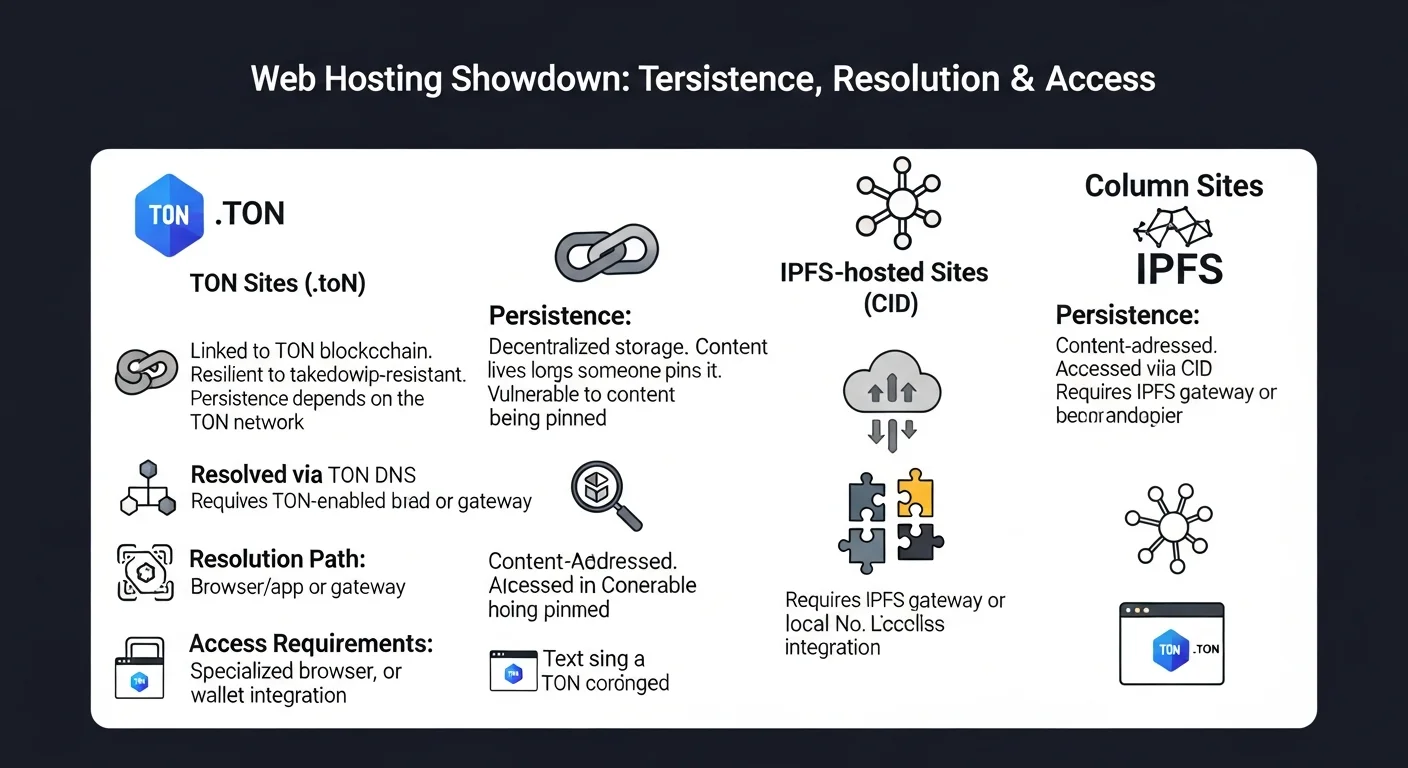
| Property | TON Sites | IPFS sites | Traditional hosting |
|---|---|---|---|
| Domain | .ton (NFT) | ENS .eth or DNS | DNS |
| Storage | TON Storage (paid) | IPFS pinning (often free) | Server or CDN |
| Persistence | While paid | While pinned | While bill is paid |
| Access | TON Proxy or compatible browser | IPFS gateway | Any browser |
| Wallet identity | Native | Through ENS | None by default |
Risks and limitations
- Discovery is harder. Most users still type domains in regular browsers; .ton requires extra setup.
- No traditional CDN. Performance depends on storage providers' geographic distribution.
- Dynamic backends are tricky. Server-side logic does not run on TON Storage; you need a separate backend.
- Persistence is paid. Forgetting to renew storage contracts can take a site offline.
- Tooling maturity. The publishing toolchain is improving but is younger than IPFS or traditional hosting.
Practical workflow for first-time TON Site publishers
- Buy a .ton domain through Tonkeeper or a TON DNS dApp.
- Build the site as a static folder. Avoid server-side dependencies.
- Upload to TON Storage and record the bag ID.
- Point the domain at the bag through the .ton DNS interface.
- Set a calendar reminder for storage renewal. Lapsed contracts can take the site offline.
Frequently asked questions
What is a TON Site?
A decentralized website hosted on TON Storage and resolved through a .ton domain. Visitors access it via the TON Proxy or a compatible browser.
Do I need a .ton domain to publish a TON Site?
You can technically publish a bag without a domain, but visitors would have to use the bag ID directly. Domains are the human-readable layer.
How long does a TON Site stay online?
As long as storage contracts are paid. Lapsed contracts can result in the bag being unhosted.
Can I run a regular web app on TON Sites?
Static sites and client-side rendered apps work. Anything requiring server-side logic needs a separate backend, optionally tied to TON wallet identity.
Is a TON Site censorship-resistant?
Largely, yes. The domain is an NFT, the content is in decentralized storage, and there is no central registrar to compel.
Final takeaway: TON Sites are a serious alternative to traditional hosting when censorship resistance, wallet-native identity, or token-gating matter. They are not a drop-in replacement for every site, but for the right use cases they are a clean, on-chain way to publish.
Disclaimer: This guide is for educational purposes only and does not constitute investment, financial, legal, or trading advice.
Related Guides
- What Is TON DNS and How Do .ton Domains Work? Guide (2026)
- How Do DAOs Work? Governance, Treasury and Voting Explained (2026)
- TON Storage Explained: Decentralized File Storage Guide (2026)
- CoinGecko vs CoinMarketCap: Crypto Data Sites Compared (2026)
- Meme Coin Chart Indicators and Charting Sites (2026)
Frequently Asked Questions
What are TON Sites?
TON Sites are websites that are served through The Open Network rather than from traditional centralized web servers. They are typically reached using .ton domains and content stored on the network.
How do you access a .ton website?
Accessing a .ton site generally requires a compatible browser or a proxy that can resolve TON domains and route the request through the network. Standard browsers usually need an extension or gateway to reach them.
How is a TON Site different from a normal website?
A normal website relies on centralized servers and the conventional DNS system, while a TON Site resolves through TON domains and can be served from decentralized storage. This aims to make hosting more censorship resistant.
What is a .ton domain?
A .ton domain is a human-readable name registered on The Open Network that can point to a site, wallet, or other resource. It works similarly to a traditional domain but is recorded on-chain.