TON Storage Explained: Decentralized File Storage Guide (2026)
— By Tony Rabbit in Tutorials
TON Storage is the file-storage layer of The Open Network. This guide explains how files become bags, how nodes serve them, how payments work, and how Storage ties into TON Sites and TON Proxy.
TON Storage is the part of The Open Network that handles files instead of accounts. Most blockchains hand off file storage to IPFS or Arweave because storing media on the chain itself is wasteful. TON took a different path: it built a native, payable storage layer that lives next to the blockchain and reuses the same identities, accounts, and economics. The result is a way to upload files that are addressable, retrievable, and paid for entirely in TON.
Quick answer: TON Storage lets users upload files that are split into chunks, hashed, and distributed across a network of storage nodes. Each upload produces a "bag ID" (a unique hash) that anyone can use to retrieve the file. Storage providers are paid in TON for keeping data available. TON Storage powers TON Sites, NFT metadata, dApp content, and any application that needs decentralized file hosting tied to TON wallets.
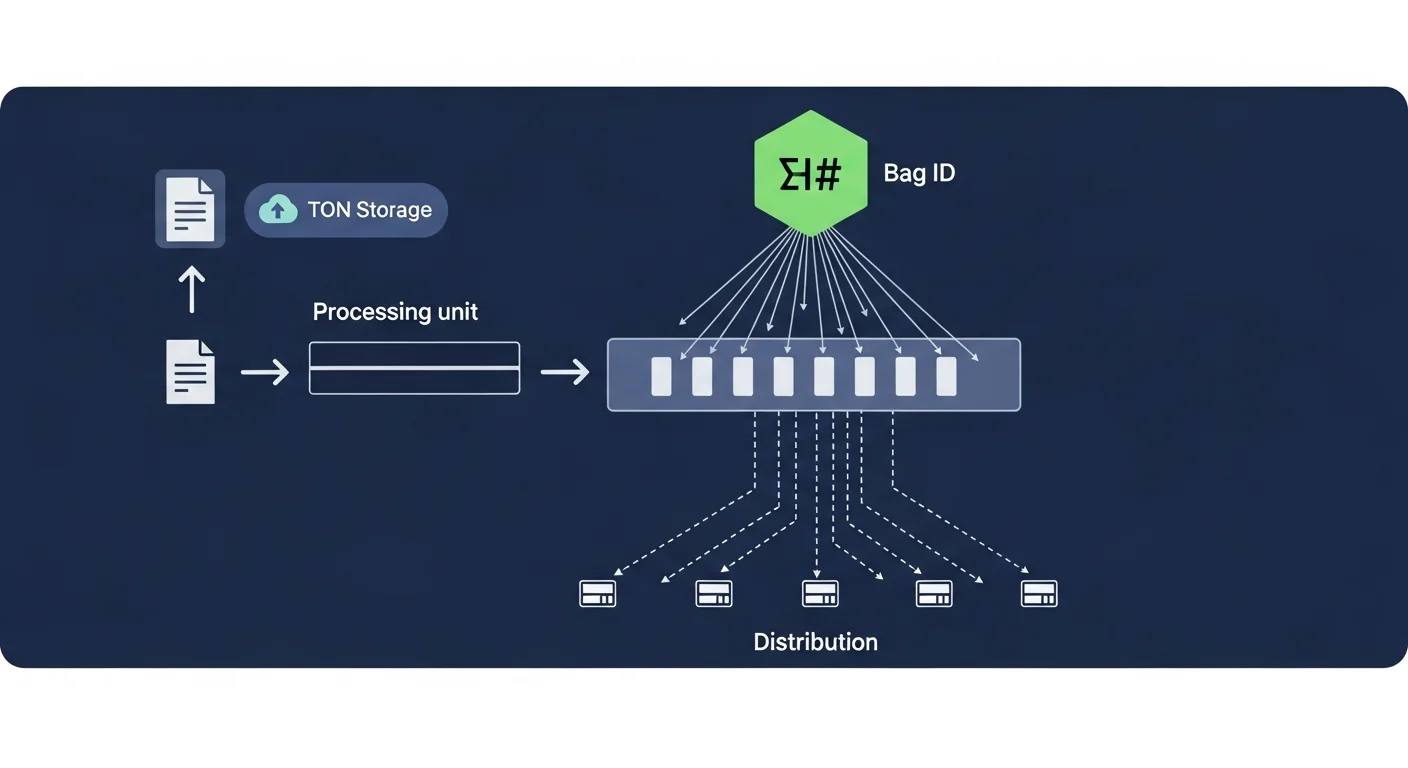
- Files become bags. Each file is split into chunks and identified by a bag ID hash.
- Storage providers earn TON. Hosting nodes are paid for serving files reliably.
- Bags are public by default. Anyone with the bag ID can retrieve the file.
- TON Sites use Storage. .ton domains can resolve to bag IDs, enabling decentralized websites.
- Persistence depends on payment. If no one pays for hosting, the file may stop being served.
What TON Storage actually is
TON Storage is the file-distribution layer of The Open Network. It is built into the same node software that runs the rest of TON, and it uses the same accounts and payment rails. Functionally, it sits next to the blockchain rather than inside it: blockchains store account state, Storage stores files, and the two reference each other through bag IDs.
Trade TON with Not.Trade, the fastest terminal on TON
Not.Trade is purpose built for TON traders: real-time on-chain charts for every jetton, insider safety scoring (Top 10 wallets, snipers, dev movement, bundlers, LP lock), MCAP-trigger limit orders, multi-wallet sniping, MEV protection and one-click swaps routed across STON.fi and DeDust. It runs natively inside Telegram and as a fast web terminal, with TON Connect non-custodial wallet support.
Read the full Not.Trade guide →Bags and chunks
When a file is uploaded, it is divided into chunks. Each chunk gets hashed, and the chunks are organized into a Merkle structure called a bag. The bag itself has a single hash, called the bag ID, which acts as a content-addressed pointer. Anyone with the bag ID can request the file from the network and verify integrity as chunks come in.
Storage nodes
Storage providers run nodes that host bags. They serve chunks on request, prove they still have the data, and earn TON for keeping the bag online. The economics work like a tiny ongoing rental: as long as someone is willing to pay, the providers keep serving.
How to upload and retrieve files
For most users, TON Storage is invisible. Wallets and apps handle uploads behind the scenes. For developers and power users, the flow is direct.
Uploading
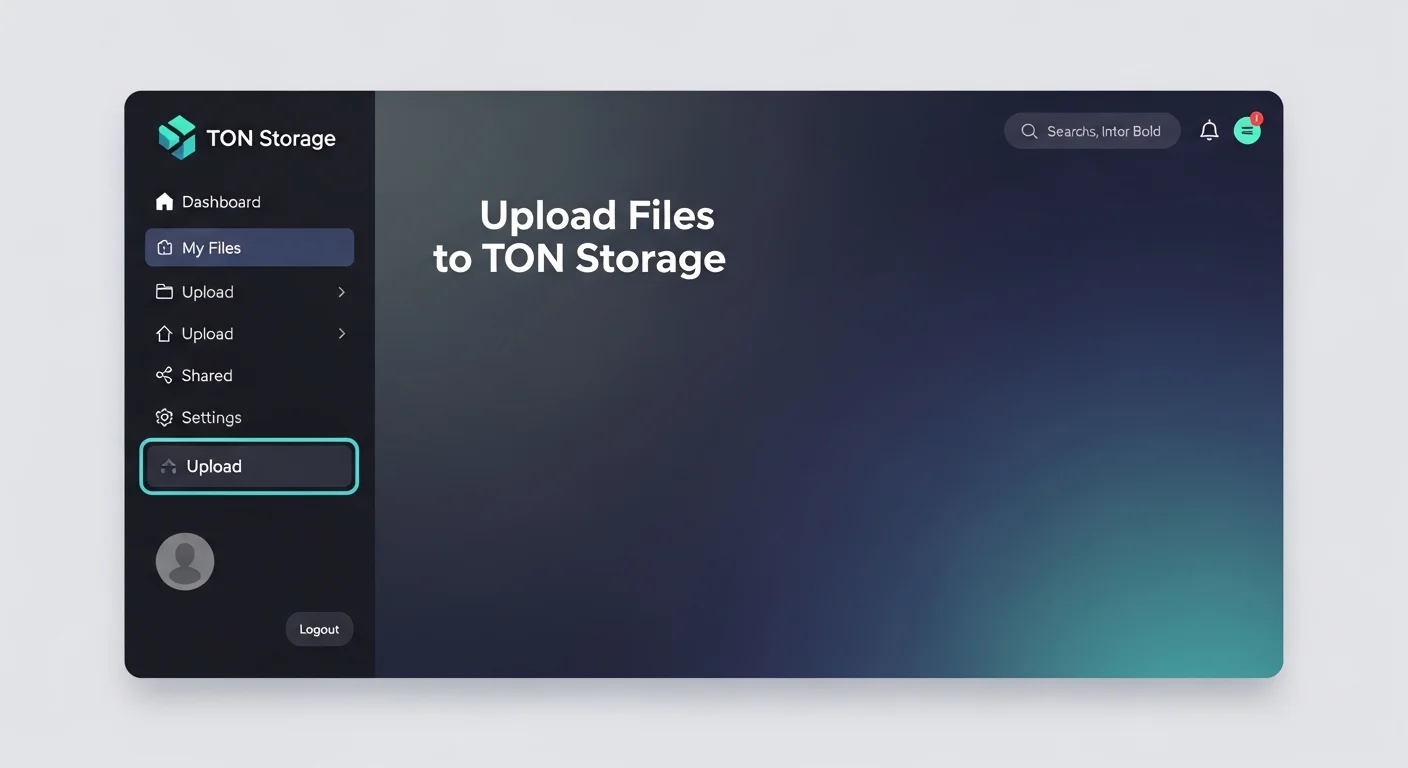
An upload tool (CLI, dApp, or wallet integration) splits the file into chunks, builds the bag, and announces it to the storage network. Storage providers pick up the bag and start serving it. The user signs a contract that pays providers for a chosen duration. The result is a bag ID and a URL pattern that resolves the bag through TON Storage.
Retrieving
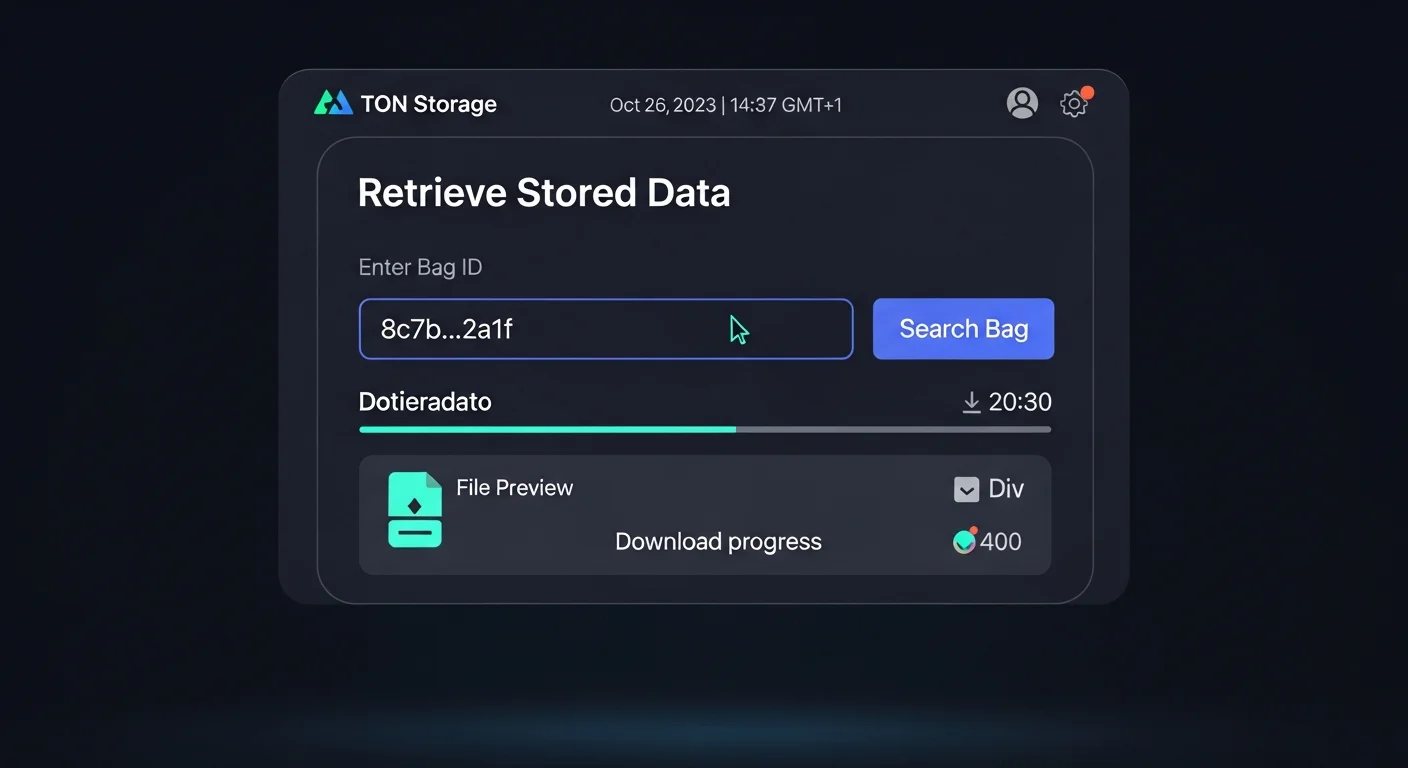
Anyone with the bag ID can fetch the file. Clients connect to storage providers, download chunks, verify integrity using the Merkle structure, and reassemble the file locally. As long as at least one node is hosting, retrieval works.
How payments and persistence work
The persistence model is paid, not permanent. This is intentional and shapes how TON Storage is used.
Storage contracts
When a file is uploaded, the user signs a contract that pays providers in TON for hosting the bag for a chosen duration. The duration can be short (testing) or long (production-grade content). At the end of the period, the contract can be renewed. If no one renews and no other party pays, providers may eventually stop serving the bag.
Provider economics
Providers compete for storage contracts and earn TON proportional to the amount of data they host and the time they host it. Reliable nodes with strong uptime get more contracts, which gives the network an incentive structure for high availability.
Persistence vs Arweave-style permanence
Arweave's model is one upfront payment for "permanent" storage. TON Storage uses ongoing payments. Both have tradeoffs: ongoing payment lets users stop paying for content they no longer need, while permanence simplifies long-term archival. For TON's typical use cases (NFTs, websites, dApp content), the ongoing model is usually a better fit.
Where TON Storage is actually used
The category is most useful when the application needs both file hosting and an on-chain payment or identity tie-in.
NFT metadata
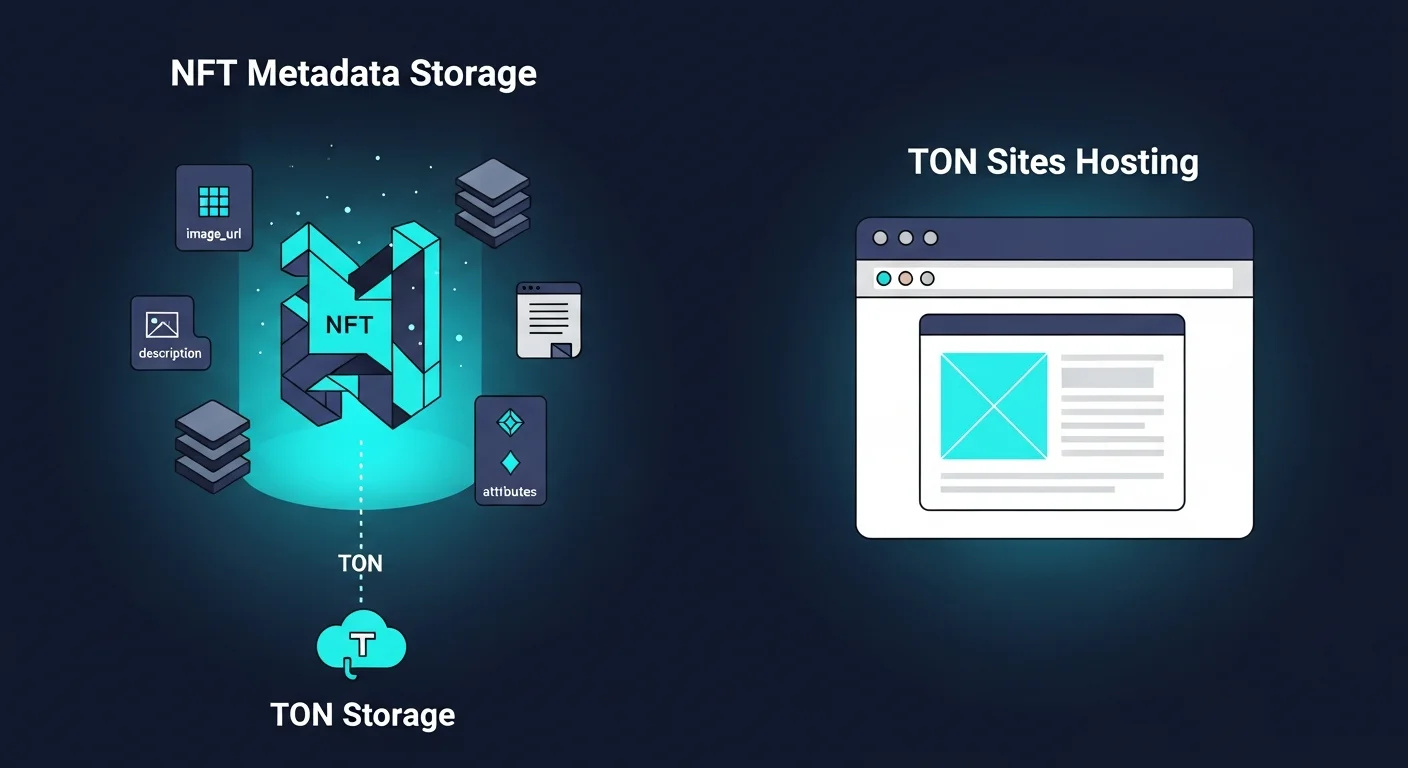
NFTs typically need an off-chain image or asset. TON Storage is a natural place to host that asset, because the bag ID can be referenced from the NFT contract and the same wallet that owns the NFT can pay for storage continuity.
TON Sites
TON Sites are decentralized websites served through TON Storage and resolved through .ton domains. The site's HTML, CSS, and assets are uploaded as bags, the .ton domain points to the latest bag ID, and visitors fetch the content through the TON Proxy or compatible browsers.
Large file sharing
For dApps that need to distribute large files (game assets, video clips, datasets), TON Storage offers a direct path with on-chain payment instead of relying on third-party CDN deals.
TON Storage vs IPFS vs Arweave
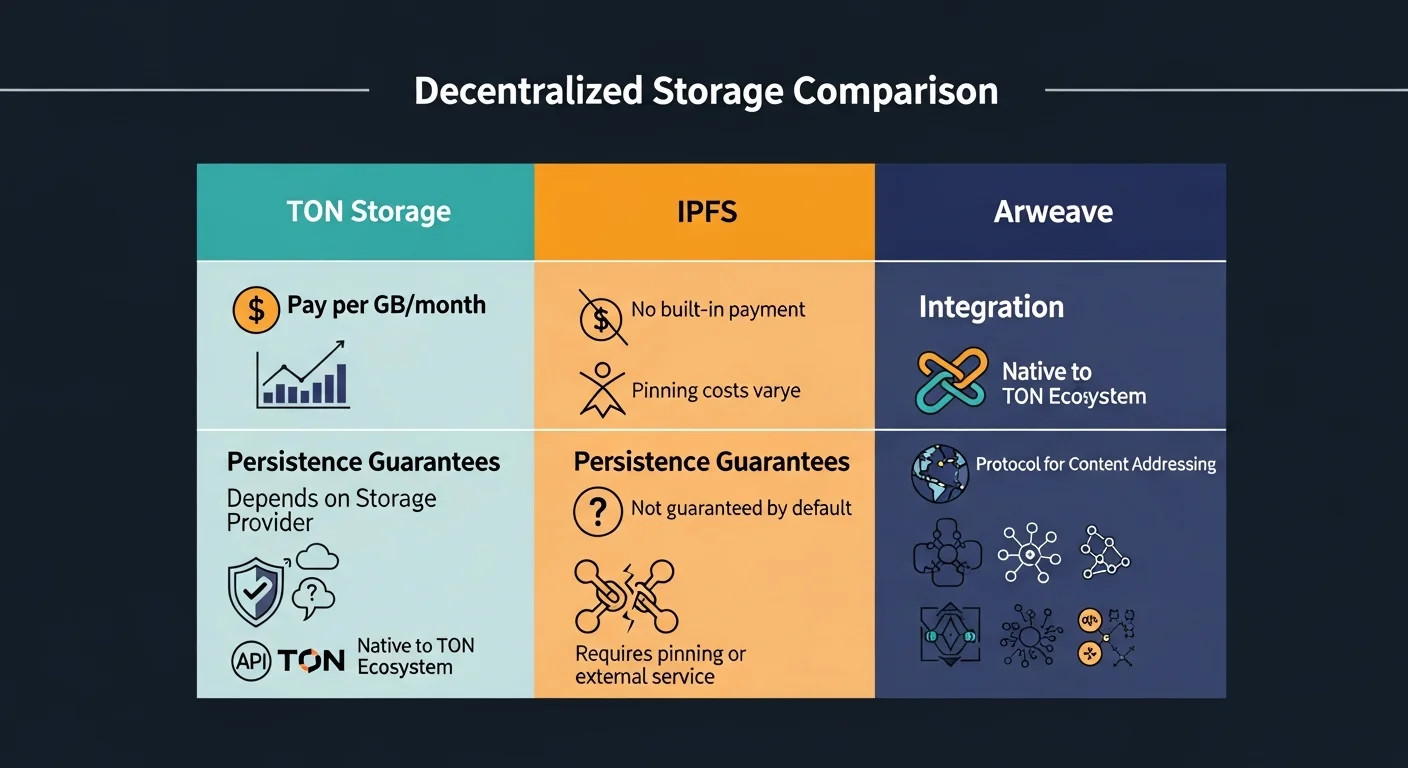
| Property | TON Storage | IPFS | Arweave |
|---|---|---|---|
| Payment model | Ongoing TON payments | Free, hosted by anyone | One-time AR payment for permanence |
| Persistence | While paid | While someone pins it | Designed to be permanent |
| Identity tie-in | Native TON wallet | None | Native AR wallet |
| Typical use | NFTs, sites, dApp assets | Quick content addressing | Long-term archival |
Risks worth knowing
- Persistence depends on payment. If contracts lapse, the file may stop being served.
- Public by default. Anyone with the bag ID can retrieve the file. Encrypt sensitive content yourself.
- Provider concentration. A small number of providers serving a popular bag can be a single point of failure.
- Tooling maturity. The dApp surface is improving, but is younger than mainstream IPFS pinning services.
- Cost variance. Storage cost depends on file size and contract duration; long-term hosting adds up.
Practical workflow for first-time TON Storage users
- Decide what you actually need to host. Pick file size and required durability.
- Pick an upload tool. Many TON wallets and dApps integrate Storage uploads directly.
- Estimate the contract duration. Match it to how long the content needs to live.
- Save the bag ID. It is the only handle that identifies your file.
- Plan renewals. Long-lived content needs ongoing payments to stay served.
Frequently asked questions
Is TON Storage permanent?
No. Persistence depends on ongoing payments. If contracts lapse and no one pays, providers may stop serving the bag.
How do I find a file on TON Storage?
Files are addressed by bag ID, which is a hash. Anyone with the bag ID can retrieve the file from the network.
Can I encrypt files on TON Storage?
Yes. The protocol does not encrypt by default, but applications can encrypt content before upload and store the bag ID alongside.
How much does TON Storage cost?
It depends on file size and contract duration. Storage providers compete for contracts, which keeps prices in line with market demand.
How is TON Storage different from IPFS?
IPFS is content-addressed but free, with persistence depending on whoever pins the file. TON Storage uses ongoing TON payments to compensate providers and tie storage into the same wallet identity.
Final takeaway: TON Storage adds a paid, decentralized file layer to TON without forcing apps to use third-party services. Treat it as a tool for the right job (NFTs, decentralized sites, dApp assets) and remember the persistence model: as long as you pay, the bag stays.
Disclaimer: This guide is for educational purposes only and does not constitute investment, financial, legal, or trading advice.
Related Guides
- What Is Walrus Protocol: WAL Decentralized Storage Guide 2026
- What Is IPFS: Decentralized Storage, Content Addressing and Distributed Files (2026)
- What is Filecoin (FIL)? Decentralized Storage Explained
- What Is Filecoin (FIL): Complete Decentralized Storage Guide (2026)
- What Is Filecoin: Decentralized Storage Markets, Incentives and Web3 Data (2026)
Frequently Asked Questions
What is TON Storage?
TON Storage is the decentralized file-storage layer of The Open Network, where files are distributed across nodes instead of a single server. It is designed to store and serve data in a way that ties into other TON services.
How does decentralized file storage work?
Files are split and distributed across many independent nodes that store and serve the data, often in exchange for payment. This spreads out hosting so there is no single point of failure or control.
How are storage providers paid on TON?
Nodes that store and serve files are generally compensated with payments for keeping the data available. The exact incentive structure is defined by the protocol and the agreements between users and providers.
How does TON Storage relate to TON Sites?
TON Storage can hold the files that make up a website, while TON Sites and related proxy services make that content reachable through the network. Together they support hosting decentralized sites on TON.